Do Perimenopause Symptoms Come and Go? Yes — Here's Why
Why perimenopause symptoms appear, vanish and return — and what the on-off pattern is actually telling you about your hormones.

Yes — perimenopause symptoms come and go. They flare for a month, vanish for two, return with a vengeance. You feel like you're going crazy. You're not. The on-off pattern is perimenopause. Here's what's actually happening — and why understanding the rhythm makes it bearable.
Why symptoms come in waves
Menopause itself is steady — estrogen is just low, full stop. Perimenopause is the opposite. Estrogen doesn't drop in a smooth line; it lurches. One month your ovaries fire normally and you feel fine. The next, ovulation skips, progesterone collapses, estrogen spikes then crashes — and every system that depends on those hormones (mood, sleep, joints, gut, skin, brain) reacts.
This is why perimenopause is harder than menopause for many women. It's not the level of hormones — it's the chaos.
The 3 patterns women describe
- Cycle-linked flares. Symptoms cluster in the week before your period and ease once it starts. This is the most common pattern in early peri. It looks like PMS on steroids and often gets misdiagnosed as PMDD.
- Random "perimenopause weeks". A whole week of bad sleep, anxiety, brain fog and joint aches — then it lifts and you feel like yourself for two months. This usually means a skipped or delayed ovulation that month.
- Quiet seasons. Symptoms can vanish for 3–6 months and feel like they're gone forever — then return. This often happens just before periods stop entirely.
What "on for years, then gone" really means
Perimenopause typically lasts 4–10 years. Symptoms usually peak in late perimenopause (the 1–2 years either side of the final period) and then fade as the body settles into menopause. That's why your friend swears she had hot flushes for two years and then nothing — she did. The symptom set does change as you move through stages.
What makes the waves bigger
- Sleep loss — one bad night can flare 5 symptoms for a week.
- Alcohol — single biggest amplifier of vasomotor and mood symptoms.
- Stress — cortisol fights estrogen for the same receptors.
- Skipped meals or low protein — glucose dips trigger hot flushes, anxiety and rage.
- Caffeine on an empty stomach — stacks with adrenaline.
What makes the waves smaller
- Strength training 2–3x/week — flattens hormonal volatility.
- Magnesium glycinate 300mg at night — most-evidenced calmer.
- 30g protein at breakfast — stops the morning crash that triggers afternoon flares.
- Walking 8,000+ steps — improves insulin sensitivity, which softens every symptom.
- HRT — by replacing estrogen at a steady level, it removes the swings entirely.
How to track the pattern
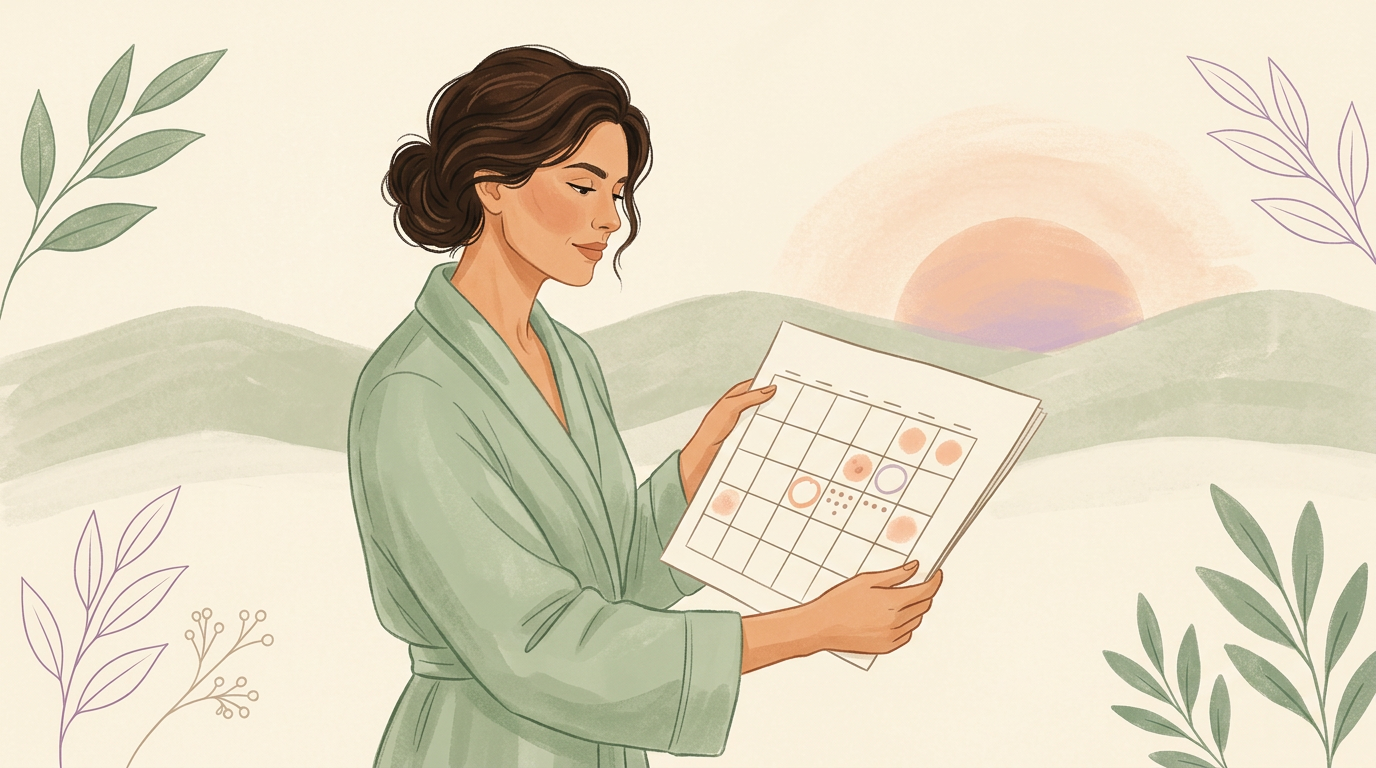
For 8 weeks, log three things daily: top 3 symptoms (1–10 scale), period day, and any obvious triggers (poor sleep, alcohol, big stress). At the end you'll see your pattern clearly — usually one of the three above. Pattern + cycle = the diagnosis. No blood test will tell you more.
When the on-off pattern is something else
If symptoms are constant rather than wavy, or if they don't shift with your cycle at all, perimenopause may not be the whole story. Thyroid disease, iron deficiency, sleep apnoea and depression all mimic perimenopause and don't come and go in the same way. Worth ruling them out with a GP.
The good news about wavy symptoms: the wave that just hit you will pass. It always does. And once you understand the pattern, you stop bracing for life and start working with it.
Get Lila, your personal coach for perimenopause.
Built for women in their 40s. 24/7 coaching, in your pocket.