
Sleep Deprivation vs Insomnia Causes and Fixes That Work
Confused about sleep deprivation vs insomnia? Learn key differences in causes, symptoms, and treatment so you know when to change habits or seek care.
At 2 a.m., you're awake again. You had enough time set aside for sleep, but your mind keeps replaying tomorrow's tasks, or you woke after a hot flash and can't settle back down. Your friend, meanwhile, sleeps normally when she gets into bed but only allows herself five hours on work nights. Both women feel exhausted, yet they may be dealing with different sleep problems.
That distinction matters because sleep deprivation vs insomnia isn't just a vocabulary question. If your schedule is cutting sleep short, protecting more time for rest may help. If you're lying awake despite having the opportunity to sleep, repeatedly treating the problem as a scheduling issue can leave the underlying driver untouched. Midlife adds another layer, because perimenopause can bring night sweats, mood changes, and repeated awakenings that resemble ordinary sleep loss.
The practical question is: Is your sleep being limited from the outside, or is your ability to sleep disrupted even when the opportunity is there? This guide separates those patterns, compares their causes and daytime effects, and shows how to track clues without trying to diagnose yourself. For a broader look at the relationship between hormonal transition and disrupted rest, see this guide to perimenopause and sleep.
Table of Contents
- Introduction Why the Difference Between Sleep Loss and Insomnia Matters
- What Sleep Deprivation and Insomnia Actually Mean
- Causes and Risk Factors Compared Side by Side
- Symptoms and Daytime Impact How Each Pattern Feels
- Short and Long Term Consequences You Should Not Ignore
- How to Tell Which One You Have and When to Seek Help
- Choosing the Right Approach for Better Sleep Starting Tonight
Introduction Why the Difference Between Sleep Loss and Insomnia Matters
A woman in her 40s stays up to finish work, checks messages in bed, and wakes early for the school run. She sleeps for roughly five hours because her schedule leaves little room for more. On a weekend, with more time available, she falls asleep quickly and sleeps longer. Her pattern may reflect insufficient sleep opportunity, rather than an inability to sleep.
Another woman gets into bed early and allows plenty of time for rest. She still lies awake, wakes repeatedly, or opens her eyes hours before morning. Although she spends eight hours in bed, she sleeps much less and feels drained and frustrated the next day. If this pattern keeps returning and affects concentration, mood, or daily functioning, it points toward insomnia symptoms.
These patterns can overlap. Insomnia can shorten total sleep and lead to sleep deprivation. Stress, caregiving, travel, or an early work start can also cause a temporary stretch of poor sleep. The first question remains practical:
Do you have too little time to sleep, or too little ability to sleep?
Midlife can make the answer harder to see. Perimenopause may add hot flashes, night sweats, mood changes, or repeated awakenings to an already crowded schedule. A night interrupted by heat and alertness may not improve by going to bed earlier. For context on the relationship between hormonal transition and disrupted rest, read this guide to perimenopause and sleep.
The distinction changes what you observe. With a crowded schedule, record bedtime, wake time, and whether you could create more sleep opportunity. With recurring midlife awakenings, also note temperature changes, mood, medication changes, and how long you remain awake. These details help separate reversible sleep loss from a hormonally influenced insomnia pattern, without trying to diagnose yourself. The goal is clarity, so your next step fits what is happening at night.
What Sleep Deprivation and Insomnia Actually Mean
A late shift, a restless child, or an evening spent scrolling can leave you short on sleep even when your ability to sleep is normal. Sleep deprivation usually means that your schedule, responsibilities, behavior, or environment allows too little time for rest. If those barriers ease, sleep may return more readily.
Insomnia is different. It involves repeated difficulty falling asleep, staying asleep, or waking too early despite having a reasonable opportunity to sleep. The pattern also causes daytime effects, such as fatigue, poor concentration, irritability, or distress. One short night does not establish insomnia.
The opportunity test
Ask what happens when you have enough time and a suitable setting for sleep.
- If you fall asleep readily when the chance appears, insufficient sleep is more likely connected to your routine, demands, or environment.
- If you stay awake or wake repeatedly despite enough time in bed, insomnia becomes more plausible.
- If you feel sleepy during the day but alert at night, both patterns may be present.
- If pain, breathing problems, leg sensations, or hot flashes wake you, another condition may be interrupting sleep.
This test is a guide, not a diagnosis. In perimenopause, the useful question may be whether sleep improves after a schedule change, or whether heat, night sweats, or repeated alert awakenings continue even when time in bed is protected. That distinction points toward reversible sleep loss or a hormonally influenced insomnia pattern.
Acute sleep deprivation can follow one unusually short night or a brief period of restricted sleep. Insomnia describes a recurring sleep-regulation problem rather than a single late bedtime. Chronic insomnia affects about 6% to 10% of adults under stricter diagnostic criteria, while broader symptom-based estimates reach about one-third of adults, according to a review of insomnia mechanisms and biomarkers.
Why the distinction gets blurred
Insomnia can reduce total sleep and create genuine sleep deprivation. Conversely, someone caring for an ill child may feel unable to function, even though sleep becomes possible when circumstances improve.
The two patterns can overlap without having identical biology. Insomnia includes persistent symptoms and daytime impairment, while researchers have examined sleep efficiency, slow-wave sleep, and cyclic alternating pattern as possible biological markers. No simple home measurement can turn one poor night into a diagnosis. A recurring pattern, its triggers, and its daytime effects provide more useful clues.
Causes and Risk Factors Compared Side by Side
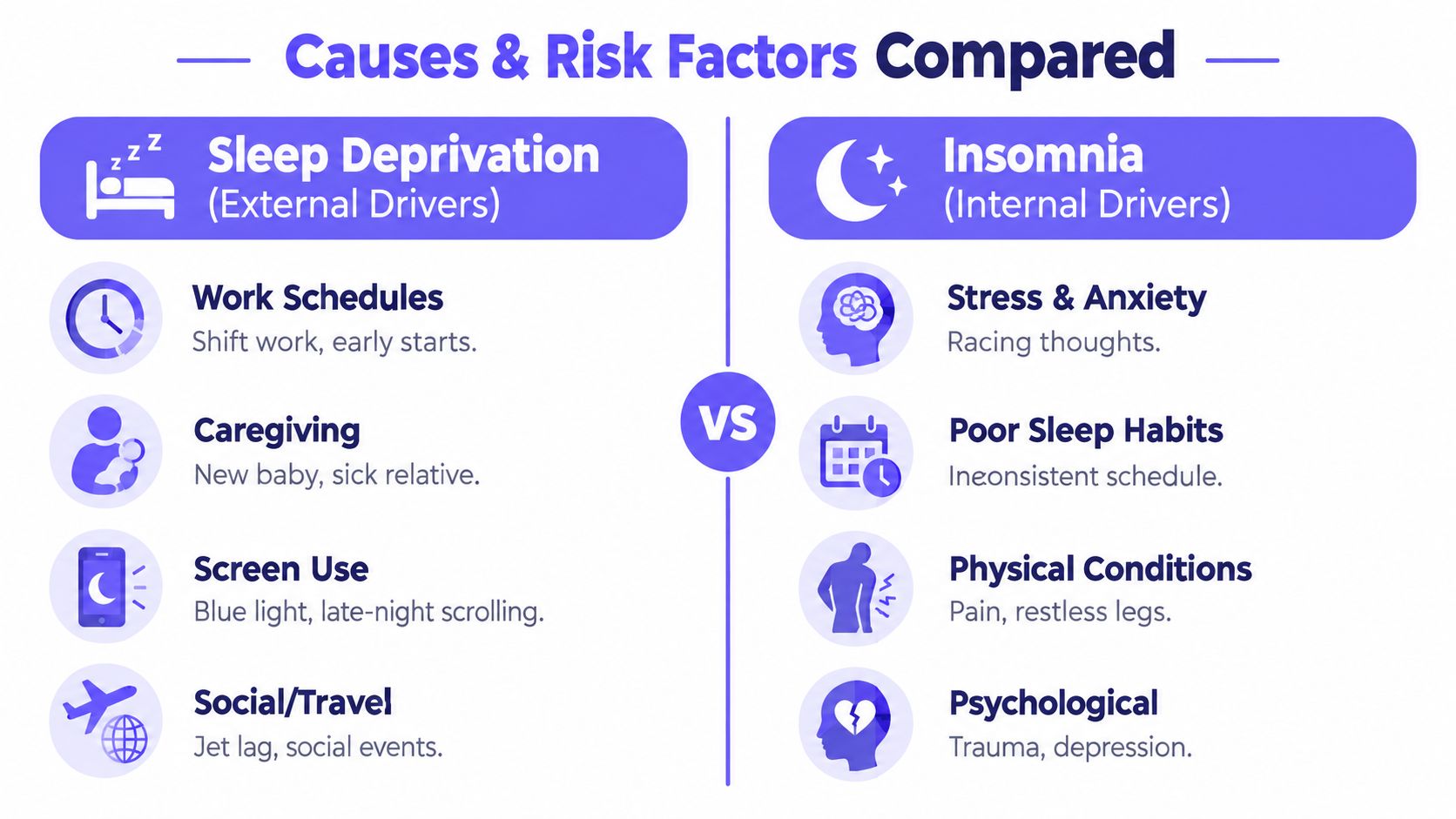
A woman may sleep only five hours because an early shift, caregiving, travel, or late-night plans leave too little time. That is usually sleep deprivation: the opportunity for sleep has been shortened or repeatedly interrupted by circumstances. Screens, an irregular routine, or an unsuitable bedroom can also delay bedtime, even when she feels tired.
Insomnia follows a different pattern. Time for sleep may be available, yet the brain and body remain difficult to settle. Racing thoughts, anxiety, conditioned alertness, pain, restless legs, depression, medication effects, and circadian disruption can all contribute. During midlife, hormonal changes may add repeated awakenings that a busy schedule alone cannot explain.
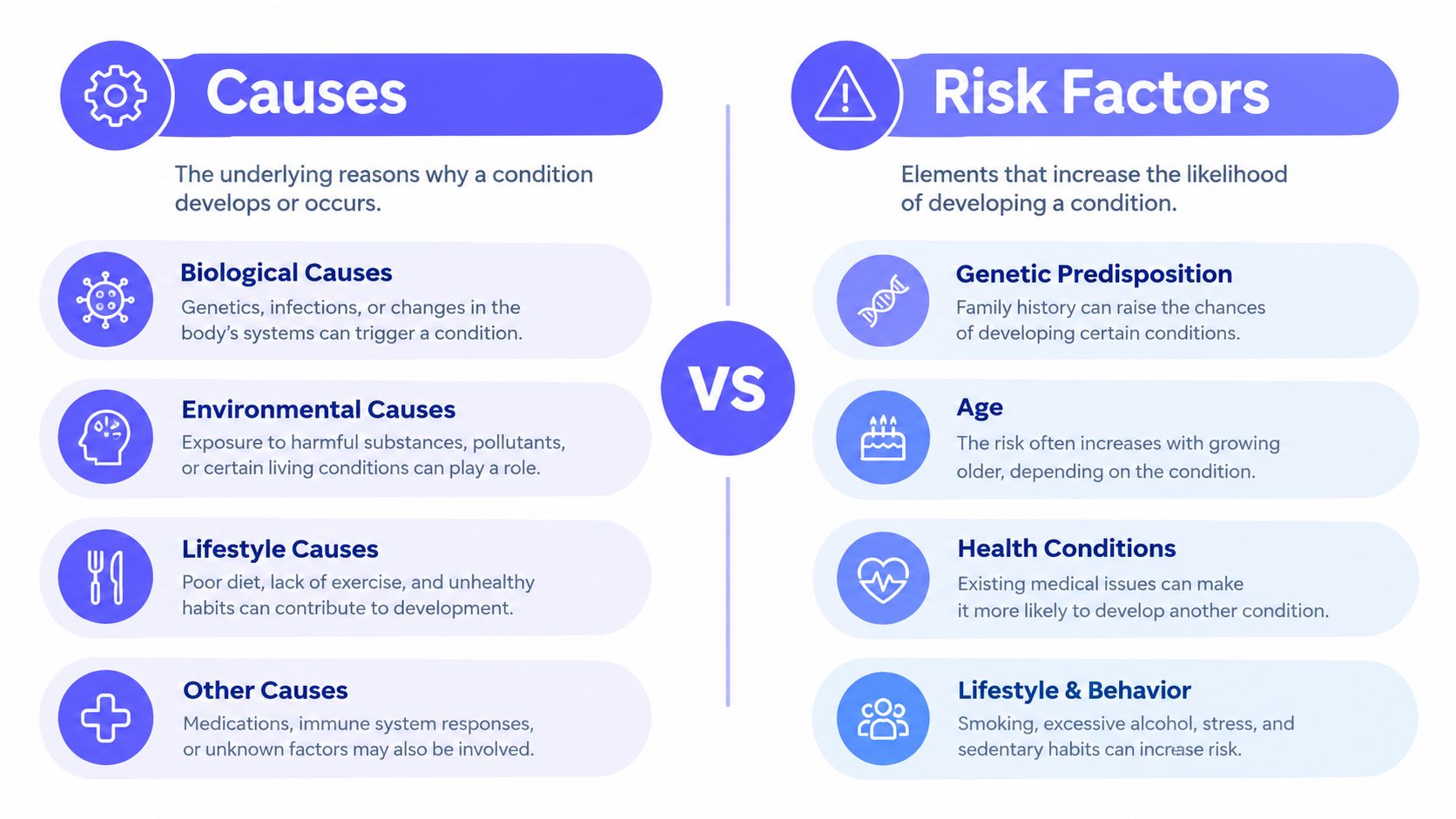
| Dimension | Sleep Deprivation | Insomnia |
|---|---|---|
| Primary problem | Too little sleep is available or protected | Sleep remains difficult despite adequate opportunity |
| Common triggers | Early starts, shift work, caregiving, screens, travel, social demands | Stress, anxiety, pain, restless legs, mood symptoms, conditioned arousal |
| Midlife clue | Sleep improves when the schedule allows recovery | Repeated awakenings or early waking continue with enough time in bed |
| Useful first question | Can I create and protect more sleep time? | What keeps my sleep system activated or repeatedly interrupted? |
| Typical response to extra opportunity | Sleep may improve when circumstances change | One lie-in often does not resolve the recurring pattern |
Why perimenopause changes the question
Perimenopause and postmenopause can blur the line between an externally shortened night and a sleep system that is repeatedly disrupted. Reviews report sleep disruption or insomnia symptoms in roughly 40% to 60% of women during this transition, and a large U.S. survey found 56.0% of perimenopausal women aged 40 to 59 slept less than seven hours per night (review of menopause-related sleep disruption).
The timing of wakefulness provides a useful clue. Menopause-related insomnia often includes repeated awakenings and long periods awake after initially falling asleep, rather than only difficulty settling at bedtime. These awakenings may be associated with lower estradiol and higher FSH, even after hot flashes and depressive symptoms are considered. A pattern like this does not prove a hormonal cause, but it supports tracking heat, night sweats, cycle changes, medications, and wake times instead of blaming a lack of discipline.
A 2025 meta-analysis identified hot flashes, depression, chronic disease, and psychotropic drug use as risk factors for insomnia during perimenopause. The reported odds ratios were 2.70 for hot flashes, 2.73 for depression, 1.39 for chronic disease, and 3.19 for psychotropic drug use (Frontiers review and meta-analysis). These figures do not predict an individual woman's experience. They do show why a generic sleep-hygiene checklist may miss the factor keeping sleep interrupted.
Practical guidance on sleep better despite insomnia and how to improve sleep quality naturally may help with behavioral or environmental contributors, alongside clinician guidance.
The key differentiator: If a realistic, protected sleep opportunity reliably restores sleep, sleep deprivation may be central. If adequate opportunity still brings repeated wakefulness, investigate insomnia and possible midlife contributors.
Symptoms and Daytime Impact How Each Pattern Feels
Sleep deprivation often feels like sleepiness that matches the amount of sleep you lost. You may fall asleep quickly when you finally sit down, nod off during passive activities, struggle to keep your eyes open in the afternoon, or sleep much more readily when you're allowed a later morning.
Insomnia often feels like sleeplessness despite exhaustion. You may be tired but alert in bed, notice a long delay before sleep, wake several times, or open your eyes too early and remain awake. Some women describe a particularly frustrating pattern in midlife: they fall asleep normally, wake after a hot flash or unexplained alertness, and can't return to sleep.
Sleepiness versus fatigue
These words aren't interchangeable. Sleepiness is a tendency to fall asleep. Fatigue is low energy, reduced motivation, or a heavy physical and mental feeling that may continue even when you aren't about to doze off.
A woman who works an early shift may sleep immediately at bedtime but wake before her body has had enough rest. She'll likely feel sleepy and may recover when she protects a longer sleep window. A woman with insomnia may lie awake for long periods, then feel fatigued, irritable, and mentally foggy even if her time in bed looks adequate.
What daytime impairment tells you
Clinicians care about what poor sleep does after morning arrives. Trouble concentrating, memory problems, mood changes, reduced motivation, and difficulty managing ordinary responsibilities all matter. Insomnia is defined not only by nighttime symptoms but also by clinically significant daytime impairment.
Biology supports the idea that these patterns overlap without being identical. After one night without sleep, serum proteomics can identify a deprivation-related multi-protein signature. Neuroimaging research also finds differences in brain regions such as the anterior cingulate, precuneus, posterior cingulate, superior temporal gyrus, and inferior occipital gyrus when examining sleep deprivation and insomnia-related effects (sleep deprivation and insomnia biomarker research).
Those findings are research tools, not home diagnostic tests. Your lived pattern remains useful: note whether you become drowsy as soon as you get a chance to rest, or whether your body stays activated despite exhaustion. If you're driving, operating equipment, or struggling to stay awake safely, stop treating the problem as a minor inconvenience and seek medical advice.
Short and Long Term Consequences You Should Not Ignore
A single short night can leave you foggy, irritable, less focused, and slower to react. If the cause is temporary and you can return to a steadier sleep schedule, these effects may ease. They still matter when daytime sleepiness affects driving, work, or caregiving.
Repeatedly restricted sleep creates a broader recovery problem. The body and brain have less time to restore attention and regulate mood. Insomnia follows a different route: nighttime alertness can recur even when you allow enough time in bed. During perimenopause, hot flashes, night sweats, temperature changes, or pain can repeatedly interrupt sleep, leaving it fragmented rather than restorative.
Why persistence is the pivot
A difficult night is common. The more useful question is whether the pattern keeps returning, disrupts daytime function, or points to an untreated cause.
A U.S. trend study found that insomnia or trouble sleeping rose from 17.5% in 2002, representing about 37.5 million adults, to 19.2% in 2012, representing about 46.2 million adults. It reported an absolute prevalence increase of 8.0% over that decade (NPR's account of the sleep-deprivation record and related trend research). These are population trends, not a diagnosis for any one person. They do show why ongoing sleep complaints deserve attention.
For women in midlife, persistence may track the menopausal transition. Insomnia symptoms can continue from one year to the next, particularly as perimenopause progresses. This pattern supports a practical distinction: reversible sleep loss may improve when the lost sleep opportunity returns, while hormonally influenced insomnia may continue despite adequate time in bed.
What repeated awakenings may signal
You may not remember every interruption, yet repeated waking can still leave you depleted. Notice whether awakenings occur with overheating, night sweats, mood changes, cycle shifts, or other menopausal symptoms. Those clues can help connect a sleep complaint with a treatable trigger.
A clear overview of the effects of sleep deprivation can explain why one poor night feels disruptive, but a list of possible outcomes cannot identify the cause. Persistent sleepiness, severe mood changes, breathing concerns, or difficulty functioning safely warrant medical care. An evaluation can consider sleep patterns, menopause symptoms, mental health, medications, and other medical factors together.
How to Tell Which One You Have and When to Seek Help
One restless night can follow a late shift, a sick child, travel, or too little time in bed. It does not establish insomnia. Begin by asking whether sleep was unavailable or whether your body stayed awake despite having a fair chance to rest. That distinction is especially useful in perimenopause, when hormonal changes can make insomnia persist even after you protect your sleep schedule.
Record when you got into bed, when you intended to sleep, when you woke, and whether work, caregiving, travel, or screens shortened the available window. Then note what happened during that window. Did you fall asleep quickly, remain awake for long periods, wake repeatedly, or struggle to return to sleep?
Build a pattern, not a perfect score
A brief diary can show whether the problem improves when the opportunity for sleep returns:
- Sleep opportunity: Record intended bedtime, wake time, and any unavoidable early start.
- Nighttime disruption: Note awakenings, estimated time awake, hot flashes, night sweats, pain, leg sensations, or breathing concerns.
- Daytime effects: Track sleepiness, fatigue, concentration, mood, and unusual caffeine use.
- Recovery response: Notice whether extra time in bed restores sleep or leaves you awake while tired.
- Context: Add stress, alcohol, medication changes, illness, travel, and menstrual or menopausal symptoms.
Wearables may reveal trends in timing, movement, and fragmented sleep. Their sleep-stage estimates are not clinical testing, so use them to compare nights and support your diary, not to diagnose insomnia.
When professional assessment makes sense
Seek help when poor sleep persists, disrupts daily life, or continues after you protect adequate sleep opportunity. Contact a clinician sooner for loud snoring, gasping, witnessed breathing pauses, severe daytime sleepiness, unexplained morning headaches, significant depression or anxiety, or symptoms that make driving unsafe.
A clinician may ask about medications, mood, pain, hot flashes, breathing, movement symptoms, and sleep timing. Depending on the pattern, evaluation may include a sleep study or testing for another disorder. If breathing-related disruption is possible, this overview of treating sleep apnea in Chattanooga explains why a sleep study may be considered.
A health assessment covering sleep, mood and hormonal health can help organize symptoms that overlap across these areas. Bring the pattern, daytime effects, and changes that make sleep better or worse. The goal is to distinguish reversible sleep loss from a hormonally influenced insomnia pattern, then choose the evaluation that fits.
Choosing the Right Approach for Better Sleep Starting Tonight
The most effective first move depends on the pattern. If sleep deprivation comes from an overcrowded schedule, protect the sleep opportunity before adding complicated techniques. Move the evening cutoff earlier, reduce avoidable late tasks, prepare for morning before bed, and make the bedroom dark, quiet, and comfortably cool.
A caregiver may need a realistic plan that shares nighttime responsibilities. A shift worker may need consistent timing around work rather than a conventional bedtime. Someone recovering from travel may need regular light exposure and a stable wake time. A practical Bornbir sleep guide can offer additional ideas for coping with short-term sleep loss, but recovery works best when you remove the source of lost sleep where possible.
Insomnia needs a different response. Repeatedly staying in bed while frustrated can teach your brain that the bed is a place for wakefulness and worry. CBT-I principles, including stimulus control and structured sleep scheduling, address that learned pattern. A clinician can guide the process, especially when hot flashes, depression, pain, medications, or possible sleep apnea are involved.
A midlife plan for tonight
- Protect the window: Choose a consistent wake time and create enough time for sleep rather than relying on weekend recovery alone.
- Reduce activation: Use a calm wind-down period, dim evening light, and keep work or emotionally charged conversations out of bed.
- Track the trigger: If you wake hot, record the event, temperature change, night sweat, and return-to-sleep difficulty.
- Match the escalation: Persistent awakenings, daytime impairment, or symptoms that don't improve with a protected schedule warrant clinical assessment.
A structured bedtime routine for better sleep can support consistency, but routine alone shouldn't be expected to resolve chronic insomnia. Lila can centralize tracking for sleep quality, mood, energy, anxiety, night sweats, meals, and cycles, then provide a personalized action plan and chat-based coaching to help you notice patterns. That kind of record can support habit building and give you clearer information to discuss with a healthcare professional.
Start tonight by writing down your intended sleep window and the reason you expect sleep may be disrupted. After several nights, compare opportunity, awakenings, symptoms, and daytime function. If the pattern points to more than a simple lack of time, schedule an evaluation instead of continuing to push through.
Lila helps you connect sleep disruption with midlife symptoms such as hot flashes, mood changes, energy shifts, and cycle changes, while giving you a personalized plan to act on. Visit Lila to begin tracking your pattern and make your next sleep decision more informed.
Get Lila, your personal coach for perimenopause.
Built for women in their 40s. 24/7 coaching, in your pocket.