
Menopause Diet for Weight Loss That Actually Works
Discover a practical menopause diet for weight loss. Learn which eating patterns protect midlife metabolism, plus meal plans, recipes, and exercise tips.
You're eating roughly the same way you always have, but your waistband tells a different story. Breakfast no longer carries you to lunch, evening cravings feel louder, and a hard workout doesn't seem to produce the results it once did. That's frustrating, but it isn't a character flaw. Menopause changes the conditions under which weight loss happens, so the strategy has to change too.
A useful menopause diet for weight loss isn't a crash plan built around surviving on less food. It's a structured, high-fiber, protein-aware approach that controls refined carbohydrates, protects muscle, and works alongside strength training and sleep. A large 2026 study of 38,283 women found mean weight gain of 0.80 kg per year during the menopause transition, while women with the most protective reverse EDIH dietary pattern gained 0.28 kg less per year than women with the least protective score, after lifestyle and demographic adjustments (JAMA Network Open study).
Table of Contents
- Why Weight Loss Gets Harder in Menopause
- The Best Diet Patterns Ranked for Menopause
- Macros, Portions, and Daily Targets
- A Realistic 3-Day Menopause Meal Plan
- Exercise and Sleep That Protect Muscle
- What to Track and How to Stay Consistent
- Your 4-Week Starter Plan and When to Get Help
Why Weight Loss Gets Harder in Menopause
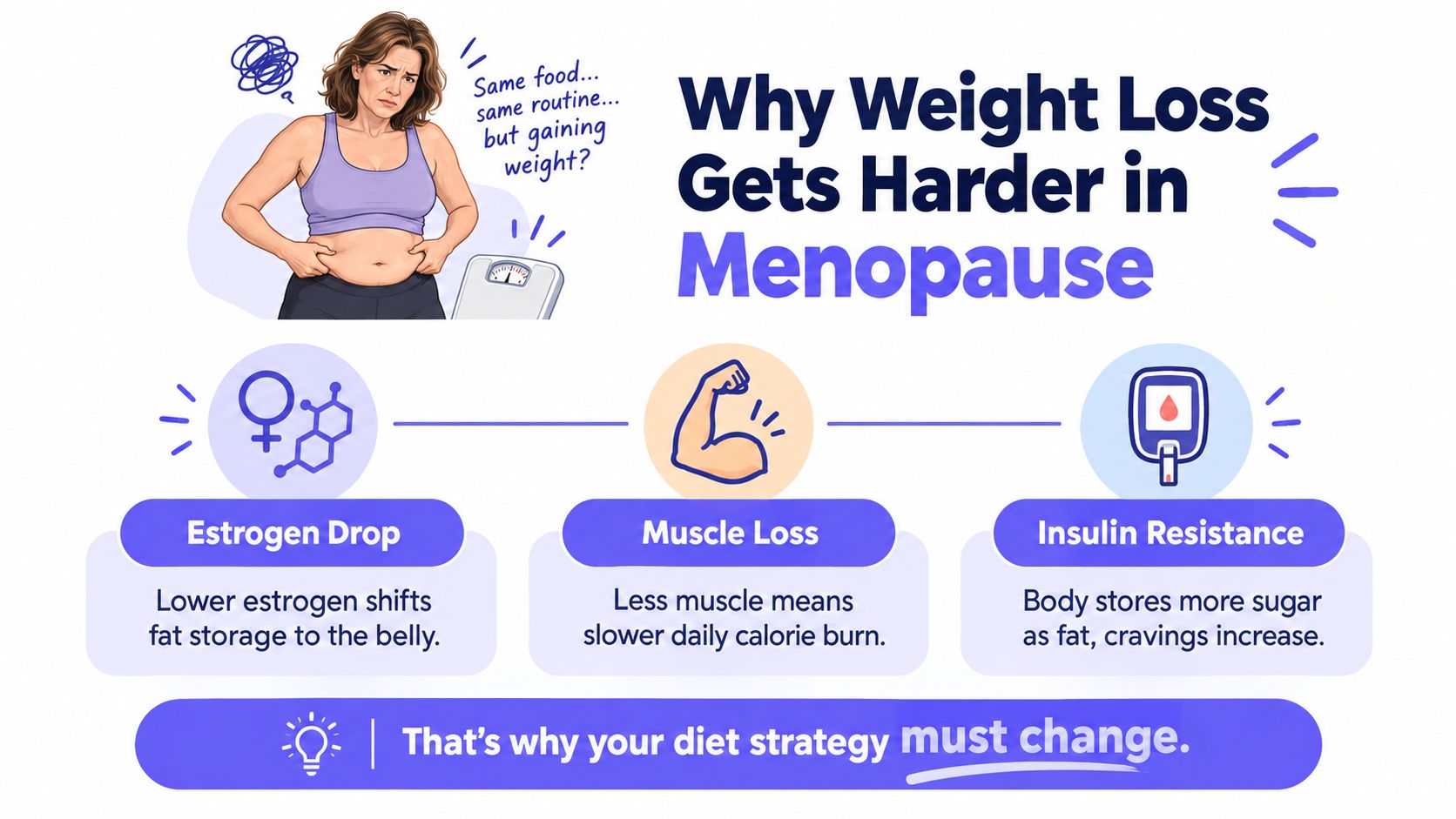
The woman who tells me, “I'm doing everything I used to do, and it stopped working,” usually isn't imagining it. The menopause transition can alter where the body stores fat, how much muscle it carries, and how it handles carbohydrate-rich meals. A major menopause evidence review describes weight gain as one of the most common effects of perimenopause and menopause, affecting at least 50% of women, with much of the change accumulating around the abdomen and upper body (British Menopause Society review).
Estrogen changes the storage pattern
As estrogen declines, fat storage tends to shift away from the hips and thighs and toward the waist. That doesn't mean every increase around your middle is visceral fat, but it does mean waist measurement matters more than obsessing over the number on the scale. Central fat has a closer relationship with cardiometabolic risk than total weight alone, according to the same menopause nutrition review.
Your diet consequence is straightforward: stop treating every calorie as interchangeable. Build meals around protein, vegetables, pulses, whole grains, and unsaturated fats, then reduce the refined foods that are easy to overeat and provide little staying power.
Muscle loss changes daily energy needs
Muscle is metabolically active tissue. When you lose it, your body generally requires less energy across the day, even if your routine looks unchanged. The response isn't to slash food aggressively. It's to give muscle a reason to stay, through resistance training, while distributing adequate protein across meals.
That's why “eat less, move more” is incomplete advice here. Eating less without sufficient protein or strength work can make the weight-loss process less favorable for lean tissue.
Blood sugar can become harder to manage
Some women find that the same cereal, toast, pastry, or sweet coffee that once felt harmless now produces a longer cycle of hunger and cravings. In practical terms, cells can become less responsive to insulin, which makes refined carbohydrate-heavy meals a poor foundation for appetite control.
The dietary adjustment isn't “never eat carbohydrates.” It's choose carbohydrates with fiber, pair them with protein and fat, and keep portions deliberate. A bowl of lentils with salmon and vegetables is a different metabolic and appetite experience from a large serving of refined starch eaten alone.
Practical rule: Preserve muscle first, control refined carbohydrates second, and create a moderate calorie deficit third.
If weight gain comes with complex symptoms, medication changes, or a history of metabolic disease, individualized guidance is sensible. Women looking for functional weight loss help can use a clinician-led assessment rather than guessing whether thyroid, glucose, medication, or menopause symptoms are affecting progress.
The Best Diet Patterns Ranked for Menopause
Not all “healthy” diets are equally precise for midlife weight control. The strongest recent comparison comes from a large Nurses' Health Study II analysis of 38,283 women, where the Planetary Health Diet and a low-insulinemic diet were associated with the lowest weight gain and obesity risk, particularly compared with patterns higher in red and processed meat, sodium, potatoes, and French fries (Harvard T.H. Chan School of Public Health summary).
Here's how I rank the practical options.
| Diet Pattern | Insulin Impact | Muscle Support | Ease for Midlife | Overall Rank |
|---|---|---|---|---|
| Low-insulinemic | Strong, emphasizes lower-insulinemic foods and high fiber | Good when protein is included deliberately | Moderate, requires learning food combinations | 1 |
| Planetary Health | Strong, plant-forward and lower in heavily processed foods | Good, but protein needs planning | Moderate to good | 2 |
| Mediterranean, low-glycemic hybrid | Good, especially with pulses, vegetables, and whole grains | Good | High, familiar and flexible | 3 |
| Standard low-calorie | Variable, depends on food quality | Weak unless protein and lifting are protected | Initially easy, often difficult to sustain | 4 |
Why low-insulinemic wins
A low-insulinemic pattern makes the most useful change: it organizes meals around foods less likely to create a sharp insulin demand, while emphasizing fiber and minimally processed carbohydrates. Think beans, lentils, vegetables, nuts, seeds, berries, whole grains, fish, eggs, tofu, and plain dairy. It doesn't require eliminating carbs, and it gives you a clearer rule than the vague instruction to “eat clean.”
The trade-off is education. You'll need to recognize that a high-fiber carbohydrate paired with protein is usually a better choice than a refined starch eaten by itself.
Why Planetary Health is a close second
The Planetary Health Diet is plant-forward, with legumes, nuts, fruits, vegetables, and whole grains forming the foundation. It performed strongly in the Nurses' Health Study II analysis, but women who eat little or no animal food need to plan protein carefully to support muscle.
Where Mediterranean fits
Mediterranean-style eating remains an excellent practical framework. Olive oil, fish, pulses, vegetables, fruit, nuts, and whole grains are easy to build into normal meals. My preferred approach is a Mediterranean-plus-low-glycemic hybrid, especially for women who want flexibility without losing structure.
Standard calorie cutting ranks last because calories still matter, but a calorie target alone doesn't tell you how to control hunger, preserve lean tissue, or improve meal quality. The winner is therefore a low-insulinemic, plant-forward pattern with Mediterranean foods and deliberate protein.
Macros, Portions, and Daily Targets
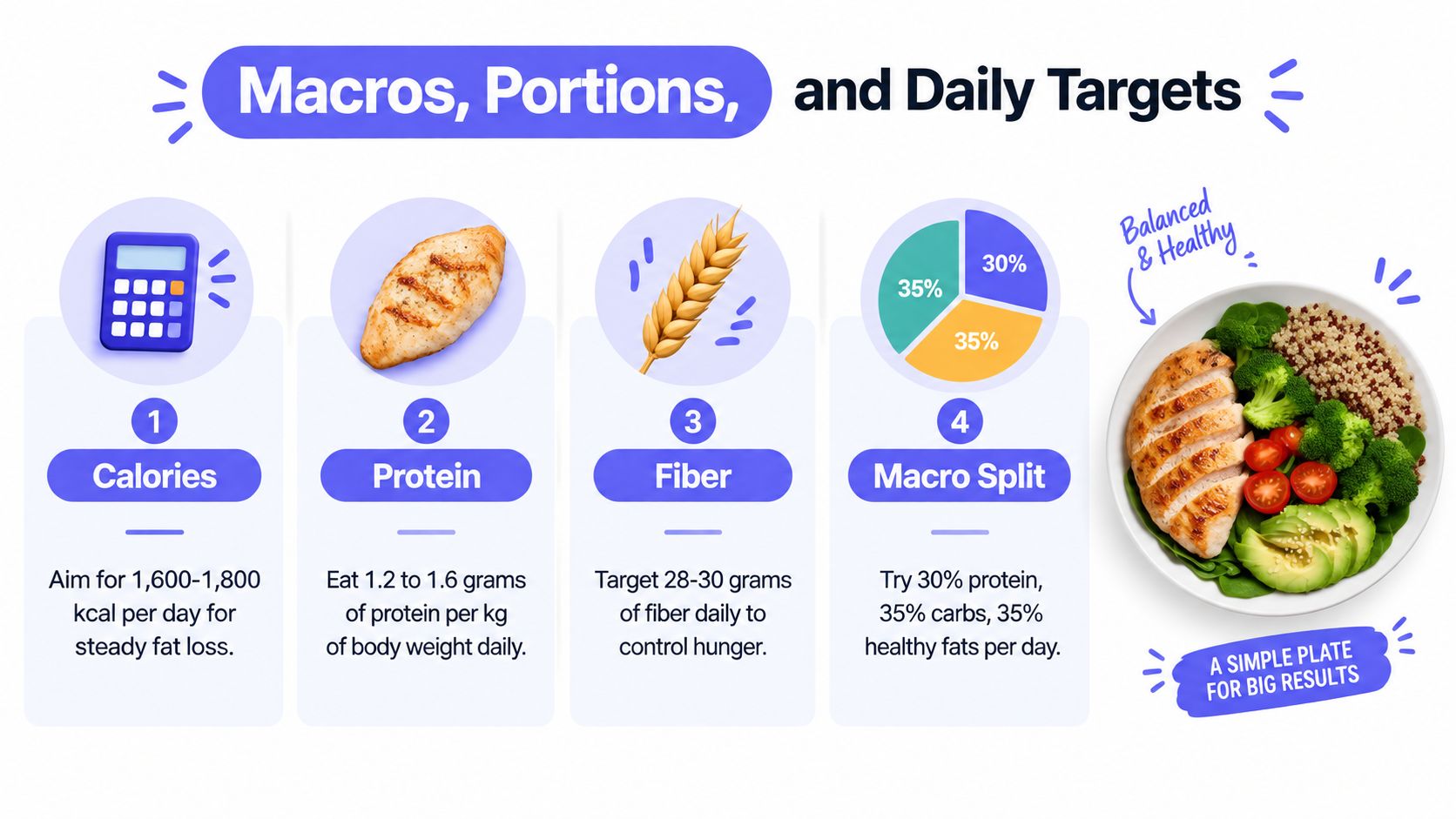
Start with a target you can repeat, not the lowest number you can tolerate. A practical starting range is 1,600 to 1,900 calories per day, adjusted for body size, activity, medical history, and response. A peer-reviewed menopause weight-management review describes a 500 to 750 kcal daily deficit from current intake, with a clinical intake floor often cited around 1,000 to 1,200 kcal per day, depending on the individual (peer-reviewed menopause weight-management review).
Don't use that floor as a personal target. It's a clinical reference, not an invitation to crash diet.
Set protein before you set perfection
Aim for 1.2 to 1.6 grams of protein per kilogram of body weight per day. For a woman weighing 160 pounds, that works out to approximately 90 to 115 grams daily. Divide it across breakfast, lunch, and dinner rather than saving most of it for the evening.
A simple meal target is 25 to 30 grams of protein at each main meal. Greek yogurt, eggs, cottage cheese, fish, chicken, turkey, tofu, tempeh, lentils, and beans can all contribute.
Fiber should reach 25 to 30 grams daily, with vegetables, berries, pulses, nuts, seeds, oats, and whole grains doing most of the work. Keep added sugar below 25 grams daily when possible, particularly if sweet foods trigger more eating.
Use a plate or your hands
A sample split is 30% protein, 35% carbohydrates, and 35% fat, but you don't need to calculate every meal forever. Use these visual portions:
- Protein: One palm-sized serving at meals.
- Vegetables: One fist or more, prioritizing variety and color.
- High-fiber starch: One cupped hand of beans, lentils, oats, quinoa, or whole grains.
- Fat: About two thumb-sized portions of olive oil, avocado, nuts, or seeds.
Calcium-rich foods, vitamin D sources, and omega-3 fats deserve attention during menopause. Include foods such as yogurt or fortified alternatives, leafy greens, salmon, sardines, walnuts, chia, and flax according to your preferences and clinical needs.
For a personal starting point, use the menopause calorie calculator, then review your weekly weight trend and waist measurement. If both remain unchanged after consistent tracking, reduce portions modestly or increase activity. If energy, sleep, or training quality deteriorates, your intake is probably too aggressive.
▶ PlayA Realistic 3-Day Menopause Meal Plan
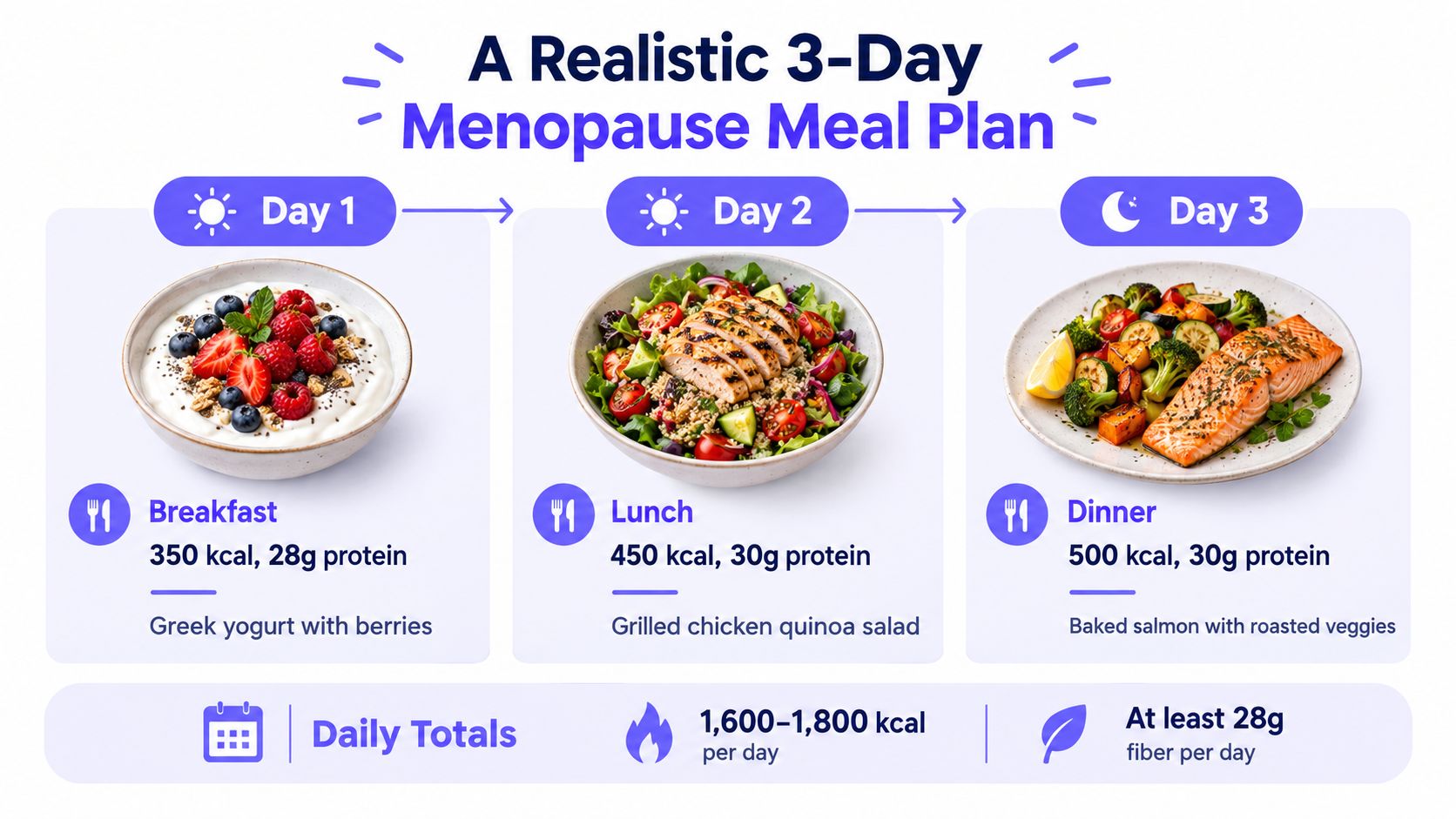
Use this as a template, not a rigid prescription. Each day is built around a protein source, high-fiber carbohydrates, vegetables, and a measured fat source. Portions should move up or down according to your calorie target, hunger, activity, and clinical needs.
Day 1
Breakfast: Plain Greek yogurt with berries, chia seeds, and walnuts. Add oats if you need more carbohydrate for training or morning activity.
Lunch: Salmon and lentil salad with leafy greens, cucumber, tomatoes, lemon, and olive oil. Use a palm-sized salmon portion and a cupped hand of lentils.
Dinner: Turkey lettuce wraps with black beans, peppers, onions, salsa, and avocado. Add a small serving of brown rice if hunger remains high.
Snack: Apple with cottage cheese or a small portion of nuts.
The quick recipe is sheet-pan salmon. Place salmon, broccoli, peppers, and sliced red onion on a tray, season with lemon, garlic, and olive oil, then roast until the fish flakes. It's fast enough for a weeknight and stores well for lunch.
Day 2
Breakfast: Overnight oats with Greek yogurt, chia seeds, berries, and cinnamon. Prepare the jar the night before so breakfast doesn't depend on morning energy.
Lunch: Grilled chicken and quinoa salad with chickpeas, greens, cucumber, tomatoes, and a yogurt-lemon dressing.
Dinner: Tofu or chicken stir-fry with frozen vegetables and a cupped hand of brown rice or edamame.
Snack: Carrots and hummus, paired with a boiled egg if you need more protein.
Make the chicken in a slow cooker or pressure cooker with tomatoes, peppers, onions, and spices. Shred it for wraps, salads, or bowls throughout the week.
Day 3
Breakfast: Eggs with spinach and mushrooms, one slice of whole-grain toast, and fruit.
Lunch: Chickpea and vegetable bowl with feta, greens, quinoa, and olive oil.
Dinner: Baked salmon or another fish with roasted vegetables and lentils.
Snack: Plain yogurt with pumpkin seeds.
For a busy week, rely on pre-chopped vegetables, frozen riced cauliflower, canned beans, microwaveable whole grains, and rotisserie chicken. These shortcuts aren't a failure of discipline. They're how you prevent afternoon fatigue from turning into takeout.
For more menu combinations, use this menopause meal plan for weight loss as a practical source of ideas.
Exercise and Sleep That Protect Muscle
Diet creates the conditions for fat loss. Strength training tells your body to keep muscle. During a calorie deficit, that signal matters more than adding endless cardio.
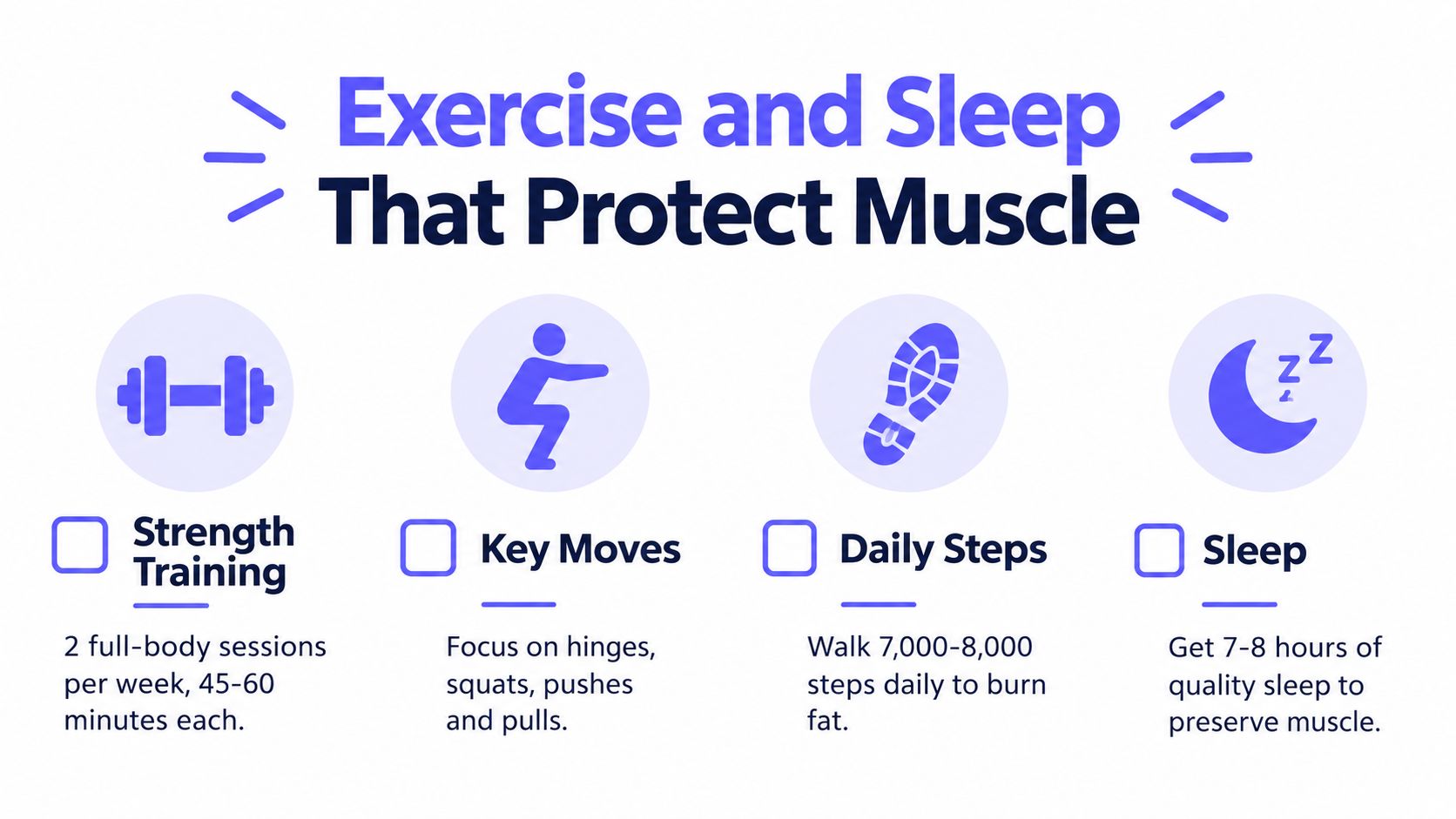
Begin with two full-body strength sessions per week, each lasting 45 to 60 minutes. Build the sessions around a hinge, squat, push, pull, and carry. Examples include Romanian deadlifts, goblet squats, chest presses, rows, and farmer carries. Choose loads that make the final repetitions challenging while preserving good technique.
A workable weekly rhythm
| Day | Training |
|---|---|
| Monday | Full-body strength |
| Tuesday | Zone-2 walk or cycle |
| Wednesday | Easy movement or rest |
| Thursday | Full-body strength |
| Friday | Zone-2 walk or cycle |
| Weekend | Longer easy walk and recovery |
Aim for 120 to 150 minutes of zone-2 walking or cycling per week. A walk after dinner can help you move after a carbohydrate-containing meal without adding much recovery stress. Walking before breakfast is also fine if you feel steady and it doesn't cause dizziness or rebound hunger.
Progression matters. Add a little load, an additional repetition, or better control when the current workload becomes comfortable. The strength training guide for perimenopause can help you organize the basics without turning exercise into punishment.
Sleep is part of the plan
Target 7 to 9 hours of sleep where possible. Stop screens 30 minutes before bed, keep the bedroom cool at around 18 degrees Celsius, and don't use alcohol as a sleep strategy. It may make you drowsy, but it can fragment later sleep and worsen the night's recovery.
If waking during the night is the main issue, review these maintenance insomnia fixes. Protein and walking anchor the diet. Strength and sleep anchor the metabolism.
What to Track and How to Stay Consistent
The scale is useful, but it's noisy during menopause. Hormonal fluid shifts can obscure fat loss, so one morning's result shouldn't dictate your behavior. Measure your waist at the navel under consistent conditions, then judge the trend rather than reacting to a single reading.
Track the behaviors that create the result. Your weekly review should take only a few minutes.
| Metric | Frequency | Target | Why It Matters |
|---|---|---|---|
| Morning body weight trend | Weekly review | Consistent trend, not one reading | Separates progress from fluid noise |
| Waist circumference | Weekly or monthly | Downward trend over time | Gives a useful view of abdominal change |
| Protein intake | Daily, reviewed weekly | Within your chosen protein range | Supports lean-mass retention |
| Strength sessions | Weekly | Complete planned sessions | Provides the muscle-preservation signal |
| Steps or zone-2 minutes | Weekly | Consistent movement | Supports activity without excessive fatigue |
| Sleep duration | Daily, reviewed weekly | Regular adequate sleep | Helps identify recovery barriers |
| Progress photos | Monthly | Same lighting and clothing | Shows changes the scale can miss |
| One lift performance | Monthly | Maintain or gradually improve | Offers a practical muscle-retention check |
Make the dashboard boring
Don't juggle four separate tools if that guarantees you'll stop tracking. Use one place for food logging, waist measurements, workouts, symptoms, and sleep, then review a single weekly summary.
A plateau deserves investigation, not panic. If waist measurements, weight trend, protein intake, training, and sleep all remain unchanged, review portions and activity with a clinician or qualified coach. If your waist is changing and strength is stable, don't sabotage the plan because the scale is temporarily stubborn.
Your 4-Week Starter Plan and When to Get Help
Use the first month to build the system gradually. Trying to overhaul food, exercise, sleep, and tracking on the same Monday usually creates enthusiasm followed by exhaustion.
Week 1
Record your usual meals, morning weight trend, waist measurement, sleep, and current training. Make protein-first swaps at breakfast and lunch. Replace refined snack foods with yogurt, eggs, fruit and nuts, hummus, or cottage cheese.
Week 2
Adopt the low-insulinemic, Mediterranean-style foundation ranked highest earlier. Put vegetables and pulses into daily meals, choose whole grains more often, and work toward your fiber target. Batch-cook one protein, one high-fiber carbohydrate, and a tray of vegetables.
Week 3
Add two full-body strength sessions and regular zone-2 walking. The plan notes sometimes describe three strength days, but two consistent sessions are the evidence-aligned starting point for women rebuilding the habit. Add a third only if recovery, sleep, and joint comfort support it.
Week 4
Review your waist trend, weight trend, protein consistency, completed workouts, movement, and sleep. Tighten portions only if adherence has been strong and progress has stalled. Don't cut calories because one weigh-in moved upward.
Get medical guidance for chest pain, unexplained weight gain of more than five pounds in a week, severe hot flashes that disrupt sleep, persistent bloating, blood sugar readings above 200 mg/dL, or a history of eating disorder. A cardiovascular, thyroid, or cancer diagnosis also warrants clinician involvement before making major diet or exercise changes.
Medication matters. Hormone replacement therapy, GLP-1 medications, and other prescriptions can affect appetite, weight, glucose, and nutritional needs, so don't adjust them based on an app or article. Use your tracking record to give your clinician a clearer picture of what's happening.
Lila gives you a daily check-in for meals, protein, workouts, symptoms, sleep, and energy, with a chat-based coach to help troubleshoot the plan as your menopause symptoms change. Visit Lila to log the first week, identify where your routine breaks down, and build a more personalized menopause diet for weight loss.
Get Lila, your personal coach for perimenopause.
Built for women in their 40s. 24/7 coaching, in your pocket.