
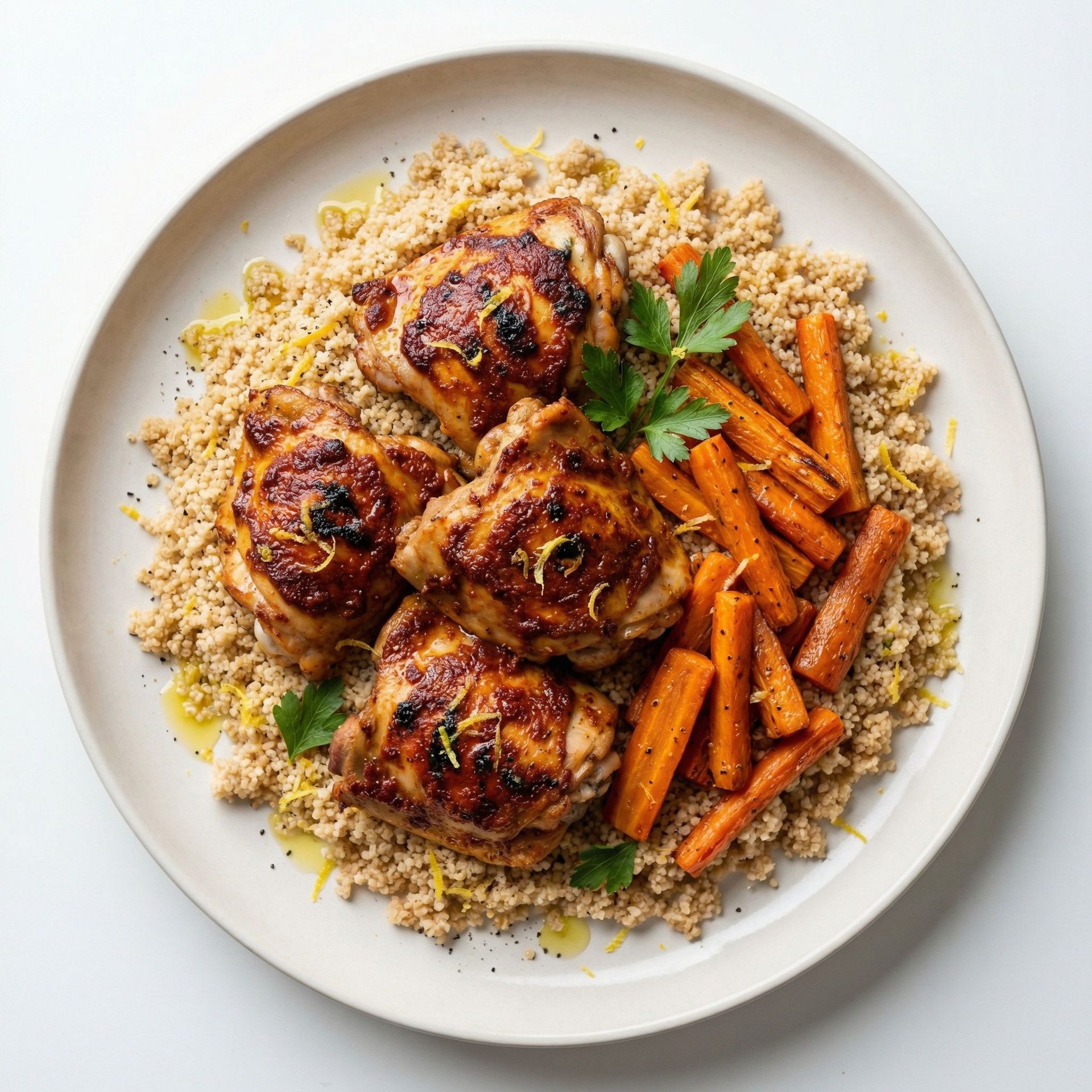
Harissa Roasted Chicken With Carrots And Couscous
Tender, spiced chicken thighs roasted alongside sweet carrots and served over fluffy whole wheat couscous. A warming, satisfying one-pan dinner that comes together with minimal effort.
Prep
10 min
Cook
25 min
Total
35 min
Makes
2 servings
The feel-good payoff
Why this meal can feel especially good in perimenopause
Think practical wins: steadier energy, comfortable fullness and one less food decision. Your response is personal, so use the prompts below to notice what works for you.
Perimenopause symptoms and relief · Office on Women’s HealthSteadier energy
Feel fueled, not flattened
A complete meal with protein, carbohydrates and fats is designed to offer more staying power than a quick carb-only fix.
Notice: energy 1–3 hours later
Comfortably satisfied
Fullness that has staying power
This meal is designed to feel substantial, so finishing it can feel like the meal is complete rather than the start of an evening of grazing.
Notice: fullness 2–3 hours later
A steadier afternoon
Give your day a solid food foundation
Being properly fed cannot solve a hard day, but a substantial meal can remove hunger and an energy dip from the list of things you are juggling.
Notice: mood + energy later
More staying power
Make the next few hours easier
This meal is built to be more sustaining than a snack-sized stopgap, with enough substance to carry you into the next part of the day.
Notice: energy + fullness later
Setup
Get set up
Choose your servings, gather what you need, then cook along below.
Prep
10 min
Cook
25 min
Total
35 min
How many are you cooking for?
The ingredient amounts update automatically.
Equipment
Oven · Sheet pan · Saucepan · Knife and cutting board
Time saver
To save time on busy weeknights, you can mix the chicken and harissa in a container the night before and let it marinate in the fridge.
Do these three things first
- 1Preheat your oven to 400°F.
- 2Set out all ingredients before cooking
- 3Measure the pantry ingredients before heating the pan
Ingredients
Gather as you go
Ingredients
From Your Pantry
Cook along
Instructions
0 of 7 steps complete
Next: Preheat your oven to 400°F
- 01
Preheat your oven to 400°F
Preheat your oven to 400°F.
Tap card to mark done - 02
Peel the carrots and cut them into…
Peel the carrots and cut them into 2-inch sticks. Place them on one side of a baking sheet, drizzle with half the olive oil, and season with a pinch of salt and black pepper. Toss to coat.
Tap card to mark done - 03
Place the chicken thighs on the other…
Place the chicken thighs on the other side of the baking sheet. Rub the harissa paste evenly over the chicken, seasoning lightly with salt.
Tap card to mark done - 04
Roast for 20 to 25 minutes
Roast for 20 to 25 minutes, or until the carrots are tender and the chicken reaches an internal temperature of 165°F.
Look for: the carrots are tender and the chicken reaches an internal temperature of 165°F
Tap card to mark done - 05
Bring the water to a boil in…
While the chicken roasts, bring the water to a boil in a small saucepan. Stir in the whole wheat couscous and a pinch of salt. Cover the pot, remove from the heat, and let it sit for 5 minutes.
Allow: 5 minutes
Tap card to mark done - 06
Fluff the couscous with a fork
Fluff the couscous with a fork, stirring in the remaining olive oil, the zest from half the lemon, and half of the lemon juice.
Tap card to mark done - 07
Divide the couscous
Divide the couscous, roasted carrots, and harissa chicken between two plates. Squeeze the remaining lemon juice over the chicken right before serving.
Ready when: everything is assembled and ready to enjoy
Tap card to mark done
Made this recipe?
Leave a quick rating or a cooking tip for the next woman.
Your symptoms change. Your plan should too.
One good meal is a start. Your whole week is better.
Tell Lila what you like, what you avoid and which symptoms are loud today. She’ll turn that context into meals, targets and small adjustments that fit real life.