
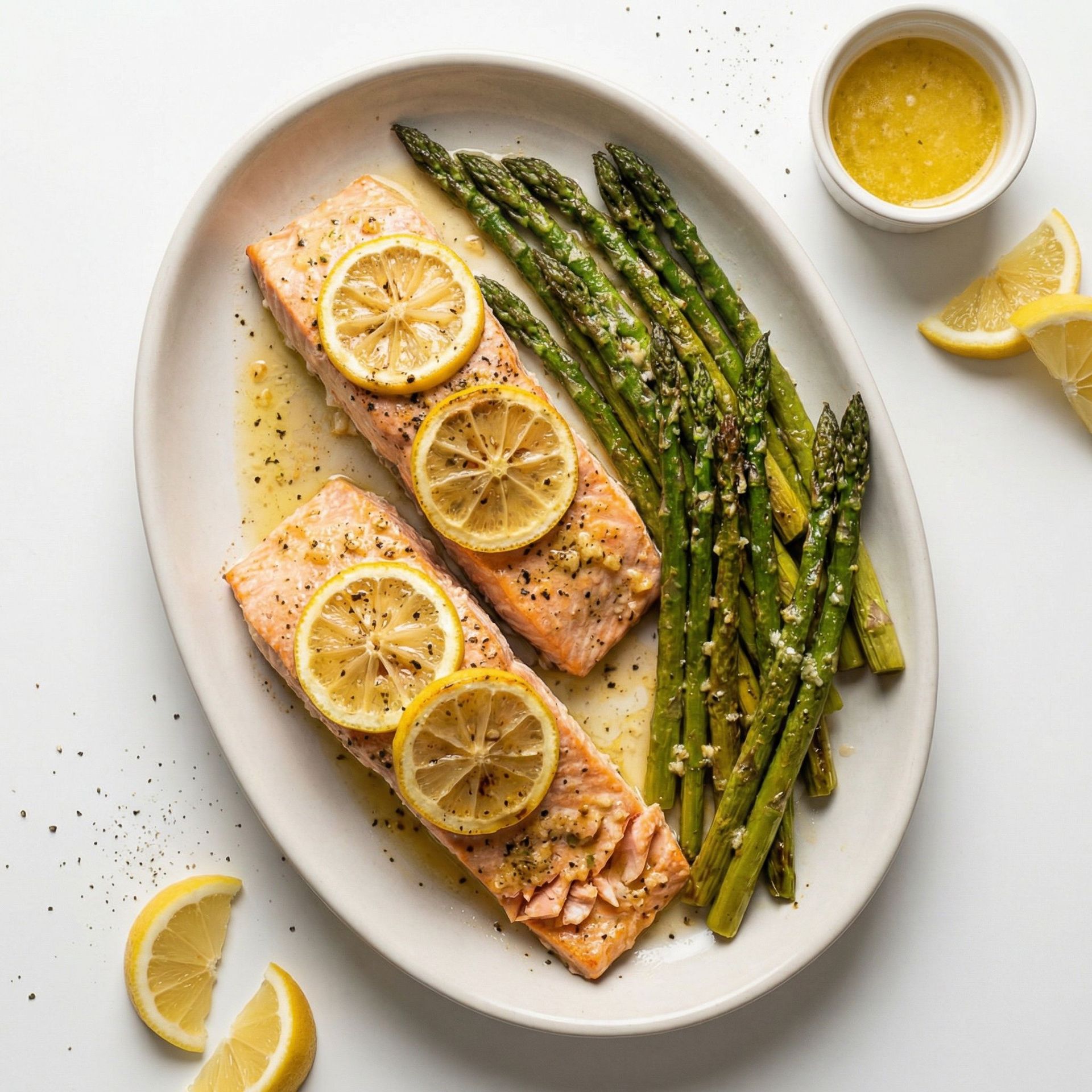
Baked Lemon Butter Salmon With Roasted Asparagus
A nourishing, low-carb dinner featuring flaky salmon and tender-crisp asparagus. Bright lemon and rich butter bring out the best in these simple, wholesome ingredients.
Prep
10 min
Cook
15 min
Total
25 min
Makes
2 servings
The feel-good payoff
Why this meal can feel especially good in perimenopause
Think practical wins: steadier energy, comfortable fullness and one less food decision. Your response is personal, so use the prompts below to notice what works for you.
Perimenopause symptoms and relief · Office on Women’s HealthTrigger-aware comfort
Make the meal work for today
Keep spicy extras on the side and adjust the temperature or portion to suit you. The best version is the one you can enjoy comfortably.
Notice: comfort + personal triggers
Everyday strength
Support the basics consistently
A nourishing meal supports the protein, energy and overall nutrition that help you keep showing up for daily movement.
Notice: energy for movement
Evening comfort
Head toward bedtime properly fed
A satisfying evening meal can make the night feel simpler. Notice whether the portion and timing fit comfortably into your sleep routine.
Notice: timing + overnight comfort
Comfortably satisfied
Fullness that has staying power
This meal is designed to feel substantial, so finishing it can feel like the meal is complete rather than the start of an evening of grazing.
Notice: fullness 2–3 hours later
Setup
Get set up
Choose your servings, gather what you need, then cook along below.
Prep
10 min
Cook
15 min
Total
25 min
How many are you cooking for?
The ingredient amounts update automatically.
Equipment
Oven · Large skillet · Sheet pan · Mixing bowl · Knife and cutting board
Time saver
Storage: Store leftovers in an airtight container in the fridge for up to 2 days. Reheat gently in a skillet or low oven to avoid rubbery fish.
Do these three things first
- 1Preheat your oven to 400°F.
- 2Set out all ingredients before cooking
- 3Measure the pantry ingredients before heating the pan
Ingredients
Gather as you go
For the Salmon and Asparagus
For the Lemon Butter Sauce
From Your Pantry
Cook along
Instructions
0 of 7 steps complete
Next: Preheat your oven to 400°F
- 01
Preheat your oven to 400°F
Preheat your oven to 400°F.
Tap card to mark done - 02
Place the trimmed asparagus on one side…
Place the trimmed asparagus on one side of a rimmed baking sheet. Drizzle with olive oil, and season generously with salt and black pepper. Toss to coat evenly.
Tap card to mark done - 03
Place the salmon fillets on the empty…
Place the salmon fillets on the empty side of the baking sheet. Pat them completely dry with a paper towel, then season with salt and black pepper.
Tap card to mark done - 04
Cut the lemon in half
Cut the lemon in half. Slice one half into thin rounds and lay them directly on top of the salmon fillets.
Ready when: everything is assembled and ready to enjoy
Tap card to mark done - 05
Melt the butter in a small bowl
Melt the butter in a small bowl. Squeeze the juice from the remaining lemon half into the butter, add garlic powder, and stir. Drizzle half of this lemon-butter mixture over the salmon.
Tap card to mark done - 06
Bake for 12 to 15 minutes
Bake for 12 to 15 minutes, depending on the thickness of the fish, until the salmon flakes easily with a fork and the asparagus is tender-crisp.
Look for: the salmon flakes easily with a fork and the asparagus is tender-crisp
Tap card to mark done - 07
Drizzle the remaining lemon butter over the…
Drizzle the remaining lemon butter over the roasted asparagus right before serving.
Tap card to mark done
Made this recipe?
Leave a quick rating or a cooking tip for the next woman.
Your symptoms change. Your plan should too.
One good meal is a start. Your whole week is better.
Tell Lila what you like, what you avoid and which symptoms are loud today. She’ll turn that context into meals, targets and small adjustments that fit real life.