
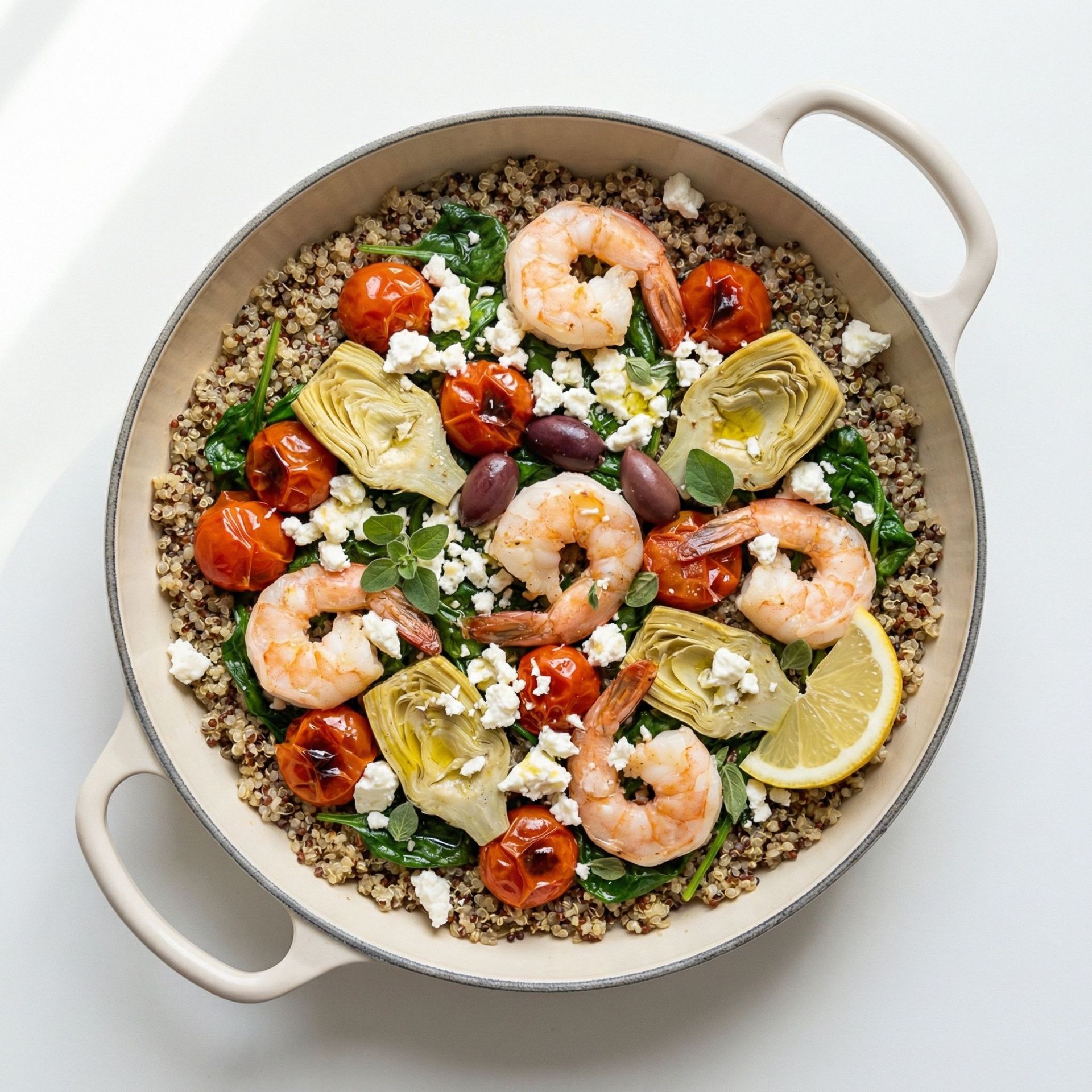
Mediterranean Shrimp and Artichoke Skillet
A vibrant, Mediterranean-inspired skillet featuring tender shrimp and heart-healthy artichokes over quinoa. Perfect for a quick, nutrient-dense weeknight dinner.
Prep
15 min
Cook
15 min
Total
30 min
Makes
2 servings
The feel-good payoff
Why this meal can feel especially good in perimenopause
Think practical wins: steadier energy, comfortable fullness and one less food decision. Your response is personal, so use the prompts below to notice what works for you.
Perimenopause symptoms and relief · Office on Women’s HealthSteadier energy
Feel fueled, not flattened
A complete meal with protein, carbohydrates and fats is designed to offer more staying power than a quick carb-only fix.
Notice: energy 1–3 hours later
Digestive comfort
A portion that works for you
Fiber and plants can support digestion, but more is not always better overnight. Start with a comfortable portion and build gradually.
Notice: comfort + portion
More staying power
Make the next few hours easier
This meal is built to be more sustaining than a snack-sized stopgap, with enough substance to carry you into the next part of the day.
Notice: energy + fullness later
Clearer, simpler choices
Let the recipe do the thinking
Clear steps and a complete plate mean fewer decisions when focus is in short supply—and a more substantial meal once you are done.
Notice: focus + energy later
Setup
Get set up
Choose your servings, gather what you need, then cook along below.
Prep
15 min
Cook
15 min
Total
30 min
How many are you cooking for?
The ingredient amounts update automatically.
Equipment
Large skillet · Knife and cutting board
Time saver
Leftovers: Store the shrimp and vegetables separately from the quinoa in an airtight container in the fridge for up to 2 days. Reheat very gently on the stovetop to prevent the shrimp from becoming rubbery.
Do these three things first
- 1Prep artichoke hearts in water (drained), cloves garlic (minced)
- 2Cook or warm any pre-cooked grain before assembly
- 3Set out all ingredients before cooking
Ingredients
Gather as you go
Ingredients
From Your Pantry
Cook along
Instructions
0 of 5 steps complete
Next: Heat 1 tablespoon of olive oil in…
- 01
Heat 1 tablespoon of olive oil in…
Heat 1 tablespoon of olive oil in a large skillet over medium-high heat. Add the shrimp, season lightly with salt, black pepper, and a pinch of dried oregano, and cook for 2 to 3 minutes per side until opaque. Transfer the shrimp to a plate and set aside.
Look for: opaque
Tap card to mark done - 02
Add a drizzle more olive oil if…
In the same skillet, add a drizzle more olive oil if needed, along with the minced garlic and halved cherry tomatoes. Sauté for 3 to 4 minutes until the tomatoes begin to soften and release their juices.
Look for: the tomatoes begin to soften and release their juices
Tap card to mark done - 03
Stir in the halved artichoke hearts and…
Stir in the halved artichoke hearts and cook for another 2 minutes to warm through.
Allow: 2 minutes
Tap card to mark done - 04
Lower the heat and fold in the…
Lower the heat and fold in the fresh baby spinach, cooking for 1 to 2 minutes just until wilted. Return the cooked shrimp to the skillet and stir to combine the flavors.
Look for: wilted
Tap card to mark done - 05
Squeeze the wedge of fresh lemon juice…
Squeeze the wedge of fresh lemon juice over the skillet for brightness. Divide the cooked quinoa between two plates, top with the warm shrimp and vegetable mixture, and finish with crumbled feta cheese.
Ready when: everything is assembled and ready to enjoy
Tap card to mark done
Made this recipe?
Leave a quick rating or a cooking tip for the next woman.
Your symptoms change. Your plan should too.
One good meal is a start. Your whole week is better.
Tell Lila what you like, what you avoid and which symptoms are loud today. She’ll turn that context into meals, targets and small adjustments that fit real life.