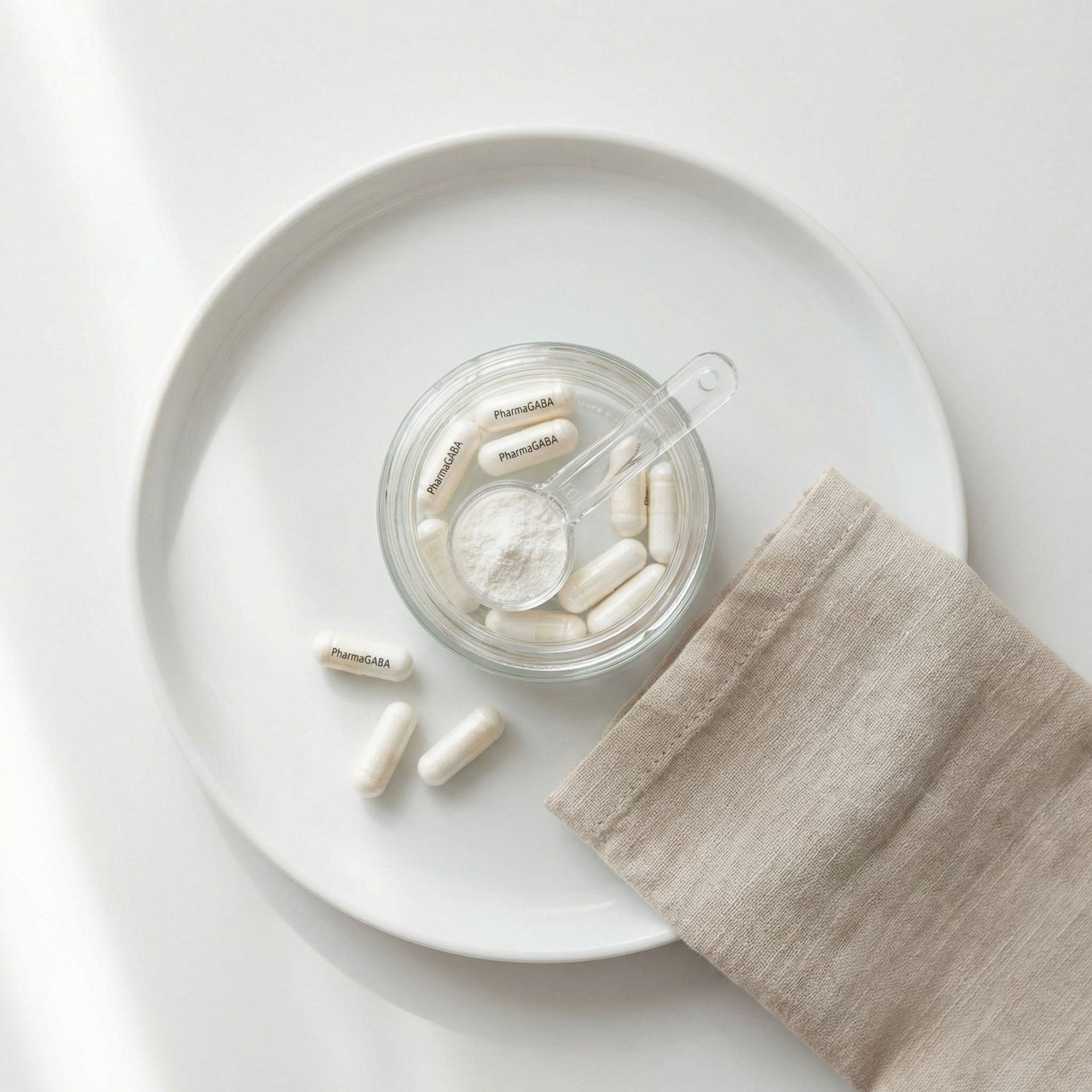
GABA (Gamma-Aminobutyric Acid)
This type of supplement is often marketed for calm, sleep or mood
Perimenopause symptoms
What might it help with?
Anxiety
Some ingredients in this group have early calming data, but results are inconsistent and they are not established anxiety treatments.
Sleep Problems
Small studies suggest a possible sleep benefit for some of these ingredients, but the result depends on the exact product and is not specific to perimenopause.
Plain English
Think of it like this
Think of it as supplying one possible building block—not pressing a sleep button. The body still decides how much reaches the brain and what happens next.
A quick safety check
Possible side effects: Drowsiness, dizziness, headache or stomach upset.
Before using it: Do not combine GABA with alcohol, prescription sleep medications, or heavy sedatives, as this can compound drowsiness; Antidepressants, sedatives, seizure medicines or alcohol.
More safety details
- Driving or any activity where drowsiness would be unsafe
Educational only—not medical advice or a personal dose recommendation. Supplements can interact with medicines, health conditions, lab tests and surgery. Check a new product with a clinician or pharmacist who knows your history.
Your symptoms change. Your plan should too.
See whether it actually helps you.
Track the symptom you care about with Lila, so a change becomes easier to notice—and easier to explain to your clinician.
 Free to download