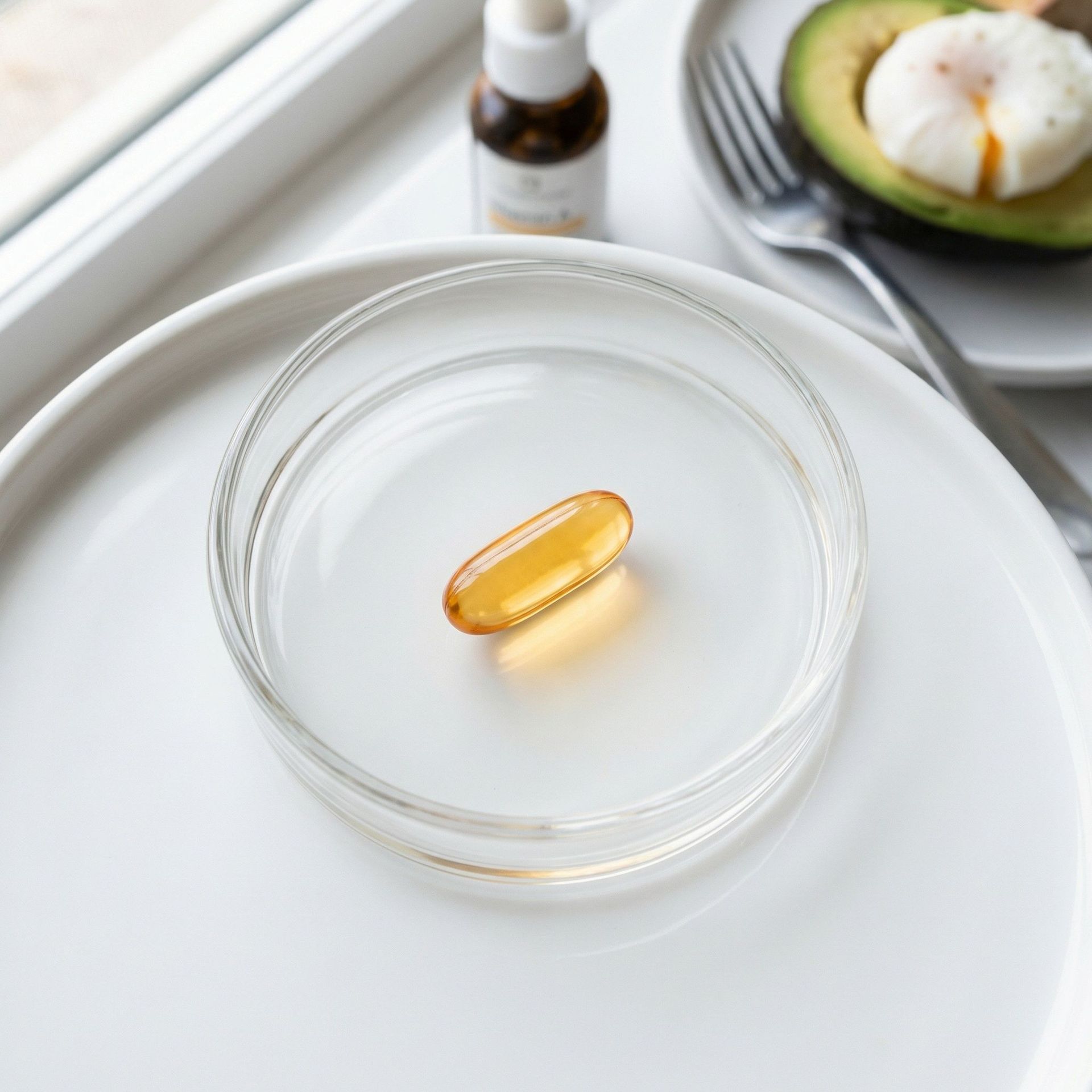
Vitamin A (Retinyl Palmitate)
Vitamin A supports vision, immunity and normal cell growth
Perimenopause symptoms
What might it help with?
No clear symptom benefit yet
Current research has not established a reliable benefit for the perimenopause symptoms linked to this guide. That does not erase its basic nutritional role—but it is a good reason not to buy it expecting symptom relief.
Plain English
Think of it like this
Vitamin A helps cells grow and specialize. That broad role is why the body needs some—and why piling on more is not automatically better.
A quick safety check
Possible side effects: Headache, nausea or dizziness; Liver and bone harm with chronic excess.
Before using it: Avoid taking oral Vitamin A if you are currently using prescription oral retinoids (like isotretinoin) unless directed by your doctor. Form & Sourcing Tips; Pregnancy or the possibility of pregnancy.
More safety details
- Liver disease, oral retinoids and vitamin A already present in other products
Educational only—not medical advice or a personal dose recommendation. Supplements can interact with medicines, health conditions, lab tests and surgery. Check a new product with a clinician or pharmacist who knows your history.
Your symptoms change. Your plan should too.
See whether it actually helps you.
Track the symptom you care about with Lila, so a change becomes easier to notice—and easier to explain to your clinician.
 Free to download