
Can Your Period Cycle Change and When It Matters
Can your period cycle change? Learn the common causes, what is normal vs concerning, how to track shifts, and when to talk to a clinician.
You're in your mid-40s, and your period has stopped behaving like the dependable calendar event it used to be. One month it arrives four days early. The next, it's ten days late. Then the bleeding lasts longer than usual, or you notice spotting that wasn't part of your old pattern. The natural question is simple: can your period cycle change, and how do you know whether the change is expected or needs attention?
Yes, it can. Cycle timing, bleeding amount, and the gap between periods may all shift, especially during perimenopause. But “common” doesn't mean every change should be dismissed. The useful skill is learning to separate a one-off variation from a developing pattern and a warning sign.
Table of Contents
- Why Your Cycle Might Be Different Than It Used to Be
- What a Normal Cycle Actually Looks Like
- The Main Reasons Cycles Change
- A Missed Period Is Not Always Menopause
- How to Track Cycle Changes So Patterns Become Visible
- When a Cycle Change Needs Medical Attention
- Reading Your Cycle as a Window Into Perimenopause
Why Your Cycle Might Be Different Than It Used to Be
For Maya, a woman in her 40s, the first change seemed harmless. Her period arrived earlier than expected, then returned later the following month. A few cycles afterward, the bleeding was heavier and lasted longer. She wondered whether this was just stress, the start of perimenopause, or something she should ask a clinician about.
That uncertainty is familiar. A period can change because ovulation has become less predictable, because stress or weight changes have affected hormonal signals, because contraception has altered bleeding, or because a condition such as a thyroid disorder or PCOS needs evaluation. Pregnancy can also cause a late or missed period, even when cycles have become irregular.
The key question isn't whether one period differs from the last. It's whether your usual pattern is changing repeatedly, and whether the bleeding itself looks unusual for you.
Practical rule: A changed cycle deserves attention before it deserves a label.
Perimenopause is one of the most common explanations for new irregularity in the 40s, but it isn't the only explanation. Early in the transition, periods may come closer together or farther apart. Later, gaps may become longer and skipped periods more common. Some people notice hot flashes, disrupted sleep, mood changes, or fatigue at the same time, while others notice menstrual changes first.
If your cycles are getting longer, learn more about what that pattern can mean. Tracking can help you describe the change clearly instead of relying on memory. By the end of this guide, you'll have a practical way to decide whether to watch the pattern, take a pregnancy test, arrange a routine appointment, or contact a clinician promptly.
What a Normal Cycle Actually Looks Like
A “normal” period isn't defined by one perfect number. The familiar 28-day cycle is a teaching example, not a requirement. Your useful baseline is the pattern that has been consistent for you, including when bleeding starts, how long it lasts, and how heavy it feels.
Three details matter most
Cycle length runs from the first day of bleeding to the first day of the next period. A cycle that shifts slightly once may not mean much. A repeated change, such as periods consistently arriving much earlier or later, is more informative.
Flow describes the amount of bleeding. Notice whether your usual light, moderate, or heavy flow has changed. A sudden increase, prolonged bleeding, or bleeding that interferes with daily activities deserves more attention than a small variation.
Spacing refers to the interval between bleeding episodes. Increasing gaps may occur as ovulation becomes less predictable. Frequent periods can also happen and shouldn't automatically be treated as harmless.
Stress, illness, major changes in routine, weight changes, perimenopause, and hormonal contraception can all affect these variables, but they don't necessarily affect them in the same way. One person may see spotting and lighter bleeding after starting contraception, while another may have no bleeding. Someone in perimenopause may experience shorter cycles at first and longer gaps later.
Use your baseline, not someone else's
Write down the first day of each period, the final day of active bleeding, and anything that feels different. A menstrual cycle calculator can help organize dates, but it can't diagnose the reason for a change.
A single unusual cycle is often less important than a repeated pattern. Look for changes that persist, become more pronounced, or occur alongside symptoms such as pelvic pain, hot flashes, fatigue, or bleeding between periods. Those details give a healthcare professional a much clearer starting point.
Here's an educational video that may help you visualize how cycle timing and hormonal changes can interact:
▶ PlayThe Main Reasons Cycles Change
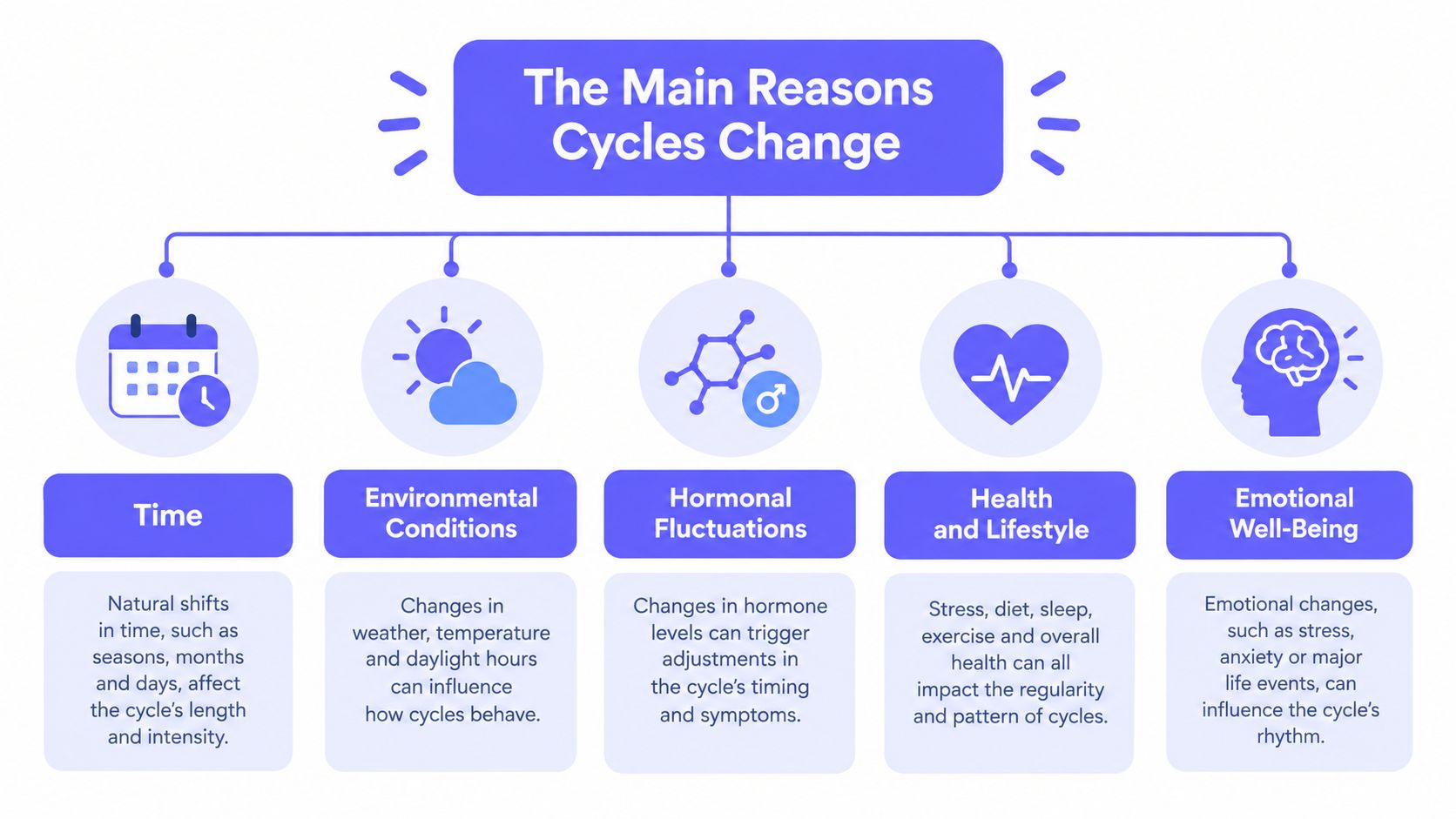
A period arrives late after a stressful month. Then the next one is heavier than usual. That pattern can reflect a short-term change in ovulation, a shift in hormone signals, changes to the uterine lining, or several factors at once. The same outward sign can have different causes, so use the timing and accompanying symptoms as clues.
Perimenopause
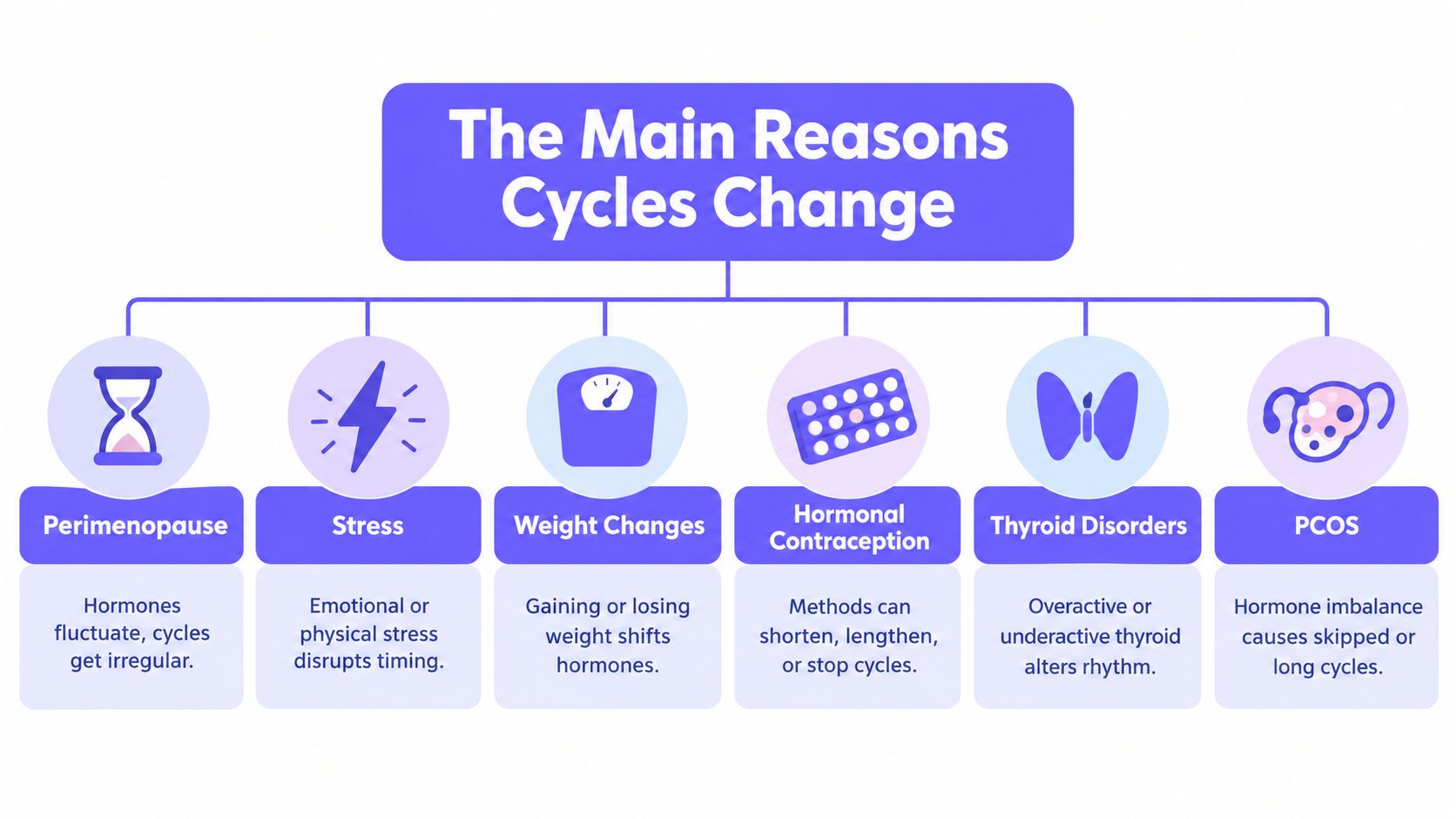
During perimenopause, hormone levels fluctuate and ovulation may become less consistent. Periods can arrive earlier or later, become heavier or lighter, or occasionally disappear. Hot flashes, disrupted sleep, mood changes, or vaginal symptoms make perimenopause more plausible, but none confirms it alone.
Cycle changes are widespread during this transition. Approximately 90% of women experience some menstrual-pattern change during the 4–8 years before complete menopause, including shorter or longer cycles, spotting, heavy bleeding, and unpredictable bleeding, according to the National Institute of Child Health and Human Development. A new pattern that continues deserves tracking, while unusually heavy bleeding or concerning symptoms call for medical advice.
Stress and physical strain
Emotional stress, poor sleep, illness, intense exercise, travel, and a major routine change can disrupt ovulation. If the change follows a demanding month and your cycle starts returning to its usual pattern, temporary disruption is plausible. Continued irregularity needs a broader explanation rather than being attributed to stress automatically.
Weight changes
Significant weight gain or loss can affect reproductive hormone signaling. Discuss the change with a clinician if it appears with unexplained weight change, persistent fatigue, acne, or new hair growth. These combinations can point beyond a calendar variation.
Hormonal contraception
The pill, injection, hormonal intrauterine system, and progestogen-only methods can alter bleeding independently of perimenopause. Spotting, lighter bleeding, longer gaps, or no bleeding may reflect the method. Record when contraception began or changed, because that timeline often explains the pattern better than one unusual period.
Thyroid disorders and PCOS
An underactive or overactive thyroid can alter menstrual rhythm and may also affect energy, weight, hair, or heart rate. PCOS can make ovulation unpredictable, leading to skipped or long cycles. The Athena Plastic Surgery women's health resource offers a plain-language overview of symptoms that can overlap with hormonal changes. For thyroid-related concerns, read about hypothyroidism and menopause.
Pregnancy
A late or missed period can be an early sign of pregnancy. Irregular cycles make timing harder to judge, so include pregnancy in your decision process whenever it is biologically possible. Several causes can coexist, including perimenopause, hormonal contraception, stress, and thyroid disease. A pregnancy test or clinician's advice can separate these possibilities.
A Missed Period Is Not Always Menopause
A skipped period in your 40s or 50s doesn't automatically mean menopause. Menopause is confirmed retrospectively after 12 consecutive months without a menstrual period, provided another cause isn't responsible. Until that point, ovulation may still happen unpredictably.
The transition itself can be gradual. Early perimenopause is identified by a persistent difference of at least 7 days between consecutive cycle lengths, and it begins, on average, 6–8 years before the final menstrual period. Later, an interval of at least 60 days without bleeding is used as a marker of the late transition, according to research on the stages of the menopausal transition.
Those definitions describe patterns. They don't eliminate other possibilities.
Keep fertility and bleeding as separate questions
A missed period may result from disrupted ovulation, sometimes called anovulation. If ovulation doesn't occur, bleeding can arrive unpredictably or not at all. That doesn't reliably indicate permanent infertility, and it makes cycle-based predictions poor protection against pregnancy.
Hormonal contraception creates another layer of confusion. It can change or suppress bleeding, so the presence or absence of a period may not show whether ovulation has occurred. If you're sexually active and pregnancy is possible, follow the instructions for your contraceptive method and consider a pregnancy test after an unexpectedly missed period.
Trying to conceive requires a different approach. Irregular bleeding can make fertile timing difficult to identify, so don't assume that a changing cycle is just an age-related inconvenience. Discuss it with a healthcare professional, especially if you're concerned about fertility or have other symptoms.
You can use a perimenopause pregnancy risk calculator as an educational aid, but it shouldn't replace contraception advice, pregnancy testing, or clinical care.
How to Track Cycle Changes So Patterns Become Visible
Tracking works best when it captures more than the date your period begins. A calendar can show timing, but the surrounding details help explain what the timing may mean.
Start with a small daily record:
- Bleeding dates: Mark the first and last day of active bleeding.
- Flow changes: Note whether bleeding is lighter, heavier, or similar to your baseline.
- Unexpected bleeding: Record spotting between periods or after sex separately.
- Body symptoms: Add hot flashes, night sweats, breast tenderness, cramps, headaches, or vaginal changes.
- Whole-body context: Note sleep disruption, mood shifts, fatigue, energy, meals, exercise, illness, and major stress.

Review patterns instead of reacting to surprises
Look at several recent cycles together. Ask whether the change happened once, repeats in the same direction, or is becoming less predictable. For example, one late period after travel tells you little. Repeatedly longer cycles combined with hot flashes and poor sleep creates a more meaningful pattern to take to a clinician.
Also record pregnancy tests, contraception changes, new medicines, and significant illness. These details can explain timing shifts that would otherwise look mysterious.
A notebook may be enough. A digital tracker can be useful if it lets you view cycles alongside symptoms, mood, sleep, energy, meals, and activity. This guide to tracking your cycle offers a practical way to build that habit without turning every day into a medical exercise.
The purpose isn't to predict every period perfectly. It's to recognize your personal baseline, notice when it changes, and communicate the pattern clearly.
When a Cycle Change Needs Medical Attention
A late period after travel may settle on its own. Bleeding that keeps changing, appears unexpectedly, or becomes difficult to manage needs a different response. Perimenopause can explain some changes, but fibroids, polyps, pregnancy-related causes, thyroid disorders, and other conditions can also affect bleeding. Repeated cycles without ovulation may allow the uterine lining to become too thick, so unusual bleeding deserves attention rather than an automatic perimenopause label.
Use the pattern and the timing to choose your next step:
| What You Notice | Likely Meaning | What to Do |
|---|---|---|
| Bleeding lasts longer than seven days | Hormonal disruption is possible, but other causes may be involved | Contact a clinician for advice |
| Bleeding occurs between periods or after sex | The cervix, uterus, hormones, pregnancy, or another condition may be involved | Arrange a medical assessment |
| Cycles arrive less than 21 days apart | Frequent bleeding may reflect irregular ovulation or another cause | Speak with a healthcare professional |
| You miss three periods consecutively | Pregnancy, contraception, anovulation, thyroid disorders, and perimenopause may all matter | Take a pregnancy test if applicable and book an appointment |
| Bleeding returns after 12 months without periods | This is not treated as a routine perimenopausal period | Contact a clinician promptly |
Heavy or persistent bleeding should not automatically be blamed on perimenopause. Seek urgent care if you feel faint or the bleeding feels unmanageable.
Call this week: Arrange care without waiting for another cycle if bleeding is prolonged, occurs after sex, appears between periods, or repeatedly arrives unusually close together.
Self-care tools can support your routine while you arrange an evaluation. You might find Luno self care tools useful for sleep, stress management, or symptom notes. Tracking can clarify the pattern, but it should not replace medical attention when a red flag appears.
Reading Your Cycle as a Window Into Perimenopause
A changing cycle is information, not a verdict. The most useful interpretation comes from combining bleeding dates with symptoms such as hot flashes, sleep disruption, mood changes, fatigue, and weight changes. One symptom can be vague. A repeated cluster gives you a clearer account of what your body is doing.
That record can support two different next steps. If the change is mild and isolated, you may choose to keep tracking and focus on supportive habits. If the pattern persists or includes a warning sign, you can bring specific dates and symptoms to a clinician instead of saying only that your period feels “different.”

Lila combines a quick daily check-in with a personalized action plan and brings symptoms, mood, sleep, energy, meals, and cycles into one place. That kind of record can help you connect cycle changes with the wider pattern of perimenopause. If you're considering treatment options, a general hormone therapy guide for women in McLean can also help you prepare questions for a qualified healthcare professional.
You don't need to predict exactly when menopause will happen. You need to know what has changed, how often it's happening, and whether the pattern calls for support. A changing cycle is a signal you can learn to read.
Lila helps you track cycles alongside sleep, mood, energy, meals, and symptoms, then turns those patterns into a personalized action plan. Visit Lila to make your next cycle change easier to understand and easier to discuss with a clinician.
Get Lila, your personal coach for perimenopause.
Built for women in their 40s. 24/7 coaching, in your pocket.