
Cardiovascular Risk Reduction: A Practical Guide
Cardiovascular risk reduction explained: key numbers, lifestyle changes, perimenopause risks and medical options to discuss with your clinician.
Cardiovascular disease accounted for approximately 32% of all deaths worldwide in 2022, according to the World Health Organization). That makes cardiovascular risk reduction relevant long before anyone receives a heart-disease diagnosis. For women approaching menopause, it also makes midlife a useful checkpoint: an opportunity to measure what's changing, rather than assume that feeling well means everything is well.
Table of Contents
- Why Heart Risk Starts Long Before Heart Disease
- The Numbers That Define Your Cardiovascular Risk
- Why Risk Climbs During Perimenopause and Menopause
- Lifestyle Changes That Lower Risk Most
- Medical Treatments for Blood Pressure, Cholesterol and Glucose
- How to Build and Track Your Prevention Plan
- Book Your Risk Assessment This Month
Why Heart Risk Starts Long Before Heart Disease
Say you're noticing disrupted sleep, a changing waistline, and less energy for your usual walks. You haven't had chest pain, and you still manage busy days. It's easy to treat these changes as an inconvenient part of getting older rather than a reason to check your cardiovascular health.
But risk and symptoms aren't the same thing. A clinician can identify high blood pressure, an unfavorable cholesterol pattern, or problems with glucose regulation even when you feel reasonably well.
Think of prevention as building a health savings account. Each sustainable habit is a deposit, while measurements help you understand whether your approach is working. The analogy isn't perfect, because genetics, medical history, and environmental exposures matter too. Still, it explains why small actions maintained over time deserve attention.
Look beyond body weight
Cardiovascular prevention includes blood pressure, blood lipids, glucose regulation, and vascular health, not just the bathroom scale. Tobacco use, dietary patterns, inactivity, harmful alcohol use, and air pollution also belong in the assessment.
A useful starting point is to distinguish what you can change directly from what needs professional help:
- Daily choices: Food, movement, smoking, alcohol, and routines that support sleep.
- Clinical measurements: Blood pressure, cholesterol, glucose, and other tests selected for your circumstances.
- Personal context: Family history, reproductive history, existing conditions, and medications.
Practical rule: Don't wait for a warning symptom to ask whether your measurable risk factors need attention.
If you already have test results but aren't sure how they fit together, Longevity Clinics' explanation of what cardiometabolic screening results mean offers useful context for a clinical conversation. Treat screening as the beginning of a discussion, not a diagnosis you have to interpret alone.
The Numbers That Define Your Cardiovascular Risk
Use this reference to organize your measurements and agree on a checking schedule with your clinician.
Key cardiovascular risk measures, targets and check frequency
| Measure | Target or threshold | How often to check | Who measures |
|---|---|---|---|
| Blood pressure | Personal target agreed with your clinician | At relevant clinic visits; home schedule agreed with your clinician | Home monitor or clinic |
| LDL cholesterol | Individual target set by overall risk | At baseline and when your clinician recommends reassessment | Laboratory blood test |
| HbA1c | Laboratory reference range, interpreted alongside your history | According to baseline results and diabetes risk | Laboratory blood test |
| Waist circumference | Consistent measurement and an individualized interpretation | Regular self-check using the same method | You, using a tape measure |
| Physical activity | Consistent aerobic activity, resistance training, and less prolonged sitting | Weekly activity log | Self-tracking or wearable |
| Sleep | Sufficient, restorative sleep with a consistent routine | Daily record if sleep is disrupted | Self-tracking or wearable |
| Smoking | None | During prevention reviews | Clinician discussion |
| Estimated cardiovascular risk | Result interpreted alongside medical and reproductive history | When measurements or relevant history change | Clinician using a validated calculator |
Read the pattern, not just the flag
A laboratory report may label LDL cholesterol as within its reference range. That doesn't automatically mean your overall cardiovascular risk is low. Your clinician still needs to consider blood pressure, smoking, glucose, medical history, and other relevant information.
The same principle applies to blood pressure. If a home reading is above the target you've agreed, record it rather than changing your medication yourself. Repeated measurements taken correctly give your clinician a more useful picture than an isolated number after a rushed morning.
For a plain-language explanation of what the measurement represents, OneTwenty's guide to blood pressure as a health biomarker can help you prepare questions.
Technique matters. Use an appropriately sized upper-arm cuff, sit with your back supported, keep your feet on the floor, and support your arm. Follow the device instructions and ask your clinic to check your technique if readings seem inconsistent.
Separate monitoring from diagnosis
A wearable can help you notice changes in activity or sleep. It can't replace a blood test, establish a diagnosis, or decide whether medication is appropriate.
Likewise, waist circumference is a tracking tool, not a verdict on your health or effort. Measure at the same anatomical location each time without pulling the tape tight.
- Bring context: Note medication changes, illness, symptoms, and unusual circumstances.
- Ask for a target: Have your clinician explain what result would change your plan.
- Confirm follow-up: Leave knowing which measurements to repeat and when.
For help connecting food, activity, and daily routines, this guide to improving metabolic health offers a practical starting point. Your clinical assessment determines how those habits fit your individual needs.
Why Risk Climbs During Perimenopause and Menopause
Perimenopause is a checkpoint, not a diagnosis of heart disease. Hormonal changes occur alongside aging, changing sleep, and shifts in activity or body composition. The useful response is assessment, not an assumption that every change comes from hormones.
This illustration highlights the risk factors worth discussing during the transition.
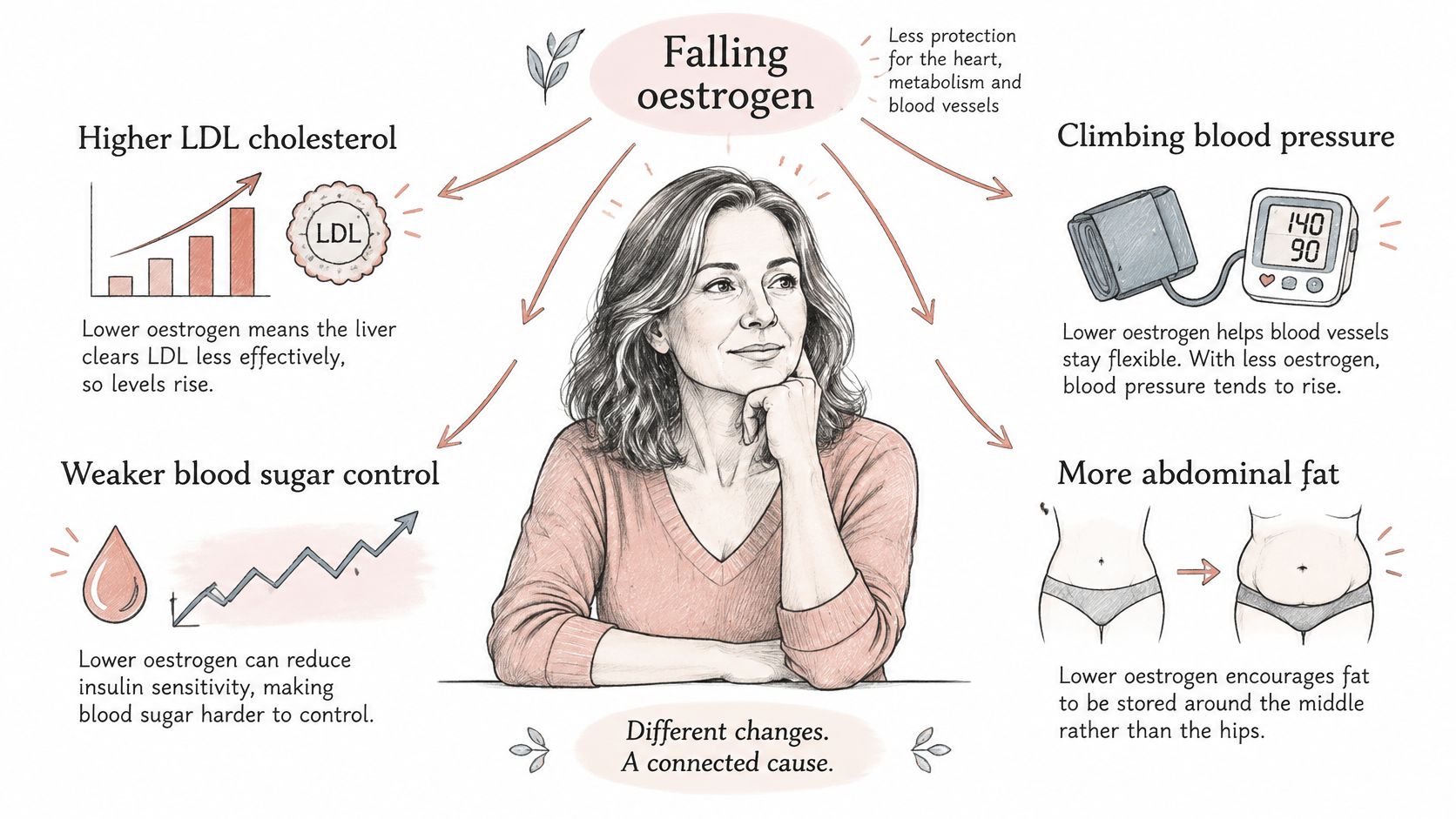
A 2025 analysis of 222,007 women found estimated atherosclerotic cardiovascular disease risk of 3.75% after menopause versus 0.81% before menopause. These are population estimates, not a prediction of what will happen to an individual woman. They support taking the transition seriously without treating menopause as proof that a cardiovascular event is inevitable.
Review more than symptoms
Think of cardiovascular protection as a dam supported by several structures, rather than a wall maintained by estrogen alone. Blood pressure control, cholesterol management, glucose regulation, and healthy routines all matter. A change in one area is a reason to inspect the whole system.
Ask for a review of blood pressure, LDL cholesterol, glucose or HbA1c, kidney health, smoking, sleep, activity, and family history. Include reproductive history rather than assuming it's unrelated.
Premature or early menopause, preeclampsia, gestational diabetes, polycystic ovary syndrome, autoimmune disease, and psychosocial stress are relevant risk modifiers discussed in guidance on cardiovascular prevention in women. A lean, active woman can still have a history that warrants closer attention.
This video provides another way to approach the menopause conversation.
▶ PlayKeep symptom treatment separate from prevention
Menopausal hormone therapy isn't recommended to prevent cardiovascular disease. It may be considered for vasomotor symptoms in recently menopausal women at low cardiovascular risk, with decisions based on symptoms, timing, contraindications, and individual circumstances.
Relieving hot flashes and preventing heart disease are different treatment goals. This explanation of hot flashes and high blood pressure can help you frame that distinction.
Take these questions to your appointment:
- For symptoms: Which treatment options fit my symptoms and medical history?
- For prevention: Which cardiovascular measurements or treatments need attention independently of symptom relief?
Always talk to your doctor about HRT, hormone testing, or any health condition.
Lifestyle Changes That Lower Risk Most
The best starting point isn't always the habit that gets the most attention online. It's the change that addresses your most important risk and fits your life. If you smoke or have significantly high blood pressure, don't postpone that conversation while perfecting your meal plan.
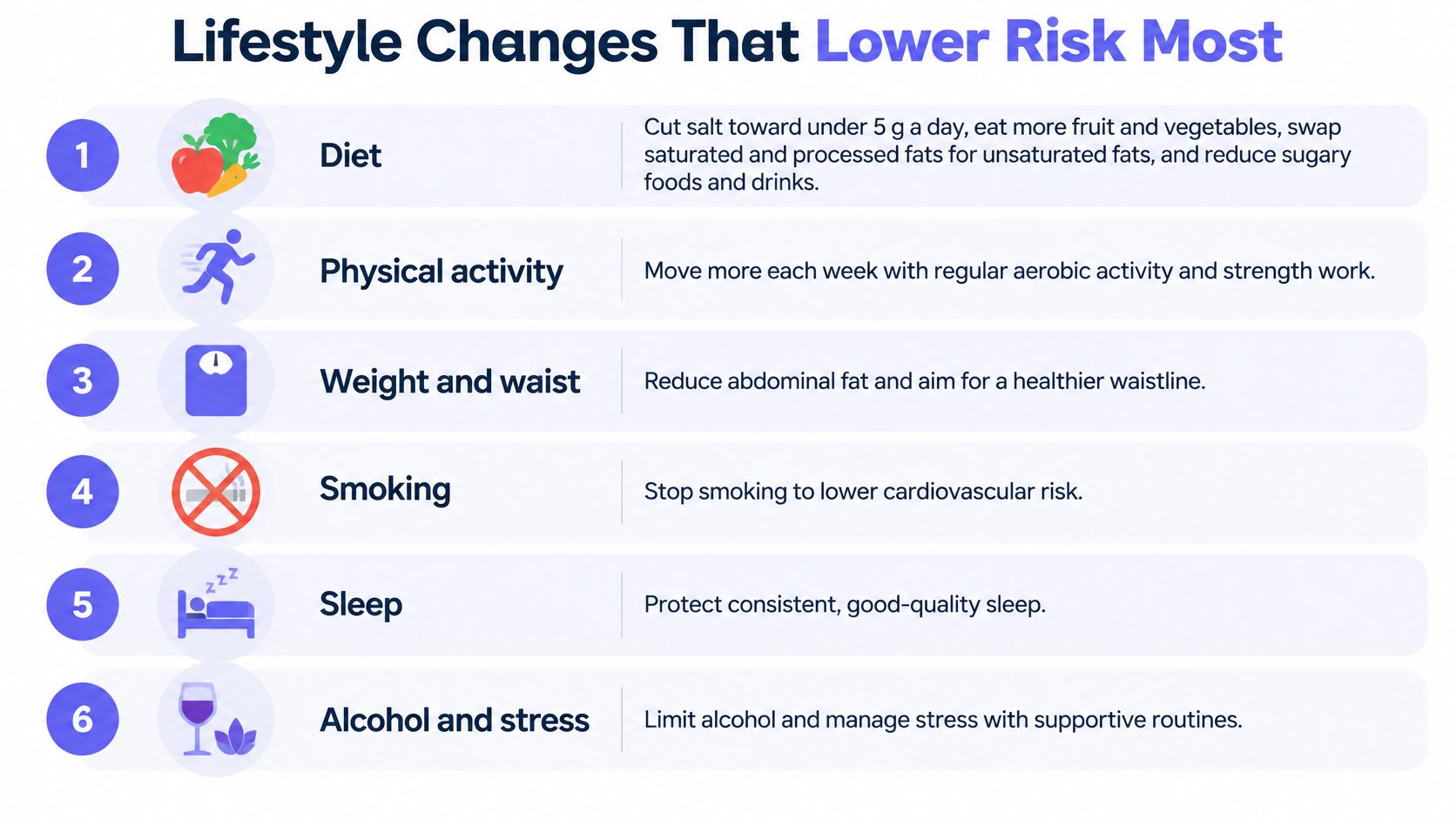
Use these habit areas as a practical menu, not a universal ranking.
Build meals you can repeat
Start with the foods you buy most often. Compare salt information on bread, sauces, soups, and ready meals, then choose a lower-salt option you enjoy. Rinsing canned beans and using herbs, spices, or lemon can make a less salty meal satisfying.
Build meals around vegetables, fruit, beans, whole grains, and suitable protein foods. Replace some butter-heavy or highly processed choices with foods containing unsaturated fats, such as olive oil, nuts, or seeds. Reduce sugary drinks and frequent sugary snacks without turning eating into a test of willpower.
A Mediterranean-style approach during perimenopause can provide a flexible pattern. It doesn't require expensive ingredients or abandoning familiar meals.
Make movement manageable and safe
The WHO physical activity guidance links regular activity with lower cardiovascular mortality, hypertension, and type 2 diabetes, alongside benefits for sleep and body composition. Combine aerobic movement with resistance exercise and interrupt long sitting periods.
Say you've stopped walking because poor sleep leaves you exhausted. Rather than beginning with demanding workouts, you could agree on a manageable walking plan, attach it to an existing routine, and increase it gradually. Track what you complete and how you recover, not just what you intended.
If you're over 35 or have been inactive for a few years, see a physician before beginning any exercise program. Stop exercising immediately if you experience faintness, dizziness, pain, or shortness of breath. New chest pressure, unexplained breathlessness, fainting, or marked exercise intolerance needs prompt medical evaluation.
A useful activity plan is one you can repeat safely on ordinary days, not just on your most energetic day.
Address the habits around food and exercise
- Weight and waist: Follow trends without treating weight loss as the only sign of progress. Discuss a sustainable approach if abdominal weight gain accompanies worsening clinical measurements.
- Sleep: Keep a regular wake time and discuss persistent insomnia, disruptive night sweats, or suspected sleep problems with your clinician.
- Alcohol: Avoid harmful drinking patterns. If alcohol regularly accompanies poor sleep or makes routines harder to maintain, plan an alternative rather than relying on an in-the-moment decision.
- Smoking: Make stopping a priority and ask about cessation support. Don't assume you must manage cravings without help.
Choose changes you can repeat, then use clinical measurements to evaluate whether the overall plan needs adjustment.
Medical Treatments for Blood Pressure, Cholesterol and Glucose
Medication and habits do different jobs. A prescription can address a physiological risk that remains important despite thoughtful eating and regular movement. Needing treatment doesn't mean you've failed at prevention.
The right comparison isn't medication versus effort. It's the likely benefit of treatment, its possible harms, and what happens if the risk remains untreated.
Blood pressure treatment requires an individual target
In the Systolic Blood Pressure Intervention Trial, high-risk adults assigned to a systolic target below 120 mm Hg had a primary cardiovascular outcome rate of 1.65% per year, compared with 2.19% per year among those assigned to a target below 140 mm Hg.
The primary outcome combined several events, including heart attack, stroke, heart failure, and cardiovascular death. That's important: it wasn't a trial showing only that a blood-pressure number became lower.
Some adverse events were more frequent with intensive treatment. A trial target isn't a universal home target, and the findings don't justify increasing medication on your own. Your clinician must balance potential benefit against tolerability and your medical circumstances.
Match treatment to the problem
| Treatment area | Main decision | What follow-up needs to clarify |
|---|---|---|
| Blood pressure | Which target and medication approach fit your risk and tolerability? | Whether readings improve without unacceptable adverse effects |
| Cholesterol | Does your overall risk justify medication, and how much lowering is needed? | Whether the chosen approach achieves the intended response |
| Glucose | Which treatment fits glucose results, kidney health, and other clinical needs? | Whether glucose management is effective and safe |
Cholesterol treatment shouldn't be based on a laboratory flag alone. A clinician considers the full risk picture and discusses the expected benefit of a statin or another approach when appropriate.
For glucose, the choice of diabetes medicine involves more than chasing a lower HbA1c. Kidney function, weight goals, existing disease, side effects, and practical issues such as taking the medicine consistently all matter. Everyday blood sugar management can support treatment, but it can't determine which prescription is right for you.
Before starting or changing treatment, discuss:
- Pregnancy potential: Tell the prescriber if pregnancy is possible or planned.
- Medical history: Include liver disease, kidney problems, and prior cardiovascular disease.
- Other products: Bring a complete list of prescriptions, over-the-counter medicines, and supplements.
- Tolerability: Describe adverse effects instead of stopping treatment without notice.
No app can make the prescribing decision to start, stop, or adjust these medicines. Use your records to support that conversation.
How to Build and Track Your Prevention Plan
A prevention plan should leave you knowing what to measure, what to work on, and when someone will review the results. A long list of intentions isn't enough.
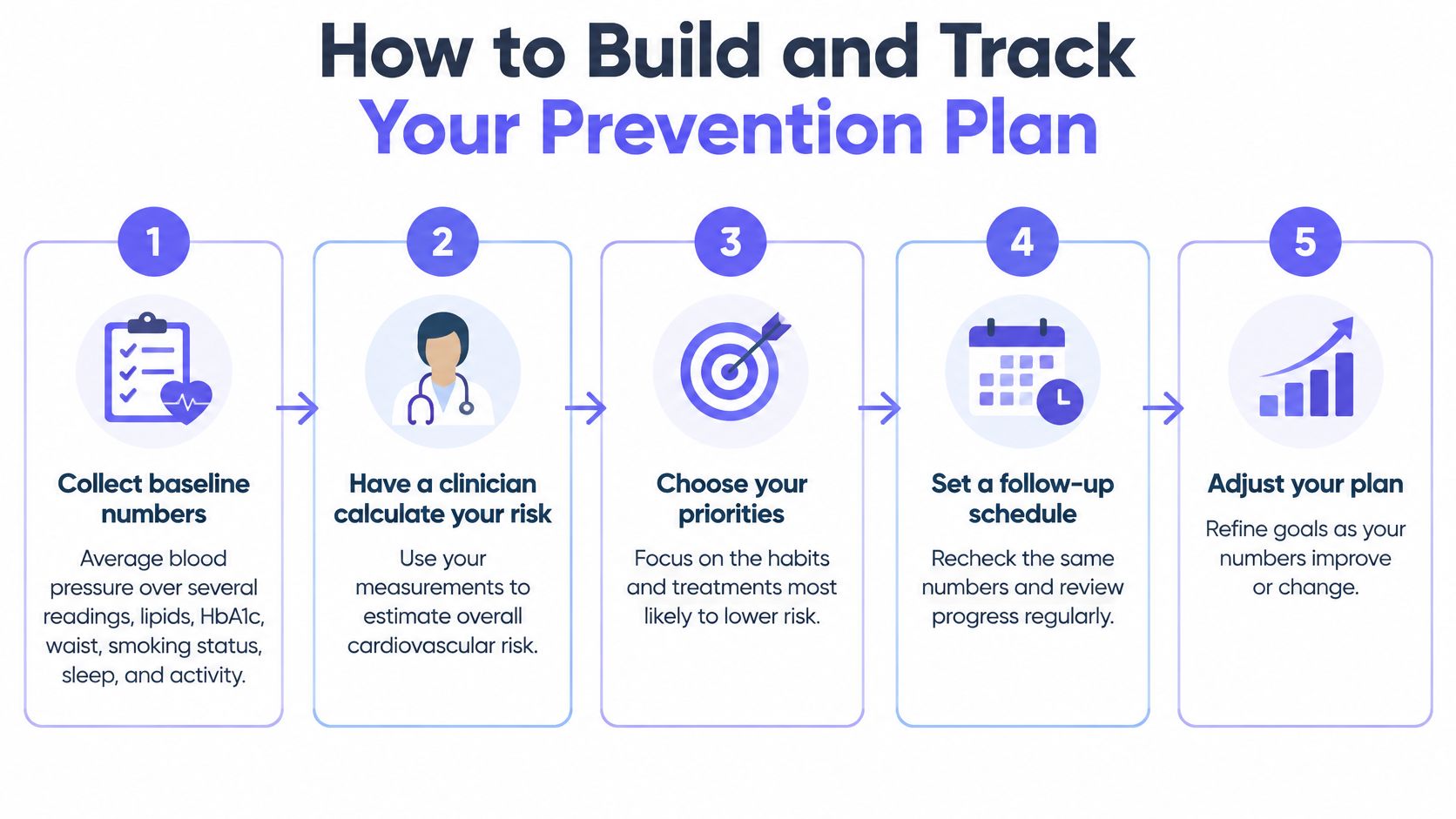
This process keeps the clinical decisions connected to daily actions.
Turn measurements into decisions
Collect your baseline. Bring blood-pressure records, available lipid and glucose results, medication details, and relevant personal history. Add a brief description of your usual sleep, activity, and smoking status.
Request a clinician-led risk assessment. A validated calculator can organize conventional risk factors, while your clinician considers information it may not capture adequately. Symptom tracking alone can't determine whether you're eligible for a statin.
Choose a manageable set of actions. Pair a specific action with a cue, such as walking after lunch or comparing salt labels during grocery shopping. Agree on what you'll do when symptoms, travel, or low energy interrupt the routine.
Record consistently. Take home measurements under similar conditions and note unusual circumstances. Keep your log simple enough that you'll continue using it.
Review trends with a follow-up plan. Ask when to repeat laboratory tests and what should prompt earlier contact. Don't dismiss repeated concerning results just because you feel well.
Understand the statin conversation
For adults aged 40–75 without established cardiovascular disease, the USPSTF statin recommendation supports starting a statin when a cardiovascular risk factor is present and estimated 10-year risk is at least 10%; at 7.5% to less than 10%, expected benefit is smaller and the choice should follow shared decision-making.
That recommendation concerns primary prevention, meaning prevention before established cardiovascular disease. It doesn't replace a separate treatment plan for someone who already has cardiovascular disease.
Ask what the expected benefit means for you, what adverse effects to watch for, and how the response will be checked. A comprehensive health assessment can help you organize the information to bring, but the clinical decision remains individualized.
Bring a usable record: A short, consistent log is more helpful than a large collection of unexplained screenshots.
For a weekly review, use a compact format rather than writing a diary:
| Log item | What to record |
|---|---|
| Activity | Completed activity minutes and resistance sessions |
| Sleep | Typical sleep duration, disruption, and daytime tiredness |
| Blood pressure | Readings and an average prepared as instructed |
| Waist trend | Latest comparable measurement |
| Questions | Symptoms, medication concerns, or barriers to discuss |
Book Your Risk Assessment This Month
Put a cardiovascular assessment on your calendar this month. Ask for a blood-pressure review, a discussion of lipid and HbA1c testing, a waist measurement where appropriate, and an overall risk assessment. Your clinician can decide which tests are needed rather than ordering everything automatically.
Bring previous results if you have them. A result becomes more useful when the clinician can see whether it's new, persistent, or changing, and whether treatment or life circumstances changed at the same time.
Arrive with clear questions
Use the appointment to establish priorities, not just collect another report.
- Overall risk: What is my estimated cardiovascular risk, and what relevant history might the calculator miss?
- First priority: Which measurement or exposure most needs attention, and what should I do about it?
- Separate treatment goals: Do my symptoms need treatment independently of cardiovascular prevention?
If you're considering a more extensive assessment, you can explore comprehensive cardiac screening through Longevity Medical Institute to understand what such an appointment may involve. Discuss whether additional testing is appropriate for your situation before committing to it.
Use tracking as preparation, not medical advice
Our app can help organize the everyday context around your appointment. Lila reads sleep, steps, activity, weight, heart rate, HRV, and menstrual data, if logged, from Apple Health, giving you a record to bring into the conversation.
Our AI coach operates within registered-dietitian-designed guardrails. It won't provide clinical or HRT prescribing advice and refers medical questions to a clinician. The service cannot and does not guarantee health-related improvements or outcomes, and app information must not be used to diagnose or treat a condition.
You don't need a perfect record before seeking care. Record the baseline information you have today, then schedule the appointment before the month ends.
Lila offers daily check-ins, health tracking, and personalized habit support for navigating perimenopause. Visit us to organize your sleep, activity, meals, and symptoms alongside a clinician-led cardiovascular prevention plan.
Get Lila, your personal coach for perimenopause.
Built for women in their 40s. 24/7 coaching, in your pocket.