
How to Manage Stress Eating in Real Life
Learn how to manage stress eating with proven strategies for recognizing triggers, planning meals, regulating your nervous system, and building habits that
At 9:47 p.m., you're barefoot in the kitchen, the lights are low, and your hand is already inside the cracker cupboard. The workday is still replaying in your head, your shoulders are tight, and you're annoyed with yourself before you've even taken the first bite.
That moment isn't proof that you lack discipline. It's information. Your body may be asking for fuel after a long gap between meals, your nervous system may be looking for comfort, or your brain may be trying to come down from a day of relentless stimulation. Stress eating is a signal to interpret, not a character flaw to punish.
The practical answer isn't stricter food rules. It's a system that helps you identify the trigger, protect sleep, eat regularly, and create another way to regulate stress. You'll start with the moment the urge appears, then build a personal trigger map, steady your meals, connect the pattern to perimenopause symptoms, and use a simple check-in that turns observations into decisions.
Table of Contents
- The Moment You Reach for the Fridge
- Why Stress Eating Looks Different in Everyone
- Mapping Your Personal Triggers in One Week
- Meals and Snacks That Take Willpower Out of the Equation
- Sleep, Hormones, and the Stress Eating Loop
- Tracking That Actually Changes Behavior
- Recovering From a Bad Day and Knowing When to Get Help
The Moment You Reach for the Fridge
Maya calls it her “kitchen autopilot.” After a demanding day, she'd finish dinner, answer one more message, and find herself standing in front of the fridge searching for something sweet. She often wasn't physically hungry, but she was exhausted, irritated, and desperate for the day to feel over.
Her first instinct was to create a list of forbidden foods. That made the late-night urge louder. Once she began asking a different question, the pattern became easier to understand: What happened in the hour before I reached for food?
Some evenings revealed a skipped lunch. Others followed a difficult conversation with her partner or a night of broken sleep. On a few days, she needed food because breakfast had been rushed and the afternoon had disappeared. The same behavior, reaching for food, had several different causes.
Practical rule: Before you decide what the eating means, check whether you need fuel, comfort, rest, or a change of state.
You can pause without turning the pause into a punishment. Put both feet on the floor, take one slow breath, and name the strongest sensation. Is your stomach empty? Are you tense? Do you feel lonely, angry, overstimulated, or depleted?
If you're physically hungry, eat. A planned option from a practical guide to low-calorie snacks for weight loss may help you choose something satisfying without making the moment more complicated. If you're emotionally flooded, food may still be part of the answer, but it shouldn't have to carry the entire job of calming you.
Stress eating becomes harder to change when you respond with shame. Shame adds another stressor, which can send you straight back to the cupboard. Treat the reach as a useful interruption, then gather the clue it offers.
Why Stress Eating Looks Different in Everyone
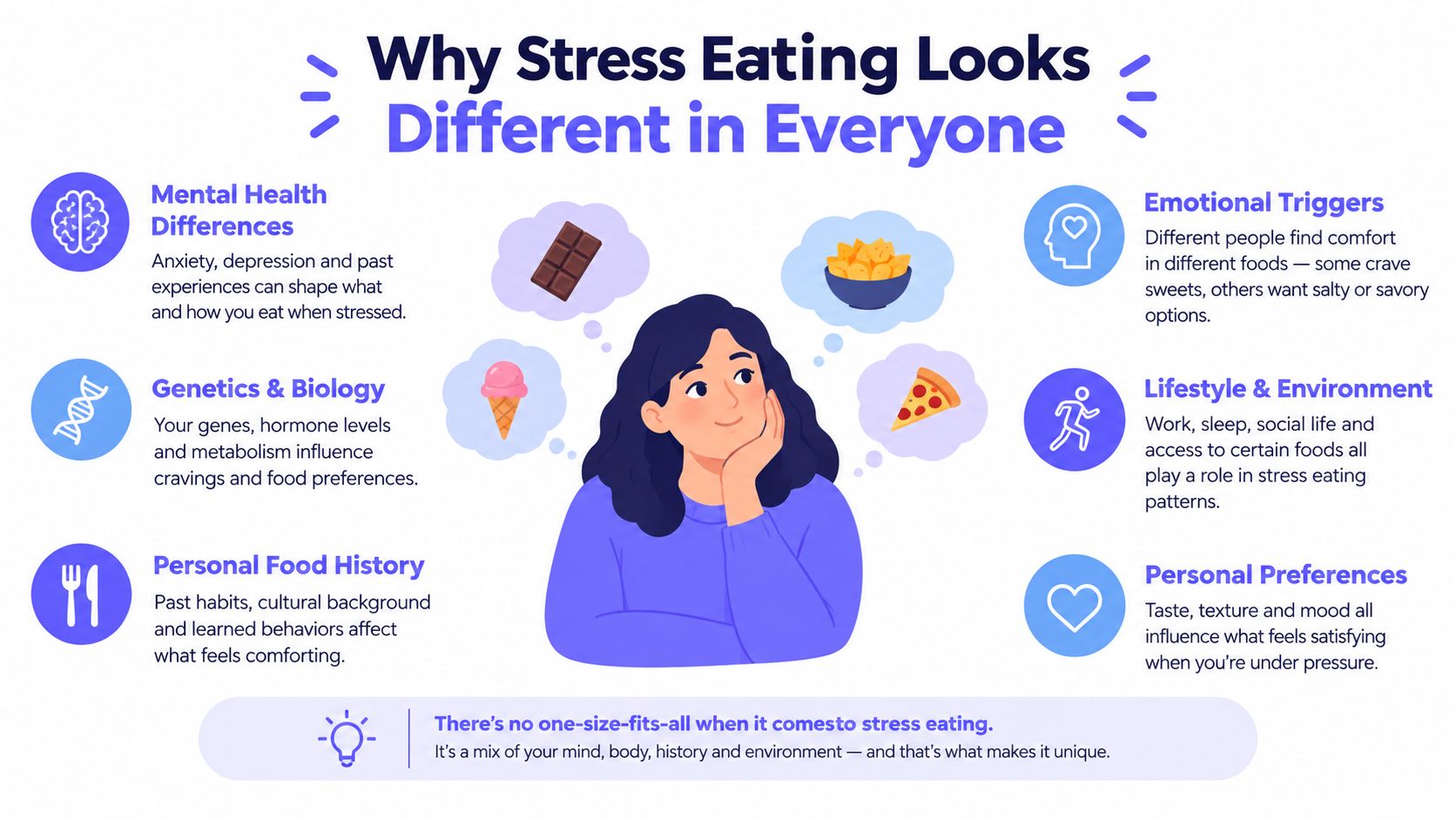
Two women can finish the same stressful day and respond in opposite ways. One reaches for snacks between tasks. The other loses her appetite, skips dinner, and feels intensely hungry later. Stress does not create one universal eating response. Research describes three broad patterns: roughly 40% of people eat more under stress, about 40% eat less, and around 20% show little meaningful change, as summarized in research on stress and eating behavior.
Appetite loss is a stress response too. It does not prove that someone handles pressure better. Your pattern can shift with sleep, emotional strain, cycle changes, and time of day. You might eat very little during a deadline, then feel ravenous at night. On another day, constant grazing may be your response to tension or mental overload.
One ecological momentary assessment found that 28.9% of participants reported increasing food intake when stressed, while 57.7% reported decreasing intake in the situations measured. Those findings reinforce one practical point: stop copying someone else's appetite strategy. Identify what your body does under pressure, then build support around that pattern.
The perimenopause variable
Perimenopause can make familiar stress signals harder to read. Broken sleep, hot flashes, mood changes, and appetite shifts may arrive together. Fatigue can feel like hunger, while a nervous-system surge can create a sudden craving for sugar.
Use one daily check-in to separate the signals: record sleep, stress level, appetite, and the situation around the urge. Pairing this note with information about blood sugar and mood swings gives you more context than judging one meal.
If you usually eat more, start with regular meals and a calming pause before the urge peaks. If you eat less, set meal reminders and keep easy options ready. If your pattern swings, protect sleep first and record both overeating and undereating. Your response is personal data, not a moral category.
Mapping Your Personal Triggers in One Week
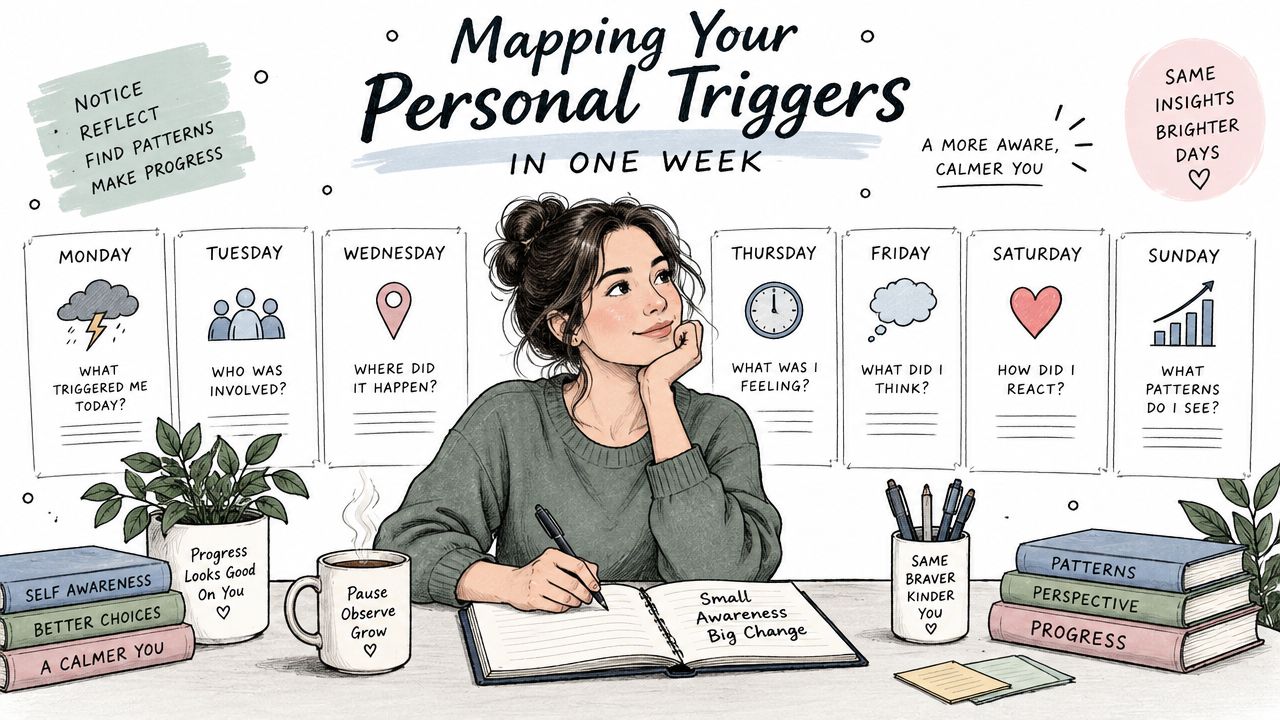
You don't need a complicated food diary. For one week, use one page or note with four columns: what happened, what you felt, what you ate, and what you needed. Add a brief cycle or symptom cue if perimenopause may be influencing the day.
Start with the thirty minutes before the urge
Write the immediate context, not your entire life story. “Finished a tense video call and opened email again” is useful. “Had a bad day” is too vague to guide a decision.
This step separates the trigger from the food. You may notice that the urge follows family conflict, long periods without movement, a skipped meal, or the transition from work into evening.
Name the feeling precisely
Choose a specific word: stressed, tired, lonely, bored, anxious, or overstimulated. If two apply, choose the stronger one. Precision matters because each feeling suggests a different response.
For example, “tired” points toward rest and an earlier bedtime. “Lonely” may call for a voice message or a conversation. “Overstimulated” may improve after ten quiet minutes away from your phone.
Record the eating without judgment
Write what you ate, approximately how much, and how quickly. “Two handfuls of crisps while standing at the counter” tells you more than a calorie total because it captures speed, setting, and attention.
Include physical hunger on a simple scale. A low hunger level with a sudden craving suggests an emotional cue may be prominent. A high hunger level after a missed meal suggests your body is asking for energy, even if stress is present too.
Ask what you actually needed
Finish with the need underneath the behavior. It might be a break, a walk, a hug, quiet, reassurance, or a more substantial lunch.
A worked example could look like this:
- What happened: I finished work late and hadn't eaten since mid-afternoon.
- What I felt: Tired and overstimulated.
- What I ate: Crackers and chocolate quickly while scrolling.
- What I needed: A proper meal, ten quiet minutes, and a transition out of work mode.
If certain foods or symptoms seem connected, your notes can support a deeper review of finding your perimenopause trigger foods. The point isn't to stop eating. It's to build a trigger map that shows what deserves attention first.
Meals and Snacks That Take Willpower Out of the Equation
Regular nourishment is the first food intervention. If you wait until you're frantic with hunger, your brain will favor whatever is fastest and most rewarding. That response isn't a failure. It's a predictable result of asking an underfed body to make calm decisions under pressure.
Try eating at regular intervals, often around three to four hours, while adjusting to your own appetite and schedule. Build meals around protein, include fiber-rich carbohydrates and fats, and stop labeling foods as “good” or “bad.” Moral language creates guilt, and guilt often fuels the restrict-and-rebound cycle.
Build the day around energy dips
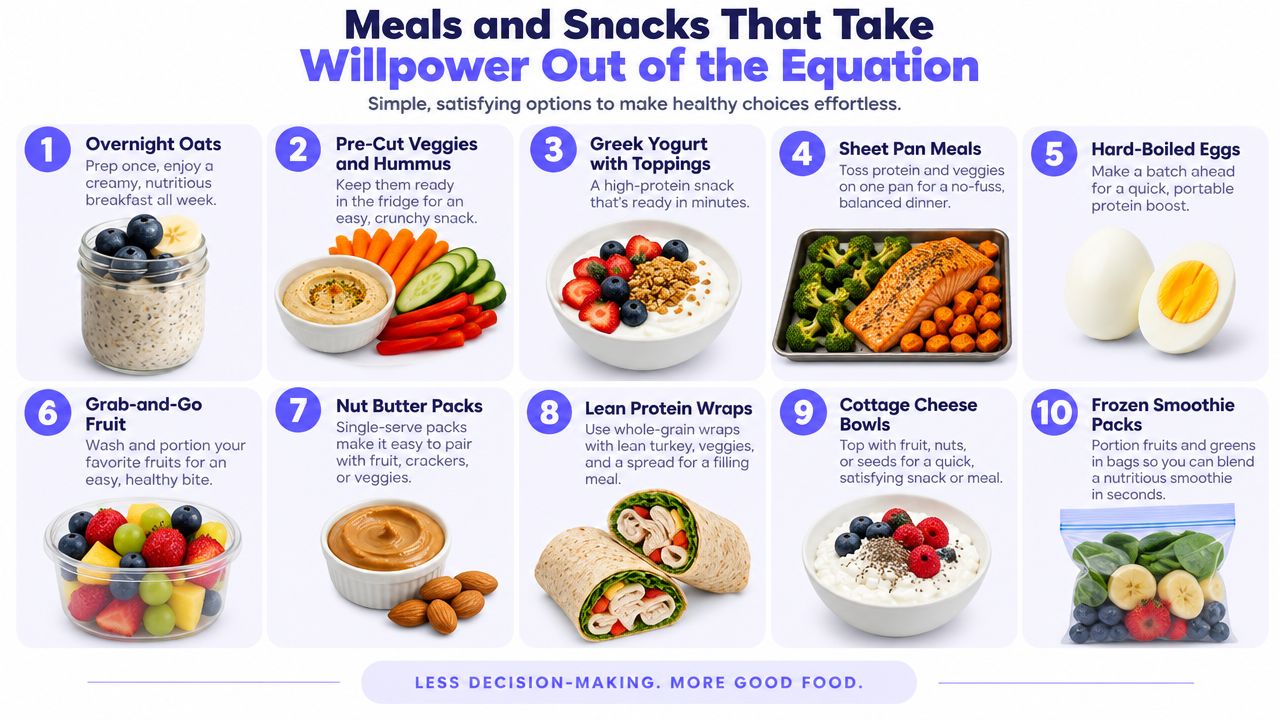
Start with a protein-forward breakfast within roughly an hour of waking if that suits your appetite. This might be eggs with whole-grain toast and fruit, or Greek yogurt with berries, oats, and seeds.
At lunch, combine vegetables, a protein source, and a slower-digesting carbohydrate such as beans, potatoes, or whole grains. If your afternoon is when stress rises, plan the snack before the crash. Greek yogurt with nuts or an apple with peanut butter gives you a deliberate option instead of leaving the decision to an exhausted brain.
Dinner should feel complete, not like compensation for the day. Serve a balanced plate, eat seated, and leave room for a second helping if you're still hungry. You're allowed to eat more. The aim is responsiveness, not restriction.
Use a sixty-second snack formula
When you need something quickly, combine:
- Two food groups: Pair protein with fruit, vegetables, or a carbohydrate.
- Two colors: Add visual variety, such as red apple and brown peanut butter, or white yogurt and blue berries.
- At least 10 grams of protein: Check the label or choose a familiar protein source.
Prepare the components in advance using ideas from this ultimate guide to healthy, quick meal prep. Structure won't eliminate every craving, and it shouldn't. It reduces the urgent hunger that turns a manageable evening into a pantry raid.
Sleep, Hormones, and the Stress Eating Loop
Treating stress eating as a food-choice problem misses the system that often drives it. Sleep disruption, caffeine, alcohol, glucose swings, hot flashes, and emotional strain can push your nervous system into a state where cravings feel urgent and self-control feels unavailable.
Perimenopause makes this especially frustrating. Night sweats or hot flashes can break sleep, and a tired brain has fewer resources for impulse control the next day. You may wake in the early hours, walk to the kitchen, and eat without feeling the gradual physical hunger that normally guides a meal.
Poor sleep can also make the next day's energy less stable. Caffeine may keep you functioning temporarily, but late use can make it harder to settle at night. Alcohol can make you drowsy while still fragmenting sleep, which leaves you more vulnerable to cravings and irritability later.
Regulate the hardest hours first
Start with the evening because bedtime often determines the next day's appetite. Create a 90-minute shutdown period before bed, ideally with work notifications and bright screens put away. Use low lighting, a shower, gentle stretching, reading, or quiet conversation to signal that the day has ended.
If you wake hungry, consider a protein-rich bedtime snack rather than trying to white-knuckle the night. Some women also discuss magnesium glycinate with a clinician or pharmacist, especially if they take medication or have a health condition. Supplements aren't automatically appropriate, and sleep disruption that persists deserves medical attention.
In the morning, take a 10-minute light walk before caffeine if your schedule and safety allow. This creates a steady transition into the day instead of starting with messages, coffee, and immediate stress.
The priority order is simple: protect sleep first, regulate your nervous system second, then fine-tune food choices.
For a broader look at the relationship between weight loss and sleep quality, focus on resources that discuss sleep as part of health behavior rather than treating it as an optional add-on. Keep caffeine to the morning, with a noon cutoff as a practical starting point, and notice whether alcohol changes your sleep or nighttime eating. Your goal is to see the connected pattern, not chase one perfect habit.
Tracking That Actually Changes Behavior
Most food logs fail because they collect information without helping you make the next decision. A long list of calories can tell you what you ate while hiding why you ate it, whether you slept poorly, or whether a tense meeting preceded the urge.
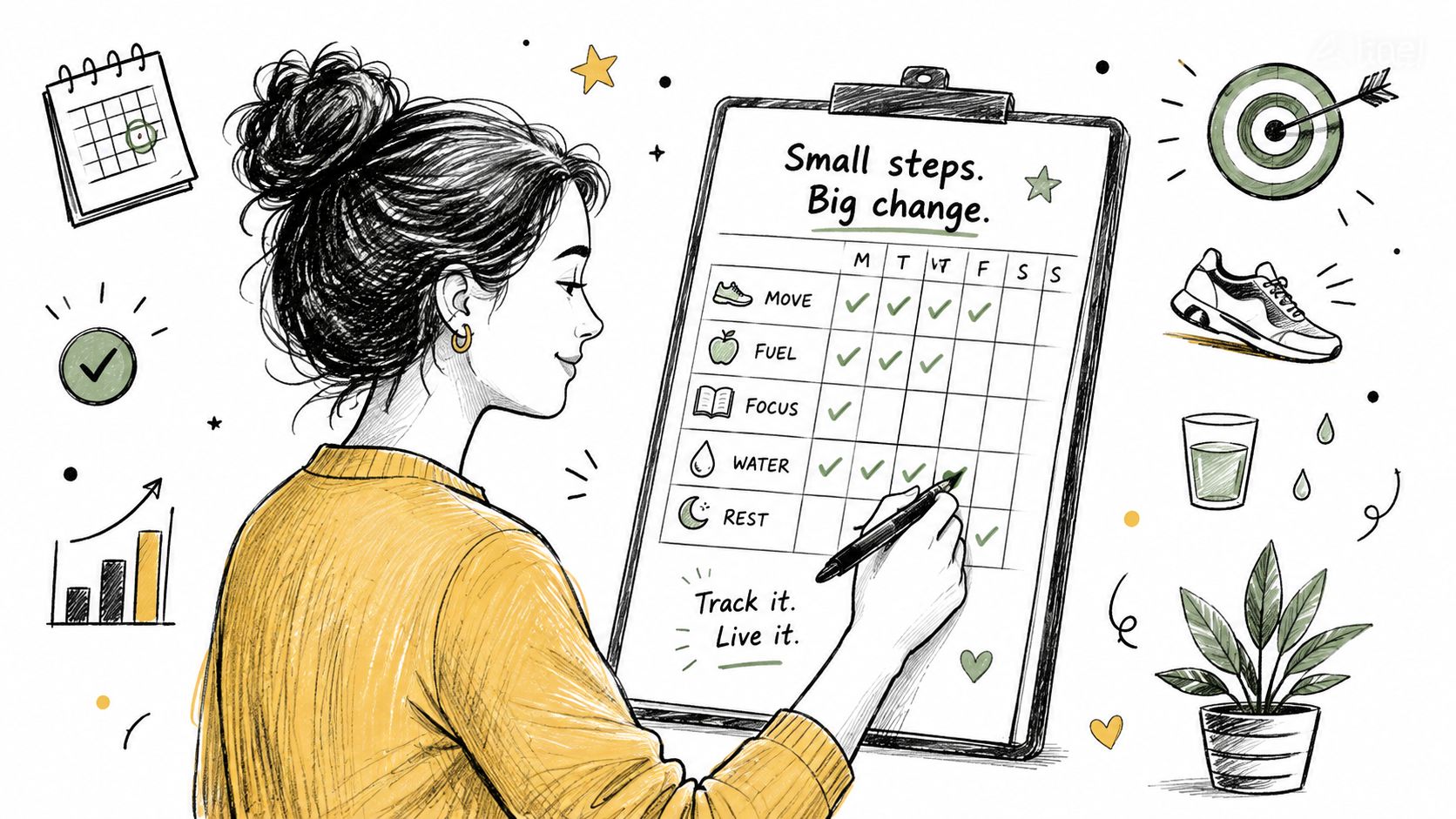
Use one daily check-in instead. Record four items:
- Hunger: Rate it from 1 to 10 before eating.
- Stress: Use the same 1-to-10 scale.
- Sleep: Note the previous night's sleep duration.
- Context: Add one word, such as deadline, argument, tired, lonely, or hot-flash.
This takes less time than searching for every ingredient in a calorie app. It also keeps the trigger visible. The number isn't a verdict, and it doesn't need to be perfectly precise. Consistency matters more than false accuracy.
Turn the check-in into a weekly experiment
A tracker only becomes useful when you review it. Set aside ten minutes on Sunday and look for two things: your lowest-hunger eating moments and your highest-stress moments.
Then identify the two patterns that appear most often. Perhaps late-afternoon eating follows poor sleep, or evening cravings follow an insufficient lunch. Choose one experiment for the next week, such as moving your snack earlier or adding more protein to breakfast.
A perimenopause-aware daily mood and habit check-in, such as the one available in Lila's meal tracking app guide, can give you a fast place to record eating, mood, sleep, energy, and symptoms together. Use it as one option among other methods, including a paper journal or notes app.
Tracking creates awareness. Reviewing creates change.
Don't collect more data than you can use. One clear daily entry followed by one weekly decision will teach you more than an elaborate log you abandon after a stressful day.
Recovering From a Bad Day and Knowing When to Get Help
One difficult eating day does not cancel your progress. The useful response is a calm return to your routine, without restriction, guilt, or promises to “start over” tomorrow.
The first hour
Start by settling your body:
- Drink water and leave the eating area.
- Have your next planned protein source if you feel physical hunger.
- Breathe slowly for 90 seconds, making each exhale longer than the inhale.
- Walk briefly or step outside to change your surroundings.
Do not skip your next meal to compensate. Restriction increases uncertainty about when food will arrive and can make the next urge stronger.
The first day
Record one brief trigger note while the details are clear. Write what happened, what you felt, and what you needed. Then eat your normal next meal and protect your bedtime. Trying to exercise away the episode or impose severe food rules keeps the stress loop active.
If the underlying need was comfort or nervous-system regulation, find adult self-soothing strategies that you can use without much effort. A warm shower, sensory grounding, a supportive message, or quiet music can help. Choose one option you will use on a hard evening.
The first week
Return to your baseline meals and review the check-ins you already keep. Look for what happened before the eating, rather than focusing only on the food afterward. Your next change might be carrying a snack, ending work earlier, protecting recovery after poor sleep, or asking someone for emotional support.
Some patterns call for professional support. Speak with a qualified provider if you notice:
- Loss of control: Episodes feel automatic, detached, or impossible to stop.
- Compensation: You purge, severely restrict, or exercise to undo eating.
- Weight cycling: Your weight repeatedly shifts by more than 10%.
- Persistent distress: Anxiety or low mood continues for two weeks.
- Trauma-linked eating: Food urges connect strongly to traumatic experiences.
Stress eating can be a common habit, yet it can also become clinically significant. A primary-care clinician, registered dietitian, or therapist trained in CBT-E or DBT can help you determine what is happening and choose treatment.
Bring notes about eating episodes, restriction or compensatory behaviors, mood, sleep, medication, symptoms, and the moments before each urge. A clear record gives your first appointment a practical starting point, far more useful than a promise to try harder.
Lila combines meal, mood, sleep, symptom, and cycle tracking in one daily check-in, with personalized guidance and chat-based coaching. Visit Lila and record today's hunger, stress, sleep, and context so you have one specific pattern to address next week.
Get Lila, your personal coach for perimenopause.
Built for women in their 40s. 24/7 coaching, in your pocket.