The 12 Best Meal Tracking App Options for 2026: A Deep Dive
Searching for the best meal tracking app? We review 12 top options for weight loss, macro tracking, and symptom management to help you find the perfect fit.
 Michelle
Finding the best meal tracking app can feel overwhelming, especially when your health goals are specific and nuanced. Whether you're managing perimenopausal symptoms like hot flashes and mood shifts, focusing on metabolic health and weight loss, or simply seeking a clear picture of your nutritional intake, the right tool makes all the difference. This guide cuts through the noise to provide a detailed breakdown of the top apps available today. We move beyond generic feature lists to give you an honest assessment of what it's really like to use each one.
This resource is designed to help you make an informed decision based on your unique needs. We'll explore everything from the granularity of macro and micronutrient tracking to the convenience of barcode scanners and the power of AI-driven insights. For women navigating menopause, we've paid special attention to apps that integrate symptom and cycle tracking, offering a more complete view of how food impacts your well-being.
Inside, you will find:
In-depth analysis of 12 leading meal tracking apps, including Lila, MyFitnessPal, and Cronometer.
Direct comparisons of key features, pricing, and real-world usability.
Clear "best for" recommendations to match you with the perfect app for your goals, whether it's simple logging or detailed metabolic analysis.
Screenshots and direct links for every platform reviewed.
As you begin your journey with a meal tracking app, consider how utilizing a comprehensive meal planning and grocery list app can optimize your weekly food preparation and shopping. Pairing these tools can create a powerful system for achieving your health objectives. Let's find the app that will support you most effectively.
1. Lila
Lila presents a unique, AI-powered approach to meal tracking, positioning itself as much more than a simple calorie counter. It's designed specifically for women in their 40s and 50s navigating the complexities of perimenopause, menopause, and post-menopause. Where other apps focus solely on food inputs, Lila integrates meal logging into a complete wellness ecosystem that also tracks symptoms, mood, sleep, energy, and menstrual cycles. This consolidated view is its primary strength, allowing the AI to identify connections between your diet and how you feel day-to-day.
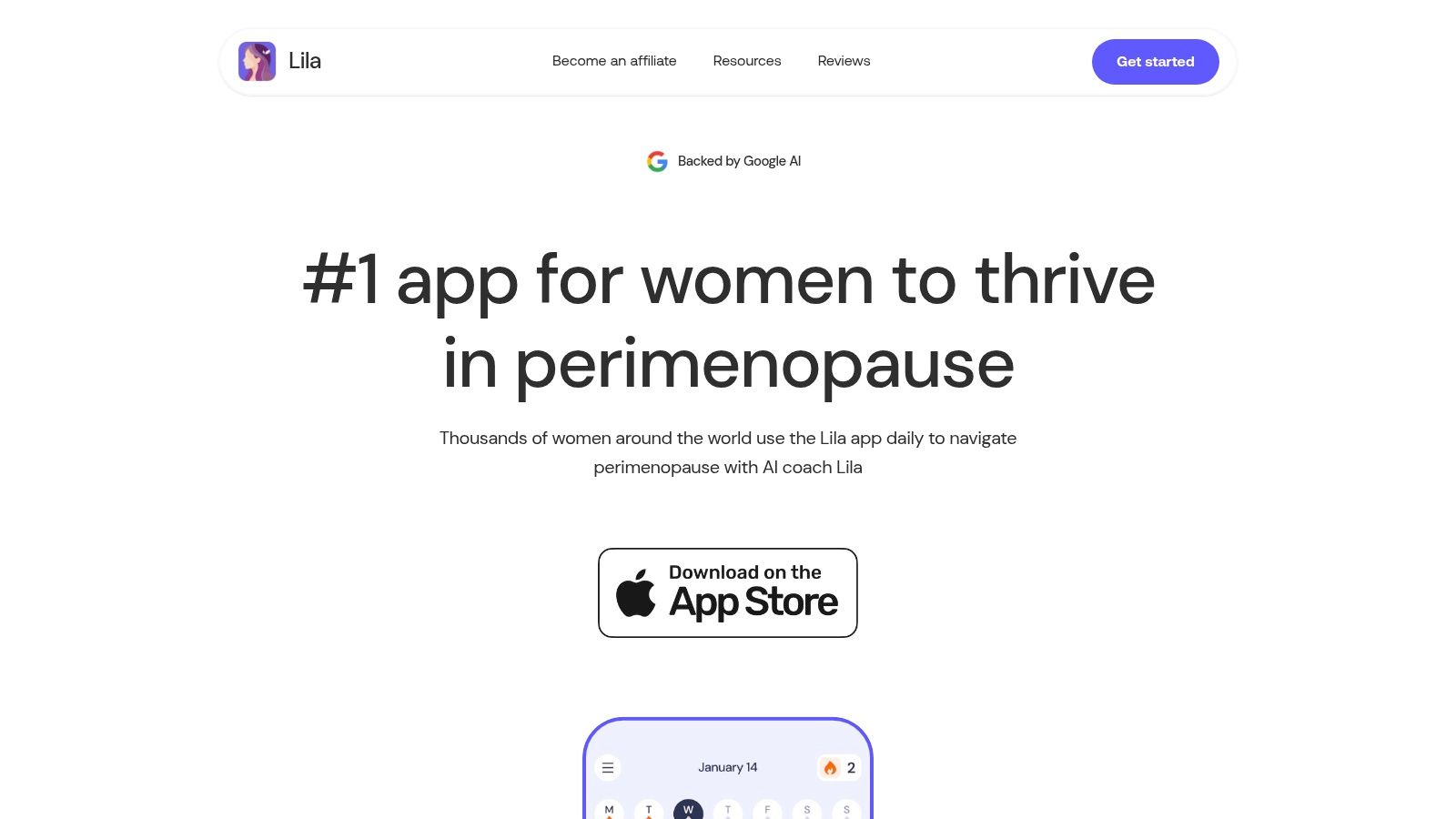
The platform’s standout feature is its real-time personalization. It begins with a one-minute daily check-in, which feeds data into the AI to generate a clear, actionable plan for the day. This moves beyond generic advice and helps you understand why certain foods might be affecting your hot flashes, bloating, or energy levels. For those who want immediate support, the 24/7 AI chat coach provides on-demand guidance and accountability, making it a powerful tool for building sustainable habits.
Why It Stands Out
Lila’s focused demographic and holistic data analysis make it the best meal tracking app for anyone wanting to manage hormonal symptoms through lifestyle adjustments. It’s less about strict dieting and more about discovering patterns. Many users report noticeable improvements in sleep, mood, and weight within weeks, a testament to its targeted methodology. The app is backed by Google’s AI fund and boasts over 35,000 active users and a 4.7 App Store rating, adding a layer of credibility. Its extensive blog also offers practical advice on topics like menopause weight-loss strategies, providing support beyond the app itself.
Key Considerations
Best For: Women experiencing perimenopausal or menopausal symptoms who want to connect their diet with their overall well-being. It is ideal for those seeking AI-driven, daily actions rather than just a food database.
Pricing: The pricing structure is not listed on the public product page, indicating a subscription model. You will need to download the app to confirm the cost before committing.
Limitations: While excellent for symptom and lifestyle management, Lila is not a replacement for professional medical advice, especially for complex or high-risk health conditions.
2. MyFitnessPal
MyFitnessPal is one of the most established names in digital food logging, making it a reliable contender for the best meal tracking app. Its primary strength lies in its enormous, community-powered food database, which is particularly robust for US-based packaged foods and restaurant meals. This makes logging incredibly fast, especially using its well-regarded barcode scanner.
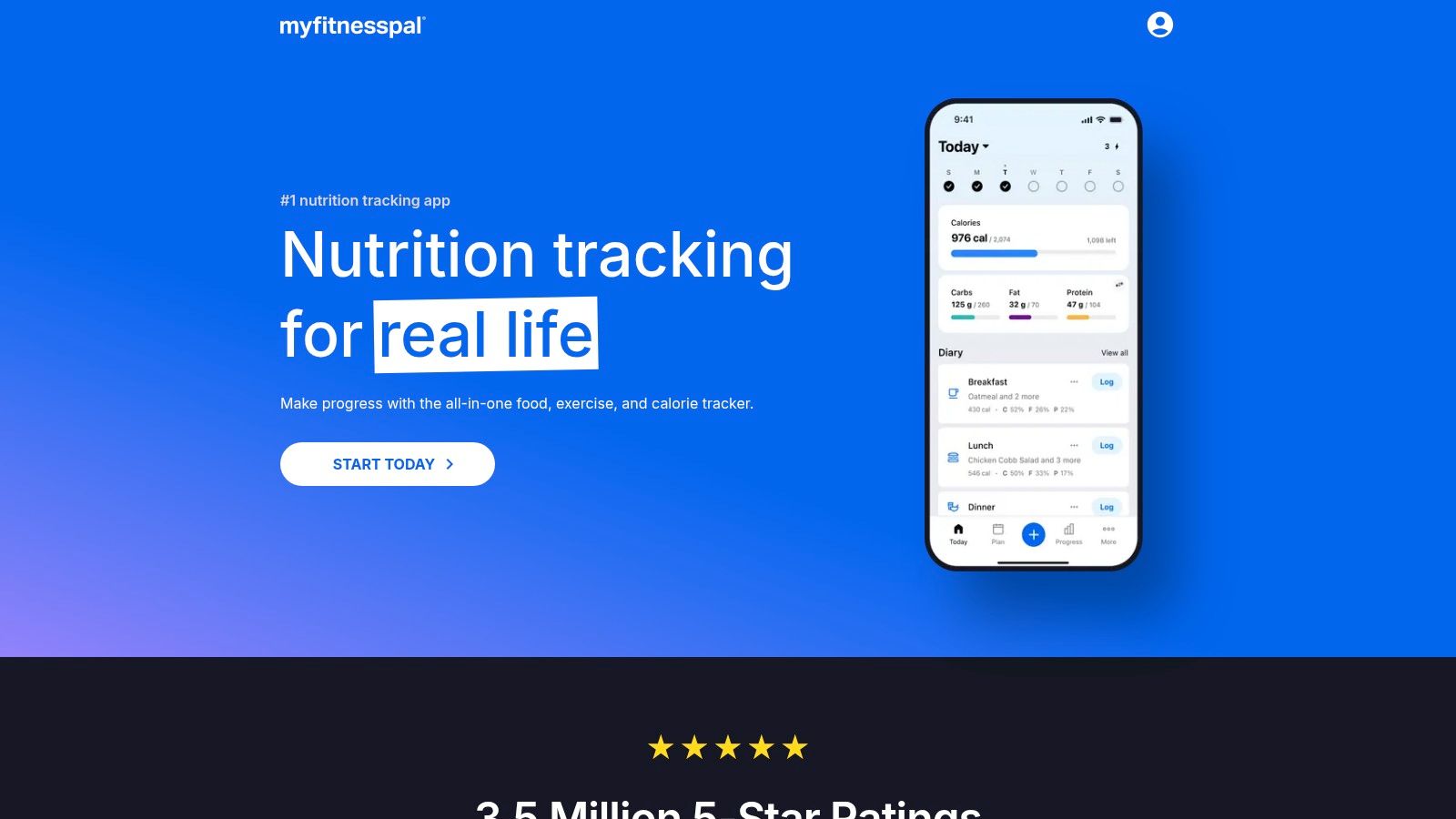
The platform is excellent for users who want to focus on specific macronutrient targets, such as increasing protein intake to support muscle mass during perimenopause. You can set custom goals for protein, carbs, and fats, and the app provides clear daily and weekly reports to monitor your progress. Its integration capabilities are also a major plus, connecting seamlessly with devices from Fitbit, Garmin, and Apple Health to consolidate your health data.
Key Details & Pricing
Best For: Users wanting a massive food database, barcode scanning, and strong integration with other fitness apps and devices.
Pricing: A functional free version is available. MyFitnessPal Premium removes ads and unlocks advanced features like custom macro goals, food timestamps, and detailed nutrient dashboards for a monthly or annual fee.
Unique Feature: The sheer size of its food library, including user-generated entries, is hard to beat.
Pros:
Vast food database simplifies logging common and obscure items.
Flexible goal setting for calories and macronutrients.
Extensive integrations with fitness trackers and health apps.
Cons:
Many of the most useful features, including detailed macronutrient tracking and advanced reports, are locked behind the Premium paywall.
The user interface can feel cluttered with ads in the free version.
Website: https://www.myfitnesspal.com
3. Lose It!
Lose It! has earned its spot as a top contender for the best meal tracking app by focusing on simplicity and speed, making it an excellent choice for beginners. Its design prioritizes getting your daily log done quickly. The app’s barcode scanner is notably fast and accurate, and its large food database makes finding common grocery items and restaurant meals straightforward.
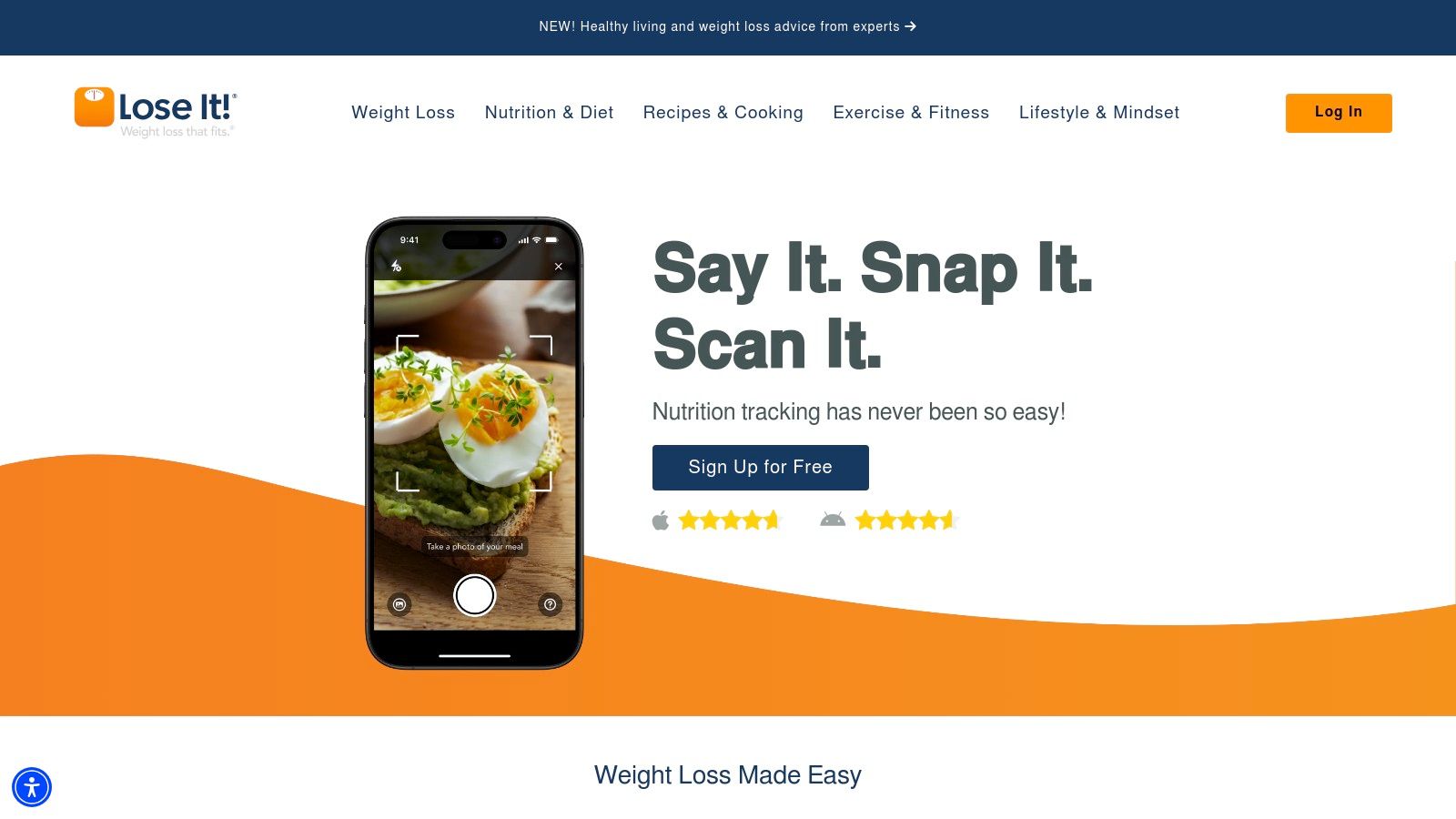
The platform is designed around establishing consistent habits, using streaks and gentle reminders to keep you engaged. This focus on building a routine is beneficial for anyone feeling overwhelmed by the idea of daily tracking. For those managing weight through perimenopause, its clear goal-setting and progress reports provide the necessary feedback to stay motivated. Pairing this app with a solid food strategy can be powerful; you can master meal prep with this ultimate guide to make logging even simpler.
Key Details & Pricing
Best For: Beginners seeking a user-friendly interface, fast logging, and motivational tools to build a tracking habit.
Pricing: A robust free version is available for basic calorie and macro tracking. Lose It! Premium unlocks advanced features like detailed nutrient planning, water tracking, and deeper integrations for a monthly or annual subscription fee.
Unique Feature: The "Snap It" feature, which allows users to log food by taking a photo, offers a visual and intuitive alternative to manual searching.
Pros:
Highly intuitive interface and excellent onboarding for new users.
Fast and reliable barcode scanner simplifies daily logging.
Strong motivational features like streaks and progress reports.
Cons:
Advanced planning and detailed analytics are locked behind the Premium subscription.
The web-based version is less functional compared to the feature-rich mobile app.
Website: https://www.loseit.com
4. Cronometer
For those who want to go beyond simple calorie counting, Cronometer presents itself as the best meal tracking app for deep nutritional analysis. Its main advantage is an unwavering focus on data accuracy and micronutrient detail. The platform tracks over 80 different nutrients, vitamins, and minerals, making it an exceptional tool for users needing to monitor specific dietary components, such as calcium for bone health or iron levels for energy during perimenopause.
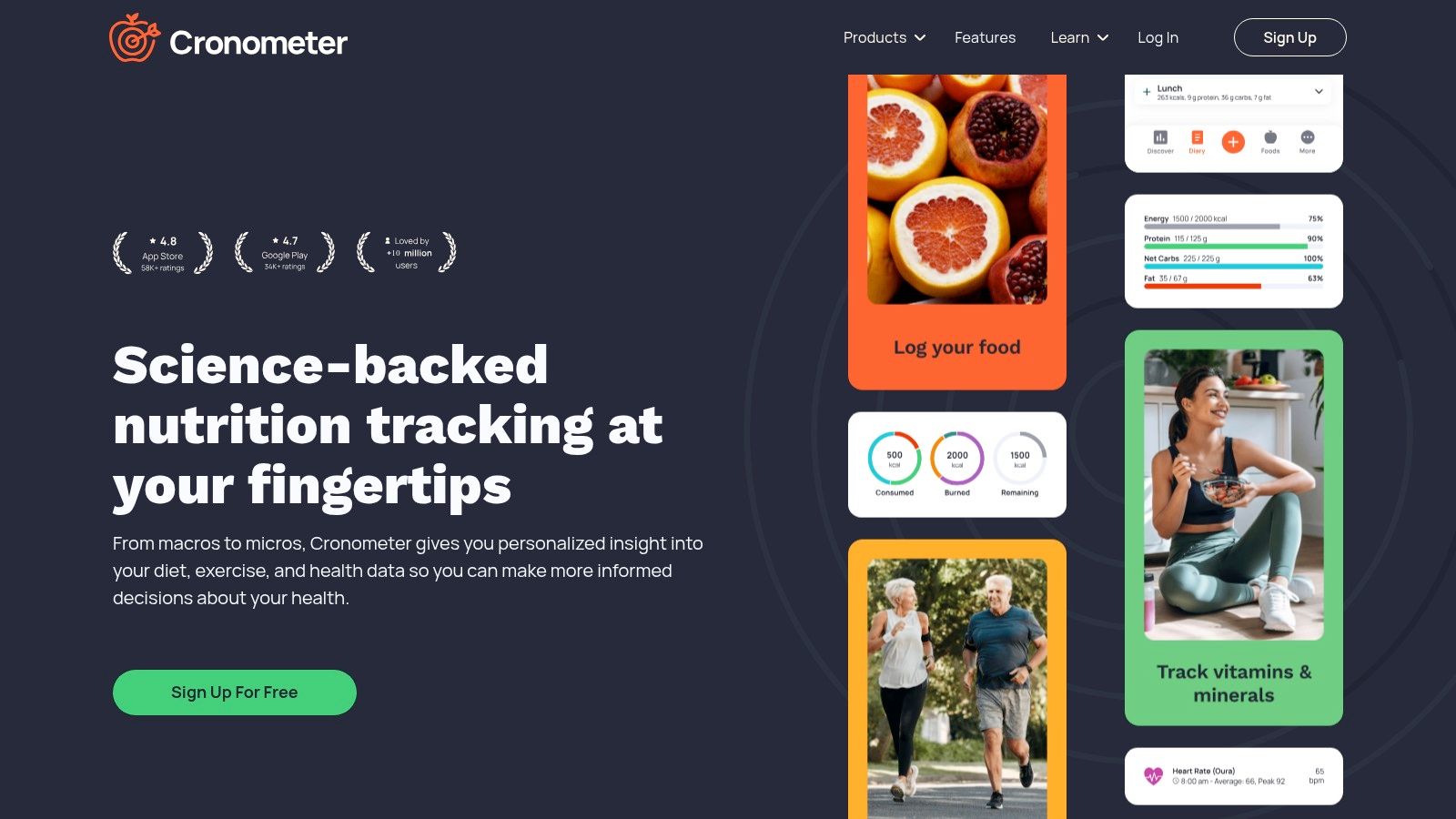
Cronometer’s food database is professionally curated and verified, which reduces the inaccuracies often found in community-sourced libraries. This precision allows you to confidently track your intake of specific amino acids, fatty acids, and fiber types. The app is also highly customizable, letting you create your own recipes, log custom biometrics, and view your progress in detailed charts that connect your diet to your health goals.
Key Details & Pricing
Best For: Data-driven users who want detailed micronutrient analysis and a highly accurate food database.
Pricing: A very capable free version is available and is ad-free. Cronometer Gold is a subscription that unlocks advanced features like a recipe importer, nutrient oracle, custom charts, and food timestamps.
Unique Feature: Its comprehensive tracking of over 80 micronutrients and a focus on a verified, accurate food database.
Pros:
Extremely detailed tracking of vitamins, minerals, and other compounds.
High-accuracy, curated food database minimizes logging errors.
The free version is robust and completely ad-free.
Cons:
The level of detail can be overwhelming for beginners just wanting to track calories.
Some convenient features, like the recipe importer, require a Gold subscription.
Website: https://cronometer.com
5. MacroFactor
MacroFactor is a standout choice for those seeking an evidence-driven, data-first approach to nutrition. Backed by the team at Stronger By Science, it acts more like a personal nutrition coach than a simple food diary, making it a strong candidate for the best meal tracking app for users serious about results. Its core function is a dynamic algorithm that adjusts your calorie and macronutrient targets weekly based on your logged food intake and weight changes, removing the guesswork from plateaus.
The platform excels at providing transparent, data-driven coaching. If you're aiming for body recomposition or sustainable fat loss during perimenopause, the adaptive recommendations ensure your plan evolves with your metabolism. Logging is fast with a verified food database and an efficient barcode scanner. This focus on precision and adaptation helps users understand their energy needs better, a critical factor when managing metabolic shifts. For those new to this level of detail, using a separate macronutrient calculator can provide a good starting point.
Key Details & Pricing
Best For: Data-driven users who want an app that automatically adjusts their targets for sustainable fat loss or muscle gain.
Pricing: Subscription-based after a free trial period. No permanent free tier is available, but the paid model ensures an ad-free experience.
Unique Feature: The adaptive TDEE (Total Daily Energy Expenditure) algorithm that provides weekly updates to your calorie and macro goals based on your actual progress.
Pros:
Intelligent, data-driven coaching logic removes the need for manual adjustments.
Completely ad-free with transparent, straightforward pricing.
Fast and accurate food logging with a verified database.
Cons:
Requires a subscription after the initial trial, with no long-term free version.
Less focused on social features or community compared to other established apps.
Website: https://www.macrofactorapp.com
6. MyNetDiary
MyNetDiary stands out as a polished and intuitive meal tracking app that successfully balances deep nutritional analysis with a user-friendly interface. It's an excellent choice for those who appreciate a clean design but don't want to sacrifice functionality. The app offers robust calorie and macronutrient tracking, with premium tiers unlocking data for over 100 different nutrients, making it powerful for anyone needing to monitor specific micronutrients to manage perimenopausal symptoms.
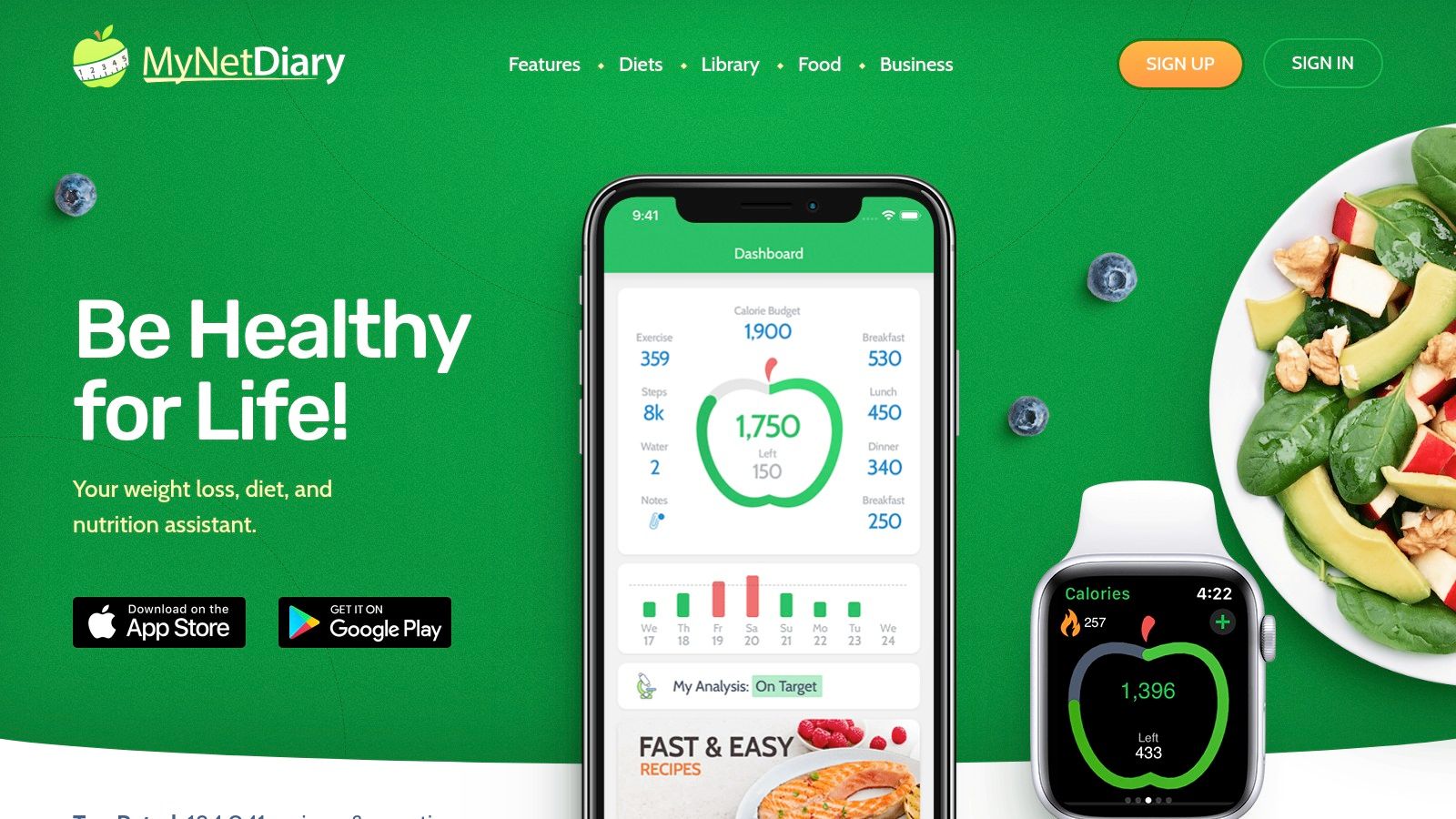
The platform integrates smoothly with devices from Apple Health, Fitbit, and Garmin, consolidating your activity and health metrics in one place. One of its most compelling aspects is the optional AI layer in the Premium Plus plan. This includes PhotoAI, which allows you to log meals simply by taking a picture, and an AI Coach that provides personalized feedback, significantly reducing the friction of daily logging.
Key Details & Pricing
Best For: Users who want a clean, modern interface with powerful AI-driven logging features and detailed nutrient analysis.
Pricing: A solid free version is available for basic tracking. Premium plans unlock meal planning, advanced nutrient data, and integrations, while Premium Plus adds the AI Coach and PhotoAI features for a higher monthly or annual fee.
Unique Feature: The AI-powered PhotoAI and AI Coach in the top tier provide a nearly effortless logging experience and personalized guidance.
Pros:
Polished and easy-to-navigate user interface simplifies daily use.
AI features like photo and voice logging reduce the time and effort of tracking.
Offers diet-specific plans and templates (e.g., keto, Mediterranean).
Cons:
Many of the most useful features, especially AI tools and in-depth nutrient analysis, are only available in the more expensive premium tiers.
The feature set can feel fragmented across different subscription levels.
Website: https://www.mynetdiary.com
7. Lifesum
Lifesum positions itself as a lifestyle-focused nutrition app rather than a strict calorie counter, making it a strong candidate for the best meal tracking app for users who want guidance beyond simple numbers. Its highly visual and approachable interface is designed to build healthier habits through structured meal plans and gentle prompts. The app offers plans for various goals, like high-protein or Mediterranean diets, which can be particularly helpful for managing metabolic health during perimenopause.
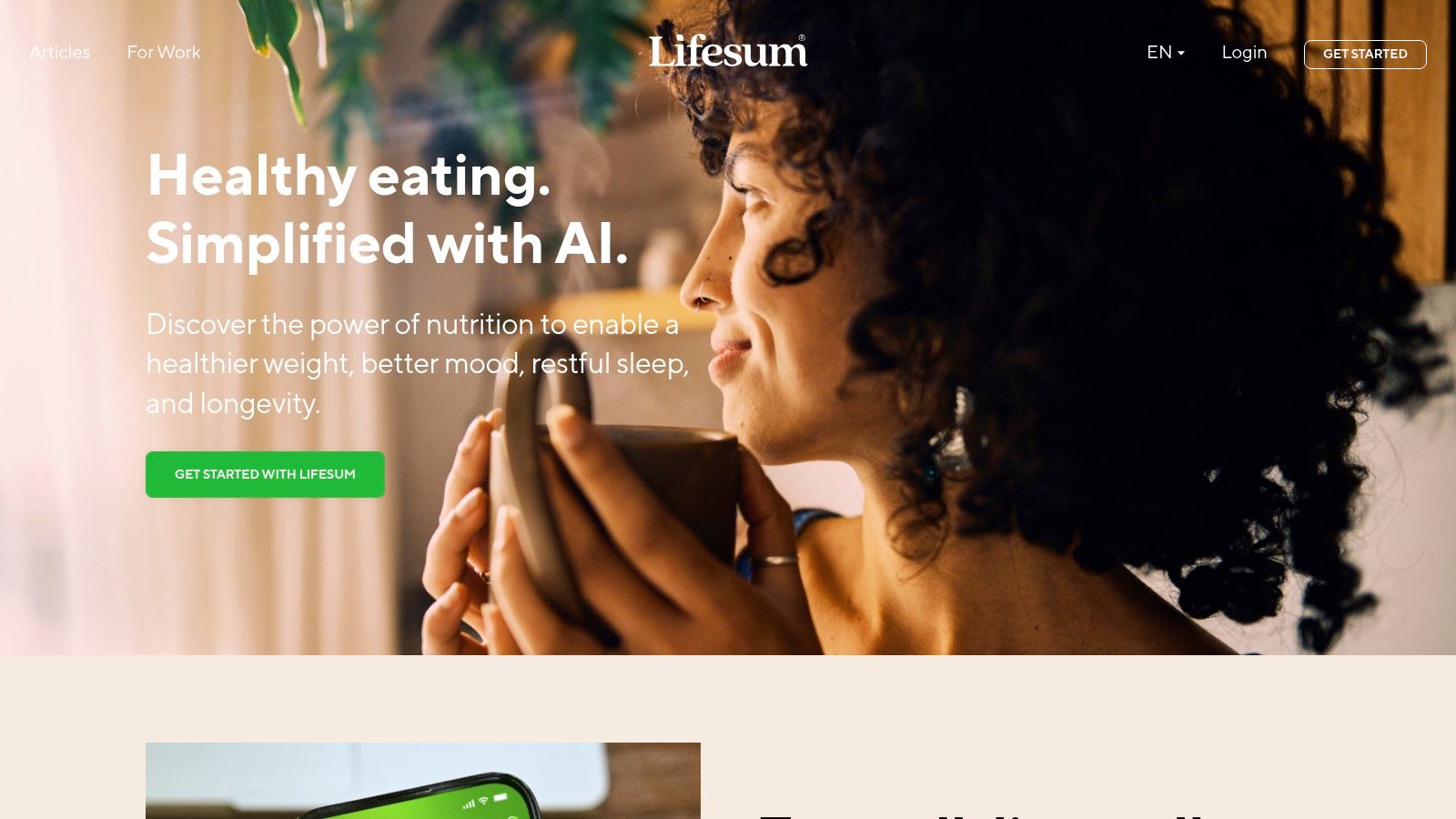
Beyond standard calorie and macro tracking, Lifesum incorporates habit targets, encouraging you to monitor water intake, fruit and vegetable consumption, and even how many sweets you eat. It provides a simple "Life Score" to give you a quick overview of how your choices are aligning with your health goals. This focus on building sustainable habits, along with its recipe suggestions and clean design, makes it less intimidating than more data-heavy platforms.
Key Details & Pricing
Best For: Users who appreciate a beautiful interface and want structured meal plans, recipes, and habit-building prompts.
Pricing: A free version covers basic calorie and macro tracking. Lifesum Premium is required for access to all diet plans, recipes, detailed nutrient information, and integration features, available for a monthly or annual subscription.
Unique Feature: Its guided meal plans and habit trackers provide a supportive structure that feels more like a wellness coach than a food diary.
Pros:
Very approachable and visually appealing design makes it easy to get started.
Helpful meal plans and recipes offer structure without being overly restrictive.
Habit trackers for water, fruit, and veggies promote well-rounded healthy behaviors.
Cons:
Most of the valuable features, including specific diet plans and detailed recipes, are behind the Premium paywall.
Exact pricing and renewal details are often only shown within the app itself.
Website: https://www.lifesum.com
8. YAZIO
YAZIO has gained popularity as a strong contender for the best meal tracking app due to its exceptionally clean interface and focus on user motivation. The app offers a straightforward approach to calorie counting and macronutrient tracking, making the daily logging process feel less like a chore. Its design is bright and encouraging, which can be a significant factor for staying consistent.
Beyond standard logging with a barcode scanner and manual entry, YAZIO incorporates engaging elements like daily challenges and tracking streaks to build healthy habits. The PRO subscription further expands its utility, unlocking specialized nutrition plans, a vast library of healthy recipes, and automatic tracking for intermittent fasting. The recent addition of AI-powered photo logging, where you can snap a picture of your meal for analysis, points to the platform's commitment to simplifying the user experience.
Key Details & Pricing
Best For: Individuals who appreciate a clean, modern design and motivational tools to keep them engaged with their health goals.
Pricing: A robust free version is available with ads. YAZIO PRO unlocks all features, including recipes, fasting trackers, and advanced nutrient data. Pricing is subscription-based and often varies by region and available promotions within the app.
Unique Feature: The combination of a sleek user interface with built-in motivational challenges and streak counters helps gamify the process of building consistent tracking habits.
Pros:
Simple and intuitive daily diary makes logging quick.
Motivational features like challenges help maintain user engagement.
Includes intermittent fasting trackers and a large recipe database in the PRO version.
Cons:
The most valuable features, like detailed nutrient insights and recipes, require a PRO subscription.
Free version contains advertisements that can be intrusive.
Website: https://www.yazio.com
9. Carb Manager
For anyone following a low-carbohydrate or ketogenic lifestyle, Carb Manager is a top-tier choice for the best meal tracking app. It’s specifically designed to simplify the complexities of these diets by automatically calculating net carbs (total carbs minus fiber and sugar alcohols). This focus makes it exceptionally useful for managing blood sugar and supporting metabolic health goals, which can be a key concern during perimenopause and beyond.
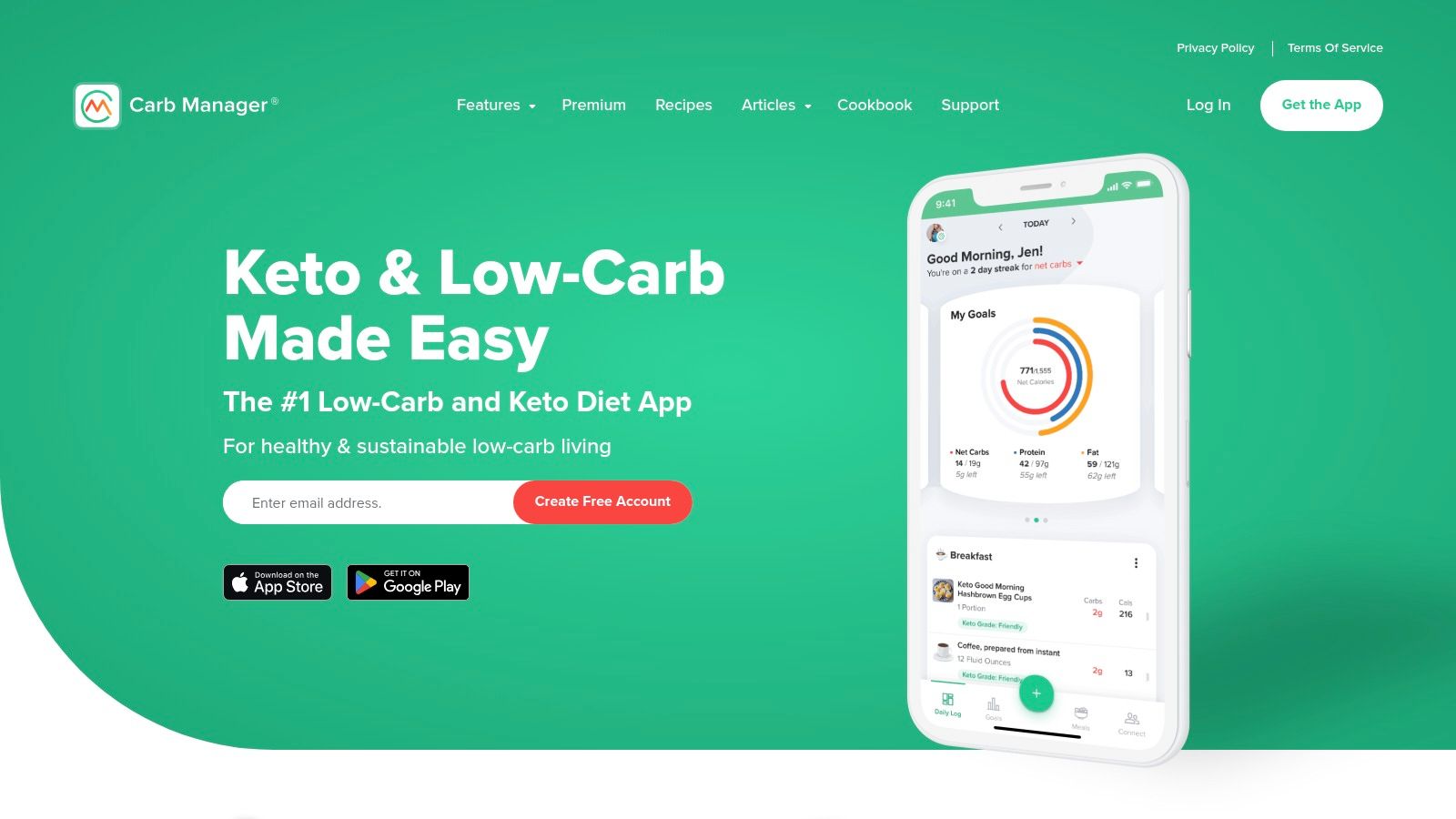
Beyond its core function, Carb Manager provides tools that are valuable even for those not strictly following keto. It allows for tracking intermittent fasting windows and logging key biomarkers like glucose and ketone levels. The app’s premium version expands its utility with a vast library of low-carb recipes, structured meal plans, and automatically generated shopping lists, helping to remove the guesswork from meal prep.
Key Details & Pricing
Best For: Individuals committed to a ketogenic or low-carb diet, or anyone who wants to be more mindful of their carbohydrate intake.
Pricing: The free version offers robust carb and macro tracking. Carb Manager Premium unlocks recipes, meal plans, detailed analytics, and advanced biomarker tracking for a monthly or annual subscription.
Unique Feature: Its primary focus on net-carb calculations and dedicated support for ketogenic diet metrics set it apart from more general-purpose trackers.
Pros:
Excellent for low-carb or carb-conscious dietary approaches.
Tracks more than just food, including fasting, ketones, and glucose.
Premium version offers rich planning tools like recipes and shopping lists.
Cons:
Its strong emphasis on keto can make it feel less suitable for users with different dietary goals.
Some advanced micronutrient details and analytics are locked behind the Premium subscription.
Website: https://www.carbmanager.com
10. Nutritionix Track
Nutritionix Track is a straightforward, US-centric meal tracker that prioritizes speed and simplicity. It’s powered by a massive database of American grocery store items and restaurant meals, which is its core strength. This makes it an excellent choice if you frequently eat out or buy common packaged foods, as logging is exceptionally fast using its predictive search or barcode scanner. The app was developed with input from registered dietitians, giving it a foundation of professional credibility.
Unlike some competitors packed with community features, Nutritionix Track offers a more focused, personal logging experience. It allows for natural language input, meaning you can type "a bowl of oatmeal with blueberries" and it will find the components for you. This makes it a great candidate for the best meal tracking app for users who want to log quickly without getting bogged down in complex features or social feeds. It also syncs with Apple Health and Fitbit to incorporate activity data.
Key Details & Pricing
Best For: US-based users who want a no-frills tracker with a strong restaurant database, or those working with a health coach.
Pricing: The core tracking features are free. The optional Track Pro upgrade is a one-time purchase that unlocks the ability to share your food log directly with a coach or dietitian and export your data.
Unique Feature: The "Coach Portal," which allows health professionals to view their clients' logs in real-time with the Pro upgrade.
Pros:
Extensive database of US restaurant and grocery items for quick logging.
Clean, simple interface without the clutter of social features or ads.
Useful sharing feature for users collaborating with a dietitian or trainer.
Cons:
Fewer advanced features and in-depth analytics compared to larger apps.
The main benefit of the paid upgrade is coach-sharing, which isn't valuable for all users.
Less robust database for international foods.
Website: https://track.nutritionix.com
11. FoodNoms
For users deeply invested in the Apple ecosystem, FoodNoms presents a compelling and privacy-focused alternative, easily making it a candidate for the best meal tracking app. It stands out with a clean, exceptionally fast interface that prioritizes user data privacy by default. The app is entirely ad-free, offering a focused logging experience without distractions. Its design philosophy centers on making tracking as quick and seamless as possible.
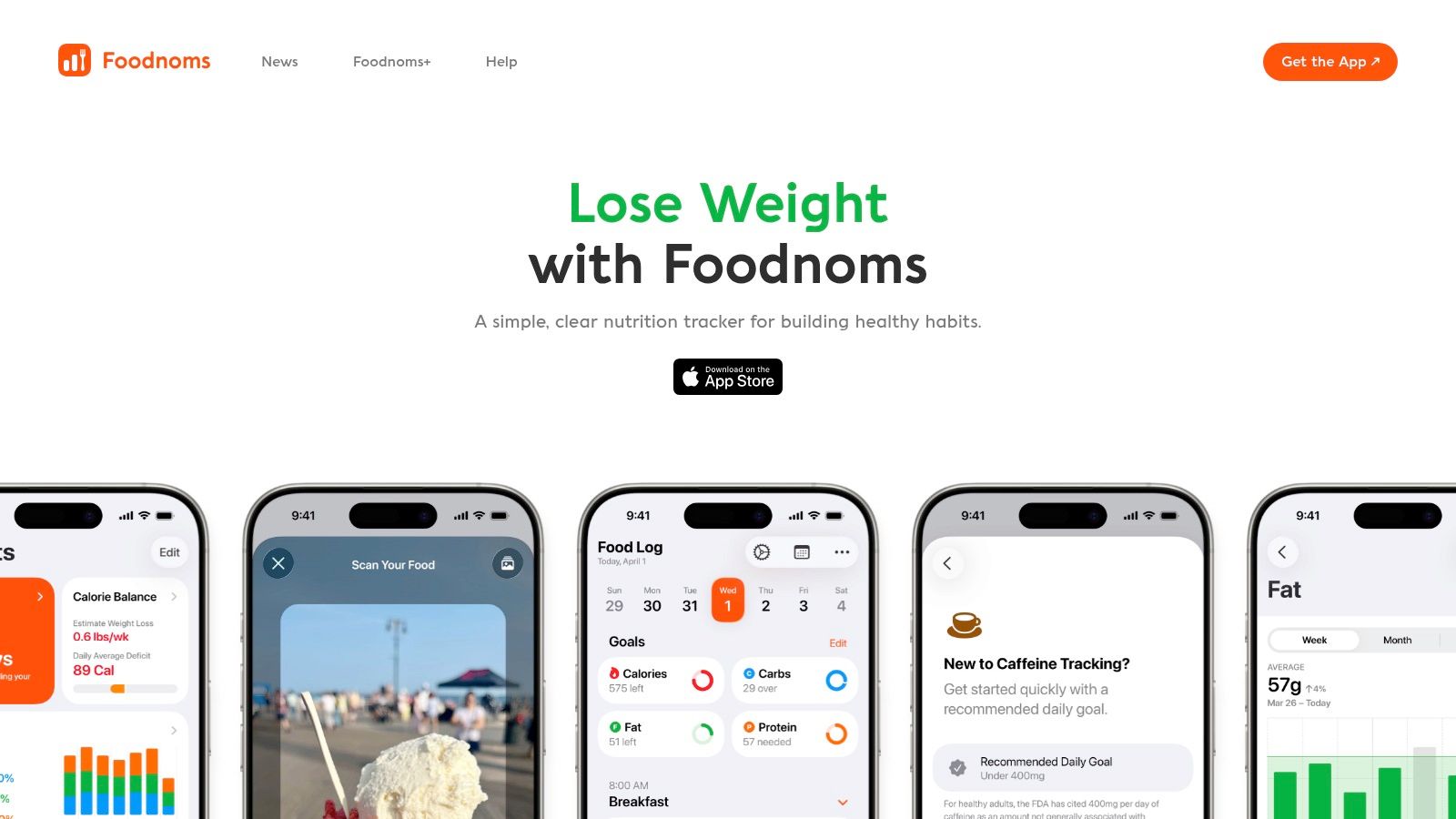
FoodNoms excels with its deep integration into Apple Health, automatically adjusting goals based on your activity data. This is great for active individuals, ensuring energy targets reflect real-time expenditure. The AI-assisted photo logging and natural language entry ("a bowl of oatmeal with blueberries") make inputting meals feel intuitive. Beyond just calories, it allows for custom goals for various micronutrients, water, and even caffeine, providing a more detailed view of your dietary habits.
Key Details & Pricing
Best For: Apple users who prioritize a clean, ad-free interface, data privacy, and deep integration with Apple Health.
Pricing: A robust free version is available. FoodNoms+ is an optional subscription that unlocks advanced features like AI photo logging, custom goals for micronutrients, and automated goal adjustments.
Unique Feature: Its privacy-first approach combined with a remarkably fast, minimalist user interface designed exclusively for Apple devices.
Pros:
Lightweight, fast, and respectful of user data privacy with no ads.
Thoughtful goal tracking beyond just calories, including specific nutrients and caffeine.
Excellent, deep integration with Apple Health for automated goal setting.
Cons:
Exclusively for Apple users (iOS/macOS), with no Android or web version available.
Some of the more advanced automation and AI features require a FoodNoms+ subscription.
Website: https://foodnoms.com
12. AteMate (formerly Ate Food Journal)
AteMate takes a different path from most meal tracking apps by prioritizing mindful eating over strict calorie counting. Instead of focusing on numbers, its core function is quick photo-based logging. You snap a picture of your meal and add optional notes about your hunger level, mood, and the circumstances surrounding the meal. This approach is designed to help you identify patterns and understand the "why" behind your eating habits.
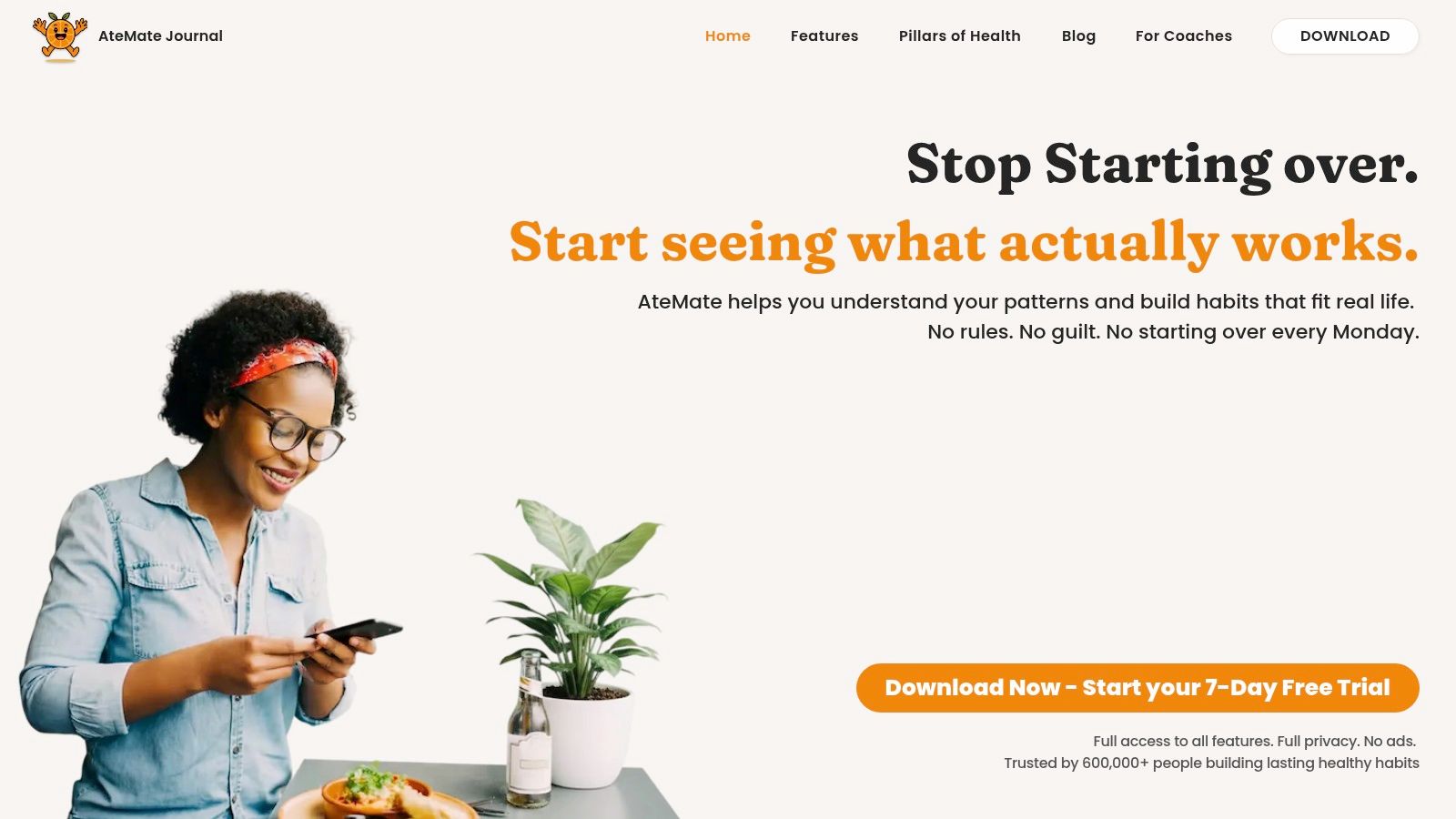
This makes AteMate an excellent tool for anyone who finds traditional calorie tracking tedious or triggering. For women navigating perimenopause, it can be especially useful for connecting food choices to symptoms like bloating, energy slumps, or mood shifts. The platform visualizes your journey on a timeline, helping you see the relationship between your meals, movement, sleep, and how you feel. It offers a gentle, behavior-focused alternative to the data-heavy nature of other trackers.
Key Details & Pricing
Best For: Users who want to build mindful habits and understand emotional eating triggers without the pressure of calorie counting.
Pricing: Offers a free version with basic photo logging. The Premium subscription unlocks advanced pattern insights, custom experiments, and deeper reflection tools for a monthly or annual fee.
Unique Feature: Its photo-first, non-judgmental "On/Off Path" system encourages awareness rather than perfection.
Pros:
Very low-friction logging encourages consistent daily use.
Focuses on the connection between food, mood, and physical feelings.
Excellent for developing a healthier relationship with food and breaking unhelpful habits.
Cons:
Not suitable for detailed micronutrient analysis or precise macro management.
Users seeking granular data and in-depth analytics may find it too simple.
Website: https://www.atemate.com
Top 12 Meal-Tracking Apps: Feature Comparison
Product | Core features | UX & quality (★) | Price / Value (💰) | Audience (👥) | Unique selling points (✨) |
|---|---|---|---|---|---|
Lila 🏆 | AI 1-min daily check‑in, symptom & cycle tracking, 24/7 chat coach | ★4.7 App Store, fast measurable improvements | 💰 Subscription (pricing not public) — high symptom-relief value | 👥 Women 40s–50s; perimenopause → menopause, metabolic goals | ✨ Real-time AI tailoring, continuous chat accountability, Google AI fund-backed |
MyFitnessPal | Large food DB, barcode/recipe logging, macro goals, integrations | ★ Mature, broad coverage | 💰 Free + Premium / Premium+ tiers | 👥 General calorie/macro trackers, mass market | ✨ Huge verified database, wide integrations, Premium AI meal planning |
Lose It! | Barcode scanner, "Snap It" photo logging, weight-loss plans | ★ Easy, beginner-friendly | 💰 Free + Premium | 👥 Beginners focused on weight loss & fast logging | ✨ Photo logging ("Snap It"), fast onboarding & reminders |
Cronometer | Deep micronutrient logging (80+ nutrients), custom biomarkers | ★ High accuracy, clinician-grade | 💰 Free + Gold (paid) for advanced reports | 👥 Nutrition-focused users, clinicians, precise trackers | ✨ Best-in-class micronutrient detail, lab/wearable integrations |
MacroFactor | Dynamic macro adjustments, progress-driven coaching | ★ Data-driven, transparent logic | 💰 Trial → subscription | 👥 Serious lifters, recomposition & fat-loss seekers | ✨ Weekly adaptive macros, transparent coaching algorithm |
MyNetDiary | Calorie/macro tracking, photo/voice logging, meal plans | ★ Polished, easy-to-use | 💰 Free + Premium / Premium Plus | 👥 Users wanting easy daily UX with deeper analysis | ✨ AI photo/voice logging, diet templates & coach features |
Lifesum | Macro tracking, structured meal plans, habit targets | ★ Attractive, approachable | 💰 Free + Premium | 👥 Users wanting guided meal plans & habit support | ✨ Friendly design, plan templates (high-protein, Mediterranean) |
YAZIO | Macro tracking, recipes, challenges, fasting support | ★ Simple & motivational | 💰 Free + PRO subscription | 👥 Motivated trackers who like gamified features | ✨ Challenges, streaks, AI-assisted logging in PRO |
Carb Manager | Net-carb/keto tracking, meal plans, biomarker logging | ★ Excellent for keto/carbs | 💰 Free + Premium | 👥 Low‑carb / ketogenic users | ✨ Net-carb focus, ketone/glucose tracking & carb cycling tools |
Nutritionix Track | Large US restaurant DB, predictive natural-language logging | ★ Fast for US foods | 💰 Free + Track Pro upgrade | 👥 US users, trainers & dietitians needing shared logs | ✨ Dietitian-friendly exports & coach-sharing (Track Pro) |
FoodNoms | Privacy-first, AI photo logging, deep Apple Health sync | ★ Fast, privacy-focused | 💰 Free + FoodNoms+ | 👥 iOS/macOS users who value privacy | ✨ Privacy-first design, goal auto-adjustments, Apple Health depth |
AteMate | Photo-based mindful food journal, pattern insights | ★ Low-friction, mindful | 💰 Freemium / subscription options | 👥 Mindful eaters, behavior-focused users | ✨ Photo-first journaling, mood/sleep/meal context & reflections |
Final Thoughts
Choosing the best meal tracking app is a deeply personal decision, much like choosing a dietary approach itself. As we've explored, the market offers a wide spectrum of tools, each with a distinct philosophy and feature set. From the data-rich environments of Cronometer and MacroFactor to the simplicity-focused mindfulness of AteMate, there is no single "best" for everyone. Your ideal app depends entirely on your goals, your personality, and the specific life stage you are navigating.
The journey through perimenopause and menopause introduces unique challenges-symptom fluctuations, metabolic shifts, and changing nutritional needs. For this reason, a generic calorie counter often falls short. It can tell you what you ate, but it can't connect the dots between your food choices and the intensity of your hot flashes, your sleep quality, or your energy levels. This is the critical gap that specialized apps are beginning to fill.
How to Make Your Final Decision
Reflecting on the detailed reviews, your next step is to crystallize your primary objective. Are you trying to lose weight, identify symptom triggers, build muscle, or simply become more mindful of your habits?
For pure data and macro precision: If your goal is strictly tied to hitting specific macronutrient or micronutrient targets, an app like Cronometer or MacroFactor will serve you well. Their detailed reporting and accurate databases are built for this purpose.
For straightforward weight loss: Apps like Lose It! and MyFitnessPal have a long history of helping users with weight management through simple calorie counting and community support. They are familiar, robust, and have massive food databases.
For symptom-centric tracking: If your main priority is understanding the relationship between your diet and perimenopausal symptoms like mood swings, bloating, or hot flashes, a general-purpose tracker will require significant manual effort. You'll be left trying to correlate data on your own. This is where an integrated solution becomes invaluable.
The most effective approach isn't just about logging food; it's about gaining actionable insights. A truly helpful tool doesn't just present you with numbers. It helps you see patterns and understand the why behind your body's responses. It guides you toward making small, sustainable changes that lead to real relief and tangible results.
Ultimately, the best meal tracking app for you is the one you will use consistently. It should feel less like a chore and more like a supportive partner in your health journey. Consider starting with a free trial of your top two or three contenders to experience their workflow firsthand. Pay attention to the user interface, the speed of logging, and whether its core philosophy aligns with your personal health goals. This hands-on test is the surest way to find the perfect fit for your lifestyle.
If you're tired of juggling separate apps for food, symptoms, and cycle tracking, Lila offers an integrated solution built for this specific chapter of life. It’s designed to connect your meal choices to your menopausal symptoms, providing insights that general-purpose trackers simply can't. Take the next step and discover how personalized tracking can make a difference in your well-being by exploring Lila.
Get Lila, your personal coach for perimenopause.
Built for women in their 40s. 24/7 coaching, in your pocket.