
Perimenopause vs Menopause: Key Differences
Perimenopause vs menopause - Understand the key differences between perimenopause and menopause, including symptoms, stages, and what to expect. Get clear
You're 44, your period still arrives roughly when expected, and yet you're waking at night, losing patience over minor problems, and sweating through a work meeting. Your jeans fit differently. Your concentration feels unreliable. You're left wondering whether this is perimenopause or menopause, especially because the symptoms feel serious while your cycle hasn't disappeared.
That confusion is understandable. The dictionary distinction is simple, but real life isn't. Most guides explain the 12-month rule and stop there. They don't tell you how to make decisions while periods are still happening, symptoms are already disruptive, and a hormone test may not provide a clear answer.
The useful question isn't only, “Which label applies?” It's, “What pattern is my body showing, what needs checking, and what can I do this week?” By the end, you'll have a practical way to place yourself on the timeline, understand what each stage tends to demand, and stop relying on guesswork.
Table of Contents
- Why This Comparison Feels So Confusing in Real Life
- What Perimenopause and Menopause Actually Mean
- Side-by-Side Comparison Across Hormones, Cycles, and Fertility
- How Symptoms Actually Show Up in Each Stage
- How Doctors Actually Diagnose Each Stage
- Treatment and Self-Care That Actually Helps
- Turning the Comparison Into a Personal Decision With Daily Tracking
- Red Flags, Quick Self-Check, and Your Next Step
Why This Comparison Feels So Confusing in Real Life
A woman in her mid-40s may arrive at an appointment with a familiar story. Her periods are still present, perhaps only slightly closer together or heavier than before. Meanwhile, sleep has become fragmented, her mood changes quickly, and hot flashes arrive without warning. She may have blamed work pressure, parenting demands, or ordinary aging because nobody has given her a useful explanation.
That gap causes real problems. Perimenopause can produce intense symptoms before menstruation ends, so waiting for periods to stop before seeking help is poor advice. A 2025 study found that perimenopause remains poorly understood and under-addressed in healthcare, with women often seeking help for sleep disruption, mood changes, and vasomotor symptoms before receiving a formal diagnosis. The Nature study on perimenopause care describes the exact problem many patients recognize: symptoms arrive before a neat clinical label.
The label matters because the plan changes
If your periods are continuing, even irregularly, you're usually dealing with a fluctuating transition rather than established menopause. That means symptoms can swing from one week to the next, and your treatment plan may need to account for ongoing cycles, pregnancy possibility, bleeding patterns, and changing hormone exposure.
If you've gone through the formal menopause milestone, the focus shifts. Your clinician can assess persistent symptoms, vaginal or urinary concerns, bone health, cardiovascular risk factors, and whether hormone therapy or non-hormonal treatment fits your history.
The practical insight: Severe symptoms with ongoing periods point toward perimenopause more often than menopause. Don't dismiss them because your cycle hasn't ended.
Your job isn't to diagnose yourself from one symptom. Track the interaction between cycle pattern, symptom clusters, age, and time since your last period. That combination gives you a far more useful starting point than a single dramatic night sweat or an isolated blood-test result.
What Perimenopause and Menopause Actually Mean
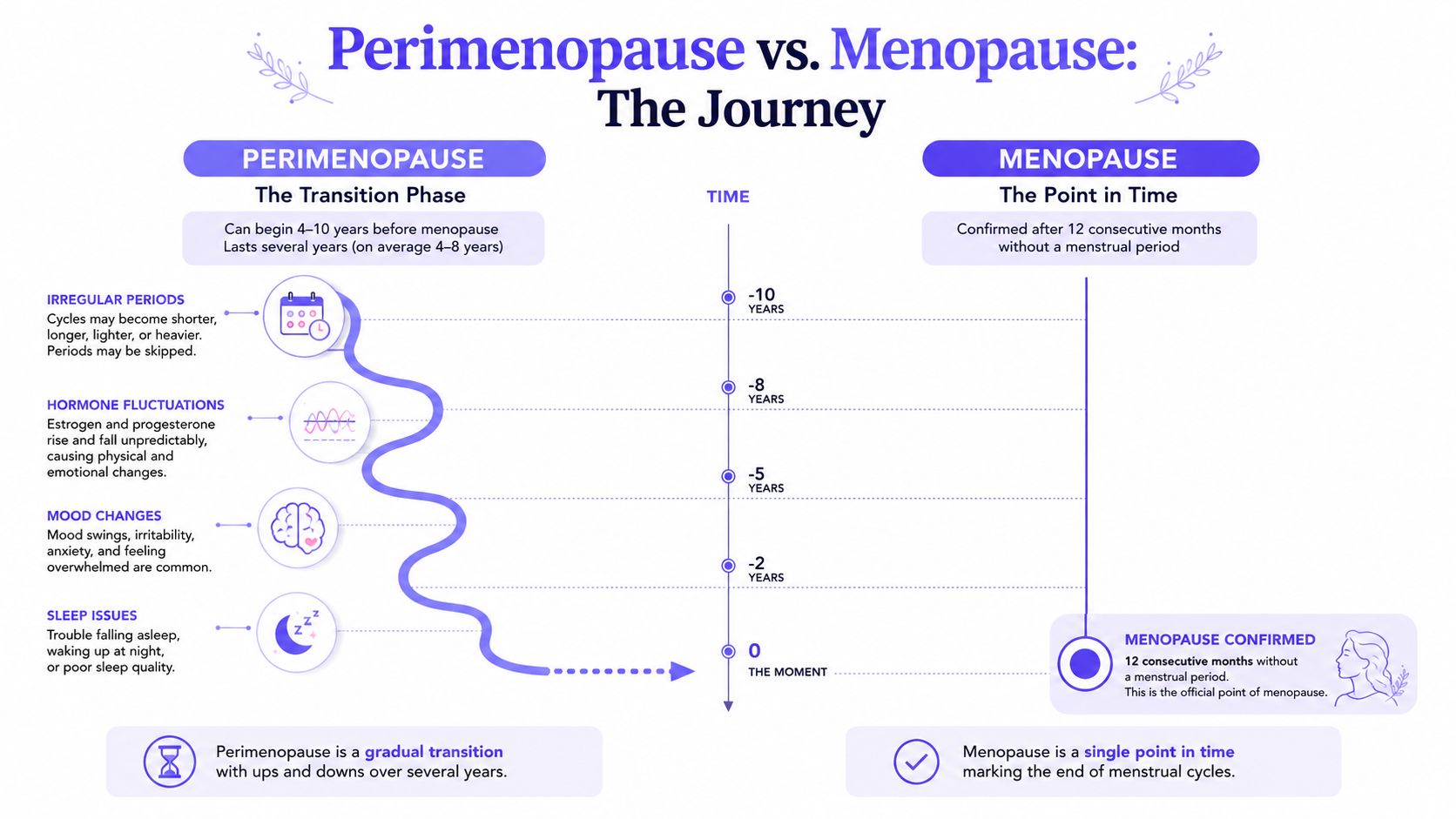
Perimenopause is the hormonally unstable transition leading up to menopause. Estrogen, progesterone, and ovulation patterns can shift unevenly, which is why symptoms may appear, disappear, and return with a different intensity. Menopause is different. It's a single point in time, confirmed retrospectively after 12 consecutive months without a period, provided there isn't another explanation for the missed bleeding.
In Australia, menopause typically occurs between ages 45 and 55, with an average age of 51, and the World Health Organization gives the same general global age range for natural menopause. The Australian Government's explanation of perimenopause also distinguishes the transition from the later milestone. Perimenopause usually lasts about 4 to 6 years, although it can range from 2 to 10 years, so the experience is not a short, predictable episode.
Use your menstrual pattern as the timeline
Clinicians commonly describe the transition in stages based on what your periods are doing:
- Early transition: Your cycle length shows a persistent difference of 7 days or more, or you begin skipping cycles. The STRAW staging review explains why menstrual changes are central to identifying this stage.
- Late transition: You experience gaps without menstruation lasting 60 days to 12 months. Symptoms may become more pronounced, but you still haven't met the formal definition of menopause.
- Menopause: You reach 12 consecutive months without menstruation. The date of menopause is assigned retrospectively, based on the final menstrual period.
This framework helps you place yourself without pretending that every body follows a clean schedule. A skipped period doesn't automatically mean menopause. Pregnancy, thyroid conditions, stress, illness, medication changes, and other causes can affect bleeding, so an unexpected change deserves context rather than a quick assumption.
Think of perimenopause as a process and menopause as a milestone. That distinction is the foundation for every later decision.
Side-by-Side Comparison Across Hormones, Cycles, and Fertility
Stage identification is a decision problem, not a label-matching exercise. Compare your hormone pattern, menstrual history, ovulation, fertility, and symptom volatility together.
| Dimension | Perimenopause | Menopause |
|---|---|---|
| Hormones | Estrogen can rise and fall unpredictably, progesterone may be relatively lower, and FSH can vary considerably | Estrogen and progesterone settle at consistently low levels |
| Periods | Still occurring, but timing, flow, or duration may change | Absent for 12 consecutive months |
| Ovulation | May happen in some cycles and not others | Natural ovulation has ended |
| Fertility | Pregnancy remains possible, although fertility is declining | Natural pregnancy is no longer possible |
| Symptoms | Often volatile, with abrupt changes in sleep, mood, temperature, and bleeding | May become steadier, though symptoms can continue |
| Staging tool | Menstrual history and symptom pattern | Retrospective menstrual history |
The hormone pattern explains why perimenopause can feel so unpredictable. As described in this clinical review of perimenopause hormones, estrogen may be erratic or temporarily high, progesterone may be relatively lower, and FSH can fluctuate from day to day. One FSH result therefore has limited value for confirming whether you have reached postmenopause.
Menopause brings a steadier hormonal pattern. Estrogen and progesterone remain consistently low rather than repeatedly surging and dropping, so symptoms may become less erratic. They can still continue after periods stop, including hot flashes, sleep disruption, vaginal symptoms, mood changes, and brain fog.
Fertility is the practical difference many people miss
If you still have periods, ovulation may still occur, even when cycles are unpredictable. Pregnancy therefore remains possible during perimenopause. Menopause is confirmed only after 12 consecutive months without menstruation, so contraception decisions should follow clinical guidance, not symptoms alone.
Track the evidence that changes your decisions: bleeding dates, cycle gaps, symptoms, and possible triggers. A single irregular period cannot establish menopause, and a symptom diary cannot confirm ovulation. Your menstrual record gives the timeline, while a clinician can interpret it alongside your medical history.
Some people also explore treatment through a specialist clinic or specialist hormone balance resources from Athena Plastic Surgery. Use that resource to prepare questions, not to replace a review of your bleeding history, medical background, and treatment risks with a qualified clinician.
How Symptoms Actually Show Up in Each Stage
Symptoms don't obey the labels. A hot flash can occur during perimenopause or menopause, while sleep and mood changes may appear before temperature symptoms become obvious. The pattern, timing, and relationship to your cycle are more informative than any single complaint.
The most disruptive symptoms often arrive during the hormonal turbulence of perimenopause, not only after periods stop.
Temperature and sleep
Hot flashes and night sweats are often the symptoms people associate most strongly with menopause, but they can begin during perimenopause. A flash may arrive during a meeting, after a glass of wine, or during the night. Alcohol, warm rooms, stress, and disrupted sleep can make the experience harder to manage.
Sleep problems deserve separate attention because they can amplify everything else. You may struggle to fall asleep, wake after a night sweat, or feel tired despite spending enough time in bed. Start with a cool bedroom, breathable sleepwear, and a consistent wake time. If sweating regularly damages bedding, practical protection such as mattress protection for older adults can make nighttime management less stressful.
Mood, anxiety, and concentration
Mood changes may show up as irritability, tearfulness, anxiety, or a shorter fuse. They're particularly confusing when life circumstances look unchanged. Sleep loss can intensify them, but hormonal fluctuation may also be part of the picture, especially during perimenopause.
Brain fog often feels like losing words, forgetting why you entered a room, or struggling to switch between tasks. Don't treat that as a character flaw. Record when it appears, how you slept, where you are in your cycle, and whether alcohol, skipped meals, or acute stress preceded it.
Bleeding, body changes, and libido
Cycle changes are the strongest staging clue. The early transition involves a persistent cycle-length difference of 7 days or more or skipped cycles, while later perimenopause involves gaps lasting 60 days to 12 months. The clinical staging evidence supports using menstrual history rather than routine hormone panels as the primary staging tool.
Weight distribution, bloating, breast tenderness, vaginal dryness, and changes in libido may occur in either stage. They can also reflect sleep, stress, medications, relationship factors, thyroid conditions, or other health issues. A symptom tracker helps you avoid blaming every change on menopause while still taking the pattern seriously.

How Doctors Actually Diagnose Each Stage
A clinician usually starts with your story, not a laboratory number. Bring the date of your last several periods, changes in cycle length, bleeding volume, sleep quality, hot flashes, mood symptoms, medications, contraception, pregnancy possibility, and relevant personal or family history.
During perimenopause, a single FSH test can mislead because levels may change substantially from day to day. Estradiol can also fluctuate, and a normal-looking result doesn't rule out the transition. Routine hormone panels generally aren't diagnostic for staging, so a clinician should interpret any test alongside your menstrual pattern and symptoms.
What an appointment may include
A practical evaluation may involve:
- Cycle review: Your clinician will ask whether periods remain present, whether cycles are changing, and how long any gaps have lasted.
- Symptom assessment: Sleep, temperature symptoms, mood, concentration, vaginal symptoms, bleeding, and sexual health all matter.
- Rule-outs: Pregnancy, thyroid problems, anemia, medication effects, and other causes may need consideration, particularly when bleeding changes are unusual.
- Selective testing: FSH, estradiol, or AMH may have a role in specific situations, but they shouldn't be treated as a universal menopause confirmation test.
- Confirmation: Menopause is confirmed retrospectively after 12 consecutive months without a period, unless another medical explanation changes the assessment.
Before your visit, review this practical guide to what a test for menopause can and cannot tell you. The strongest question to ask isn't “Can you test my hormones?” It's “Given my cycle history and symptoms, what stage is most likely, what else should we rule out, and what treatment options are reasonable for me?”
Treatment and Self-Care That Actually Helps
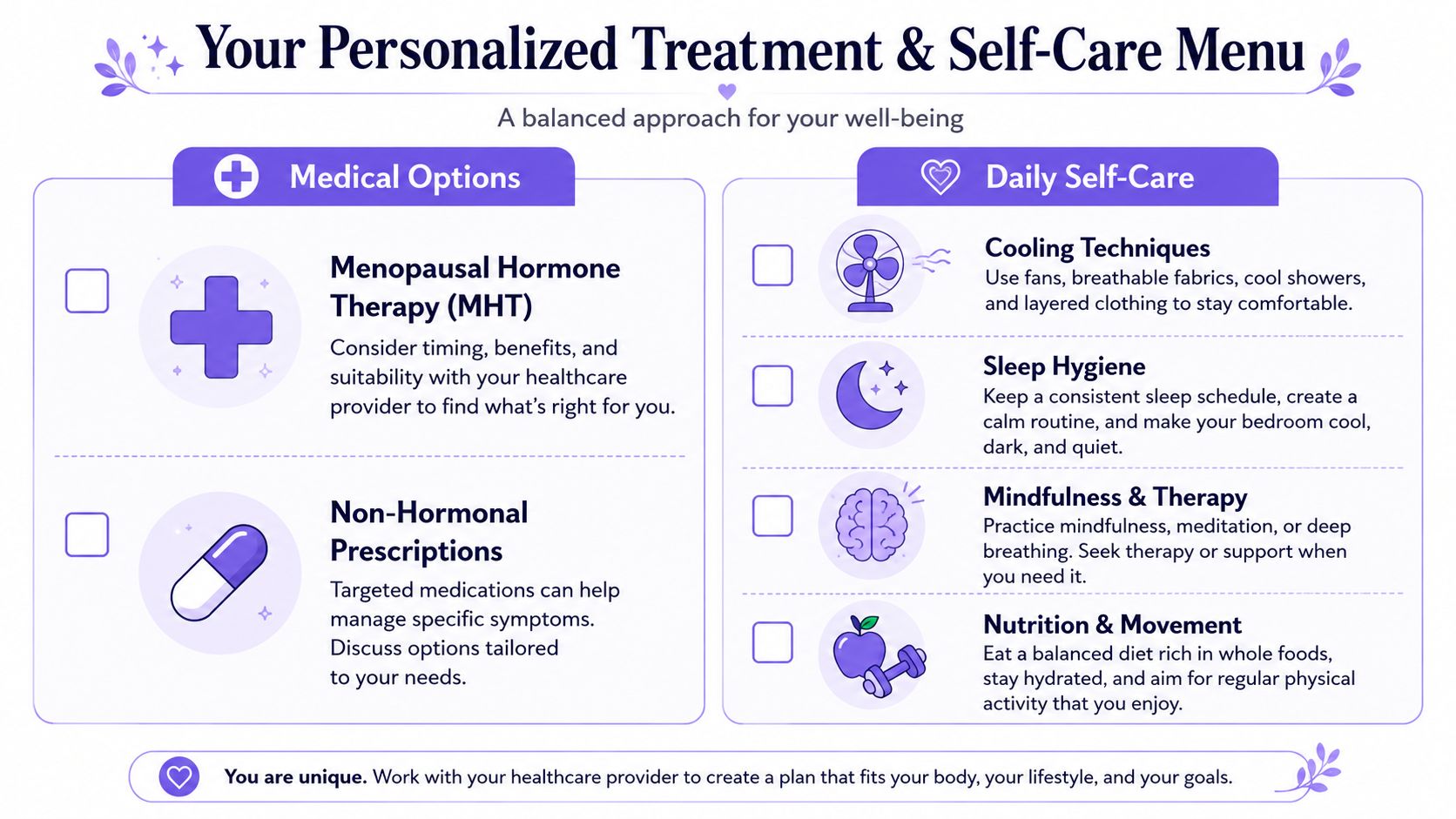
You don't need to choose between lifestyle changes and medical care. Use both when symptoms interfere with sleep, work, relationships, or daily functioning. My clear recommendation for a symptomatic woman in her 40s who's still cycling is to start tracking immediately, tighten the basics that affect symptoms, and discuss treatment rather than waiting for menopause to be formally confirmed.
Menopausal hormone therapy can help with vasomotor symptoms, sleep disruption, and other menopause-related concerns for people who are appropriate candidates. It isn't suitable for everyone, and the decision depends on medical history, symptoms, age, timing, bleeding pattern, and personal risk factors. Review what hormone therapy for menopause involves before an appointment, then discuss the risks and benefits with a qualified prescriber.
Choose the treatment according to the problem
- Hot flashes and night sweats: Cooling strategies, a cool bedroom, lighter layers, and reducing personal triggers are sensible first steps. If symptoms remain disruptive, hormone therapy or non-hormonal prescriptions may be appropriate.
- Mood and anxiety: Therapy, sleep repair, movement, and stress-management practices can help. SSRIs and SNRIs may be considered when mood or vasomotor symptoms need medication, especially when hormone therapy isn't suitable.
- Sleep disruption: Treat the night sweats, but also protect the routine. Keep a consistent wake time, dim lights before bed, and avoid turning every bad night into a different schedule.
- Muscle, bone, and body composition: Resistance training supports strength, while protein-forward meals can improve satiety and make meals easier to structure. Choose manageable sessions you'll repeat rather than punishing workouts you'll abandon.
- Alcohol and triggers: Alcohol can worsen hot flashes and sleep for some people. Test a reduction and track the result instead of assuming the effect is permanent or universal.
- Specific prescriptions: Gabapentin may be considered for selected vasomotor symptoms, while antidepressants can address particular mood or temperature symptoms. A clinician should match the medication to your health history.
Menopause care matters globally because more than one billion women are currently experiencing perimenopause, menopause, or postmenopause, according to Impacts of Menopause. Earlier menopause also needs proper evaluation. Menopause before age 40 is classified as premature menopause, and the source reports that it affects up to 8.6% of women. That situation deserves clinician-led assessment rather than self-treatment.
Turning the Comparison Into a Personal Decision With Daily Tracking
A changing cycle, restless sleep, and sudden irritability can leave you unsure which stage you're in. Treat perimenopause vs menopause as a decision to clarify, not a vocabulary test. Record your cycle status, sleep, mood, energy, hot flashes, bleeding, meals, alcohol, exercise, and medication changes for a few minutes each day.
Look for relationships. Do night sweats precede poor sleep? Do hot flashes follow alcohol? Does anxiety gather around a certain part of your cycle? Does brain fog appear after missed meals or several stressful days? A consistent record turns “I don't feel right” into specific information you can review with a clinician.
Keep the system simple. Rate symptom intensity, add one short note, and review your entries weekly. Change one habit at a time so you can tell what helped.
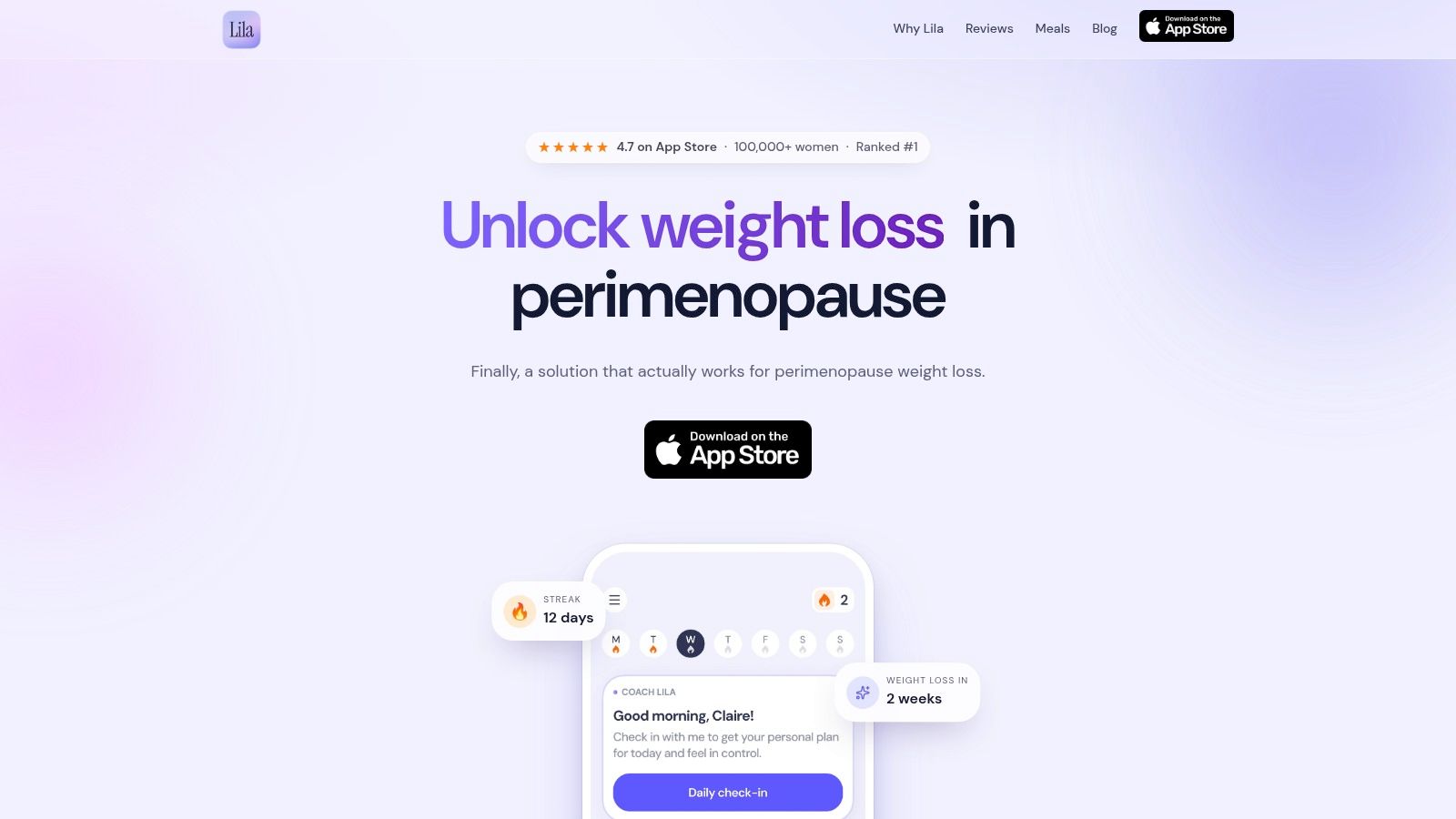
Lila brings cycle, symptom, mood, sleep, energy, and meal tracking into one daily check-in, with an AI-guided action plan and chat-based coaching. Its role is organization, not diagnosis. For practical guidance on how to track perimenopause symptoms, use the record to prepare better questions and identify patterns worth discussing with your clinician.
Red Flags, Quick Self-Check, and Your Next Step
Some symptoms should take you out of article-reading mode and into clinical care. Arrange medical assessment for very heavy bleeding, bleeding between periods, bleeding after sex, or sudden severe mood changes. Seek urgent care for chest pain, and report any bleeding after menopause has been confirmed.
Use this quick self-check:
- Still cycling with changing timing or symptoms: Perimenopause is more likely. Track the cycle and symptom pattern, then book care if symptoms disrupt your life.
- Long gaps without a period, but less than 12 consecutive months: You may be in late perimenopause. Don't assume the milestone has happened yet, and discuss pregnancy prevention and unusual bleeding with your clinician.
- 12 consecutive months without a period: Menopause has been reached retrospectively. Persistent or new symptoms still deserve evaluation and treatment options.
This week, record your period date, sleep quality, mood, energy, temperature symptoms, and one possible trigger each day. Bring that record to your appointment. It will give you and your clinician something more useful than, “I just don't feel like myself.”
If you're tired of guessing where you are in the transition, visit Lila to centralize your cycle, symptom, sleep, mood, meal, and energy tracking. Use the daily check-in and personalized action plan to identify patterns you can act on, while keeping your clinician involved for diagnosis and treatment decisions.
Get Lila, your personal coach for perimenopause.
Built for women in their 40s. 24/7 coaching, in your pocket.