
What Is Menopause Belly: Causes, Signs and Fixes
Learn what is menopause belly, why fat shifts to the midsection in midlife, and which nutrition, strength and sleep steps help.
Menopause belly is the shift toward storing more fat around the abdomen, especially visceral fat around the internal organs, during perimenopause and after menopause, and it isn't a separate medical diagnosis. The size of that shift surprises most women: early postmenopausal women carried 36% more trunk fat and 49% more intra-abdominal fat than premenopausal women in a controlled comparison.
That gap matters because it explains something the scale can't. You can weigh the same as you did three years ago and still find that your trousers fasten differently, that your waistband leaves a mark, that your middle has a shape it never had before. The change isn't imaginary, and it isn't a failure of discipline. It's fat moving to a different address.
Table of Contents
- What Menopause Belly Means and Why It Is Not a Diagnosis
- Signs of Menopause Belly and How to Tell It From Bloating
- How Estrogen Decline Moves Fat to the Midsection
- Why Muscle Loss and Sleep Make the Belly Harder to Reduce
- When Belly Fat Signals Higher Metabolic Risk
- Nutrition, Strength Training and Sleep Steps That Shrink Menopause Belly
- Start Tracking Your Waist This Week
What Menopause Belly Means and Why It Is Not a Diagnosis
Menopause belly describes fat moving toward the abdomen during perimenopause and after the final menstrual period. There's no blood test for it, no diagnostic code, and no single moment when it starts. It's a pattern of fat distribution, and it shows up on a tape measure far more reliably than on a bathroom scale.
Two kinds of fat sit in that area, and they behave differently. Subcutaneous fat lies just under the skin, the soft layer you can pinch between finger and thumb. Visceral fat sits deeper, wrapping the liver, kidneys and intestines. Both contribute to a thicker waist, but only one of them is metabolically active in ways that affect your heart and blood sugar.
The clearest evidence comes from a controlled study published in 2000 that compared 53 premenopausal women averaging 47 years old with 28 early postmenopausal women averaging 51. The postmenopausal group had 36% more trunk fat, 49% more intra-abdominal fat and 22% more subcutaneous abdominal fat. The intra-abdominal difference stayed significant even after the researchers adjusted for age and total body fat, which points at hormonal change rather than ageing alone.
Think of a suitcase repacked for the return journey. The weight on the airline scale is identical, but the contents now bulge at the front instead of sitting flat. Nothing was added, and yet the bag no longer slides under the seat.
What this means in practice: a larger waist can appear while your total weight barely moves. A scale that hasn't budged is not proof that nothing changed.
That's the first thing to unlearn. The midsection shift of midlife is a change in where fat is stored, and it can happen alongside stable weight, a modest gain, or even a small loss. Judging it by the scale is like judging a haircut by your shoe size.
Signs of Menopause Belly and How to Tell It From Bloating
The everyday signs are easy to recognise once you know what to look for. Waistbands that fitted comfortably last spring now dig in by mid-afternoon. Your waist measurement creeps up while your weight holds steady. The middle feels softer and fuller, while your arms, shoulders and legs look much the same as before.
Then there's the pattern that gets mislabelled. Hormonal changes can be associated with bloating, constipation, abdominal pain, nausea and indigestion, and research on the menopause and gut relationship remains inconsistent and often confounded by age, as a review of the evidence on abdominal symptoms sets out. Much of what gets called menopause belly at night is distension, not new fat.
Time pattern is the most useful separator you have.
| Feature | Menopause belly | Bloating or gut swelling | What to track |
|---|---|---|---|
| Pattern across the day | Waist grows steadily over months | Swells and eases within hours, often after meals | Time of day and meals eaten |
| Speed of change | Gradual, over weeks to years | Can change in a single day | Dated waist readings |
| Waist measure | Stays enlarged on good days | Varies widely from day to day | Morning and evening waist |
| Other signs | Lower energy, more visceral fat risk | Gas, constipation, pain or nausea | Bowel movements and pain |
| Next step | Track waist and strength over time | See a doctor if swelling is painful or persistent | Symptom and meal log |
A waist that measures 2 cm larger at 8pm than at 7am, then returns to baseline overnight, behaves like distension. A waist that measures 3 cm larger than it did four months ago on every single morning reading behaves like fat. Both can be true at once, which is why guessing wastes time and tracking doesn't. If you want practical relief strategies for the gut side, these menopause bloating relief approaches are a sensible starting point.
Swelling that is persistent, painful, or worsening quickly needs prompt medical review. Treating every abdominal change as menopause can delay evaluation of a gut or gynaecological problem, and treating every change as fat can push you into a diet you don't need.
How Estrogen Decline Moves Fat to the Midsection
Estrogen does more than run the menstrual cycle. During the reproductive years it steers fat storage toward the hips and thighs, which is why body shape at 35 tends to sit lower than it does at 55. As estradiol falls, that steering weakens and new fat settles in the abdomen instead, often while total body weight barely moves, as the Mayo Clinic's overview of menopause weight gain explains.
The timeline follows a predictable order. During perimenopause, estrogen fluctuates and then declines, and abdominal fat starts rising several years before the final menstrual period, tracking the fall in serum estradiol. The steepest accumulation sits in the years just before that last period, and visceral fat keeps climbing afterwards at a slower pace. The scale can stay flat through all of this, because what changes is where fat sits and what it's made of.
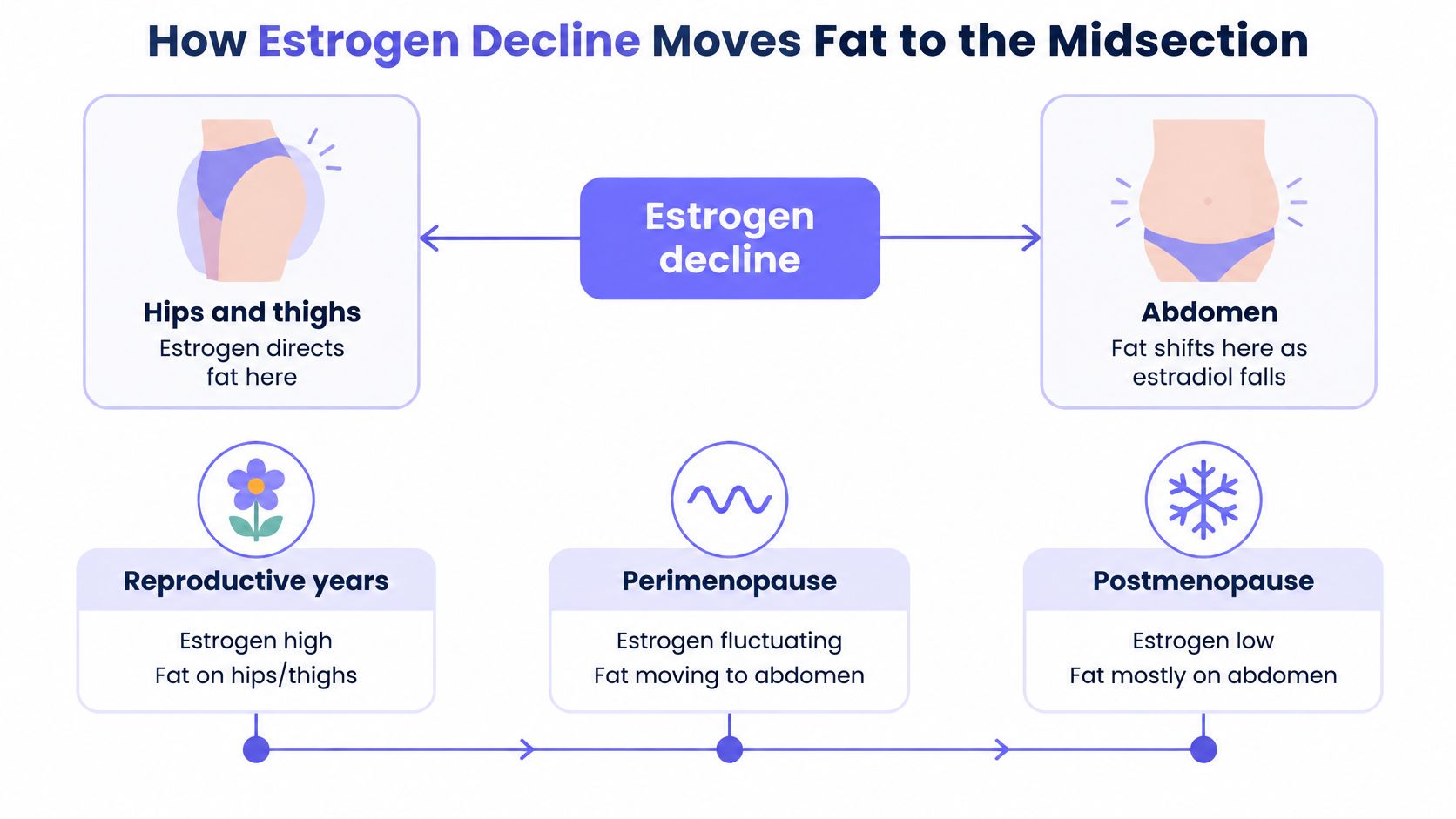
One distinction matters here. The fat arriving is largely visceral fat, stored deep inside the abdominal cavity rather than as the soft layer you can pinch under the skin. That makes it a different problem from the bloating and fluid shifts that swell your waist by evening and release it overnight. Bloating is volume. This is tissue.
Follow the chain one link at a time. Estrogen falls. Fat storage relocates from hips and thighs to the abdomen. Energy expenditure drifts down. Lean muscle becomes harder to hold. Sleep fragments. Each link makes the next one easier, and none of them is a character flaw.
On hormone therapy: it may attenuate central fat redistribution in appropriate patients, but it is not a weight-loss treatment. It's prescribed for validated menopausal indications after individualised risk assessment.
Your first job is context. Note which stage you're in and roughly when your periods began changing, because every waist reading you take later makes more sense against that timeline. Knowing whether you're three years into erratic cycles or five years past your last period changes how you interpret the trend. If you're unsure where you fall, these signs of low estrogen help you place yourself.
Why Muscle Loss and Sleep Make the Belly Harder to Reduce
Blaming estrogen alone gets the story half right. Estrogen decline interacts with loss of lean mass, lower resting energy expenditure, sleep disruption, changing activity levels and altered insulin and lipid metabolism, as clinical reviews of menopause body composition describe. The belly is the visible end of several processes running together.
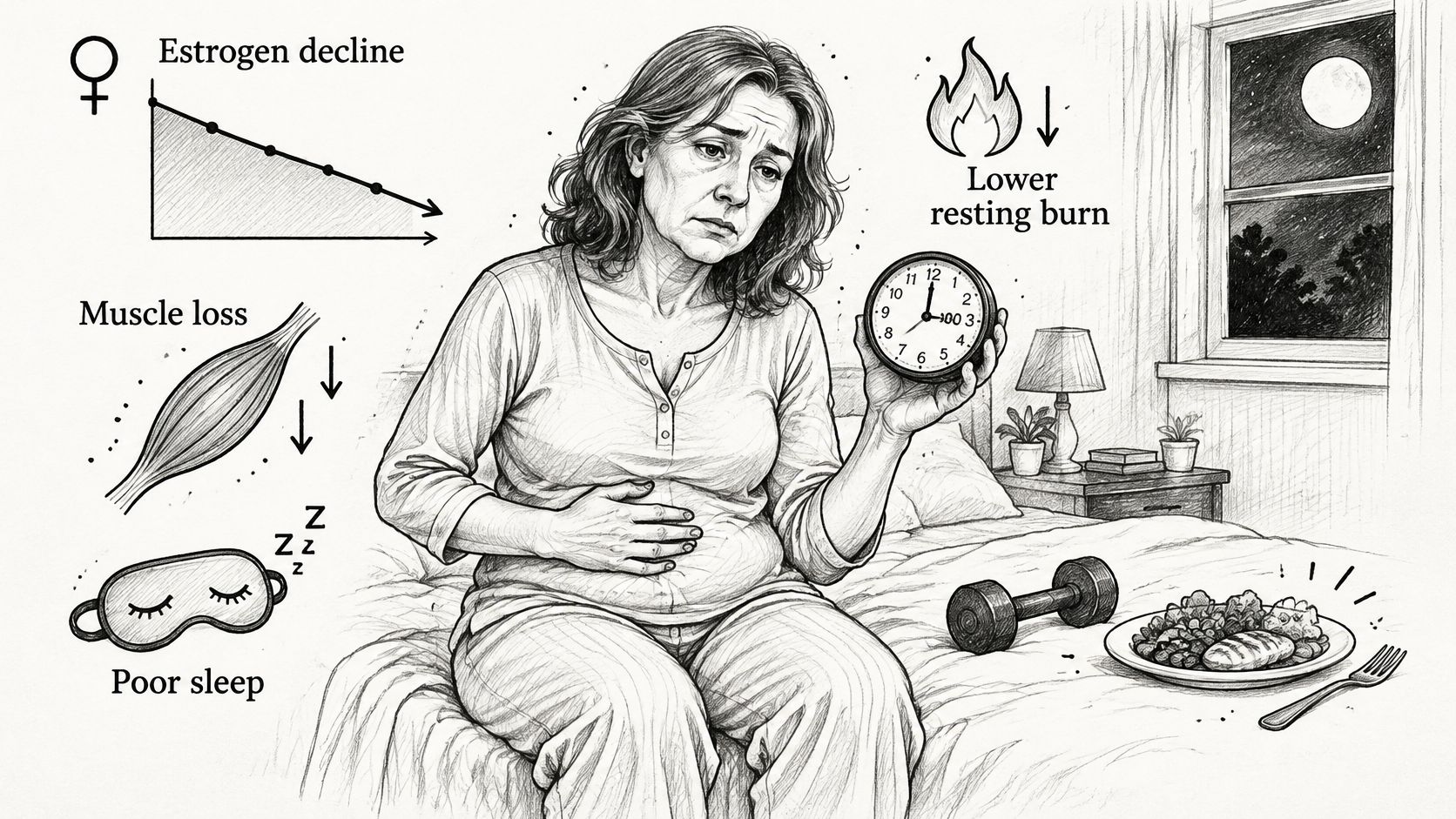
Here's the trap in plain terms. Muscle burns energy around the clock; fat burns very little. Lose muscle and gain visceral fat at the same time and your daily energy use drops, so the portion sizes that kept you steady at 40 slowly start producing fat at 50. A woman eating exactly as she did a decade ago, walking the same route with the same dog, can gain around her middle without ever feeling hungrier.
The sleep link
Short, broken nights raise hunger and drain energy. You eat more and move less, which deepens the muscle loss that started the whole slide. Night sweats that wake you three times a night aren't a side issue in this story; they're one of its drivers.
Visceral fat doesn't sit still either. It releases inflammatory and metabolic signals and is linked with higher cardiometabolic risk than subcutaneous fat alone.
This is why aggressive dieting based on scale weight backfires. Cut calories hard without protecting muscle and you lose the tissue that keeps your energy burn up, then regain fat in the same abdominal spot. A tape measure and a training log tell you more than a scale does. Bioelectrical-impedance scales can estimate muscle and fat mass, but readings swing with hydration, so standardised waist measurements taken the same way each time are usually more actionable.
▶ PlayThe levers worth pulling are unglamorous and effective: strength work to hold muscle, protein spread across the day, sleep you protect deliberately, and a waist trend you consistently record. If you're new to lifting, this guide to strength training after 40 covers how to begin without wrecking your joints.
When Belly Fat Signals Higher Metabolic Risk
The average change is modest. A peer-reviewed review of the Study of Women's Health Across the Nation and other studies reports that women gain roughly 5 to 7 pounds, or 2 to 3 kilograms, on average across the menopause transition, with more fat mass, less lean mass and more prominent abdominal deposition, as summarised in the North American Menopause Society's metabolic evidence review.
Averages hide a lot. Individual outcomes vary with age, genetics, physical activity, diet, sleep, medications and health conditions. Some women gain nothing; others gain considerably more. What the same review also links is higher body weight and abdominal adiposity with more severe hot flashes, night sweats, insomnia, fatigue and reduced quality of life. The midsection isn't only a cosmetic concern.
Visceral fat is metabolically active tissue, and it's associated with greater cardiometabolic risk, including insulin resistance, type 2 diabetes and cardiovascular disease. That's the reason a growing waist deserves a clinical look rather than another round of cutting carbs.
| Measure | What it signals |
|---|---|
| Waist circumference | Excess central fat and higher cardiometabolic risk |
| Waist-to-height ratio | Central fat relative to body height |
| Triglycerides | Altered lipid metabolism |
| HDL cholesterol | Lower protective cholesterol |
| Fasting glucose | Possible insulin resistance |
| Blood pressure | Added cardiovascular strain |
These are screening guides, not diagnoses. One high reading doesn't settle anything, because a single measurement can be skewed by a stressful morning, a bad night's sleep or a coffee beforehand. A pattern across several measures, taken together, is what a clinician can work with.
When to book the appointment: if your waist has grown steadily and you also have raised blood pressure, raised triglycerides or glucose, or low HDL, ask your doctor for a lipid panel, a fasting glucose check and a blood pressure reading.
Understanding how those markers connect is the whole point of what metabolic health means, and it's worth reading before your appointment so the conversation starts further along. Lila isn't a substitute for medical advice, and we'd always point you to your doctor about perimenopause symptoms rather than guessing at what a reading means.
Nutrition, Strength Training and Sleep Steps That Shrink Menopause Belly
The goal is changing what your waist is made of: less stored fat, more muscle underneath. The scale cannot see that swap, which is why the tape measure matters more here than body weight.
The order of operations matters more than the intensity. Muscle works like an engine that burns fuel even at rest, so strength work comes first to protect it. Protein feeds the repair. Sleep and stress habits govern hunger and the cortisol response linked to abdominal storage, so they close the loop.
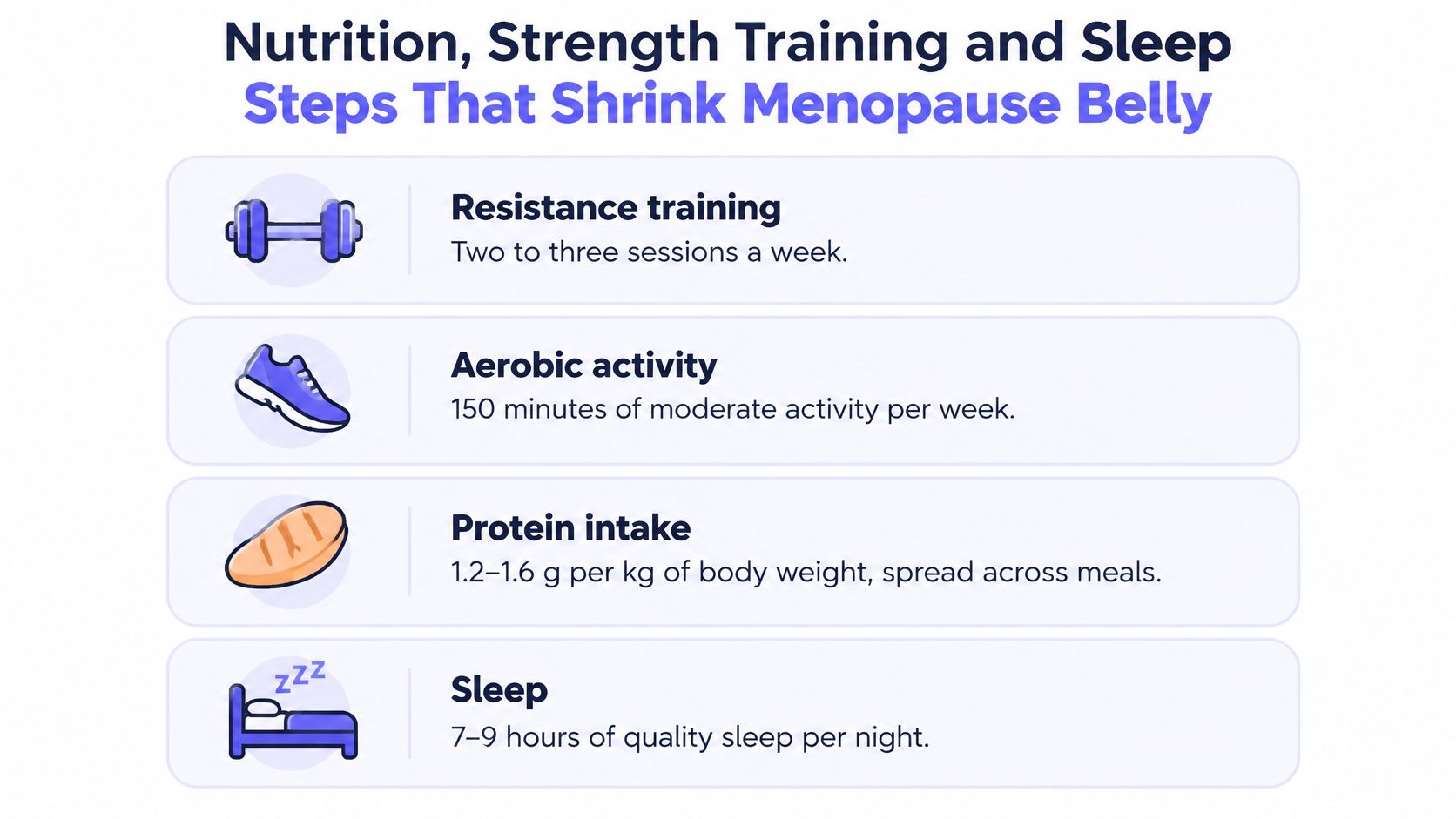
| Strategy | Starting dose | Why it matters |
|---|---|---|
| Resistance training | 2-3 sessions a week, all major muscle groups | Preserves or builds lean mass that burns energy |
| Aerobic activity | 150 minutes of moderate activity a week | Helps reduce visceral fat and supports blood pressure |
| Protein | 1.2-1.6 g per kg of body weight daily, spread across meals | Supports muscle repair during strength work |
| Fibre | 25-30 g a day | Supports fullness and regular bowel movements |
| Sleep | 7-9 hours a night | Helps regulate hunger and reduce fatigue |
| Stress reduction | 10 minutes of breathing or walking daily | Lowers the stress response linked to abdominal fat storage |
This ordering is backed by observation. In a 2024 BMC Women's Health study of 71 postmenopausal women with a mean age of 68.8, the more active women had significantly lower waist circumference, body-fat percentage, abdominal fat and BMI than the low-activity group. That age is a useful reminder that the midsection still responds to training well past the menopause transition.
A realistic week looks like this: three 20-minute sessions of squats, rows and a wall press, a protein source at every meal, and a fixed bedtime you defend. A 10-minute walk after dinner covers the aerobic base without a gym membership. For a closer look at how protein and carbohydrate targets are set, this guide to understanding macros for weight loss walks through the arithmetic.
- Anchor protein to meals, not snacks: 25 to 30 g at breakfast changes the whole day's pattern.
- Walk after eating: ten minutes steadies blood sugar and adds up across a week.
- Set a consistent lights-out time: treat it like a meeting you can't move.
Fibre and regular meal timing also calm the bloating that inflates the same tape reading, so part of the early change you see is digestive, while fat change follows more slowly. Sleep earns its row in the table too: short nights push hunger up and leave you too tired to train.
Anyone over 35, or who has been inactive for a few years, should see a physician before beginning any exercise programme.
Start Tracking Your Waist This Week
The scale misses this change, so track four things instead: waist, symptoms, meals and strength. Here's the routine in order.
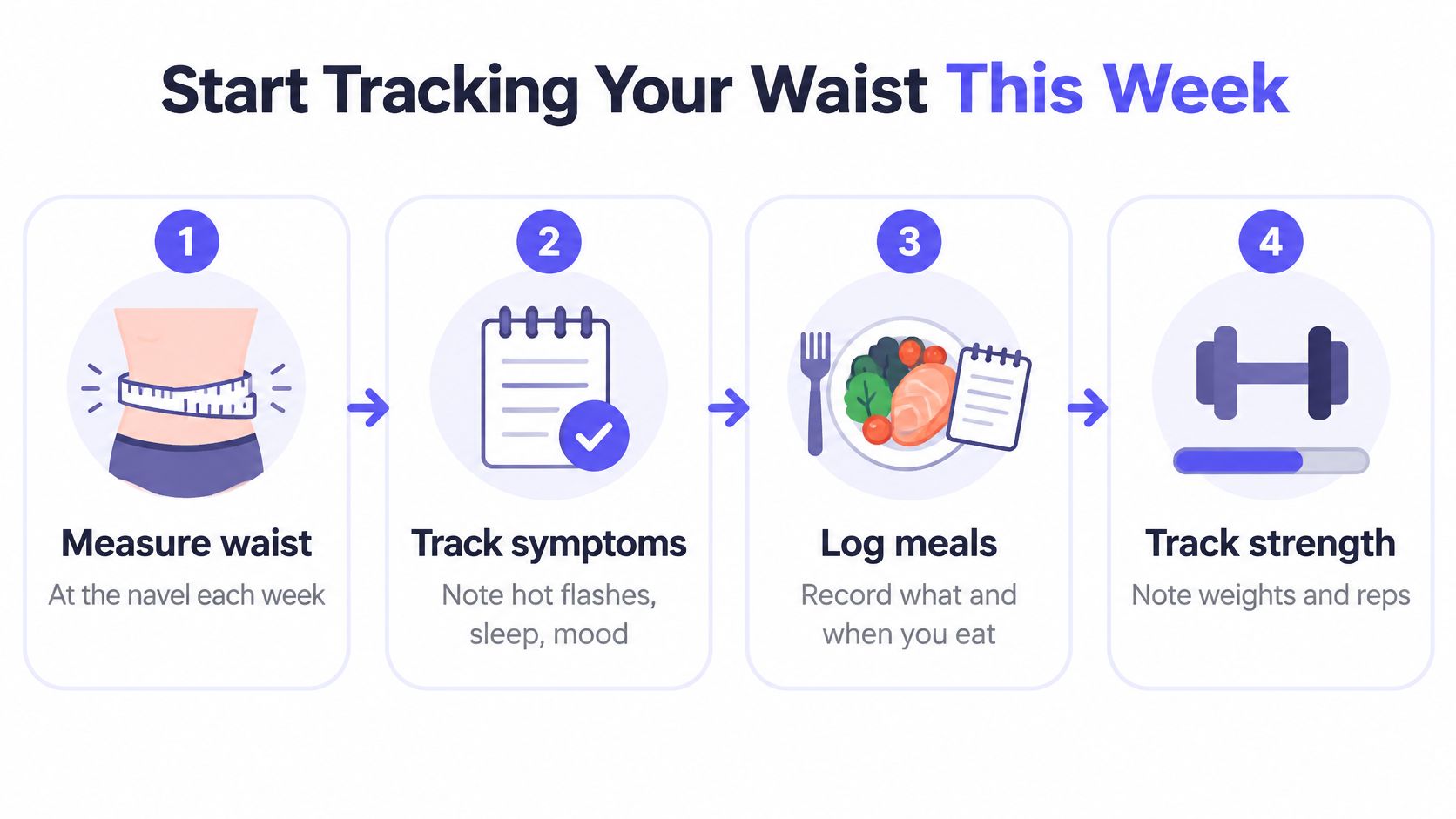
- Measure at the navel each morning. Same tape, same spot, before eating. Average the week's readings rather than reacting to a single day, because averaging smooths out hydration and bloating.
- Log symptoms daily. Hot flashes, sleep quality, bloating and energy, so the pattern sits next to the waist trend instead of being remembered vaguely.
- Record meals, alcohol and sleep. This is how you spot that the evening waist bulge follows a particular lunch or a second glass of wine.
- Write down weights and reps. Rising strength is evidence that you've held muscle, even in a month when the scale refuses to move.
- Review after four to six weeks. Compare your averaged waist with the pattern you logged, and bring both to your next appointment.
If you want a quick sense of how your middle compares with your hips, this waist-to-hip ratio calculator gives you the number in seconds.
The rule that makes tracking worth it: judge the trend, not the day. Four weeks of readings tells you something. One Tuesday morning tells you nothing.
Lila is an AI-powered perimenopause app that links symptoms to logged meals, sleep, alcohol and HRT doses, combining a 24/7 nutrition coach, photo meal logging and symptom tracking in one place, so the waist trend, the bloating pattern and the sleep data live together instead of in three notebooks. Setup takes about two minutes: you share your symptoms, goals and stage, and Lila builds a perimenopause nutrition plan around them. A paper notebook does the same job if you prefer it.
Start the morning waist log this week, and take the trend, not a single number, to your next doctor's visit.
Your waist is telling you something your scale can't, and Lila is built to read it alongside everything else going on in your body. Share your symptoms, goals and stage, and Lila turns them into a perimenopause plan that ties meals, sleep and symptom patterns together so you can see what's changing. Visit Lila to start your log this week.
Get Lila, your personal coach for perimenopause.
Built for women in their 40s. 24/7 coaching, in your pocket.