
Alcohol and hot flashes: Practical tips to manage menopause symptoms
Explore how alcohol and hot flashes relate to menopause, and discover practical steps to reduce symptoms and improve comfort.
 Michelle
If you’ve ever wondered about the link between alcohol and hot flashes, you’re not alone. Many of us have experienced it firsthand: you enjoy a drink in the evening, only to be hit with a sudden, overwhelming wave of heat. The short answer is a definite yes, alcohol can make hot flashes worse. It works as a vasodilator, which means it widens your blood vessels and rushes warm blood to your skin's surface.
Your Evening Drink and Your Internal Thermostat
Picture your body's temperature regulation system as a sensitive thermostat. During menopause, this thermostat is already a bit haywire, overreacting to the slightest changes. When you add alcohol to the mix, it's like someone sneaking over and cranking up the dial. That sudden spike in warmth can easily push your body over its tipping point, triggering a hot flash or a drenching night sweat.
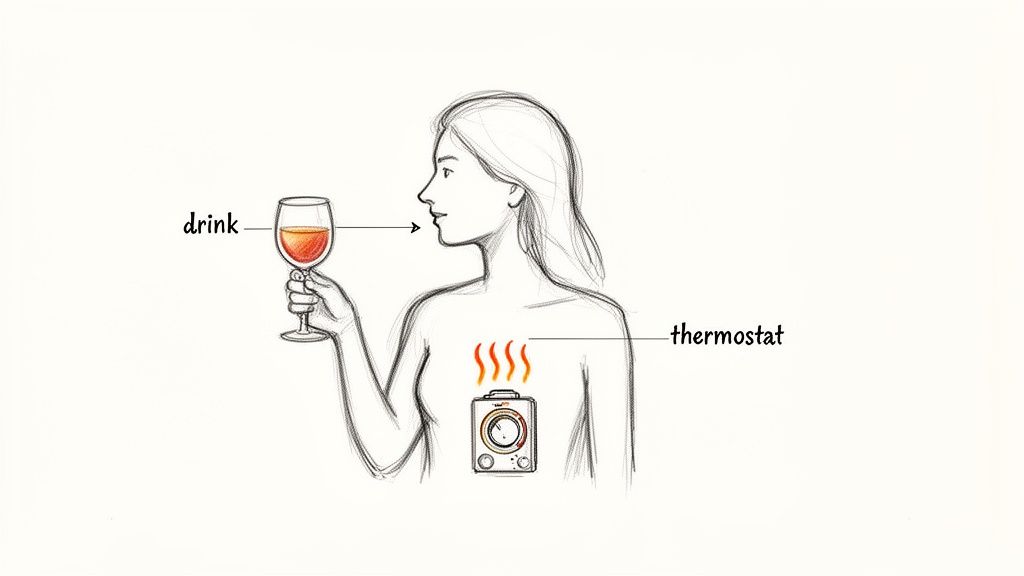
But here’s the thing—the connection isn't always so simple. It’s more like a personal puzzle. The pieces involve not just if you drink, but also what, how much, and even when.
Understanding Your Personal Response
Everyone's body reacts differently. You might find that a certain type of alcohol is a guaranteed trigger for you, while your friend has no problem with it. Getting to know your own unique patterns is the secret to feeling more in control.
Several key factors can shape your personal response to alcohol:
The Amount: That first glass of wine might feel perfectly fine. But that second glass? It could be the very thing that pushes you into hot flash territory.
The Type: From what I've seen and heard, many women point to red wine as a primary culprit. It contains compounds like sulfites and histamines, which are known triggers. Clear spirits like gin or vodka often seem to cause fewer issues, but again, it’s personal.
The Timing: Having a drink too close to bedtime is a classic recipe for night sweats. Your body is busy metabolizing the alcohol right when you’re trying to get some rest, which can disrupt your sleep and turn up the heat.
To get a better handle on these factors, it helps to see them laid out. This table breaks down how different aspects of drinking can play a role in your hot flash experience.
How Alcohol Can Influence Your Hot Flashes
Factor | Potential Impact on Hot Flashes | What This Means For You |
|---|---|---|
Amount Consumed | Even small amounts can trigger a reaction, but more alcohol often leads to more frequent or intense hot flashes. | Pay attention to your personal limit. Is it one drink? Two? Knowing your threshold is the first step. |
Type of Beverage | Red wine, with its sulfites and histamines, is a common suspect. Beer and sugary cocktails can also be problematic. | Try switching to a different type of drink. If red wine is your trigger, see how you feel with a white wine or a clear spirit. |
Timing of Drinks | Drinking late in the evening can disrupt sleep and lead to more severe night sweats. | Try having your drink earlier in the evening with a meal to give your body more time to process it before bed. |
Hydration Level | Alcohol is dehydrating. Dehydration can stress your system and make you more susceptible to hot flashes. | For every alcoholic beverage you have, drink a full glass of water. Staying hydrated can make a big difference. |
Looking at this, you can see how it’s not just one thing, but a combination of factors that can set off a reaction.
The goal isn't necessarily total abstinence but mindful awareness. By becoming a detective of your own body, you can pinpoint exactly what causes a reaction.
This whole process is about empowering yourself with knowledge. Once you start noticing your patterns, you can make choices that work for you. Maybe you discover that swapping your nightly wine for a relaxing herbal tea gives you that same sense of winding down, without the fiery side effects. In fact, you can learn more about which menopause teas may help with hormonal balance in our guide.
Ultimately, understanding your unique triggers helps you navigate parties, dinners, and quiet nights at home with confidence, all while keeping your internal thermostat happy.
The Science Behind Alcohol-Induced Hot Flashes
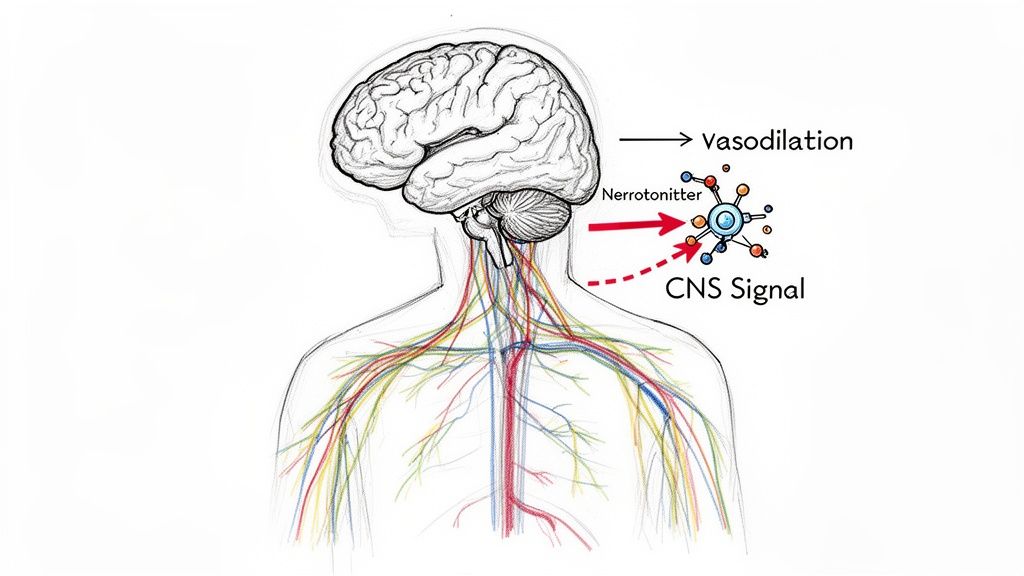
To figure out why a seemingly harmless glass of wine can suddenly unleash a wave of intense heat, we need to peek inside your body's command center: the central nervous system. A key player here is the hypothalamus, which acts as your brain's internal thermostat. During menopause, this thermostat becomes notoriously sensitive because of hormonal shifts, making it much more likely to overreact.
When you introduce alcohol into the mix, it messes with this delicate system. Alcohol disrupts the chemical messengers, or neurotransmitters, that your brain relies on to communicate. These garbled signals can confuse your hypothalamus, tricking it into thinking your body is overheating when it really isn't.
The Vasodilation Effect
The most direct link between alcohol and hot flashes comes down to a process called vasodilation. It's a simple concept. Imagine your blood vessels are like tiny, flexible hoses running throughout your body. Alcohol causes these hoses to widen, particularly the ones closest to the surface of your skin.
This expansion allows a greater volume of warm blood to rush toward your skin, which is exactly why some people get a flushed face or feel warm all over when they drink. But for a body already dealing with a faulty thermostat, this sudden surge of surface heat is often enough to trigger a full-blown hot flash. Your brain essentially hits the panic button and launches its emergency cool-down protocol: intense sweating and a racing heart.
What’s fascinating is that this all happens without alcohol significantly changing your core sex hormones. Research has shown that alcohol’s effect on hot flashes is less about meddling with estradiol or testosterone levels and more about its direct impact on your body’s temperature controls and neurotransmitters. You can dive deeper into these thermoregulatory effects in this detailed scientific review.
This same vasodilation process is the culprit behind those dreaded night sweats. As your body works to metabolize the alcohol overnight, it continues generating heat and disrupting your brain’s temperature signals, often waking you up in a sweat.
Key Takeaway: Alcohol doesn't trigger hot flashes by altering your estrogen levels. Instead, it directly fools your brain's thermostat and widens your blood vessels, creating a sensation of heat that your body scrambles to counteract.
To really get the full picture, it helps to understand the hormonal backdrop of menopause. Learning how fluctuating estrogen and progesterone levels affect the body provides essential context. Once you see that baseline, it becomes crystal clear how an external factor like alcohol can pour gasoline on an existing fire. The main thing to remember is that alcohol acts as a direct physical trigger—one that your already-sensitized system simply can't ignore.
Does What You Drink Actually Matter?
When we talk about alcohol and hot flashes, the advice can feel all over the place. You've probably heard it all—some friends might swear off red wine like it's the enemy, while others will tell you it's the sugary cocktails or hard liquor that do them in.
The real story? It's not that simple. Both the type of drink and the amount you have can make a difference, but how your body reacts is completely unique to you. What sets off a hot flash for one person might be totally fine for another. It's why digging into the research can sometimes leave you more confused than when you started.
The Great Debate: What and How Much
Let’s get into the specifics. The type of beverage is often a major player. A lot of women point to red wine as their number one trigger, and there’s some science to back that up. It often comes down to two culprits:
Histamines: These are natural compounds you find in fermented things, like aged cheese and, you guessed it, red wine. Histamines are well-known for causing blood vessels to widen, which is the exact same process that kicks off a hot flash.
Sulfites: These are preservatives, also hanging out in red wine, that can cause reactions like flushing and a feeling of warmth in people who are sensitive to them.
Because of this, some find that clear spirits like vodka or gin—which have fewer of these compounds—are a safer bet. And those sweet, colorful cocktails? The sugar itself can be an inflammatory trigger, adding fuel to the fire that alcohol already started.
The real issue isn’t just one ingredient; it’s the total burden on your system. Your personal reaction is a mix of the specific drink, how much you have, and your own unique body chemistry.
This brings us to the tricky distinction between "light" and "heavy" drinking. The science here is a mixed bag, which just goes to show how personal this all is. For instance, one study on perimenopausal women suggested that a light intake—just one to five drinks per week—was actually linked to fewer hot flashes than not drinking at all.
But another study tells a different story for premenopausal women, finding that more drinking meant a higher risk of hot flashes and night sweats. You can dig into the details of these contrasting study findings on Plos One.
Ultimately, your best strategy is to become a detective of your own body. Start paying close attention to how different drinks and different amounts make you feel. Just like certain foods can help ease your symptoms, certain drinks can definitely make them worse.
If you’re looking to find other ways to support your body, our guide on 9 foods that fight hot flashes is a great place to start. By understanding your personal patterns, you can make choices that let you enjoy a drink without dreading the consequences.
How Alcohol Magnifies Stress and Sleep Issues
That glass of wine at the end of a long day can feel like a well-deserved reward, a moment to finally unwind. But what starts as a way to de-stress often ends up doing the exact opposite, creating a domino effect that can make menopause symptoms feel so much worse.
The temporary sense of calm is deceiving. Behind the scenes, alcohol is sabotaging one of your body’s most critical functions: sleep. While a drink might make you feel drowsy and help you fall asleep faster, it wreaks havoc on your sleep architecture—the natural, cyclical patterns your brain moves through to truly rest and repair itself. It’s particularly brutal on REM sleep, the stage where most of our mental restoration happens.
The Sleep Debt and Stress Cycle
When your sleep quality is consistently poor, you start to rack up a "sleep debt." This isn't just about feeling groggy the next day. A sleep debt makes you more irritable, less patient, and far less equipped to handle everyday stressors.
In response to this exhaustion, your body starts pumping out more cortisol, the primary stress hormone. And that’s where the vicious cycle really kicks in, one that can feel impossible to break.
You have a drink to relax, but it disrupts your sleep.
Poor sleep leaves you feeling exhausted and raises your cortisol levels.
Higher stress and fatigue make you more prone to having hot flashes.
Hot flashes and night sweats wake you up, ruining your sleep even more.
Suddenly, you're stuck in a loop. The very thing you were using to cope with stress—the alcohol—is now the main source of it. Alcohol becomes a symptom amplifier, taking every existing challenge and cranking up the volume.
Alcohol takes existing menopause challenges like sleep disruption and mood swings and turns up the volume, making the entire experience feel more overwhelming and difficult to manage.
Taking Back Control of Your Rest
The connection between poor rest and intense menopause symptoms is incredibly strong. This is why focusing on your sleep is one of the most powerful things you can do to break the cycle. Learning how to improve sleep quality naturally is a foundational step toward feeling better, even if you still enjoy an occasional drink.
Even small gains in sleep can have a huge ripple effect, leading to a better mood, more stable energy, and fewer hot flashes. As you start to feel more rested, you might even find that the desire for that evening glass of wine starts to fade all on its own. Understanding the deep connection between physical activity and rest is another game-changer; explore our guide to see the importance of fitness and sleep and how they work together during this transition.
Alright, let's get practical. Knowing why alcohol can trigger hot flashes is one thing, but figuring out what to do about it in your real life is where the rubber meets the road. This is your chance to move beyond just understanding the science and start building a strategy that works for you.
The goal here isn't about total deprivation—unless that’s what you choose. It’s about being mindful and making smart choices that let you feel your best. The best way I've found to do this is to run a little personal experiment. Think of it as listening carefully to your body's signals so you can finally understand what it’s trying to tell you. By establishing a clear baseline, you can methodically reintroduce things and see exactly what causes a reaction.
Start with a Booze Break
First things first: take a temporary break from alcohol. I recommend aiming for at least two to three weeks with zero drinks. This gives your system a chance to reset and gives you a clean slate to work from. It helps your body break out of any nagging cycles of inflammation or poor sleep that drinking might be contributing to.
I like to think of it as hitting the reset button on a fussy computer. Before you can figure out which program is causing the problem, you sometimes need to shut the whole thing down and start fresh. This break gives you that crucial, quiet starting point.
Mindfully Reintroduce and Observe
Once your break is over, you can start reintroducing alcohol, but do it with intention. Don't just jump back into your old habits. Instead, approach it like a detective trying to solve a case—your case.
One Type at a Time: Start with just one kind of alcohol. Maybe it's a specific white wine or a clear spirit like vodka. Have one standard drink and pay close attention to how you feel over the next 24 hours.
Track Everything: Get a journal or use an app. Note the type of drink, how much you had, the time of day, and any symptoms that pop up. Did a hot flash hit you an hour later? How did you sleep that night?
Test Different Variables: A few days later, try something else. Maybe a different type of drink, or have it at a different time. Does a glass of red wine with dinner affect you differently than a cocktail on an empty stomach?
This methodical approach helps you gather real, personal data, revealing the specific patterns between your choices and your symptoms.
By taking a temporary break and then slowly reintroducing alcohol, you’re not just guessing what triggers your hot flashes—you're gathering concrete evidence to build a plan that truly works for you.
This little experiment can be incredibly revealing. You might be surprised to see how a single drink can kick off a whole chain reaction, affecting much more than just your internal thermostat.
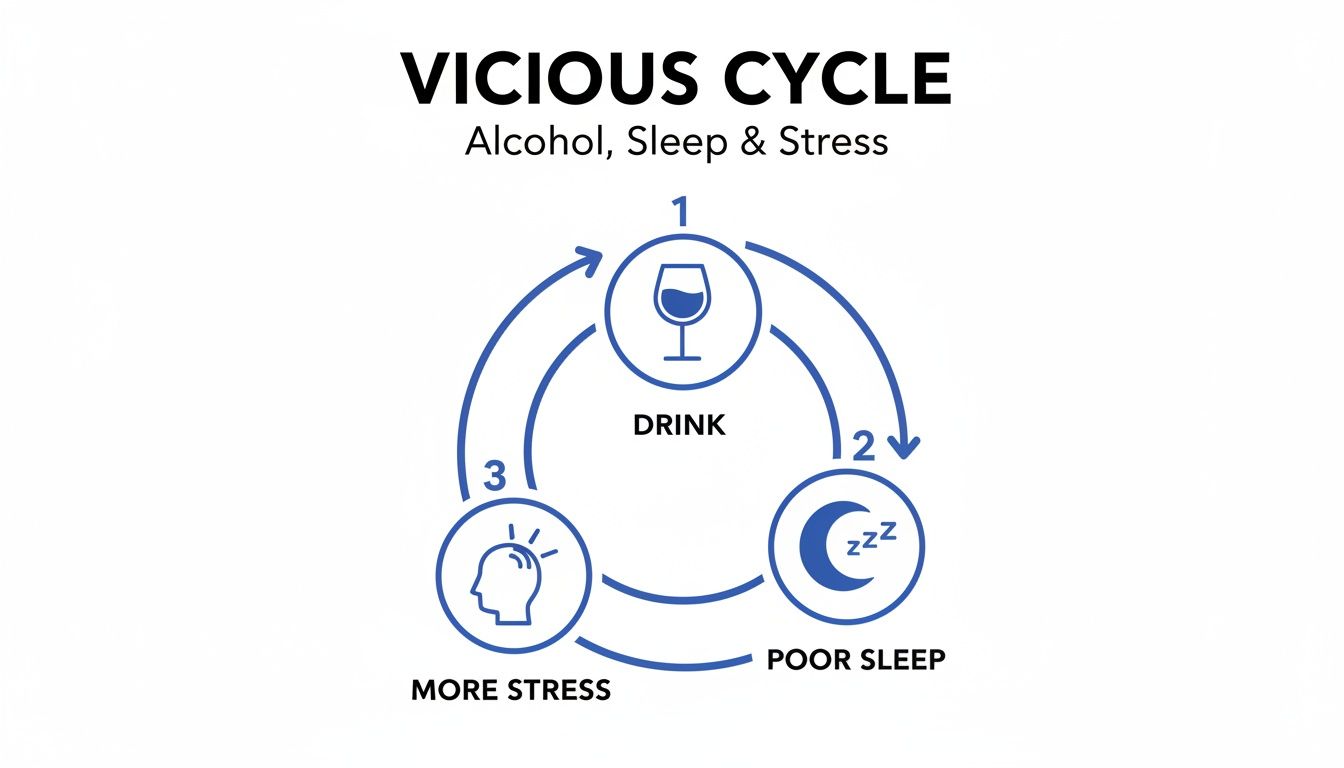
This cycle of alcohol, poor sleep, and stress is a big reason why managing your intake can have such a powerful effect. When you interrupt this loop, you’re not just cooling down hot flashes; you’re often boosting your mood and energy levels at the same time.
Track and Understand Your Personal Triggers
▶ PlayWhile general advice is a great starting point, the real key to relief is understanding your own body. The link between alcohol and hot flashes is deeply personal, which means becoming a detective for your own health is your secret weapon.
Trying to keep a mental log of every symptom, meal, and drink is a recipe for frustration and missed connections. That’s where a dedicated tool can step in and truly make a difference, helping you finally see the patterns hiding in your daily life.
Get Your Personalized Action Plan
An app like Lila is built for exactly this kind of detective work. Its quick daily check-ins make it effortless to log everything that matters—what you drank, how you slept, your mood, and the intensity of your hot flashes—all in one place. Over time, a clear picture begins to emerge from the data.
By consistently tracking your habits and symptoms, you move from guessing what causes your hot flashes to knowing for certain. This data-driven insight is the key to creating a truly effective management plan.
You can start answering specific questions. Does that single glass of red wine on a Tuesday cause a worse night sweat than two cocktails on a Saturday? Does drinking on an empty stomach matter? These are the kinds of powerful insights you get from tracking.
Here’s a glimpse of how the Lila app helps you visualize the connections between your habits and how you feel.
This visual summary turns simple data into powerful insights, highlighting trends in your mood and symptoms throughout the week. The Lila platform then uses this information to build a personalized action plan, giving you clear steps to find relief. With the added support of a 24/7 chat-based coach, you can turn those insights into lasting changes and finally feel back in control.
Frequently Asked Questions About Alcohol and Hot Flashes
Figuring out the link between alcohol and hot flashes can feel confusing, and it's normal to have a lot of questions. Let’s walk through some of the most common ones to give you clear, practical answers for navigating this tricky relationship during menopause.
Will I Have To Stop Drinking Completely?
Probably not. For many women, the solution isn't total abstinence but rather becoming more mindful of how and when they drink. The real goal is to figure out your personal triggers. You might find you can still enjoy a drink now and then by making a few simple, strategic changes.
Sometimes, just switching from red wine to a clear spirit does the trick. Other times, it's about reducing the amount you pour or making sure you have a solid meal first. It's all about finding that sweet spot that works for your body and your life.
Think of it less as a strict "all or nothing" rule and more about becoming an expert on your own body. When you track your intake and symptoms, you can make informed choices instead of just feeling like you're missing out.
Why Does Alcohol Seem to Cause Worse Night Sweats?
Alcohol has a reputation for kicking night sweats into overdrive, and for good reason. It really comes down to two things happening in your body. First, as your system works to metabolize the alcohol while you sleep, that process itself literally generates heat, turning up your internal thermostat.
Second, alcohol messes with both your brain's temperature-control center and your natural sleep cycles. This double whammy—extra heat combined with scrambled brain signals—is often enough to push your body over the edge, triggering one of those drenching sweats that wakes you up hours after you’ve gone to bed.
How Soon Will I See Improvements After Reducing Alcohol?
Everyone is a bit different, but many women notice a real difference in their hot flashes—both how often they happen and how intense they are—within just one to two weeks of cutting back. A big reason for this quick turnaround is that your sleep quality often gets better almost right away, which helps calm your nervous system and lower your overall stress levels.
If you want an even clearer picture, try taking a break for a full three to four weeks. This gives your body enough time to reset and establish a new baseline, so you can truly see how you feel without alcohol in the mix.
Ready to stop guessing and start knowing what works for your body? Lila uses AI to turn your daily habits into a personalized action plan for symptom relief. Join over 35,000 women who are feeling better and regaining control with data-driven insights. Start your journey with Lila today.
Get Lila, your personal coach for perimenopause.
Built for women in their 40s. 24/7 coaching, in your pocket.


