What Vitamin Should I Take for Energy? A 2026 Guide
Tired of feeling sluggish? Discover what vitamin should i take for energy in our 2026 guide, covering B12, magnesium, and expert advice for perimenopause.
 Michelle
Some days it hits before breakfast. You wake up after a full night in bed, make coffee, answer two emails, and already feel behind your own body. By midafternoon, your brain feels foggy, your legs feel heavy, and the usual fixes stop working. More caffeine doesn't really help. Sleeping in doesn't fully reset you. You start wondering whether this is just what your 40s feel like now.
It isn't.
A lot of women in perimenopause blame themselves for fatigue that has a very real biological basis. Hormone shifts can change sleep, stress response, blood sugar stability, and how your body uses key nutrients needed to make energy. If you're searching for what vitamin should i take for energy, the better question is often: what is slowing down my energy system in the first place?
That matters because "low energy" isn't one thing. Sometimes it's a nutrient gap. Sometimes it's poor sleep, low iron, stress overload, or a combination that stacks up slowly. If you're trying to sort out whether your fatigue is hormonal, nutritional, or both, this guide on menopause fatigue relief can help frame the bigger picture.
Feeling Tired Is Not Your New Normal
Melissa is 46. She isn't lazy, depressed, or "out of shape." She works, keeps everyone else's schedule in her head, and used to be the person who could push through a busy week without crashing. Now she gets through the basics and feels wrung out.
What changed? Often, it isn't one dramatic event. It's a slow pileup. Sleep gets lighter. Periods may become less predictable. Stress feels louder in the body. Workouts that used to energize start draining you. Then you start asking friends, "Is anyone else just exhausted all the time?"
That question deserves a real answer, not another lecture about drinking water and getting more steps.
Persistent fatigue can come from many places, and some of them need medical attention. That's why it's useful to think about addressing the root causes of exhaustion instead of chasing quick fixes. A vitamin can help when a deficiency or increased nutrient need is part of the problem. But the goal isn't to slap a supplement on top of burnout and hope for the best.
Fatigue during perimenopause is common, but common doesn't mean normal or untreatable.
For many women in their 40s, the missing piece is that hormones and micronutrients interact. The body may be asking for more support than it did a decade ago, especially in the systems that make and manage energy all day long. Once you understand that, the question shifts from "Why am I failing?" to "What does my body need right now?"
How Your Body's Energy Factory Works
Your body makes energy inside your cells. The main output is ATP, which acts like the spendable currency your muscles, brain, and organs use to do their jobs. When ATP production slows, you feel it as fatigue, weakness, poor focus, or that frustrating "tired but wired" feeling.
A simple way to picture it is this: each cell has a tiny factory. The mitochondria are the engines inside that factory. Food provides raw materials. Oxygen helps the process run. Vitamins and minerals act like the skilled workers, tools, and switches that keep the assembly line moving.

Why one missing worker can slow the whole line
A lot of people think of energy nutrients as optional extras. They're not. They're part of the machinery.
B vitamins are a good example. B vitamins, particularly B1, B2, B3, B5, B6, B9, and B12, form an interconnected network essential for mitochondrial ATP production. A shortfall in any single B vitamin can rate-limit the entire system, with studies showing ATP yield can drop up to 30-50% in cases of isolated deficiencies, directly causing fatigue (GoodRx on vitamins and supplements for energy boost).
That "rate-limit" idea is important. If the assembly line has everything except one trained worker, production still slows. In your body, that can show up as:
Morning drag that doesn't match how much you slept
Exercise intolerance where normal activity feels harder than it should
Brain fog during tasks that used to feel easy
Afternoon collapse even when you ate lunch
ATP isn't just about calories
People often become confused. They think, "I'm eating enough. Why am I still tired?" Calories are only part of the story. Your body still needs the micronutrients that help turn food into usable energy.
Practical rule: If you feel depleted despite eating and resting, don't just think about how much fuel you're taking in. Think about whether your cells have what they need to use that fuel.
That also explains why random energy supplements can disappoint. If they don't address the specific weak link in your own energy factory, they may do very little. The right vitamin for energy is the one that supports the part of the system that's struggling.
The Core Nutrients Your Energy Depends On
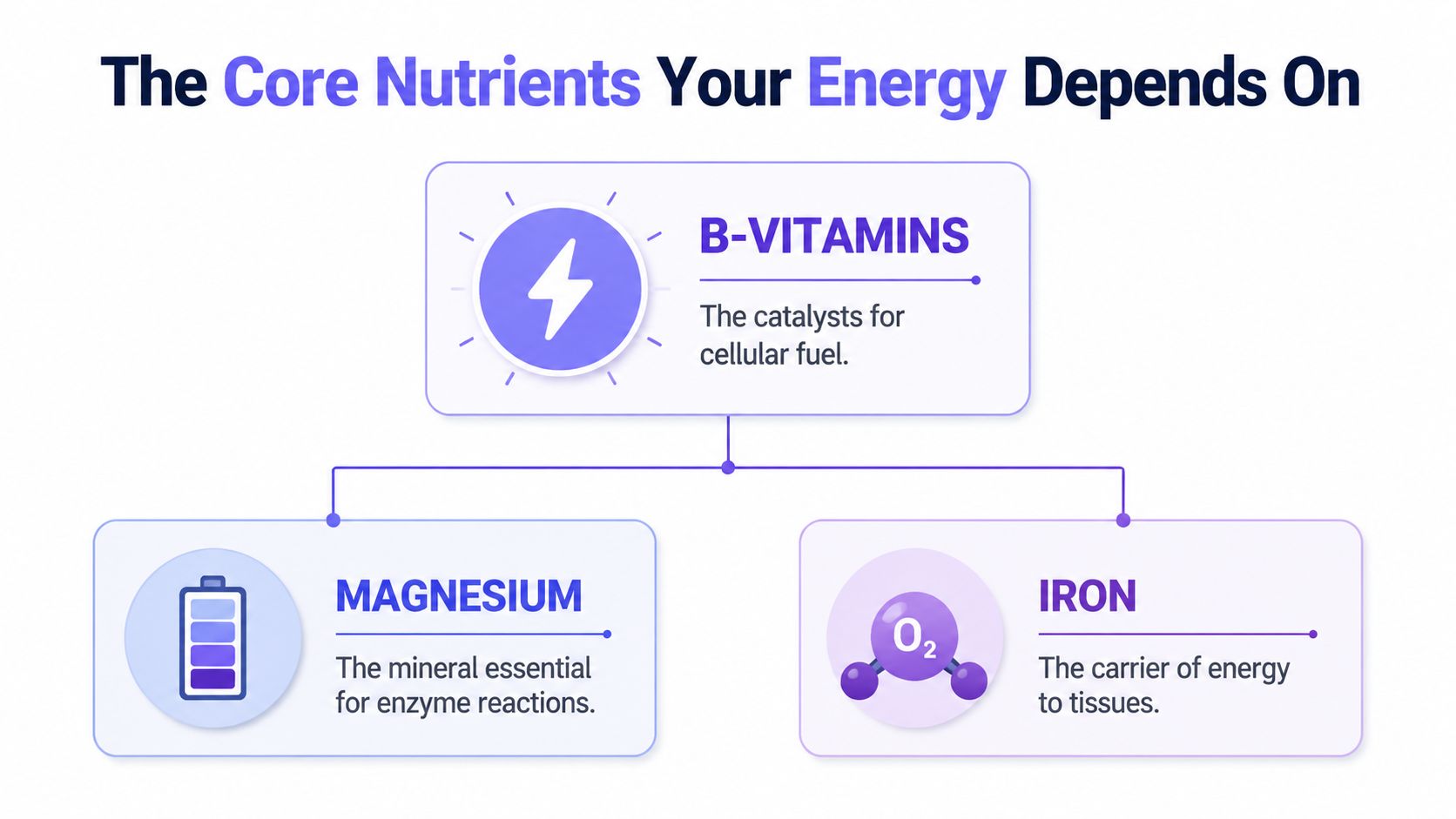
When women ask me what vitamin should i take for energy, I usually start with this: there usually isn't one magic pill. Energy depends on a small group of nutrients that work together. If one is low, the whole system can feel sluggish.
B vitamins keep the engine turning
The B family acts more like a team than a single nutrient. They help your body process carbohydrates, fats, and proteins into cellular energy. They're especially relevant if you're dealing with stress, eating inconsistently, restricting food groups, or noticing more mental fatigue than usual.
A few practical examples help:
B12 often comes up when fatigue is paired with brain fog, weakness, or a diet low in animal foods.
Folate and B6 matter because they support overlapping pathways, not isolated tasks.
A B-complex can make more sense than taking one B vitamin in isolation when your symptoms suggest a broader gap.
If you're curious about testing options before discussing treatment with your clinician, some women explore at-home B12 testing and injections to understand what services exist. The key is still confirming whether you actually need B12 support.
Magnesium helps your cells use fuel
Approximately 48% of the U.S. population consumes less than the required daily amount of magnesium from food. This widespread deficiency can impair energy production by hindering ATP function, as magnesium is an essential cofactor for converting food into usable cellular energy (Harvard Health on the best vitamins and minerals for energy).
This is one reason magnesium comes up so often in conversations about fatigue, poor stress tolerance, and restless sleep. It doesn't create energy by itself. It helps your energy systems do their jobs.
Food sources are practical and worth prioritizing:
Dark leafy greens such as spinach
Beans and legumes
Unrefined grains
Nuts and seeds
Milk and yogurt
If your energy dips come with tension, trouble winding down, or that buzzy overstimulated feeling at night, magnesium deserves a closer look. For women in midlife, it can also fit into a broader conversation about sleep and mood support. This overview of vitamin D and menopause is useful if you're trying to see how nutrient needs can overlap during this stage.
Iron carries oxygen where energy is made
Iron often gets left out of "energy vitamin" conversations because it isn't a vitamin. But it matters. Your cells need oxygen to produce energy efficiently, and iron helps your body make hemoglobin, the part of red blood cells that carries oxygen to tissues.
Low iron can make fatigue feel very physical. You may notice:
Heavy limbs
Shortness of breath with exertion
Lower exercise tolerance
Feeling wiped out after routine tasks
Iron is found in foods like lean meat, seafood, poultry, beans, lentils, spinach, peas, nuts, dried fruit, and iron-fortified grains. Iron is one nutrient you shouldn't supplement blindly. If you don't need it, more isn't better.
Food first, then targeted support
Here's the simplest way to think about these nutrients:
Nutrient | Main energy job | Food-first examples |
|---|---|---|
B vitamins | Help convert food into usable cellular energy | Fish, eggs, dairy, meat, legumes, fortified grains |
Magnesium | Supports ATP function and enzyme activity | Leafy greens, beans, whole grains, nuts, seeds |
Iron | Helps deliver oxygen to tissues | Meat, seafood, lentils, beans, spinach |
The best answer to what vitamin should i take for energy is rarely "all of them." It's the one, or combination, that matches what your body is missing.
The Perimenopause Connection and The Energy Crisis
The reason energy feels different in your 40s isn't just "getting older." Perimenopause changes the conditions your body is working under. Estrogen and progesterone begin to fluctuate, and those shifts ripple outward into sleep, mood, muscle function, blood sugar stability, and nutrient use.
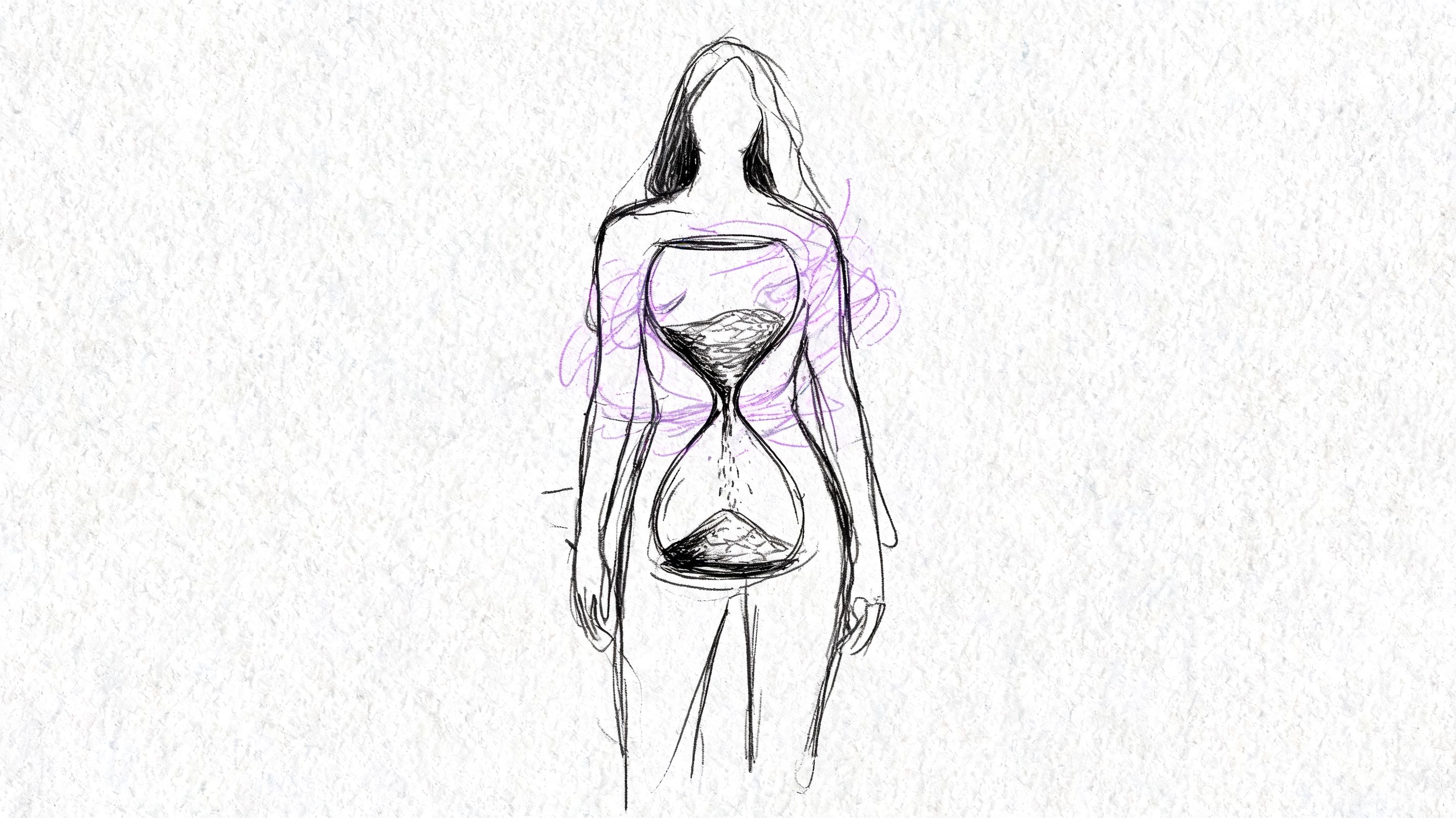
A woman may say, "I used to bounce back. Now one bad night ruins two days." That's not imagined. Hormonal volatility can make your energy systems less resilient. Poor sleep increases stress sensitivity. Stress makes sleep worse. Irregular cycles can make some weeks feel far harder than others.
Why vitamin D matters more in this phase
One nutrient deserves special attention here. Vitamin D deficiency is prevalent in 40-70% of perimenopausal women. It directly impairs energy by weakening muscle function and reducing mitochondrial efficiency. Studies show supplementation to optimal levels (30-50 ng/mL) can improve muscle strength by 15-25% and significantly reduce perceived exhaustion (Innerbody on the best vitamins for energy).
That matters because perimenopausal fatigue is often a mix of physical and mental depletion. If your muscles feel weaker, stairs feel steeper, or your mood and motivation have both dropped, vitamin D status is worth checking with a clinician.
Hormones can raise the cost of getting through the day
During perimenopause, your body may spend more effort regulating things that once felt automatic. Sleep can fragment. Stress can hit harder. Glucose swings may feel sharper. The result is that you can be doing "all the right things" and still feel as if your battery never quite charges.
When hormones shift, the same nutrient status that once felt adequate may no longer feel adequate in daily life.
That's one reason generic energy advice often misses the mark. A woman in perimenopause doesn't just need stimulation. She may need targeted support for the systems under extra strain.
This short explainer can help connect the hormone side with what you're feeling day to day:
▶ PlayThe pattern matters as much as the symptom
Many women notice that fatigue isn't constant. It clusters. Some days are manageable. Some feel like walking through wet cement. That pattern is a clue.
If your energy crashes seem tied to sleep disruption, cycle changes, mood swings, or periods of bloating and irritability, you're not dealing with a random personal failure. You're seeing the body-level consequences of a transition that changes how energy gets made, used, and recovered.
How to Know What You Really Need for Energy
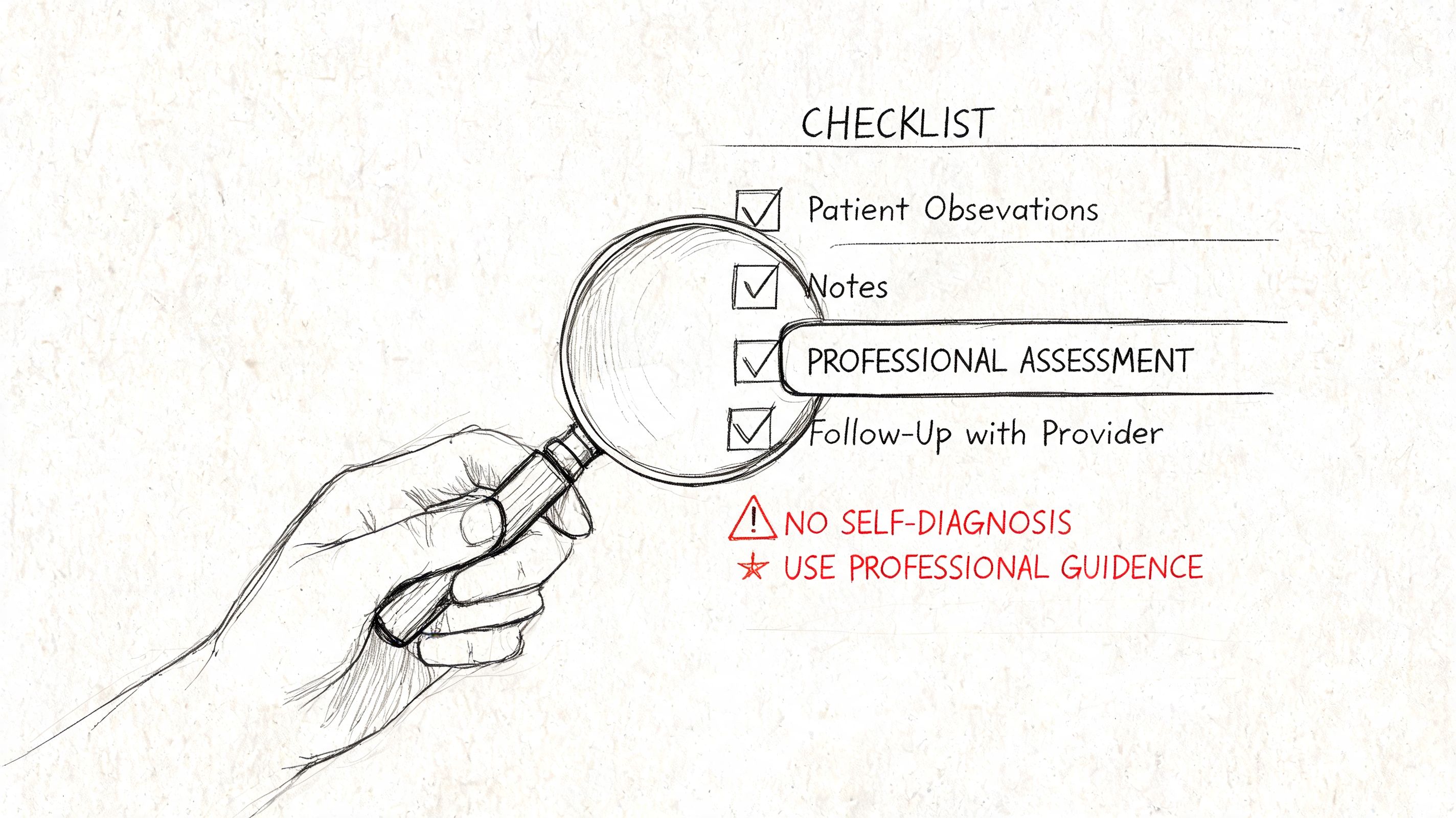
The smartest approach is simple. Test, don't guess. Fatigue has too many possible causes to treat like a supplement guessing game.
Most general advice skips the fact that perimenopause can change nutrient handling. During this phase, fluctuating estrogen impairs B-vitamin metabolism and depletes magnesium. Emerging data shows that combined B-complex and magnesium supplementation offers significant energy gains, but only when timed with cycle tracking to address hormonal dips, highlighting the need for personalized, data-informed strategies (PMC article on perimenopause-related nutrient patterns).
What to ask your clinician about
A good fatigue workup is usually broader than "Should I take B12?" Bring your symptoms and ask what testing makes sense in your case. Common discussion points include:
Vitamin D testing if you have weakness, low mood, or a lot of indoor time
B12 and folate testing if brain fog, diet pattern, or medication history suggests a gap
Magnesium assessment when fatigue overlaps with poor sleep, tension, or stress sensitivity
Iron studies if you have heavy periods, shortness of breath, or feel physically drained
The exact panel should come from your clinician, especially if you have thyroid symptoms, medication changes, gut issues, or significant sleep disruption.
Track the pattern before the appointment
Doctors get better clues when you bring patterns, not just a vague sentence like "I'm tired."
Keep notes for a few weeks on:
Energy by time of day
Sleep quality and wake-ups
Cycle timing or irregular bleeding
Exercise response
Mood, bloating, and cravings
Whether fatigue is mental, physical, or both
That kind of record helps separate constant deficiency-type fatigue from fatigue that worsens during hormonal dips.
What helps most: Bring a symptom log, not just a supplement list.
If you're building that foundation, this guide to supplements for women over 40 can help you think more clearly about which questions to take to your appointment.
Don't confuse "normal range" with "fine"
One of the biggest frustrations women face is being told everything looks normal when they still feel awful. Lab interpretation is nuanced, and symptom context matters. That's why it's worth reviewing results with a clinician who takes fatigue seriously and looks at the whole picture, not just whether a value barely clears the cutoff.
The goal isn't to collect supplements. It's to identify which problem you're solving.
Lifestyle Strategies to Amplify Your Energy
Supplements can help, but they work best when your daily habits stop draining the system they're meant to support. Think of lifestyle as the floor under your energy. If that floor is shaky, even the right nutrient plan won't feel as strong as it should.
Start with steadier mornings
A breakfast with protein often supports more stable energy than a sugary or all-carb start. If coffee is your breakfast, you may feel alert briefly and then crash harder later. Many women notice fewer dips when they eat a real meal early enough to anchor blood sugar.
Hydration matters too. Mild dehydration can feel like fatigue, irritability, or poor focus. If your afternoon slump arrives with a headache or that dry, wrung-out feeling, try checking your fluid intake before assuming you need another supplement.
Use caffeine more strategically
Caffeine can help, but it can also cover up the clues your body is giving you. If you're curious about gentler options, this guide on how much caffeine in matcha latte can help you compare your usual choice with a lower-jolt alternative.
A few practical guardrails:
Delay the second caffeinated drink if you already feel wired, anxious, or shaky.
Avoid using caffeine to replace lunch because that usually worsens the later crash.
Notice your sleep response if afternoon caffeine turns into nighttime wakefulness.
Choose movement that gives back
When you're depleted, more intensity isn't always better. Brisk walking, strength training, mobility work, and short sessions you can recover from often support energy better than punishing workouts that leave you flattened.
A useful question is: "Do I feel more alive after this, or just more exhausted?" In perimenopause, that difference matters.
The right routine doesn't just burn calories. It leaves enough energy for the rest of your life.
Stress reduction belongs here too. A few quiet minutes, a slower evening routine, or even a consistent bedtime can help your body stop spending so much energy on recovery.
Your Path to Reclaiming Your Energy
If you've been wondering what vitamin should i take for energy, the most honest answer is this: take the one your body needs. For many women in their 40s, the full story includes more than one nutrient and more than one cause. B vitamins, magnesium, vitamin D, and iron all matter, but they matter in different ways and for different reasons.
Perimenopause complicates the picture because hormones can change sleep, stress response, and how resilient your energy feels from one week to the next. That's why a generic "energy vitamin" answer often falls short.
Start with curiosity, not self-blame. Notice your pattern. Track when fatigue hits, what it feels like, and what else is happening around it. Then bring that information to a clinician who can help you test thoughtfully and build a plan that matches your symptoms.
You don't need to accept constant exhaustion as your new baseline. A personalized approach is often what helps you feel like yourself again.
If you're ready to stop guessing and start seeing patterns, Lila can help you track energy, sleep, symptoms, meals, and cycles in one place. That daily data makes it easier to spot what drains you, what helps, and when your body needs more support.
Get Lila, your personal coach for perimenopause.
Built for women in their 40s. 24/7 coaching, in your pocket.