
7 Best Biomarker Testing Companies Compared for 2026
Explore the Best Biomarker Testing Companies compared on panels, oversight, pricing, privacy, and reading results. Choose with confidence.

Say a woman in her early forties notices her sleep breaking at three in the morning and her afternoon energy crashing hard. She orders a direct-to-consumer blood panel online, visits a local draw center, and receives a ten-page PDF a week later. Half a dozen numbers sit slightly outside the printed reference range, three sit right on the borderline, and the report offers no clear next step.
That moment exposes the gap in modern self-ordered lab work. Collecting blood is the easy part. Knowing whether a number reflects a medical issue, normal cycle fluctuation, or lab noise is much harder.
Demand for direct lab access is climbing fast. The global biomarker-testing market was estimated at $17.51 billion in 2024 and projected to reach $19.75 billion in 2025, implying 12.8% year-over-year growth, according to the Business Research Company's Biomarker Testing Global Market Report. Yet market growth doesn't make every service interchangeable. The same report highlights a distinction most shoppers miss: analytical validity (whether a lab measures a marker reliably) is not the same as clinical validity (whether that measurement predicts or explains a meaningful health outcome).
Instead of chasing a single winner among the best biomarker testing companies, match the service design to the question you're trying to answer. Below, I compare eight major platforms using the same five practical criteria:
- What gets measured: The breadth and focus of each panel, from four-hormone snapshots to whole-body baselines.
- Collection and clinical oversight: Whether you use an in-person venous draw or an at-home kit, and whether a licensed clinician reviews your results.
- Annual cost and availability: Membership versus one-time pricing, extra collection or state fees, and geographic access.
- Data privacy practices: How health records, wearable streams, and lab reports are stored, protected, or shared.
- Result interpretation: How to read the numbers without overreacting to normal shifts or borderline flags.
This guide is informational only and doesn't replace personal medical advice, diagnosis, or treatment from a qualified doctor.
Table of Contents
- 1. OneTwenty
- 2. Function Health
- 3. Superpower
- 4. InsideTracker
- 5. Quest Health
- 6. Labcorp OnDemand
- 7. Everlywell
- 8. WHOOP Advanced Labs
- How the leading biomarker testing companies differ by pricing model, collection method, and best-fit use
- Turning Your Results Into a Plan Worth Following
1. OneTwenty
You already track sleep, heart rate, recovery, and glucose patterns, but your blood work sits in a separate file until the next annual panel. OneTwenty is built for closing that gap. It combines wearable and connected-device data with recurring blood testing in one preventive-health platform, then presents the results through scores and risk categories. The practical question is not whether it looks advanced. It is whether you want your lab markers interpreted beside daily signals over time.
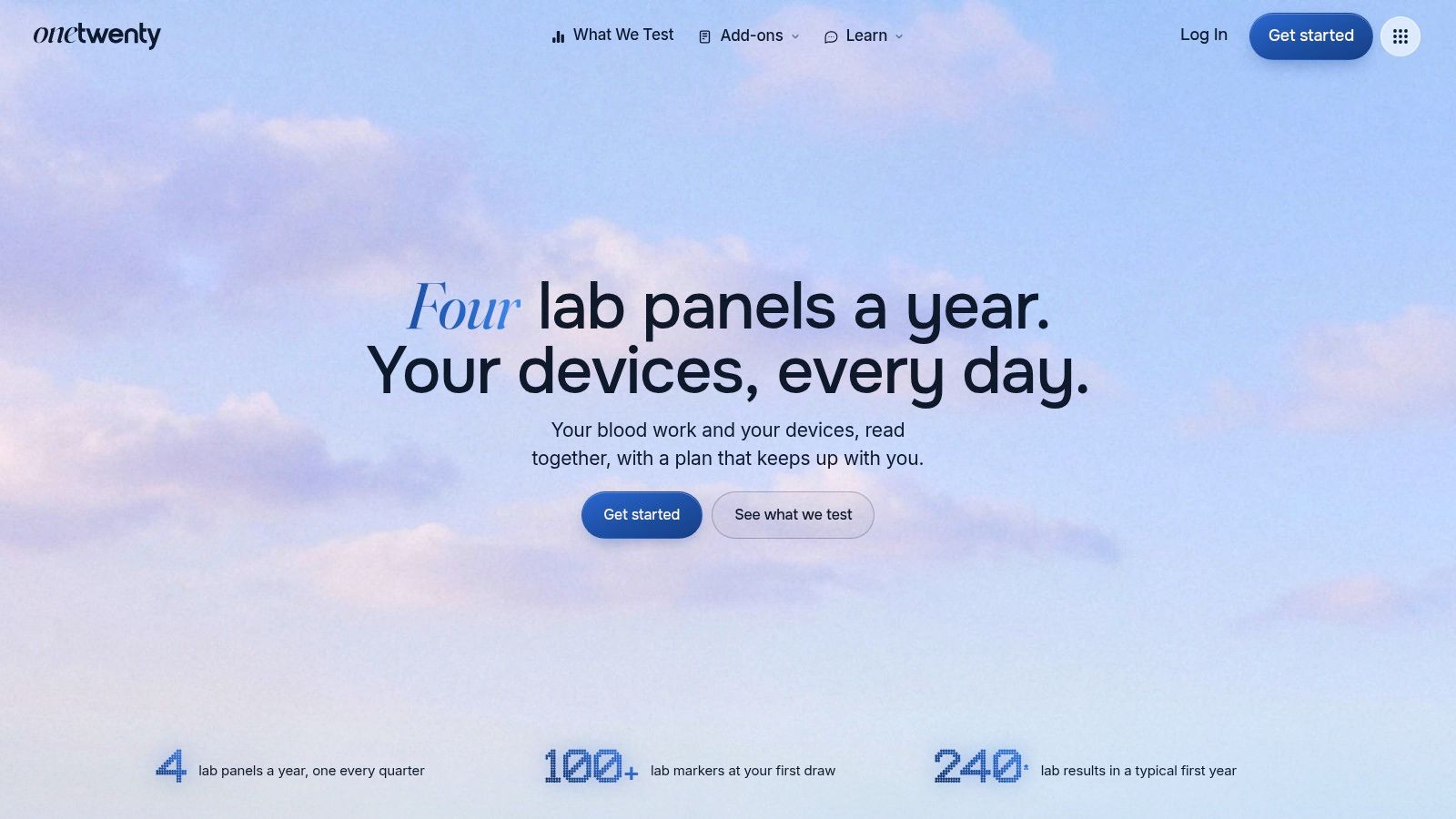
OneTwenty sits in preventive health, not diagnostic oncology. Specialty cancer labs may use genomic profiling to guide treatment decisions for diagnosed patients. OneTwenty's job is different: it organizes risk signals across areas such as cardiometabolic health, cancer risk indicators, metabolic dysfunction, and neurodegeneration. That distinction matters. A consumer longevity score can help frame what to discuss with a clinician. It cannot tell you that cancer is present, that Alzheimer's disease will develop, or that a treatment is working.
Panels, wearable signals, and clinical oversight
OneTwenty connects daily data from wearables, smart scales, and blood pressure monitors with blood biomarker results. Those inputs feed into an Essential 8 Health Score and an individualized risk profile, alongside tools like OneTwenty's lab-based biological age calculator. The value here is continuity. A lipid, glucose, or inflammation marker is easier to interpret when you can compare it with changes in activity, recovery, body weight, or blood pressure.
- Quarterly lab cadence: Members receive scheduled quarterly follow-up panels. That shorter interval can show whether lipids, glucose regulation, or hormone markers moved after a lifestyle or treatment change.
- Clinician-guided interventions: Independent clinical partners review results and build personalized care plans. Those plans may include prescription medications, such as GLP-1 therapies or TRT where appropriate, and supplement protocols.
- Connected-device workflow: The live dashboard syncs major consumer wearables. That makes the service most useful for people who already log daily physiologic data and want lab results placed beside it.
- Risk-domain framing: Results are organized around chronic-disease pillars rather than a single organ system. This supports broad prevention planning, but it also means each domain needs careful interpretation instead of a simple green or red score.
The main trade-off is resolution versus noise. Daily device data can reveal patterns, but devices vary in accuracy and placement. Lab panels have tighter measurement standards, yet they capture only the moments when blood is drawn. Combining the two is useful when the trends agree. When they conflict, the lab result usually deserves more weight for diagnosis or medication decisions, while wearable data can help explain timing, adherence, sleep, or training load.
Annual cost, privacy, and how to read your numbers
OneTwenty offers Core and Executive annual plans that bundle smart-device syncing, the live dashboard, and quarterly testing. Both tiers are HSA/FSA eligible, which may reduce the effective cost if you already use pre-tax health funds. Availability is more restricted than walk-in retail lab testing, so confirm access before planning around a specific draw date.
Privacy deserves the same scrutiny as the panel list. One platform holds longitudinal blood work plus continuous physiological tracking. That is more sensitive than a single lab PDF. Review how independent clinical partners, wearable connectors, and other third parties handle synced data before connecting every device. Ask what is stored, what is shared, and whether you can disconnect a source without losing your lab history.
Reading the output takes restraint. Composite metrics such as biological age and longevity scores work best as directional trend lines. They are not clinical diagnoses, and they should not drive medication or supplement changes on their own. Start with the underlying biomarkers. Check whether a change is large, consistent across repeated panels, and plausible given sleep, training, illness, menstrual cycle timing, or recent diet changes. A borderline value that moves between visits often matters less than a persistent shift in the same direction.
OneTwenty fits data-minded users who want continuous tracking, quarterly retesting, and clinician-backed intervention pathways in one place. It is a weaker fit for someone seeking a simple one-off hormone check without a membership, wearable setup, or repeated draws. Choose it when the recurring pattern is the point. Choose a targeted lab service when the question is narrow and the budget is tied to a single result.
2. Function Health
Suppose your primary goal isn't checking a single symptom, but building a wide whole-body baseline you can compare against six months later. Function Health is structured around that exact rhythm. Its annual membership covers 160+ lab tests split across two testing rounds per year, giving you an initial baseline and a scheduled mid-year follow-up without needing to assemble individual panels yourself.
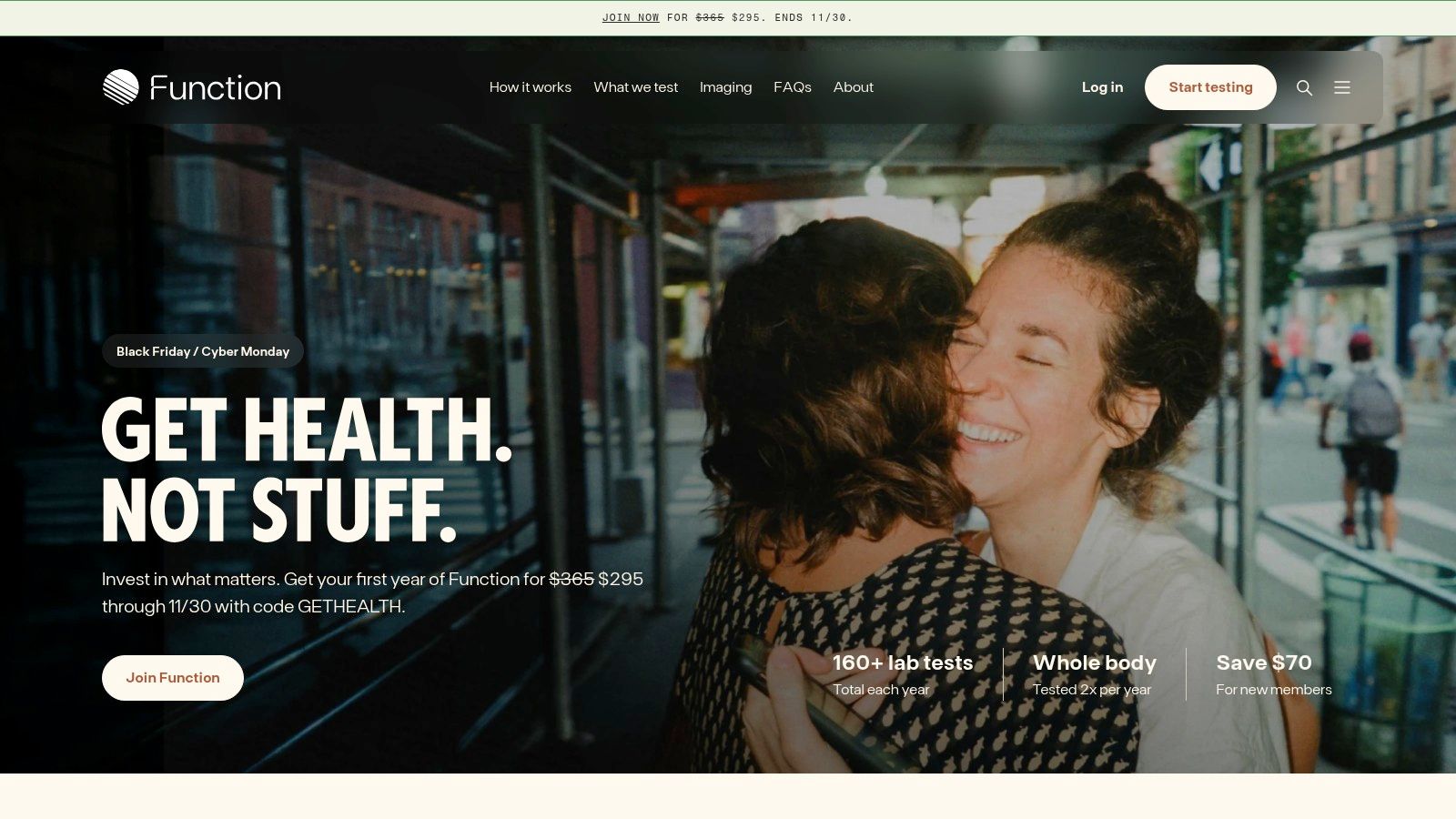
This broader preventive model reflects a much larger shift in healthcare spending toward early detection. According to PMI market analysis, the global biomarker market was valued at approximately US$90.2 billion in 2024 and is projected to reach US$288.5 billion by 2034 at a 13.6% compound annual growth rate. Function Health captures the consumer side of that demand by bundling markers across hormones, thyroid function, metabolic health, cardiovascular risk, nutrients, and organ function into one predictable annual plan.
If you're weighing whether you need a comprehensive health assessment rather than a targeted hormone draw, Function Health's menu helps you see multiple systems side by side. Blood draws happen through the Quest Diagnostics lab network, which gives you standardized venous collection across most of the United States. At-home phlebotomy is available in select regions, though it carries an extra fee.
Clinical review, annual pricing, and reading wide panels
Once your lab results arrive, a clinician provides a written review along with personalized next steps inside the dashboard. That written summary is useful for sorting urgent flags from minor drifts, though it isn't the same as a live back-and-forth appointment with a primary care physician who knows your full medical history.
Transparent annual membership pricing makes budgeting straightforward at the start, yet your real annual cost can climb if you add specialty panels or pay for at-home blood draws. Before signing up, read the privacy policy carefully to confirm how your uploaded health history and lab records are stored, whether data is shared with partner labs or analytics tools, and how to export your raw PDFs for your own doctor.
- Strong fit: Adults who want a broad metabolic, nutrient, thyroid, and cardiovascular baseline plus a built-in mid-year retest to watch trends move.
- Poor fit: Women looking only for a quick, targeted perimenopause hormone check, since ordering 160+ tests almost guarantees a handful of borderline out-of-range flags that require extra clinical context and follow-up.
When those red or yellow flags appear, resist the urge to self-treat every minor outlier. Group them by system, note whether you were fasting, stressed, or mid-cycle during the draw, and bring the full report to your clinician.
3. Superpower
Your blood results arrive, but the next step is unclear: which findings need attention, and who can answer follow-up questions? Superpower addresses that gap with an annual membership covering 150+ biomarkers across metabolic, cardiovascular, and general health systems, two blood draws per year, a personalized action plan, an AI health tool, and access to a care team.
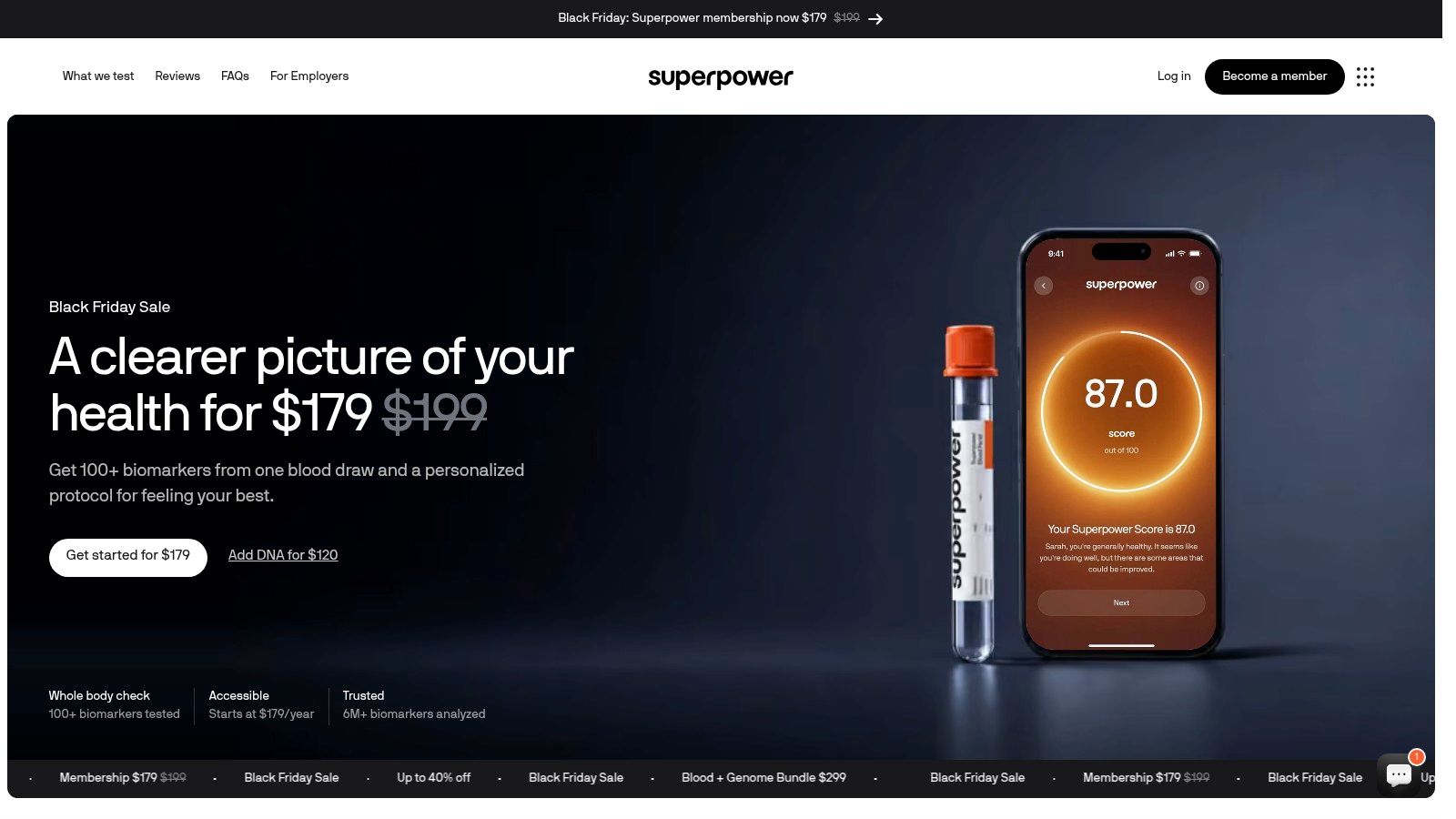
The main reason to consider it is ongoing guidance. Samples are collected through partner labs, with at-home collection available for an extra fee. Digital explanations and care-team messaging give you somewhere to take questions after the report arrives. Before joining, clarify who reviews your results and which questions the care team can handle, rather than assuming every message amounts to a medical consultation.
The membership also lists HSA/FSA eligibility. Check whether your account qualifies before counting that toward your budget.
Pricing nuances, data governance, and avoiding over-interpretation
Start with the checkout total for your location, not just the headline membership fee. Include at-home phlebotomy and any optional follow-up tests when calculating your annual spend. The practical question is whether you want repeated broad testing and digital support enough to pay for the full package.
Data handling deserves the same scrutiny. Superpower combines lab results, an AI assistant, and care-team chat, so review its privacy terms before uploading prior medical records. Look for how chat inputs and de-identified lab values may be used, including for AI training, and whether account data can be deleted on request. These are questions to resolve before sharing, not assumptions to make about the service.
Laboratory oversight is a separate consideration. A federal district court vacated the agency's 2024 final rule on laboratory-developed tests (LDTs) on March 31, 2025, as documented on the FDA's laboratory-developed tests policy page. A platform's brand does not establish the clinical usefulness of every test it offers. Ask which findings have established clinical uses and which are exploratory.
A longer biomarker list can create more follow-up questions without changing medical care.
Use the AI explanations and action plan to organize those questions. An out-of-range result needs context before it becomes a reason to change treatment or start supplements. Care-team access is useful only if it helps you understand that distinction.
For a focused reproductive hormone check, a broad membership may buy more testing than you need. Superpower is a closer match for someone seeking repeat broad-panel tracking with digital guidance between results, provided the annual cost and data terms suit them.
4. InsideTracker
If you already log workouts, sleep stages, and recovery metrics on a fitness tracker, a standard medical lab printout often feels disconnected from your daily habits. InsideTracker bridges that divide by analyzing blood-test results alongside optional wearable and DNA data, then organizing everything into a goal-driven Action Plan. Rather than trying to replicate a massive clinical screen, it targets health and performance optimization over time.
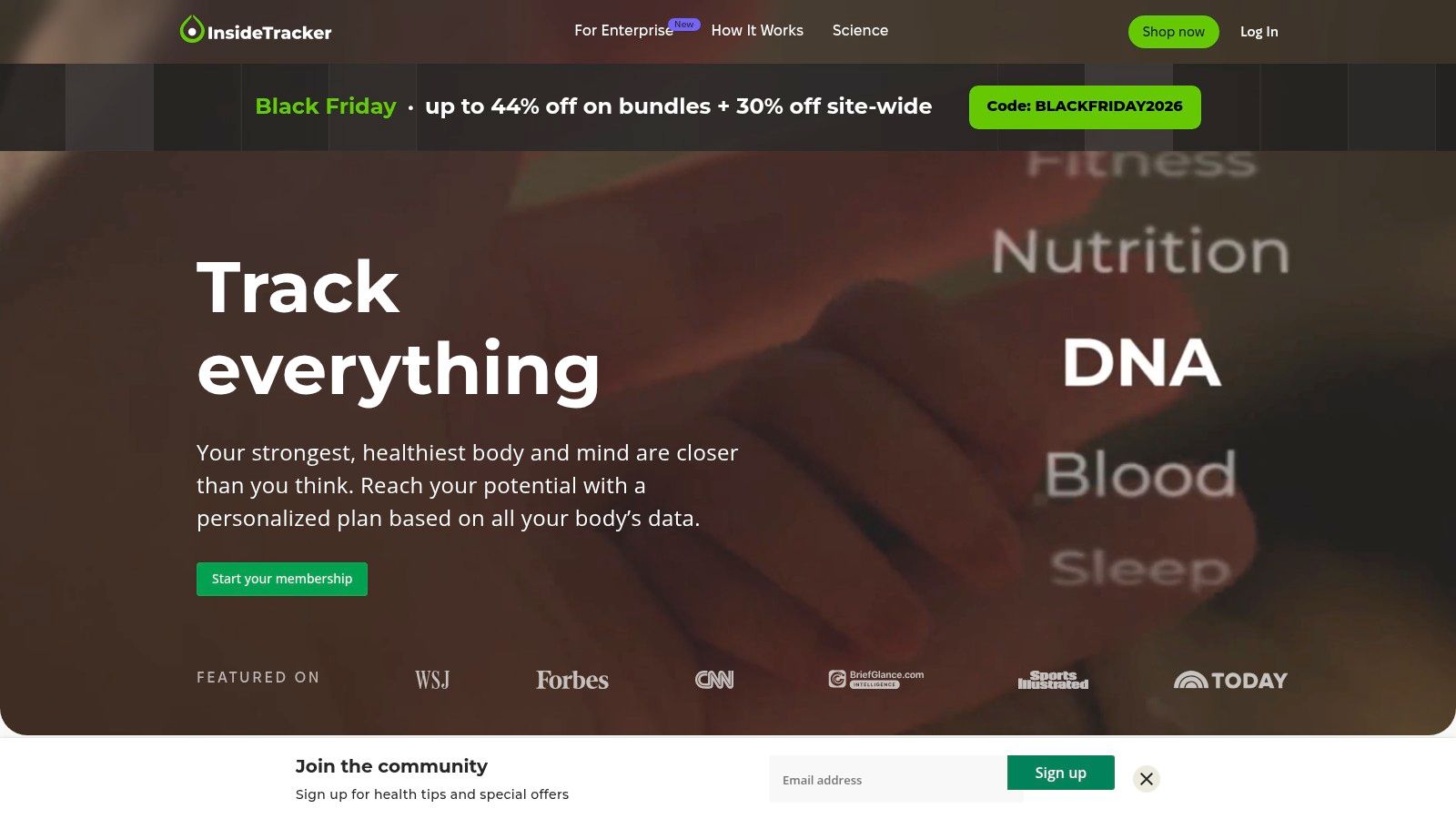
The service sits inside a rapidly expanding segment of specialized consumer testing. The global biomarker testing services market was estimated at US$650 million in 2024 and is forecast to reach US$1.06 billion by 2030 at an 8.5% compound annual growth rate, according to Research and Markets. InsideTracker stands out in that crowd because it lets members upload blood results from outside providers, which means you don't always have to buy every single draw through its storefront to keep your timeline intact.
- Core blood panel: The Ultimate blood test covers up to 54 biomarkers spanning heart health, metabolism, sleep, inflammation, nutrients, and hormone balance.
- Flexible hormone add-ons: Optional hormone markers can be added when you want extra context beyond the core performance markers.
- Multi-source inputs: Combining blood draws with wearable sleep and activity streams helps highlight how training load or poor recovery relates to markers tied to metabolic health.
Split costs, data privacy, and clinical boundaries
Budget carefully with InsideTracker, because platform membership and blood testing are priced separately. If you plan to test twice in one year, add the annual subscription cost to two rounds of blood draws plus any hormone add-ons to see your real yearly investment. Uploading labs already ordered through your primary care doctor can soften that total cost, provided your physician's order includes the specific biomarkers InsideTracker analyzes.
Because the platform can ingest blood work, wearable streams, and optional DNA data, privacy deserves a deliberate check. Verify how genetic data is segregated from blood and wearable data, who can access your profile, and whether consent settings let you opt out of research or marketing analytics.
Clinical oversight is the main trade-off here. InsideTracker translates lab numbers into nutrition, lifestyle, and supplement recommendations, but those recommendations are not a substitute for medical evaluation or treatment. Its "optimal" wellness zones are often narrower than standard clinical reference ranges. Seeing a marker outside an "optimal" zone while still inside a normal medical range shouldn't trigger alarm. Use it as a prompt to adjust sleep, training, or nutrition habits, and turn to a licensed physician whenever you suspect an underlying endocrine or menopausal condition.
5. Quest Health
If changing periods and disrupted sleep have you considering a hormone panel, start with the question you want the results to answer. Quest Health offers focused, individual panels online without an annual subscription. You then visit a collection center for a standard venous blood draw.
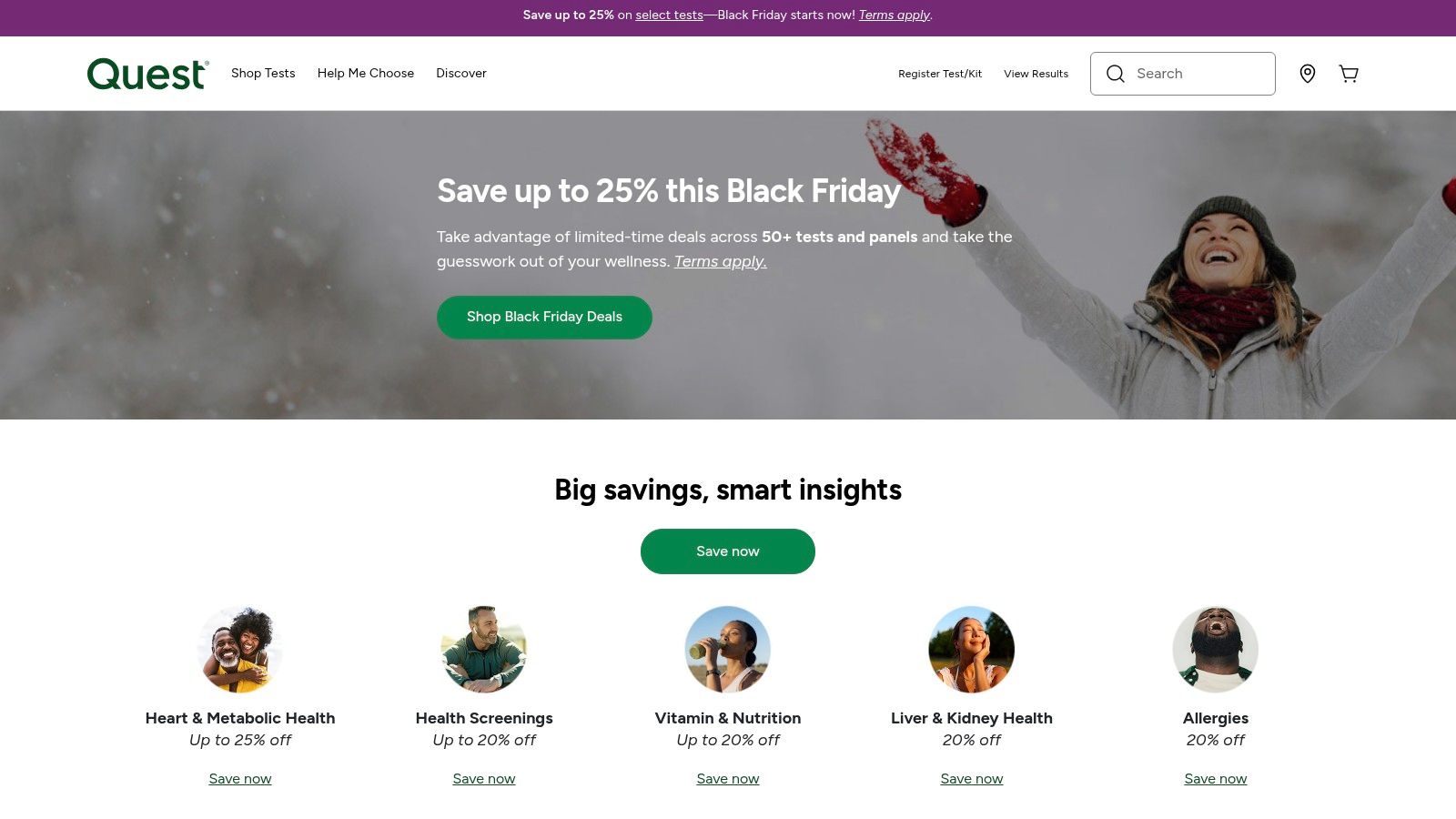
The catalog includes a menopause and perimenopause assessment, a post-menopause panel, and a broader women's hormone panel. These options suit a focused testing question rather than a broad biomarker baseline. Choose according to what your clinician needs to investigate, rather than assuming the panel with the most markers will give the clearest answer.
A hormone result needs clinical context. Routine biochemical testing is generally unnecessary for diagnosing or managing perimenopause in women older than 45, because diagnosis usually rests on symptoms and cycle changes, according to the 2025 European Society of Endocrinology clinical practice guideline. When testing is appropriate, FSH timing and interpretation alongside estradiol matter. The guideline also notes that NICE advises against diagnosing premature ovarian insufficiency from a single blood test or routinely using AMH for that purpose.
If you're weighing whether you can test for perimenopause, decide with your clinician whether a hormone snapshot would change your care.
Clinical reality: Hormones fluctuate across days and cycles during perimenopause. A normal FSH or estradiol result does not rule out the symptoms or cycle changes you're experiencing.
Oversight, one-time pricing, and how to use your report
Quest Health includes physician-service oversight and follow-up support in its ordering workflow. An independent physician reviews the order and results. That review provides oversight, but interpreting the findings alongside your symptoms, cycle history, and medications still matters.
The collection method has a practical trade-off: you must travel to a Quest site, in exchange for standardized clinical sample handling.
Individual prices are displayed without recurring membership fees, though some panels have an additional physician-service fee at checkout. Check the final cart total. For a yearly budget, count every panel and any repeat draw you expect to purchase, rather than treating the first order as your total cost.
Check the portal's privacy terms before ordering, including who can access your results and how medical records are handled. A familiar laboratory report format does not answer every data-privacy question.
Quest fits a focused, one-time testing need when you intend to discuss the results with your gynecologist or primary care clinician. Record your menstrual-cycle day and medications at the draw, and bring that context with the report. The useful outcome is an informed clinical discussion, not a diagnosis based on an isolated number.
6. Labcorp OnDemand
When accuracy and lab reliability sit at the top of your priority list, going straight to one of the largest clinical reference laboratories in the United States is hard to beat. Labcorp OnDemand lets you purchase individual tests online without booking a doctor's visit first, provide a venous blood sample at a local Labcorp draw center, and view results inside the standard Labcorp patient portal.
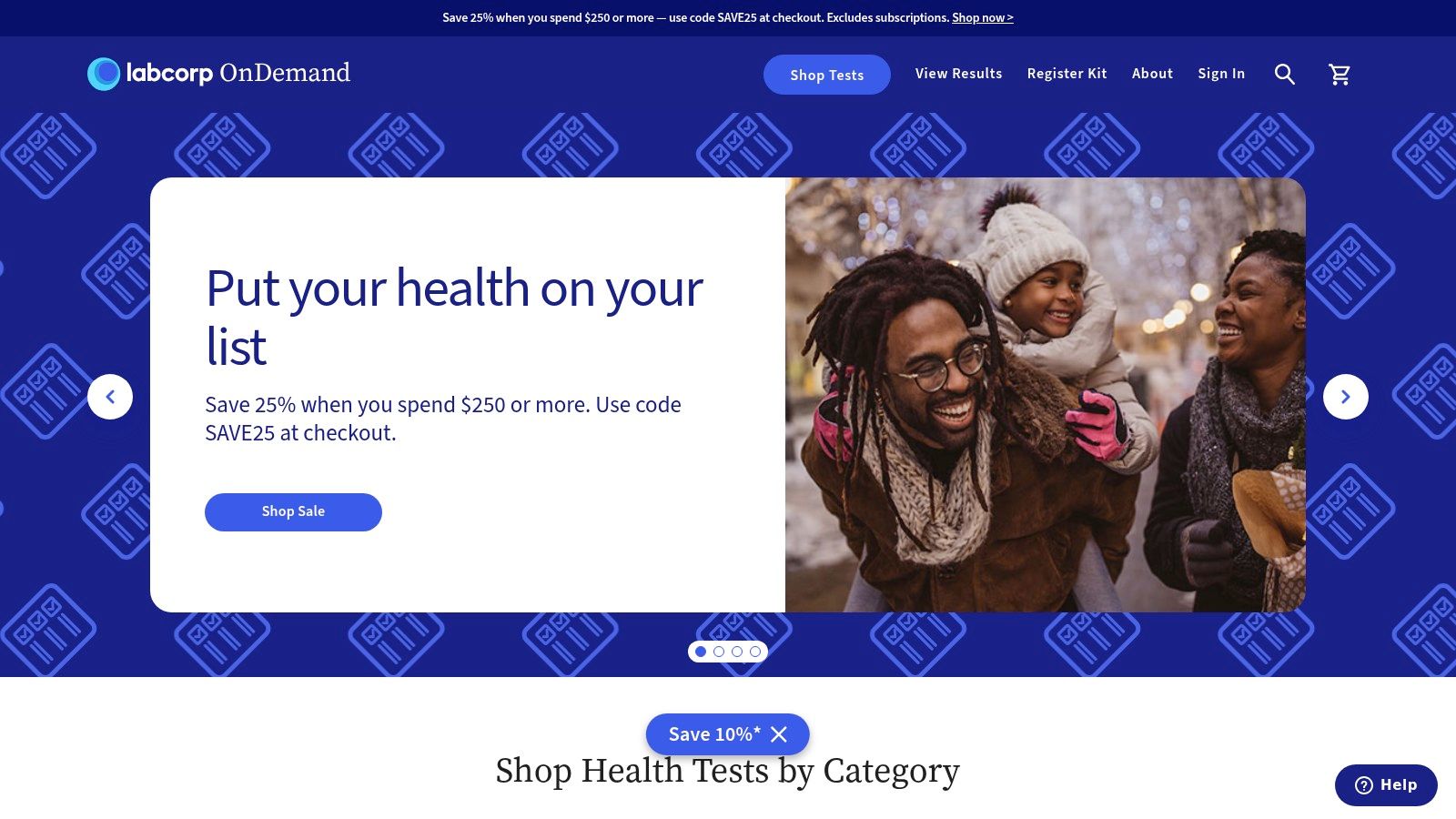
The operational scale behind that portal is substantial. Labcorp reported $13.009 billion in total revenue in 2024, up roughly 6.97% from $12.162 billion in 2023, and up roughly 160% from $5.004 billion in 2010, according to Labcorp financial revenue history on Macrotrends. For a consumer ordering a self-pay test, that infrastructure translates into standardized venous blood processing, established quality-control protocols, and lab reports formatted the exact way your doctor expects to see them.
Labcorp OnDemand's dedicated Menopause Test is deliberately narrow. It measures four reproductive hormones: estradiol, FSH, LH, and progesterone. You won't get thyroid markers, iron studies, or metabolic panels inside that single purchase, which keeps the scope tight and avoids drowning you in unrelated flags.
Cost, privacy, and what a four-hormone snapshot misses
Because Labcorp OnDemand uses a one-time purchase model, there's no annual membership to cancel and no forced retest schedule. Its listed menopause panel typically costs less than broader hormone memberships, making it an accessible starting point if you want a clean clinical baseline from an established laboratory network. Turnaround times can occasionally take longer than certain at-home consumer brands, so don't schedule a doctor's review the very next afternoon.
Privacy is handled through Labcorp's regulated patient-portal ecosystem rather than a consumer wellness app, which minimizes third-party wearable or marketing data sharing. You can download your official lab PDF straight from the portal and hand it directly to your clinician.
- Check medications first: Hormone therapy or hormonal contraception can substantially alter estradiol, FSH, LH, and progesterone readings, making raw values difficult to interpret without clinical guidance.
- Pair with broader context: A four-hormone snapshot won't uncover iron deficiency, thyroid dysfunction, or blood-sugar instability, all of which can mimic perimenopausal fatigue and brain fog.
- Record cycle timing: Write down your cycle day and recent symptoms on the day of your draw so your physician can judge whether the hormone pattern matches your stage.
Choose Labcorp OnDemand if you want a straightforward, low-friction, one-time venous draw from a nationally recognized lab and already have a doctor who will help you interpret the printout.
7. Everlywell
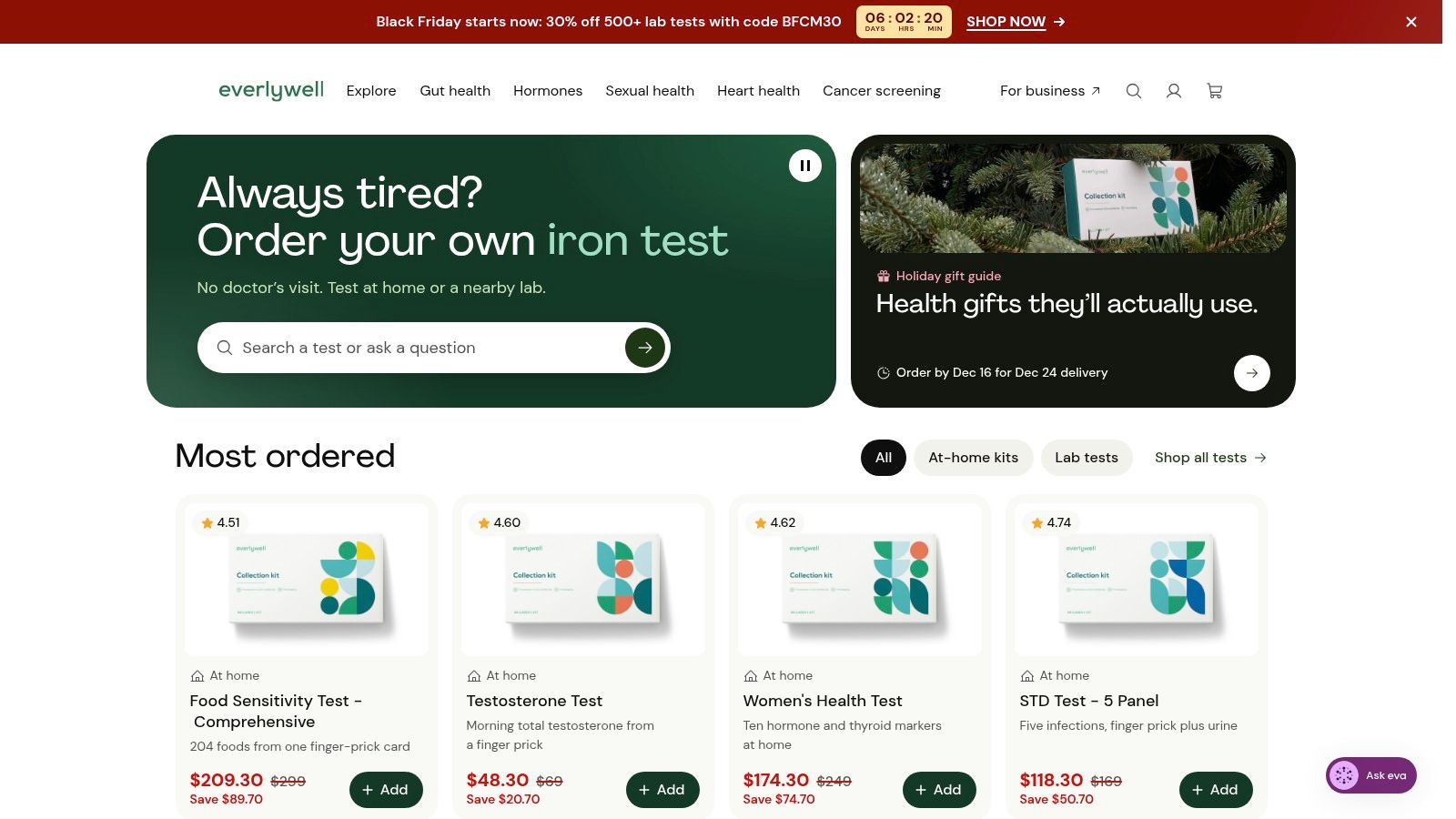
Not everyone wants to sit in a clinic waiting room at seven in the morning just to get a hormone check. Everlywell built its reputation on letting shoppers choose between at-home collection kits and in-person lab tests, depending on the specific product. Its women's health lineup includes a home-collection hormone test, a lab-based Perimenopause Check, and separate targeted options for thyroid and other hormones.
Convenience is a real advantage, yet sample collection method matters more than most buyers realize. Reproducibility deserves close scrutiny across consumer kits. In a National Institute of Standards and Technology evaluation of direct-to-consumer gut-microbiome testing services, researchers using standardized material found notable inconsistencies in results both within individual providers and across different providers.
That doesn't mean every home kit is unusable. It does point to a practical rule: always check whether a test uses venous blood, dried blood spots, saliva, or urine, because the sample matrix affects how closely results compare to standard clinical lab assays.
Panel differences, sale pricing, and clinical follow-up
Pay close attention when browsing Everlywell's catalog, because its at-home and in-person panels measure different sets of markers. Two products with similar names can cover meaningfully different hormone combinations, so read the marker list rather than the product title. Product pages list the exact markers and collection method, and many display customer ratings and review counts that help you spot shipping or sample-collection friction before you buy. If you're comparing options while choosing a test for menopause, verify whether the kit you're clicking uses a finger-prick card at home or a venous blood draw at a partner lab.
Everlywell frequently runs promotional discounts, so compare any sale price against the regular listed price before checking out. If you plan to retest in six months, factor in that the repeat kit may not be discounted at the same rate. Review Everlywell's privacy policy before activating your kit to understand how personal health questionnaires and test results are stored, and check whether optional telehealth consultations involve separate clinical terms.
Smart comparison step: If your symptoms are persistent or severe, favor Everlywell's in-person venous lab option over a home dried-blood-spot or saliva kit so your doctor can compare the numbers directly against hospital-grade reference ranges.
Everlywell works best for shoppers who want to start with a narrow, targeted women's-health question and value the option to collect samples at home. Treat the digital result card as a conversation starter for a clinician visit, never as a replacement for medical evaluation.
8. WHOOP Advanced Labs
If you already wear a WHOOP strap every day, you've probably watched your recovery score drop or your sleep efficiency slide without knowing what changed under the hood. WHOOP Advanced Labs connects clinical blood work directly to your existing WHOOP sleep, recovery, and activity trends inside the same app. For current members, that eliminates the hassle of toggling between a separate lab portal and a wearable dashboard.
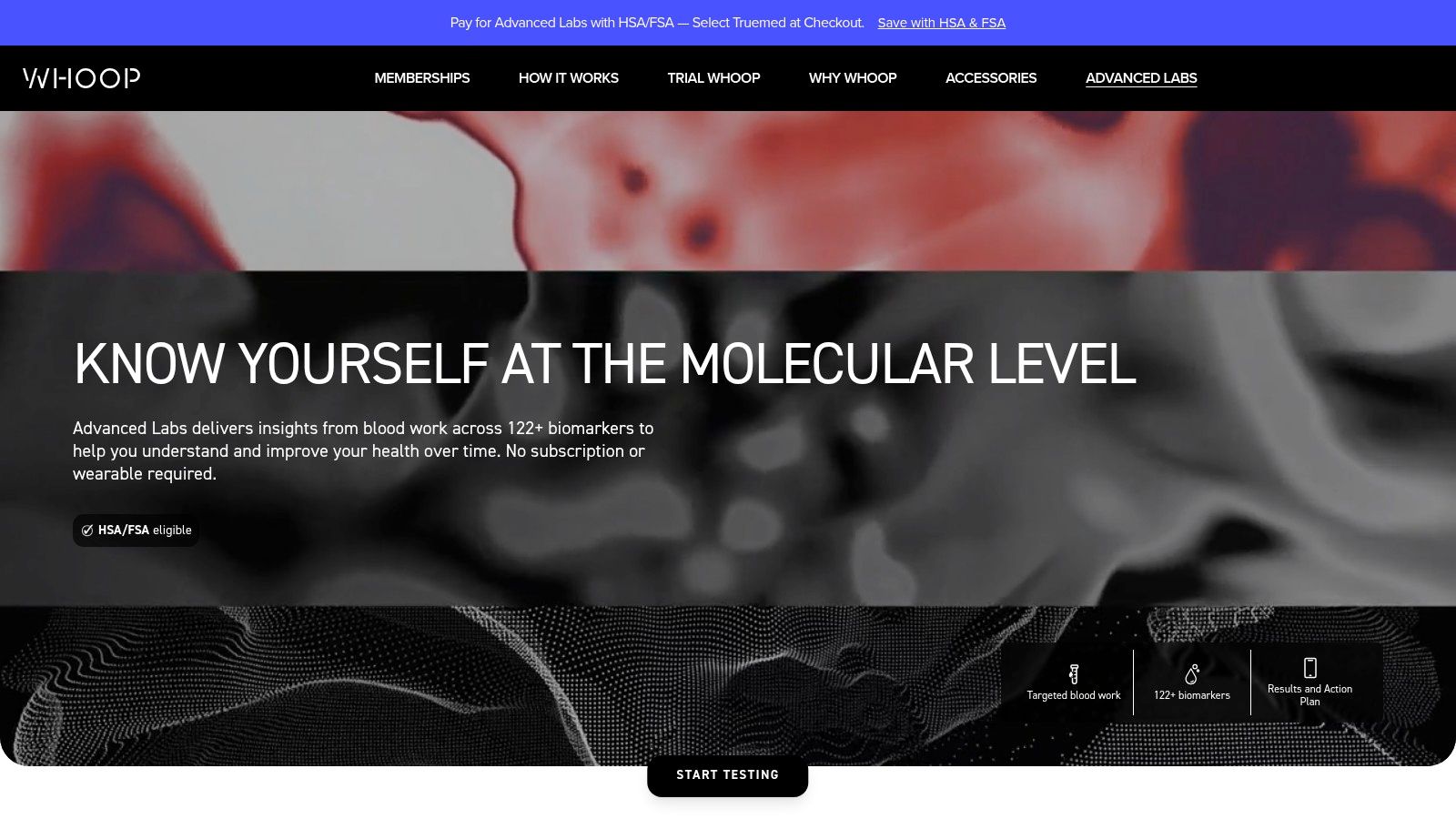
Its dedicated, one-time Women's Health Panel covers a thoughtful group of reproductive and thyroid-related markers: estradiol, progesterone, AMH, FSH, LH, prolactin, and thyroid-peroxidase antibodies. Pairing those blood values with continuous physiological metrics such as resting heart rate, sleep stages, and heart rate variability gives you richer context than a standalone lab slip. For example, spotting higher thyroid-peroxidase antibodies alongside weeks of unexplained low recovery scores gives you a concrete, well-documented reason to schedule an endocrine workup with your doctor.
Pricing structure, privacy, and keeping wearable context grounded
A major advantage of WHOOP Advanced Labs is that one-time specialized panels are available without purchasing a separate Advanced Labs subscription. That keeps costs contained if you only want to run the Women's Health Panel once or twice a year. Still, you do need a compatible WHOOP account and app experience, so this isn't an option for non-members. Depending on where you live, additional Quest fees can apply in certain states, so review the checkout breakdown before booking your draw.
Clinician review and an action plan are described as part of the service, giving you structured guidance rather than raw numbers alone. On the privacy side, merging clinical lab biomarkers with continuous biometric data inside a single consumer app warrants a careful read of WHOOP's health-data permissions, storage policies, and third-party sharing disclosures.
- Where it shines: Existing WHOOP members who want a focused women's hormone and thyroid-antibody panel mapped directly alongside sleep and recovery trends without adding another lab subscription.
- Where it stops short: Wearable trends offer helpful day-to-day context, not a clinical diagnosis or treatment plan, and markers like AMH or single-day FSH still require a physician to interpret alongside your cycle history and symptoms.
If you're already paying for WHOOP and want your next hormone draw integrated into the interface you check every morning, Advanced Labs is a logical fit. If you don't use WHOOP, choose a standalone clinical lab or platform-agnostic testing service instead.
How the leading biomarker testing companies differ by pricing model, collection method, and best-fit use
A useful comparison starts with the decision each reader is making: buy a broad baseline, run a focused hormone panel, or track results over time. Pricing model and collection method matter because they shape the total cost, the sample experience, and how much guidance comes with the numbers.
| Item | Pricing Model | Collection Method | Best For |
|---|---|---|---|
| OneTwenty | Annual Core or Executive plan model | Wearable integrations and quarterly lab panels | Ongoing health monitoring combining biomarker results with wearable data |
| Function Health | Annual membership with two testing rounds | Quest locations; at-home draws in select areas for an extra fee | Broad biomarker testing with scheduled retesting |
| Superpower | Membership; pricing varies by state | Partner labs or at-home collection for an extra cost | Broad testing paired with digital guidance and follow-up |
| InsideTracker | Separate membership and blood-test costs | Blood testing; can also upload results from other providers | People tracking biomarkers alongside fitness, wearable, or DNA data |
| Quest Health | Individual test purchases; some tests have an additional physician-service fee | In-person Quest locations | Focused menopause or hormone testing without an annual membership |
| Labcorp OnDemand | One-time test purchase | In-person Labcorp locations | A straightforward, one-time menopause hormone panel |
| Everlywell | Individual test purchases; prices may vary with promotions | At-home kits or in-person lab testing, depending on the test | People seeking targeted women's-health tests or at-home collection |
| WHOOP Advanced Labs | One-time panel option; some states may have additional fees | Lab collection paired with WHOOP app and wearable data | WHOOP users who want to view lab results alongside sleep and recovery trends |
The biggest trade-off is commitment. Annual plans such as OneTwenty, Function Health, Superpower, and InsideTracker suit readers who expect repeat testing and want results framed over time. That structure works well for trends, but it can be poor value for someone who needs one targeted answer.
Quest Health, Labcorp OnDemand, Everlywell, and WHOOP Advanced Labs fit more defined jobs. Quest Health and Labcorp OnDemand favour people comfortable with an in-person draw. Everlywell may suit readers who want a targeted test with at-home options. WHOOP Advanced Labs makes most sense for existing users who want lab results near sleep and recovery data.
Collection method also changes interpretation. A quarterly or repeat-testing model can show direction, while a single draw gives a narrower snapshot. Wearable integration adds context, but day-to-day readings still need clinical interpretation. Choose the service that matches the question first, then compare price, sampling, and review style.
Turning Your Results Into a Plan Worth Following
Choosing among the best biomarker testing companies gets much simpler once you stop hunting for the largest biomarker count and start matching the tool to your actual goal. Before you pull out a credit card or schedule a morning blood draw, run through this five-step check:
- Define your question first: Decide whether you want a broad whole-body baseline (Function Health, Superpower, OneTwenty), performance tracking synced with wearables (InsideTracker, WHOOP Advanced Labs), or a focused, one-time hormone check without a subscription (Quest Health, Labcorp OnDemand, Everlywell).
- Verify clinical oversight: Confirm whether a licensed clinician reviews your results, whether that review is a written summary or an interactive consult, and whether you'll still need your own doctor to order follow-up care.
- Calculate the true annual cost: Add membership fees, scheduled retests, extra physician-service charges, state surcharges in New York or New Jersey, and at-home phlebotomy fees before comparing two services.
- Read the privacy policy: Check whether the platform is HIPAA-certified or governed by standard consumer privacy terms, whether your lab results can be exported as clean PDFs, and whether health chats or wearable streams are used for AI training.
- Plan your clinician conversation: Print your full lab report, write down your cycle day and current medications, and bring symptom notes to your appointment instead of reacting to every borderline flag on your own.
Keep one biological reality front and center: hormone levels shift with cycle timing, stress, sleep loss, and medications, so a single snapshot is rarely conclusive on its own. Always talk to your doctor about hormone therapy, hormone testing decisions, or any health condition before changing prescriptions or starting targeted supplements.
Lab work also captures only one slice of the picture. Blood markers tell you what was circulating during a five-minute morning draw, whereas daily tracking shows how your body responds across weeks of real life. At Lila, we don't sell lab tests, and we don't sell or prescribe hormone therapy (such as estradiol or progesterone) or GLP-1 medications, because those are prescription-only. Instead, our perimenopause app fills the gap between clinic visits.
In a two-minute setup, you share your symptoms, goals, and stage, and we build a perimenopause nutrition plan based on protocols designed by Rebecca R., MSc, RD, a UK-registered dietitian specializing in midlife women's nutrition. Our quick daily check-in tracks 20+ symptoms including hot flashes, night sweats, sleep quality, mood, anxiety, energy, brain fog, bloating, joint pain, headaches, libido, vaginal dryness, period changes, and weight, alongside photo meal logging and a 24/7 AI nutrition coach. After usually 2 to 3 weeks of consistent logging, Lila surfaces the foods most correlated with each symptom, ranked by impact, so you can see whether hitting protein and fiber targets, taking magnesium, or cutting out wine moved the needle. Our app isn't designed to diagnose, treat, or mitigate any health condition and can't guarantee specific health outcomes, yet bringing three weeks of structured symptom, sleep, and meal patterns alongside your lab PDF turns a rushed doctor's visit into a productive clinical conversation.
Take one concrete step this week before ordering any blood work: write down the single health question you want answered, start logging your daily symptoms, sleep, and meals in the Lila app for the next two to three weeks, and book an appointment with your doctor so you can review both your daily patterns and the right targeted lab panel together.
Get Lila, your personal coach for perimenopause.
Built for women in their 40s. 24/7 coaching, in your pocket.