
8 Effective Hot Flash Natural Remedies to Try in 2026
Discover 8 evidence-based hot flash natural remedies. Our guide covers herbs, lifestyle changes, and mind-body practices to help you find relief.
 Michelle
Hot flashes can feel disruptive and overwhelming, arriving without warning and leaving you feeling flustered and overheated. While they are a hallmark of the menopausal transition for over 80% of women, you do not have to simply endure them. There is a growing body of evidence supporting a wide range of hot flash natural remedies that can significantly reduce their frequency and intensity.
This is not about generic advice. It is about building a personalized toolkit of evidence-informed strategies that work for your body. From well-researched herbal supplements like sage and black cohosh to powerful mind-body techniques and strategic lifestyle adjustments, a multi-faceted approach offers the most effective path to relief. Many women find that a combination of methods, rather than a single solution, provides the best outcome.
In this guide, we will explore 8 of the most effective natural remedies, detailing the science behind them and offering practical implementation steps. You will learn how to integrate these practices into your daily life and discover how to use data-driven tools, like the Lila app, to track what truly works for you. This approach empowers you to move beyond guesswork and create a targeted plan to regain comfort and control. The goal is to provide you with actionable information to build a proactive strategy for managing your symptoms and improving your quality of life during this transition.
1. Sage Extract and Sage Leaf Tea
Long used in traditional medicine, sage (Salvia officinalis) stands out as one of the most researched herbal options for managing vasomotor symptoms of menopause. This common garden herb contains phytoestrogenic compounds that appear to mimic some effects of estrogen in the body, helping to regulate the body's internal thermostat and reduce the frequency and intensity of hot flashes. For those seeking evidence-based, natural remedies for hot flashes, sage offers a compelling starting point.
Scientific backing for sage is robust compared to many other herbs. A notable 2011 Swiss clinical trial demonstrated its effectiveness, with participants taking a daily fresh sage leaf tablet experiencing a 50% reduction in average hot flash intensity after just four weeks. By the eight-week mark, the reduction reached 64%. Many Lila users have found similar success, often incorporating sage tea into their morning or evening routines and using the app's symptom log to see a measurable decrease in hot flash events over time.
How to Use Sage Effectively
To get the most out of this herb, consistency and proper preparation are key. Sage can be consumed as a tea or taken as a standardized extract in capsule form.
Sage Leaf Tea: Brew a cup by steeping 1 teaspoon of dried sage leaves (or 1 tablespoon of fresh leaves) in hot water for 5 to 10 minutes. The longer you steep, the stronger the flavor and potential effect.
Standardized Extracts: For a more concentrated and consistent dose, look for sage supplements in capsule or tincture form. Take them at the same time each day to maintain stable levels in your system. This consistency makes it easier to track your response in a symptom diary like Lila's.
Key Insight: Whether you choose tea or a supplement, tracking your symptoms before and after starting sage is crucial. This helps you objectively determine if it's the right remedy for your body.
Before adding sage to your routine, it's important to consult your healthcare provider, especially if you are taking other medications or have underlying health conditions. To explore other herbal allies for this life stage, you can find more information about herbs that may help with menopause symptoms.
2. Black Cohosh Root Extract
A staple in traditional Native American medicine for centuries, black cohosh (Actaea racemosa) is now one of the most widely used herbal supplements for menopausal symptom relief worldwide. This North American plant's root contains compounds that are thought to influence serotonin pathways in the brain. Since serotonin plays a role in regulating body temperature, this action may help stabilize the body's internal thermostat and reduce the sudden heat surges characteristic of hot flashes. It's a well-known option among natural remedies for hot flashes, particularly in Europe where it has been popular for decades.
While clinical study results have been mixed, many show positive outcomes. Several randomized controlled trials have reported a 20-30% improvement in hot flash symptoms compared to a placebo. Its long history of use and the volume of anecdotal success stories make it a compelling choice for many women. Tracking your hot flash patterns with the Lila app before and after starting black cohosh can provide personal, data-backed evidence of its effectiveness for you, helping to cut through the noise of conflicting studies.
How to Use Black Cohosh Effectively
To determine if black cohosh will work for you, a patient and methodical approach is best. It often takes time for the effects to become noticeable, so consistency is crucial.
Standardized Extracts: Look for supplements that are standardized to contain a specific amount of the active compounds, often listed as triterpene glycosides. This ensures you are getting a consistent and reliable dose with each capsule.
Start Low and Go Slow: Begin with a lower dose to assess your body's tolerance before gradually increasing to the manufacturer's recommended amount. This can help minimize potential side effects. Take it at the same time each day for best results.
Key Insight: Black cohosh is not a quick fix. You must take it consistently for at least 6 to 8 weeks before evaluating its effectiveness. Using a daily check-in feature like Lila's can help you see gradual improvements that might otherwise be missed.
Always consult your healthcare provider before starting any new supplement, including black cohosh, especially if you have a history of liver issues or are taking other medications. You can find more information on how to build a personalized menopause care plan by exploring resources on creating your own menopause toolkit.
3. Phytoestrogen-Rich Foods (Flaxseed, Soy, Red Clover)
Incorporating phytoestrogen-rich foods into your diet is a powerful, food-first approach to managing menopausal symptoms. Phytoestrogens are plant-derived compounds that have a similar chemical structure to human estrogen, allowing them to weakly bind to the body's estrogen receptors. This action can help buffer the effects of declining estrogen levels, potentially stabilizing the body's temperature regulation and reducing hot flash frequency. For those looking for natural remedies for hot flashes rooted in nutrition, focusing on these foods is a practical strategy.
The connection between phytoestrogen consumption and lower hot flash rates is supported by population studies. For instance, women in Asian countries, where high-soy diets are traditional, historically report fewer vasomotor symptoms. Similarly, many Lila users who diligently track their food intake alongside their symptoms often discover that consistently including foods like flaxseed or tofu corresponds with fewer or less intense hot flash episodes. This makes dietary modification a key area to explore for personalized relief.
How to Use Phytoestrogens Effectively
Successfully using food to manage symptoms requires consistency and mindful inclusion. The goal is to make these foods a regular part of your eating pattern, not a sporadic addition.
Flaxseed: Aim to include 1 to 2 tablespoons of ground flaxseed daily. It is crucial to use ground flaxseed, as the body cannot break down whole seeds to access the beneficial compounds. Mix it easily into oatmeal, yogurt, smoothies, or baked goods.
Soy Products: Try to incorporate one serving of whole soy foods like tofu, tempeh, edamame, or unsweetened soy milk into your daily routine.
Track and Observe: Give your body time to adapt. It can take 2 to 4 weeks of consistent intake to notice a change. Use a food and symptom tracker, like the one in the Lila app, to objectively see how these dietary changes correlate with your hot flash patterns over time.
Key Insight: Start with small, consistent amounts of phytoestrogen-rich foods. This allows you to monitor your body's response and find the right balance for your system without overwhelming it.
Before making significant dietary changes, it's wise to speak with a healthcare provider or registered dietitian, especially if you have a history of hormone-sensitive conditions. To discover more options, you can read about 9 foods that fight hot flashes.
4. Evening Primrose Oil (Omega-6 Supplementation)
Evening primrose oil (EPO) is a widely used supplement derived from the seeds of the evening primrose plant. It is a rich source of gamma-linolenic acid (GLA), an omega-6 fatty acid that plays a role in producing prostaglandins, compounds that help regulate inflammation and hormonal activity. The theory behind its use for hot flashes is that GLA may help correct a potential imbalance in fatty acids that contributes to menopausal symptoms, offering a gentle approach to finding relief.
While clinical research on EPO for hot flashes has yielded mixed results, its popularity persists, particularly in UK and European menopausal health protocols. Some studies show modest benefits, with certain participants reporting a 10-15% reduction in hot flash severity. Its effect is thought to be more about subtle, long-term support for the body's inflammatory and hormonal systems rather than a rapid, direct intervention. For many, EPO is one part of a broader strategy for managing menopausal wellness.
How to Use Evening Primrose Oil Effectively
To determine if EPO is one of the hot flash natural remedies that works for you, proper dosing and consistent tracking are essential. It often takes several weeks to notice a difference.
Start with a Standard Dose: Begin with a dose of 1,500mg daily, typically split between morning and evening. Always take it with food to improve absorption and minimize potential digestive discomfort like bloating or nausea.
Look for GLA Content: When choosing a supplement, look for products that clearly state the percentage of GLA on the label. This ensures you are getting a potent and effective product.
Track Your Progress: Use a symptom log, like the one in the Lila app, to monitor your hot flash frequency and intensity over a period of at least six to eight weeks. This data helps you see if the supplement is making a tangible difference.
Key Insight: Evening primrose oil's effectiveness can be enhanced when combined with a balanced intake of omega-3 fatty acids (from fish, flaxseeds, or walnuts). This balance is crucial for managing overall inflammation.
Before starting EPO, it's wise to speak with your doctor, especially if you have a history of seizures or are taking blood-thinning medications. They can help ensure it's a safe choice for your individual health profile.
5. Paced Breathing and Slow, Deep Breathing Techniques
Controlled breathing exercises, particularly slow, deep breathing performed at a specific pace, represent one of the most effective non-pharmacological hot flash natural remedies. This approach works by activating the parasympathetic nervous system, our body's "rest and digest" mode. This action helps to stabilize the hypothalamus, the brain's temperature control center, preventing the sudden and intense feelings of heat that define hot flashes.
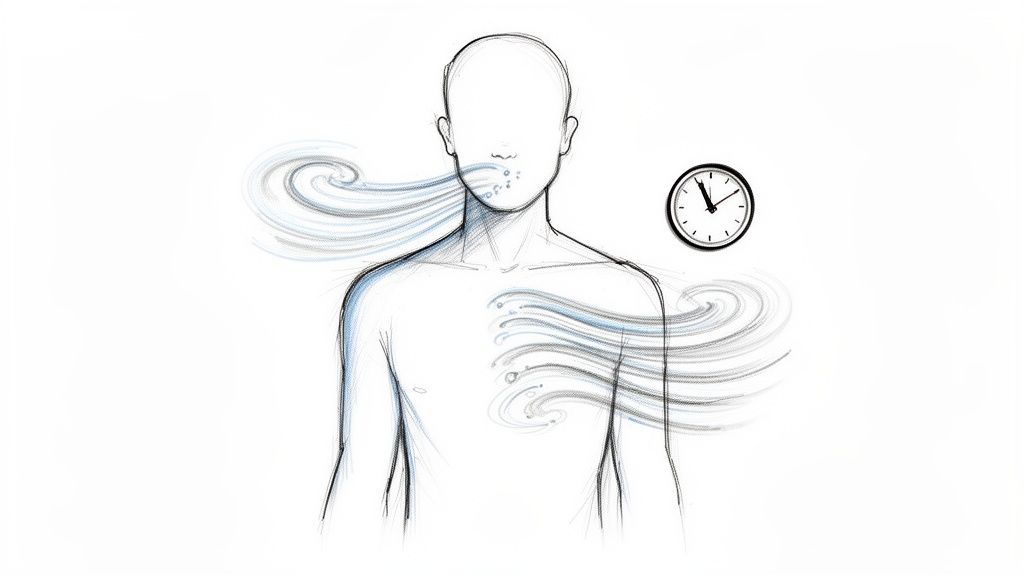
The scientific community strongly supports paced breathing. Prestigious institutions like the Mayo Clinic and Cleveland Clinic recommend it as a first-line approach for managing vasomotor symptoms. Research published in the journal Menopause found that women who consistently practiced slow, deep breathing experienced a 36% reduction in hot flash frequency. Other studies show reductions of up to 50% in both frequency and intensity. This is because the practice trains your nervous system to be less reactive to the hormonal fluctuations that can trigger a hot flash.
How to Use Paced Breathing Effectively
The goal is to establish a daily routine to build your nervous system’s resilience, not just to react to a hot flash as it happens. You can practice anywhere, but starting in a quiet space is best.
▶ PlayFind Your Rhythm: The most studied pace is 'resonant frequency breathing' at 5 to 6 breaths per minute. This typically means inhaling for 5 seconds and exhaling for 5 seconds. Use a timer or a guided breathing app to get the pace right.
Practice Proactively: Set aside 5 to 15 minutes, twice a day, to practice during calm periods. This trains your body to self-regulate, making it easier to manage a hot flash when one does occur.
Track Your Progress: Use the Lila app's daily check-in to log your breathing practice sessions. By correlating this new habit with your hot flash log, you can clearly see the impact your efforts are having on your symptoms.
Key Insight: Start practicing when you feel calm, not in the middle of a hot flash. Building the skill proactively makes it a powerful tool you can call upon when symptoms flare up.
Consistency is more important than duration. Even five minutes of focused breathing each day can produce a measurable difference in your hot flash frequency and severity over a few weeks. Think of it as physical therapy for your nervous system.
6. Red Clover Isoflavone Supplements
Red clover (Trifolium pratense) is a legume that has gained significant attention as a natural remedy for hot flashes due to its high concentration of isoflavones. These plant-based compounds are structurally similar to human estrogen and can interact with estrogen receptors in the body, providing a mild, hormone-balancing effect that may help stabilize the body's fluctuating internal temperature during menopause. For those seeking non-hormonal, evidence-informed options, red clover offers a well-researched botanical choice.
The scientific community has explored red clover's potential for years, with its use being particularly common in European and Australian menopausal health protocols. Multiple clinical trials have investigated its impact on vasomotor symptoms. While results vary, some studies published in journals like Menopause have shown a 20-30% reduction in hot flash frequency for participants using standardized extracts. Success often depends on the quality of the supplement and the individual's unique body chemistry, underscoring the importance of personal symptom tracking. Many Lila users have found that logging their red clover intake alongside daily symptom scores provides clear insight into whether it's making a difference for them.
How to Use Red Clover Effectively
To gauge red clover’s effectiveness, it’s important to select a quality product and use it consistently. The active isoflavones, including genistein and daidzein, are the key components.
Standardized Extracts: Choose supplements standardized to provide a specific amount of isoflavones, typically around 40 mg per dose. This ensures you are getting a consistent and potent amount in each capsule.
Consistency and Timing: Take your supplement with a meal to improve absorption and reduce the chance of stomach upset. Commit to using it for at least 8 to 12 weeks, as it can take time for the effects to become noticeable.
Key Insight: The true test of any supplement is your personal response. Diligently tracking your hot flash frequency and intensity in a tool like the Lila app before and during supplementation is the best way to determine if red clover works for you.
Given its estrogen-like properties, you should consult your healthcare provider before starting red clover, especially if you have a personal or family history of hormone-sensitive conditions. For more details on diet’s role in managing symptoms, you can read about foods that might impact menopause.
7. Regular Exercise and Movement (Aerobic, Strength, and Mind-Body)
Regular physical activity is a powerful, evidence-based strategy for managing hot flashes. Exercise improves cardiovascular stability and enhances the body’s ability to regulate its internal temperature (thermoregulation), which is often disrupted during menopause. It also helps reduce stress hormones like cortisol that can trigger vasomotor symptoms. For those looking for effective hot flash natural remedies, incorporating consistent movement is a foundational step.
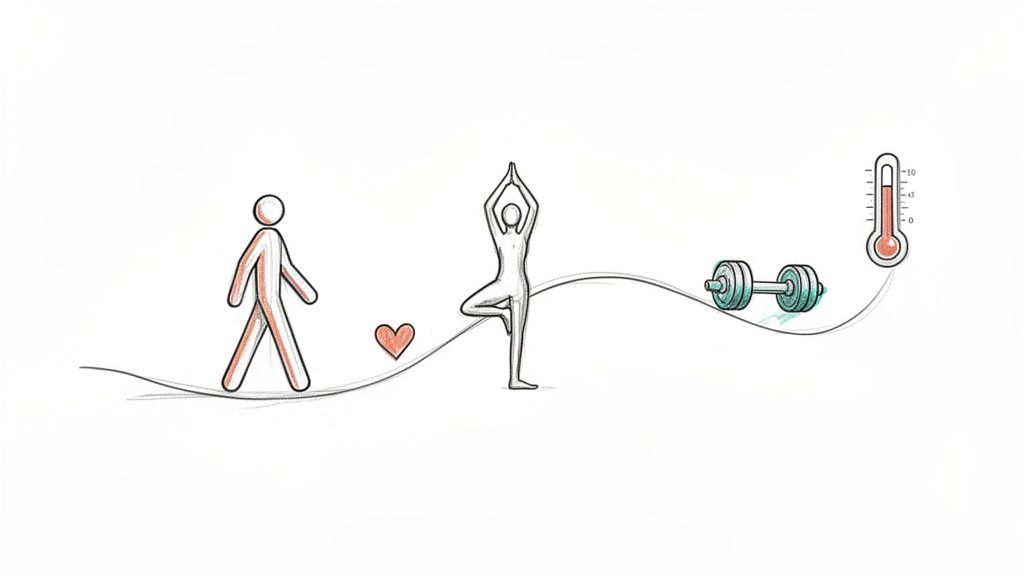
The scientific backing for exercise is strong. Research, including findings from the Harvard Women's Health Study, indicates that women who exercise regularly can experience 30-50% fewer hot flashes. They also report better management of related issues like poor sleep and mood swings. Many Lila users see this firsthand; by logging their workouts and symptoms, they often notice improved sleep and mood stability within the first two weeks of starting a consistent movement routine. Beyond direct hot flash relief, addressing other common challenges of this life stage, such as menopause-related weight changes, can be supported by specific research into the benefits of effective menopause exercises.
How to Use Movement Effectively
A well-rounded fitness plan that combines different types of exercise provides the best results for both hot flash control and overall health. The key is finding activities you enjoy and can stick with.
Aerobic Exercise: Aim for at least 150 minutes of moderate-intensity cardio per week. Activities like brisk walking, cycling, swimming, or water aerobics are excellent for improving thermoregulation and cardiovascular health.
Strength Training: Incorporate resistance training at least twice a week. Building muscle mass improves metabolic health and has been shown to help stabilize core body temperature.
Mind-Body Practices: Integrate yoga, tai chi, or Pilates into your routine. These practices help regulate the nervous system and lower the stress response, directly reducing a common trigger for hot flashes.
Timing is Key: Try to complete workouts at least 4-6 hours before bedtime. Exercising too close to sleep can sometimes raise core body temperature and interfere with rest.
Key Insight: Don't feel you have to start with intense workouts. Even 10-minute walks have measurable benefits. The most important factor is consistency. Use a tool like Lila to log your movement and see how it correlates with a decrease in hot flash frequency and intensity over time.
8. Consistent Sleep Hygiene and Environmental Temperature Control
Optimizing sleep quality and managing bedroom temperature are foundational approaches for reducing the impact of hot flashes. Poor sleep often creates a negative feedback loop; night sweats disrupt sleep, which in turn can worsen the frequency and intensity of daytime symptoms. By establishing evidence-based sleep hygiene practices and controlling your sleep environment, you can directly combat one of the most disruptive aspects of menopause.
Scientific research supports the profound effect of temperature on sleep and hot flash management. Studies in sleep medicine indicate that a cool bedroom, specifically between 60-67°F (15.5-19.4°C), is optimal for those prone to night sweats. Many Lila users who diligently track their sleep and hot flash events consistently identify bedroom temperature and bedding material as two of the most significant factors influencing their nightly comfort and overall sleep quality.
How to Use Sleep Hygiene Effectively
Building a better sleep routine involves more than just going to bed on time. It's about creating a consistent, supportive environment that signals to your body that it's time to rest and cool down. This is one of the most powerful natural remedies for hot flashes because it addresses the symptom at its source.
Set the Scene: Maintain a bedroom temperature between 60-67°F. If your budget allows, invest in a cooling mattress cover or sheets made from moisture-wicking materials like bamboo or Tencel.
Create a Rhythm: Establish a consistent bedtime and wake time, even on weekends. This helps regulate your body's internal clock, or circadian rhythm, which can reduce symptom severity.
Mind Your Intake: Avoid caffeine after 2 PM and limit alcohol within three hours of bedtime. Both are known triggers for night sweats and can interfere with deep, restorative sleep.
Be Prepared: Keep a glass of cool water and a change of lightweight clothing on your nightstand for quick relief if a night sweat strikes.
Wind Down Properly: Limit screen time for 30-60 minutes before bed. The blue light from phones and tablets can suppress melatonin production and make it harder to fall asleep.
Key Insight: A cool, dark, and quiet bedroom is not just a preference, it's a therapeutic tool. Using a symptom tracker like Lila can help you correlate changes in your sleep environment and routine with the frequency of your hot flashes, providing clear data on what works.
By focusing on these foundational habits, you can significantly reduce sleep disruptions and improve your resilience to hot flashes during the day. For more targeted strategies, you can explore other natural remedies for menopause night sweats.
8-Point Comparison of Natural Hot‑Flash Remedies
Item | 🔄 Implementation complexity | ⚡ Resource requirements | 📊 Expected outcomes | 💡 Ideal use cases | ⭐ Key advantages |
|---|---|---|---|---|---|
Sage Extract and Sage Leaf Tea | Low — brew tea or take standardized extract; consistent dosing advised | Low — inexpensive herb or supplement; easy daily routine | Moderate–high reduction in hot flashes (up to ~50%) within 2–4 weeks | First-line natural alternative for women seeking evidence-based, low-cost option | ⭐⭐⭐⭐ Strong clinical evidence; well‑tolerated; affordable |
Black Cohosh Root Extract | Low — capsule/tablet; start low and monitor for tolerance | Low–moderate — standardized extracts preferred; brand quality important | Modest–moderate reduction (≈20–30%); effects in 4–8 weeks | Women seeking herbal relief for hot flashes/night sweats without phytoestrogens | ⭐⭐⭐ Long history of use; may aid sleep; widely studied |
Phytoestrogen-Rich Foods (Flaxseed, Soy, Red Clover) | Moderate — requires dietary changes and consistency | Low — food-based, affordable but needs meal planning | Modest symptom reduction over weeks (2–4 weeks to notice) | Those preferring whole‑food, sustainable dietary approaches | ⭐⭐⭐ Provides nutrition (fiber, protein); low risk; supports cardio/metabolic health |
Evening Primrose Oil (GLA) | Low — daily softgels; consistent dosing required | Moderate — supplement cost; choose reputable GLA percentage | Small–moderate benefit (≈10–15%) in 4–6 weeks for some users | Individuals targeting inflammatory/hormonal support as adjunct therapy | ⭐⭐ Supports hormonal/inflammatory balance; generally well‑tolerated |
Paced Breathing and Slow, Deep Breathing | Low — practice-based; needs regular training and discipline | Minimal — time investment; optional guided apps or timers | Moderate–high reductions (30–50%); immediate relief possible; cumulative benefits | Anyone seeking non‑pharmacologic, immediate symptom control and stress reduction | ⭐⭐⭐⭐ No side effects; free; effective immediately and long‑term with practice |
Red Clover Isoflavone Supplements | Low — take standardized supplement; monitor if estrogen‑sensitive | Moderate — standardized extracts (40mg isoflavones) recommended | Modest–moderate reductions (≈20–30%) in 4–8 weeks for some users | Those seeking a phytoestrogen option for hot flashes and bone/cardiovascular support | ⭐⭐⭐ Phytoestrogen benefits; researched but variable efficacy |
Regular Exercise and Movement | Moderate — requires time, planning, and consistency | Low–moderate — time commitment; minimal equipment needed | Moderate–high reduction (30–50%); benefits in 2–4 weeks plus broad health gains | Individuals aiming for sustainable, multi‑symptom management (sleep, mood, weight) | ⭐⭐⭐⭐ Comprehensive health benefits; sustainable; improves sleep and mood |
Consistent Sleep Hygiene & Environmental Temp Control | Moderate — habit changes and bedroom adjustments | Low–moderate — thermostat, bedding upgrades optional; behavioral consistency | High impact on nighttime symptoms (40–60% sleep-related improvement) often within 1–2 weeks | People with night sweats and sleep disruption as primary concern | ⭐⭐⭐⭐ Immediate sleep benefits; complements all other strategies |
Creating Your Personalized Hot Flash Relief Plan
You have just explored a wide array of powerful, natural remedies for hot flashes, from dietary adjustments and specific herbal supplements to mind-body techniques that can cool you down in the moment. The journey to relief is not about finding a single "magic bullet" but about building a personalized, multi-layered strategy that suits your body, lifestyle, and preferences.
The sheer number of options, including sage, black cohosh, and paced breathing, can feel overwhelming. The key is to approach this systematically, not randomly. Start small by selecting one or two remedies that seem most accessible and appealing to you. Perhaps this means adding flaxseed to your morning yogurt or committing to a five-minute deep breathing session every evening.
The Power of Systematic Tracking
Guesswork is the enemy of progress. The most crucial step in finding effective hot flash natural remedies is to track your efforts and symptoms meticulously. Did swapping your morning coffee for sage tea make a difference? Did that week of consistent aerobic exercise reduce the intensity of your night sweats? Without data, these are just questions. With data, they become answers.
This is where a dedicated tool can make all the difference. By logging your daily food intake, exercise, sleep quality, and any new supplements or practices, you create a personal data set. Over time, patterns emerge, revealing clear cause-and-effect relationships that are unique to your physiology. This process moves you from a state of frustration to one of empowered self-management.
Key Insight: True relief comes not from trying everything at once, but from methodically testing individual strategies and observing their direct impact on your symptoms.
Building Your Personal Action Plan
Once you begin tracking, you can build a more sophisticated and effective plan. Here’s a simple framework to get started:
Choose Your Focus: Select one or two strategies from this article to implement for a consistent period, such as two to four weeks.
Establish a Baseline: Before you start, log your hot flash frequency and intensity for a few days to know your starting point.
Track Daily: Consistently record your symptoms, adherence to the new strategy, and other relevant lifestyle factors (like stress, diet, and sleep).
Analyze and Adjust: At the end of the trial period, review your data. If you see a positive change, keep the strategy. If not, you can confidently discard it and test another.
This methodical approach ensures you are investing your time and energy in remedies that deliver real, measurable results for you. For a more personalized approach, understanding your hormonal baseline through an oestrogen blood test can provide valuable insights.
Knowing When to Seek Professional Guidance
While these natural approaches are powerful first-line strategies, they are part of a larger wellness toolkit. It is essential to recognize when professional medical advice is necessary. Please consult your healthcare provider if:
Your hot flashes are severe and significantly disrupt your daily life or sleep.
Your symptoms persist or worsen despite your best efforts with natural remedies.
You experience other concerning symptoms alongside hot flashes, such as heart palpitations, unexplained weight loss, or persistent fatigue.
Your doctor can help rule out other underlying medical conditions and discuss a wider range of treatments, including hormone replacement therapy (HRT) if appropriate. By combining informed self-care with professional medical support, you create a robust and comprehensive plan to manage your symptoms effectively and reclaim your comfort and well-being.
Stop the guesswork and start building a data-driven plan to manage your hot flashes. The Lila app is designed to help you track your symptoms, diet, and lifestyle changes, so you can see exactly which hot flash natural remedies work for you. Take control of your menopausal journey by downloading Lila and turning your daily habits into actionable insights.
Generated with the Outrank app
Get Lila, your personal coach for perimenopause.
Built for women in their 40s. 24/7 coaching, in your pocket.


