
How to Reduce Joint Inflammation: Perimenopause Guide
Learn how to reduce joint inflammation during perimenopause with effective, natural strategies. Start feeling better today.
You wake up with stiff fingers, take the stairs carefully because your knees ache, and wonder why a workout that once felt easy now leaves every joint complaining. Then your period changes, sleep becomes unreliable, hot flashes appear, and someone tells you it's probably just aging.
That explanation is too shallow. Joint pain that begins or intensifies during perimenopause deserves a hormonal and inflammatory lens, not an automatic label of wear and tear. Rest, stretching, and occasional painkillers may buy temporary relief, but they won't address the factors changing underneath you.
Here's how to reduce joint inflammation with a plan built for the perimenopausal transition: calm an active flare, change the food pattern that feeds inflammation, rebuild strength progressively, protect sleep, and know when symptoms require medical evaluation.
Table of Contents
- When Joint Pain Shows Up Alongside Hormonal Changes
- Why Perimenopause Triggers Inflammation in Your Joints
- Quick Relief Strategies You Can Use This Week
- An Anti-Inflammatory Eating Pattern Built for Perimenopause
- A Progressive 12-Week Exercise Plan for Inflamed Joints
- Sleep, Stress, Supplements, and Tracking What Works
- When to See a Doctor and Your First 4 Weeks
When Joint Pain Shows Up Alongside Hormonal Changes
Many women first notice the pattern in small, ordinary moments. Your fingers feel tight when you open a jar. Your knees ache after a familiar walk. Your hips or ankles feel tender after exercise that used to leave you energized, not inflamed.
The timing matters. Joint symptoms may arrive alongside irregular periods, hot flashes, night waking, mood changes, or a noticeable drop in recovery. That combination looks different from an isolated mechanical injury. It also doesn't mean every ache is caused by menopause, but it does mean you shouldn't dismiss the pattern as inevitable aging.
If you're unsure where you are in the transition, this guide to perimenopause versus menopause can help you place joint symptoms in the wider hormonal picture.
The pattern worth noticing
Perimenopausal joint complaints often include:
- Morning stiffness: Your hands, knees, or feet feel tight after waking, then loosen as you move.
- Symmetric achiness: Both hands, both knees, or several joints may hurt rather than one joint following a clear injury.
- Intermittent swelling: A joint may look or feel puffy during a flare and calmer later.
- Exercise intolerance: A normal session produces disproportionate soreness or swelling.
- Changing symptom intensity: Pain rises and falls with sleep disruption, stress, cycle changes, or hot flashes.
You don't need to wait until pain becomes severe before responding. Early tracking can show whether joint symptoms cluster with poor sleep, a stressful week, a particular training session, or hormonal changes.
Practical rule: Treat new joint pain as information, not a character judgment about your age, fitness, or body.
Being told to “just rest” can be especially frustrating. Complete rest reduces your capacity, while pushing through swollen joints can prolong a flare. The useful middle ground is calm the acute irritation, keep safe movement, then build strength and aerobic capacity gradually.
Perimenopause also changes the stakes. Muscle mass, bone health, sleep quality, body composition, and immune signaling can shift at the same time. A plan that only tells you to ice your knee misses the system producing the problem.
Why Perimenopause Triggers Inflammation in Your Joints
Estrogen isn't only a reproductive hormone. Joint tissues, including synovial tissue, cartilage, and the joint capsule, respond to estrogen signaling. During perimenopause, estrogen levels can fluctuate sharply before declining, and that changing signal may affect how joints handle inflammation, repair, lubrication, and physical load.
This is one reason joint pain can feel widespread rather than neatly confined to one damaged structure. Hormonal and immune changes can influence several joints at once, while poor sleep and reduced recovery make ordinary training stress feel more provocative.
The estrogen connection in plain English
When estrogen support changes, the joint environment may become less resilient. Pro-inflammatory signaling involving substances such as IL-6 and TNF-alpha can become more relevant, synovial fluid may feel less supportive, and cartilage repair processes may not keep pace with daily demands.
That doesn't prove that every painful joint is inflamed, and it doesn't replace an examination. It does explain why a woman can develop aching fingers, knees, and hips around the same period of hormonal disruption even when imaging doesn't reveal an obvious injury.
For a clear overview of the topic, this resource on joint pain from low estrogen is useful because it connects hormonal changes with musculoskeletal symptoms rather than treating each ache as a separate orthopedic event.
Why generic arthritis advice often fails
Traditional arthritis advice frequently centers on mechanical wear, rest, ice, and symptom control. Those tools have a place, but they don't fully address fluctuating estrogen, systemic inflammation, muscle loss, sleep disruption, and changing recovery needs.
A 2026 systematic review found a potential association between menopause onset and musculoskeletal symptoms, while a 2026 clinical recommendations review advises clinicians to consider arthritic disease, autoimmune disease, vitamin deficiencies, and estrogen-deficient states when evaluating joint pain in women. The review of menopause and musculoskeletal symptoms supports a more careful evaluation when pain begins during this transition.
That's why an ice pack or generic supplement may not solve the problem. You're not dealing with one switch. You're managing a changing hormonal environment, an immune response, tissue capacity, and the way you load your body.
Quick Relief Strategies You Can Use This Week
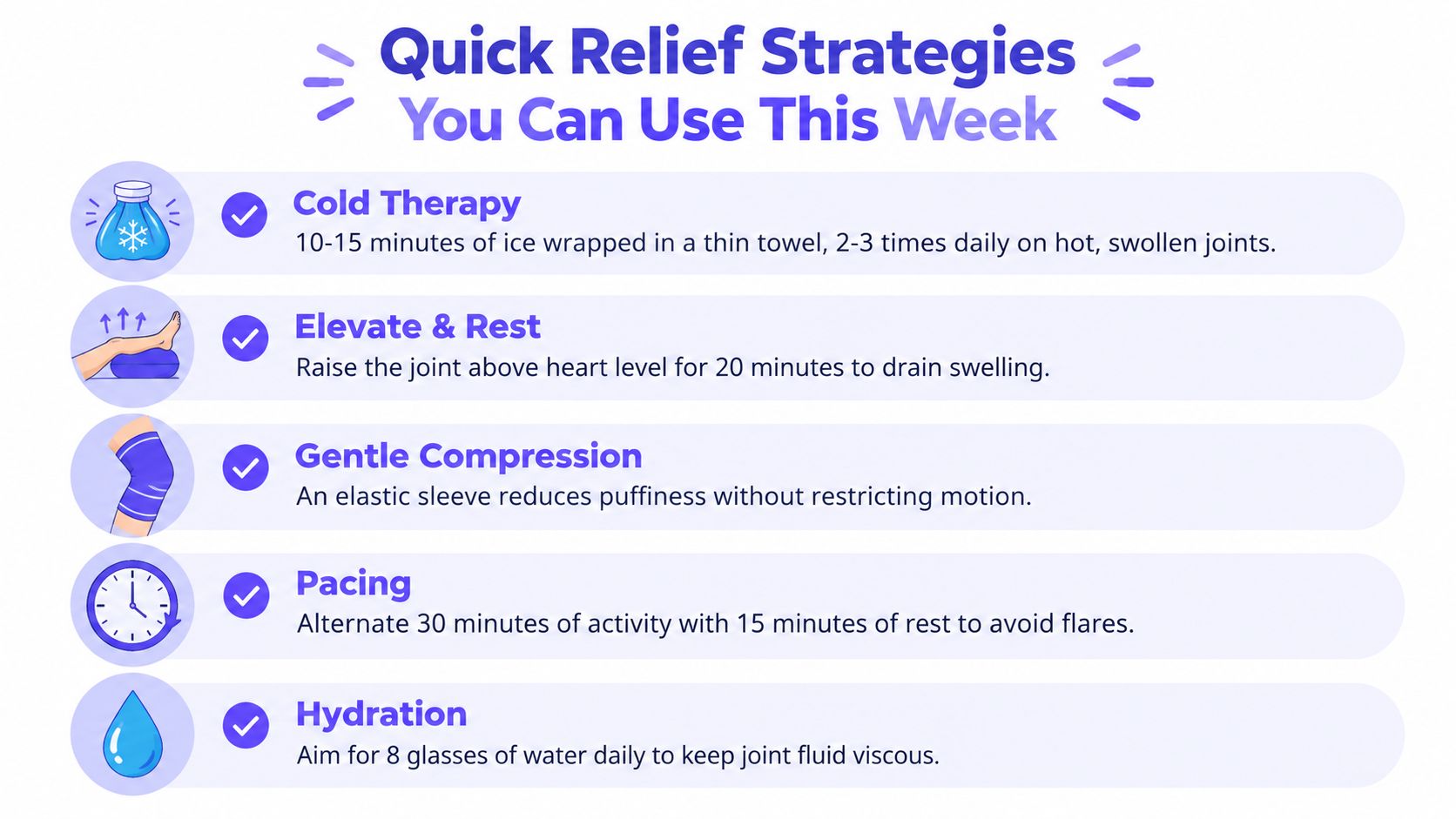
Start with the joint in front of you. The aim over the next few days isn't to cure the hormonal driver. It's to reduce irritation enough that you can sleep, move, and begin the longer-term work.
Use cold therapy for heat and swelling. Wrap an ice pack in a thin towel and apply it for 10 to 15 minutes, two to three times daily when a joint feels hot or puffy. Use heat instead for stiffness without active swelling, such as a warm shower or heating pad before gentle movement.
Keep the joint moving without provoking it
Pain often makes people freeze a joint completely. That can increase stiffness. Try small, controlled movements that stay well below sharp pain:
- Ankle pumps: Flex and point your feet slowly while seated or lying down.
- Finger extensions: Open your hand gently, spread the fingers, then relax.
- Knee bends: Slide one heel toward your body and back without forcing the range.
- Shoulder circles: Move slowly through a comfortable arc.
- Short walks: Choose a flat route and stop before symptoms escalate.
Sleep position matters more than many women realize. If you sleep on your side, place a pillow between your knees. If your knees hurt while lying on your back, try support under them. Keep painful wrists in a neutral position rather than folded under your pillow.
Hydration supports normal body function, but don't treat water as a cure. Drink consistently through the day, and include electrolytes when you've been sweating heavily or struggling to eat and drink normally.
Over-the-counter choices need a safety check
Topical diclofenac 1% gel may help localized joint pain, while oral NSAIDs can reduce pain for some people. Use the lowest effective dose with food and check with a clinician or pharmacist first if you have kidney disease, stomach ulcers, cardiovascular risk, take blood thinners, or use other medications.
Topical menthol or capsaicin can provide a counter-sensation that makes pain easier to tolerate. They won't correct the underlying driver, and they can irritate skin, so follow the product directions and wash your hands after application.
CBD products also vary substantially in formulation and quality. If you're considering them, review practical information on choosing the right CBD for inflammation and discuss possible interactions with a qualified professional.
For a longer-term plan designed for this stage, use this guide to perimenopause joint pain alongside your symptom notes. These short-term actions buy you time. They aren't a substitute for changing the food, movement, sleep, and medical strategy that follows.
An Anti-Inflammatory Eating Pattern Built for Perimenopause
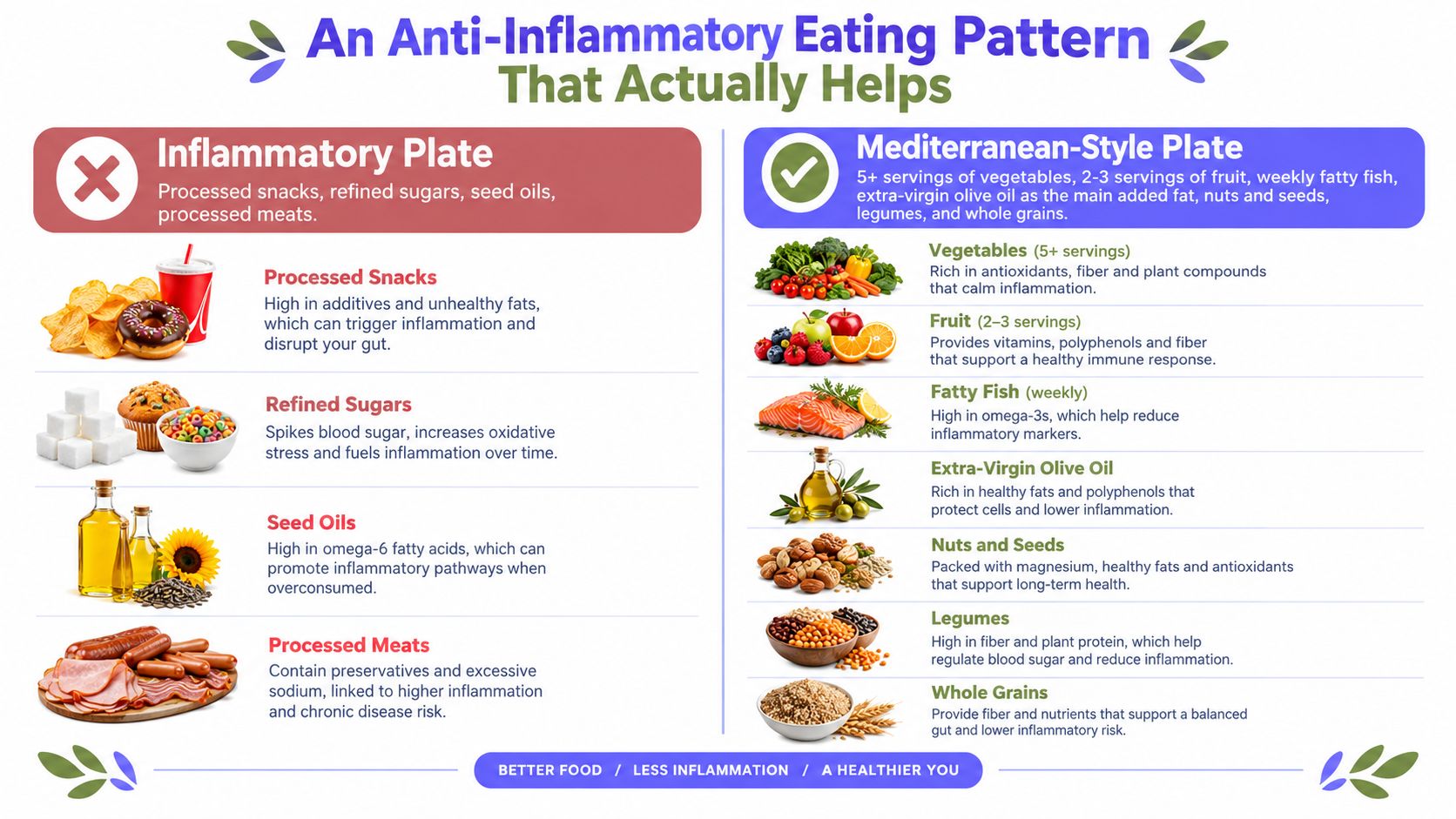
Joint pain that appears with changing cycles deserves more than generic arthritis advice. Falling oestrogen can affect pain sensitivity, sleep, body composition, and inflammatory signalling, so your food pattern should support the hormonal transition rather than chase one “miracle” ingredient. Start with a Mediterranean-style eating pattern, not expensive powders or extreme restriction. The American College of Rheumatology conditionally recommends this pattern over no formally defined diet for rheumatoid arthritis, although evidence for specific outcomes remains limited and low quality in some areas. The guideline review supports a whole-food approach.
Build most meals around vegetables, fruit, legumes, whole grains, nuts, seeds, olive oil, and fatty fish. Reduce ultra-processed snacks, processed meat, refined carbohydrates, and meals dominated by saturated fat. This gives you more fibre, protein, and unsaturated fat while supporting steadier energy during perimenopause.
Replace first, then add
Do not redesign your kitchen overnight. Make practical swaps that reduce processed food and make nourishing meals easier when sleep, pain, or hot flushes have drained your energy.
| Instead of | Try |
|---|---|
| Sugary cereal | Oats with berries and walnuts |
| Deli meat sandwich | Sardine, salmon, or hummus wrap |
| White rice every day | Farro, quinoa, or another whole grain |
| Fried snack | Fruit with nuts or plain yogurt |
| Processed spread | Extra-virgin olive oil-based dressing |
Include fatty fish regularly, with dietary guidance describing a practical target of about twice weekly. Use olive oil as your main added fat, and keep lentils, beans, or chickpeas available for quick meals.
A simple three-day menu
Day one starts with oats, berries, and walnuts. Lunch is lentil and vegetable soup with whole-grain bread. Dinner is salmon, greens, and roasted vegetables.
Day two includes plain yogurt with fruit and seeds, followed by a hummus and vegetable wrap. Finish with a chickpea, tomato, and whole-grain salad dressed with olive oil.
Day three begins with eggs and sautéed greens. Have leftover salmon or beans at lunch, then serve vegetable and lentil stew with farro for dinner.
Keep your grocery list simple:
- Produce: leafy greens, tomatoes, peppers, broccoli, berries, citrus, apples, onions, garlic.
- Protein: salmon or sardines, eggs, lentils, chickpeas, beans, plain yogurt.
- Pantry: oats, farro or quinoa, whole-grain wraps, walnuts, seeds, extra-virgin olive oil.
- Freezer: frozen vegetables, berries, and fish portions for low-effort meals.
Perimenopause is not a reason to turn eating into a control project. Intermittent fasting windows, fear of all seed oils, and restrictive elimination diets can increase stress and make adequate nourishment harder. A review of knee osteoarthritis found that low-carbohydrate diets may help some people more than low-fat diets for pain, but results are mixed. It also found the strongest overall outcomes when diet was combined with exercise and weight loss. Read the nutrition evidence on osteoarthritis before adopting a rigid rule.
If you suspect nightshades, dairy, or gluten, remove one category at a time, track symptoms, and reintroduce it deliberately. Eliminating three food groups at once will not show you which factor matters.
For meal ideas suited to hormonal change, use this guide to the Mediterranean diet during perimenopause. You can also review MEDISTIK inflammation relief strategies, while keeping your main effort on the overall eating pattern.
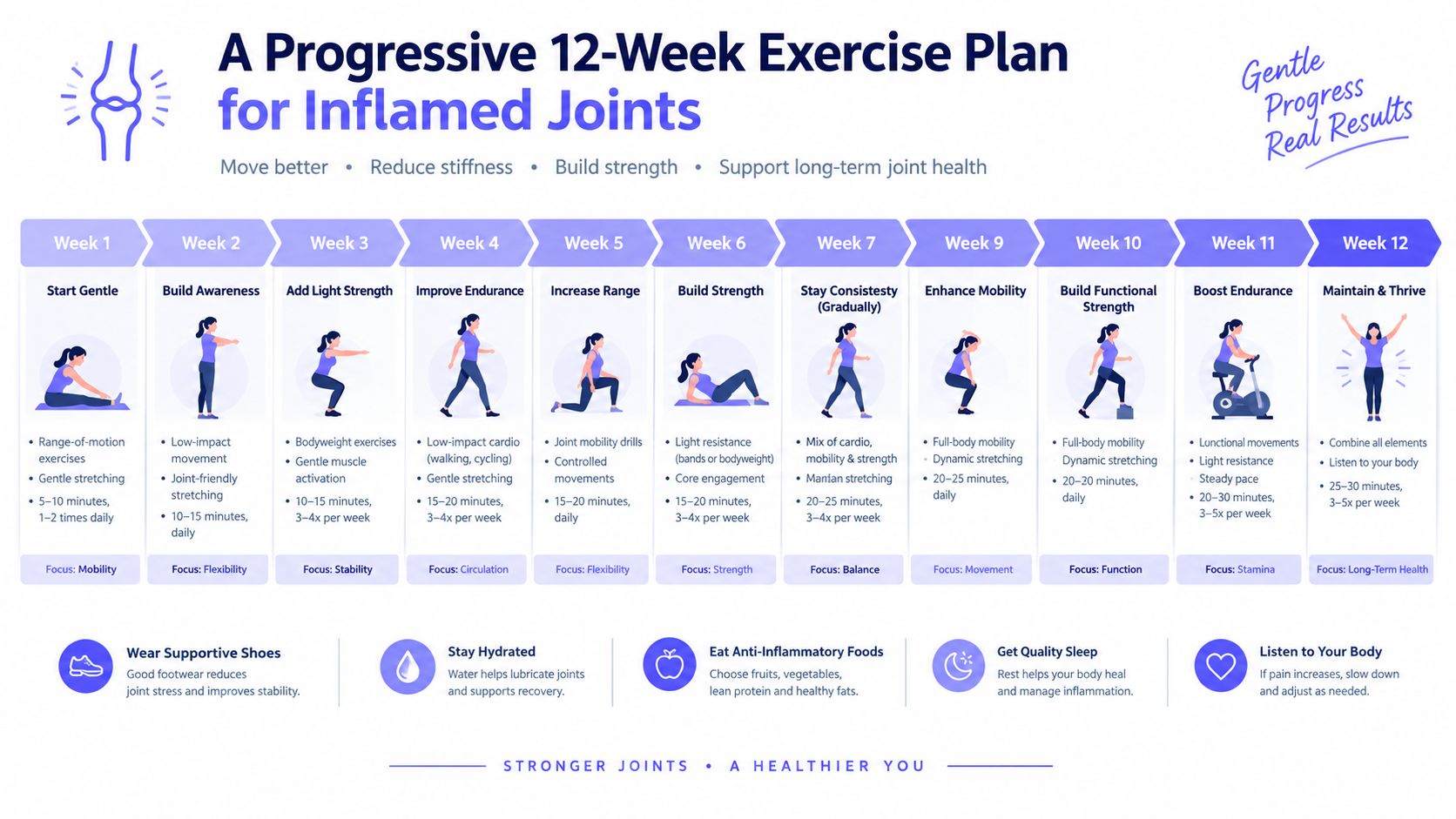
A Progressive 12-Week Exercise Plan for Inflamed Joints
Exercise is not an optional add-on for perimenopausal joint health. It helps maintain muscle, supports function, and gives your joints a more capable support system. The key is progressive, low-impact loading, not punishing workouts during a flare.
Clinical guidance has long recommended regular activity adapted to the individual. The 2018 EULAR recommendations advised adults aged 18 to 65 to complete moderate aerobic activity for at least 30 minutes on 5 days each week, or vigorous activity for 20 minutes on 3 days each week, while adapting exercise when joints are inflamed. Read the EULAR physical activity recommendations.
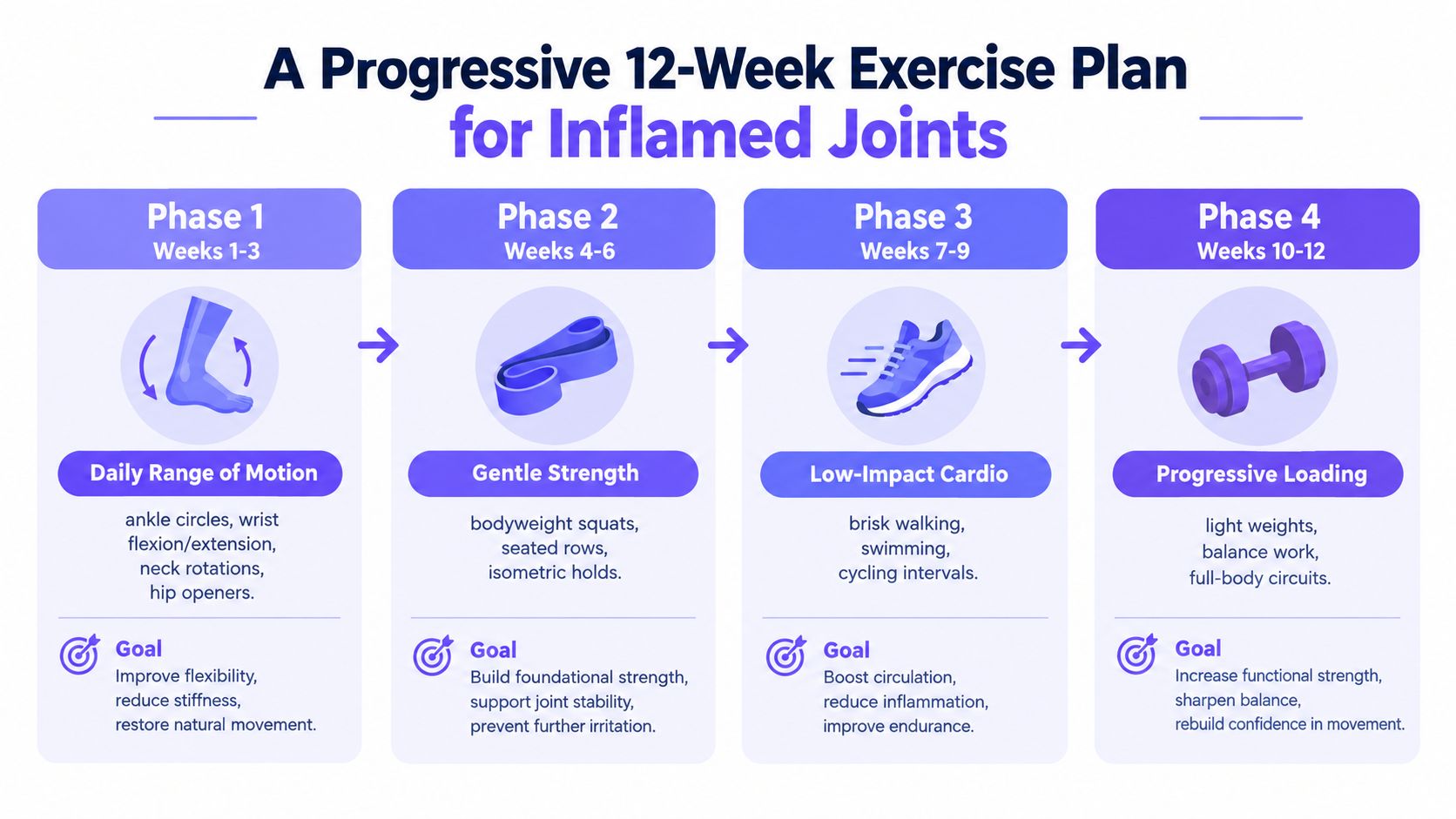
Phase one, weeks one to three
Start with daily range-of-motion work. Use ankle circles, wrist flexion and extension, neck rotations, hip openers, and comfortable knee bends. Add flat-ground walking if tolerated, keeping the pace easy enough to speak in full sentences.
Keep this phase under 150 minutes of total weekly activity. The purpose isn't calorie burn. It's to restore regular movement without creating a rebound flare.
Phase two, weeks four to six
Add low-impact cardio three times weekly. Choose a stationary bike, elliptical, swimming, or aquatic walking. Stay at a conversational pace and keep the resistance modest.
If your joints respond well, extend the session gradually. If swelling increases later that day or the next morning, reduce duration before you abandon the activity.
Phase three, weeks seven to nine
Add resistance work twice weekly. Use bands, machines, or bodyweight movements such as supported squats, wall push-ups, rows, and carefully coached Romanian deadlifts. Include one balance session weekly using a countertop or wall for support.
Phase four, weeks ten to twelve
Consolidate a sustainable week with low-impact cardio, resistance training, mobility, and balance. By this stage, your total time may approach 200 minutes weekly if your joints tolerate it, but more time isn't automatically better.
Use this decision rule:
- Progress: Pain remains manageable, swelling doesn't persist, gait is normal, and daily function improves.
- Hold: Symptoms are stable but recovery takes longer than expected.
- Regress: A joint becomes hot or visibly swollen, pain changes your gait, or function worsens. Reduce intensity by 50%, replace impact work with water walking, and pause new loading during a flare.
Your hormones change recovery, not the laws of training. Build capacity gradually, then respect the feedback.
Exercise trials in rheumatoid arthritis have not shown harm to joint inflammation, acute-phase reactants, or pain compared with control, and some studies found fewer clinically active joints within the exercise group. A 2025 meta-research review also reported improvements in fatigue, pain, disease activity score, and ESR, but not uniform improvement across joint counts or inflammatory biomarkers. See the Cochrane arthritis exercise summary.
For a plan that accounts for menopause-related changes in strength and recovery, use this menopause workout plan. You want training that leaves you more capable, not a cycle of overdoing it, flaring, stopping, and starting again.
Sleep, Stress, Supplements, and Tracking What Works
Perimenopause can make joint pain worse even when your diet and training are sensible. Night sweats, hot flashes, anxiety, and cycle changes break up sleep and reduce recovery, so treat these symptoms as part of the inflammation picture rather than unrelated inconveniences.
Set a consistent sleep window and use a screen-free wind-down during the hour before bed. If knee or hip pain wakes you, place a pillow for support and adjust your mattress or topper to reduce pressure points. Persistent poor sleep needs attention as a health symptom, not blame as a personal failure.
Use small stress resets
Stress does not explain every flare, but it can increase pain sensitivity, disrupt sleep, and keep your nervous system on alert. Pick one reset you can repeat daily:
- Slow-exhale breathing: Breathe in gently, then make each exhale longer for 10 minutes.
- Outdoor walking: Take a short, easy walk without turning it into a workout.
- Restorative movement: Use supported yoga positions or gentle floor mobility.
Body composition also matters, particularly when painful knees limit activity. As noted earlier, the 2025 nutrition review places weight loss of 5% to 10% alongside low-impact exercise and an anti-inflammatory eating pattern as a first step for osteoarthritis. Use that guidance as part of a broader perimenopause plan, not as a reason to pursue restrictive dieting or treat food as the only solution.
Be selective with supplements
Do not build your plan around a supplement stack. Omega-3 fats, curcumin, and vitamin D may suit some people, but the right choice depends on medications, medical history, dietary intake, and laboratory results. Ask a clinician or pharmacist before starting them, especially if you use anticoagulants or have surgery planned.
Glucosamine is not a dependable short-term answer for an active flare. Collagen also deserves a specific reason rather than an automatic purchase. Testing for a deficiency and correcting it with professional guidance is more useful than guessing.
Track the basics weekly: morning stiffness, painful joints, swelling, sleep quality, meals, movement, stress, and cycle changes. Lila can record symptoms, sleep, mood, meals, energy, and cycles in one place. Its perimenopause supplement finder can help you organize supplement questions before discussing them with a clinician. Review the record for patterns, such as worse stiffness after broken sleep or a cycle change, instead of chasing perfect scores.
When to See a Doctor and Your First 4 Weeks
Don't manage every new joint symptom at home. Arrange a same-week or same-day clinical assessment for a joint that becomes warm and swollen, sudden locking or giving way, pain that wakes you at night, fever, unexplained weight loss, morning stiffness lasting beyond 45 minutes, or symptoms that disrupt your gait or hand function.
Start with primary care for an initial examination and appropriate testing. A rheumatologist may be the right next step if autoimmune disease is suspected, while orthopedics or physical therapy can help when the pattern points toward a mechanical injury.
Your first four weeks
Week one: Build one Mediterranean-style meal at a time, walk gently for 20 minutes daily if tolerated, and set a consistent sleep window. Record stiffness and swelling rather than relying on memory.
Week two: Add two short resistance sessions using supported bodyweight movements or bands. Keep the exercises easy enough that you can assess your response the following morning.
Week three: Add one stress reset, such as slow-exhale breathing or an outdoor walk, and track hydration alongside sleep and movement. Look for associations rather than demanding immediate symptom elimination.
Week four: Reassess pain, stiffness duration, swelling, walking tolerance, grip, and sleep. If symptoms haven't improved, if function is declining, or if red flags appear, bring your notes to a clinician and ask for a perimenopause-aware evaluation rather than accepting “just aging” as the final answer.
The point isn't to control every variable. It's to create enough structure to see what your body is responding to, protect inflamed joints while they settle, and build strength for the hormonal years ahead.
If joint pain is arriving with hot flashes, sleep disruption, mood changes, or cycle shifts, Lila can help you track those symptoms, meals, movement, sleep, and energy together. Start logging tomorrow, follow a small action plan, and use the pattern to decide what to adjust or discuss with your clinician.
Get Lila, your personal coach for perimenopause.
Built for women in their 40s. 24/7 coaching, in your pocket.