Menopause Workout Plan: Adapt for Hot Flashes & Pain
Build your evidence-based menopause workout plan. Learn to adapt strength & cardio for hot flashes, joint pain, & poor sleep.
 Michelle
The most popular menopause fitness advice is also the most frustrating. It usually tells you to do more cardio, burn more calories, and push through the slump.
That approach misses what many women feel in real life. The body you had in your thirties may not respond to the same training in your forties and fifties, especially when sleep is off, joints feel stiff, and a workout that used to energize you now leaves you wiped out.
A good menopause workout plan isn't harder. It's smarter. It protects muscle, supports bone, respects symptom swings, and gives you room to adjust without feeling like you're failing.
Why Your Workout Needs a Menopause Makeover
If your usual routine suddenly feels ineffective, that's not a motivation problem. It's a physiology problem.
Menopause changes how your body handles muscle, energy, recovery, and body composition. One major shift is metabolic. Research summarized by Superpower's menopause workout guide notes an estimated 100 to 200 calorie per day drop in resting metabolic rate, driven largely by muscle loss linked to declining estrogen. The same guidance also points to 7,000 to 9,000 daily steps as a useful baseline for reducing sarcopenia and osteoporosis risk.
That matters because muscle isn't just about looking toned. Muscle helps determine how much energy you burn at rest, how stable your joints feel, how confidently you move, and how well you tolerate daily life.
Why more cardio often backfires
Many women respond to midlife body changes by adding longer cardio sessions and eating less. Sometimes that keeps the scale busy for a while. It often makes the bigger problem worse.
Too much low-value cardio can leave you hungrier, more fatigued, and no stronger. It also doesn't solve the issue that's driving many menopause complaints in the first place, which is a gradual loss of lean tissue and resilience.
Practical rule: If your workouts leave you exhausted but not stronger, your plan needs rebuilding, not more effort.
A better approach starts with one question. What does your body need now?
For most women, the answer is some mix of strength work, lower-stress cardio, mobility, balance, and enough recovery to benefit from training. That's very different from chasing calorie burn.
Train with your body, not against it
The makeover isn't about lowering standards. It's about raising precision.
On a good-energy day, you may lift, walk, and finish feeling capable. On a poor-sleep day with hot flashes or aching knees, the smartest move may be a shorter session, slower pace, or mobility-focused workout. That isn't inconsistency. That's skill.
A menopause workout plan works better when it accounts for fluctuating symptoms instead of pretending every day feels the same. Women often quit not because exercise doesn't help, but because the plan they're following doesn't bend when their body clearly needs it to.
Use this stage as a pivot point. Build a body that's harder to knock off course, not one that's punished for changing.
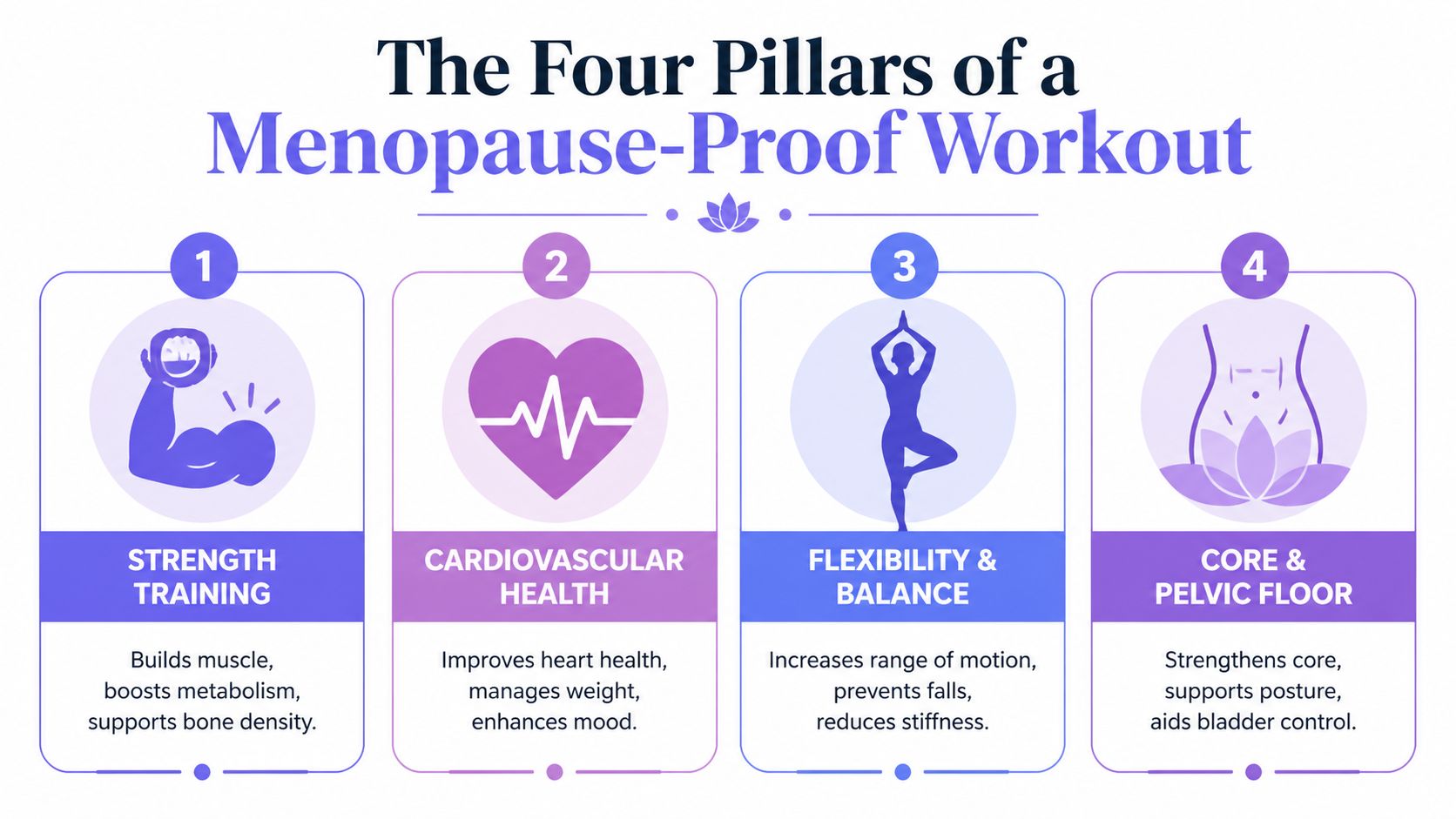
The Four Pillars of a Menopause-Proof Workout
The strongest plans don't rely on one perfect workout. They combine a few types of training that solve different problems.
Strength training
If I had to choose one foundation for a menopause workout plan, it would be resistance training.
A landmark University of Exeter study, covered by Medical Xpress, followed women aged 40 to 60 through a targeted 12-week low-impact resistance program. The resistance group trained for 30 to 35 minutes, 3 to 4 times weekly, and saw a 19% increase in hip function and lower-body strength plus a 21% increase in full-body flexibility. The program used bands, ankle weights, dumbbells, planks, balance work, hip hinges, and multi-planar movement.
Those details matter. This wasn't random exercise. It was structured resistance work with progression.
What works:
Major movement patterns: Squats, hinges, pushes, pulls, glute bridges, carries, and core stability work.
Controlled progression: Add load, reps, range, or stability challenge over time.
Repeat exposure: Strength improves when you return to the same patterns long enough to own them.
What doesn't:
Endless light weights: If the load never challenges you, your body has no reason to adapt.
Constant novelty: A different online workout every day can feel fun, but it makes progress harder to track.
Punishing volume: More sessions aren't automatically better if recovery suffers.
Cardiovascular health
Cardio still belongs in the plan. It just shouldn't dominate it.
Moderate aerobic exercise supports heart health, mood, and fat metabolism without the wear-and-tear feeling many women get from chasing intensity too often. Brisk walking, cycling, easy intervals on a bike, and steady treadmill incline work all fit well here.
For many women, walking is the most sustainable cardio option because it's accessible and easier to recover from. It also pairs well with strength work instead of competing with it.
If nutrition is part of your focus too, Lila's guide on a menopause diet plan complements this training approach well because body composition changes respond best when exercise and eating patterns support the same goal.
Cardio should improve your capacity, not drain your reserves.
Flexibility and balance
Many women notice stiffness, shakier single-leg balance, or a sense that movement feels less fluid than it used to. That's not cosmetic. It's functional.
Flexibility and balance training improve range of motion, body control, and fall prevention. They also make strength training safer and more effective because you can move through positions with more confidence.
This doesn't require an hour of yoga every day. It can mean:
Short mobility blocks: Hip openers, thoracic rotation, ankle mobility, and dynamic hamstring work.
Balance practice: Single-leg stands, split-stance holds, controlled step-downs.
Movement quality resets: Gentle sessions on days when high effort isn't the right call.
If you want ideas for lower-intensity days, these gentle mobility routines for older adults are a practical reference for restoring motion without turning recovery into another hard workout.
Core and pelvic floor
This pillar gets skipped far too often.
A strong core in menopause isn't about visible abs. It's about pressure management, posture, spinal support, and pelvic control. That matters for lifting, walking, coughing, carrying groceries, and feeling steady in your body.
Instead of hundreds of crunches, focus on:
Planks and side planks for trunk stiffness and alignment
Dead bugs or marching patterns for core control
Glute bridge variations to connect hips and trunk
Breath-led core work that doesn't encourage constant bracing
Pelvic floor symptoms can change how exercise feels. If bearing down, leaking, or pressure shows up during workouts, that's a sign to modify and get more individualized guidance.
A menopause-proof plan uses all four pillars together. Strength does the heavy lifting. Cardio supports health and stamina. Mobility and balance keep you moving well. Core and pelvic floor work hold the whole system together.
Building Your Weekly Menopause Workout Plan
Most women don't need a heroic schedule. They need a plan they can repeat.
The core of an effective menopause workout plan is resistance training 2 to 3 times per week, covering major muscle groups with 3 sets of 8 to 15 reps per exercise, as outlined in Core Total Wellness's menopause weight lifting plan. That same guidance stresses that consistent application 2 to 3 times weekly gives the strongest bone and muscle protection.
The weekly structure that holds up
Think in terms of anchors, not perfection. Your anchors are the sessions that matter most each week. Everything else supports them.
For most women, that means:
Strength first: Put your full-body lifting sessions on the calendar before optional cardio.
Walking often: Use walks for circulation, stress relief, and recovery.
Mobility on purpose: Add short flexibility or balance work instead of waiting until stiffness forces it.
Recovery days that still count: A lighter day isn't a wasted day.
If you want more exercise ideas to plug into these schedules, Lila's article on the best exercises for menopause is a helpful companion.
Sample Weekly Menopause Workout Schedules
Day | Beginner (Building Consistency) | Intermediate (Increasing Intensity) | Advanced (Optimizing Performance) |
|---|---|---|---|
Monday | Full-body strength | Full-body strength | Full-body strength |
Tuesday | Walk + mobility | Brisk walk or moderate cardio | Moderate cardio |
Wednesday | Rest or easy walk | Mobility + balance | Lower-intensity recovery session |
Thursday | Full-body strength | Full-body strength | Full-body strength |
Friday | Walk | Walk + core work | Interval-based cardio or sport session |
Saturday | Mobility or gentle cardio | Optional third strength or longer walk | Third strength session |
Sunday | Rest | Rest or easy mobility | Mobility, balance, or easy walk |
How to choose your level
The right level isn't about ambition. It's about recoverability.
Beginner fits if you've been inconsistent, feel intimidated by lifting, or often crash after workouts. Two strength sessions and regular walking are enough to build momentum.
Intermediate works if you've already established a routine and can recover well from two structured lifting days. This level adds more purposeful cardio and more regular mobility.
Advanced is only useful if your sleep, joints, and energy can support it. If your body starts giving you warning signs, advanced training becomes expensive fast.
The best plan is the one you can still do during a rough week.
What a full-body strength day can look like
Use this as a template:
Warm-up: Light cardio and dynamic movement
Lower body push: Squat or sit-to-stand variation
Upper body push: Chest press or incline push-up
Upper body pull: Row or band row
Hip dominant move: Deadlift pattern or glute bridge
Core: Plank, dead bug, or carry
Cool-down: Easy walk and basic stretches
Don't chase soreness. Chase competence. If your form is improving, the weight is gradually rising, and you're recovering well enough to return next session, you're doing the right work.
How to Exercise with Hot Flashes Joint Pain and Fatigue
A static plan breaks down fast when symptoms change from day to day. That's where many women assume they're inconsistent, when the actual issue is that their plan has no room for adjustment.
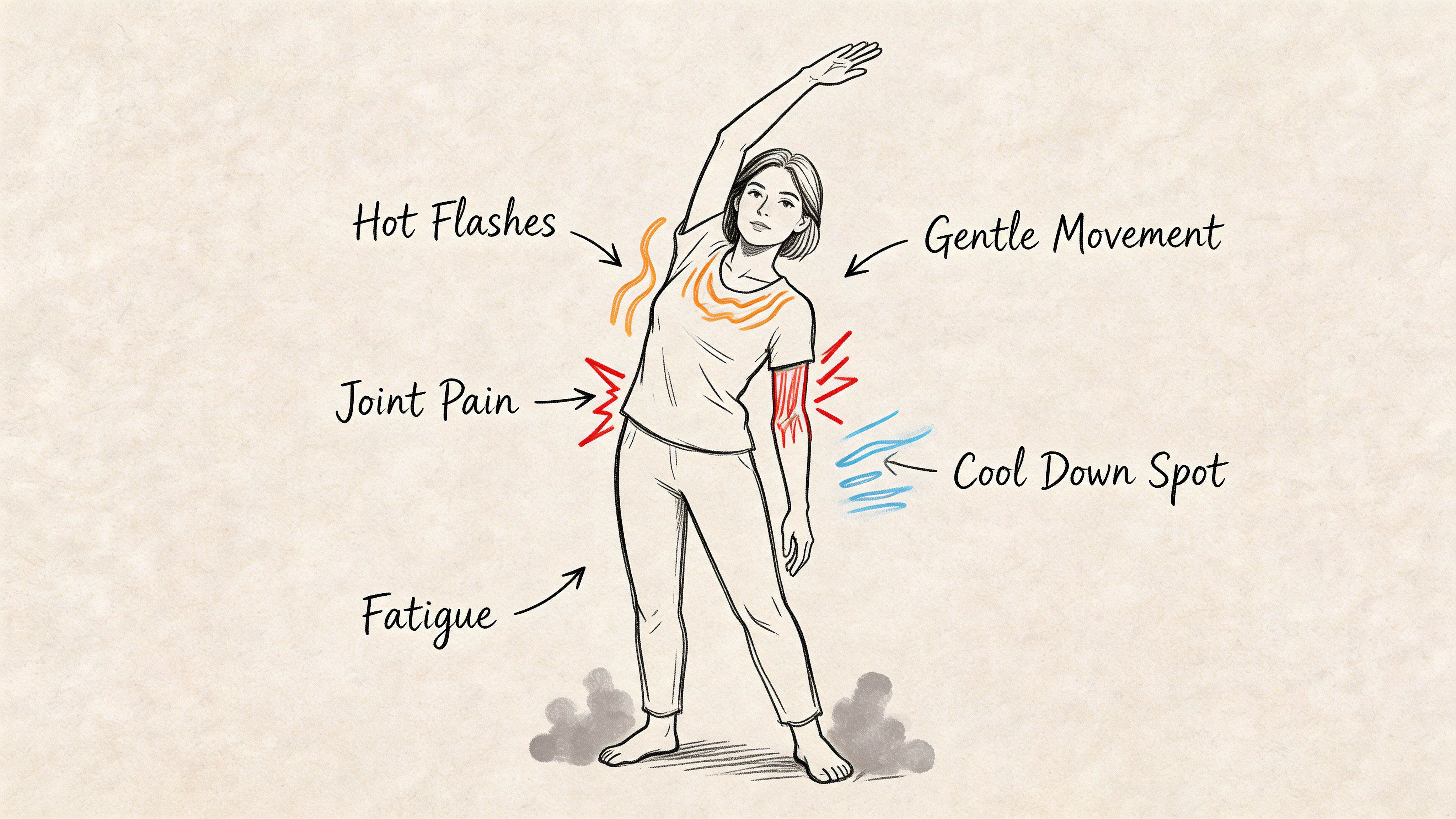
A better menopause workout plan has built-in swap options. Your job isn't to force the original workout at all costs. Your job is to choose the version your body can use today.
On hot flash days
Hot flashes can make exercise feel unpredictable. Some women tolerate a warm gym fine. Others feel flattened by a room that's only slightly stuffy.
Adjust the environment first:
Train cooler: Use a fan, lighter layers, and well-ventilated spaces.
Change timing: Morning sessions often feel easier than late-day workouts.
Lower density: Extend rest periods between sets instead of rushing.
Choose steadier modes: Walking, cycling, and controlled strength circuits tend to be easier than all-out efforts.
You don't need to cancel every workout because symptoms flare. You may just need to shift from performance mode to maintenance mode.
On joint pain days
Joint pain changes exercise selection, not the value of exercise itself.
If knees, hips, shoulders, or hands are complaining, look at movement quality before assuming you should stop training. Reduce range if needed, slow the tempo, and use more stable setups. A goblet squat to a box may feel far better than a deep bodyweight squat. A chest-supported row may beat bent-over pulling if your back is irritated.
Useful swaps include:
For knee pain: Box squats, step-ups to a low height, glute bridges, cycling
For hip stiffness: Shorter-range hinges, supported split squats, mobility before loading
For wrist or shoulder irritation: Neutral-grip pressing, resistance bands, incline push-ups on a bench
For impact sensitivity: Walking, elliptical, bike intervals, or strength circuits instead of jumping
For women dealing with estrogen-related aches, Lake City PT's approach to joint pain offers a helpful rehab-minded perspective on why low-estrogen changes can affect comfort and how to think about symptom management.
If joint discomfort is part of your bigger picture, Lila's article on menopause joint pain is also a practical read for understanding patterns beyond the workout itself.
If pain changes your mechanics, modify early. Waiting until you limp through the session is rarely the smart move.
On fatigue days
Fatigue is where generic programs fail hardest. They assume every low-energy day is a discipline issue.
Sometimes fatigue means you need a warm-up and you'll feel better once you start. Sometimes it means your nervous system, sleep, and recovery are asking for a different session entirely. Learning the difference matters.
Use a simple decision filter:
Do you feel tired but functional? Do the workout, but reduce load or volume.
Do you feel heavy, foggy, and under-recovered? Replace intensity with walking or mobility.
Do you feel sick, dizzy, or unusually depleted? Rest and reassess.
A reduced session can still be productive:
One or two main lifts instead of a full circuit
A shorter walk instead of intervals
Mobility plus breathing work instead of strength
Technique practice with lighter loads
Here's a useful movement session for a lower-capacity day:
▶ PlayThe rule that keeps you consistent
Consistency during menopause doesn't mean repeating the exact same output every week. It means keeping the habit alive while changing the dosage.
I tell women to keep three versions of each workout in mind:
Full version for strong days
Short version for average days
Minimum version for symptom-heavy days
That one shift prevents the all-or-nothing spiral. You stop asking, "Can I do the perfect workout?" and start asking, "What's the best version I can do today?"
Tracking Progress and Staying Motivated for the Long Haul
If you're only tracking body weight, you're missing most of the story.
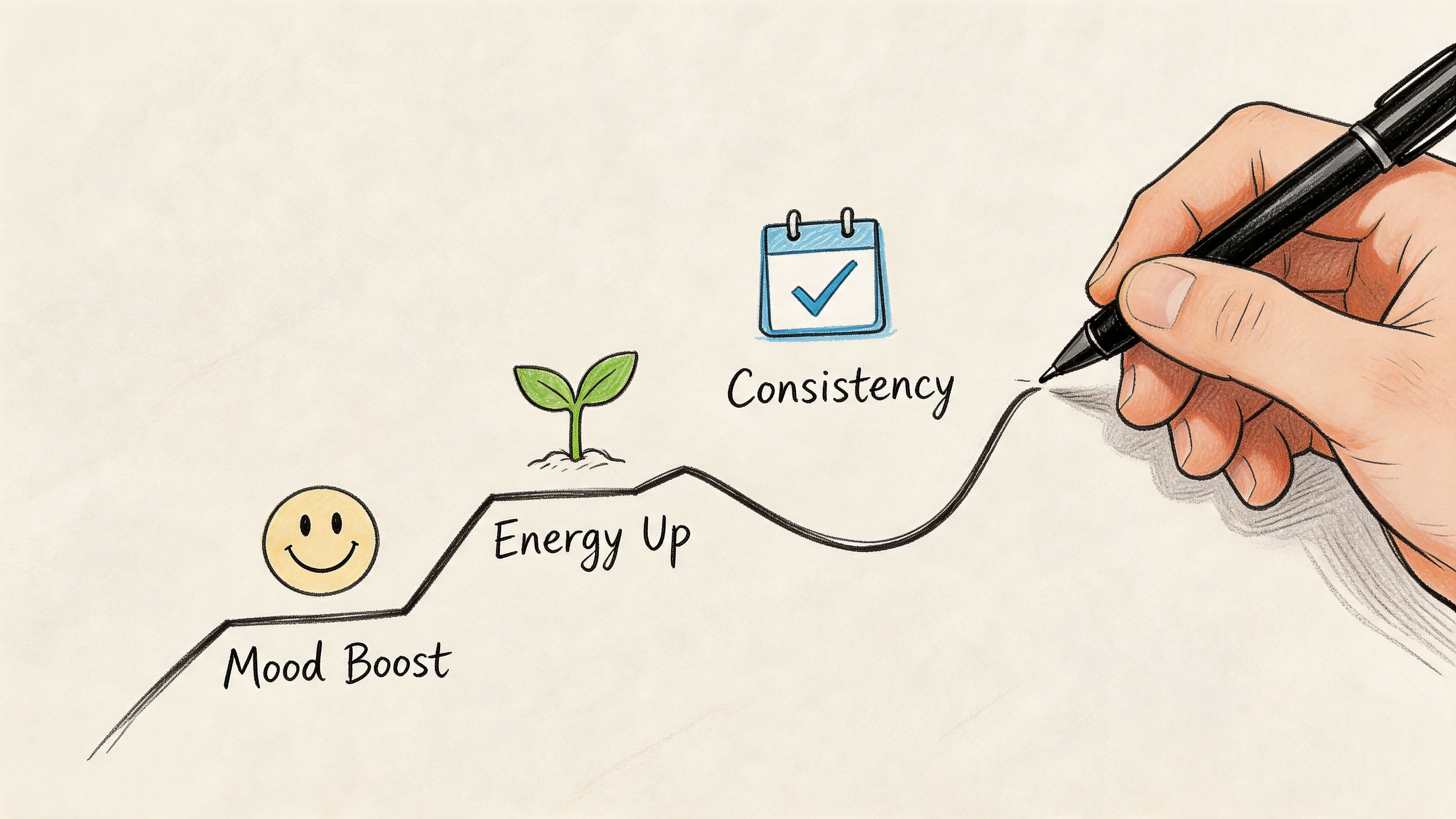
Menopause progress often shows up first in quieter ways. You recover faster after walks. You stop dreading stairs. You sleep more steadily after strength days. Your afternoon energy doesn't crash as hard. Your balance improves when you're putting on shoes. Those changes count, and they often appear before visible body changes do.
What to track besides workouts
A useful tracking system includes more than sets and reps. It should help you connect symptoms to training choices.
Keep notes on:
Energy
Sleep quality
Mood
Joint comfort
Hot flashes
Cycle changes if still cycling
Which workouts leave you better versus depleted
Patterns emerge quickly when you look at these together. You may notice that late-night workouts disrupt sleep, that certain cardio sessions worsen fatigue, or that strength training on better-rested days improves the rest of the week.
Why adaptation beats rigid discipline
A static plan asks you to fit your body into the plan. A smart plan adjusts to the body you have that day.
That's why symptom tracking matters so much. The point isn't to become obsessive. The point is to spot useful patterns early enough to make better decisions. If hot flashes spike after poor sleep, your hard interval day probably doesn't belong there. If your joints feel best after a warm-up and controlled strength work, that's valuable information.
A 2025 study highlights technology's utility, reporting that AI-driven adaptive plans that adjusted intensity based on daily symptom tracking reduced dropout rates by 45%, and users reported 30% better sleep and energy stabilization compared with static plans. That logic is practical. When a tool can connect daily check-ins with workout adjustments, adherence usually improves because the plan feels livable.
Lila is one example of that type of system. It combines daily symptom check-ins with personalized action planning, which can help women decide whether today should be a strength day, a lighter movement day, or more of a recovery focus.
A plan you can adapt is easier to trust than a plan you keep failing to follow.
Motivation gets easier when training supports your real life
The women who stay consistent longest usually have a reason beyond weight loss.
Sometimes they want to keep hiking without knee pain. Sometimes they want enough strength to keep playing tennis, cycling, or traveling comfortably. Sometimes they just want to feel physically capable again.
That shift matters. Training becomes less about punishment and more about staying connected to a version of life you value. Motivation gets steadier when the payoff is concrete and personal.
Try this simple review at the end of each week:
What gave me energy?
What drained me?
Which sessions felt worth repeating?
What needs adjusting next week?
That's how long-term adherence is built. Not by forcing more effort, but by making the plan easier to continue.
Your Next Steps to a Stronger Menopause Journey
A solid menopause workout plan doesn't ask you to ignore symptoms. It teaches you how to train around them without losing momentum.
The priorities are straightforward. Build around strength. Keep cardio supportive, not exhausting. Use mobility and balance work to stay capable. Adjust the day's session when hot flashes, pain, or fatigue show up. Track what helps. Drop what keeps digging the hole deeper.
Personalization also matters for motivation. A personalized plan tied to activities you care about can improve long-term consistency. Research highlighted by Prevention notes that workout plans customized to hobbies like cycling or tennis can prevent 25% more muscle loss in postmenopausal women than generic gym routines.
Start smaller than you think you need to. Add two weekly strength sessions. Walk most days. Keep a simple note on sleep, energy, and symptoms. Build a short-version workout for difficult days.
You don't need a perfect month. You need a repeatable week.
If you want help turning symptom patterns into day-by-day decisions, Lila offers an AI-guided way to track sleep, energy, mood, movement, and menopause symptoms in one place, then turn that information into a personalized action plan you can follow.
Get Lila, your personal coach for perimenopause.
Built for women in their 40s. 24/7 coaching, in your pocket.