Lose Weight Menopause: Science-Backed Strategies for Success
Unlock lasting results with expert nutrition, exercise, and lifestyle tips. Our science-backed plan helps you effectively lose weight menopause.
 Michelle
Trying to lose weight during menopause can feel like you're playing a game where the rules have suddenly changed, and no one gave you the new instruction manual. It's not just you, and it's certainly not a lack of effort. The truth is, your body is operating under a new hormonal reality, and the old tricks simply don't work anymore.
To see real, lasting results, you have to work with your body, not against it. This means understanding the "why" behind the changes and shifting your focus to what really moves the needle now: building muscle and eating to support your new metabolism.
Why Losing Weight During Menopause Feels So Different
If you're eating and exercising the same way you always have but watching the scale creep up, I want you to hear this: you're not imagining things. The shift into perimenopause and menopause completely rewires your body's chemistry. This isn't a willpower problem; it's a biological one.
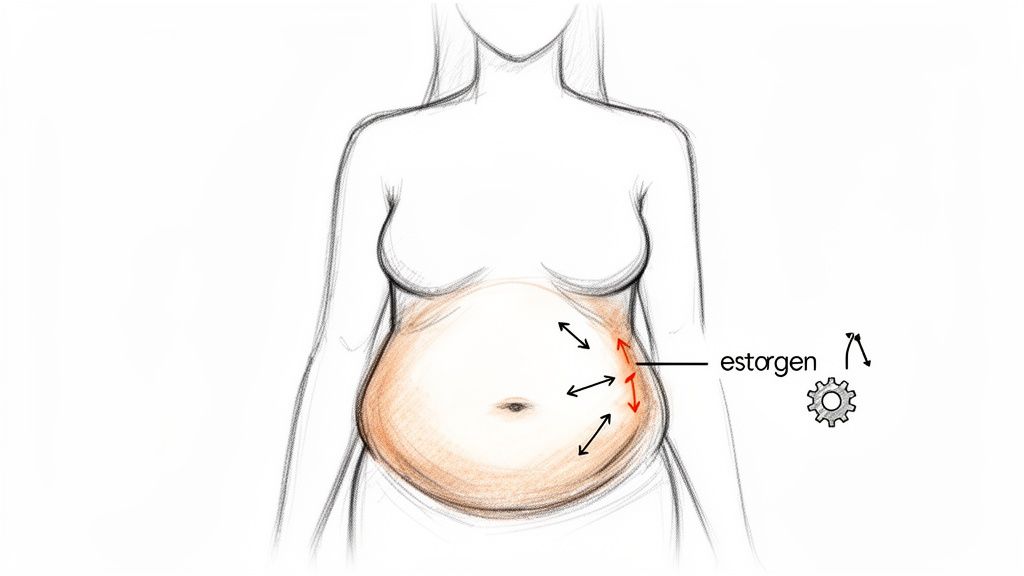
The main player in this story is estrogen. This powerful hormone does more than manage your reproductive cycle; it’s a key regulator of your metabolism, where you store fat, and even your mood. As your estrogen levels drop, your metabolic rate naturally slows down. Your body just doesn't burn through calories as efficiently as it used to.
Before we get into the specifics, it's helpful to see the main hormonal shifts and what they're doing inside your body.
Hormonal Shifts and Their Impact on Your Body
Hormonal Change | Primary Effect on the Body | Resulting Challenge for Weight Management |
|---|---|---|
Declining Estrogen | Slows metabolic rate and signals the body to store fat abdominally. | It's easier to gain weight (especially belly fat) and harder to lose it, even without changing eating habits. |
Increasing Androgens | Androgens (like testosterone) become more dominant, further promoting central fat storage. | A shift from a "pear" shape (fat on hips/thighs) to an "apple" shape (fat around the middle). |
Shifting Insulin Sensitivity | The body becomes less responsive to insulin, making it harder to manage blood sugar. | Increased cravings for sugar and carbs; calories are more likely to be stored as fat. |
Decreasing Progesterone | Can contribute to water retention and bloating, making you feel heavier. | The number on the scale can be misleading due to fluid fluctuations, not just fat gain. |
These changes work together, creating a perfect storm that makes weight management feel like an uphill battle.
The "Hormonal Belly" Phenomenon
One of the most common frustrations I hear from women is the change in their body shape. Even if the scale hasn't moved much, their clothes fit differently. That's because falling estrogen tells your body to redistribute fat, moving it from your hips and thighs directly to your abdomen.
This isn't just a cosmetic issue. The resulting increase in visceral fat—the deep, internal fat that wraps around your organs—is a serious health concern. This type of fat is metabolically active and is directly linked to an increased risk of:
Insulin resistance and type 2 diabetes
Cardiovascular disease
High blood pressure
On top of that, your muscle mass takes a hit. Women start to lose muscle around age 30, but this process picks up speed during menopause. Because muscle burns more calories than fat, losing it slows your metabolism even further. This creates a vicious cycle: less muscle means a slower metabolism, which makes it easier to gain fat, which can make you feel less motivated to exercise.
If you want to explore this topic in more detail, our holistic guide to managing weight fluctuation in menopause is a great place to start.
The Numbers Behind the Frustration
This isn't happening to just a few people; it's an incredibly common experience. The average weight gain during the menopausal transition is about five pounds, but for 20% of women, it can be 10 pounds or more.
The statistics paint a clear picture. While just over half of women aged 20–39 are classified as overweight, that number skyrockets to 68.1% for women aged 40–59. This is driven by hormonal shifts causing muscle loss of about 3–5% per decade, which in turn tanks your metabolism and encourages that stubborn abdominal fat.
It’s not just about gaining weight. The real issue is the fundamental shift in your body composition. You’re trading metabolism-boosting muscle for health-damaging belly fat, all thanks to your changing hormones.
Once you truly grasp this biological reality, you can stop blaming yourself. This is the first and most important step. It allows you to ditch the "eat less, move more" mantra that no longer serves you and adopt a smarter strategy—one that focuses on rebuilding muscle, balancing blood sugar, and creating a hormonal environment that encourages your body to burn fat again.
Your Menopause Nutrition Strategy for Fat Loss
If you've found that the diet and exercise tricks from your 20s and 30s have suddenly stopped working, you're not alone. The hormonal shifts of menopause change the rules of the game. It's time to stop thinking about "dieting" and start focusing on a smarter fueling strategy that works with your body, not against it.
This isn't about restriction or deprivation. It’s about recalibrating your plate to give your body what it needs to thrive in this new chapter. The whole game plan boils down to a few key priorities: making protein the star of every meal, filling up on fiber, and embracing the right kinds of fats.
Make Protein Your Top Priority
During the menopausal transition, declining estrogen accelerates muscle loss. This is a big deal because muscle is your metabolic engine—the more you have, the more calories you burn, even at rest. Prioritizing protein is your single most powerful tool to counteract this.
But it does more than just protect your metabolism. Protein is incredibly satiating. A meal built around it keeps you feeling full and satisfied for hours, which naturally quiets those nagging cravings and stabilizes your blood sugar. You end up eating less without the constant feeling of being hungry.
So, how much is enough? A good target is 1.2 to 1.6 grams of protein per kilogram of your ideal body weight. For most of us, that breaks down to a solid 25–40 grams of protein per meal.
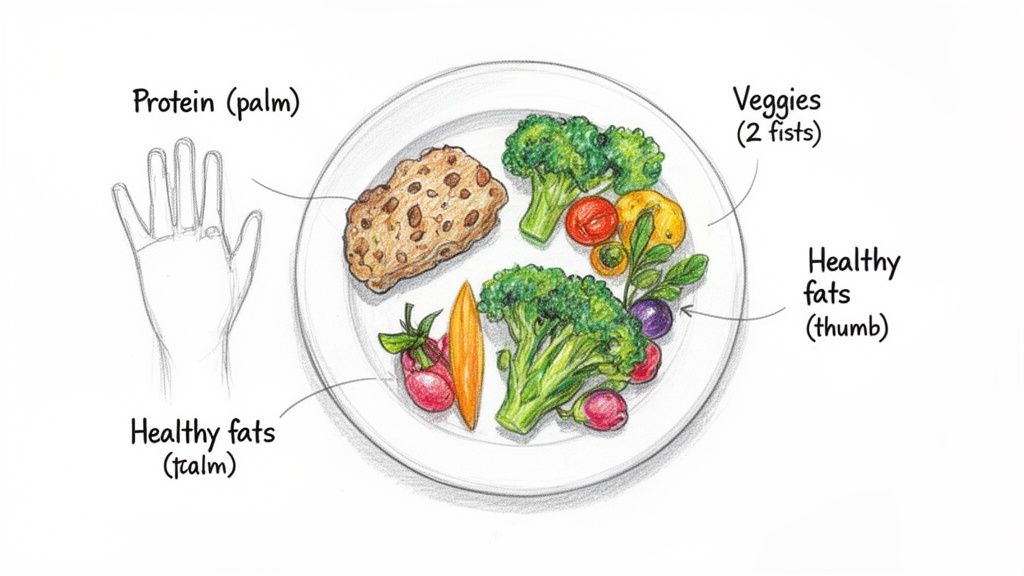
A Simple Way to Eyeball Your Portions:
Protein: Aim for a portion about the size of your palm (think chicken breast, fish, or a block of tofu).
Fiber-Rich Veggies: Pile on two fist-sized portions of colorful, non-starchy vegetables (broccoli, leafy greens, peppers are perfect).
Healthy Fats: A thumb-sized serving is all you need (like avocado, a sprinkle of nuts, or a drizzle of olive oil).
Complex Carbs: Limit these to a cupped-hand portion (quinoa, sweet potato, or beans).
This simple visual guide removes the need for obsessive counting and ensures you're getting a balanced plate every time. And when you eat matters, too. Nailing your protein intake and timing can help you structure meals for sustained energy and muscle support throughout the day.
Fiber is Your Fat-Loss Ally
If protein is the star of the show, fiber is the unsung hero. As estrogen drops, our bodies can become less sensitive to insulin. This leads to more dramatic blood sugar spikes and crashes—a perfect storm for intense cravings and fat storage, particularly around the belly.
Fiber is the answer. It slows down how quickly sugar enters your bloodstream, smoothing out those energy rollercoasters. It also nourishes the beneficial bacteria in your gut, which we now know play a huge role in balancing hormones and managing weight.
Boosting your intake is easier than you think:
Swap your usual bread for a hearty whole-grain or sourdough loaf.
Stir a tablespoon of chia seeds or ground flaxseed into yogurt or a smoothie.
Toss beans and lentils into your salads and soups for a cheap and easy boost.
Trade processed snacks for an apple with a small handful of almonds.
Aiming for 25 to 30 grams of fiber daily is a fantastic goal. You’ll notice better digestion, less bloating, and a greater sense of fullness after meals.
Outsmart Cravings with a Plan
Those sudden, intense cravings for sugar and salty carbs? They’re real, and they’re fueled by hormones. Trying to fight them with pure willpower is exhausting and rarely works. A much better approach is to have a plan with satisfying, smart swaps ready to go.
Instead Of This | Try This Smart Swap |
|---|---|
A candy bar | A square of >70% dark chocolate with a few almonds |
Potato chips | Air-popped popcorn seasoned with nutritional yeast |
Ice cream | Full-fat Greek yogurt with berries and a drizzle of honey |
Sugary soda | Sparkling water with a splash of cranberry juice and a lime wedge |
The trick is to have these healthier alternatives on hand before the craving strikes. It puts you back in the driver's seat. For more delicious meal ideas laid out in a simple format, check out our 5-day menopause diet plan for weight loss—it’s full of recipes designed for exactly this.
By building your meals around these core principles, you're not just trying to lose weight; you're creating an internal environment that supports a healthier, more energetic body. You’ll finally start to feel better and see the results you've been working for.
Your New Fitness Playbook for Menopause
If you've spent years believing that more time on the treadmill is the answer to weight loss, it’s time for a fundamental shift in thinking. I see this all the time: women work harder and harder, doing the same cardio routines that worked in their 30s, only to see the scale refuse to budge or even creep up.
The reason? That old approach can actually work against your menopausal body. Long, steady-state cardio sessions can drive up cortisol, our primary stress hormone. Since cortisol is already on high alert during this life stage, adding more can signal your body to store even more fat, particularly around your middle.
We need a smarter approach—one that focuses on rebuilding your metabolism from the inside out.
Why Strength Training Is Your New Best Friend
The single biggest game-changer for your body during perimenopause and menopause is strength training. It’s not just an option; it's essential. As estrogen declines, we lose muscle mass, and since muscle is what burns calories, our metabolism takes a direct hit.
Lifting weights is the most powerful way to fight back.
By building lean muscle, you literally increase your resting metabolic rate. This means your body torches more calories around the clock—whether you're at your desk, sleeping, or watching a movie. Think of every pound of muscle you build as a tiny metabolic engine working for you 24/7.
But the benefits don't stop there. A consistent strength routine also:
Sharpens your insulin sensitivity, which helps your body process carbohydrates more effectively instead of storing them as fat.
Builds bone density, directly countering the heightened risk of osteoporosis that comes with menopause.
Makes you feel powerful. There's a profound mental and emotional boost that comes from feeling physically strong and capable in your body.
A common fear I hear is, "But I don't want to get bulky!" Please hear me on this: you won't. Women have significantly lower testosterone levels than men, making it incredibly difficult to build large, bulky muscles. What you will build is a leaner, firmer, more defined physique.
Structuring Your Week for Maximum Impact
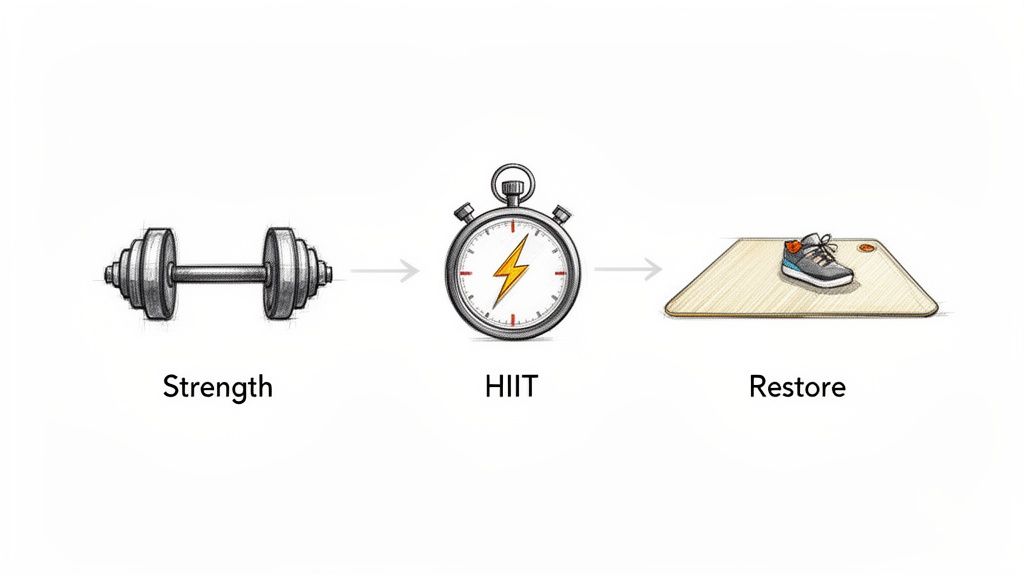
An intelligent fitness plan isn't about punishing yourself for hours every day. It's about strategic, consistent effort. The goal is to blend muscle-building workouts with just the right amount of cardio and deep recovery.
Here’s a sample weekly blueprint that I’ve seen work wonders for my clients.
Day of the Week | Activity Focus | Example Workout |
|---|---|---|
Monday | Full-Body Strength | 30-45 minutes of compound moves like squats, push-ups, rows, and overhead presses. |
Tuesday | Active Recovery | A brisk 30–60 minute walk, light stretching, or a gentle yoga class. |
Wednesday | HIIT Cardio | A 20-minute session. Try 30 seconds of high-knees or burpees followed by 60 seconds of complete rest. |
Thursday | Full-Body Strength | 30-45 minutes hitting different movements like lunges, deadlifts, planks, and glute bridges. |
Friday | Active Recovery | Hop on a bike, go for a swim, or do another low-impact activity you genuinely enjoy. |
Saturday | Flexibility & Stress Reduction | A restorative yoga or Pilates class to actively lower cortisol. |
Sunday | Full Rest | Do nothing! Let your body repair and rebuild. It's crucial. |
Notice this schedule is built around two full-body strength sessions. That's the sweet spot for stimulating muscle growth without overtaxing your system. We've also included just one High-Intensity Interval Training (HIIT) session. HIIT is phenomenal for fat loss and heart health in minimal time, but doing it too often can backfire by spiking cortisol.
If you’re looking for more inspiration, check out this breakdown of the best exercises for menopause that are perfectly suited for this approach.
The Overlooked Power of Rest and Recovery
The final piece of this puzzle is the one most people skip: recovery. Your muscles don't get stronger while you're lifting weights; they get stronger when they repair and rebuild in the hours and days after your workout.
This makes active recovery and full rest days non-negotiable.
Activities like brisk walking, gentle stretching, and especially mind-body practices like yoga and Pilates are incredibly valuable. They do more than just soothe sore muscles; they actively help lower your cortisol levels. By taming stress, you’re sending a powerful signal to your body to stop holding onto stubborn belly fat.
When you bring these three elements together—strength, smart cardio, and intentional rest—you create a fitness routine that truly works with your menopausal body, not against it. The result is a faster metabolism, a leaner physique, and a renewed sense of energy and strength.
The Overlooked Keys to Menopause Weight Loss
So, you’re doing everything right. You're watching what you eat and making it to your workouts, but the scale just won't budge. If this sounds familiar, the real issue might not be what's on your plate or how many reps you're doing. It's time we talk about two of the biggest, yet most overlooked, factors in menopausal weight loss: sleep and stress.
These two are a powerful duo, and not in a good way. They have a direct line to the hormones that dictate your hunger, cravings, and where your body decides to store fat. Think about it—hot flashes, anxiety, a mind that won’t shut off at 2 a.m.—these are common complaints during menopause for a reason, and they wreak havoc on your sleep.
Even one night of tossing and turning can send your hormones into a tailspin. Levels of ghrelin, the "I'm hungry" hormone, shoot up. At the same time, leptin, the hormone that tells your brain you're full, takes a nosedive. The result? You wake up feeling ravenous, with powerful cravings for sugar and carbs. This isn't a failure of willpower; it’s a biological response.
Tame Stress to Tame Belly Fat
Chronic stress is the other silent saboteur of your efforts. Menopause can be a high-stress chapter of life, and a body stuck in fight-or-flight mode is constantly pumping out cortisol. As we've touched on, high cortisol is like a megaphone telling your body to store fat, especially that stubborn visceral fat right around your middle.
Getting a handle on your stress isn't some fluffy self-care extra; it's a non-negotiable part of any real strategy for losing weight during menopause. The good news is that you don't need to book a week-long silent retreat. Small, consistent actions are what move the needle.
Here are a few simple techniques I often recommend:
Box Breathing: This is incredibly simple and effective. Inhale for a count of four, hold for four, exhale for four, and hold for four. Just five minutes of this can have a measurable impact on your cortisol levels.
A Dose of Nature: You don't have to go on a huge hike. A simple 20-minute walk in a park or any green space can significantly lower stress hormones.
Mindful Moments: Before you eat, just stop. Take three slow, deep breaths. This tiny pause can shift you out of a stressed state and even help your body digest your meal better.
Stress, sleep, and emotional health are all deeply connected to your metabolism. Taking some time to explore how to improve mental wellbeing can be a game-changer, addressing the root causes that diet and exercise alone can't fix.
Master Your Sleep for Better Hormones
Honestly, if I could only give one piece of advice beyond nutrition and exercise, it would be to sort out your sleep. When you prioritize good sleep hygiene—which is just a fancy term for your sleep habits and environment—you give your metabolism a fighting chance.
First, turn your bedroom into a cave. It should be as cool, dark, and quiet as you can possibly make it. Blackout curtains are a fantastic investment, and a white noise machine can be a lifesaver. A cooler body temperature is a natural signal to your brain that it's time to sleep.
Key Takeaway: You cannot out-exercise a bad night's sleep or out-diet a high-stress lifestyle. Managing sleep and stress directly regulates the hormones that control appetite and fat storage, making your nutrition and fitness efforts far more effective.
The science on this is clear. While we can't blame menopause for all midlife weight gain, we know the hormonal shift triggers a frustrating redistribution of fat to the abdomen. A major review confirmed this, showing that 60–70% of women cite weight gain as a symptom. The data is striking: postmenopausal bodies have, on average, 36% more trunk fat and a whopping 49% more intra-abdominal fat than premenopausal bodies. You can read the full statement from the International Menopause Society to see the research for yourself.
A simple wind-down routine is also incredibly powerful. About an hour before you want to be asleep, dim the lights and put away your phone. Read a real book, take a warm bath with Epsom salts, or just listen to some calm music. These small rituals send a clear signal to your body that the day is over, helping you fall asleep faster and stay asleep longer. That, in turn, sets you up for hormonal balance and better food choices the entire next day.
Creating Your 12-Week Menopause Wellness Plan
▶ PlayI know, looking at all this information can feel like trying to drink from a firehose. But you don't have to overhaul your entire life overnight. The real secret is building small, consistent habits that add up to powerful results over time. Think of this 12-week plan as your roadmap to gradually integrate these strategies without the burnout.
We're going to focus on mastering one new habit at a time before adding the next. This approach is how you truly rewire your body and mind for a healthier way of living—one that supports you through menopause and beyond. This is also where a tool like the Lila app can be a game-changer, giving you the structure and accountability to see it through.
Weeks 1-4: The Foundation Phase
Your first month is all about getting the fundamentals right. We're not jumping into intense workouts just yet. Instead, the focus is squarely on fueling your body correctly and learning to listen to its signals.
Week 1: Master Your Protein. Your only job this week is to hit your protein target at every single meal. Start logging your food in the Lila app. Don't worry about calories for now—just focus on protein. You'll probably notice right away that you feel fuller for longer and those afternoon cravings start to disappear.
Week 2: Add Fiber and Hydration. Keep up the protein focus, but now, consciously add a good source of fiber to each meal (think veggies, legumes, or whole grains). Start tracking your water intake in Lila, too. Aim for at least two liters a day and make a note of how your energy and digestion feel.
Week 3: Introduce Gentle Movement. It’s time to start moving your body in a way that feels good. Add three 30-minute brisk walks to your week. The goal here isn't to scorch calories; it's to help manage stress and improve your body's insulin sensitivity. Log these walks in Lila and see if you notice a connection to your sleep scores.
Week 4: Optimize Your Sleep Routine. This week, you’re creating a non-negotiable wind-down routine. An hour before you plan to sleep, shut down the screens, dim the lights, and do something that calms your nervous system. See for yourself how this directly impacts your sleep quality by using Lila’s sleep tracker.
Trying to lose weight during menopause can feel like an uphill battle, often because it's the culmination of years of hormonal shifts, poor sleep, and mounting stress. This timeline shows exactly how these factors snowball over time.
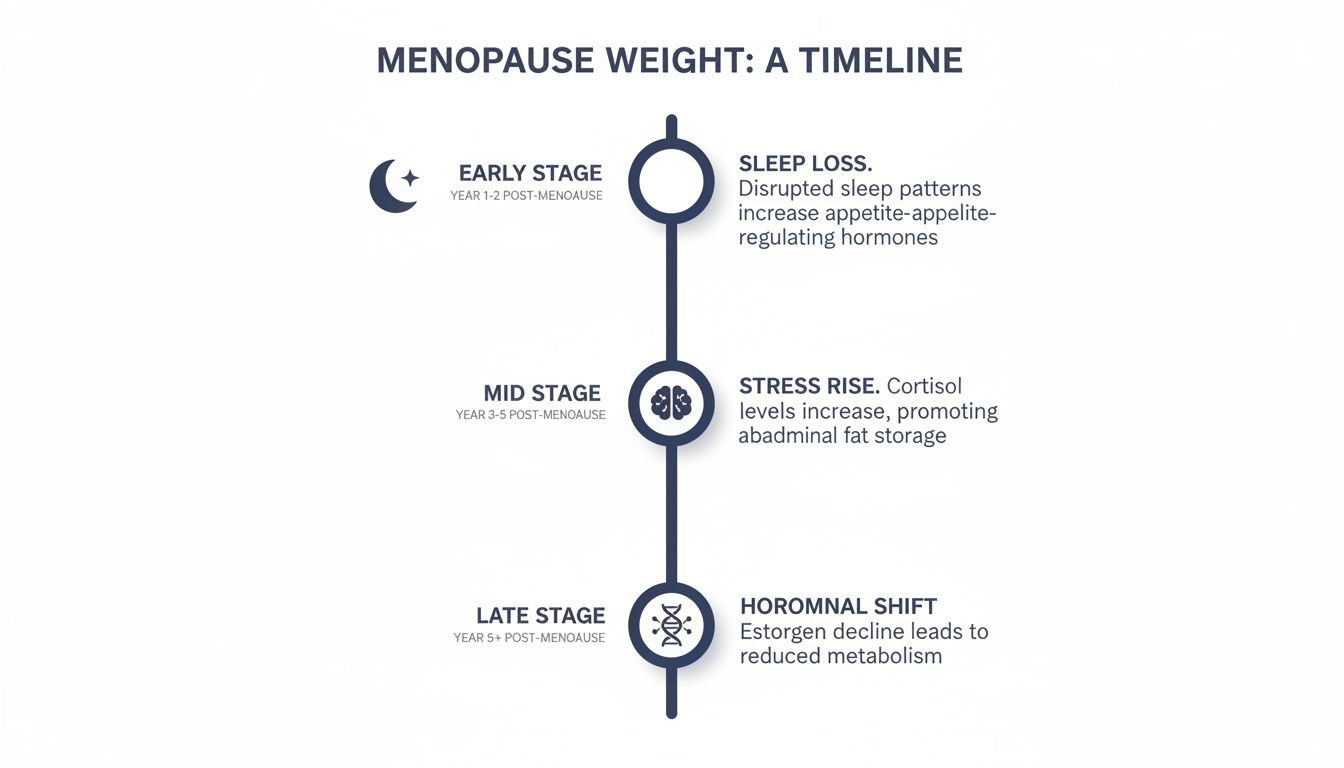
As you can see, the weight gain doesn't just appear out of nowhere when your period stops. It's a gradual process, which is why laying this strong foundation is so critical to reversing the trend.
Weeks 5-8: The Acceleration Phase
Alright, with your nutrition dialed in, your body is primed and ready for the next step. Now we’re going to ramp up your fitness to start building that metabolism-boosting lean muscle. This is where you’ll start to see and feel significant changes in your body composition.
Your body now has the high-quality fuel it needs to build muscle and recover from your workouts.
Week 5: Begin Strength Training. Let's start with two full-body strength workouts this week, about 30 minutes each. You can use dumbbells, resistance bands, or just your own body weight. Log your sessions in Lila and pay close attention to your energy levels and any muscle soreness.
Week 6: Increase Workout Intensity. Stick with your two strength sessions, but this week, try to go a little heavier with the weights or add an extra set to each exercise. Your body is adapting, so we need to keep giving it a reason to get stronger.
Week 7: Add One HIIT Session. On a day you're not lifting weights, add one 15- to 20-minute High-Intensity Interval Training (HIIT) session. This is an incredibly effective way to burn fat without jacking up cortisol, but remember, more is not better. One session is plenty.
Week 8: Review and Refine. It's time for a check-in. Open up the Lila app and look back at your data from the last two months. Where are the biggest wins? Is your energy more stable? Is your sleep improving? Use Lila's AI coach to help you spot patterns and get personalized suggestions for what comes next.
Weeks 9-12: The Optimization Phase
The final month is all about making these new habits stick and fine-tuning your approach based on how your body is responding. You've built incredible momentum; now you're learning how to make it last for the long haul.
This consistency is what makes all the difference. Research shows that a decade after menopause, the average woman carries about 10.7 kg (23.5 pounds) more weight, which dramatically increases cardiovascular risk. This process begins in perimenopause, but the good news is that the right lifestyle changes—like a modest calorie deficit and a focus on protein—can completely rewrite that script. You can read the full study about these long-term changes to dig into the science.
Key Takeaway: Your body gives you data every single day. By using Lila's daily check-ins for symptoms, meals, and energy, you're not just guessing what works. You're building a personalized roadmap to success based on your own unique biology.
In this final phase, you’ll stick with your established routine: two strength workouts, one HIIT session, and daily mindful movement. Use Lila as your troubleshooting partner. If you hit a weight loss plateau, the app's AI can help you see if late-night snacking has crept back in or if your sleep quality has taken a dip, giving you actionable advice to get back on track.
This continuous feedback loop is what transforms a 12-week plan into a lifelong strategy to not only lose weight during menopause but to feel absolutely fantastic while doing it.
Common Questions About Menopause Weight Loss
Even with a great plan in hand, you're bound to have some questions pop up as you start navigating weight loss during this phase of life. It’s a unique journey, so let's get into some of the most common concerns I hear from women just like you.
Can Hormone Replacement Therapy Help with Weight Loss?
This is probably one of the biggest questions out there. While Hormone Replacement Therapy (HRT) isn't a direct weight-loss drug, it can be a huge help. Its main purpose is to tackle those disruptive symptoms like hot flashes and mood swings by giving your body back some of the estrogen it's missing.
What’s really interesting, though, is how this helps your body composition. By restoring estrogen levels, HRT can fight back against that frustrating shift of fat storage to your midsection. It also helps you hold onto the precious lean muscle that keeps your metabolism fired up, making all your efforts in the kitchen and the gym that much more effective. Think of it less as a weight loss tool and more as a way to get your body back on a level playing field.
HRT doesn't magically melt fat away, but it creates a much friendlier internal environment for weight loss, helping your body respond better to diet and exercise.
Of course, HRT is a significant medical decision with real benefits and potential risks. It's absolutely essential to have a detailed discussion with your doctor to see if it’s a safe and smart choice for your personal health history.
What Supplements Are Actually Worth Taking?
The supplement aisle can feel like a total minefield, but a few key players have solid science backing them up for supporting a menopausal body. Instead of just grabbing bottles off the shelf, it’s best to focus on what addresses the specific biological changes you're going through.
Here’s what’s often worth considering:
Quality Protein Powder: Let’s be real, hitting your daily protein goal can be tough. A good powder is a simple and effective tool for preserving muscle and keeping you feeling full.
Magnesium Glycinate: This form of magnesium is fantastic for its calming properties. It can seriously improve your sleep and help take the edge off stress—both of which are crucial for managing cortisol, the infamous fat-storage hormone.
Vitamin D & Calcium: Your risk for osteoporosis shoots up after menopause. This classic duo is non-negotiable for keeping your bones strong and healthy.
Before you start taking anything new, your best bet is always to get some bloodwork done. That way, you and your doctor can pinpoint any actual deficiencies and address them directly, rather than wasting money on supplements you may not even need.
I've Hit a Weight Loss Plateau. What Should I Do?
First, take a deep breath. Hitting a plateau is a totally normal part of the process, not a sign of failure. It just means your body has adapted to your routine. Here’s a quick troubleshooting checklist to figure out what’s going on.
Get Honest About Your Nutrition
Go back to basics for a few days. Have those little unaccounted-for snacks, bigger portion sizes, or extra bites off your partner's plate crept back in? Often, just a week of diligent food logging is all it takes to spot where the extra calories are coming from.
Shake Up Your Workout
Your body is smart and gets efficient at doing the same thing over and over. If you've only been walking, it's time to add in a couple of strength training sessions. Already lifting? Try upping the weights, cutting down your rest time between sets, or learning a few new compound exercises.
Check In on Stress and Sleep
Never underestimate the power of rest. Just one week of poor sleep or high stress can spike cortisol and bring your progress to a screeching halt. Take an honest look at your sleep habits and how you're managing stress. Sometimes the answer isn't working out harder—it's resting more deeply.
Sometimes, a planned "diet break" where you eat at your maintenance calorie level for a week can be just the thing to reset your metabolism and hormones before you get back to it.
Juggling all these moving parts is so much simpler when you can see the whole picture in one place. That's exactly what Lila was designed for. By tracking your meals, workouts, sleep, and symptoms, the app can help you connect the dots, get personalized insights to bust through plateaus, and stay motivated. Start building your personalized plan and feel like yourself again with Lila.
Get Lila, your personal coach for perimenopause.
Built for women in their 40s. 24/7 coaching, in your pocket.