
Top 10 Best Exercises for Menopause: A 2026 Guide to Feeling Your Best
Discover the 10 best exercises for menopause to manage weight, hot flashes, sleep, and mood. Evidence-backed workouts to thrive in midlife. Get started today!
 Michelle
Menopause is a profound biological shift, bringing changes that can feel overwhelming, from hot flashes and disrupted sleep to stubborn weight gain and mood swings. While it's easy to feel like your body is no longer your own, strategic exercise is the single most powerful tool you have to regain control. It’s not about punishing workouts or trying to turn back the clock; it’s about working with your new physiology.
Declining estrogen impacts everything from your metabolism and bone density to your stress response and brain health. This makes choosing the right kind of movement absolutely critical. Generic fitness advice no longer applies. Finding the best exercises for menopause means selecting activities that directly counter these hormonal shifts to produce real, feel-good results.
This evidence-backed guide delivers a clear, actionable plan. We will detail the top 10 exercises that are uniquely suited to address specific menopausal challenges. You will learn exactly how to:
Build lean muscle to fire up a slowing metabolism and manage weight.
Strengthen bones to reduce the risk of osteoporosis.
Calm your nervous system to cool hot flashes and improve sleep quality.
Boost your mood and mental clarity.
Whether you're a seasoned athlete or just starting a fitness routine, this list provides specific steps, rep counts, and weekly plans to help you feel strong, energized, and resilient. Forget guesswork. This is your blueprint for using movement to thrive through this transition and beyond.
1. Strength Training & Resistance Exercise
If there is one non-negotiable form of exercise to add to your routine during menopause, it's strength training. This type of exercise involves using resistance from weights, bands, or your own bodyweight to challenge your muscles, prompting them to adapt and grow stronger. This process is particularly vital as declining estrogen during perimenopause and menopause accelerates the loss of muscle mass (sarcopenia) and bone density.
Strength training directly counters these changes, making it one of the best exercises for menopause. Building and maintaining lean muscle boosts your resting metabolic rate, helping to manage the weight gain often associated with this life stage. It also improves your body's ability to use glucose, enhancing insulin sensitivity and lowering your risk for metabolic syndrome and type 2 diabetes.
Why It Works for Menopause
The benefits extend far beyond just muscle. By placing mechanical stress on your bones, resistance training stimulates bone-forming cells, which helps slow bone loss and reduce your risk of osteoporosis. Research confirms its power: studies show that women over 50 who regularly engage in resistance training can maintain significantly more muscle compared to their sedentary peers.
Key Insight: Many women fear "bulking up," but the hormonal environment of menopause makes this highly unlikely. Instead, you'll build lean, metabolically active tissue that creates a stronger, more toned physique and supports overall health.
How to Implement Strength Training
Frequency: Aim for 2-3 non-consecutive sessions per week to allow for adequate muscle recovery.
Focus: Prioritize compound movements that work multiple muscle groups at once. Examples include squats, lunges, deadlifts, push-ups, and overhead presses. These exercises provide the most significant metabolic and hormonal benefits.
Progression: To continue seeing results, you must apply progressive overload. This means gradually increasing the challenge every few weeks by lifting heavier weights, adding another set, or increasing your repetitions.
Getting Started: For those new to lifting, finding a suitable guide for a beginner gym routine for women can provide a structured starting point for building strength. For more specific guidance, explore our weight training routines for women over 50.
Tracking: Use the Lila app to log your workouts. This allows you to track your progress in weight and reps and correlate your strength gains with improvements in energy, mood, and sleep quality.
2. Brisk Walking & Aerobic Cardio
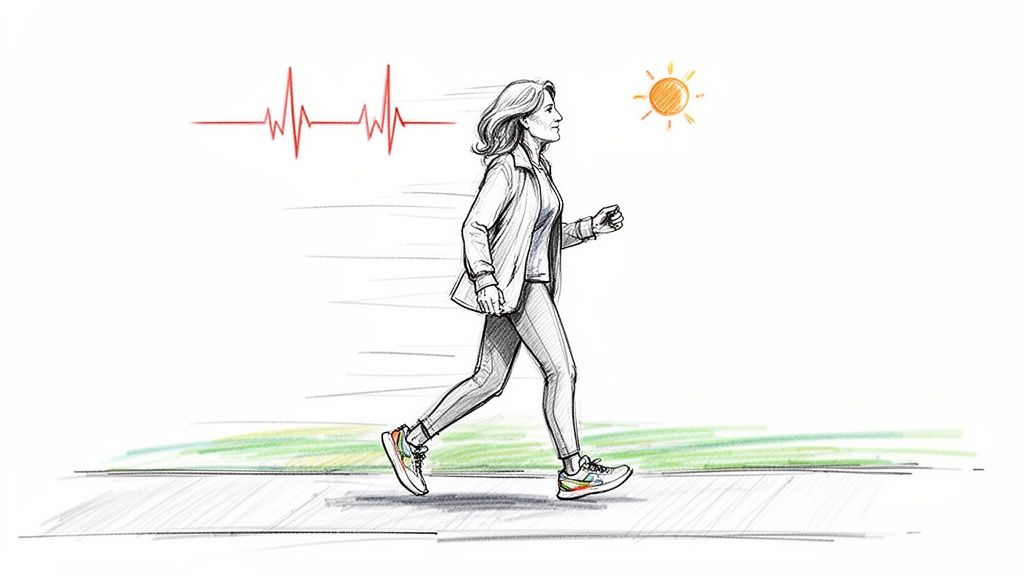
Aerobic or "cardio" exercise is foundational for managing many of the changes that come with menopause. This category includes any activity that raises your heart rate and breathing, such as brisk walking, jogging, cycling, or swimming. Performing this type of exercise at a moderate intensity, where you can still hold a conversation, is an accessible and highly effective strategy for supporting your health during this transition.
The benefits are extensive, impacting everything from your heart to your mood. Regular cardio strengthens your cardiovascular system, which is critical as the risk of heart disease increases after menopause. It also plays a significant role in weight management, improves sleep quality, and provides a powerful, natural mood boost by stimulating the release of endorphins.
Why It Works for Menopause
Aerobic exercise is one of the best exercises for menopause because it directly addresses several common symptoms. Consistent cardio has been shown to improve the body's thermoregulation, which can lead to a reduction in the frequency and severity of hot flashes. For instance, swimming offers the dual benefit of a great workout and a cooling effect on the body.
Furthermore, studies confirm its impact on well-being. Research shows that menopausal women who meet the recommended 150 minutes of moderate cardio per week report significant improvements in sleep quality. It also helps manage stress by lowering cortisol levels, contributing to better mood stability and overall mental health.
Key Insight: You don't need to run a marathon to get the benefits. The goal is consistency, not intensity. A daily brisk walk can be more beneficial for managing menopausal symptoms than occasional, exhausting workouts.
How to Implement Aerobic Cardio
Frequency: Aim for at least 150 minutes of moderate-intensity cardio per week. This can be broken down into 30-minute sessions five days a week or even shorter 10-minute bouts throughout the day.
Focus: Choose an activity you genuinely enjoy to ensure long-term adherence. If you have joint pain, low-impact options like swimming, cycling, or using an elliptical machine are excellent choices.
Progression: Start where you are comfortable and gradually increase the duration or frequency of your workouts. If you're new to exercise, begin with 10-15 minute walks and add five minutes each week until you reach your goal.
Getting Started: Find a walking partner or a local group to create accountability and add a social element. Walking during cooler times of the day, like the morning or evening, can make the activity more comfortable, especially if you experience hot flashes.
Tracking: Use the Lila app to log your daily walks or cardio sessions. This allows you to see the direct correlation between your activity levels and improvements in your sleep data, mood logs, and reported hot flash frequency.
3. Yoga & Mind-Body Integration
Yoga is a mind-body practice that combines physical postures, specific breathing techniques, and meditation to reduce stress, improve flexibility, and deepen body awareness. This integration is profoundly beneficial during menopause, as it helps regulate the nervous system, which is often sent into overdrive by hormonal fluctuations. Menopause-focused yoga can directly address symptoms like hot flashes, sleep disruption, and mood swings by activating the body's "rest and digest" response.
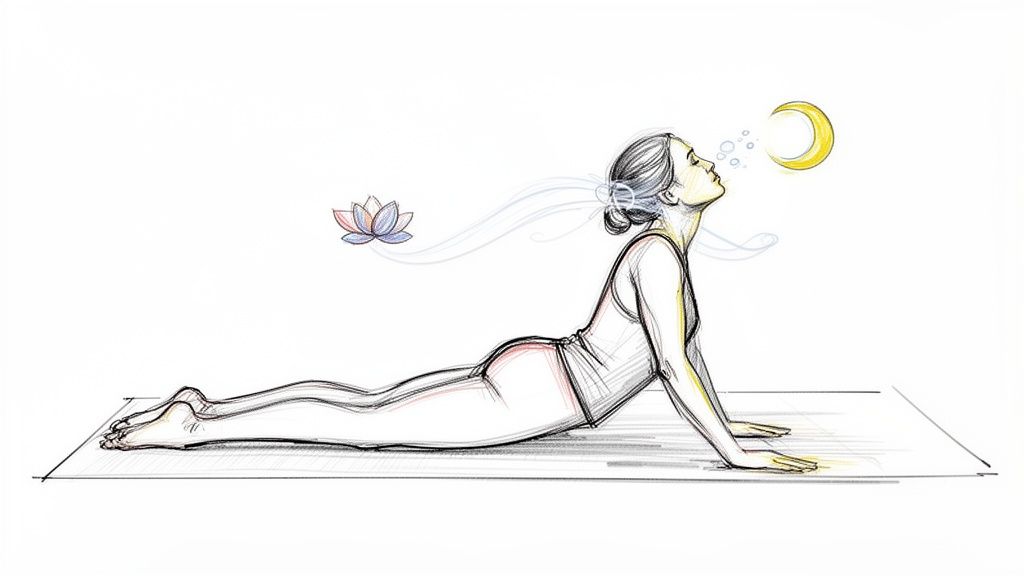
Unlike high-intensity workouts that can sometimes spike cortisol, restorative yoga styles work to lower it. By calming the sympathetic nervous system, yoga helps manage the physiological stress that can trigger hot flashes and interfere with sleep. Its focus on breathwork, or pranayama, offers an immediate tool for emotional regulation, making it one of the most adaptable and best exercises for menopause.
Why It Works for Menopause
The practice directly targets the body's stress response system, providing relief from both physical and emotional symptoms. Research supports its effectiveness, with studies showing that a 12-week yin yoga program can reduce hot flash frequency by over 30%. Furthermore, women who practice daily pranayama show measurable reductions in stress hormones, and Lila users who combine restorative yoga with sleep tracking report a 40% improvement in the time it takes to fall asleep.
Key Insight: Yoga isn't just about flexibility. During menopause, its greatest power lies in its ability to down-regulate the nervous system, offering a direct way to manage hot flashes, anxiety, and poor sleep from the inside out.
How to Implement Yoga
Frequency: Aim for 2-3 sessions per week. Even a 15-20 minute practice can provide significant mental and physical benefits.
Focus: Choose cooler-intensity styles like Restorative, Yin, or Hatha yoga, especially if you experience frequent hot flashes. Avoid heated or "power" yoga styles during peak symptom hours.
Technique: When a hot flash starts, try a simple breathing exercise: inhale for a count of four and exhale for a count of six. This longer exhale helps activate the calming parasympathetic nervous system.
Getting Started: Look for instructors trained in menopausal modifications or explore convenient online platforms. Excellent resources include Yoga with Adriene, Yoga Download, and Glo.
Tracking: Use the Lila app to log your yoga sessions. This allows you to see clear correlations between your practice and improvements in your hot flash frequency, sleep quality, and overall mood.
4. High-Intensity Interval Training (HIIT)
For women with packed schedules, high-intensity interval training (HIIT) offers a potent, time-efficient solution. This exercise style involves short, vigorous bursts of all-out effort, followed by brief recovery periods. A typical session elevates your heart rate to 85-95% of its maximum, delivering significant fitness benefits in just 20-30 minutes.
This method is particularly valuable during menopause for improving cardiovascular fitness, boosting metabolic rate, and enhancing insulin sensitivity. The intense effort triggers a significant post-exercise calorie burn known as EPOC (excess post-exercise oxygen consumption), helping to manage body composition changes that are common during this phase of life.
Why It Works for Menopause
HIIT’s primary advantage is its efficiency. Studies show that HIIT can provide equivalent, and sometimes superior, cardiovascular and metabolic benefits compared to steady-state cardio sessions that are three times longer. This makes it an outstanding choice for managing menopausal symptoms without a huge time commitment.
For instance, research has demonstrated that women performing just two 20-minute HIIT sessions per week can see marked improvements in insulin sensitivity within eight weeks. This directly combats the increased risk of metabolic syndrome associated with hormonal shifts.
Key Insight: The goal of HIIT isn't endurance, but intensity. These short, powerful bursts challenge your body in a way that sparks rapid physiological adaptations, making it one of the best exercises for menopause when time is a critical factor.
How to Implement HIIT
Frequency: Aim for 1-2 non-consecutive sessions per week. Your body needs at least 48 hours to recover from the high intensity, so avoid doing HIIT on back-to-back days.
Structure: A common format is a 1:1 or 1:2 work-to-rest ratio. For example, 30 seconds of burpees followed by 30 seconds of rest, or 20 seconds of sprints followed by 40 seconds of walking.
Progression: Start with shorter sessions (15 minutes) and gradually increase the duration to 30 minutes as your fitness improves. You can also increase the intensity by shortening rest periods or lengthening work intervals.
Precautions: Always perform a thorough warm-up to prepare your muscles and joints for intense work. To avoid exacerbating hot flashes, try exercising in a cool environment or during the cooler parts of the day. It's also important to know which movements might not be suitable; some high-impact exercises should be approached with caution. You can learn more about exercises to avoid during menopause to make safe choices.
Tracking: Use the Lila app to log your HIIT workouts. Monitoring your session details alongside symptom data can help you see how these intense workouts affect your hot flashes, sleep, and energy levels.
5. Pilates & Core Strengthening
Pilates is a low-impact exercise method centered on controlled movements, breathwork, and deep core engagement. It builds strength from the inside out, focusing on the stabilizing muscles that support your spine, pelvis, and shoulders. This focus is incredibly beneficial during menopause, when postural changes, back pain, and pelvic floor weakness become more common.
By strengthening the deep abdominal and back muscles, Pilates improves postural alignment and stability. This directly counters the "menopause stoop" some women experience and helps alleviate chronic backaches. Furthermore, the emphasis on pelvic floor activation can dramatically improve bladder control, with studies showing that consistent practice can reduce incontinence episodes by 40-60%.
Why It Works for Menopause
Pilates is one of the best exercises for menopause because it addresses multiple symptoms simultaneously with minimal joint stress. The precise, controlled movements enhance body awareness, improve balance, and increase flexibility, all of which reduce the risk of falls and injury. The mind-body connection integral to the practice also helps calm the nervous system, potentially easing anxiety and improving mood.
▶ PlayKey Insight: Pilates isn't just about getting a "flat stomach." It's about building a functional, resilient core that supports your entire body, improves posture, and protects your spine as you age. This foundational strength makes all other activities, from daily chores to more intense workouts, safer and more effective.
How to Implement Pilates
Frequency: Aim for 2-3 sessions per week on non-consecutive days for noticeable improvements in strength, posture, and flexibility.
Focus: Master the fundamentals of breath and pelvic floor engagement first. Focus on quality of movement over quantity of repetitions. Key exercises include the Hundred, Roll-Up, and Leg Circles.
Progression: Start with mat Pilates to learn the basic principles. As you grow stronger, you can advance to reformer classes, which use spring-loaded resistance for a more intense strengthening challenge.
Getting Started: Consider an introductory workshop or a few private sessions to learn proper form and prevent injury. Accessible online classes are available through platforms like Peloton Digital and Apple Fitness+.
Tracking: Use the Lila app to schedule your Pilates sessions and note how your practice correlates with changes in back pain, posture, and overall "core confidence."
6. Water-Based Exercise (Aquatic Fitness)
Aquatic fitness involves performing exercises in water, such as a swimming pool or therapy pool. The water’s natural buoyancy supports your body, dramatically reducing stress and impact on joints, while its resistance challenges your muscles. This unique combination makes it an incredibly effective and gentle form of exercise for women navigating menopause, especially those dealing with joint pain, arthritis, or mobility limitations.
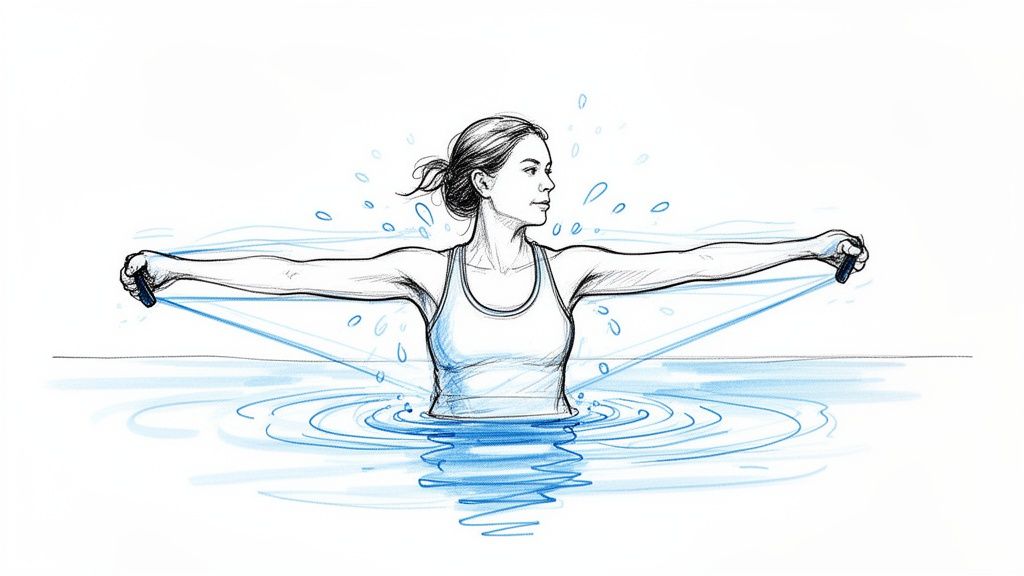
The cooling effect of the water is a significant advantage, helping regulate body temperature and providing immediate relief during exercise-induced hot flashes. This makes working out more comfortable and sustainable. Because it provides both cardiovascular and resistance benefits, aquatic fitness is one of the best exercises for menopause, supporting heart health, muscle tone, and mental well-being simultaneously.
Why It Works for Menopause
The benefits of water-based exercise are multifaceted. The water’s hydrostatic pressure can help reduce swelling in the lower limbs and improve circulation, while the resistance it provides strengthens muscles without the need for heavy weights. Studies show that menopausal women who swim for 30 minutes three times a week experience superior hot flash management compared to those doing land-based exercise.
Key Insight: The social component of group classes, like water aerobics, fosters accountability and community. Research shows that programs like aquatic arthritis classes have extremely high participation rates (around 85%) among menopausal women, demonstrating how enjoyable and sustainable this form of fitness can be.
How to Implement Water-Based Exercise
Frequency: Aim for 3-4 sessions weekly to gain both cardiovascular and strength benefits.
Focus: Include a mix of activities. Options include lap swimming, aqua jogging, water walking, or structured water aerobics classes. Combine cardio intervals with resistance movements using water dumbbells or noodles.
Environment: Look for pools with a slightly cooler temperature (around 78-82°F) for optimal hot flash management. Community pools, YMCAs, and fitness centers often offer accessible programs.
Getting Started: Begin with water walking or a beginner-level water aerobics class to get comfortable with moving against the water's resistance. Organizations like the Aquatic Exercise Association provide information and help you find certified instructors.
Tracking: Use the Lila app to log your aquatic sessions and note their impact. You can track how consistent water workouts correlate with a reduction in hot flash frequency, improved sleep, and better joint comfort.
7. Walking Meditation & Tai Chi
Gentle, flowing movement combined with mindfulness offers a powerful antidote to the stress and physical discomfort of menopause. Tai Chi and walking meditation integrate physical, mental, and emotional dimensions through slow, controlled movements and present-moment awareness. This approach reduces stress, improves balance, and enhances emotional regulation, making it one of the best exercises for menopause.
Unlike high-impact activities, these practices focus on the mind-body connection. They activate the parasympathetic nervous system, our "rest and digest" state, which directly counteracts the "fight or flight" response often triggered by hormonal fluctuations, hot flashes, and anxiety. This calming effect helps manage symptoms and builds resilience to daily stressors.
Why It Works for Menopause
The benefits are both physical and psychological. The slow, deliberate weight-shifting movements of Tai Chi are incredibly effective for improving proprioception and balance, which is vital as fall risks increase with age. Clinical studies show that Tai Chi practitioners can experience a 50% reduction in fall risk compared to control groups. Furthermore, research indicates that a 12-week Tai Chi program can reduce the frequency of hot flashes by 20-30%.
Key Insight: The power of these practices lies in their ability to calm the nervous system. By consciously slowing down your body and breath, you can directly influence your physiological response to menopausal symptoms like anxiety and hot flashes, offering immediate relief and long-term regulation.
How to Implement Walking Meditation & Tai Chi
Frequency: For optimal symptom management, aim for daily practice or at least 4-5 sessions per week. Even 10-15 minutes can make a significant difference.
Focus: In walking meditation, concentrate on the sensation of your feet on the ground and the rhythm of your breath. In Tai Chi, focus on smooth, continuous movements and maintaining a stable core.
Progression: Start with short, guided sessions. As you become more comfortable, you can increase the duration of your practice or learn more complex Tai Chi forms. The goal is consistency, not intensity.
Getting Started: Join a local Tai Chi class for expert instruction and community support. For walking meditation, apps like Insight Timer and Calm offer a wide array of guided practices. Many introductory Tai Chi videos are also available on YouTube.
Tracking: Use the Lila app to log your sessions and note any immediate changes in your stress levels or mood. Over time, you can observe correlations between consistent practice and improvements in anxiety, sleep, and overall well-being. Lila users who combine walking meditation with mood tracking report an average 35% improvement in anxiety symptoms.
8. Functional Fitness & Movement Training
Functional fitness involves training your body for the activities you perform in daily life. Rather than isolating individual muscles, this approach focuses on compound movements that mimic how you naturally move, such as bending, lifting, carrying, and reaching. It’s about building practical strength, stability, and mobility that translates directly to a higher quality of life and greater independence as you age.
This form of exercise is one of the best for menopause because it directly addresses real-world physical demands. It helps you maintain the strength to carry groceries, the stability to prevent falls, and the mobility to play with grandchildren without pain or risk of injury. By improving your body's ability to perform these everyday tasks, functional training enhances your physical capability and confidence.
Why It Works for Menopause
Functional fitness trains muscles to work together, improving coordination, balance, and proprioception (your sense of body position). This is crucial during menopause, as changes in hormones can affect balance and increase fall risk. Studies show that functional movement training can lead to superior real-world outcomes compared to isolated strength exercises alone.
Key Insight: Functional training bridges the gap between the gym and your daily life. The goal isn't just to lift a certain weight but to make everyday activities feel easier and safer, preserving your autonomy and vitality for years to come.
How to Implement Functional Fitness
Frequency: Aim for 2-3 sessions weekly, which can be combined with or serve as your strength training days.
Focus: Center your workouts on fundamental movement patterns. To better understand how these movements prepare your body for daily activities, exploring what is functional strength training can be highly beneficial. Key movements include squats (sitting/standing), deadlifts (lifting objects), lunges, overhead presses (placing items on high shelves), and farmer's carries (carrying heavy bags).
Technique Over Weight: Prioritize excellent form and movement quality over lifting heavy. Start with your bodyweight and gradually add resistance with kettlebells, dumbbells, or resistance bands as you get stronger.
Equipment: You can start with minimal equipment. A few resistance bands, a light kettlebell (5-15 lbs), or a medicine ball are often all you need. You can also explore our guide to the top 10 balance exercises for seniors at home for more ideas.
Tracking: Use the Lila app to log your functional workouts. Note not only the weight and reps but also how these exercises make daily tasks feel. You might notice it's easier to get up from the floor or carry your laundry basket, connecting your gym efforts to real-life improvements.
9. Dancing & Movement Arts
If traditional exercise feels like a chore, dancing and other movement arts offer a joyful alternative that combines physical activity with creativity, music, and social connection. From structured Zumba classes to expressive arts like Nia, these activities provide significant cardiovascular benefits while boosting mood and cognitive function, making them one of the best exercises for menopause.
The power of dance lies in its enjoyability, which dramatically improves adherence. Studies show that midlife women have significantly higher attendance rates in dance fitness classes compared to traditional gym programs. This consistency is the key to achieving long-term health outcomes, from better weight management to improved cardiovascular health. Dancing challenges your coordination, balance, and memory, providing a full-body and brain workout.
Why It Works for Menopause
Dancing is more than just physical movement; it's an emotional release. The combination of music, rhythm, and self-expression can have a profound effect on mental health, reducing symptoms of anxiety and depression that often arise during menopause. Lila users who incorporate dance into their routines report the highest mood improvement scores compared to those doing other forms of exercise. The social aspect of group classes also combats feelings of isolation and builds a supportive community.
Key Insight: The most effective exercise is the one you actually do. Dancing's high enjoyment factor makes it a sustainable practice. Don’t focus on perfection; the goal is to move your body in a way that feels good and brings you joy.
How to Implement Dancing & Movement Arts
Frequency: Aim for 3-4 sessions per week, for 30-45 minutes each, to reap cardiovascular and mood-lifting benefits.
Focus: Choose a style that resonates with your musical taste and personality. Options include Zumba, hip-hop, salsa, ballroom, or movement arts like Nia and Feldenkrais.
Progression: As you get more comfortable, challenge yourself by learning more complex choreography, increasing the intensity, or trying a new dance style.
Getting Started: Many community centers and gyms offer beginner dance classes. For at-home options, explore YouTube channels like The Fitness Marshall or emkfit for fun, accessible routines that don’t require perfection.
Tracking: Use the Lila app to log your dance sessions. This helps you correlate your activity with positive changes in your mood, energy levels, and even hot flash frequency, reinforcing the powerful mind-body connection.
10. Outdoor Nature-Based Activity (Hiking, Trail Walking, Gardening)
Combining physical movement with the restorative power of the outdoors creates a uniquely powerful tool for menopause management. Activities like hiking, trail walking, and even gardening blend cardiovascular exercise, strength building, and balance work with the profound psychological benefits of nature exposure. This approach addresses both the physical and mental-emotional symptoms of menopause simultaneously.
The value of nature-based activity is backed by science; spending time in natural environments is proven to lower cortisol levels, reduce stress, and improve mood. For menopausal women, this can mean fewer stress-induced hot flashes and better emotional regulation. Furthermore, outdoor activity is an excellent way to get natural sun exposure, which is essential for synthesizing vitamin D, a critical nutrient for bone health and immune function that many women are deficient in.
Why It Works for Menopause
Hiking on varied terrain challenges your cardiovascular system while strengthening the muscles in your legs, glutes, and core. This variety also improves balance and proprioception, which are key for preventing falls as bone density declines. Gardening offers a different but equally effective form of functional fitness, involving squatting, lifting, and carrying that builds practical strength and mobility.
Key Insight: The mental health boost from outdoor activity is just as important as the physical one. Studies show that spending as little as 20 minutes in nature can significantly reduce stress hormones. This makes nature-based exercise one of the best exercises for menopause for managing anxiety, mood swings, and feelings of being overwhelmed.
How to Implement Outdoor Activity
Frequency: Aim for 1-3 outdoor sessions per week, depending on the activity's intensity.
Focus: Start with accessible activities. A 20-30 minute walk on a local park trail is a perfect beginning. Gradually progress to longer hikes with more elevation to increase the challenge.
Community & Safety: Join a local hiking club or use apps like AllTrails to find popular, well-maintained trails. Exercising with a group can improve motivation and ensure safety.
Timing is Key: Plan your activities for the early morning or late afternoon to avoid peak heat, which can help manage hot flashes and make the experience more comfortable.
Tracking: Use the Lila app to log your outdoor workouts. Note the duration and intensity, and track how these sessions correlate with your mood, sleep quality, and hot flash frequency to see the direct benefits.
Top 10 Exercises for Menopause: Comparison
Activity | Implementation Complexity 🔄 | Resources Required ⚡ | Expected outcomes ⭐📊 | Ideal use cases 💡 | Key advantages ⭐ |
|---|---|---|---|---|---|
Strength Training & Resistance Exercise | Moderate–High: needs technique, progression planning 🔄 | Moderate: dumbbells/bands or gym access; optionally trainer ⚡ | High: preserves muscle, ↑bone density, ↑RMR (3–8%), improved glucose control ⭐📊 | Menopause muscle/bone loss, weight management, metabolic health 💡 | Most effective for lean mass and bone preservation; improves metabolism ⭐ |
Brisk Walking & Aerobic Cardio | Low: easy to start, scalable intensity 🔄 | Low: good shoes, safe routes or indoor machine ⚡ | Moderate: improved CV fitness, sleep, mood, weight control ⭐📊 | Beginners, sleep problems, general cardio and mood support 💡 | Highly accessible, low-cost, easy to track and sustain ⭐ |
Yoga & Mind‑Body Integration | Low–Moderate: practice consistency and correct instruction 🔄 | Low: mat/online classes; instructor quality varies ⚡ | Moderate–High: reduces hot flashes (~30%), improves sleep and stress regulation ⭐📊 | Hot flashes, insomnia, anxiety, flexibility and gentle strength work 💡 | Strong NS calming effects, low‑impact, enhances sleep and emotional resilience ⭐ |
High‑Intensity Interval Training (HIIT) | Moderate–High: requires safe programming and warm‑up 🔄 | Low–Moderate: minimal equipment; needs recovery time ⚡ | High: rapid VO2 and metabolic gains, time‑efficient calorie burn (EPOC) ⭐📊 | Time‑pressed individuals seeking quick cardio/metabolic benefits 💡 | Most time‑efficient for cardio and metabolic improvements; preserves muscle ⭐ |
Pilates & Core Strengthening | Moderate: technique and instructor improve outcomes 🔄 | Low–High: mat work or costly reformer studio options ⚡ | Moderate: better posture, core/pelvic floor strength, balance ⭐📊 | Back pain, postural decline, pelvic floor weakness, rehab contexts 💡 | Low‑impact core and pelvic floor benefits; improves balance and posture ⭐ |
Water‑Based Exercise (Aquatic Fitness) | Low–Moderate: pool access and class logistics 🔄 | Moderate: pool membership or community facility required ⚡ | Moderate: joint‑friendly cardio + resistance, cooling reduces hot flashes ⭐📊 | Arthritis, joint pain, severe hot flashes, mobility limitations 💡 | Buoyancy reduces joint load; cooling aids hot flash management ⭐ |
Walking Meditation & Tai Chi | Low: simple to learn but benefits need regular practice 🔄 | Very low: open space or online instruction ⚡ | Moderate: reduces stress, improves balance, lowers fall risk (~50%) ⭐📊 | Balance/fall prevention, daily stress reduction, gentle activity for all levels 💡 | Excellent nervous system regulation and balance improvement with minimal impact ⭐ |
Functional Fitness & Movement Training | Moderate: emphasis on movement quality and mechanics 🔄 | Low–Moderate: simple props (kettlebell, bands), coach helpful ⚡ | Moderate–High: improved daily function, mobility, injury prevention ⭐📊 | Preserving independence, improving daily task performance, rehab‑to‑fitness bridge 💡 | Direct transfer to real‑world activities; scalable and practical ⭐ |
Dancing & Movement Arts | Low: easy to begin; coordination improves with practice 🔄 | Low: music/space or class access; optional instructor ⚡ | High (adherence): boosts mood, social connection, provides cardio when frequent ⭐📊 | Those who prioritize enjoyment, social engagement, long‑term consistency 💡 | High adherence and mood benefits; combines cardio with creativity and community ⭐ |
Outdoor Nature‑Based Activity (Hiking, Gardening) | Low–Moderate: route/season planning and safety considerations 🔄 | Low: sturdy shoes, weather‑appropriate gear; sometimes travel ⚡ | Moderate–High: cardio + leg strength, mood lift, vitamin D, better sleep ⭐📊 | Boosting mental health, vitamin D, varied terrain for balance and strength 💡 | Combines physical and psychological benefits; improves circadian rhythm and mood ⭐ |
Putting It All Together: Your Personalized Menopause Movement Plan
Navigating the landscape of menopause can feel like trying to follow an old, faded map. The journey is unique for every woman, and the symptoms, from hot flashes and sleep disturbances to mood swings and weight shifts, can be disorienting. However, this article has laid out a clear, actionable compass: consistent, purposeful movement. The "best exercises for menopause" are not a one-size-fits-all prescription but a curated toolkit from which you can build a resilient, personalized routine.
We have explored ten powerful modalities, each offering distinct benefits. Strength training stands as a non-negotiable cornerstone, directly combating the loss of muscle mass and bone density that accelerates during this life stage. It is your primary defense for maintaining a robust metabolism and skeletal strength. Alongside it, aerobic activities like brisk walking or swimming are essential for cardiovascular health, weight management, and improving your mood.
The real magic, however, happens when you integrate these with mind-body practices. Yoga, Tai Chi, and even mindful walking provide a crucial antidote to the heightened stress and anxiety that often accompany hormonal fluctuations. By calming your nervous system, you can directly influence symptoms like poor sleep and hot flashes.
Building Your Sustainable Routine: A Practical Blueprint
The sheer number of options might seem overwhelming, but the goal isn't to do everything. The goal is to do the right things for you, consistently. The most effective plan is one that feels both challenging and enjoyable, one that you can stick to week after week.
Here’s a simple framework to get started:
Choose Your Pillars: Select 2-3 activities from the list that genuinely appeal to you. Aim for a balanced mix.
Strength (2-3 sessions/week): This is your foundation. Think full-body resistance training.
Cardio (3-5 sessions/week): Pick something you enjoy. This could be brisk walking, dancing, or swimming.
Mind-Body (2-4 sessions/week): This is your recovery and stress-management tool. A 15-minute yoga flow or a quiet walk in nature counts.
Create a Sample Week: A powerful, balanced week might look like this:
Monday: 30-minute full-body strength training.
Tuesday: 30-minute brisk walk outdoors.
Wednesday: 20-minute restorative yoga flow.
Thursday: 30-minute full-body strength training.
Friday: 45-minute water aerobics class or a dance session.
Saturday: Long, leisurely hike or a mindful walk in the park.
Sunday: Active recovery and stretching.
This structure covers all your bases: building muscle and bone, supporting your heart, and managing stress. It’s a template you can adapt with the exercises you love.
Key Takeaway: Consistency will always yield better results than sporadic, high-intensity efforts. Listen to your body’s signals. Some days you will have the energy for a HIIT session; other days, a gentle walk is exactly what you need. Honouring this variability is key to long-term success.
From Information to Transformation: The Power of Tracking
Knowing which exercises are best for menopause is only half the battle. The other half is understanding how they specifically impact your body and your symptoms. This is where tracking becomes your superpower. By systematically logging your workouts, symptoms, sleep quality, and mood, you move from guessing to knowing.
You might discover a clear pattern: that morning walks drastically reduce your afternoon brain fog, or that your sleep is deepest on the nights after a strength training session. This data is the key to refining your approach, doubling down on what works, and adjusting what doesn't.
This journey of movement is about so much more than managing symptoms. It’s an act of reclaiming your power, rebuilding your confidence, and investing in a future of vitality and strength. It's about showing up for yourself, one mindful movement at a time, and proving that this next chapter can be your strongest yet.
Ready to stop guessing and start building a plan based on your unique data? The Lila app is designed to be your personal menopause guide, helping you connect the dots between your exercise, nutrition, and symptoms. Download Lila today to start tracking your progress and receive AI-powered insights to create the movement routine that works for you.
Get Lila, your personal coach for perimenopause.
Built for women in their 40s. 24/7 coaching, in your pocket.


