
Menopause and Mood Swings Treatment Options
Explore evidence-based menopause and mood swings treatment options. Learn to distinguish hormone shifts from clinical depression and build a personalized plan.
You snap at your partner over a small mistake, then find yourself crying in the bathroom because the reaction feels completely unlike you. Later, you lie awake after a night sweat, replaying the conversation and wondering whether you're becoming depressed or just moving through perimenopause.
That uncertainty can be distressing, but it doesn't mean you're failing. Menopause-related mood swings are real, treatable health symptoms, and the right response depends on their pattern, intensity, duration, and effect on your life. The most useful approach combines careful observation with professional assessment, rather than assuming every emotional change needs hormones or that every low mood should be managed with an antidepressant.
Table of Contents
- Why Menopause Triggers Intense Mood Swings
- Understanding the Scale of Menopausal Mood Changes
- Hormone Shifts Versus Clinical Depression
- Medical Treatments for Menopause and Mood Swings
- Cognitive Approaches and Digital Tracking Tools
- Preparing for a Productive Doctor Visit
- Building Your Personalized Menopause Management Plan
Why Menopause Triggers Intense Mood Swings
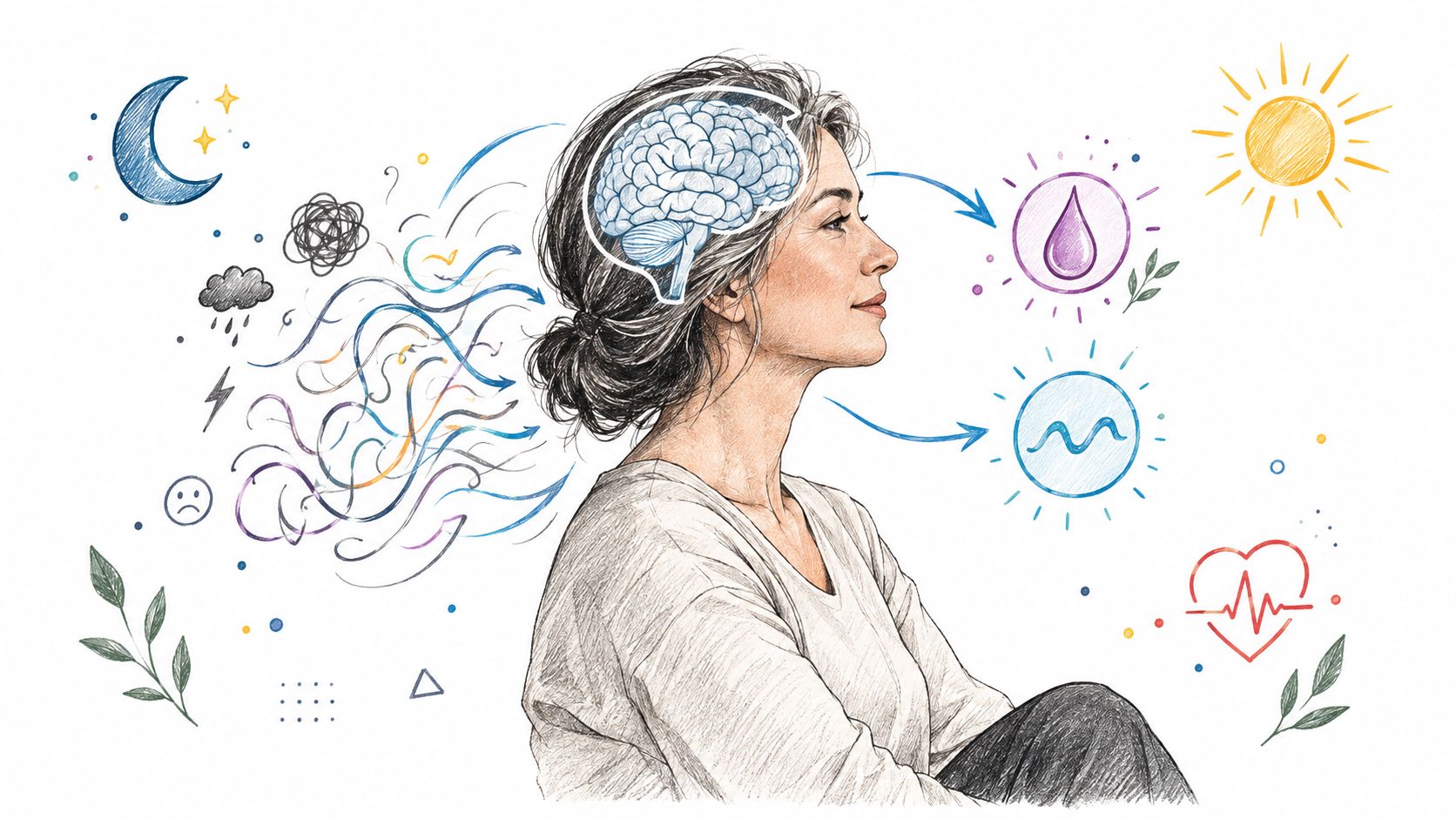
A woman may feel calm in the morning, tense by lunchtime, and unexpectedly tearful by evening. She may still recognize the trigger, but her emotional response feels faster, stronger, and harder to settle. During perimenopause, changing reproductive hormones can affect the brain systems involved in mood, stress response, sleep, and emotional regulation.
Estrogen and progesterone don't decline in a smooth line. They can fluctuate, sometimes making symptoms difficult to predict. Those changes may interact with serotonin, dopamine, and other signaling systems that help regulate motivation, calmness, pleasure, and resilience. The result can be irritability, anxiety, tearfulness, emotional sensitivity, or a sense of being unusually overwhelmed.
Why sleep can magnify emotional reactions
Hormonal mood changes rarely happen in isolation. Hot flashes and night sweats can interrupt sleep, while poor sleep can make ordinary frustrations feel much more threatening. A woman who wakes repeatedly may have less patience, lower concentration, and less ability to pause before reacting.
This can create a reinforcing loop. A difficult night increases irritability the next day, conflict increases stress, and stress makes it harder to relax at bedtime. Anxiety about another sleepless night can then become part of the problem. Understanding how female hormone levels can change across the cycle and life stages can help you place individual symptoms in a broader pattern, although a chart can't diagnose the cause of your mood changes.
Practical rule: Treat the whole pattern, not just the emotion. Mood, sleep, hot flashes, stress, and menstrual changes can influence one another.
The experience also varies widely. One woman may notice premenstrual-like irritability during an unpredictable cycle. Another may mainly experience anxious thoughts, low motivation, or sudden crying. Someone else may feel emotionally steady until several nights of disrupted sleep leave her struggling to cope.
If you're looking for a culturally relevant explanation of anxiety symptoms during this transition, the resource on perimenopause anxiety in Italy offers another perspective. Whatever the setting, the central message is the same: mood symptoms deserve attention without shame. They may be connected to hormonal change, but they still deserve proper evaluation when they persist or interfere with daily life.
Understanding the Scale of Menopausal Mood Changes
A woman may feel calm at breakfast, irritable by afternoon, and tearful after another difficult night. That shift can be part of the menopausal transition, yet the intensity and impact vary widely. A 2025 review of menopause-related symptoms reported that approximately 50% to 80% of middle-aged women experience menopause-related symptoms overall. Psychological symptoms, including depression, anxiety, and sleep disturbance, have been reported in roughly 10% to 38% of postmenopausal women in studies from low- and middle-income countries.
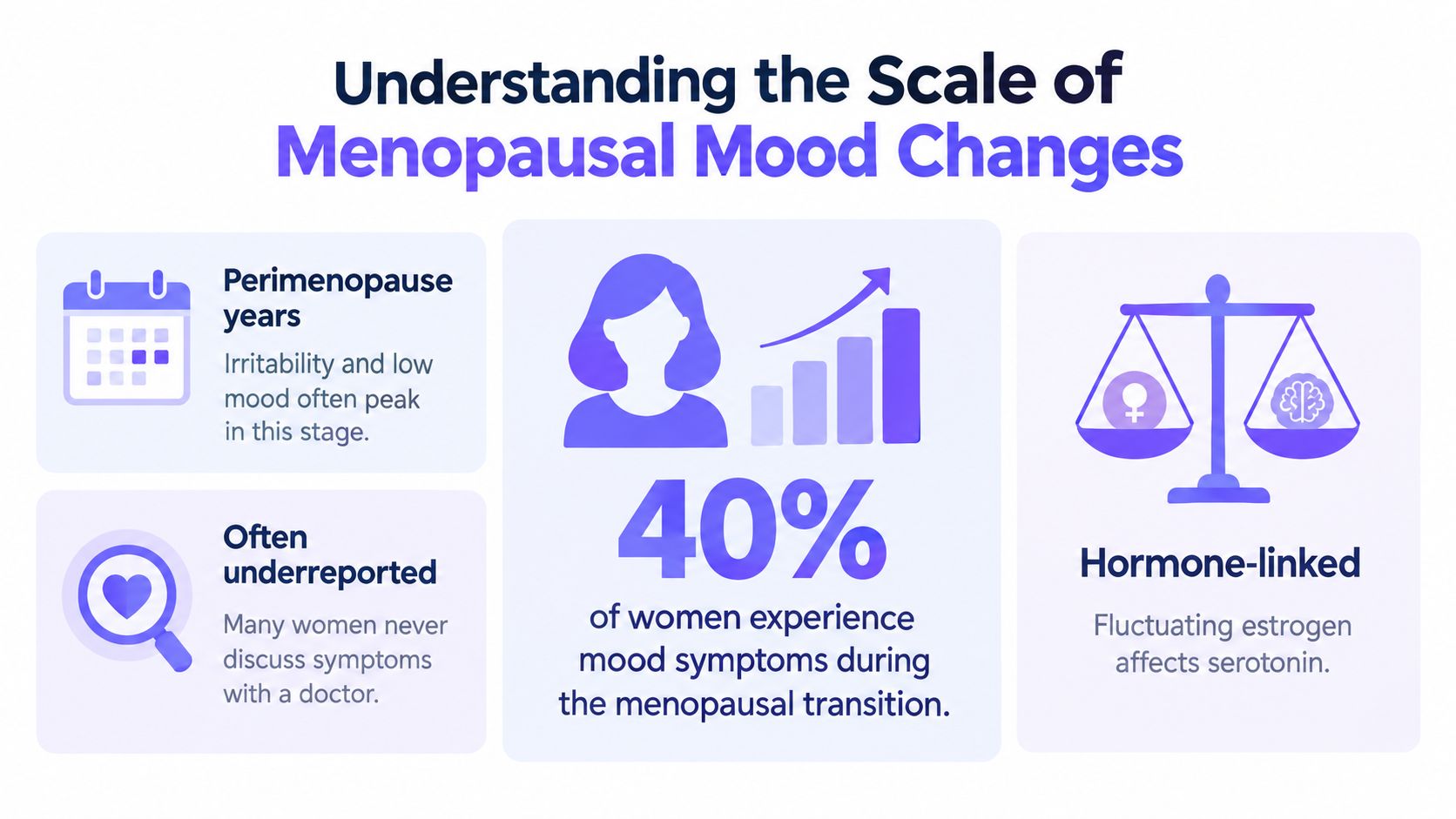
These figures describe groups, not your diagnosis. They cannot identify whether irritability is linked mainly to hormonal fluctuation, poor sleep, depression, stress, or another health concern. They do show why “just menopause” is an incomplete explanation when emotional symptoms persist or disrupt daily life.
What the longitudinal evidence suggests
Depressive symptoms can increase during perimenopause compared with the premenopausal period. The same longitudinal evidence review reported approximately 1.5- to 2-fold higher odds, including an adjusted odds ratio of 1.82. Among women without a previous history of depression, the reported hazard ratio for developing major depressive disorder was 1.59, with a 95% confidence interval of 1.15 to 2.20.
These findings describe increased risk, not a prediction for every woman. The review estimated that more than 85% pass through menopause without clinically significant mood disturbances. Both points matter: menopause does not make depression inevitable, and serious symptoms should not be dismissed as something a woman must endure.
Several circumstances can make mood changes harder to manage:
- Previous depression: A personal history supports earlier assessment and closer follow-up.
- Sleep disruption: Night sweats, insomnia, and repeated awakenings can reduce emotional resilience.
- Physical symptoms: Hot flashes and other discomforts can keep the nervous system activated.
- Stress and limited support: Work pressure, caregiving, relationship strain, and isolation may intensify distress.
- Functional impairment: Difficulty working, maintaining relationships, or completing ordinary tasks gives a symptom greater clinical significance.
A short spell of irritability after poor sleep does not by itself indicate major depression. Tracking mood, sleep, physical symptoms, and daily functioning can help reveal whether symptoms come in waves or remain persistent. Contact a clinician when sadness, loss of interest, escalating anxiety, or reduced functioning continues, worsens, or includes thoughts of self-harm. That pattern calls for assessment rather than reassurance alone.
Hormone Shifts Versus Clinical Depression
The question isn't whether symptoms are “real.” Both hormone-related emotional lability and clinical depression are real. The question is which pattern best describes what's happening and what type of support is appropriate.
Hormonal mood swings often fluctuate with other perimenopausal symptoms. You may have good periods between difficult days, notice a relationship with hot flashes or cycle changes, or feel better after restorative sleep. Clinical depression can also fluctuate, so no single feature proves the diagnosis. However, persistent low mood, loss of pleasure, hopelessness, guilt, major changes in sleep or appetite, impaired functioning, or suicidal thoughts require clinical assessment.
| Symptom Pattern | Hormonal Mood Swings | Clinical Depression |
|---|---|---|
| Emotional pattern | Irritability, tearfulness, or anxiety may come in waves and occur alongside hot flashes, night sweats, or cycle changes. | Low mood or loss of interest may persist across situations and become increasingly difficult to lift. |
| Relief between episodes | You may return closer to your usual self between symptom flares. | Positive events or rest may not restore your usual interest, energy, or sense of connection. |
| Function | You may feel more reactive but continue most responsibilities. | Work, relationships, self-care, concentration, or daily tasks become significantly impaired. |
| Sleep | Sleep disruption may follow night sweats or anxious arousal and then affect mood the next day. | Sleep changes can occur as part of a broader depressive pattern, including insomnia or excessive sleep. |
| Escalation | Tracking can help identify links among hormones, sleep, stress, and symptoms. | Symptoms lasting more than two weeks, worsening symptoms, functional impairment, or persistent sleep disruption warrant professional assessment, as outlined in clinical guidance on menopause diagnosis and treatment. |
The perimenopausal window of opportunity
Treatment response can depend on reproductive stage. Evidence summarized by the Australasian Menopause Society indicates that estrogen may be about as effective as antidepressants for depression emerging during perimenopause, but appears ineffective for depression in post-menopause. This suggests a possible perimenopausal window of opportunity, not a universal benefit from hormone treatment.
That distinction is important. Menopausal hormone therapy may be considered when mood symptoms appear during the transition and physical menopausal symptoms are also prominent, but it isn't a first-line treatment for major depressive disorder. If a clinician identifies a depressive disorder, an antidepressant, psychotherapy, or both may be more appropriate. A practical guide to depression treatment during menopause can help you prepare questions, but it can't replace an individualized assessment.
Seek urgent help if you have thoughts of suicide, self-harm, or harming someone else. Contact local emergency services or a crisis service immediately rather than waiting for a routine menopause appointment.
Don't try to settle the question through a single hormone test or one difficult day. A symptom record that includes mood, sleep, hot flashes, cycle changes, stress, and functioning gives a clinician more useful information. You can also learn more about whether perimenopause can be tested, while keeping in mind that diagnosis usually depends on age, symptoms, menstrual history, examination, and medical context rather than one definitive result.
Medical Treatments for Menopause and Mood Swings
There isn't one universal prescription for menopause and mood swings treatment. Clinicians usually consider whether the main problem is a depressive disorder, vasomotor symptoms, sleep disruption, anxiety, or a combination of these concerns.
Menopausal hormone therapy
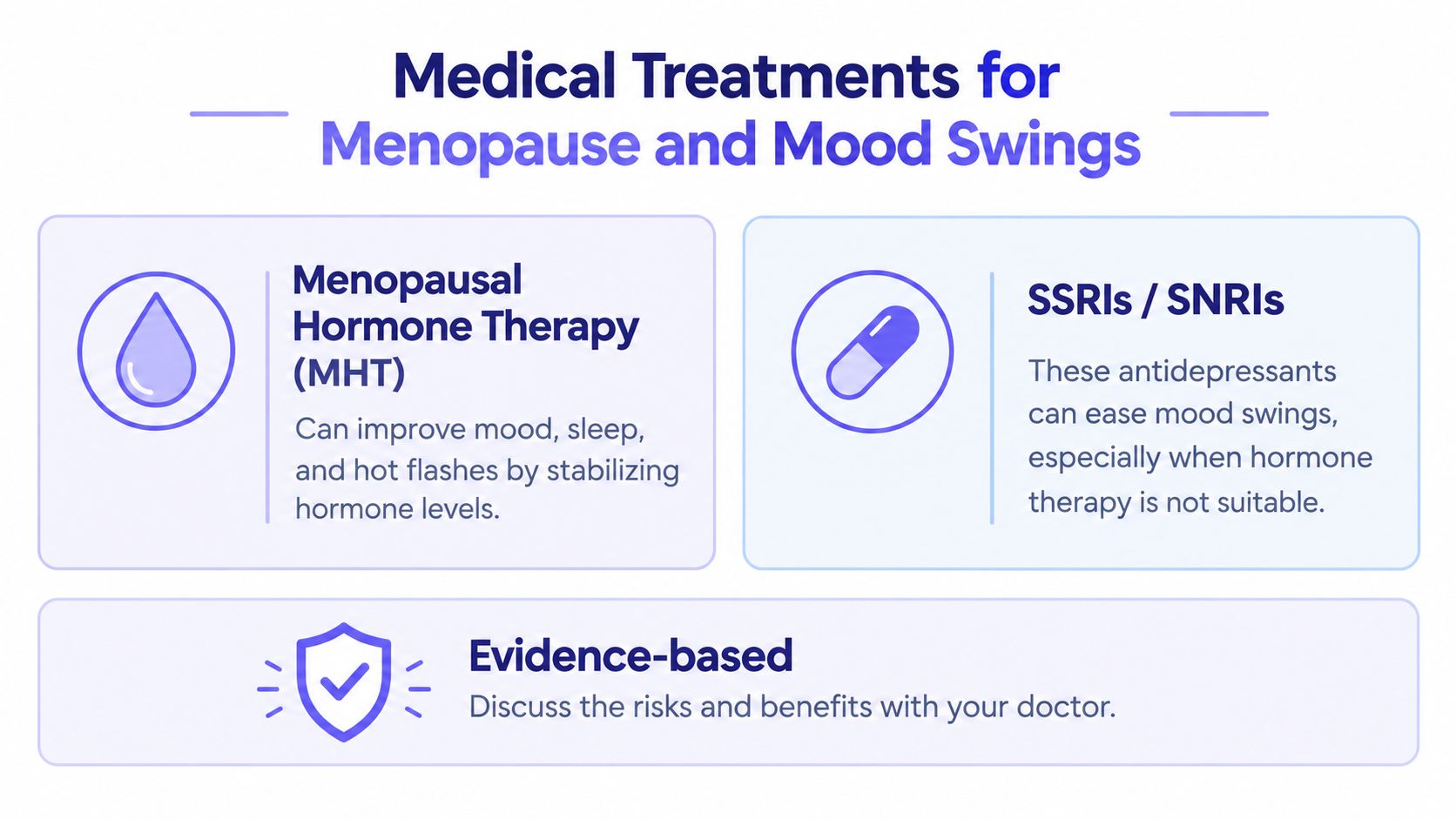
Menopausal hormone therapy, or MHT, can be useful for selected women in the menopause transition, particularly when mood symptoms occur with hot flashes or night sweats. Improving those physical symptoms may also improve sleep and reduce the strain they place on mood. MHT isn't approved as a treatment for major depressive disorder and generally shouldn't be prescribed solely to prevent future mood problems.
In one randomized trial of 50 women with perimenopausal depressive symptoms, 12 weeks of transdermal estradiol produced remission in 68% of participants compared with 20% receiving placebo, with a reported P<0.001 difference. These figures come from the NICE evidence and guidance document. A trial result can inform a discussion, but it doesn't predict exactly how one person will respond.
MHT requires a medical review. Certain breast or endometrial cancers, unexplained vaginal bleeding, active liver disease, and thromboembolic risk can affect whether hormone therapy is safe. If you're considering options to balance hormones in Ashburn, use that information as a prompt for questions about benefits, risks, alternatives, and follow-up, not as a substitute for prescribing assessment.
SSRIs and SNRIs
Selective serotonin reuptake inhibitors and serotonin-norepinephrine reuptake inhibitors can target depression or anxiety directly. They may also reduce hot flashes, which makes them a possible dual-target option when hormone therapy isn't suitable or when a diagnosed mood disorder is present.
A 2020 systematic review and meta-analysis combined seven randomized controlled trials involving 1,676 participants. Of those participants, 992 received an SSRI or SNRI and 684 received placebo, with treatment lasting an average of 9.5 weeks. The analysis found improved depressive symptoms and higher response and remission rates with antidepressants than with placebo, although discontinuation related to adverse events was more common with medication. These findings are reported in the systematic evidence summarized for menopause nonhormone treatment.
The same evidence summary reported hot-flash reductions of approximately 24% to 69% versus placebo, with combined frequency-and-severity improvements of about 19% to 61%. Venlafaxine 37.5 mg was associated with a 41% reduction after one week in one evidence summary, while nausea, dry mouth, constipation, and other adverse effects were more frequent. Paroxetine 10 to 20 mg produced roughly 40.6% to 51.7% reductions in hot flashes versus placebo in reviewed trials. These medication figures don't mean one drug is right for everyone.
A prescriber should consider bipolar disorder risk, suicidal ideation, sleep effects, sexual adverse effects, blood pressure, drug interactions, and discontinuation symptoms. Hormone therapy and antidepressants can sometimes be combined, but the decision belongs with a clinician who knows your medical history. If you're exploring alternatives to HRT, ask specifically which symptom each option targets and how you'll review its effect.
This video can provide an additional visual explanation of treatment conversations, but medical decisions still require personal assessment.
▶ PlayCognitive Approaches and Digital Tracking Tools
Medication can be valuable, but it doesn't teach you what happens before an emotional surge or how to respond when it begins. Cognitive behavioral therapy, or CBT, addresses the thoughts, behaviors, sleep habits, and stress responses that can amplify menopausal symptoms.
A CBT therapist may help you identify a pattern such as, “I slept badly, so tomorrow will be impossible,” and replace it with a more workable response. Therapy can also build skills for challenging catastrophic thoughts, setting boundaries, calming physiological arousal, and protecting sleep. UK NICE guidance recommends considering CBT for low mood or anxiety associated with menopause, making it a useful option alongside or instead of medication for some women.
Turn vague symptoms into visible patterns
Tracking works best when it captures context rather than asking only, “How do you feel?” Record the symptom, its intensity, what happened beforehand, and what followed. Useful fields include:
- Mood: Note irritability, sadness, anxiety, emotional sensitivity, and moments of calm.
- Sleep: Record bedtime, awakenings, night sweats, and how rested you feel.
- Physical symptoms: Add hot flashes, headaches, pain, and changes in bleeding patterns.
- Daily inputs: Track meals, caffeine, alcohol, movement, stressful events, and social contact.
- Function: Write down whether symptoms affected work, parenting, relationships, concentration, or self-care.
The purpose isn't to create a perfect record. It's to notice repeatable connections. You might discover that anxiety rises after several nights of poor sleep, or that a demanding workday and skipped meals make irritability more likely. A collection of mood tracker examples can help you choose a format you'll use.
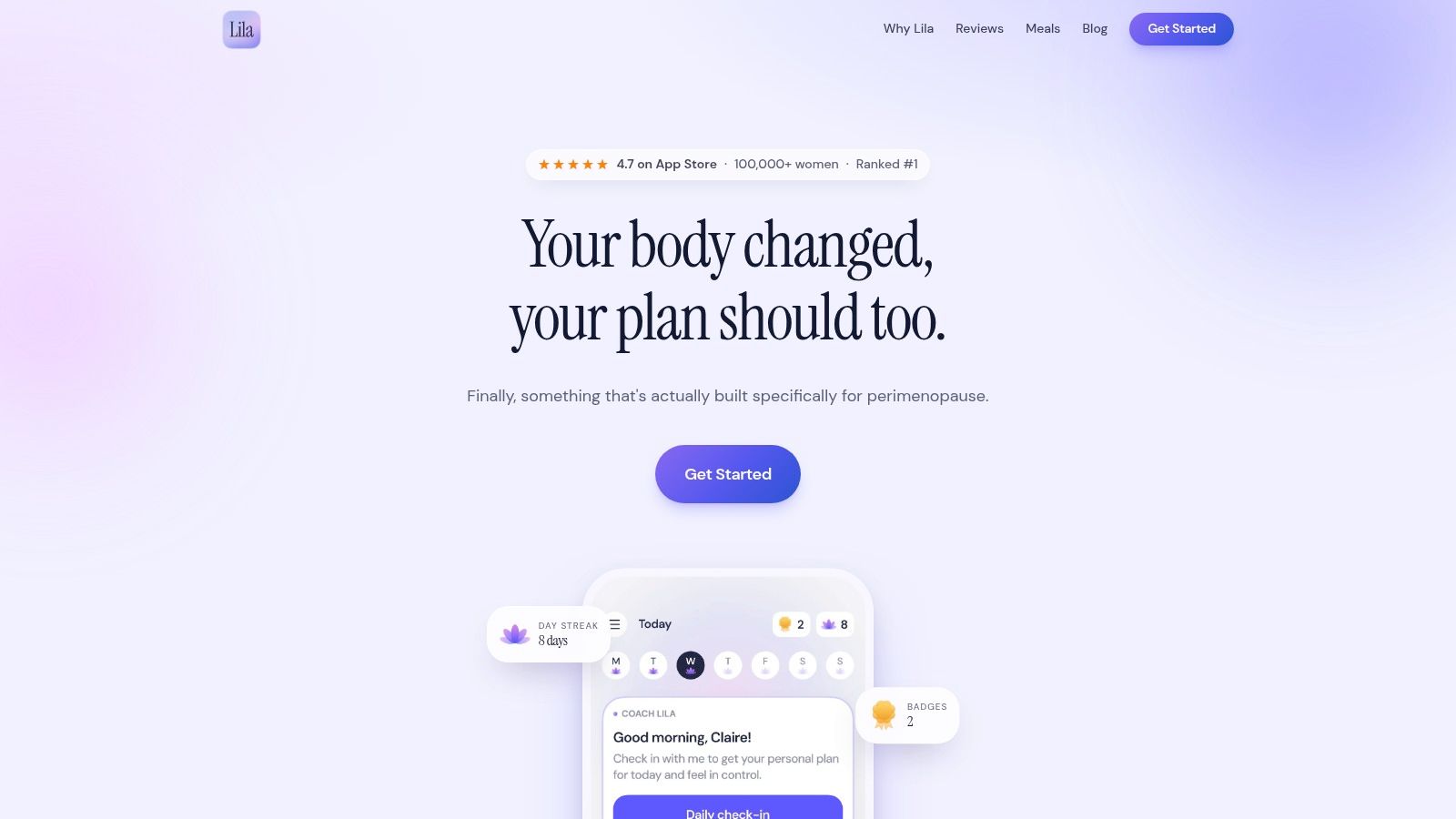
Digital tools can centralize mood, sleep, energy, meals, symptoms, and cycle information. An AI-supported chat coach can turn a daily check-in into reminders or practical suggestions, but it shouldn't diagnose depression, replace therapy, or tell you to stop prescribed medication. Use tracking to strengthen your self-awareness and your clinician conversation, not to postpone help when symptoms are serious.
Preparing for a Productive Doctor Visit
A clear appointment begins with a clear description of the problem. Instead of saying, “My hormones are all over the place,” explain what changed, when it started, how often it occurs, and what it prevents you from doing.
Bring a short symptom summary covering your mood, sleep, hot flashes, night sweats, bleeding pattern, anxiety, concentration, and energy. Include examples of functional impact, such as missing work, withdrawing from friends, struggling with household tasks, or losing interest in activities you usually enjoy.
What to tell your clinician
- Describe the timeline: Note whether symptoms began with cycle changes, hot flashes, sleep disruption, or another life event.
- Explain the pattern: Say whether symptoms come in waves, remain present most days, or appear after poor sleep.
- Name the severity: Mention crying spells, panic symptoms, hopelessness, loss of pleasure, or difficulty concentrating.
- Share your history: Include previous depression, anxiety, bipolar symptoms, trauma, medication use, and past responses to treatment.
- Discuss physical risks: Tell the clinician about cardiovascular risks, clotting history, liver disease, unexplained bleeding, and relevant cancer history.
- Bring family context: Mention family history that may influence mental health, cardiovascular health, or cancer risk.
- List current products: Include prescriptions, supplements, over-the-counter medicines, caffeine, alcohol, and recreational substances.
A symptom diary doesn't need to be elaborate. A concise record can show whether mood symptoms track with sleep loss, vasomotor symptoms, or cycle changes, while also revealing signs that require direct mental health treatment. If you want to understand how menopause assessment may work before your appointment, review this guide to testing for menopause.
Ask your clinician what diagnosis they're considering, what each treatment is meant to improve, when you should expect a review, and which side effects require a call. If you're offered MHT, ask about contraindications and what follow-up will involve. If you're offered an SSRI or SNRI, ask how it may affect sleep, sexual function, blood pressure, anxiety, and discontinuation.
Building Your Personalized Menopause Management Plan
Effective menopause and mood swings treatment is usually layered. The first layer is observation, so you can distinguish a difficult day from a repeating pattern. The next may include sleep support, CBT, movement, stress reduction, or changes that reduce triggers. Medical treatment can then target the dominant problem, whether that's vasomotor symptoms, a depressive disorder, anxiety, or several symptoms together.
Your plan should change as your symptoms change. A strategy that helps during early perimenopause may need adjustment when cycles stop, hot flashes settle, or depression becomes the primary concern. MHT may be appropriate for some women with physical symptoms and mood changes, while antidepressants or psychotherapy may be more suitable when a clinical depressive disorder is present.
Review your plan with a clinician rather than judging it after one difficult day. Track whether mood, sleep, hot flashes, relationships, and functioning are improving, and report worsening symptoms promptly. You don't have to prove that menopause caused every feeling before asking for help. You only need to recognize that your experience is affecting your life and deserves thoughtful care.
Lila offers daily symptom check-ins, personalized action plans, and a chat-based coach that can help you track mood, sleep, energy, meals, hot flashes, and cycle changes in one place. Visit Lila to explore a practical way to organize your symptoms and prepare for a more informed menopause care conversation.
Get Lila, your personal coach for perimenopause.
Built for women in their 40s. 24/7 coaching, in your pocket.