
Menopause and Sugar Cravings: What Helps Most
Learn why menopause and sugar cravings happen, how to track your triggers, and practical meal, sleep and protein strategies that actually reduce cravings.
Cutting out sugar or trying to balance your hormones isn't the most useful first response to menopause cravings. Before changing your diet, spend two weeks noticing when the urge appears and what happened beforehand. A broken night, an unsatisfying lunch or food that suddenly tastes less flavorful may tell you more than the craving alone.
The connection between menopause and sugar cravings is real enough to investigate, but it isn't a simple estrogen-to-sweets equation. You don't need to blame yourself, ban dessert or assume every afternoon energy dip means something is wrong with your blood sugar.
Table of Contents
- What Actually Drives Sugar Cravings in Menopause
- Track Your Cravings for 14 Days and Act on the Result
- Meal Structure That Keeps Cravings Quiet
- Sleep, Movement and When to Get Tested
- When Taste Changes Your Sweet Preference
What Actually Drives Sugar Cravings in Menopause
Declining estrogen is often presented as the explanation for new cravings. That's more certainty than human evidence supports. Estrogen influences appetite-related pathways, but the detailed evidence is stronger in animals than in people, and a review of menopause-related cravings describes limited, mixed evidence for a menopause-specific mechanism.
Hormones may contribute without explaining the whole experience. Menopause can overlap with changes in sleep, mood, meal routines and glucose regulation, making it difficult to separate one influence from another.
These overlapping influences are a better starting point than blaming willpower.
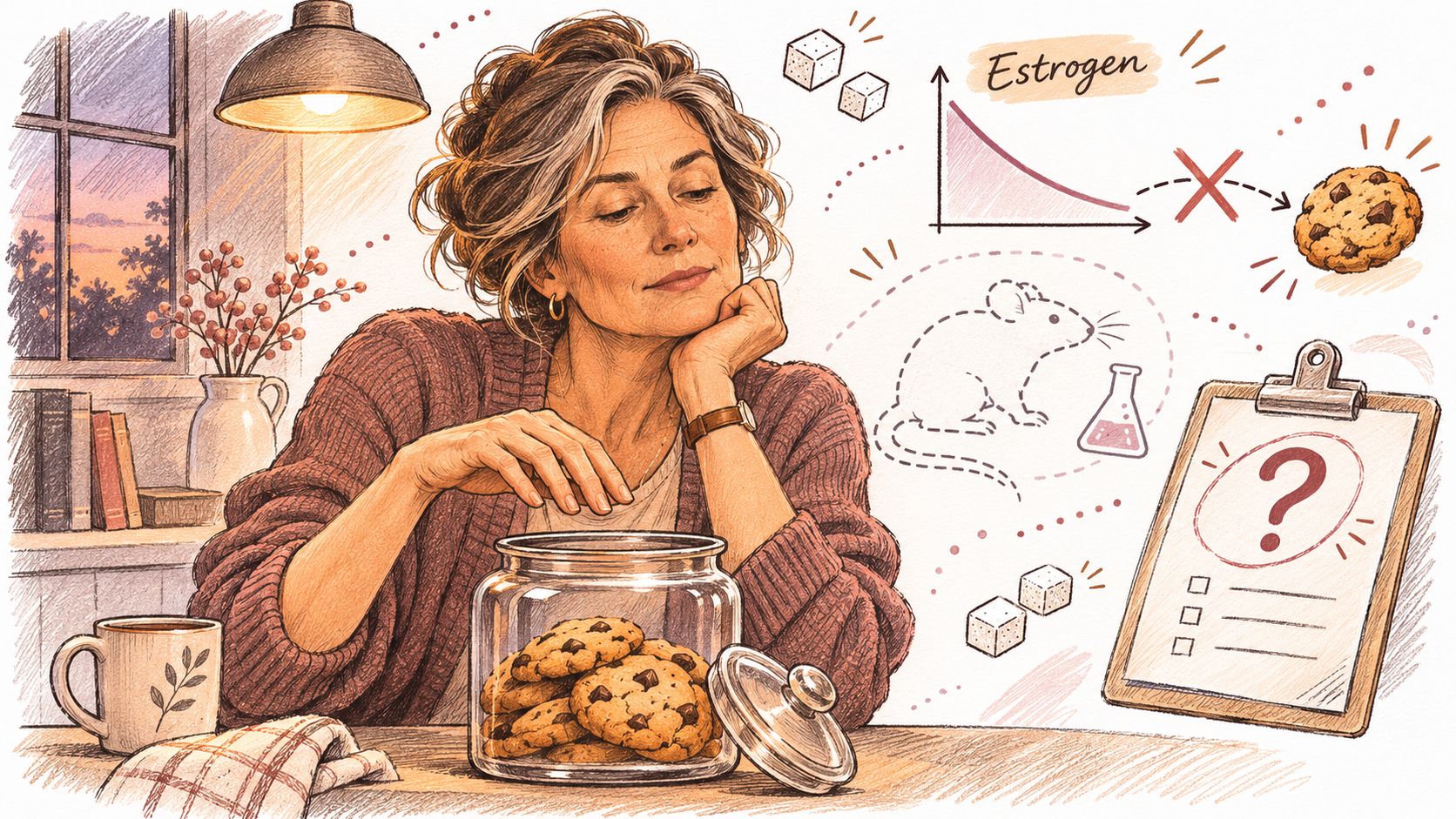
The drivers can overlap
- Poor sleep: After a restless night, appetite signals and eating control may change. You might find the office biscuits unusually appealing even after your usual breakfast.
- Hot-flash disruption: Night sweats can interrupt sleep repeatedly. Next-day snacking may reflect exhaustion rather than a new preference for sugar.
- Mood and stress: An anxious afternoon can make familiar, highly palatable food more appealing. The sweet may also provide a welcome pause.
- Insulin sensitivity: In a longitudinal study of women across the menopause transition, the representative adjusted annual increase in HOMA-IR was 4.3% during the transition window, compared with 1.2% beforehand. HOMA-IR estimates insulin resistance; it doesn't measure cravings.
The ZOE PREDICT study found that postmenopausal participants reported 12% higher sugar intake and 12% poorer sleep, alongside a 42% higher two-hour incremental glucose response after eating, compared with premenopausal participants. These are associations, not proof that menopause caused cravings or that cravings caused the glucose differences.
A 2024 study in Women & Health found that menopause symptoms explained 16.7% of the variance in problematic eating behavior among 281 peri- and postmenopausal women aged 40–64. That finding supports taking symptoms seriously, but it doesn't establish a single cause.
A craving is information about your circumstances, not a diagnosis of a hormone problem or insulin resistance.
For background on glucose regulation, our blood sugar management guide explains the practical distinctions. If weight treatment is already part of a medical conversation, Weight Method's resource on managing menopause weight gain with GLP-1s offers context for that separate discussion, rather than a reason to medicate ordinary cravings.
Start by noticing whether the urge follows a bad night, a skipped lunch or a stressful afternoon.
Track Your Cravings for 14 Days and Act on the Result
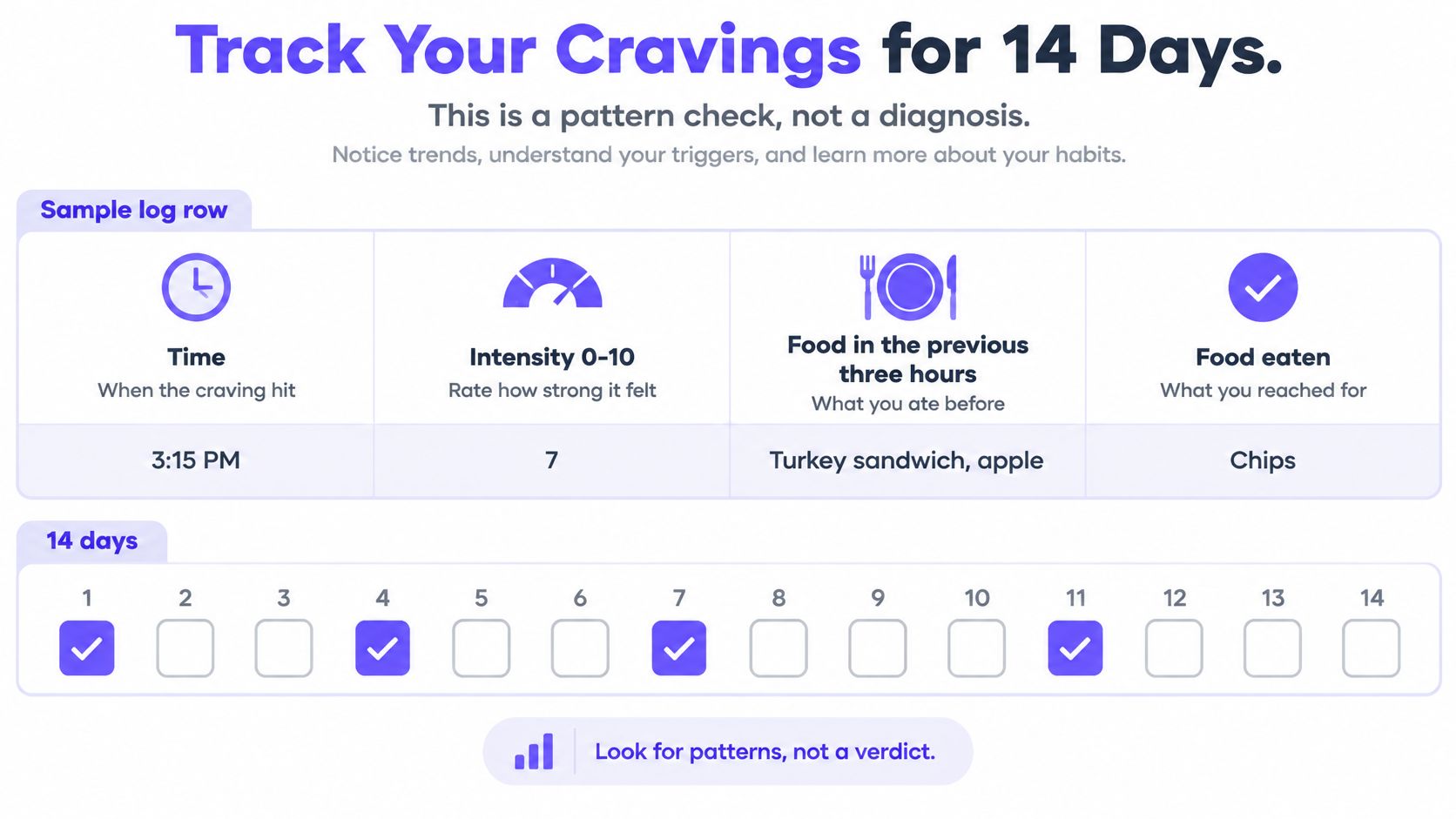
Before changing your diet, watch your own cravings for two weeks. Sleep, meal timing, stress and changes in taste may help explain a pattern; estrogen alone may not. A log cannot prove what caused an urge, but it can show what tends to happen around it.
Use the same simple notes each day. When a craving appears, record its intensity, what you ate recently, and whether you felt hungry, wanted a particular taste or needed a break. Include sleep, mood, stress, movement and, if you still have periods, cycle stage. Treat these details as clues, not diagnoses.
What to record
Capture the craving when it happens. Note the time, how strong it feels, what you ate recently and what you reached for, if anything. Add whether you felt physically hungry, wanted a particular taste or mainly needed a pause.
Record sleep each morning. Note how long you slept, whether hot flashes, night sweats or other interruptions woke you, and whether you feel rested. Duration alone may not describe how restorative the night felt.
Add context in the evening. Briefly note mood, stress and movement. Record relevant changes, such as alcohol or a prescribed treatment adjustment, without assuming either explains the craving.
Check for repetition midway through. Look for combinations that recur, such as stronger urges after disrupted sleep or a lunch that left you hungry. One difficult day is not enough to establish a pattern.
Compare your notes at the end. Set more-rested days beside disrupted-sleep days and compare craving intensity and unplanned sweet episodes. Check whether urges also cluster around hunger, emotional strain or a change in how enjoyable food tastes.
Hypothetical log entry: Tuesday afternoon | strong craving | lunch was a white roll without protein | broken sleep | stressful meeting | ate biscuits.
This entry describes the circumstances without labeling the biscuits a failure. If recording food makes you anxious or encourages restriction, stop detailed tracking and ask a registered dietitian or clinician about a gentler approach.
A manageable observation schedule
Start by observing your usual routine, rather than banning sugar. Record your typical breakfast and lunch, and keep familiar foods in place. That makes it easier to see whether stronger urges tend to follow particular circumstances.
If your routine is chaotic, choose a consistent breakfast and lunch early in the two-week period. You can also plan a portion of a sweet you enjoy. Record any changes you make, since they shape what the log can show. This is a practical experiment, not a controlled trial.
At the midpoint, choose one plausible factor to adjust. If urges seem to follow disrupted sleep, focus on your evening routine. If they tend to come after an inadequate lunch, make that meal more substantial. Changing one thing at a time makes the results easier to interpret.
The embedded video is included here for viewers who want another format for exploring the topic.
▶ PlayMeasure progress by less urgency or fewer unplanned episodes, not complete abstinence.
If a routine seems helpful, keep it. If your notes show no clear change, try adjusting one factor next, beginning with sleep if it is often disrupted. Seek medical review if symptoms concern you.
The perimenopause symptom tracker guide offers a way to organize what you notice. Lila brings symptom tracking and meal logging together, linking symptoms with logged meals, sleep, alcohol and HRT doses. Its coach can answer questions about cravings and energy crashes at any hour. These records may help you spot recurring associations, but they cannot establish what caused them.
Meal Structure That Keeps Cravings Quiet
Meal patterns and their effect on cravings
| Pattern | What It Combines | Typical Craving Effect |
|---|---|---|
| Protein-and-fiber breakfast | Eggs, oats, berries | May reduce mid-morning sweet cravings when breakfast was previously inadequate |
| Balanced lunch | Lean protein, whole grains, olive oil | May support steadier afternoon energy |
| Protein-based afternoon snack | Greek yogurt with berries | Can take the edge off an afternoon sweet urge driven by hunger |
| Planned sweet after a meal | A square of dark chocolate after dinner | A defined portion may make the experience feel more contained |
| Refined carbohydrate alone | White bread or biscuits with no protein | May produce a quicker glucose rise and leave hunger less satisfied |
These are patterns to test, not guaranteed outcomes. A biscuit doesn't necessarily cause a crash, and an afternoon craving doesn't prove your glucose has fallen too low. Portion size, the rest of the meal and your individual response all matter.
The useful comparison is whether the food meets your needs. If lunch is a small roll eaten between meetings, adding beans, eggs, tofu, fish or chicken may be more helpful than trying harder to resist sweets later.
Use the visual as a meal-building prompt, rather than a prediction of your personal glucose response.
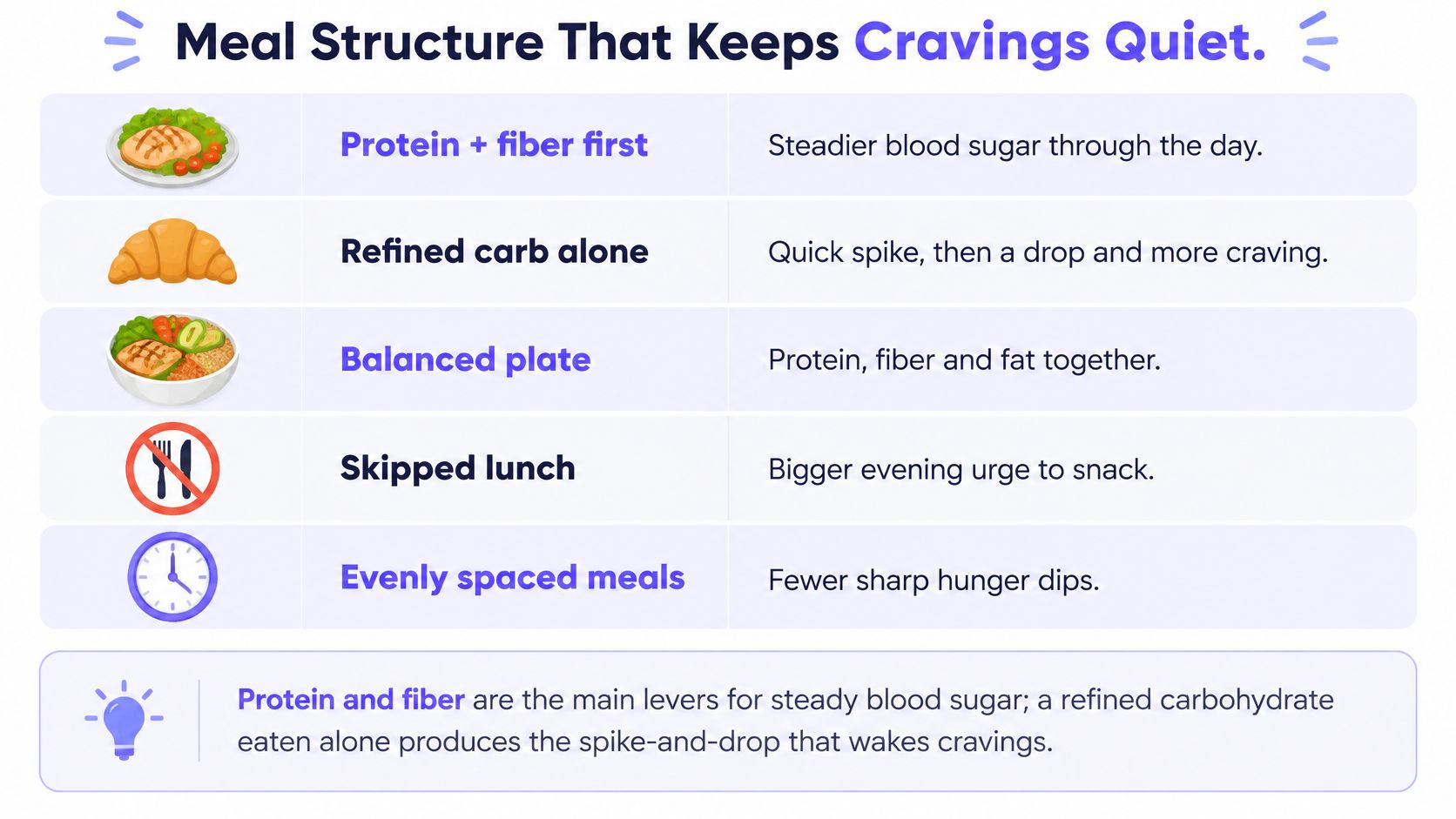
Build enough food into the day
Protein and fiber are useful meal-building priorities, alongside enough overall food and some unsaturated fat. Think lentil soup with whole-grain bread, tofu with vegetables and rice, or eggs with oats and berries. You don't have to remove carbohydrates to make a meal more satisfying.
A snack has a different job from a meal. Greek yogurt and fruit can bridge a genuine gap before dinner, but it shouldn't become a substitute for lunch because you're worried about weight gain.
Likewise, a planned sweet after dinner can be easier to enjoy deliberately than repeated bites while standing in the kitchen. That's a behavioral strategy, not a promise that dessert after a meal prevents every glucose rise or rebound craving.
Respond without turning it into a battle
- Check for hunger first. If you've missed a meal or eaten too little, eat something substantial rather than delaying needed food.
- Pause when the urge is unclear. Drink some water, step away from the kitchen or take a short walk, then decide what would help.
- Keep the sweet if you want it. Put it on a plate and enjoy it, optionally alongside yogurt or nuts, rather than treating it as a lapse that requires compensation.
Extreme restriction is a poor starting point for this experiment. Aim for meals that leave you comfortably satisfied, not the smallest meals you can tolerate.
Use our menopause diet plan guide for meal ideas, while letting your appetite, preferences and clinical needs shape the details.
Sleep, Movement and When to Get Tested
Sleep may be part of a craving pattern, but a craving alone cannot show whether sleep, blood sugar or hormonal changes are responsible. Track the timing for two weeks before making major dietary changes. If cravings follow nights disrupted by hot flashes, try practical sleep adjustments and see whether the pattern shifts.
A consistent wake time, a quieter wind-down and a cool room may help. Choose bedding you can adjust after a night sweat, and set aside chores that can wait. Find more practical ideas in this guide to sleeping better during perimenopause. If you remain exhausted despite allowing enough time for sleep, tell your clinician rather than assuming menopause explains it.
Combine strength and aerobic activity
Choose resistance exercises you can progress gradually, such as chair squats, rows, wall push-ups or appropriately loaded gym exercises. Pair them with aerobic activity you enjoy, including walking, cycling or swimming. These activities support general health, but they are not a guaranteed way to stop sugar cravings.
The JCI Insight analysis and clinical discussion describes evidence from the Women's Healthy Lifestyle Project: combined dietary and activity changes attenuated increases in LDL cholesterol, weight and waist circumference. This supports attention to metabolic health across menopause, not a promise that exercise will reduce cravings. After trying changes, a clinician can discuss whether reassessing symptoms and relevant metabolic markers is appropriate.
Symptoms that need a clinician, not just coaching
| Warning Sign | Why It Matters | Action |
|---|---|---|
| Frequent urination with thirst | May signal high blood glucose | Book a clinician visit |
| Unexplained weight change | Can reflect metabolic or other health changes | Discuss with your doctor |
| Recurrent binge episodes | May need clinical evaluation | Seek medical or specialist support |
| Cravings with persistent fatigue | Glucose regulation is one possible explanation among others | Ask whether fasting glucose or HbA1c is appropriate |
Cravings alone aren't a reliable test for insulin resistance. A clinician can consider your symptoms, medications, family history, blood pressure and weight trend when deciding whether fasting glucose or HbA1c testing would be useful. These tests answer different questions from a food diary, which helps you notice when cravings occur and what else was happening.
Bring the pattern you've noticed, not a diagnosis you feel you must prove.
Don't wait for your tracking period to end if concerning symptoms are already present. Recurrent loss of control around food also deserves compassionate assessment, even if your weight hasn't changed. Fitness testing is not a diagnostic test for sugar cravings or a prerequisite for starting gentle activity; Telomyx VO2 max testing in Chester is a separate option for measuring aerobic fitness. Lila is not a substitute for medical advice, so consult your doctor about perimenopause symptoms.
When Taste Changes Your Sweet Preference
A sweeter bite does not always mean you need more sugar. If food seems less flavorful, changing taste perception may be part of the picture, alongside sleep, stress, hunger and other influences. Log what you notice for two weeks before making broad diet changes.
An exploratory survey of taste perception during menopause examined reported changes in taste. The findings are exploratory, so they do not establish that menopause causes taste changes or that altered taste leads to higher sugar intake. A taste shift is one possible clue, not an explanation to assume.
Try more flavor, not just more sweetness
If sweetness seems muted, adding sugar may feel like a way to restore enjoyment. That is plausible, but it is a hypothesis to test in your own routine, not an established cause of cravings.
Instead, vary another sensory feature:
- Add brightness with acid. Lemon zest or a squeeze of lemon can make fruit and plain yogurt more interesting. Vinegar can sharpen a savory meal that tastes flat.
- Use aromatic spices. Cinnamon or ginger can add interest to oats, while chili can make a savory snack more distinctive. These are flavor options, not craving treatments.
- Include satisfying texture. Toasted seeds or crunchy nuts can make soft yogurt or porridge more engaging without relying entirely on sweetness.
Fruit and unsweetened dairy can pair flavor with nourishment. Try plain yogurt with ripe berries, cinnamon and toasted nuts, then note whether you enjoyed it. The goal is to find a satisfying option, not to make it taste exactly like dessert.
Distinguish a taste gap from another need
Add a brief description to your log: food tasted flat, you wanted comfort, felt sleepy or felt physically hungry. If stronger flavor improves enjoyment but you still want a snack after a stressful meeting, taste may be only part of the pattern.
If you are considering sweeteners, this comparison of Splenda and stevia can provide background. Switching sweeteners will not explain why a craving appeared. Persistent or sudden taste changes are worth discussing with a clinician or dental professional rather than automatically attributing them to menopause.
Evidence on taste changes during menopause is still developing. Longer-term research is needed to distinguish menopause-related sensory changes from aging and other influences. Your own observations can still guide a practical next step without settling the science.
Lila brings meal logging, symptom check-ins and a 24/7 AI nutrition coach together in a perimenopause app. It can help you organize a craving pattern alongside meals, sleep and symptoms, so you can choose a manageable next step without starting with a sugar ban.
Get Lila, your personal coach for perimenopause.
Built for women in their 40s. 24/7 coaching, in your pocket.