
Menopause Fatigue Relief: Easy Diet and Sleep Tips to Restore Energy
Discover menopause fatigue relief with actionable tips on nutrition, sleep, and lifestyle changes to boost energy and reclaim your day.
 Michelle
Let's be honest, the exhaustion that hits during perimenopause and menopause feels different. It's not just regular tiredness; it's a profound, bone-deep exhaustion that a good night's sleep or a strong coffee can't seem to touch. This isn't just in your head—it's a real, physical response to the massive hormonal shifts happening in your body.
Understanding what's behind this fatigue is the first step to finally getting some relief. The good news is, you have a lot more control than you might think.
Why Menopause Makes You So Tired
If you feel like you're walking through mud just to get through the day, you are far from alone. Fatigue is one of the most common and disruptive symptoms of the entire menopausal transition.
In fact, a staggering 64.13% of women around the world report dealing with it. That makes it even more common than irritability. Digging into the data from the landmark SWAN study, we see that 46% of perimenopausal women battle exhaustion, with some estimates climbing as high as 85% for postmenopausal women. It's a shared experience, even if it feels isolating.
The Hormonal Rollercoaster at the Core
At the heart of this exhaustion are your two key female hormones: estrogen and progesterone. Think of them as the master conductors of your body's energy orchestra.
Estrogen: This powerful hormone does more than regulate your cycle; it influences brain chemicals like serotonin and dopamine, which control your mood, motivation, and sleep. As estrogen levels start to bounce around and eventually decline, it throws your body's natural rhythm completely off-kilter, leading to that familiar feeling of lethargy and a flat mood.
Progesterone: Often called the "calming" hormone, progesterone helps you relax and promotes sleep. As progesterone levels fall, you may find it much harder to fall asleep or, even more frustratingly, stay asleep through the night.
The Ripple Effect on Your Body
These hormonal shifts don't just happen in isolation. They trigger a cascade of other symptoms that all feed into a vicious cycle of fatigue.
My patients often describe feeling "bone tired" during the menopausal transition. It’s deep-seated exhaustion that interferes with their ability to maintain a high level of responsibility at work, keep up with constant demands from family and friends, and prioritize the basics of self-care.
This insight from experience really highlights how menopause fatigue goes way beyond simple sleepiness. It can impact every corner of your life.
This visual shows how hormonal changes, sleep disruption, and lifestyle stressors are interconnected causes of menopause fatigue.
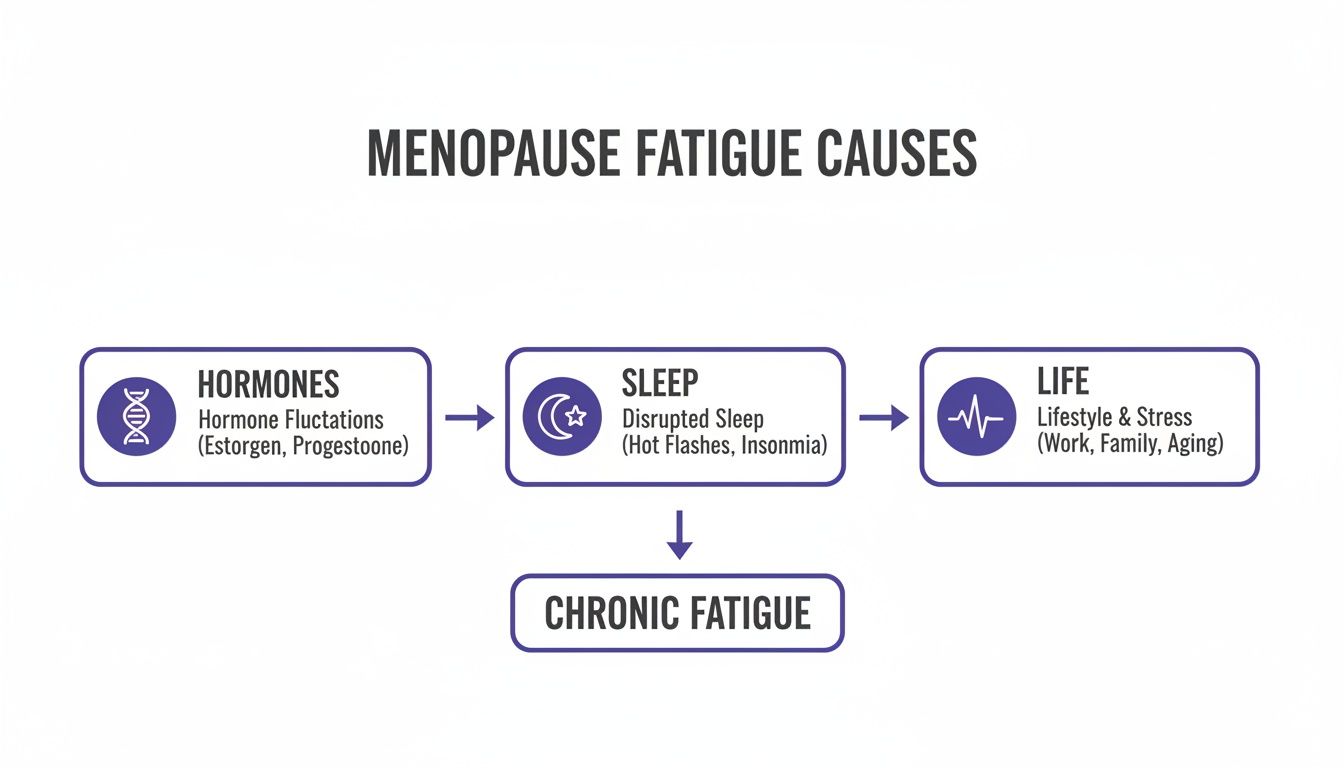
As you can see, what starts with hormones quickly leads to poor sleep, which in turn magnifies the stress and exhaustion you feel in your day-to-day life.
It's Not Just Hormones: Other Key Factors
While hormones are the main event, a few other key players are almost certainly contributing to that feeling of being completely wiped out.
Sleep Disruption: This is arguably the biggest accomplice to hormonal fatigue. Night sweats can jolt you awake, drenched and freezing. But even without dramatic hot flashes, declining estrogen can mess with your internal thermostat, making you more sensitive to temperature changes and disrupting your sleep quality all night long.
Increased Cortisol: As you move through perimenopause, your body naturally produces more cortisol—the stress hormone. Chronically elevated cortisol can leave you feeling anxious, jittery, and "on edge," which makes it incredibly difficult to wind down and get the deep, restorative sleep you desperately need. While menopause is a major factor here, it's also helpful to explore other reasons why you might wake up tired every morning.
Anemia Risk: In early perimenopause, it's common for periods to become heavier and more frequent. This isn't just an inconvenience; that excessive bleeding can lead directly to iron-deficiency anemia, a well-known cause of persistent fatigue, weakness, and even breathlessness.
Understanding these interconnected factors is crucial. It validates that your exhaustion is a real physiological challenge, not a personal failing or something you just have to "push through."
To give you a roadmap for what's ahead, here's a quick look at the strategies we're going to cover in this guide.
Your Menopause Fatigue Relief Cheatsheet
This table gives you a quick overview of the key strategies we'll cover to help you start boosting your energy today.
Strategy Area | Key Action | Why It Works |
|---|---|---|
Sleep Hygiene | Optimize your bedroom and pre-sleep routine. | Improves sleep quality to directly combat fatigue from night sweats and insomnia. |
Nutrition | Focus on blood sugar balance and key nutrients. | Stabilizes energy levels and provides the building blocks your body needs. |
Smart Movement | Incorporate gentle, consistent physical activity. | Boosts endorphins, improves sleep, and builds resilience without causing more exhaustion. |
Medical Review | Discuss hormone therapy and rule out other issues. | Addresses the root hormonal cause and checks for underlying conditions like anemia. |
Stress & Mood | Implement mindfulness and calming techniques. | Lowers cortisol levels, which helps reduce the "wired and tired" feeling. |
Think of these as the pillars of your energy-restoring plan. Now, let's dive into the practical, actionable steps you can take to start feeling like yourself again.
Master Your Nights for More Energetic Days
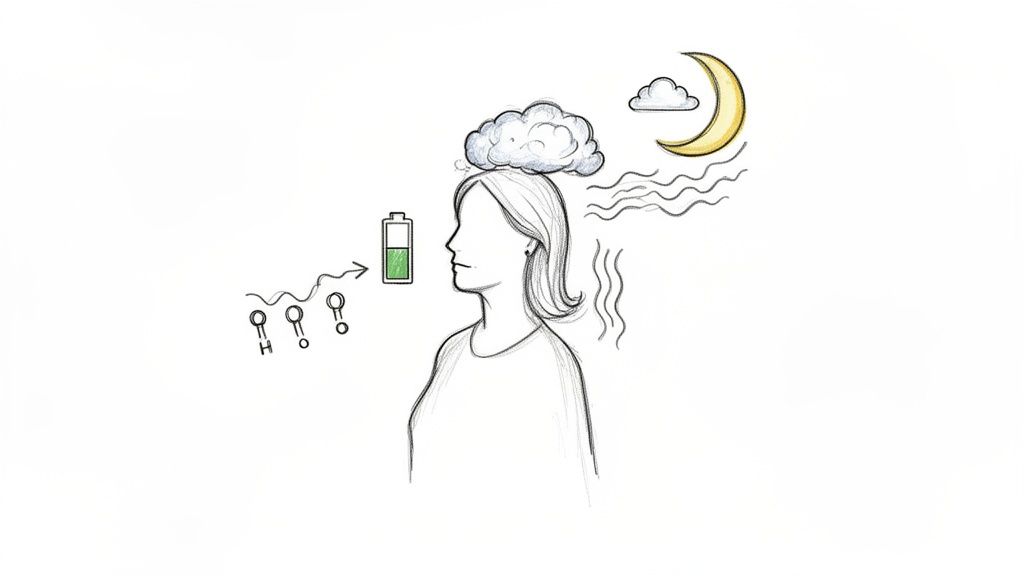
When menopause-related fatigue hits, it often feels like poor sleep is the number one culprit. We all know the generic advice to "get 8 hours," but that well-meaning tip falls flat when hormonal chaos is sabotaging your rest. To genuinely tackle this fatigue, we have to get specific and address the unique challenges of this life stage, from night sweats to a mind that just won't quit.
The real goal isn’t just clocking more hours in bed; it's about achieving deep, restorative sleep. That process starts by transforming your bedroom from a potential battleground into a true sleep sanctuary.
Create a Cool and Dark Sleep Sanctuary
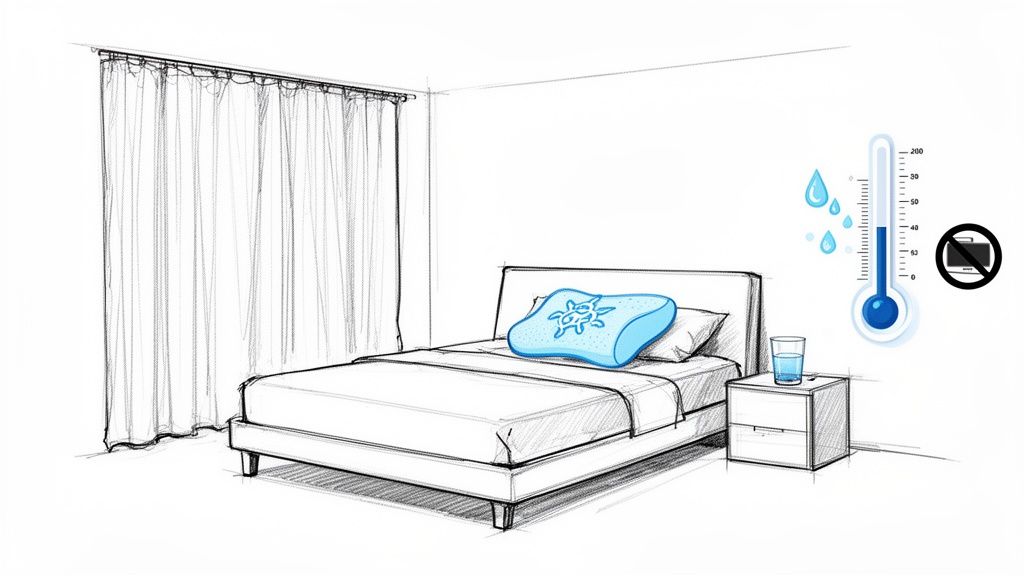
During perimenopause and menopause, your body's internal thermostat—a part of the brain called the hypothalamus—goes haywire thanks to fluctuating estrogen. It becomes incredibly sensitive, meaning a tiny rise in room temperature can trigger a full-blown night sweat, leaving you drenched, cold, and wide awake. Your first mission is to engineer a consistently cool environment.
My personal game-changer was investing in cooling bedding. It sounds simple, but switching to bamboo sheets and a wool-filled mattress topper made a significant difference. Wool is brilliant at wicking moisture away, so even if I do get warm, I don't wake up drenched and shivering.
Beyond bedding, try making these small but powerful adjustments:
Layer your bedding. Instead of one heavy comforter, use a lightweight duvet and a separate blanket. This makes it easy to peel off a layer without disturbing your partner.
Drop the thermostat. Aim for a cool room temperature, somewhere between 60-67°F (15-19°C).
Embrace the fan. The circulating air and a little white noise can work wonders. A bedside fan pointed at your upper body can be a lifesaver.
Darkness is just as crucial. Any light, even the faint glow from a streetlamp or your alarm clock, can suppress the production of melatonin—the very hormone that signals to your body that it's time for sleep. Investing in high-quality blackout curtains or a comfortable sleep mask can create the pitch-black environment your body needs.
Design a Screen-Free Wind-Down Routine
Your brain craves clear signals that the day is over. Mindlessly scrolling on your phone in bed sends the complete opposite message. It keeps your mind whirring and exposes you to sleep-disrupting blue light. A dedicated wind-down routine isn't just a nice idea; it's a non-negotiable part of your fatigue-fighting plan.
Commit to spending the last 30-60 minutes before bed on calming, screen-free activities. Consistency is everything here; you're training your brain to associate these actions with sleep.
For instance, your nightly ritual could look like this:
Dim the lights. An hour before bed, lower the lights around your home. This gives your brain the cue to start producing melatonin.
Try gentle stretching. Focus on poses that release tension in common trouble spots like your neck, shoulders, and hips. This can help ease that physical restlessness many of us feel.
Practice mindful breathing. Just sit comfortably and focus on your breath. A simple box breathing technique—inhale for four counts, hold for four, exhale for four, hold for four—is incredibly effective at calming a racing mind.
Read a physical book. Make sure it’s something relaxing, not a page-turner that will have you on the edge of your seat.
Think of this ritual as your personal buffer zone between the day's stress and the rest you desperately need. If you're interested in the science behind it, there are excellent resources on understanding and enhancing sleep quality.
The Power of a Consistent Sleep Schedule
When you’re completely exhausted, the urge to sleep in on the weekends is overwhelming. I get it. But maintaining a consistent wake-up and sleep time—yes, even on weekends—is one of the most powerful things you can do for your energy. It stabilizes your circadian rhythm, which is your body's internal 24-hour clock.
An erratic sleep schedule is like giving yourself jet lag without ever leaving home. This can make the fatigue even worse and make it harder to fall asleep when you need to. It might feel tough at first, but committing to a regular schedule will pay off with more predictable energy levels.
If night sweats are your main sleep thief, it’s worth digging into more targeted strategies. Our guide on how to beat menopause night sweats and regain restful sleep offers more detailed tips. By mastering your nights, you give your body its best shot at recharging so you can face the day with renewed vitality.
How to Eat for All-Day Energy
The connection between your plate and your energy levels becomes crystal clear during menopause. That hormonal rollercoaster can send your blood sugar on a wild ride, too, causing energy spikes followed by truly debilitating crashes. One of the most powerful tools you have for finding relief from menopause fatigue is a smart, strategic approach to what you eat.
Forget about restrictive diets. The goal is much simpler and more sustainable: build meals that deliver a steady, reliable stream of energy. This all comes down to a thoughtful balance of protein, fiber-filled carbohydrates, and healthy fats every time you eat.
Build a Blood Sugar Balancing Plate
Think of your energy like a slow-burning log in a fireplace, not a flash of lightning. Sugary drinks and processed snacks are like throwing a piece of paper on the fire—you get a big, bright flame that dies out almost instantly, leaving you more tired than you were before. To keep that fire burning steadily all day, you need better fuel.
The secret is combining your macronutrients:
Protein: This is the anchor for your meal. It slows down digestion and stops blood sugar from shooting up too quickly. Good sources include chicken, fish, tofu, beans, and Greek yogurt.
Fiber-Rich Carbs: These provide the actual fuel. Unlike simple carbs (like white bread), complex ones from vegetables, whole grains, and legumes release their energy slowly and steadily.
Healthy Fats: Found in foods like avocados, nuts, seeds, and olive oil, these fats help you feel full longer and further stabilize that energy release.
This combination is your secret weapon against the dreaded afternoon slump. For example, instead of a plain piece of toast for breakfast, try topping it with mashed avocado and a sprinkle of pumpkin seeds.
Practical Swaps for Sustained Energy
Putting this into practice doesn't mean you have to overhaul your entire kitchen or learn complex new recipes. It’s really about making small, intentional choices throughout your day that add up.
Consider these simple but incredibly effective swaps:
Morning Boost: Instead of a sugary cereal, blend a smoothie with protein powder, a handful of spinach, some berries, and a spoonful of almond butter.
Smarter Snacking: Swap that bag of chips for a handful of walnuts and an apple. The protein and fat from the nuts, paired with the fiber from the apple, will keep you full and focused for hours.
Lunch Upgrade: A salad with just lettuce and dressing won’t get you through the afternoon. Load it up with grilled chicken, chickpeas, and a rainbow of colorful vegetables to turn it into a true power lunch.
These small adjustments can make a world of difference in how you feel. For a more detailed guide to creating a supportive eating plan, check out our comprehensive menopause diet plan.
Menopause fatigue isn’t just a personal struggle; it’s a massive global health issue. A recent analysis revealed that physical and mental exhaustion is a reality for 64.13% of menopausal women worldwide. The sheer scale is staggering, with over 101 million menopausal women in China alone. Crucially, the problem often starts early. Data shows 46% of women in perimenopause report fatigue—a huge jump from just 20% premenopause. You can explore the full findings on menopause fatigue prevalence and its impact to understand its global scale.
The Hidden Impact of Hydration and Other Drinks
While your food choices are critical, what you drink plays an equally important—and often overlooked—role in managing menopause fatigue. Dehydration is a surprisingly common culprit behind tiredness and brain fog.
Water is non-negotiable. The key is to sip it consistently throughout the day, rather than chugging a huge bottle all at once. Try keeping a water bottle on your desk as a constant visual reminder to drink up.
Then we have to talk about two big energy vampires: caffeine and alcohol.
Caffeine: That morning cup of coffee is a ritual for many and is usually fine. But relying on it to power through the afternoon can seriously backfire. A late-day caffeine hit can disrupt your sleep quality later that night, leading to a more exhausted you the next morning. It’s a vicious cycle. As a rule of thumb, try to have your last caffeinated drink by 2 p.m.
Alcohol: An evening glass of wine might feel like a great way to unwind, but it’s a notorious sleep saboteur. Although it can make you feel drowsy and fall asleep faster, alcohol fragments your sleep in the second half of the night. It prevents you from getting into the deep, restorative stages you need to truly recharge. This is a major reason you can wake up feeling groggy and unrefreshed, even after getting a full eight hours.
By focusing on stabilizing your blood sugar with balanced meals, staying hydrated, and being mindful of your caffeine and alcohol habits, you can build a powerful nutritional foundation to fight fatigue and reclaim your energy.
Using Movement to Create More Energy
When you’re bone-deep tired, the last thing you want to hear is "you should exercise." I get it. The thought of lacing up your sneakers can feel completely overwhelming. But what if we reframe the goal? Instead of seeing movement as something that spends your precious energy, let's explore how the right kind of activity can actually create it.
It’s time to toss out that old "no pain, no gain" mantra for good. During menopause, that approach often does more harm than good. This isn't just a feeling; it's backed by research. A landmark 2026 study found that a staggering 76% of women reported fatigue as their number one menopausal symptom. But here’s the hopeful part: a global meta-analysis revealed that consistent physical activity could slash the prevalence of that fatigue down to 48.95%. The evidence is clear—moving your body is one of the most powerful tools in your fatigue-fighting arsenal. You can dive deeper into how movement impacts menopause symptoms in the full study.
This data confirms what so many of us learn through trial and error: finding a way to move is essential.
Start with Consistency, Not Intensity
The secret to making exercise work for you instead of against you is to start small and focus on being incredibly consistent. This isn’t about running a marathon or spending hours at a high-intensity gym class. Pushing yourself too hard right now can actually backfire, spiking your cortisol and leaving you feeling even more depleted.
The real goal is to gently nudge your body back toward an energized state, not to exhaust it.
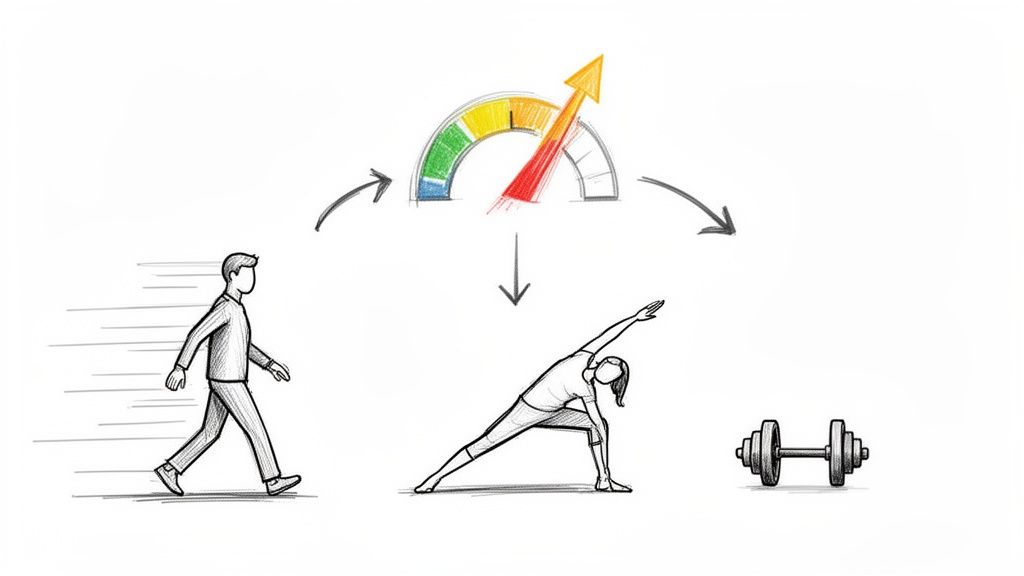
A fantastic place to begin is simply walking more. Could you manage a brisk 15-minute walk after lunch? It’s a simple act with a huge payoff. You'll boost circulation, get fresh oxygen flowing to your brain to clear away that frustrating fog, and soak up some natural light to help regulate your internal clock.
I always tell my clients to pay close attention to how they feel an hour after they move. If a workout leaves you wiped out for the rest of the day, it's not the right fit for you at this moment. The right movement should make you feel more energized, not less.
Find Your Energy-Giving Activities
Once you've gotten into a steady rhythm, you can start to experiment with different activities that combat menopause fatigue in unique ways. Think of it as building a toolkit of movements you can pull from depending on what your body needs that day.
Strength Training: Building and maintaining muscle is non-negotiable during and after menopause. More muscle means a higher resting metabolism, which helps with energy regulation and body composition. Don’t let the term "strength training" intimidate you. This can be as simple as doing bodyweight squats while waiting for your tea to brew or using light dumbbells a couple of times a week.
Restorative Yoga or Stretching: These gentle practices are your secret weapon against stress. Their main job isn't to make you sweat; it’s to calm your nervous system. A simple 10-minute morning stretch or a restorative yoga session can lower cortisol, the stress hormone behind that awful "wired but tired" feeling.
Cardio That Energizes: Think swimming, cycling, or just putting on your favorite music and dancing around the kitchen. These activities are brilliant for your heart and your head. They trigger the release of endorphins—your body’s natural mood-lifters—giving you an immediate feel-good boost. The key is to keep the intensity moderate. A good rule of thumb is that you should still be able to hold a conversation.
Weave Movement into Your Life
Let’s be realistic. When you're busy and exhausted, finding a solid hour for a workout can feel impossible. The solution? Stop looking for big blocks of time and start sprinkling "movement snacks" throughout your day.
Here's a real-world example: Sarah, 48, hits a wall of fatigue around 3 p.m. every single day. Instead of forcing herself to power through with more caffeine, she now sets a timer for a 10-minute "movement break." She might walk up and down her stairs a few times, do some simple stretches at her desk, and finish with a minute of deep, calming breaths.
This short, intentional burst of activity is often enough to break the cycle of fatigue, helping her finish the workday feeling more focused and less frazzled. This is the heart of using movement to create energy—it’s about listening to your body, being consistent, and choosing activities that fill your cup, not empty it.
Talking to Your Doctor About Fatigue
While building better habits around diet, sleep, and movement is a fantastic start, sometimes that’s just not enough to shake the deep, persistent fatigue that can come with menopause. If you’ve put in the work and still feel like you’re running on fumes, it’s time to call in a professional. A well-planned conversation with your doctor is a crucial next step.
I can't stress this enough: you have to be your own best advocate. All too often, women are told that their exhaustion is just a normal part of getting older or "the change." But debilitating fatigue that gets in the way of your life isn't normal, and it deserves to be investigated. Don't be afraid to state clearly how much your energy levels are impacting your quality of life.
When to Make the Appointment
So, when is it time to pick up the phone? You should absolutely schedule a visit if the fatigue is severe, relentless, and just won't let up. It’s especially important if other symptoms are showing up alongside the exhaustion.
Make an appointment if your fatigue is paired with any of these red flags:
Shortness of breath or a heart that feels like it’s pounding or racing
Persistent headaches or any changes in your vision
Noticeable weakness in your arm or leg muscles
New or unusual abdominal pain, bloating, or nausea
Thoughts of harming yourself
These symptoms could signal that there's more going on than just hormonal shifts. It's vital to rule out other medical conditions.
My patients often feel dismissed when they bring up fatigue. Preparing for your appointment by tracking your symptoms and having specific questions ready can transform the conversation from a complaint into a collaboration.
Investigating the Root Cause with Lab Tests
To really get to the bottom of what's draining your energy, your doctor will likely want to run some key blood tests. This is a standard part of the process, designed to check for common culprits that can either cause or seriously worsen fatigue during menopause. Going into your appointment prepared to discuss these tests will help ensure you get a thorough workup.
This checklist can help you and your doctor investigate underlying medical reasons for persistent fatigue.
Key Lab Tests to Discuss for Menopause Fatigue
Test Name | What It Measures | Why It Matters for Fatigue |
|---|---|---|
Complete Blood Count (CBC) | Red and white blood cells, platelets, and hemoglobin. | Helps spot iron-deficiency anemia, a major cause of fatigue that’s common due to heavy perimenopausal bleeding. |
Full Thyroid Panel (TSH, Free T3, Free T4) | The function of your thyroid gland. | An underactive thyroid (hypothyroidism) is more common in midlife women and can cause profound fatigue, brain fog, and weight gain. |
Iron and Ferritin | Your body's iron levels and, crucially, your iron stores. | Even without full-blown anemia, low ferritin (your iron "savings account") is a frequent issue that can cause significant tiredness. |
Vitamin D | The level of vitamin D in your blood. | Low levels are incredibly common and have a direct link to fatigue, low mood, and even muscle weakness. |
Vitamin B12 | Your body's B12 status. | A deficiency in this key vitamin can lead to a specific type of anemia, causing severe fatigue and neurological symptoms. |
Knowing about these tests empowers you to have a more informed conversation and be an active partner in your own health. If a deficiency is found, supplementing can be a game-changer. You can learn more about specific vitamins for menopause fatigue in our detailed guide.
Demystifying Menopause Hormone Therapy (MHT)
For many women, the most powerful tool for fighting menopause fatigue is to tackle the hormonal chaos head-on. This is where Menopause Hormone Therapy (MHT)—you might also know it as HRT—comes in. MHT works by replacing the estrogen and progesterone your body isn't making as much of anymore.
While MHT isn't a direct "cure" for fatigue itself, it’s brilliant at tackling the root causes. By putting a stop to disruptive hot flashes and night sweats, MHT can give you back what you're truly missing: deep, uninterrupted sleep. That alone can make a world of difference. Research confirms MHT can lead to less fragmented sleep and fewer middle-of-the-night awakenings.
If you suspect that night sweats and terrible sleep are the real villains behind your exhaustion, it makes perfect sense to ask your doctor if you’re a good candidate for MHT. It’s a highly personal decision based on your unique health profile, but for so many women, it's the key to feeling like themselves again.
Got Questions About Menopause Fatigue? We've Got Answers
▶ PlayNavigating the constant exhaustion that can come with menopause brings up so many questions. You know your body better than anyone, and when something feels this off, you deserve clear, straightforward answers.
This section is all about tackling the most common questions we hear from women just like you. The goal is to give you practical guidance so you can find real relief and feel more in control of your well-being.
How Long Does Menopause Fatigue Last?
This is the big one, isn't it? The honest answer is: it really varies. The entire menopausal transition can last anywhere from a few years to over a decade. For many women, the fatigue hits its peak during perimenopause, when hormones are at their most chaotic.
The good news is that the duration of your fatigue is directly tied to what's causing it.
If your exhaustion is mainly driven by night sweats wrecking your sleep, finding effective ways to manage them—whether through lifestyle tweaks or medical options like MHT—can bring relief relatively quickly. Likewise, if heavy bleeding has led to iron-deficiency anemia, addressing the anemia can give you a significant energy boost.
The key takeaway here is that fatigue isn't a life sentence. By systematically tackling the root causes we've been talking about, you can dramatically shorten its stay.
Are There Supplements That Actually Help With Energy?
The supplement aisle can be completely overwhelming, but a few key nutrients have solid evidence behind them for fighting fatigue, especially during menopause. Before you start anything new, though, it’s absolutely essential to get your levels checked with a blood test. Taking supplements you don't need is a waste of money and can sometimes be harmful.
Here are a few that often come up:
Iron: If heavy periods have left you with low iron stores (ferritin) or full-blown anemia, supplementing can be a total game-changer. It's one of the most direct ways to combat fatigue caused by iron deficiency.
Vitamin D: Often called the "sunshine vitamin," low levels are incredibly common and have a direct link to both fatigue and low mood. A simple blood test will tell you if you need a supplement.
B Vitamins (especially B12): Think of these as the spark plugs for your cells. B vitamins are essential for converting the food you eat into energy. A deficiency, which gets more common as we age, can lead to profound fatigue.
Magnesium: While it's not a direct energy booster like caffeine, magnesium is brilliant for promoting relaxation and improving sleep quality. Taking it in the evening can help calm a restless nervous system, leading to more restorative nights and, as a result, more energetic days.
Think of these as targeted tools, not a magic bullet. They are most effective when used to correct a specific, diagnosed deficiency.
How Do I Know If It's Just Menopause or Something More Serious?
This is a really important question to ask. While fatigue is a hallmark symptom of menopause, you should never just assume it's the only cause, especially if the exhaustion is severe and just won't let up. Your body is sending you signals, and it's time to listen.
Schedule a visit with your doctor if your fatigue is accompanied by any other red-flag symptoms like:
Shortness of breath or heart palpitations
Persistent headaches or changes in your vision
Unexplained muscle weakness
New or unusual abdominal pain or bloating
These could be signs of other conditions like thyroid issues, heart problems, or even autoimmune disorders.
The goal is to get a complete picture of your health. By ruling out other potential issues, you and your doctor can confidently create a targeted plan for menopause fatigue relief that truly addresses your specific needs. It’s the essential step toward finally reclaiming your energy.
Trying to navigate all these changes and track your symptoms can feel overwhelming on its own. That's why Lila was created. The AI-powered app helps you connect the dots between your daily habits and how you feel, offering a personalized action plan to ease symptoms like fatigue, poor sleep, and mood changes. Feel like yourself again by discovering your path to relief.
Get Lila, your personal coach for perimenopause.
Built for women in their 40s. 24/7 coaching, in your pocket.


