
Perimenopause Diet Plan: Daily Targets and a Two-Week Test
Build a perimenopause diet plan with daily protein and fiber targets, food tests for hot flashes and bloating, and realistic weight guidance.
A perimenopause diet plan comes down to a short set of numbers you can check against today's plate: protein at about 1.0 to 1.2 g per kilogram of target body weight, fiber at 25 g a day (21 g from age 51), roughly 2.5 cups of non-starchy vegetables, and calcium at 1,000 mg (1,200 mg from age 51). Most women who feel like their body changed overnight are missing two of those, protein and fiber, not a magic food.
Women are already changing what's on the table. In a 2024 online survey published by Menopause International, 111 of 266 respondents (41.7%) said they had changed what they eat because of menopause.
What's harder than changing is knowing which change is worth keeping. The plan here runs as a set of short, testable experiments: one routine to build, one food to test per symptom, a fixed window for judging it, and a clear rule for dropping what doesn't help. Nothing here promises relief in days, and nothing asks you to give up a whole food group on a guess.
Table of Contents
- Daily Targets for a Perimenopause Diet Plan
- Why Your Plate Needs to Change in Perimenopause
- How to Build Your Weekly Meals
- Weight Goals Without Crash Dieting
- Foods to Test for Hot Flashes, Bloating and Sleep
- When to Bring Your Doctor Into the Plan
- Start a Two-Week Trial This Week
Daily Targets for a Perimenopause Diet Plan
Readers who go looking for a perimenopause diet plan usually eat reasonably well already. What's typically missing is enough protein spread across the day and enough fiber overall, so start with those two rows and work outward. Every number below is something you can measure against a real plate today.
| Food group or nutrient | Daily target | Why it matters |
|---|---|---|
| Protein | About 1.0 to 1.2 g per kg of target body weight, or 25 to 30 g at each meal | Protects muscle and steadies appetite while weight changes |
| Fiber | 25 g a day up to age 50, 21 g a day from 51 | Supports regularity, blood sugar control and fullness |
| Non-starchy vegetables | About 2.5 cups a day | Main source of fiber and micronutrients for fewer calories |
| Fruit | 1.5 to 2 cups a day, whole rather than juiced | Fiber and vitamin C without added sugar |
| Legumes and soy | 1/2 cup cooked, most days | Plant protein and fiber; soy is the food studied for hot flashes |
| Whole grains | 3 servings a day, such as oats, brown rice or quinoa | Slower-digesting carbohydrate for steadier energy |
| Omega-3 foods | 2 servings a week of fatty fish, or flaxseed and walnuts | Supports heart and brain health during midlife changes |
| Calcium | 1,000 mg a day up to age 50, 1,200 mg from 51 | Helps protect bone density as estrogen falls |
| Added sugar and alcohol | Keep added sugar low and alcohol limited | Both can worsen night sweats, sleep and afternoon crashes |
Protein is the row most readers miss
At 1.0 to 1.2 g per kilogram of target body weight, a 70 kg target means roughly 70 to 84 g a day. Spread that as 25 to 30 g at each meal instead of saving it all for dinner, because a steady supply protects muscle while weight and hormones shift. Breakfast is where the gap usually hides: toast and coffee delivers close to none. Run your own numbers through the protein calculator for women over 40.
Fiber, vegetables and the rest of the plate
Fiber at 25 g up to age 50 and 21 g from 51 does the quiet work behind regularity, blood sugar control and fullness. Build up over two or three weeks rather than doubling overnight, or you'll spend the first week bloated and blame the food.
Non-starchy vegetables at about 2.5 cups cover volume and micronutrients for very little energy, and whole fruit at 1.5 to 2 cups adds fiber without juice's sugar load. Half a cup of cooked legumes or soy most days gives you plant protein and fiber in one move, and soy is the food with actual trial data behind hot flashes. Add three servings of whole grains, two weekly servings of fish or other omega-3 sources, and calcium at 1,000 mg up to 50 and 1,200 mg from 51 from dairy, canned sardines with bones, calcium-set tofu or leafy greens.
Treat the table as a starting point, not a prescription. If you're very active, pregnant or managing kidney disease, set your protein number with a clinician. For the next two weeks the table's job is measurement: it gives you a baseline to check meals against.
Why Your Plate Needs to Change in Perimenopause
Type "menopause food" into a search bar and you'll get a list: soy, flaxseed, salmon, pomegranate, something with "hormone-balancing" in the name. None of those fixes perimenopause on its own.
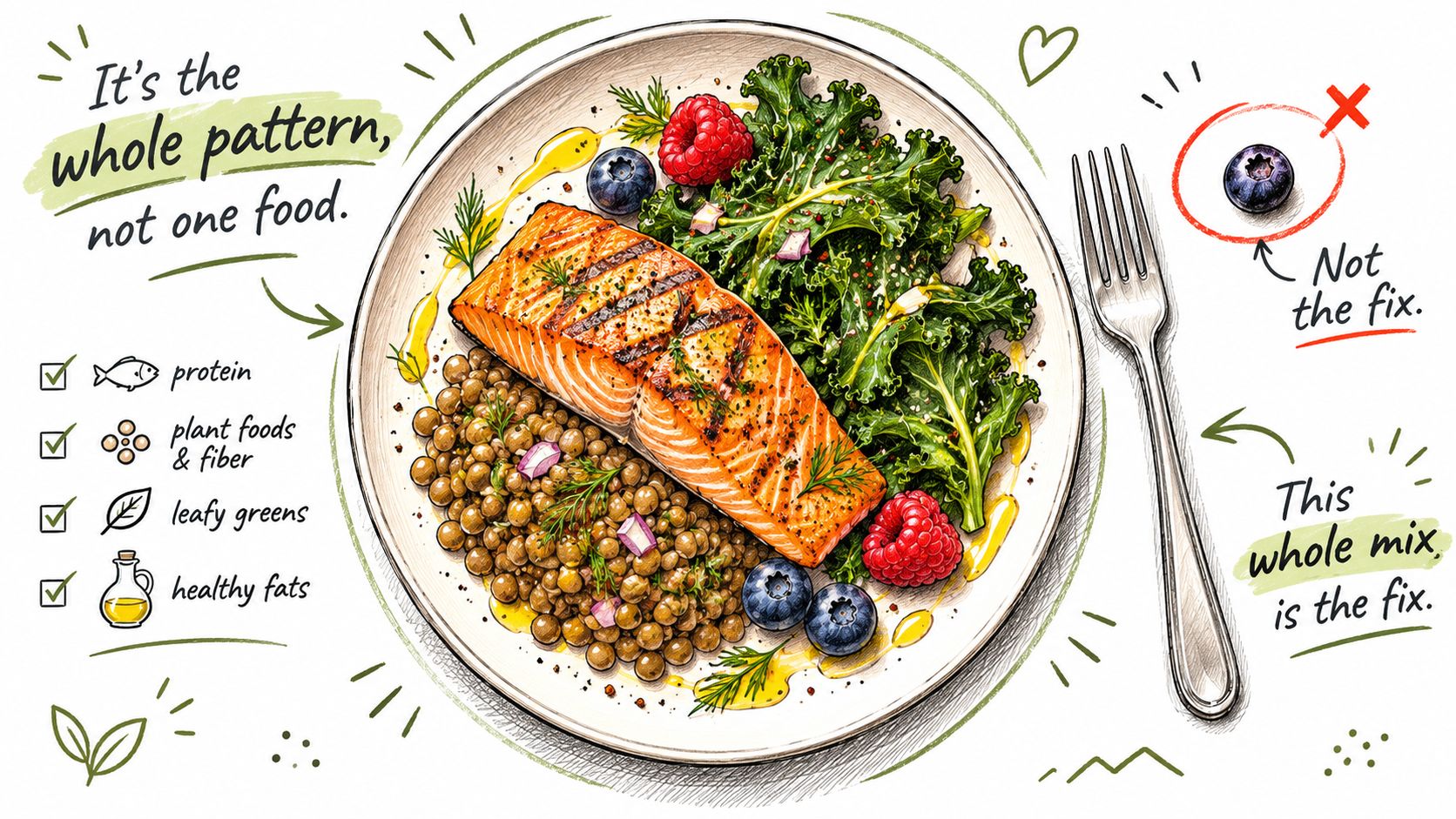
Evidence points to a pattern rather than a product. A 2024 review of lifestyle medicine evidence found that Mediterranean and other plant-forward dietary approaches may help reduce vasomotor symptoms such as hot flashes while also supporting healthy aging and weight management, as summarized in this review of lifestyle medicine and menopause symptoms.
Where the evidence is strongest
Personalization isn't a hedge, it's what the numbers demand. A World Health Organization-linked systematic review of 66 studies from all continents, reported in that same review, found vasomotor-symptom rates ranging from 3% to 86%. With that much variation between populations, no plan can promise that one food will behave the way it behaved for a study volunteer.
A 2025 review that synthesized 42 studies on dietary patterns and targeted nutrients found the most consistent benefit for Mediterranean-style and plant-rich eating in cardiometabolic outcomes, with symptom-specific effects less consistently established, according to this review of dietary patterns and targeted nutrients.
The realistic promise: A pattern you can keep for months does more for sleep, energy and heart risk than a supplement you abandon in three weeks.
The 2024 review also summarized Women's Health Initiative data showing that a reduced-carbohydrate pattern with moderate fat and higher protein may reduce the risk of weight gain in postmenopausal women, while a low-fat pattern alone was associated with increased weight-gain risk. That's the case for holding protein and fiber high while you trim calories, instead of cutting fat and hoping.
Three rules run through everything that follows: choose nutrient-dense food, hit the protein and fiber targets, and keep calories at a level you can hold. Rebecca Rumsey, MSc, RD, Lila's perimenopause nutrition lead, builds plans on that flexible shape rather than on a list of banned ingredients.
Track your own response to hot flashes, sleep, bloating and mood. Your pattern is the experiment, and the answer lives in your log, not in someone else's meal plan.
How to Build Your Weekly Meals
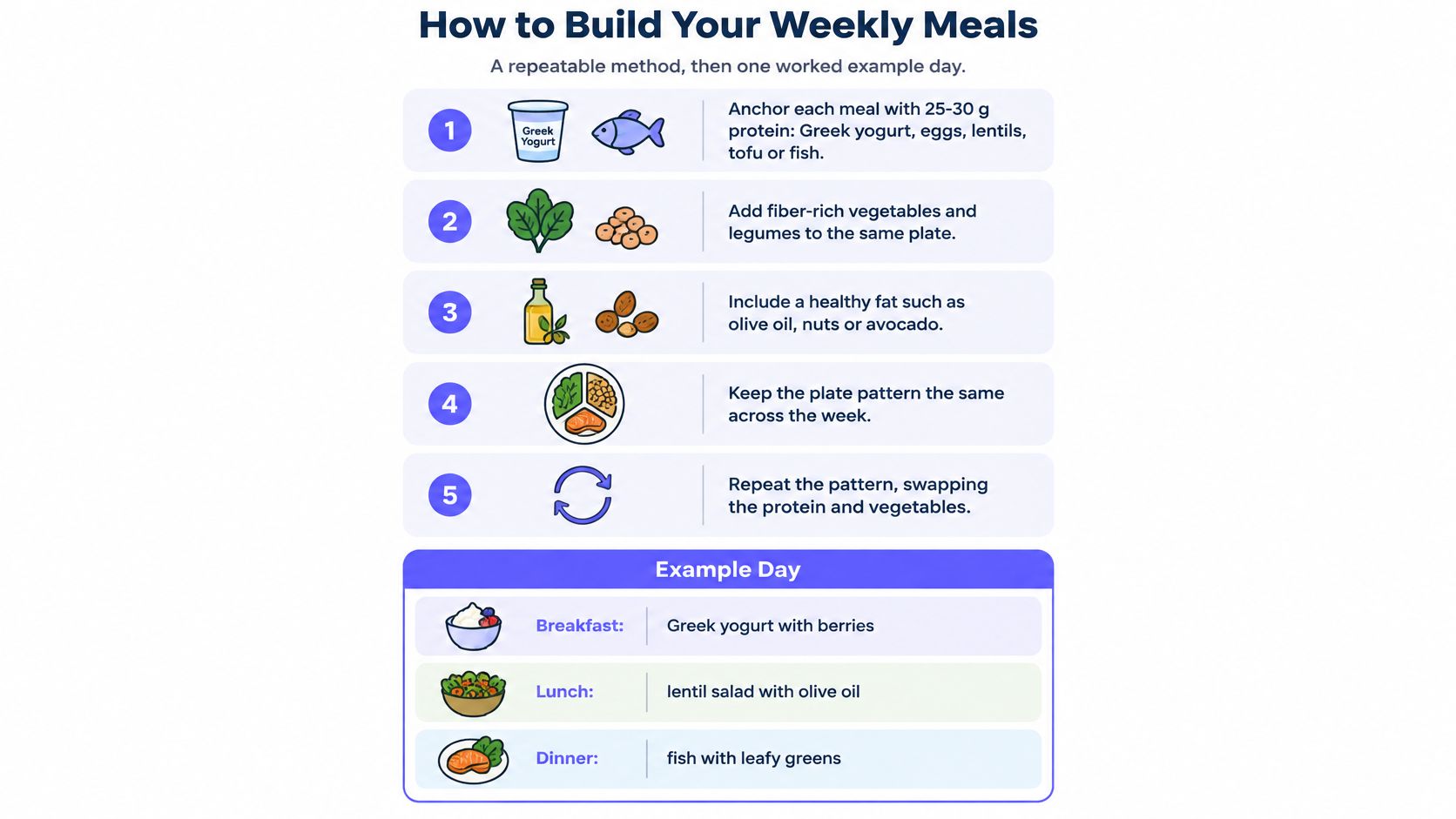
A weekly plan fails for one of two reasons: it's too complicated to repeat, or it's too dull to want to repeat. The method below handles both, and it works in two halves. Steps one through five shape each plate, and steps six and seven make the whole thing repeatable.
The seven-step shape of a week, before you get into the detail of portions.
- Anchor each meal with 25 to 30 g of protein. Greek yogurt, eggs, lentils, tofu or fish. This is the target many miss, and it's the one that protects muscle while your body composition shifts.
- Fill half the plate with non-starchy vegetables. Roasted, raw or stir-fried, they add fiber and volume for very little energy.
- Add one fiber-rich carbohydrate. Oats, quinoa or beans keep energy steadier through the afternoon than white bread on its own. That pairing matters, because refined carbohydrate eaten without protein is a common setup for the mid-afternoon crash.
- Include an unsaturated fat. Olive oil, nuts, seeds or avocado, for satiety and because it's the backbone of the Mediterranean pattern.
- Schedule fish or soy twice a week and rotate them. Half a cup of cooked whole soybeans one night, salmon or sardines the next, so neither becomes a chore.
- Batch-cook two proteins and two grains on the weekend. A pot of lentils, a tray of chicken or tofu, a pan of quinoa and a batch of brown rice.
- Log meals for 14 days. You can't tell whether targets are met from memory, and the log is what makes the tests in this plan meaningful.
Here is what that method looks like on a plate across one day: oats with Greek yogurt, berries and ground flaxseed at breakfast; a lentil and roasted-vegetable bowl with olive oil at lunch; salmon, a large salad and quinoa at dinner; a nut-based snack with an apple in the afternoon. Notice that no single meal is unusual. The structure does the work, not any exotic ingredient.
Mediterranean-style eating is structure first and results second. In a systematic review of seven intervention studies in menopausal women, body-weight change ranged from -0.2 to -7.7 kg and only one study found a statistically significant reduction, though weight and cardiometabolic markers generally moved in a favorable direction, according to this systematic review of Mediterranean-style trials in menopausal women. Read the results as a reminder: the pattern is a sound frame, not a guaranteed number on the scale. Keep Mediterranean-style eating for perimenopause as your template, then let your own 14-day log tell you what it does for your sleep, energy and symptoms.
Two steps deserve extra respect because they look optional and aren't. Batch-cooking saves more time than any other step on the list, since weeknight decisions shrink to assembly rather than cooking from scratch. And the logging step is the one that converts a generic weekly plan into your personal experiment: without it, you're following someone else's diet, and with it, you're testing your own.
Weight Goals Without Crash Dieting
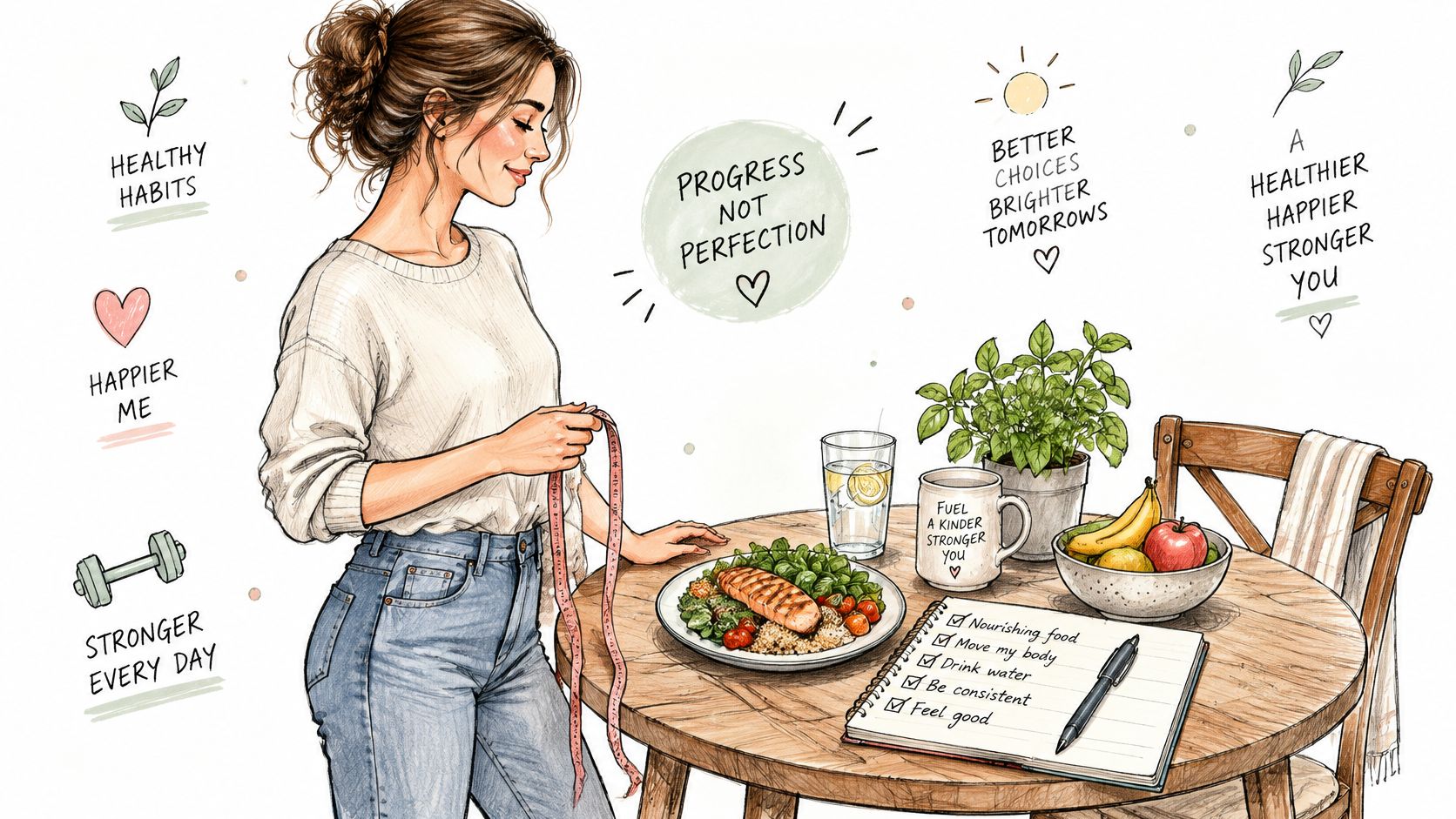
The crash-diet instinct is understandable and mostly counterproductive. Cut calories hard for three weeks and the scale moves, sleep gets worse, and you quit before the muscle you'll want at 60 is protected. Slower is the version that lasts.
A 2025 randomized trial of 160 perimenopausal women tested a program combining a hypocaloric, low-fat, high-protein, high-fiber diet with physical activity, psychological support and behavior change. 42.5% of intervention participants lost more than 5% of body weight, against 2.5% receiving standard care, as reported in this trial of a combined perimenopause weight program.
That result doesn't prove diet alone won, or that low fat specifically did. The program bundled movement, coaching and behavior change, so the honest reading is that a structured, supported plan beats standard advice.
Diet can still move weight on its own. In the Women's Study for the Alleviation of Vasomotor Symptoms, participants on a low-fat vegan diet with daily whole soybeans lost an average of 3.5 kg while the control group gained 0.8 kg, a significant difference at P = 0.0021, according to the trial's weight and symptom results.
Guardrails that protect muscle and sleep
Aim for a deficit that produces roughly 0.25 to 0.5 kg (about half a pound to a pound) a week rather than a starvation number, and hold protein at the target from the table while you do it. Add resistance training twice a week to give your muscles a reason to stay. Sleep and mood belong in the plan too, because a diet that wrecks both gets abandoned.
Two caveats matter here. Most of the strongest evidence comes from postmenopausal women, so it doesn't transfer automatically to early perimenopause, when cycles, sleep and appetite are still moving. Personalization also has to account for age, activity, medications, stage, diabetes risk, food access and cultural eating patterns. The perimenopause weight loss tips guide covers how those variables change the plan.
| Goal | What changes in the plan | What to track |
|---|---|---|
| Fat loss | A moderate deficit of about 0.25 to 0.5 kg a week with protein held at target | Body weight trend over 8 to 12 weeks, waist and energy |
| Waist reduction | Protein and fiber targets, plus resistance training to protect muscle | Waist measurement every two weeks |
| Glucose control | Fiber and protein at each meal, fewer refined carbohydrates | Clinician-directed glucose checks where relevant |
| Symptom relief | One trigger tested at a time from the symptom table | Daily hot-flash count and sleep log over 2 to 4 weeks |
| Weight maintenance | Calories matched to activity, protein and fiber targets kept | Weight and waist held steady over 8 to 12 weeks |
Judge the plan on waist measurement, energy, sleep and adherence rather than the scale alone. A week of good sleep and steady hunger is a result worth keeping.
Foods to Test for Hot Flashes, Bloating and Sleep
A small planned trial is more useful than a whole new diet you cannot maintain. Think of each food as one switch on a control panel. You change one switch, watch one symptom, then decide whether it helped. Lila's guide to finding your perimenopause trigger foods is a useful starting shortlist when you want common triggers paired with the symptoms they may affect.
The strongest food-specific protocol in the literature bundles a reduced-fat, plant-based pattern with 1/2 cup (86 g) of cooked whole soybeans daily, and the WAVS trial on a plant-based diet with soybeans reported that total hot flashes fell 79% in the intervention group against 49% in controls, a statistically significant difference. The study included 84 postmenopausal women with at least two moderate-to-severe hot flashes a day, and 71 finished the 12 weeks.
Keep those details in view before turning soy into a rule. The participants were postmenopausal, the trial was small and not blinded, and the intervention bundled several dietary changes at once, so soy alone cannot take the credit. Improvement within days is also an unrealistic expectation.
Test one thing at a time. Change a single food or drink, keep it for a window you set in advance, and log the symptom daily so the comparison is against your own baseline, not your memory.
| Symptom | Food or drink to test | How to judge it |
|---|---|---|
| Night sweats | Alcohol, especially wine and spirits | Stay alcohol-free for 2 weeks and compare nightly logs |
| Hot flashes | Caffeine, spicy food and very hot drinks | Cut one trigger for 2 weeks and track daily frequency |
| Afternoon energy crashes | Refined carbs eaten without protein | Pair carbs with 20 to 30 g protein for 2 weeks |
| Bloating | Lactose, gluten or high-FODMAP foods | Remove one food at a time for 2 to 3 weeks, then reintroduce it |
| Poor sleep | Heavy late dinners and caffeine after noon | Finish dinner 2 to 3 hours before bed and log sleep quality |
| Migraine | Aged cheese and red wine | Remove for 4 weeks and note headache days |
| Low mood or irregular cycles | Alcohol and skipped meals, with limited evidence | Keep meals regular and cut alcohol for 4 weeks, log mood daily; see a clinician if low mood persists or cycles change |
Foods described as hormone-balancing deserve the same test as everything else. SleepHabits has a roundup of best foods for hormonal health, and it works better as a list of candidates to try than as a list of promised fixes.
Set a review date before you start, usually two to four weeks out. If a symptom has not changed by that date, put the food back and move to the next candidate. Your log, not a rulebook, decides what stays.
When to Bring Your Doctor Into the Plan
Some symptoms need a clinician rather than a food swap, and the sooner that's clear, the better. Book an appointment for any of these:
- Heavy or prolonged bleeding, or cycles that suddenly shorten to under three weeks
- Any bleeding after 12 months without a period
- Symptoms that arrive suddenly or feel severe
- Low mood that persists beyond two weeks, or anxiety that interferes with work and sleep
- Sleep broken by loud snoring or pauses in breathing, which points to a sleep study, not a diet change
- An existing diagnosis such as diabetes, kidney disease or high blood pressure
Questions about HRT, prescriptions and diagnoses belong with a clinician, even when you're tracking meals and symptoms in an app. If you take blood sugar, blood pressure or other medication, tell your clinician before making large changes to protein, fiber or calories, because those shifts can change what your dose needs to be.
Bring the 14-day meal and symptom log to the appointment. A clinician can read a pattern off two weeks of entries in a couple of minutes, and it saves you from trying to remember whether the night sweats started before or after the new breakfast.
If you're weighing over-the-counter options while you wait, Supplemynts lists an Amberen perimenopause formula with its ingredients, which is worth bringing to your clinician rather than stacking around a prescription on your own.
Lila isn't a substitute for medical advice, and we ask users to consult their doctor about perimenopause symptoms. Our protocols are nutrition guidance, and for medical questions such as HRT, prescriptions or conditions we point you to a clinician.
Start a Two-Week Trial This Week
A trial without dates drifts. Put five dates in your calendar now, and let the rest of the fortnight be ordinary.
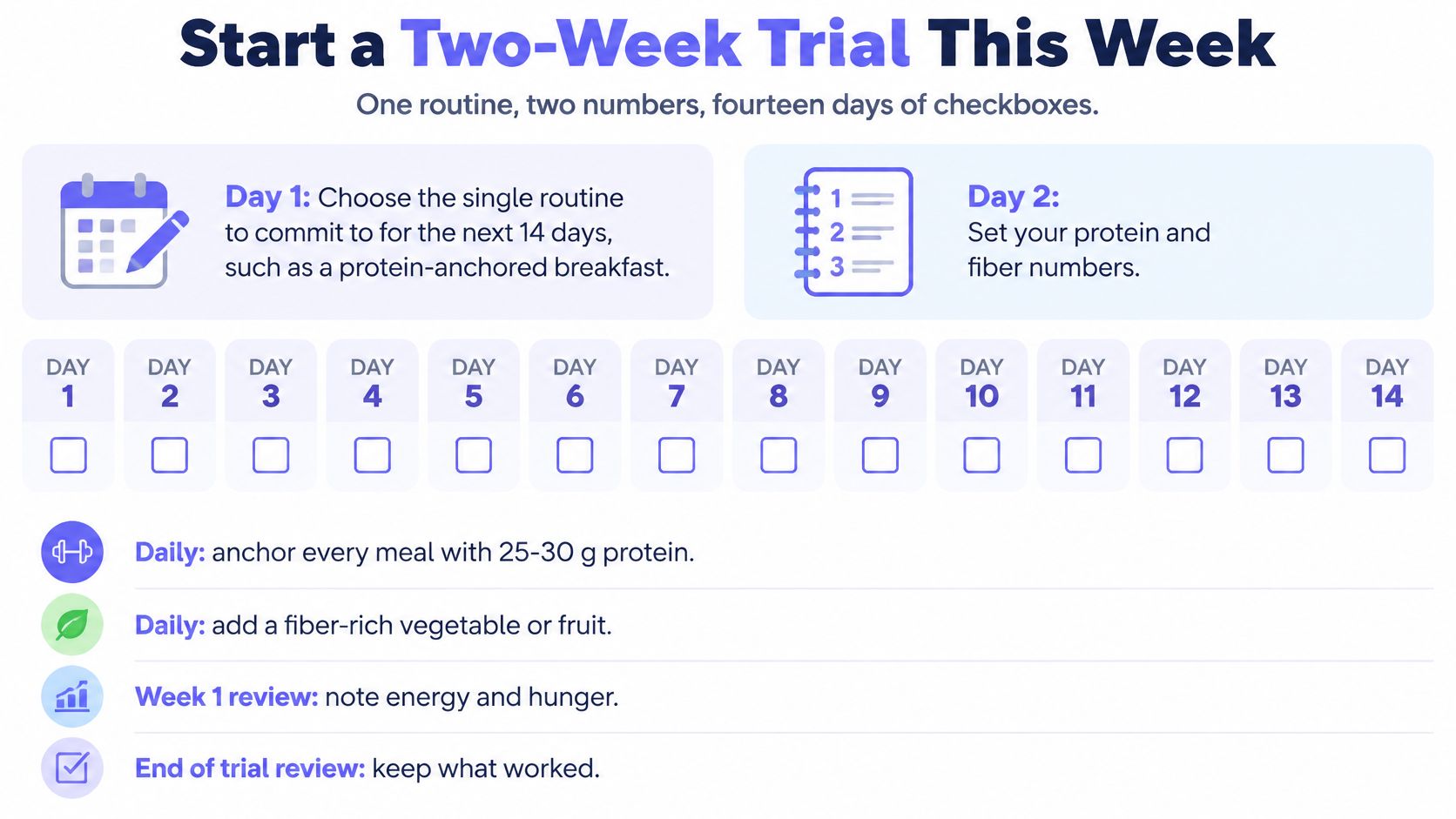
- Day 1 Pick the single routine you'll commit to for the next 14 days. A protein-anchored breakfast is the usual best first move.
- Day 2 Set your protein and fiber numbers for each meal.
- Day 3 Choose the one food test for the symptom bothering you most and start it today.
- Day 7 Read the first week's log for early patterns. Change nothing yet.
- Day 14 Compare hot flashes, sleep, energy and bloating against the average of the first week.
The decision rule at the end is short: keep what clearly helped, drop what didn't, and take the log to your clinician either way. Nothing gets a second week unless the first week showed something.
Lila builds a plan from your symptoms, goals and stage in about two minutes if you'd rather not assemble the calendar yourself, and the perimenopause symptom tracker guide shows how to keep the daily entries short enough to finish.
The video below is a useful companion before Day 1.
▶ PlayWhen the two weeks close, repeat the cycle with a second symptom from the table, using the same window and the same decision rule.
Lila is an app for women in perimenopause, combining a 24/7 AI nutrition coach, photo meal logging and symptom tracking so the connection between what you ate and how you felt stays visible. Set your protein and fiber targets once and Lila highlights them in logged meals, flags common trigger foods, and adapts its guidance to whether you're in early perimenopause, late perimenopause or post-menopause. If you want the targets, the meal ideas and the two-week test in one place, start with Lila.
Get Lila, your personal coach for perimenopause.
Built for women in their 40s. 24/7 coaching, in your pocket.