
8 Hormone-Aware Perimenopause Weight Loss Tips That Actually Work in 2026
Struggling with midlife weight gain? Discover practical, science-backed perimenopause weight loss tips for nutrition, exercise, sleep, and stress management.
 Michelle
Perimenopause isn't just a hormonal shift; it's a complete metabolic rewrite. Declining estrogen, fluctuating progesterone, and rising cortisol conspire to slow metabolism, sap energy, and redistribute weight to the abdomen. If the weight loss strategies that worked in your 20s and 30s are suddenly failing, you're not imagining it. Your body is playing by a new set of rules.
This isn't about eating less and moving more in the same old ways. It's about working with your new hormonal reality, not against it. Forget generic advice. This guide offers a hormone-aware approach with actionable perimenopause weight loss tips designed specifically for this unique life stage. Understanding how to manage the underlying hormonal shifts is key to navigating this phase. For a deeper dive into natural strategies, explore a practical guide on how to balance hormones naturally.
We'll move beyond frustrating, surface-level suggestions and provide specific, evidence-informed actions you can take today. You will learn how to:
Build lean muscle with targeted strength training.
Manage hunger and preserve muscle with strategic protein intake.
Stabilize energy by balancing your blood sugar.
Improve metabolism through optimized sleep and stress reduction.
Each tip is designed to address the root causes of weight gain during this transition. For a truly personalized journey, tools like the Lila app can help you track symptoms and tailor these strategies to your unique body, providing data-driven insights and AI-powered coaching to guide your every step. Let's get started on the path to regaining control and feeling like yourself again.
1. Prioritize Strength Training and Resistance Exercise
If cardio has been your go-to exercise for years, it’s time to shift your focus. During perimenopause, strength training becomes your most powerful ally against weight gain. Fluctuating and declining estrogen levels accelerate the loss of muscle mass, a condition known as sarcopenia. Since muscle is metabolically active, losing it slows down your metabolism, making it easier to gain weight, especially around your midsection.
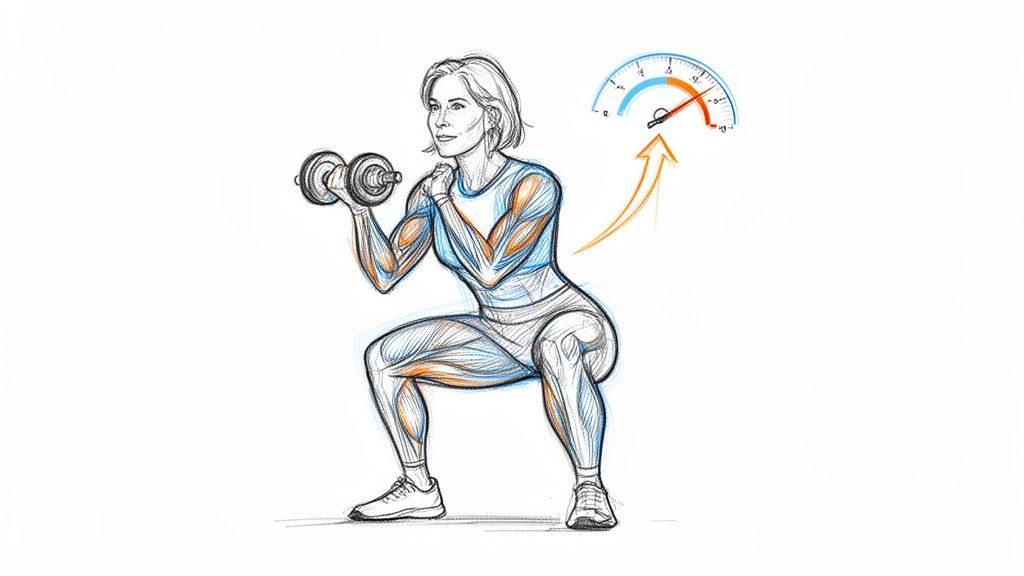
Resistance exercise directly counters this by building and preserving lean muscle. This not only boosts your metabolic rate but also improves how your body uses insulin, which helps regulate blood sugar and reduces fat storage. The benefits extend beyond the scale; strength training also significantly improves bone density, protecting against osteoporosis.
How to Implement Strength Training
Getting started doesn't require a gym membership or heavy equipment. The key is consistency and progressive overload, meaning you gradually increase the challenge.
Frequency: Aim for 2–3 sessions per week on non-consecutive days to allow for muscle recovery. Start with 20–30 minutes per session.
Exercises: Focus on compound movements that work multiple muscle groups at once, such as squats, lunges, push-ups, and rows. You can use dumbbells, resistance bands, or just your bodyweight.
Fueling: Pair your workouts with adequate protein intake (around 0.8–1 gram per pound of body weight) to support muscle repair and growth. Use the Lila app to track your meals and ensure you’re hitting your protein targets.
To effectively build and preserve muscle mass during perimenopause, prioritizing key principles of strength training for weight loss is essential.
Expert Insight: Exercise physiologist Dr. Stacy Sims emphasizes that for women in perimenopause, lifting heavy is more effective than cardio alone for changing body composition. This approach builds muscle, which acts as a "glucose sink," pulling sugar from the bloodstream and improving metabolic health.
You can log your workouts and monitor consistency using Lila’s activity tracker. Pay attention to improvements in your energy and mood, as these are often the first positive changes you’ll notice. For a deeper dive into structuring your workouts, discover the best exercises for menopause and perimenopause.
▶ Play2. Increase Protein Intake to Support Satiety and Muscle Preservation
As your hormones shift during perimenopause, making protein a priority at every meal becomes one of the most effective perimenopause weight loss tips. Protein is essential for countering the muscle loss that accelerates during this phase. It also boosts satiety, helping you feel fuller for longer, which can naturally reduce your overall calorie intake. Furthermore, it stabilizes blood sugar, reducing the energy crashes and cravings that often lead to unhealthy snacking.
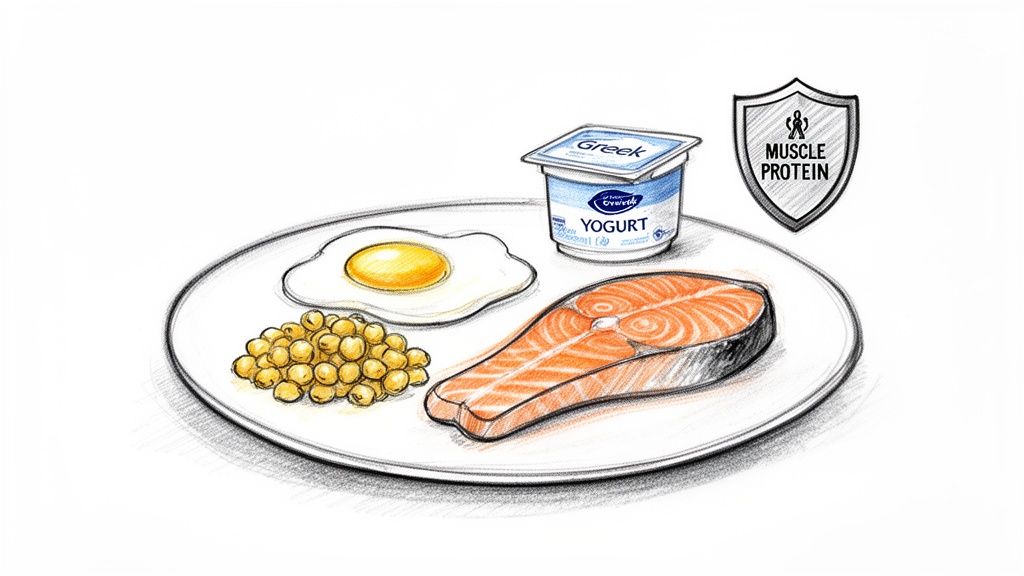
Your body also burns more calories digesting protein compared to fats and carbohydrates, a phenomenon known as the thermic effect of food. This slight metabolic advantage, combined with muscle preservation, makes a high-protein diet a powerful tool for managing your weight. Studies show that when women increase their protein intake, they often experience weight loss without feeling deprived or needing to count calories strictly.
How to Implement a High-Protein Diet
The goal is to distribute your protein intake evenly throughout the day to maximize its benefits for muscle synthesis and appetite control.
Target Intake: Aim for 25–30 grams of protein per meal. For a more personalized number, target 0.8–1 gram of protein per pound of your ideal body weight daily.
Meal Structure: Start each meal with your protein source. Good options include eggs, Greek yogurt, chicken, fish, lean beef, tofu, lentils, and chickpeas.
Smart Snacking: If you need a snack, make it protein-rich. A small container of cottage cheese, a handful of almonds, or a quality protein shake can curb hunger and stabilize energy levels.
Track Your Intake: Use the Lila app to log your meals and monitor your daily protein consumption. The tracker helps you see where you are falling short and allows you to adjust your food choices to consistently hit your targets.
Expert Insight: Sports nutritionist Dr. Layne Norton highlights that consuming adequate protein, especially at breakfast, is key for midlife women. A protein-forward breakfast sets the tone for the entire day by managing hunger hormones and preventing the blood sugar rollercoaster that drives afternoon cravings and fat storage.
By focusing on protein, you're not just dieting; you're providing your body with the fundamental building blocks it needs to stay strong, energized, and metabolically healthy through the perimenopausal transition.
3. Stabilize Blood Sugar to Reduce Cravings and Energy Crashes
If you feel like you're riding a hormonal roller coaster of cravings, energy crashes, and mood swings, you're not alone. During perimenopause, hormonal fluctuations, especially declining estrogen, can impair your body's insulin sensitivity. This makes it harder for your cells to manage blood sugar, leading to intense cravings, constant hunger, and the notorious 3 p.m. slump that drives many women to reach for sugary snacks.
Stabilizing your blood sugar is one of the most effective perimenopause weight loss tips because it directly addresses the metabolic root of the problem. By preventing sharp spikes and dips in glucose, you can reduce the hormonal signals that tell your body to store fat, particularly around the abdomen. This approach also helps prevent the development of insulin resistance, a key factor in metabolic dysfunction and long-term weight gain.
How to Implement Blood Sugar Balancing
The goal is to slow down the absorption of glucose into your bloodstream. This is achieved by making strategic food choices and paying attention to meal timing. It's not about restriction but about smart combination and consistency.
Meal Composition: Build every meal around the "PFFC" formula: Protein + Healthy Fat + Fiber + Complex Carbohydrate. A perfect example is a plate with salmon (protein), avocado (fat), broccoli (fiber), and a small sweet potato (complex carb).
Meal Timing: Aim to eat every 3–4 hours. This prevents the extreme hunger that often leads to reactive overeating and poor food choices.
Strategic Pairing: Never eat a carbohydrate alone. Pairing it with protein and fat slows down digestion and glucose absorption. Instead of an apple by itself, have an apple with a handful of almonds or a spoonful of almond butter.
Prioritize Whole Foods: Focus on whole grains, legumes, vegetables, and low-sugar fruits. These foods are naturally high in fiber, which is critical for blood sugar control. Minimize refined carbs like white bread, pastries, and sugary drinks.
Expert Insight: Glucose optimization expert Dr. Jessie Inchauspe, author of Glucose Revolution, has shown that simple "hacks" like eating your food in the right order (fiber first, then protein and fat, then carbs) can significantly flatten your glucose curve, reducing cravings and improving energy levels.
Many women report a dramatic reduction in sugar cravings and energy crashes within just 10 days of adopting this balanced eating style. You can use the Lila app’s meal logger to track your food intake and identify personal triggers. You might notice a clear correlation between a high-sugar breakfast and subsequent mood swings, hot flashes, or even sleep disruptions that night. By understanding these patterns, you can make targeted adjustments for better metabolic health.
4. Optimize Sleep Quality and Duration for Metabolic Health and Appetite Regulation
Sleep is not a luxury; it is a metabolic necessity, especially during perimenopause. Hormonal shifts often trigger sleep disruptions like hot flashes, night sweats, and general restlessness. This lack of quality sleep directly undermines weight loss efforts by dysregulating key hormones. Cortisol (the stress hormone) spikes, promoting belly fat storage, while hunger hormones go haywire. Ghrelin (the "I'm hungry" signal) increases, and leptin (the "I'm full" signal) decreases, leading to intense cravings and overeating.
Research underscores this connection, showing that poor sleep during perimenopause can increase the risk of weight gain by 50–75% compared to women who sleep well. It sabotages your willpower and makes it harder to stick to healthy eating and exercise plans. Improving sleep is one of the most effective perimenopause weight loss tips because it creates the physiological foundation for all other efforts to succeed.
How to Improve Your Sleep
Making sleep a non-negotiable priority can yield significant results. The goal is to aim for 7–9 hours of quality, uninterrupted sleep per night.
Establish a Routine: Go to bed and wake up at the same time every day, even on weekends. This consistency stabilizes your circadian rhythm, making it easier to fall asleep and wake up feeling rested.
Optimize Your Environment: Create a sleep sanctuary. Keep your bedroom cool (ideally 60–67°F or 15–19°C), dark, and quiet. Use blackout curtains, an eye mask, or a white noise machine if needed.
Mind Your Evening Habits: Avoid caffeine after 1 p.m. and limit alcohol, as it can fragment sleep in the second half of the night. Stop eating large meals at least three hours before bedtime to allow for proper digestion.
Track and Connect the Dots: Use an app like Lila to log your sleep duration and quality. Correlate this data with your daily food choices, exercise, and stress levels to identify personal patterns and triggers that disrupt your rest.
Expert Insight: Sleep scientist Dr. Matthew Walker, author of Why We Sleep, explains that even a single night of poor sleep can significantly reduce insulin sensitivity. For perimenopausal women already facing insulin resistance, this makes fat storage more likely. Prioritizing sleep is a direct way to support your metabolic health.
Many Lila users report noticeable weight loss (5–8 lbs in 8 weeks) simply by increasing their nightly sleep from under 6 hours to 7+ hours. By addressing sleep-disrupting symptoms like hot flashes with personalized strategies, you can reduce nighttime cravings and give your body the restorative time it needs to regulate weight effectively.
5. Track Food, Symptoms, and Hormonal Cycles to Identify Patterns and Optimize Timing
Perimenopause isn’t a steady decline; it’s a hormonal rollercoaster. Your menstrual cycles become irregular, and the dramatic fluctuations in estrogen and progesterone directly affect your appetite, metabolism, energy levels, mood, and water retention. Tracking these variables in one place allows you to connect the dots between your hormones and your body’s responses, turning confusing symptoms into predictable patterns.
This data-driven approach is a game-changer for perimenopause weight loss tips because it helps you work with your body, not against it. For instance, you might notice your cravings for carbs and high-calorie foods spike a week before your period. This isn't a failure of willpower; it's often your body's response to hormonal shifts in the luteal phase. Knowing this allows you to plan for it, preventing both restrictive under-eating and subsequent guilt-driven overeating.
How to Implement Symptom and Cycle Tracking
The goal is to gather insights without getting overwhelmed by data entry. A consistent, simple approach is most effective.
Log Daily: Use a dedicated app like Lila to perform a quick daily check-in. Record your meals, key symptoms (like bloating or hot flashes), mood, sleep quality, and energy levels. This creates a rich dataset to identify personal trends.
Identify Your Cycle Phase: Note where you are in your cycle (follicular or luteal phase, if known). The luteal phase, for example, often requires a slight increase in calories, potentially 200–300 more per day, to support metabolic demands and stabilize mood.
Review for Patterns: Once a week, look at your tracked data. You might discover that dairy triggers bloating mid-cycle, high-stress days lead to evening sugar cravings, or poor sleep consistently follows an intense late-night workout.
Share with Your Provider: This detailed log is invaluable for discussions with your healthcare provider. It provides concrete evidence to support a perimenopause diagnosis and helps them tailor treatment or lifestyle recommendations more effectively.
Expert Insight: Hormone expert Dr. Alisa Vitti, a pioneer in cycle syncing, highlights that a woman's metabolism, stress response, and nutritional needs change significantly between the follicular and luteal phases. By tracking and aligning your lifestyle to these phases, you can better manage symptoms and support a stable weight.
With an app like Lila, you can use the AI coach to ask specific questions about your patterns, such as, "Why do I always feel so tired on day 22 of my cycle?" This transforms raw data into actionable advice. Recognizing these connections empowers you to make strategic adjustments, from meal timing to your self-care routine, that are in sync with your unique hormonal rhythm.
6. Manage Stress and Cortisol Levels to Prevent Abdominal Fat Storage
Chronic stress is a major obstacle to perimenopause weight loss. When you're stressed, your body produces cortisol, a hormone that directly signals your body to store fat, particularly in the abdominal area. The hormonal fluctuations and disruptive symptoms of perimenopause, like hot flashes and poor sleep, are inherently stressful, creating a cycle where stress and its symptoms feed each other, making weight management feel impossible.
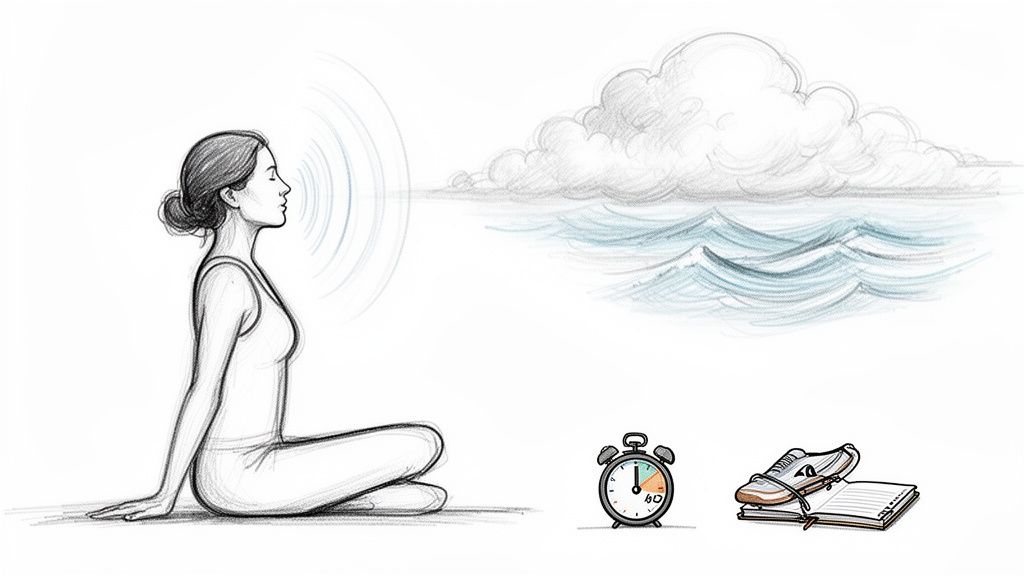
Managing stress is not just about feeling better; it's a critical strategy for metabolic health. Lowering cortisol helps reduce cravings, prevent emotional eating, and improve sleep quality, all of which are fundamental for sustainable weight loss. For example, some Lila users report losing 2–3 pounds in a month just by adding a daily five-minute breathing practice, with no other changes. This shows the direct impact of stress reduction on the body's ability to release weight.
How to Implement Stress Management
Integrating stress-reduction techniques into your daily routine is essential. Consistency matters more than duration, so start with small, manageable practices.
Practice Daily: Dedicate a small part of your day to a calming activity. This could be 5 minutes of guided breathwork, a 10-minute meditation session using an app, or a quiet 20-minute walk in nature.
Track Your Triggers: Use Lila’s daily check-in feature to log your stress levels and moods. This helps you identify patterns and understand what triggers your stress, empowering you to address the root causes.
Try Specific Breathing Techniques: Practices like Box Breathing (inhale for 4, hold for 4, exhale for 4, hold for 4) or 4-7-8 breathing can lower cortisol levels within minutes, offering immediate relief.
Address Underlying Patterns: For many women, stress is linked to perfectionism or all-or-nothing thinking around their diet and lifestyle. Lila's AI coach is available 24/7 to help you reframe these thoughts and build healthier coping mechanisms.
You can learn more about how food choices impact your body's stress response with a cortisol detox diet.
Expert Insight: Functional medicine practitioners emphasize that regulating the HPA axis (your central stress response system) is key during midlife. A chronically activated stress response disrupts every system in the body, from digestion to metabolism, making weight loss exceptionally difficult without addressing cortisol first.
By actively managing stress, you create a physiological environment that supports weight loss. Swapping a stress-driven evening snack for a gentle walk or journaling session is a powerful step toward breaking the cortisol-weight gain cycle and is one of the most effective perimenopause weight loss tips you can adopt.
7. Reduce Calorie Deficit Expectations and Embrace Sustainable, Modest Changes
If you've approached weight loss with an aggressive calorie-cutting strategy in the past, it’s time for a mental reset. The hormonal shifts of perimenopause, including a slower metabolism and accelerated muscle loss, make your body highly resistant to extreme deficits. A large calorie gap can increase cortisol, slow your metabolism further, and trigger muscle breakdown, ultimately sabotaging your efforts.
The new rule for perimenopause weight loss tips is to think smaller for bigger results. A modest, sustainable calorie deficit of 300–500 calories per day creates an environment where your body can burn fat while preserving precious muscle. This gentle approach maintains your energy levels, supports hormonal balance, and prevents the metabolic adaptation that often leads to weight regain after crash dieting. Slow and steady progress, like losing 0.5–1 pound per week, is far more effective long-term than a rapid drop followed by a rebound.
How to Implement a Modest Deficit
Shifting your mindset from restriction to sustainability is the core of this strategy. It’s about making smart, manageable adjustments that you can maintain consistently.
Establish Your Baseline: Use a tracker like Lila to log your normal food intake for a few days to understand your maintenance calories. From there, aim for a small reduction of 300–500 calories, achieved through a combination of diet and increased activity.
Prioritize Nutrients Over Numbers: Focus on hitting your protein and fiber targets first. This naturally helps control hunger and reduces overall calorie intake without a feeling of deprivation. Use the Lila app to see where small, high-impact changes can be made, like swapping a sugary snack for a protein-rich one.
Track Non-Scale Victories: Since modest deficits often lead to body recomposition (losing fat while gaining muscle), the scale may not move quickly at first. Track other metrics like how your clothes fit, your strength gains in the gym, improved energy, and better sleep quality. These are the true indicators of progress.
Be Patient and Consistent: Stick with your modest deficit for at least 4 weeks before considering any adjustments. This gives your body time to respond without triggering metabolic slowdowns. The goal is sustainable fat loss, not a race to the bottom.
Expert Insight: Dr. Layne Norton, a renowned expert in metabolic adaptation, argues that large calorie deficits are a primary driver of metabolic slowdown and muscle loss. He advocates for smaller deficits combined with high protein and resistance training to achieve sustainable fat loss and protect metabolic health, an approach particularly critical during the hormonal changes of midlife.
8. Get Professional Support: AI Coaching, Accountability, and Personalization
Navigating perimenopause weight loss alone can feel overwhelming. Symptoms are unpredictable, online advice is often contradictory, and what worked in your 30s may no longer be effective. Professional support provides personalized guidance, accountability, and the psychological boost of having an expert in your corner. Research shows that having a coach or using a tracking app can increase weight loss success by 40–50%.
This support can come from a personal trainer, a registered dietitian, or an AI coach like Lila. The goal is to move beyond generic advice and get a plan tailored to your unique hormonal landscape, lifestyle, and challenges. A professional can help troubleshoot when progress stalls and keep you consistent, which is fundamental for achieving lasting perimenopause weight loss tips.
How to Implement Professional Support
Whether you choose a human expert or an AI-driven platform, the key is finding support that understands the specifics of perimenopause. Generic weight loss plans often fail because they don't account for hormonal fluctuations affecting metabolism, sleep, and stress.
Find the Right Fit: If working with a human professional, ask about their experience with perimenopausal clients. For an accessible, 24/7 option, consider an AI coach like Lila, which integrates symptom, meal, and cycle tracking to provide real-time feedback.
Focus on the Biggest Barrier: Use your coach to identify what’s holding you back most. Is it poor sleep from hot flashes? Stress-induced cravings? Inconsistent workouts? Tackling the primary obstacle first creates momentum.
Combine with Community: Pair professional support with a peer community, such as online groups or local fitness classes. Sharing experiences with others on a similar journey normalizes challenges and boosts motivation.
For instance, women working with a registered dietitian might discover a FODMAP sensitivity is causing their perimenopausal bloating, leading to both symptom relief and weight loss. Similarly, Lila's AI coach can identify patterns, like evening hot flashes disrupting sleep and elevating morning cortisol, allowing for targeted interventions.
Expert Insight: Behavioral psychology research by experts like B.J. Fogg and James Clear shows that accountability is a cornerstone of habit formation. A coach or tracking system creates an external feedback loop that makes you more likely to stick with new behaviors, whether it's hitting your protein goal or getting to bed on time.
Lila users often report faster progress and significantly higher long-term adherence because the app provides both a plan and the accountability to follow it. To understand more about this approach, explore how to lose weight in your 40s with AI.
8-Point Comparison of Perimenopause Weight-Loss Tips
Strategy | Implementation Complexity 🔄 | Resource Requirements 💡 | Expected Outcomes ⭐📊 | Speed / Efficiency ⚡ | Ideal Use Cases |
|---|---|---|---|---|---|
Prioritize Strength Training and Resistance Exercise | Moderate — learning curve or coach recommended | Moderate — equipment (dumbbells/bands), 2–3×/wk time commitment | High — preserves muscle, raises RMR, improves bone and insulin sensitivity | Moderate — measurable changes in 4–6 weeks | Women needing metabolic repair, body recomposition, bone health |
Increase Protein Intake to Support Satiety and Muscle Preservation | Low–Moderate — meal planning and portioning | Low–Moderate — higher-quality protein foods; possible cost increase | High — increased satiety, muscle retention, better glucose control | Fast — satiety benefits immediate; body comp in weeks | Those with energy crashes, low-protein meals, pairing with strength work |
Stabilize Blood Sugar to Reduce Cravings and Energy Crashes | Moderate — requires carb quality, timing awareness | Low — whole foods, fiber, possible CGM for precision | High — fewer cravings, steadier energy, reduced diabetes risk | Fast–Moderate — energy/craving improvements in 1–2 weeks | People with intense cravings, reactive hunger, variable energy |
Optimize Sleep Quality and Duration for Metabolic Health | Moderate–High — may need multi-pronged approach for hot flashes | Low–Moderate — sleep hygiene, environment changes, occasional medical help | Very High — improves hormones, insulin sensitivity, appetite regulation | Moderate — benefits 2–4 weeks to consolidate | Anyone with fragmented sleep, night sweats, or poor recovery |
Track Food, Symptoms, and Hormonal Cycles to Identify Patterns | Low–Moderate — consistent daily logging (2-min check-ins) | Low — app (e.g., Lila), time for tracking, privacy consideration | High — personalized insights, better timing of nutrition/exercise | Slow–Moderate — patterns emerge in ~2–3 months but useful sooner | Women with irregular cycles or unclear triggers for symptoms |
Manage Stress and Cortisol Levels to Prevent Abdominal Fat | Low–Moderate — daily habit changes; may need therapy for deeper issues | Low — breathwork, walks, community; possible professional support | High — reduced visceral fat risk, improved mood and sleep | Moderate — some benefits within weeks with consistent practice | Those with chronic stress, emotional eating, high cortisol signs |
Reduce Calorie Deficit Expectations and Embrace Modest Changes | Low — mindset shift and modest tracking | Low — calorie tracker, patience, emphasis on protein/strength | High long-term — sustainable fat loss, preserved muscle, better adherence | Slow but sustainable — ~0.5–1 lb/week; better long-term efficiency | Prior crash dieters or women seeking durable, maintainable results |
Get Professional Support: AI Coaching, Accountability, Personalization | Moderate — selection and engagement with coach/app | Moderate — cost (AI cheaper), time for check-ins, data sharing | Very High — higher adherence, tailored troubleshooting, faster course-correction | Fast — accelerates progress via accountability and personalization | Those needing accountability, complex symptoms, or faster troubleshooting |
Your Personalized Path Forward
Navigating the landscape of perimenopause can often feel like trying to follow an old map in a new and constantly shifting territory. The rules that once governed your body’s metabolism, energy, and weight have changed, and the frustration that comes with this transition is real. However, the path forward isn’t about finding a single magic solution; it's about building a sustainable, personalized system that respects your body’s new hormonal reality. The most effective perimenopause weight loss tips are not secrets, but strategies that must be woven together into a cohesive daily practice.
This journey is about moving away from the "eat less, move more" mantra that likely worked in your 20s and 30s. That approach often backfires now, increasing stress hormones and working against your metabolic health. Instead, the key is to adopt a hormone-aware mindset. This means embracing the powerful synergy between strength training, strategic nutrition, restorative sleep, and proactive stress management.
Synthesizing the Core Strategies
Let's distill the most crucial takeaways from the tips we've covered. Think of these not as a checklist to complete, but as interconnected pillars supporting your overall well-being.
Strength Over Cardio: While all movement is beneficial, strength training is non-negotiable. Building and maintaining muscle mass is your primary defense against a slowing metabolism. It improves insulin sensitivity and directly counteracts the hormonal signals that encourage fat storage.
Protein is Your Anchor: Making protein the star of every meal is a simple change with profound effects. It helps you feel full, stabilizes blood sugar to curb intense cravings, and provides the essential building blocks your muscles need to repair and grow after a workout.
Hormones Rule, Not Willpower: Your efforts will be constantly undermined if your foundational hormones are out of balance. Prioritizing 7-9 hours of quality sleep and actively managing cortisol through stress-reduction techniques are not luxuries; they are fundamental to successful weight management during this phase.
Key Insight: Perimenopause weight loss is less about restriction and more about addition. It’s about adding more protein, more muscle, more sleep, and more intentional calm to your life.
From Information to Action
Knowing these principles is one thing; implementing them consistently is another. This is where personalization becomes your greatest asset. Your body is unique, and its response to food, exercise, and stress will be specific to you. This is why tracking your inputs and outputs is so critical.
By monitoring your food intake, symptoms, and cycle, you stop guessing and start making data-informed decisions. You begin to see the direct connections: "When I eat this for breakfast, my energy is stable all morning," or "When my sleep drops below six hours, my sugar cravings are uncontrollable the next day."
This process of self-discovery is the essence of creating a personalized plan that lasts. It empowers you to tune into your body’s signals rather than fighting against them. A modest, sustainable approach will always outperform drastic measures that only disrupt your hormones further. This journey is yours to own, and with the right strategies and support, you can navigate perimenopause feeling strong, energized, and fully in control of your health. The goal isn’t just to lose weight, but to build a resilient, vibrant body for the decades to come.
Ready to stop guessing and start building a plan that truly works for your body? The Lila app is designed to help you connect the dots between your habits, hormones, and symptoms, providing personalized insights and AI-driven guidance based on your unique data. Take the first step toward a data-driven perimenopause journey by exploring Lila today.
Get Lila, your personal coach for perimenopause.
Built for women in their 40s. 24/7 coaching, in your pocket.


