
10 Sleep Improvement Strategies That Work in 2026
Discover 10 sleep improvement strategies for better nights, from cooler bedrooms and CBT-I to smarter caffeine timing and evening routines.
You wake at 3 a.m. drenched in sweat, throw off the duvet, and wait to cool down. Then your mind starts running through tomorrow's meetings, an unfinished task, and whether you'll ever sleep properly again. By noon, you're exhausted, bloated, and reaching for another coffee.
Perimenopausal sleep disruption rarely has just one cause. A hot flash may wake you, reflux may make lying down uncomfortable, and worry about the next day may keep you awake after the physical discomfort passes. The most useful sleep improvement strategies address those problems separately rather than expecting a supplement or a colder bedroom to fix everything.
Start by noticing what wakes you and what keeps you awake. Those aren't always the same thing. If symptoms are affecting your daily life, clinician-led menopause care for UK women can help you explore treatment alongside practical changes at home.
The options below move broadly from behavioral treatment and everyday habits toward clinical support, with a final strategy for protecting the bed-sleep connection. Use the comparison table to choose a starting point, not to build an elaborate routine. You need a manageable experiment, not another exhausting job.
Table of Contents
- 1. Cognitive Behavioral Therapy for Insomnia (CBT-I)
- 2. Consistent Sleep and Wake Schedule
- 3. Cool and Comfortable Bedroom Environment
- 4. Limit Alcohol, Caffeine, and Large Evening Meals
- 5. Morning Light Exposure and Daytime Activity
- 6. Evening Wind-Down Routine and Reduced Screen Use
- 7. Regular Exercise Timed for Better Sleep
- 8. Relaxation and Mindfulness Techniques
- 9. Discussing Menopause Hormone Therapy and Non-Hormonal Treatments with a Clinician
- 10. Limit Daytime Napping and Use the Bed Only for Sleep
- How the 10 sleep improvement strategies compare on cost, speed of results, and who they suit best
- Build Your Sleep Plan One Strategy at a Time
1. Cognitive Behavioral Therapy for Insomnia (CBT-I)
CBT-I treats the habits and worries that keep insomnia going, even when night sweats originally triggered it. It combines techniques such as stimulus control, adjusting time in bed, challenging sleep-related thoughts, and relaxation.
The American Academy of Sleep Medicine guideline strongly recommends multicomponent CBT-I for adults with chronic insomnia and describes treatment commonly delivered across 4–8 sessions. This is structured treatment, not advice to put your phone away.
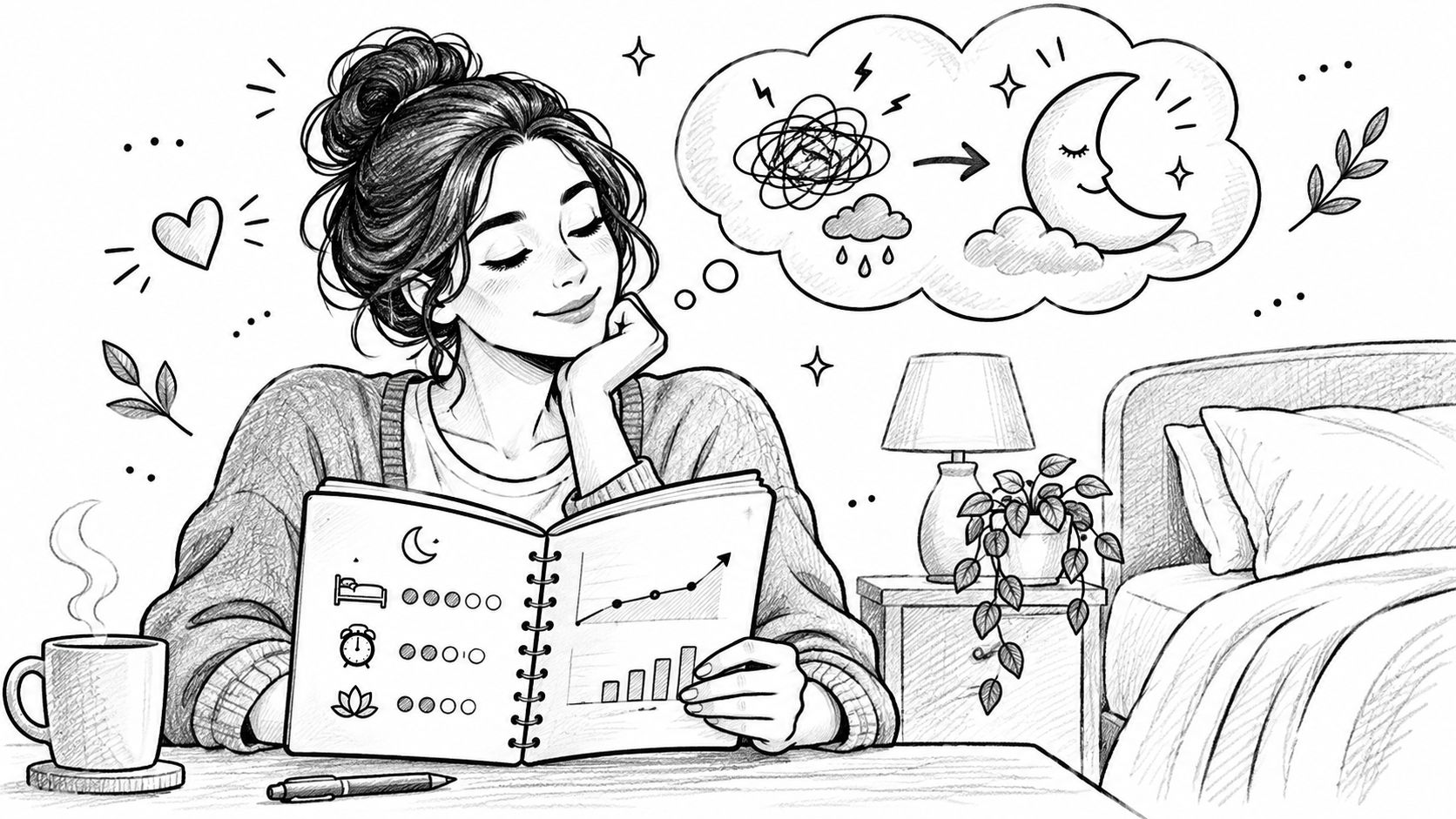
Start with a useful sleep diary
Tonight, note when you get into bed, roughly when you fall asleep, what wakes you, and how you feel tomorrow. Record hot flashes separately from time spent worrying afterward, so a clinician can distinguish physical triggers from an insomnia pattern.
Say you cool down after a sweat but remain awake rehearsing tomorrow's problems. That's a reason to address both menopause symptoms and the common causes of insomnia, rather than assuming better bedding will solve everything.
During the first week, expect observation and adjustment, not perfect sleep. Ask your clinician about a qualified CBT-I practitioner or an evidence-based digital program. Don't copy aggressive sleep-restriction schedules online, particularly if you're already dangerously sleepy or have other medical conditions.
2. Consistent Sleep and Wake Schedule
After a sweaty, broken night, sleeping late feels like the obvious repair. The trade-off is that you may be less ready for sleep the following evening, especially if you also nap after work.
Anchor your wake time before trying to force an earlier bedtime. Choose a realistic morning time that fits your responsibilities, then get out of bed rather than repeatedly restarting the alarm.
- Tonight: Set your morning alarm and prepare something easy to get up for, such as breakfast, a shower, or a short walk.
- At bedtime: Go to bed when you're sleepy, not merely because you're worried about getting enough sleep.
- After a rough night: Keep the morning reasonably consistent without ignoring dangerous sleepiness.
For example, if night sweats wake you before dawn, resist automatically moving bedtime much earlier the next evening. Extra time in bed can mean extra time awake, frustrated, and monitoring your body.
When hot flashes are the main problem, keep cooling supplies nearby so managing an episode doesn't turn into a prolonged nighttime task. A schedule won't treat the flashes themselves, but it can reduce the additional disruption around them.
Use this guide to adjusting your sleep schedule if your routine has drifted. During the first week, look for less variation in your mornings and more predictable evening sleepiness, rather than judging success by an uninterrupted night.
3. Cool and Comfortable Bedroom Environment
A cooling mattress pad isn't automatically better than a fan and removable bedding. Start with the cheapest changes that make a sweaty awakening easier to manage, then decide whether specialist products solve a remaining problem.
Bedroom changes are popular: 34% of surveyed U.S. adults reported improving their sleep environment as a sleep-improvement strategy in a 2025 Statista survey of 1,000 respondents. That measures what people tried, not proof that buying new bedding treats insomnia.
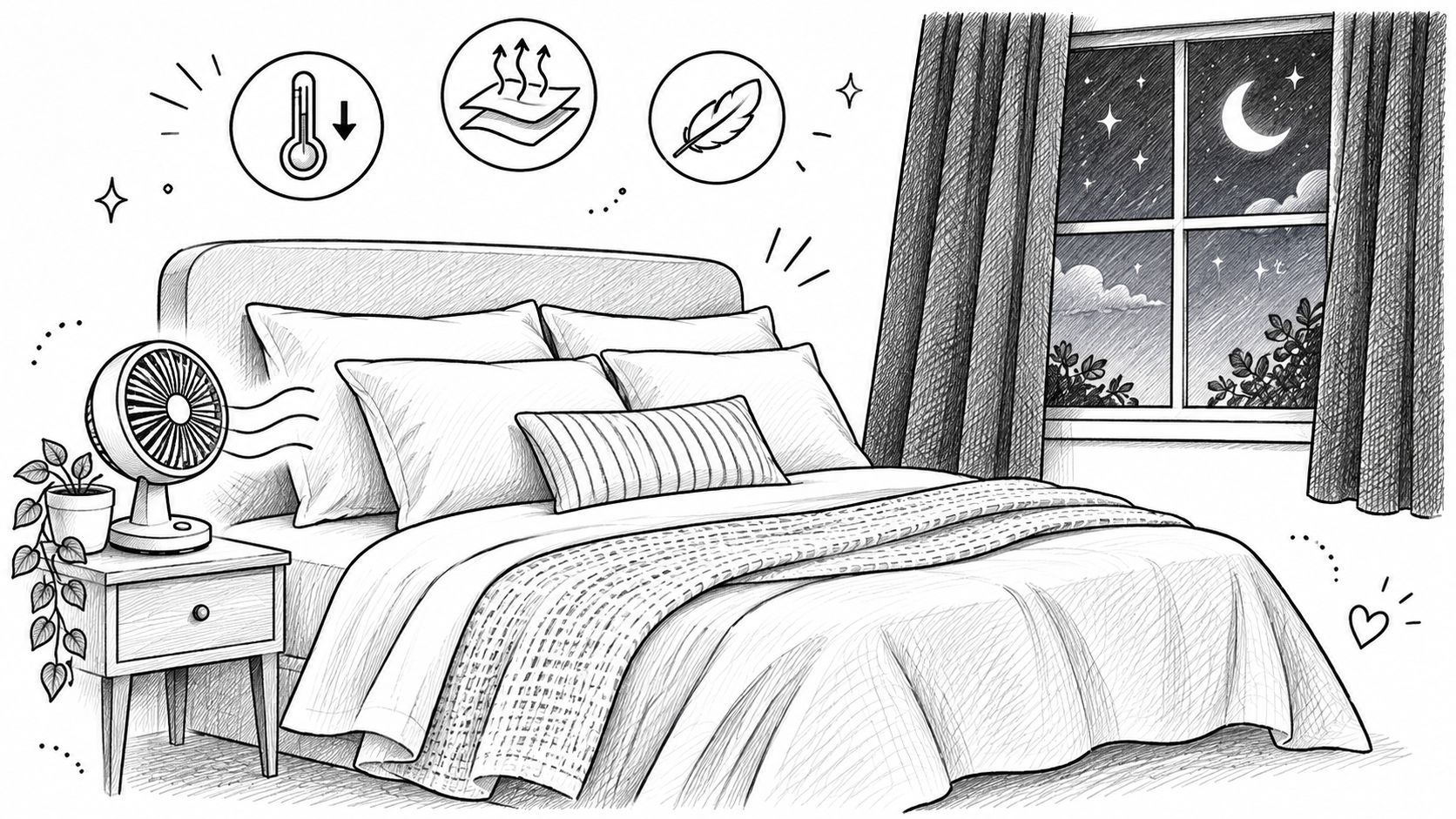
Make recovery from a sweat easier
Use light, removable layers rather than a heavy duvet you repeatedly throw off and pull back. Keep dry sleepwear within reach, position a fan safely, and use separate covers if your partner prefers more warmth.
If you wake overheated but become chilly afterward, making the entire room colder may create a different problem. Adjust the layer closest to you first, and choose bedding by comfort and breathability rather than assuming a particular fabric label guarantees results.
Practical rule: Judge cooling changes by how quickly you become comfortable again, not by whether they eliminate every hot flash.
During the first week, record whether you needed to change clothes, how disruptive the episode felt, and whether you settled afterward. These ways to manage menopause night sweats can help you refine the setup, but persistent drenching sweats deserve medical discussion.
4. Limit Alcohol, Caffeine, and Large Evening Meals
An evening drink, a late dinner, and coffee to compensate the next morning can become a frustrating cycle. Treat each as a separate experiment, because they can interfere with sleep in different ways.
Caffeine can leave you alert when you want to sleep. Alcohol may make you feel sleepy initially but leave the later part of the night less settled, while a large meal can make bloating and reflux more uncomfortable when you lie down.
- Move caffeine earlier: Start with a midday cutoff and include tea, energy drinks, and pre-workout products in your review.
- Test alcohol-free evenings: Compare hot flashes, awakenings, and next-day energy without replacing wine with another sedating product.
- Make dinner easier to tolerate: Choose a smaller evening meal and leave comfortable digestion time before lying down.
Say you wake with a hot sensation, a sour taste, and abdominal pressure after a large dinner with wine. Don't assume every part of that awakening is hormonal. Try an earlier, lighter dinner without alcohol and note whether the burning, sweating, or both change.
If hot flashes are your main problem, watch whether alcohol accompanies more disruptive nights, but don't label every food a trigger after a single occurrence. During the first week, look for a repeatable pattern rather than imposing a restrictive diet.
Frequent reflux, difficulty swallowing, or persistent nighttime discomfort needs clinical assessment. Food adjustments shouldn't become a substitute for investigating ongoing symptoms.
5. Morning Light Exposure and Daytime Activity
The morning after a broken night matters too. Staying indoors in dim light until lunchtime can make your routine less distinct, especially if fatigue then pushes you toward a long afternoon sleep.
Try pairing outdoor morning light with gentle movement. A walk around the block, breakfast outside, or walking part of your commute gives you a repeatable daytime anchor without requiring a demanding workout.
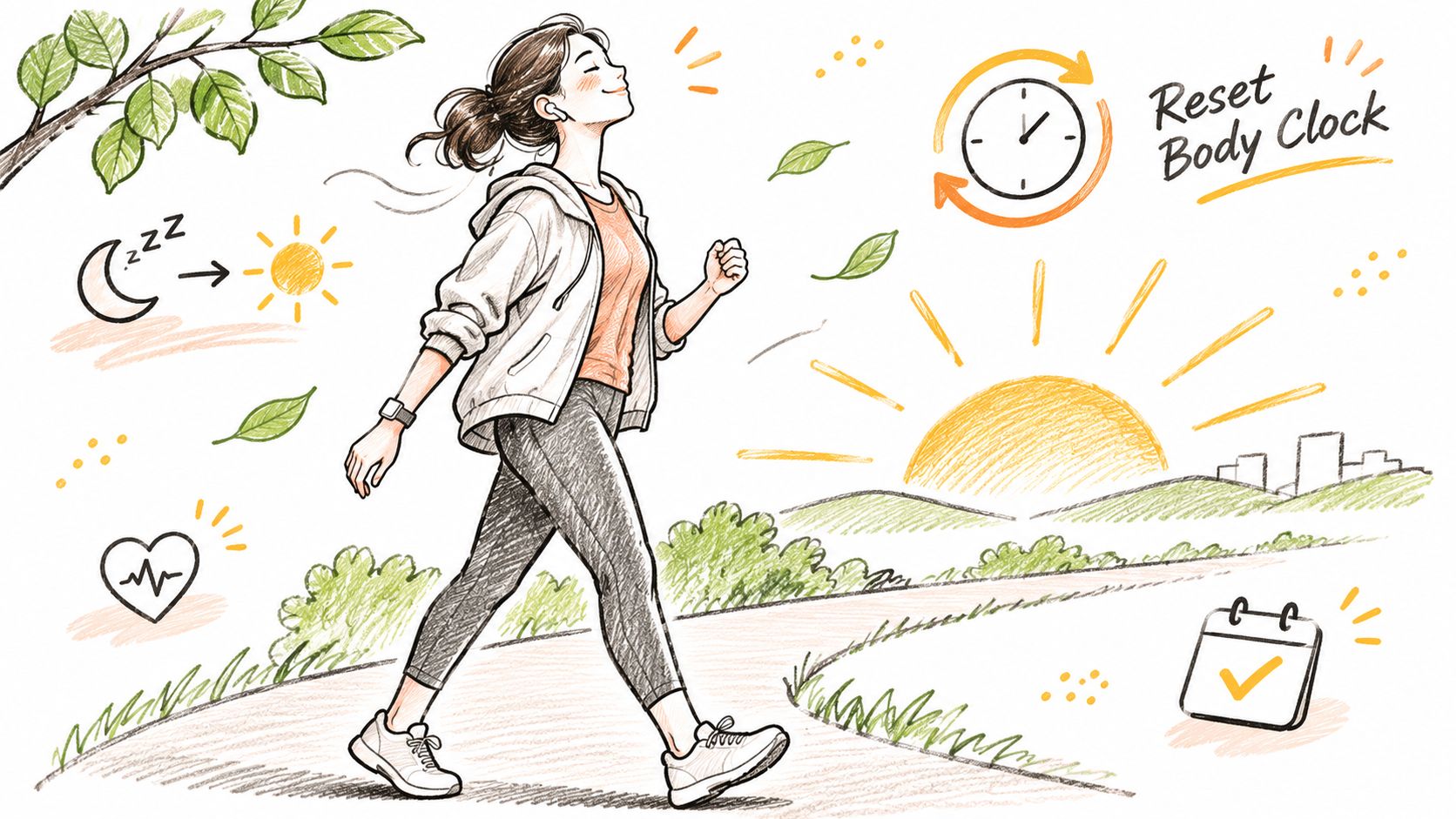
Match the routine to your symptoms
If heat brings on flushing, choose a shaded route, wear removable layers, and avoid turning a gentle walk into an overheating test. If bloating makes waistbands uncomfortable, comfortable clothing may be the difference between following through and abandoning the plan.
For example, put walking shoes by the door tonight and step outside after getting dressed tomorrow. On a difficult morning, shorten the walk rather than deciding the whole routine has failed.
During the first week, measure consistency and daytime alertness, then notice whether evening sleepiness becomes more predictable. Don't expect morning light to stop a temperature-related awakening on its own.
A light-therapy lamp is a different intervention from ordinary outdoor time. Discuss one with a clinician if you have eye problems, take light-sensitive medications, or have a history of mood elevation. Shift workers also need timing advice suited to their main sleep period, rather than automatically seeking bright light after every shift.
6. Evening Wind-Down Routine and Reduced Screen Use
If bedtime is the first quiet moment in your day, it may also be when every unfinished thought arrives. A useful wind-down creates space to deal with those thoughts before you're trying to sleep.
Choose an uncomplicated sequence: prepare tomorrow's essentials, write down unresolved tasks, dim the room, and read something undemanding. Keep reading outside bed if you've started associating the bed with long stretches of wakefulness.
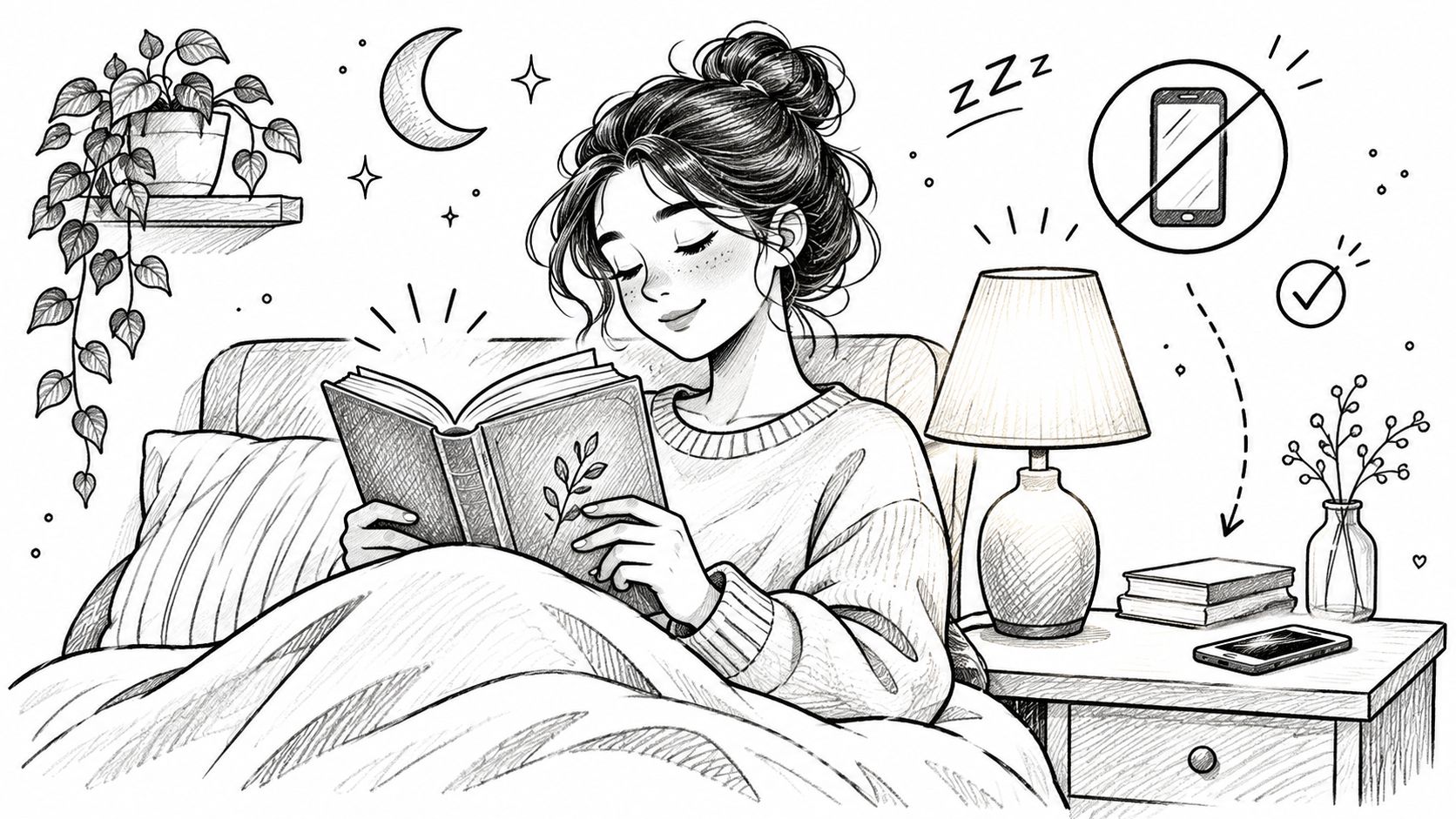
- Reduce stimulation: Silence work messages and avoid content that leaves you angry, anxious, or tempted to keep scrolling.
- Prepare for sweats: Put a dry top and water nearby before settling down.
- Stay comfortable: Choose a comfortably warm shower rather than a hot bath if heat reliably triggers flushing.
The benefit isn't just about screen brightness. Reading stressful messages in a dim room can still leave you mentally switched on, while an elaborate relaxation routine can become another task you feel pressured to complete.
Say you usually research menopause symptoms in bed after a hot flash. Move that research to daytime and keep a written question list for your clinician instead.
Use a bedtime routine for better sleep as a starting point, not a rigid prescription. In the first week, look for less bedtime rumination and less phone use after awakenings, even if night sweats continue.
7. Regular Exercise Timed for Better Sleep
Exercise should support recovery, not become punishment for sleeping badly or gaining weight. During perimenopause, a workable combination of walking, strength exercises, and gentler movement is more useful than repeatedly attempting workouts you're too exhausted to sustain.
Choose timing by your response. Some women feel settled after an evening workout; others remain hot, alert, and uncomfortable well into bedtime.
Separate training from overheating
If vigorous activity leaves you flushed at night, move it earlier when possible or reduce the intensity. Keep gentler stretching or an easy walk as your evening option, particularly when hot flashes are already frequent.
For example, compare an after-work strength session with the same session earlier on a day off. Notice bedtime warmth, mental alertness, and overnight comfort rather than assuming the workout helped or harmed sleep because of its timing alone.
- Start realistically: Choose movements you can repeat, such as chair squats, resistance-band rows, or walking.
- Adjust after poor sleep: Reduce intensity when fatigue affects coordination or concentration.
- Watch recovery: Note whether soreness or joint pain becomes another reason you wake.
During the first week, success means finding activity you can recover from and repeat. Exercise isn't a replacement for treating severe night sweats or persistent insomnia, and you don't need to earn a good night's sleep through exhaustion.
Stop exercising if you experience faintness, dizziness, pain, or shortness of breath, and seek appropriate medical advice.
8. Relaxation and Mindfulness Techniques
A hot flash can finish while your body still feels on alert. You may be listening for the next episode, checking the clock, or calculating how little sleep remains.
Relaxation targets that second layer of wakefulness. Try comfortable paced breathing, progressive muscle relaxation, or a body scan without requiring yourself to fall asleep by the end.
The task is to reduce struggle, not to prove you can make yourself sleep.
For a nighttime awakening, first address the physical problem: remove a layer, change damp clothing, or sit comfortably if reflux is bothering you. Then soften your jaw and shoulders and let your breathing slow naturally, without forceful deep breaths or uncomfortable breath-holding.
A guided practice can provide something neutral to follow:
▶ PlayPractice when the stakes feel lower
Try the technique during your evening wind-down before relying on it during a frustrating awakening. If a body scan makes you monitor every sensation more intensely, switch to quiet audio or a simple external focus instead.
Gentle movement may suit you better than seated meditation; these yoga options for perimenopause offer another starting point. Avoid heated practice if overheating is already disrupting your nights.
During the first week, notice whether awakenings feel less distressing and easier to manage. Relaxation can complement insomnia treatment, but it shouldn't become another test you believe you're failing.
9. Discussing Menopause Hormone Therapy and Non-Hormonal Treatments with a Clinician
When night sweats repeatedly soak your clothes or interrupt sleep despite practical adjustments, bring the problem to a clinician. You don't need to complete every lifestyle experiment before asking about treatment.
A review of sleep problems during the menopausal transition describes the overlap between vasomotor symptoms and insomnia, including why treating hot flashes may not resolve learned wakefulness or sleep anxiety. Symptom treatment and CBT-I may address different parts of the same night.
Bring a specific treatment question
Rather than saying only that you sleep badly, explain what happens: whether you wake hot, how long you remain awake afterward, and how fatigue affects your day. Ask whether menopause hormone therapy or a non-hormonal treatment fits your symptoms, medical history, and preferences.
- Clarify the target: Are you treating hot flashes, insomnia, mood symptoms, or more than one problem?
- Review safety: Discuss existing conditions, current medicines, supplements, and potential interactions.
- Agree on follow-up: Ask what improvement to track and which side effects should prompt contact.
For example, if treatment reduces sweating but you still lie awake worrying, that doesn't necessarily mean it failed. Behavioral insomnia treatment may still be needed; a trial in women with insomnia and hot flashes found that 70% receiving telephone CBT-I had scores in the no-insomnia range after eight weeks, compared with 24% receiving menopause education.
Explore alternatives to HRT before your appointment if helpful. Report loud snoring, gasping, or marked daytime sleepiness too, since menopause shouldn't automatically explain every sleep problem.
10. Limit Daytime Napping and Use the Bed Only for Sleep
The sofa nap that gets you through the evening can make bedtime more difficult. Likewise, working, scrolling, and worrying in bed can make it harder to associate that space with sleep.
Stimulus control is more targeted than general bedroom advice. The VA/DoD insomnia guideline recommends CBT-I and advises against sleep-hygiene education as a stand-alone treatment for chronic insomnia.
- Leave prolonged wakefulness: If you're clearly awake and becoming frustrated, move to a safe, dimly lit place for a quiet activity.
- Return when sleepy: Don't wait for a particular clock reading or repeatedly test whether you can sleep.
- Review naps: If you need one, keep it brief and earlier rather than drifting into a long evening sleep.
Say a hot flash wakes you and you begin answering emails in bed. Cool down first, then move elsewhere if you remain alert. Return when sleepiness comes back rather than turning the bed into a nighttime office.
Safety first: Don't push through dangerous drowsiness to protect a sleep schedule. Avoid driving when sleepy and seek help for persistent excessive sleepiness.
During the first week, you may notice the urge to nap before nighttime sleep changes. Track that response without forcing yourself through unsafe fatigue.
If mobility problems, fall risk, or caregiving duties make leaving bed impractical, ask a CBT-I clinician to adapt the approach. The aim is less wakeful struggle, not rigid rule-following.
How the 10 sleep improvement strategies compare on cost, speed of results, and who they suit best
Use this table to match a strategy to the disruptor waking you: night sweats, reflux after a late meal, or a 3 a.m. worry loop. Cost and speed matter, but so does whether you can repeat the change on a bad-sleep week.
| Item | Cost | Time to Notice Effect | Best For |
|---|---|---|---|
| Cognitive Behavioral Therapy for Insomnia (CBT-I) | Digital programs typically cost less than in-person therapy | Usually several weeks of treatment | Chronic insomnia and sleep-related worries or habits |
| Consistent Sleep and Wake Schedule | Free | About one to two weeks | Regulating sleep timing and supporting daytime energy |
| Cool and Comfortable Bedroom Environment | Low cost; cooling equipment adds expense | Can help the first night the environment is adjusted | Reducing awakenings from night sweats or overheating |
| Limit Alcohol, Caffeine, and Large Evening Meals | Free to try | Some notice changes within two weeks | Reducing night awakenings, reflux, or sleep-onset problems |
| Morning Light Exposure and Daytime Activity | Free; a light therapy lamp may cost extra | Effects may take a few weeks | Supporting circadian rhythm, alertness, and mood |
| Evening Wind-Down Routine and Reduced Screen Use | Low cost | Less bedtime rumination within one to two weeks | Easing bedtime anxiety and building a repeatable cue for sleep |
| Regular Exercise Timed for Better Sleep | Low cost; gym or class fees may add expense | Often improves sleep within two to four weeks | Improving sleep, mood, energy, and metabolic health |
| Relaxation and Mindfulness Techniques | Free or low cost | A few days of practice can calm bedtime thoughts; steady practice deepens the effect | Calming racing thoughts or anxiety at bedtime or after waking |
| Discussing Menopause Hormone Therapy and Non-Hormonal Treatments with a Clinician | Consultation fees apply; insurance coverage depends on your plan | Depends on the treatment and individual response | Sleep disruption linked to hot flashes or night sweats |
| Limit Daytime Napping and Use the Bed Only for Sleep | Free | Often noticeable within two to three weeks | Strengthening the bed-sleep association and reducing time awake in bed |
Start with the free changes you can repeat tonight. If hot flashes keep waking you despite cooling and alcohol limits, bring a two-week symptom log to a clinician rather than stacking supplements on your own.
Build Your Sleep Plan One Strategy at a Time
Choose a small starting combination: a fixed wake time, an earlier caffeine cutoff, and a plan for handling night sweats. These are practical to test without buying equipment, though no single change is guaranteed to work fastest for everyone.
Tonight, set the alarm, prepare light bedding and dry sleepwear, and decide where you'll sit if you become fully awake. Tomorrow, get some outdoor light and record what happened without grading the night as a success or failure.
Track the disruption, not just the sleep score
Keep a brief record of bedtime, awakenings, sweating, reflux, alcohol, caffeine, and next-day energy. Review patterns across several weeks rather than changing the plan after every difficult night.
A wearable can provide estimates, but it shouldn't overrule how you feel or diagnose a sleep disorder. An international survey published in JMIR found that approximately 45% of sleep-wearable users felt their device positively affected sleep and stress, while 4.5% reported a negative effect.
- Less sweating, still awake: Consider whether worry or conditioned wakefulness needs separate treatment.
- Less reflux, fewer awakenings: Keep the meal adjustment while checking whether the pattern repeats.
- Better numbers, worse functioning: Prioritize your symptoms and discuss the mismatch with a clinician.
At Lila, we connect food, sleep, and symptom logs so you can see what changes alongside your habits. For sleep support, we recommend magnesium glycinate over magnesium oxide because it's better absorbed and gentler on digestion, but supplementation isn't a substitute for investigating persistent insomnia; review its suitability with your clinician or pharmacist.
Book a clinical conversation if night sweats persist, insomnia affects daily functioning, or you experience snoring, gasping, or excessive sleepiness. Bring your notes, including what improved and what didn't. You don't need a perfect explanation before seeking help, and you don't need to keep adding sleep rules when the underlying problem needs treatment.
Lila brings sleep, meals, symptoms, mood, and energy tracking together with personalized guidance for perimenopause. Visit Lila to start connecting your nighttime disruptions with daily habits and build a manageable plan around the symptoms affecting you most.
Get Lila, your personal coach for perimenopause.
Built for women in their 40s. 24/7 coaching, in your pocket.