
8 Symptoms of Low Progesterone in Women
Learn 8 symptoms of low progesterone in women, from irregular cycles to sleep and mood changes, plus when to seek medical advice.
You're in your mid-forties and your cycle has lost its rhythm. Last month your period came on day 23. This month it arrives on day 29, after a week of broken sleep and a mood you barely recognize as your own. You assume it's a busy quarter, too much coffee, a lingering cold. Then the same week repeats itself the following cycle, almost to the day.
That repetition is the clue. Progesterone is the hormone that dominates the second half of the cycle, produced by the corpus luteum after ovulation to stabilize the uterine lining, calm the brain, and hold the cycle steady until a period arrives. When ovulation gets erratic, progesterone output gets erratic with it, and the symptoms of low progesterone in women show up as a cluster of changes rather than one dramatic sign.
That's why it gets missed. No single lab value announces it, and the symptoms overlap with thyroid disease, anemia, depression, and plain exhaustion. A flagged "low" result can mean almost nothing if the blood was drawn on the wrong cycle day. What works is a pattern: three months of cycle dates, bleeding notes, sleep scores, and mood ratings that show where the trouble clusters. What doesn't work is waiting for a symptom to become undeniable before you mention it.
Here are the eight symptoms I'd track first, each with how to log it and the point where you stop tracking and get evaluated.
Table of Contents
- 1. Irregular or Changing Menstrual Cycles
- 2. Heavy, Prolonged, or Breakthrough Bleeding
- 3. Short Luteal Phase and Reduced Fertility Signals
- 4. Sleep Disruption and Insomnia
- 5. Anxiety, Irritability, and Low Mood
- 6. Breast Tenderness and Worsening PMS
- 7. New or Worsening Headaches and Migraines
- 8. Bloating, Water Retention, and Midlife Weight Gain
- Comparing Low Progesterone Symptoms and Tracking Priorities
- When to Stop Tracking and Talk to a Doctor
1. Irregular or Changing Menstrual Cycles
Progesterone is produced mainly after ovulation, by the corpus luteum. When ovulation becomes irregular or stops, progesterone stays low and the cycle stops following its own schedule. Cycles often shorten first, drifting from 29 days to 24 or 25, before they start skipping entirely.
A 2021 analysis from the Study of Women's Health Across the Nation describes early perimenopause as a stretch of fluctuating ovarian function rather than a steady hormonal decline, which is why one cycle can produce plenty of progesterone and the next almost none (SWAN analysis of progesterone metabolites in early perimenopause). Irregular ovulation is the mechanism behind most cycle unpredictability in your forties, not a sudden, permanent shutdown.
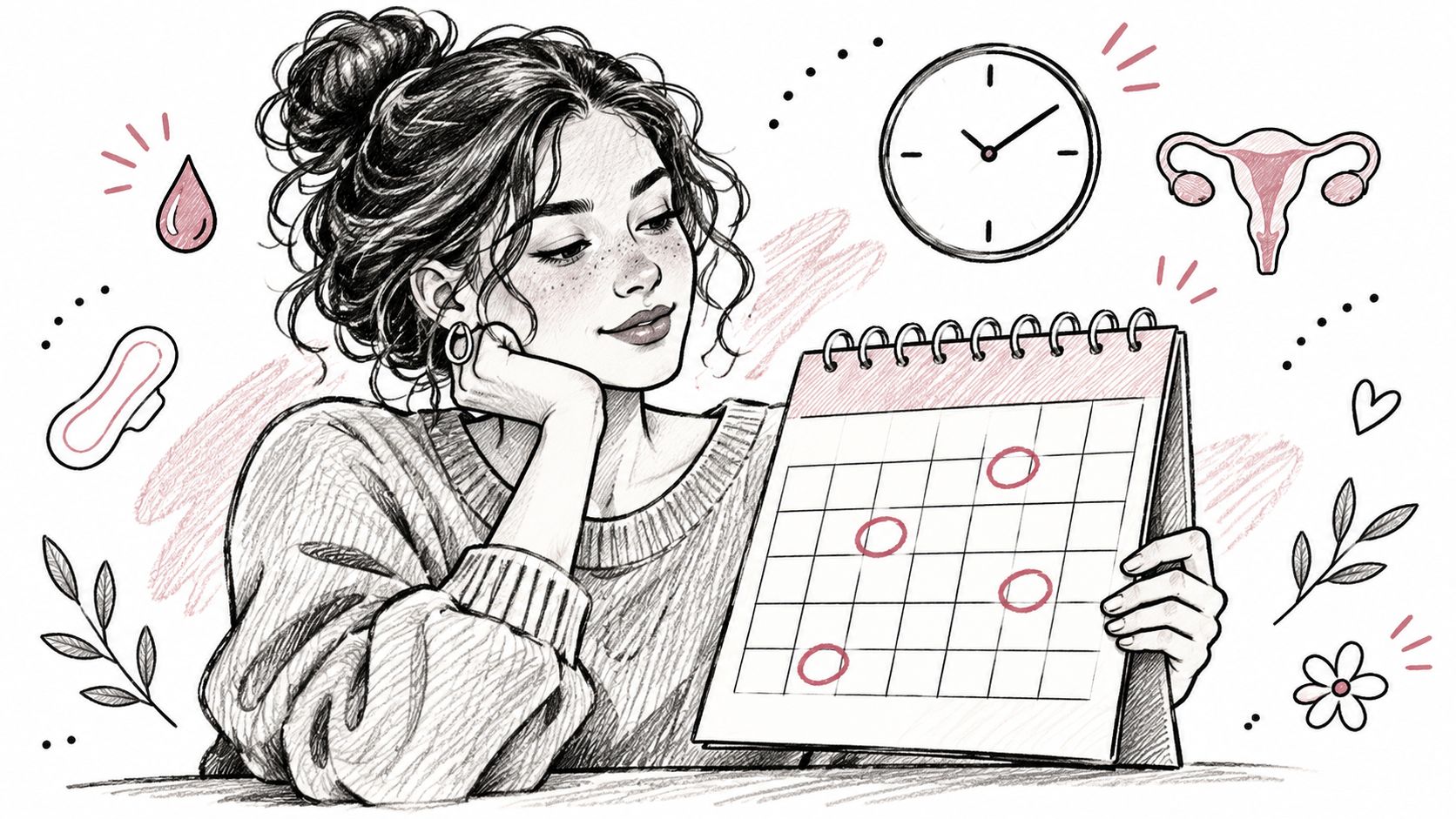
Say you track in Lila and notice your cycle has shortened from 29 days to 23 over four months. That trend, not any single start date, is what earns a clinician's attention. Cycles that shift by a few days once are usually noise. The range of normal change is wider than commonly assumed, and you can read more in how your period cycle can change.
What to log and what not to wait on
- Start and end dates for three to six months: a tracker turns scattered dates into a trend line you can hand over at an appointment.
- Bring the history, not just the date: patterns tell a clinician far more than a single data point.
- Get seen sooner if: bleeding becomes very irregular alongside other symptoms, or pregnancy is possible.
- Question cycle supplements: products sold for cycle regulation, like this Healtsy Arkofemina listing, can't tell you why ovulation changed.
2. Heavy, Prolonged, or Breakthrough Bleeding
Progesterone doesn't only trigger a period. It stabilizes the lining that estrogen has been building. When progesterone is too low or too brief, estrogen keeps stimulating the endometrium with less opposition, and bleeding gets heavier, longer, or starts arriving early as spotting.
That imbalance is sometimes called an unopposed estrogen effect. It's a description of a mechanism, not a diagnosis, and it's the reason spotting before a period is worth noting rather than shrugging off.
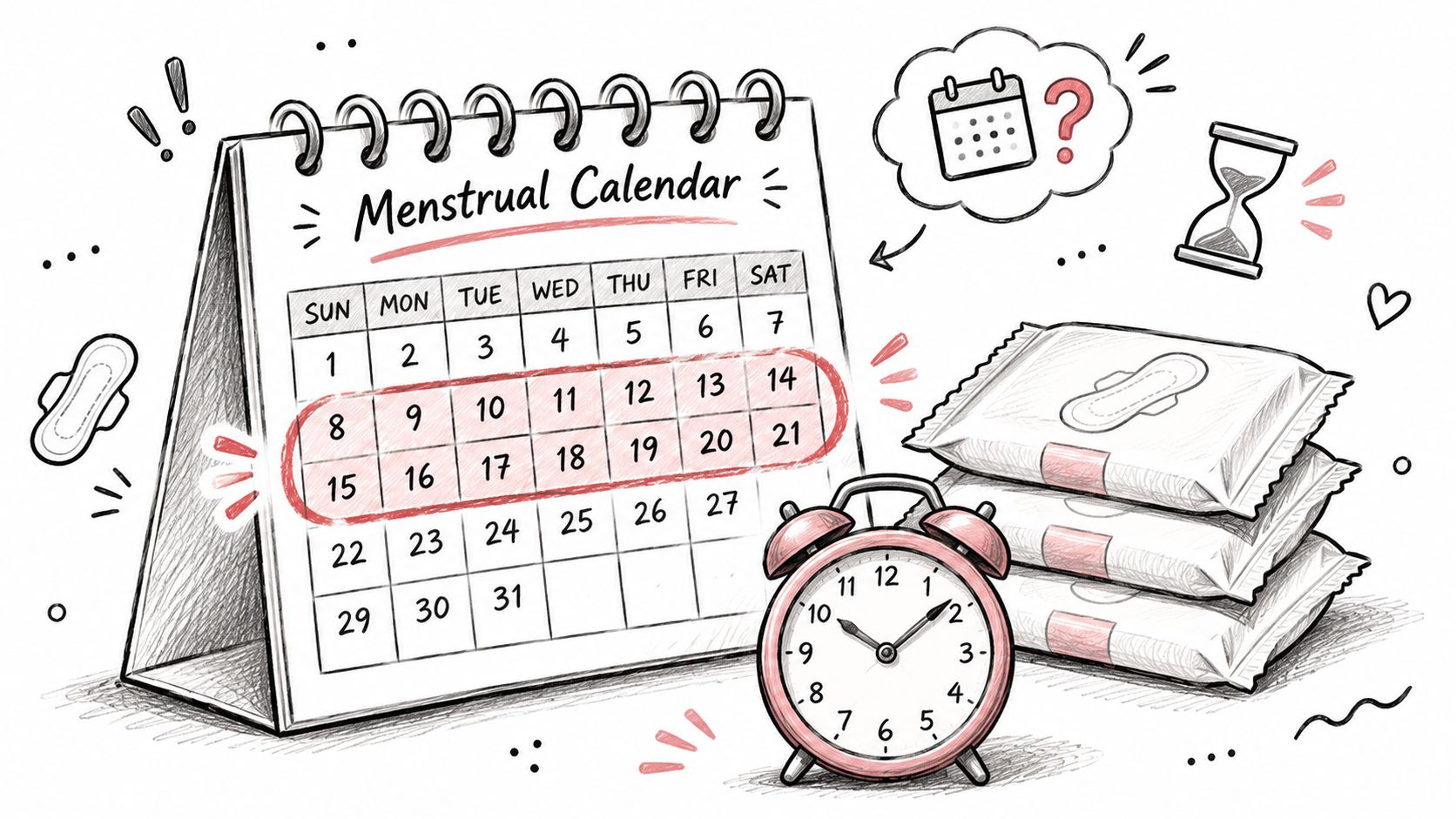
Say a 48-year-old reports two weeks of spotting before every period. Her doctor orders a transvaginal ultrasound, finds a polyp, removes it, and the spotting stops. Insufficient progesterone was a reasonable hypothesis and it wasn't the whole answer, which is exactly why bleeding changes belong in front of a clinician rather than in a supplement order.
Track volume, not adjectives
"Heavy" means very little in an exam room. Numbers do.
- Count protection changes: pads or tampons per day, clots passed, and whether you're changing protection overnight.
- Red flags that skip the wait: any bleeding after 12 months without a period, bleeding that soaks through protection within an hour, or bleeding with dizziness or faintness.
- Ask about progestogen therapy: progesterone and progestins are used to stabilize the lining, and whether you need one is a decision for a prescriber.
- Know that spotting has its own differential: polyps, fibroids, and cervical changes all mimic hormonal spotting, and perimenopause spotting between periods explains why the workup comes first.
3. Short Luteal Phase and Reduced Fertility Signals
The luteal phase is the stretch between ovulation and the next period, and progesterone owns it. A luteal phase running about 10 days or less, cycle after cycle, is the closest thing to a clinical signature of insufficient progesterone production. It matters because the lining needs enough progesterone support, for long enough, to let an embryo implant.
In a prospective BioCycle Study analysis of 259 premenopausal women, researchers examined 463 ovulatory cycles and found 8.9% met a clinical definition (luteal phase under 10 days), 8.4% met a biochemical one (peak progesterone below 5 ng/mL), and only 4.3% met both (BioCycle Study analysis of luteal phase length and progesterone). Recurrent findings across cycles were rarer still, at 3.4% and 2.1% of women respectively.
That gap between the two definitions is the whole story. Short luteal phases and low progesterone values identify overlapping but different groups, so a single flagged result confirms very little on its own.
▶ PlayThe ASRM committee opinion on luteal phase deficiency is blunt about the limits here: no reproducible, clinically practical standard currently distinguishes luteal phase deficiency reliably. A mid-luteal sample is generally drawn about seven days before the expected period, and the result counts as presumptive evidence of ovulation, shaped heavily by draw timing and day-to-day variability.
- Pin down ovulation: basal body temperature or ovulation predictor kits give you an estimated ovulation date, which is what makes luteal length measurable at all.
- Count the days, not the feeling: a luteal phase that lands at 9 or 10 days repeatedly is the finding worth reporting.
- Escalate on time, not hope: if conception hasn't happened after six months of trying past age 35, or twelve months under 35, that's the standard point to see a fertility specialist.
4. Sleep Disruption and Insomnia
Progesterone isn't only a reproductive hormone. Your body converts it into allopregnanolone, a neurosteroid that acts on GABA-A receptors, the same calming pathway targeted by anti-anxiety medication. When progesterone falls, that built-in sedative weakens, and sleep gets lighter, more fragmented, and easier to derail.
A recent review of sleep across the menstrual cycle reports lower sleep efficiency, shorter sleep time, and more variable activity during the late luteal phase as progesterone declines (review of sleep and reproductive hormones across the lifespan). The same review is careful about blame: insomnia, night sweats, anxiety, low mood, bloating, and breast tenderness aren't specific to progesterone deficiency, because estrogen is fluctuating at the same time.
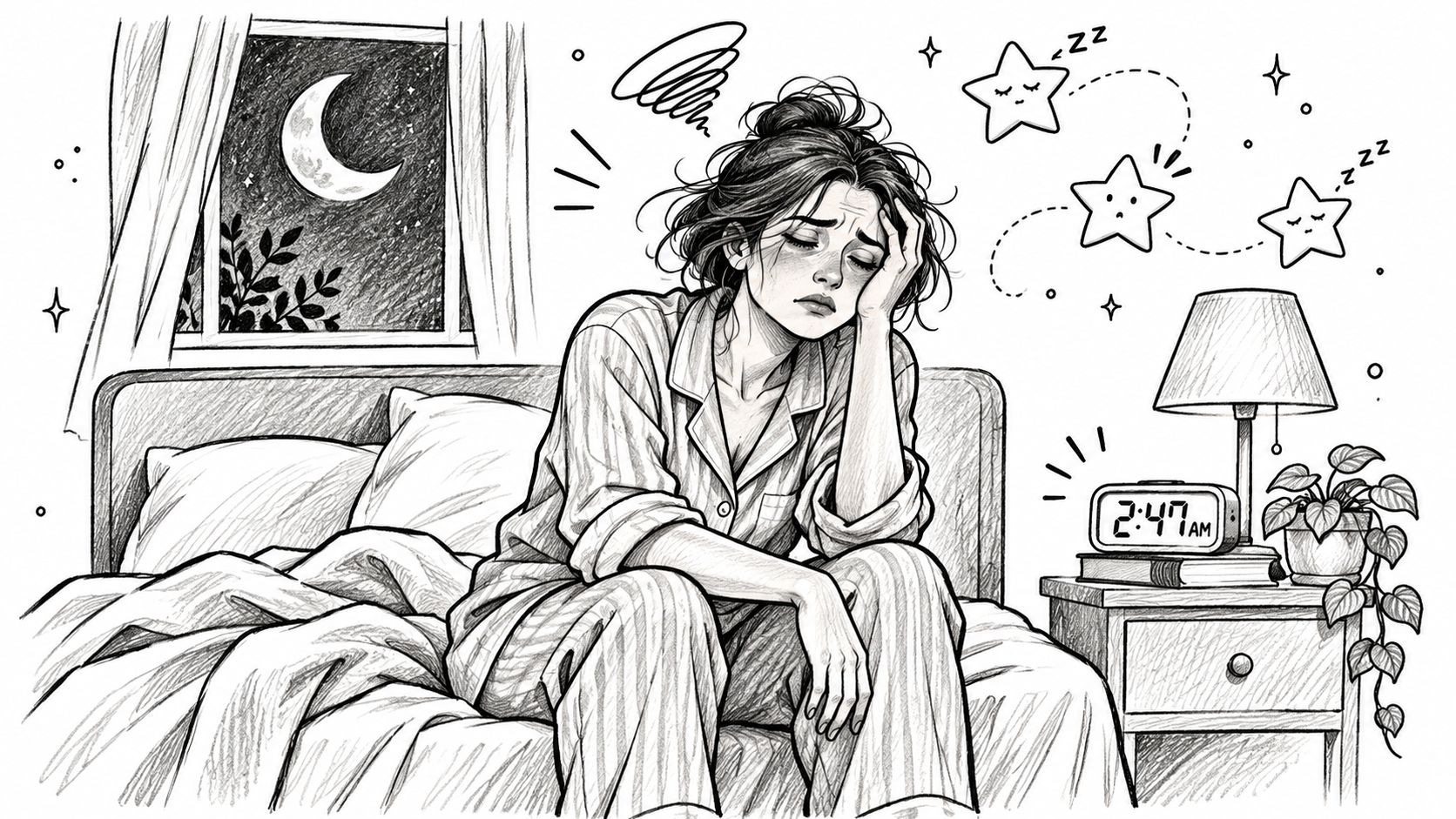
A worked example: log sleep quality nightly and you find your worst nights cluster in the ten days before your period. That pattern lets you plan evening routines for those days instead of treating every night as equally likely to go wrong. For a broader look at how the transition affects sleep, see does menopause cause insomnia.
What actually helps
- Fix your wake time: a consistent morning anchor does more for fragmented sleep than an early bedtime does.
- Cut caffeine after noon: midlife sleep is more sensitive to it, and afternoon coffee shows up at 3 a.m.
- Cool the bedroom: 16 to 19 degrees Celsius reduces disruption from night sweats.
- Ask for CBT-I by name: cognitive behavioral therapy for insomnia is first-line treatment for chronic insomnia, and it outperforms sleeping pills over time. Providers for Healthy Living explains the sleep hygiene basics that support it.
Practical rule: if broken sleep has been the norm for months rather than weeks, ask for CBT-I before you ask for a hormone test. It's the treatment with the strongest evidence, and it works whether or not progesterone is the trigger.
5. Anxiety, Irritability, and Low Mood
The same allopregnanolone pathway that quiets sleep also steadies mood. Less progesterone means less of that GABA-A support, and the late luteal week can bring a short fuse, tearfulness, and anxiety that feels physical rather than mental.
A history of premenstrual dysphoric disorder or a previous episode of depression makes this more likely, not less. It's worth saying out loud at your first appointment rather than waiting to be asked.
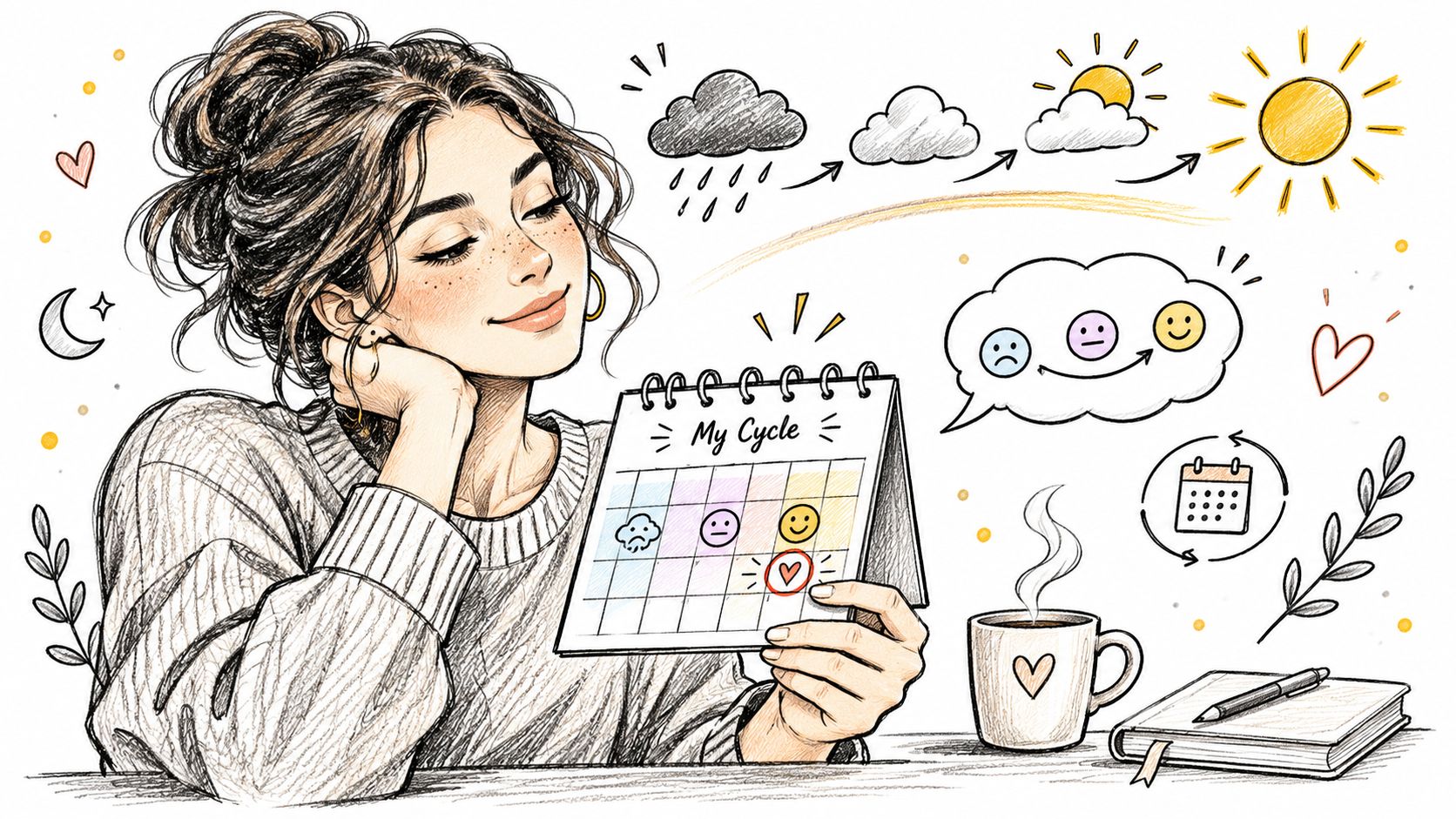
A user rates her mood daily on a five-point scale and finds her irritability peaks on cycle days 24 to 28, four months running. That's a different clinical object than "I've been anxious lately," and it's what makes a clinician take luteal mood symptoms seriously.
Mood tracking that beats a single rating
- Rate daily, not weekly: a weekly average hides the luteal spike entirely.
- Note sleep and alcohol alongside mood: both change the reading, and both are trackable.
- Use exercise and mindfulness deliberately: regular aerobic activity and mindfulness practices have evidence for reducing anxiety and mood symptoms in midlife.
- Draw a hard line at self-harm: persistent low mood or thoughts of self-harm need professional support now, not a supplement and a wait-and-see.
6. Breast Tenderness and Worsening PMS
Breast tenderness that was a two-day nuisance in your thirties can become a week of sensitivity in your forties. Bloating, cramping, and breast soreness all intensify with the cyclical rise and fall of progesterone and estrogen, and when progesterone production turns erratic, premenstrual symptoms can get stronger, last longer, or appear in forms you never had before.
New symptoms aren't automatically worse hormones. A pattern that repeats in the same phase of every cycle points to hormones. A symptom that arrives and stays does not, and deserves its own workup.
What I tell patients: a new, fixed lump is not a progesterone symptom. Get it examined, and keep your screening mammograms on schedule.
A 45-year-old notices her breast tenderness is more severe than it was in her thirties. She logs it in a symptom calendar for three cycles, confirms it peaks in the luteal phase and fades within two days of bleeding, and brings that to her gynecologist. That's a conversation with evidence behind it rather than a guess. More on the mechanism sits in perimenopausal breast tenderness.
Reduce the load before you chase the hormone
- Wear a supportive bra for sleep and exercise: it changes discomfort more reliably than any cream.
- Cut sodium in the two weeks before your period: it reduces fluid retention and bloating alongside the tenderness.
- Practice breast self-awareness: know what your normal texture feels like, and report anything fixed.
- Keep screening on schedule: mammography timing follows your age and risk profile, not your symptom calendar.
7. New or Worsening Headaches and Migraines
Menstrual migraine tends to arrive in the days just before bleeding starts, tracking the fall of progesterone and estrogen rather than the period itself. The withdrawal of both hormones is the trigger, which is why the headache often precedes the bleeding rather than accompanying it.
In perimenopause, hormonal instability can make headaches more frequent or change their character. A migraine that used to hit once a season can start showing up every cycle, and one that never had visual symptoms can acquire them.
A user logs headache onset next to cycle day and finds her migraines consistently begin two days before her period. That timeline lets her clinician plan preventive treatment timed to the vulnerable window instead of treating each attack after it starts. Broader patterns are covered in menopause headaches, causes, relief, and strategies.
The aura question matters
- Track the full set of inputs: cycle day, sleep, hydration, meals, and alcohol. Headache triggers are usually cumulative, not single.
- Eat and drink on schedule: skipped meals and dehydration are two of the most common, most fixable triggers.
- Flag visual symptoms: migraine with aura changes the safety calculation for estrogen-containing therapy, so say the word "aura" explicitly if you get visual disturbances.
- Bring the calendar, not the memory: attack frequency and cycle timing determine whether prevention is worth starting.
8. Bloating, Water Retention, and Midlife Weight Gain
Progesterone has a mild diuretic effect and supports fluid balance, so low levels can leave you puffy, bloated, and up a kilogram that isn't fat. Some clinicians describe the resulting state as relative estrogen dominance, though that phrase isn't a formal diagnosis and shouldn't be treated as one.
Weight distribution in midlife is a wider problem than hormones alone. Sleep debt, muscle loss, and a slower metabolism all move the number on the scale, and blaming progesterone for all of it leads to treatments that don't work.
The symptoms most often attributed to low progesterone, from irregular cycles and heavier bleeding to worsening PMS, sleep disruption, anxiety, low mood, fatigue, and digestive complaints, overlap closely with thyroid disease, depression, anemia, and medication effects (review of low progesterone symptoms in perimenopause). That overlap is why a single progesterone or estradiol result so rarely explains the lived pattern.
A user tracks meals next to cycle data and sees bloating peak during the luteal phase, every cycle. She adjusts sodium and fiber for those ten days and the puffiness drops without any other change.
What moves the needle
- Cut ultra-processed food and excess sodium in the second half of the cycle: that's when retention is worst.
- Strength train two to three times a week: it protects the muscle mass that keeps your metabolism steady through midlife.
- Get persistent bloating checked: bloating with pain or changed bowel habits needs evaluation for ovarian issues and celiac disease, not a diet.
- Stay skeptical of quick promises: clinics advertising weight loss at 3D Aesthetics Leamington Spa can support body composition goals, but no program fixes a hormonal pattern on its own.
Comparing Low Progesterone Symptoms and Tracking Priorities
| Symptom | Typical Timing | Best Tracking Method | When to Escalate |
|---|---|---|---|
| Irregular or Changing Menstrual Cycles | Changes gradually over months; cycles may shorten, lengthen, or be skipped | Record period start and end dates for 3–6 months | Seek evaluation for very irregular bleeding or if pregnancy is possible |
| Heavy, Prolonged, or Breakthrough Bleeding | Periods may last over 7 days; spotting can occur before or between periods | Log daily bleeding and how often protection is changed | Seek prompt care for postmenopausal bleeding, hourly soaking, or bleeding with dizziness |
| Short Luteal Phase and Reduced Fertility Signals | Between ovulation and the next period; a short phase may involve pre-period spotting | Track ovulation with basal body temperature or ovulation tests | Consult a fertility specialist if trying to conceive for 6 months at age 35 or older, or 12 months under 35 |
| Sleep Disruption and Insomnia | May worsen 1–2 weeks before a period | Record sleep quality and cycle day | Consider clinical support, including CBT-I, for chronic insomnia |
| Anxiety, Irritability, and Low Mood | Often in the days before a period; may become more persistent | Record daily mood alongside cycle day | Seek professional support for persistent symptoms or thoughts of self-harm |
| Breast Tenderness and Worsening PMS | Often in the second half of the cycle; may ease after bleeding starts | Track symptoms and cycle timing on a calendar | Promptly seek assessment for a new lump, skin change, or nipple discharge |
| New or Worsening Headaches and Migraines | May occur before or during menstruation; patterns can change across cycles | Log headaches with cycle day, sleep, hydration, and food | Seek urgent care for sudden severe pain or neurological symptoms; get medical advice for a changing pattern, especially after age 50 |
| Bloating, Water Retention, and Midlife Weight Gain | Bloating may peak before menstruation; weight changes may be gradual | Track symptoms alongside cycle, meals, and weight patterns | Consult a clinician for persistent bloating, pain, or changes in bowel habits |
When to Stop Tracking and Talk to a Doctor
Tracking earns its keep when it changes what happens next. Three months of cycle dates, bleeding notes, sleep scores, and mood ratings give a clinician somewhere to look, which is more than a single flagged lab value ever will.
Book the visit when symptoms are doing damage. Broken sleep that lasts weeks, mood shifts that affect work or relationships, new anxiety, or bleeding that is heavy, prolonged, or arrives after menopause are all reasons to stop observing and get assessed. Bleeding with dizziness, or any bleeding after 12 months without a period, needs evaluation rather than another month of logging.
Bring your notes with you, and bring them in a form someone can read in two minutes.
- Cycle dates: start and end dates for at least three cycles, with your best estimate of ovulation.
- Bleeding detail: the heaviest days, with pad or tampon counts and any spotting between periods.
- Sleep and mood: scores plotted against cycle day, so the luteal pattern is visible at a glance.
- Medications and supplements: including hormonal contraception, which suppresses ovulation and makes a low progesterone reading expected rather than abnormal.
- Specific questions: ask about thyroid and prolactin testing, ferritin, and whether a mid-luteal progesterone sample is worth timing.
What I'd push for is context, not a number. A progesterone result read without the cycle day, the rest of the hormone panel, and your symptom history is close to meaningless, and the same value can be entirely normal in the first half of a cycle. Ask what the result means for your pattern, and ask what the next step is if it comes back ambiguous.
Lila centralizes the tracking piece with daily check-ins across 20+ symptoms, including sleep quality, mood, anxiety, energy, bloating, headaches, and period changes, so the pattern is recorded as it happens rather than reconstructed from memory. It isn't a diagnostic tool and doesn't replace medical advice, and any decision about hormone testing or treatment belongs with your clinician.
Lila was built for exactly this stage: a two-minute daily check-in that tracks 20+ symptoms alongside sleep, mood, and cycle data, so the pattern you take to your doctor is already written down. It adapts its nutrition guidance to your perimenopause stage and helps you spot which foods line up with bloating, night sweats, and headaches, which makes tracking feel less like homework and more like evidence. Visit Lila to see whether it fits how you want to manage your symptoms.
Get Lila, your personal coach for perimenopause.
Built for women in their 40s. 24/7 coaching, in your pocket.