Thinning Hair Menopause Vitamins: Support & Revive Your Hair Health
Find the best thinning hair menopause vitamins to support hair health. Understand why hair changes & how targeted nutrition helps you thrive.
 Michelle
If you’ve started to notice your part widening, your ponytail feeling a little thinner, or just more hair in your brush, you’re not imagining things. This is a classic sign of menopause for many women. While there isn't a single magic bullet, a thoughtful approach combining lifestyle tweaks and specific thinning hair menopause vitamins can create a powerful foundation for healthier, stronger hair.
First, let's get to the root of the problem—understanding why this is happening is the key to doing something about it.
Why Menopause Can Affect Your Hair Health
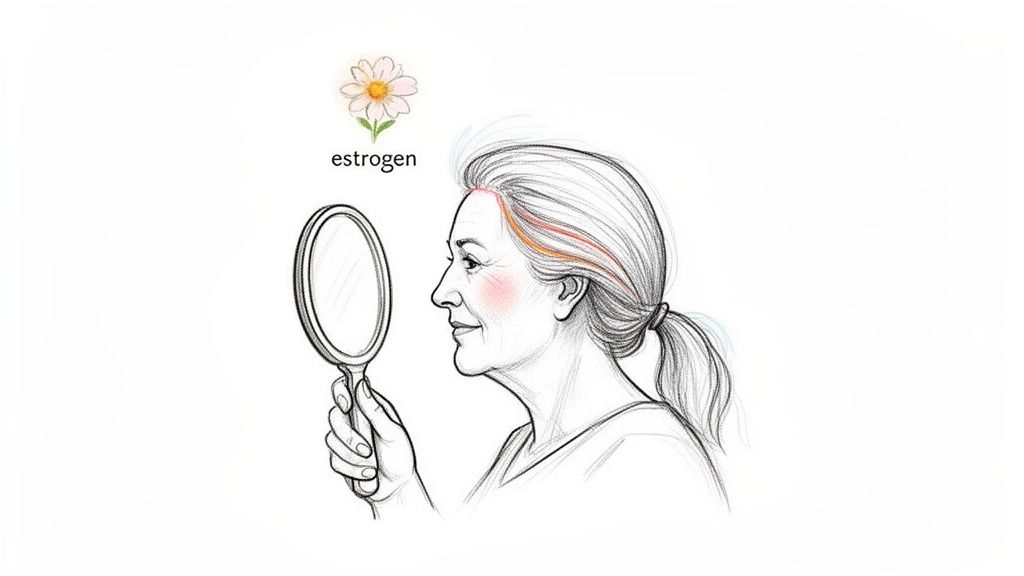
Think of the hormone estrogen as the master gardener for your hair. For decades, it has kept your hair follicles in their active growing phase (the anagen phase) for as long as possible, which is what gives you a full, healthy head of hair.
But as you enter menopause, estrogen levels naturally decline. Without its chief gardener, the hair growth cycle gets thrown off balance. The growth phase shortens, and the hair follicles themselves can start to shrink. This common condition is known as Female Pattern Hair Loss (FPHL).
How Common Is Menopausal Hair Thinning?
If this is your experience, you are far from alone. One major 2022 study revealed that a staggering 52.2% of postmenopausal women experience female pattern hair loss. That study also found that the odds can increase with age and a higher BMI, confirming what many of us have suspected.
This isn't just about shedding a few extra strands. It shows up in a few distinct ways:
A widening part is often the very first and most common sign.
Your ponytail might feel less full, forcing you to wrap the hair tie an extra time.
Individual strands can feel finer and more fragile to the touch.
You might notice more of your scalp is visible, especially in harsh lighting.
Hormonal shifts are a huge piece of the puzzle, but it helps to see how they fit into the bigger picture of female hair loss to rule out other causes.
Moving From "Why" to "What Now?"
Simply understanding this hormonal connection is empowering. It shifts the narrative from "What's wrong with me?" to "Okay, this is a normal part of a biological process." You can learn more about the specifics in our detailed guide on how menopause can cause hair loss.
Here's the good news: you have options. While you can't turn back the clock on menopause, you can absolutely give your body the essential building blocks it needs to support your hair follicles and buffer the effects of these hormonal changes.
This is where smart nutrition really shines. By focusing on the right thinning hair menopause vitamins and key nutrients, you’re creating the best possible internal environment for hair to thrive. Think of them as the new support crew, stepping in to help your follicles do their best work even with less estrogen on the job. Let’s dive into exactly which ones make a real difference.
What’s Really Happening to Your Hair During Menopause?
To figure out why your hair is changing, we have to look at the hormonal drama unfolding behind the scenes. For decades, one hormone in particular—estrogen—was your hair’s best friend, acting as the VIP guardian of your hair growth cycle.
During your reproductive years, estrogen was hard at work keeping your hair in its anagen (growth) phase for as long as possible. This is why your hair felt thick and stayed on your head for a good long while. It was the key to a healthy, full head of hair.
But as you transition into menopause, your estrogen levels start to drop, and that guardian steps down. Without it, the whole system that kept your hair growing gets thrown off balance.
The Hormonal Seesaw Effect
This drop in estrogen doesn't just happen in isolation; it sets off a chain reaction. The growth phase of your hair gets shorter, which means individual strands don't have as much time to grow long and strong before they're shed. At the same time, the hair follicles themselves can start to shrink, a process called miniaturization.
This is the central reason so many women notice their hair thinning. In fact, a major 2023 review confirmed that this exact hormonal shift is why nearly 50% of women experience noticeable hair thinning, with that number jumping significantly after age 50. You can take a closer look at the science behind these hair follicle findings in the study itself.
But estrogen is only one side of the story. To get the full picture, we need to talk about androgens.
Key Takeaway: Think of it like a hormonal seesaw. As your hair-protective estrogen goes down, the relative effect of androgens—which can be tough on hair follicles—goes up.
The New Influence of Androgens
Androgens, often called "male hormones" like testosterone, have always been present in your body in small, manageable amounts. When you were younger, your high levels of estrogen easily overpowered them, keeping their effects on your hair under wraps.
Once menopause hits and estrogen levels plummet, that balance is gone. Suddenly, the androgens that were always there have a much louder voice. For women who are genetically sensitive to them, these androgens can latch onto hair follicles and cause trouble.
This process has a powerful miniaturizing effect on the scalp:
It signals the follicles to produce hairs that are finer, shorter, and less vibrant.
Over time, some follicles might just give up and stop producing hair altogether.
This is why menopausal hair thinning often looks a lot like female pattern hair loss, showing up as a widening part or a general sense of "less hair" all over. If you want to get a better handle on your own hormone levels, our guide to understanding normal estradiol levels is a great place to start.
The Cycle of Stress and Sleepless Nights
The story doesn't stop with hormones. Menopause can also bring on a wave of stress and disrupt your sleep, creating a vicious cycle that makes hair issues even worse.
High cortisol from chronic stress can literally push more of your hair into the shedding phase. On top of that, a lack of deep, restorative sleep means your body—including the hardworking cells in your hair follicles—doesn't get the downtime it needs to repair and regenerate. This combination of hormonal shifts and lifestyle pressures creates a perfect storm for thinning hair.
Understanding this complete picture—from estrogen's departure to the rising influence of androgens and the added burden of stress—is the first real step toward taking back control. It helps you move from feeling frustrated and confused to a place where you can make informed, strategic choices to support your hair's health.
Okay, we’ve talked about why menopausal hair thinning happens. Now for the important part: what can you actually do about it?
When it comes to nutrition, think of vitamins and minerals not as a magic bullet, but as a dedicated support crew for your hair follicles. They provide the raw materials and reinforcement needed to help your hair weather the hormonal shifts of menopause.
Instead of just giving you a long list of supplements, let's break them down by their job description. We'll group them into three key teams: The Builders, The Regulators, and The Protectors. This makes it much easier to see how each nutrient plays a specific role in keeping your hair healthy from the inside out.
The image below gives a great visual of the hormonal tug-of-war that’s at the heart of menopausal hair changes.
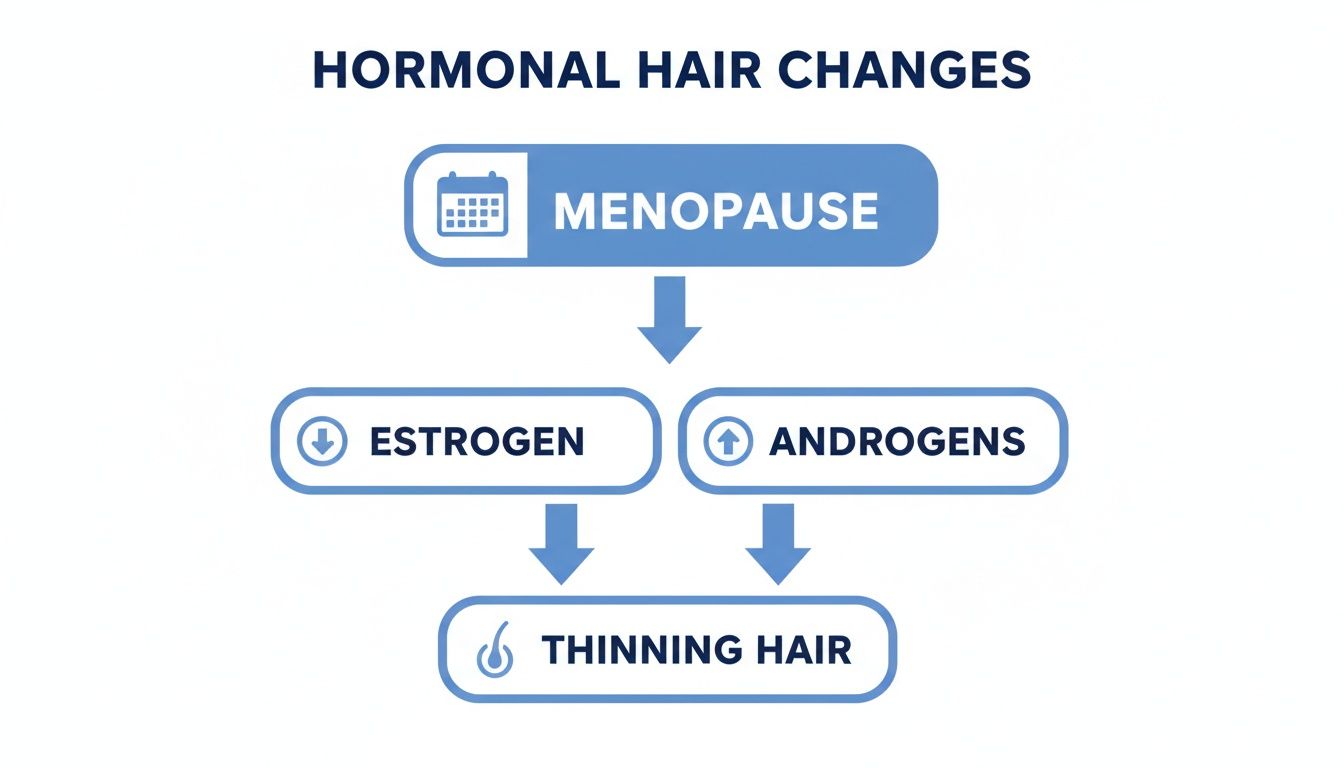
As you can see, the drop in estrogen (which helps keep hair in its growth phase) and the relative rise in androgens (which can shrink follicles) is the main reason so many of us start seeing more hair in the brush.
The Builders: Creating a Strong Foundation
These are the nutrients that literally form the building blocks of a healthy hair strand. Without them, hair can’t grow strong and is more likely to become weak and brittle.
Biotin (Vitamin B7) Biotin gets a lot of hype for hair health, and for good reason. It’s a critical part of producing keratin, the very protein that makes up over 90% of each hair on your head. Think of biotin as the head foreman on a construction site, making sure every hair strand is built correctly. True deficiencies are rare, but keeping your levels topped up during menopause is a smart strategy.
Collagen Peptides Your body’s most common protein, collagen is packed with amino acids—especially proline—that are essential for building that all-important keratin. Taking collagen peptides gives your body a direct, easy-to-use supply of these amino acids. It’s a helping hand for not just your hair, but your skin and joints, too.
The Regulators: Managing the Growth Cycle
This group is like the project management team for your hair. They oversee everything from creating new follicles and delivering oxygen to keeping hormones in check. Many women in their 40s and beyond are low in these, and it can really put a damper on hair growth.
Vitamin D You probably know it as the “sunshine vitamin,” but it’s also a key player in waking up dormant hair follicles to start a new growth phase. It helps create the tiny pores where new hairs sprout. Since low Vitamin D is incredibly common, especially as we get older, it's one of the first things to consider when you notice increased shedding.
Iron Think of iron as the oxygen delivery service for your hair. It’s essential for making hemoglobin, the protein that ferries oxygen to every cell in your body—including the power-hungry cells of your hair follicles.
When iron is low (anemia), your body gets smart. It diverts oxygen to your vital organs first, leaving hair follicles to fend for themselves. This can trigger a major shift into the shedding phase.
Because perimenopause can bring heavy or irregular periods, low iron stores are a frequent culprit behind hair thinning during this time.
Zinc Zinc is a true multitasker. It’s involved in both hair tissue growth and repair, and it also helps the oil glands around the follicles function properly. A dip in zinc levels can disrupt the hair growth cycle and lead to shedding.
The Protectors: Shielding Against Damage
Finally, we have the bodyguards. These antioxidant nutrients defend your hair follicles from oxidative stress—cellular damage that can be accelerated by the changes of menopause, not to mention daily stress and environmental factors.
Vitamin C This isn't just for colds! As a powerful antioxidant, Vitamin C helps shield follicles from free radical damage. But it does double duty: it’s also absolutely essential for making collagen and, crucially, helps your body absorb iron from plant-based foods. It’s the ultimate team player.
Vitamin E Like its friend Vitamin C, Vitamin E is a potent antioxidant that fights oxidative stress right at the scalp. A healthy scalp is the foundation for healthy hair, and by protecting the cells, Vitamin E fosters a better environment for growth.
Selenium This trace mineral helps guard against oxidative damage and has a role in the creation of hair itself. It’s a delicate balance with this one—both too little and too much can contribute to hair loss—so getting the right amount is key.
Now, let's pull all of this together. The table below summarizes these key nutrients, their role, and where you can find them in your diet.
Top Vitamins and Minerals for Menopausal Hair Health
This table provides a quick-glance guide to the most important nutrients for supporting your hair during the menopausal transition.
Nutrient | Role in Hair Health | Best Food Sources |
|---|---|---|
Biotin (B7) | Essential for producing keratin, the main protein in hair. | Eggs, nuts (almonds, walnuts), seeds, sweet potatoes, avocado |
Iron | Carries oxygen to hair follicles for energy and growth. | Red meat, poultry, fish, lentils, spinach, fortified cereals |
Vitamin C | Protects follicles from damage; needed to make collagen and absorb iron. | Citrus fruits, bell peppers, strawberries, broccoli, kiwi |
Vitamin D | Helps create new hair follicles and restart the growth cycle. | Fatty fish (salmon, mackerel), fortified milk/yogurt, sunlight |
Zinc | Supports hair tissue growth and repair; keeps oil glands functioning. | Oysters, beef, pumpkin seeds, lentils, chickpeas |
Vitamin E | An antioxidant that reduces oxidative stress on the scalp. | Sunflower seeds, almonds, spinach, avocado, wheat germ |
Collagen | Provides amino acids needed to build new hair proteins. | Bone broth, chicken skin, fish, collagen peptide supplements |
Selenium | Protects against cellular damage and aids in hair follicle function. | Brazil nuts (limit to 1-2 per day), tuna, sardines, eggs |
Focusing on a diet rich in these foods is the best first step for supporting your hair from within.
Bringing these nutrients together gives your hair a solid line of defense. For a more general overview, you might want to explore this guide on the best vitamins for thinning hair.
Remember, supporting your hair is just one piece of the wellness puzzle during this stage of life. For a more holistic view, our guide on natural perimenopause supplements offers ideas for overall well-being.
So, you know which nutrients are important. But what’s the best way to get them—from your plate or from a pill? Let's tackle that next.
Should You Focus on Food or Supplements?
So, you've got the list of all the key vitamins and minerals that can help with menopausal hair thinning. The next logical question is a big one: what’s the best way to get them into your system? Should you be overhauling your grocery list or just heading straight for the supplement aisle?
Let's cut to the chase. The most effective strategy almost always starts with a "food-first" mindset.
Think of it this way: whole foods are like a symphony orchestra. When you eat spinach alongside some bell peppers, you're not just getting iron and Vitamin C. The vitamin C in the peppers is actively helping your body absorb the iron from the spinach. They work together in concert, enhancing each other's benefits in a way a single, isolated supplement just can't replicate.
This natural synergy is incredibly powerful. Your body has spent millennia learning how to best recognize and use the nutrients that come packaged in whole foods.
Why Your Plate Should Come First
Putting a nutrient-packed diet at the top of your list brings benefits that go far beyond your hair. A balanced plate is your best friend for supporting your energy levels, mood, and overall well-being as you navigate the changes of menopause.
Nutrient Synergy: Foods are more than just a single nutrient. An orange gives you Vitamin C, sure, but it also delivers fiber, flavonoids, and a whole host of other compounds that a simple ascorbic acid tablet is missing.
Better Absorption: The nutrients found in food are often more “bioavailable.” This just means your body can absorb and put them to use much more efficiently.
Built-in Safety: It's practically impossible to get a toxic dose of a vitamin or mineral just by eating real food. With supplements, especially the fat-soluble vitamins, it's a real risk if you’re not careful.
Here's the bottom line: supplements are designed to supplement a healthy diet, not stand in for one. The meals you eat every day must be the foundation of your plan for healthier hair.
But let’s be realistic. Menopause can be a demanding time. Between a hectic schedule, up-and-down energy levels, and the body's changing needs, getting every single nutrient from food, every single day, is a tall order. This is precisely where smart, targeted supplementation can be a game-changer.
When Supplements Are a Smart Move
Even with the best diet in the world, gaps can happen. During menopause, your body’s demand for certain nutrients—like Vitamin D and iron—can actually go up, right at the time when your ability to absorb them might be going down. In these cases, a supplement can act as an essential safety net.
Consider supplements when:
A Deficiency Is Confirmed: If blood tests show you're low in something specific, like iron or Vitamin D, a supplement is the fastest and most direct way to get your levels back where they need to be. If a deficiency is contributing to your hair loss, this step is non-negotiable.
Your Diet Has Limitations: If you're vegan, vegetarian, or have food allergies, getting enough of certain nutrients—like B12, iron, or zinc—from diet alone can be a real struggle.
Food Alone Isn't Enough: Sometimes, the amount of a nutrient needed to see a real benefit for hair health is simply too hard to get from your diet. For instance, getting enough Vitamin D from food and sunlight is tough for many people, especially during the winter months.
Choosing Wisely to Avoid Wasting Your Money
Walking into the supplement aisle can feel overwhelming. It's a huge industry, and not all products are created equal.
To make sure you're getting something that will actually help, look for high-quality, "bioavailable" forms that your body can easily use. For example, "chelated" minerals (like zinc glycinate) or the "methylated" forms of B vitamins are generally absorbed much better than their cheaper counterparts.
Ultimately, the best approach is a personalized one. Start with food. Pack your meals with all the hair-healthy builders, regulators, and protectors we've been talking about. Then, if you can, work with a healthcare provider to run some tests and see if you have any specific gaps. This allows you to supplement intelligently, using targeted support only where it's truly needed. Combining a great diet with smart supplementation gives you the best of both worlds for your hair health.
How to Safely Integrate Vitamins with HRT
▶ PlayIf you're using Hormone Replacement Therapy (HRT) to manage menopause symptoms, you might also be looking at specific thinning hair menopause vitamins to tackle hair loss. This is a common and smart approach, but it's crucial to understand that these two treatments don't work in isolation. Your body is a complex system, and adding a new supplement can create unexpected ripple effects.
That's why even the most "natural" vitamin requires a little homework before you start taking it, especially if you're already on HRT or any other prescription medication.
The One Step You Can't Skip
Before you even think about adding a new supplement to your routine, the very first thing you must do is talk to your doctor or pharmacist. I can't stress this enough—it's not just a friendly suggestion, it's an essential safety check.
Your healthcare provider has the full picture: your specific HRT regimen, other medications you take, and your overall health history. They are the only ones who can give you the green light or advise you on which supplements could cause more harm than good.
A Word of Caution: Supplements are not harmless. They contain biologically active compounds that can interfere with medications. Sometimes they can make a drug dangerously strong, or, more often, they can weaken its effects and sabotage your entire treatment plan.
When you go to your appointment, bring a list of everything you're taking and everything you'd like to try. This helps you and your doctor work together to create a plan that is both effective and, most importantly, safe.
Understanding How Supplements and HRT Can Interact
So, why all the fuss? It comes down to how certain supplements can interfere with the way your body absorbs, metabolizes, and uses medications like HRT. Think of your medication as a specific key designed for a very specific lock in your body. Some supplements can bend that key or gum up the lock, preventing it from working as it should.
Here are a few common ways this can happen:
Absorption Issues: Some supplements, especially minerals like calcium or iron, can physically latch onto medications in your gut. This prevents the drug from ever making it into your bloodstream to do its job. This is why you're often told to take certain pills hours apart from others.
Metabolism Mix-ups: Many drugs, including the estrogen in your HRT, are processed by enzymes in your liver. Certain supplements (St. John's Wort is a classic example) can rev up these enzymes, causing your body to break down and flush out your medication too quickly. The result? Your HRT becomes less effective.
Hormonal Interference: Some botanicals contain plant-based compounds that mimic hormones (phytoestrogens). While these can sometimes be helpful, they can also compete with your HRT, leading to confusing results and throwing your hormonal balance off-kilter.
Using an App to Keep Track of It All
Once you and your doctor have agreed on a plan, it's a great idea to monitor how you're feeling. A health-tracking app can be a fantastic tool for this. By consistently logging your symptoms, energy levels, hair changes, and any side effects, you build a clear, detailed record over time.
For example, the Lila app lets you track all of these details in one simple place. You can then share this data with your doctor at your follow-up appointments. It gives them real, objective information to see how well the combination of HRT and your vitamins is working for you, ensuring every part of your plan is helping you feel your best.
Your Action Plan for Healthier Hair During Menopause
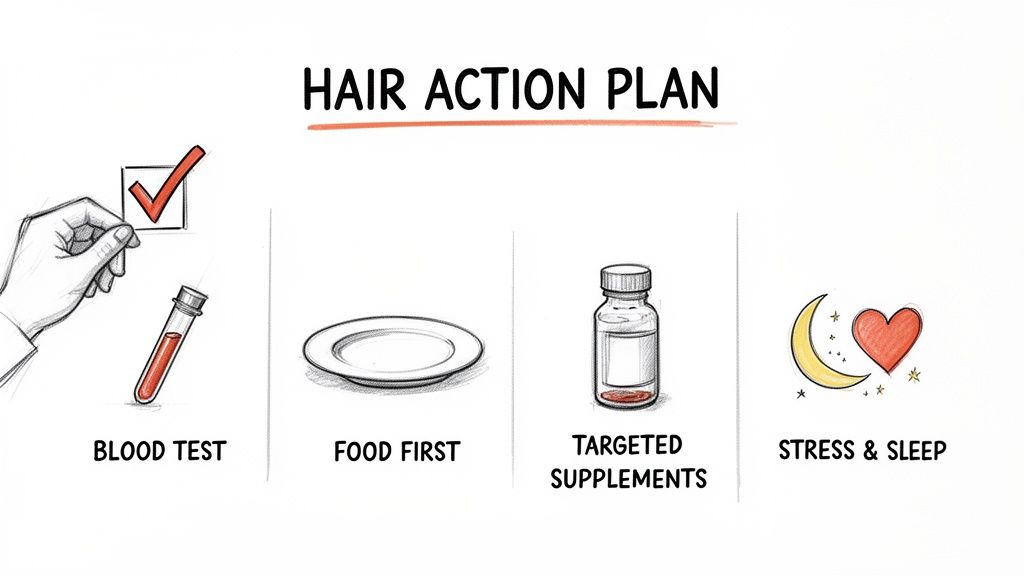
Alright, you now understand the complex science behind why your hair is changing during menopause. But knowledge is only half the battle. The next, most important step is turning that knowledge into a concrete action plan—one that’s designed for you and your body.
The key is to move away from guesswork and towards a strategy. Before you even think about buying a new supplement, I always recommend starting with a visit to your doctor for some baseline blood work. It’s a surprisingly simple step that can reveal so much, like whether your ferritin (iron stores) or vitamin D levels have dipped low enough to contribute to hair shedding.
My Core Philosophy: Don't supplement in the dark. Testing gives you a clear roadmap, showing you exactly what your body is missing. This way, you’re investing in what will actually work, not just another bottle of hope.
Once you have this personal data, you can start building a routine that truly supports your hair from the inside out. It's not about adding a dozen new, complicated steps to your day. It's about being consistent with a few key, powerful habits.
Building Your Personalized Roadmap
Think of this as a simple, four-part checklist. These are the daily choices and habits that, when combined, create the best possible environment for healthier hair growth.
Food First, Always: Really lean into a diet packed with nutrients. This means consciously adding foods rich in the building blocks and protectors we've talked about. Think lean proteins for keratin production, leafy greens for iron, and colorful fruits for antioxidants.
Supplement Strategically: With your blood test results as a guide, you can now add only the specific thinning hair menopause vitamins your body truly needs. For many women, this might be an iron supplement to boost low ferritin or a daily vitamin D capsule to support the hair growth cycle.
Manage Your Stress and Sleep: High cortisol and restless nights are absolute hair-health wreckers. Find simple ways to unwind that fit into your life—a 10-minute walk after dinner, a few deep breaths before a meeting—and make getting enough sleep a non-negotiable priority.
Track Your Progress: Change takes time, and it’s easy to lose motivation when you aren't seeing results overnight. Using a tool like the Lila app to log your meals, supplements, and how you feel can be incredibly helpful. It creates a visual record, so you and your doctor can see what's working and make smart adjustments along the way.
This approach puts you in the driver’s seat. By combining smart testing with a food-first mindset, targeted supplements, and lifestyle tweaks, you're not just hoping for better hair—you're building a sustainable, long-term strategy for it.
Your Questions About Menopause Hair Loss, Answered
When you start noticing changes in your hair during menopause, it's natural to have a lot of questions. Let's walk through some of the most common concerns I hear from women going through this exact transition.
Can Menopausal Hair Loss Be Reversed?
This is the big one, and the honest answer is a mix of yes and no. We can't completely turn back the clock on age-related changes, but we can absolutely make a significant difference in the health, density, and growth of your hair.
Think of it less as a "reversal" and more as a "reset." By combining targeted nutrition, being kinder to your hair, and sometimes using medical treatments like minoxidil, you create the perfect environment to encourage new growth and fortify the hair you already have.
How Quickly Will I See Results From Vitamins?
It's natural to want a quick fix, but with hair, patience truly is a virtue. Hair grows in long cycles, so it takes time for any nutritional boost to travel from your bloodstream to your follicles and show up as new growth.
You should start to see the first positive signs—like less hair in your brush or some new, fuzzy growth along your hairline—within three to six months of consistently taking the right thinning hair menopause vitamins and eating a nutrient-rich diet.
A Pro's Tip: Consistency is everything. Taking your supplements every single day provides your hair follicles with the steady stream of building blocks they need to get back to work. Sporadic use just won't cut it.
Is It Better to Use a Special Shampoo?
A good shampoo can be a great supporting player, but it's not the hero of the story. It can't stop hormonally driven hair loss all by itself.
What it can do is help with the side effects. Look for gentle, sulfate-free formulas with hydrating ingredients (like glycerin) and strengthening compounds (like caffeine, saw palmetto, or biotin). These can help your hair feel thicker and less dry while protecting your scalp from irritation.
Ready to create a personalized plan that addresses your unique symptoms and helps you feel your best? The Lila app combines AI-powered insights with your daily check-ins to build a clear, actionable roadmap for navigating menopause with confidence. Start your journey today at https://getlila.com.
Get Lila, your personal coach for perimenopause.
Built for women in their 40s. 24/7 coaching, in your pocket.