
Can You Get Hot Flashes After Menopause? a Guide
Wondering can you get hot flashes after menopause? Yes, it's common. Learn why they persist and find effective relief strategies in this helpful guide.
Yes. Hot flashes can continue well past menopause, with roughly half of women still experiencing them four years after their final period and about one in ten reporting them a decade or more later. Persistent symptoms are common, but a new or rapidly changing pattern isn't something to automatically blame on menopause.
You may know the scene well. Your periods stopped years ago, you've adjusted to thinking of yourself as postmenopausal, and then a sudden wave of heat rises through your chest and face during a meeting, wakes you with damp sheets, or leaves you kicking off the covers in the early morning. The experience can feel confusing because many people assume menopause ends as soon as the final period does.
It doesn't work that way for everyone. The timing, intensity, and triggers vary, so the useful question isn't only whether postmenopausal hot flashes are possible. It's whether your symptoms look like a familiar continuation of vasomotor symptoms, or whether they've changed enough to deserve medical evaluation.
Table of Contents
- Can You Really Get Hot Flashes After Menopause
- Why Hot Flashes Continue Past the Final Period
- When Hot Flashes Are Not Just Menopause
- Hormonal and Nonhormonal Treatment Options Explained
- Practical Self-Care and Trigger Management Steps
- How to Track Symptoms and Decide When to See a Doctor
Can You Really Get Hot Flashes After Menopause
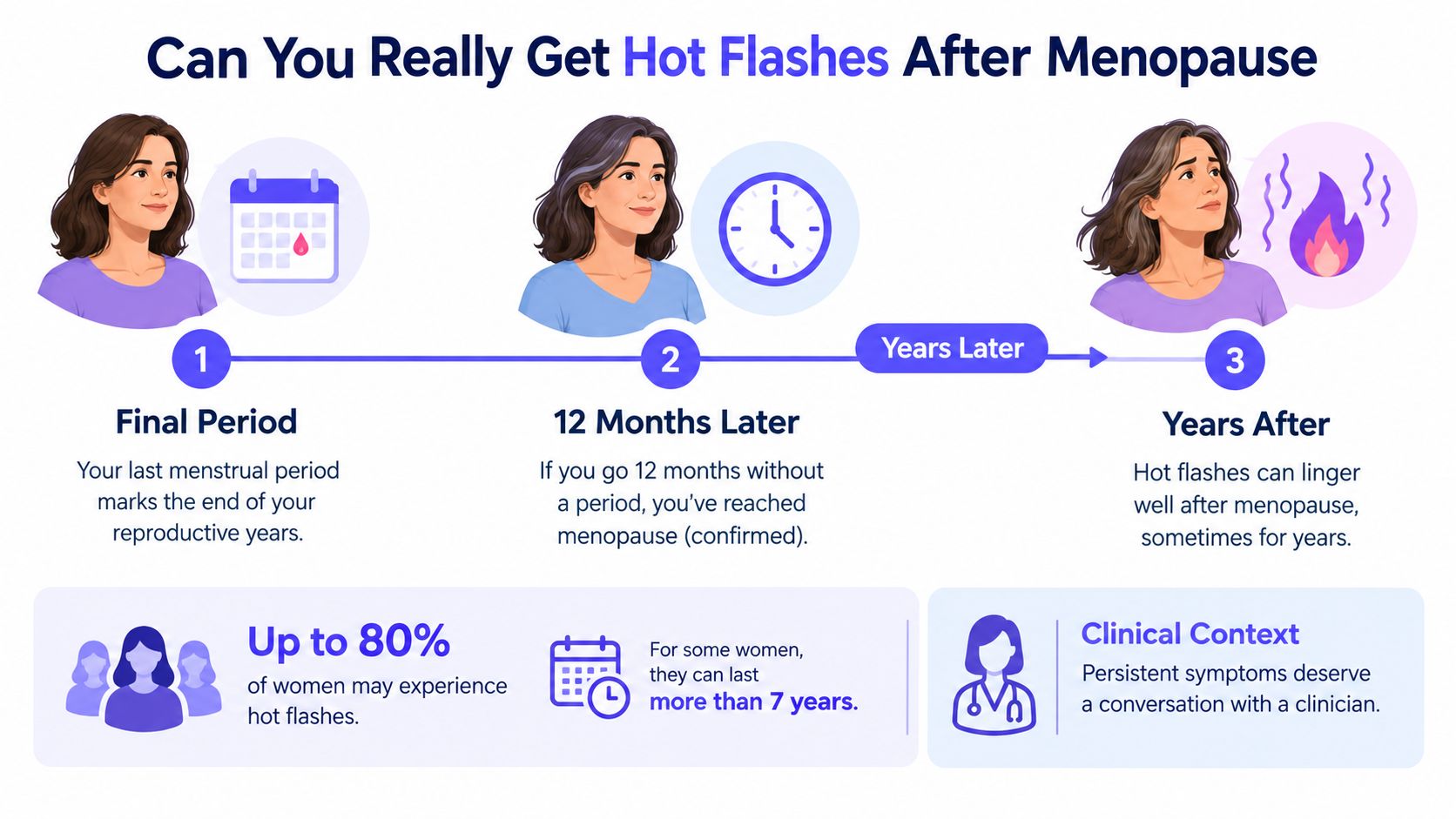
A heat surge during a stressful conversation, or waking up sweaty years after your last period, can feel confusing. In many cases, it is still part of menopause. Vasomotor symptoms, the clinical term for hot flashes and night sweats, do not always stop when periods do.
Menopause is defined clinically as 12 consecutive months without a menstrual period. That milestone marks the end of menstrual cycles. It does not mean the body's temperature-control system immediately becomes steady again. For some women, the brain pathways involved in heat regulation remain unusually sensitive after ovarian hormone production has shifted.
That is why postmenopausal hot flashes are real, and common enough to be considered a normal pattern for many women.
A pooled analysis of 10 studies involving 35,445 women found that vasomotor symptoms peaked around one year after the final menstrual period and then declined gradually rather than stopping all at once. Nearly 50% of women still reported symptoms four years after their final period, and approximately 10% reported symptoms as far as 12 years afterward. In late postmenopause, defined in that analysis as more than five years after the final period, 43.9% continued to report vasomotor symptoms, as detailed in the pooled analysis of postmenopausal hot-flash duration.
What persistence can look like
Persistent symptoms are not all the same. One woman may have an occasional flush that passes in minutes. Another may have repeated daytime episodes, night sweats that interrupt sleep, and a growing worry about when the next one will hit. The symptom category is the same, but the effect on daily life can be very different.
Duration varies too. One frequently cited dataset found hot flashes in 35% of women one to two years after menopause, 28.6% at three to five years, 26.2% at six to ten years, and 10.3% beyond 11 years, according to the same pooled analysis. Those numbers describe a population pattern, not a deadline for any one person.
This distinction matters. A familiar pattern that stays broadly stable often fits persistent menopausal vasomotor symptoms. A new pattern, a faster pace, or symptoms that start to look different belongs in a different category and may need medical evaluation rather than simple reassurance.
If you understand why menopause causes hot flashes, the symptom usually feels less mysterious. It also becomes easier to sort ordinary persistence from a warning pattern, which is the first step in choosing between self-care, nonhormonal treatment, or hormone therapy based on your health history.
Why Hot Flashes Continue Past the Final Period
You can be years past your final period, living with a steady routine, and still get a sudden wave of heat that feels as if it came out of nowhere. That pattern surprises many women, but it has a physiological explanation.
A hot flash starts in the body's temperature-control system. The hypothalamus, a region deep in the brain, helps keep your internal temperature within a narrow comfort zone. After estrogen falls, that zone can narrow further. A small shift that once would have passed unnoticed can now trigger heat-loss responses. The body reacts as if it needs cooling, sending more blood flow toward the skin and turning on sweating. The thermostat analogy fits here. It is like a thermostat that has become too sensitive, reacting to a minor fluctuation instead of waiting for the room to get truly hot.
That helps explain persistence after menopause. In some women, this system stays reactive long after the final period, especially if symptoms started earlier in the menopause transition.
Severity and timing change the picture
Long-term follow-up research adds an important layer. The issue is not only whether hot flashes continue, but how intense they are and when they began. In a population-based study followed for 16 years, moderate-to-severe symptoms reached a prevalence of 46% during the first two years after the final menstrual period. Their prevalence declined slowly and did not return to premenopausal levels until approximately nine years after the final period, according to the 16-year population study of hot-flash patterns.
The same study found that one-third of women at least 10 years beyond their final menstrual period still reported moderate-to-severe hot flashes. It also showed that the full symptom timeline often extends beyond the postmenopausal years alone. Symptoms that start earlier in the transition tend to last longer. Symptoms that begin in late transition or postmenopause had a median duration of about 3.8 years in that study.
This is why reassurance by itself may fall short. A symptom can be common and still interfere with sleep, concentration, mood, and work enough to justify treatment.
Why one woman improves while another doesn't
Persistence is not one-size-fits-all. It likely reflects a mix of hormone sensitivity, nervous-system reactivity, sleep quality, stress, medications, and overall health. Population research shows a gradual decline over time, but it cannot tell one person exactly when her last episode will happen.
If your symptoms remain moderate or severe, asking how long hot flashes last is only the beginning. The more useful next step is to sort your pattern into the right category: familiar but persistent symptoms, versus symptoms that are changing, escalating, or affecting daily life enough to need a fuller treatment discussion. That distinction shapes whether self-care may be enough, whether nonhormonal prescription options make sense, or whether hormone therapy should be considered in the context of your health history.
When Hot Flashes Are Not Just Menopause
A familiar hot flash that follows the same pattern for years is different from a symptom that suddenly appears or changes dramatically. Menopause is a common explanation, but it isn't a universal diagnosis for every episode of sweating, flushing, or nighttime heat.
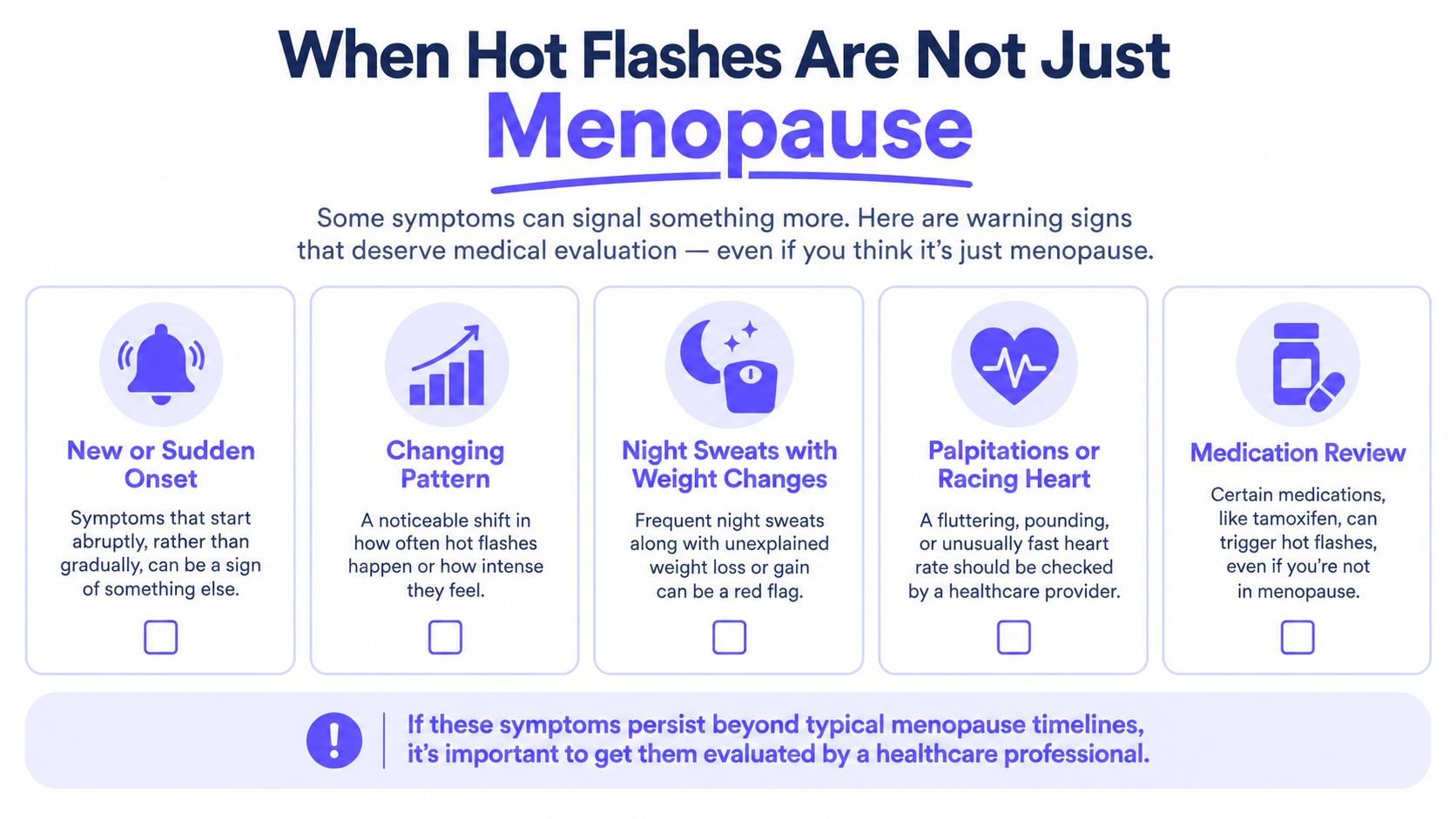
Other possibilities can include thyroid disease, infection, malignancy, low blood sugar, medication effects, and alcohol-related flushing. Some medicines can trigger or intensify hot flashes, and a change in treatment may be more relevant than the number of years since your final period. The American College of Obstetricians and Gynecologists' guidance on managing hot flashes recommends clinical context and individualized assessment rather than automatic attribution.
Patterns that deserve attention
Arrange a clinical review if your episodes are new, unusually intense, or accompanied by other changes. You don't need to assume the worst. You do need to give a clinician enough information to distinguish ordinary persistence from a symptom that needs another explanation.
Watch for:
- New onset: Episodes begin abruptly after a long period without them.
- A changing pattern: Flashes become much more frequent, severe, or disruptive.
- Night sweats with fever or weight loss: These combinations warrant assessment rather than simple cooling measures.
- Palpitations or tremor: A racing heart or shaking may point to a broader medical issue.
- Swollen lymph nodes: Report persistent swelling alongside night sweats or other systemic symptoms.
- Medication changes: Note new drugs, dose changes, or treatments that began before the symptoms.
Sleep disruption can obscure the source of the problem. A person may describe “poor sleep” or reduced energy without realizing that repeated night sweats are fragmenting rest. If low mood or anxiety is also present, reviewing information about perimenopause depression symptoms may help you identify concerns to raise with a qualified professional.
Thyroid symptoms can overlap with menopause, which is why hypothyroidism and menopause deserve separate consideration when fatigue, temperature changes, palpitations, tremor, or weight changes accompany flushing.
Seek prompt medical advice when the pattern changes. Persistent symptoms can be benign, but “different from usual” is clinically useful information.
Hormonal and Nonhormonal Treatment Options Explained
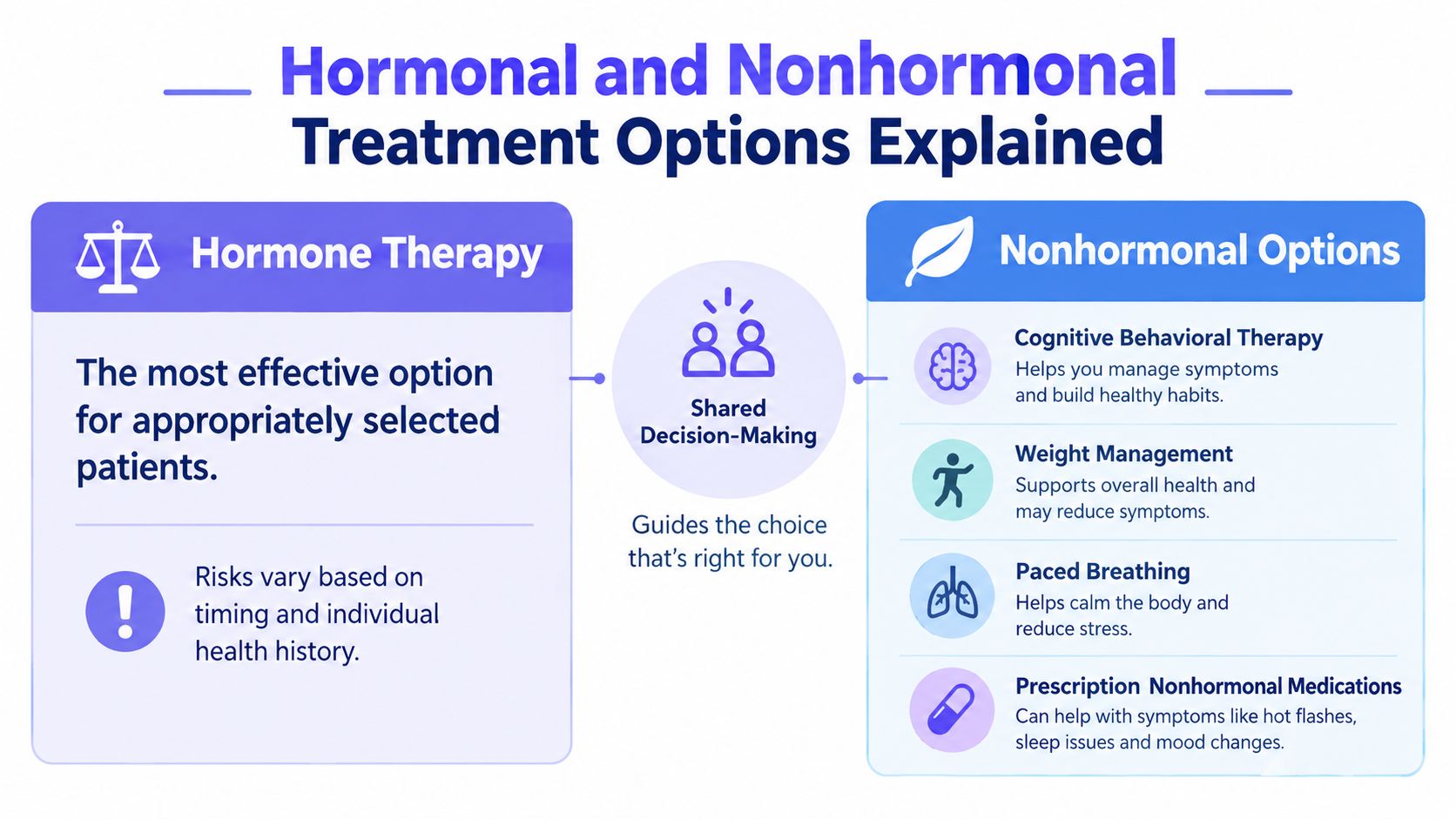
Treatment should match the symptom burden and your medical history. Hormone therapy is the most effective option for appropriately selected patients, but it isn't automatically suitable for everyone. Decisions depend on factors that can include cardiovascular health, breast-cancer history, clotting risk, liver health, medication interactions, age, timing, and personal preferences.
For some women, the expected benefit outweighs the risks after an individualized discussion. For others, a contraindication or concern about hormones makes a nonhormonal route more appropriate. The point isn't to rank treatments in the abstract. It's to identify which option fits your circumstances.
How the main choices differ
| Option | Where it may fit | Important discussion points |
|---|---|---|
| Hormone therapy | Appropriate candidates with bothersome vasomotor symptoms | Review cardiovascular, breast-cancer, thromboembolic, hepatic, and medication risks |
| Prescription nonhormonal therapy | People who can't or don't want to use hormones | The choice depends on other conditions, side effects, interactions, and monitoring |
| Cognitive behavioral therapy | People whose flashes cause distress, sleep problems, or daily interference | Recent evidence supports improvement in bother and interference, not necessarily elimination of every episode |
| Clinical hypnosis | People interested in a structured behavioral approach | Studies report reductions in frequency and severity |
| Neurokinin-3 therapies | An emerging medication category for vasomotor symptoms | Fezolinetant is the first FDA-approved medication in this class, while elinzanetant remains an additional developing option |
The treatment evidence summarized in a recent review of hormonal, nonhormonal, behavioral, and neurokinin-3 therapies supports a broader conversation than “take hormones or do nothing.” Cognitive behavioral therapy improved hot-flash-related bother and daily interference, while clinical hypnosis studies reported significant reductions in frequency and severity.
What to ask before starting
Ask what symptom the treatment is expected to improve, how quickly you should reassess it, what monitoring is required, and which side effects should prompt a call. If an antidepressant is suggested for vasomotor symptoms or mood, a resource on antidepressant safety and monitoring can provide general context, but your prescriber should still review your full medication list and health history.
Supplements and generic cooling advice shouldn't be presented as equivalent to clinically tested treatments. Lifestyle measures may support comfort, but moderate-to-severe symptoms often need a more deliberate plan. You can also review what hormone therapy for menopause involves before discussing benefits and risks with a clinician.
Practical Self-Care and Trigger Management Steps
Self-care works best as a practical support system, not as a promise that persistent symptoms will disappear. Start by making each episode shorter, less disruptive, and easier to manage while you decide whether medical treatment is needed.

Try these adjustments:
- Cool the environment: Keep a fan near your bed, use breathable bedding, and open a window when outdoor conditions allow.
- Dress in layers: Choose removable layers so you can respond quickly instead of becoming overheated.
- Review triggers: Notice whether alcohol, caffeine, spicy meals, warm rooms, or emotional stress precede episodes. You don't need to eliminate every possible trigger, but patterns can guide sensible changes.
- Protect sleep: Use a consistent wind-down routine, dim lights before bed, and keep the bedroom comfortably cool.
- Time activity thoughtfully: Exercise supports overall health, but strenuous activity close to bedtime may leave some people overheated. Adjust the timing if you notice a repeated connection.
- Use paced breathing: Slow, deliberate breathing during the first sensation of heat may help you stay calmer while the episode passes.
Food choices also matter for overall postmenopausal health. If you're reviewing nutrition alongside symptom management, guidance on menopause bone health with plants offers a useful starting point for considering plant-based sources within a balanced eating pattern.
Cooling strategies can improve comfort, but they won't diagnose the cause or replace treatment for frequent night sweats and severe episodes. Keep the response simple enough to follow when you're tired.
Here's a practical setup you can prepare today:
- Put a fan and a glass of water beside the bed.
- Keep a spare sleep top nearby if night sweats are common.
- Record the preceding meal, drink, activity, stress level, and sleep disruption.
- Bring that record to a clinician if the pattern persists or interferes with daily life.
If you want a visual explanation of cooling and symptom support, this video can complement, but not replace, individualized medical advice.
▶ PlayHow to Track Symptoms and Decide When to See a Doctor
A symptom diary turns a vague complaint into useful clinical information. Record when each episode occurs, how intense it feels, whether it wakes you, what you were doing beforehand, and whether you notice palpitations, tremor, fever, weight change, or medication changes.
A simple decision pathway helps:
- Stable and familiar: Continue practical cooling measures and discuss treatment if symptoms affect sleep or quality of life.
- Persistent and disruptive: Book a routine appointment to review prescription and nonprescription options.
- New, escalating, or accompanied by warning signs: Arrange medical evaluation rather than assuming menopause is responsible.
U.S. government guidance notes that hot flashes can continue for up to 14 years after menopause, so lasting symptoms aren't automatically unusual. At the same time, duration alone doesn't determine whether an episode is safe to ignore. The pattern and associated symptoms matter more than a calendar cutoff, as explained in government guidance on menopause symptoms and relief.
A perimenopause symptom tracker can help organize observations about sleep, mood, energy, meals, and episodes. Bring the record to your appointment, especially if you're unsure whether disrupted sleep is causing daytime fatigue or whether another condition may be contributing.
Lila combines daily symptom check-ins, personalized action plans, and a chat-based coach to help you organize patterns in hot flashes, sleep, mood, energy, meals, and cycles. Visit Lila to track what's happening and turn your observations into practical next steps to discuss with your clinician.
Get Lila, your personal coach for perimenopause.
Built for women in their 40s. 24/7 coaching, in your pocket.