What Is Hormone Therapy for Menopause Answered
Wondering what is hormone therapy for menopause? This guide explains the types, real benefits, and risks to help you have an informed talk with your doctor.
 Michelle
Menopausal Hormone Therapy (MHT), which you might also hear called hormone replacement therapy, is a medical treatment that replenishes the hormones your body gradually stops making as you enter menopause. The goal is simple: to ease the disruptive symptoms that come with this hormonal shift.
By replacing what’s been lost—primarily estrogen—MHT gets to the root cause of why you might be feeling so off. It helps restore a sense of balance so you can feel more like yourself again.
To give you a quick overview, here’s a simple breakdown of what MHT is all about.
Hormone Therapy at a Glance
Aspect | Description |
|---|---|
What It Is | A medical treatment to replace hormones lost during the menopausal transition. |
Purpose | To relieve moderate to severe menopausal symptoms and prevent bone loss. |
Hormones Used | Primarily estrogen; progestogen is often included for those with a uterus. |
Primary Symptoms Addressed | Hot flashes, night sweats, sleep disturbances, and vaginal dryness. |
Think of it this way: MHT isn't about turning back the clock, but rather about smoothing out a very bumpy biological transition.
What Is Hormone Therapy and How Does It Work?
Imagine your body's hormonal system is like a finely tuned orchestra, with estrogen acting as a key conductor. During perimenopause and menopause, your ovaries start producing less and less estrogen, and that conductor’s cues become erratic. The result is biological chaos.
This isn't just a simple power-down. It's an unpredictable fluctuation that triggers a cascade of effects across your body, which you experience as menopausal symptoms.
These "glitches" show up in all sorts of ways because estrogen receptors are everywhere in your body. Its decline can impact your brain, bones, skin, and even your heart. This is why you may experience:
Hot flashes and night sweats: These happen because the part of your brain that regulates body temperature gets thrown off balance without a steady supply of estrogen.
Sleep disruption: Often a direct result of being woken up by night sweats, but hormonal shifts can also interfere with your natural sleep cycles.
Mood changes: Estrogen influences mood-regulating brain chemicals like serotonin. When levels dip, you might feel more irritable, anxious, or down.
Brain fog: That frustrating feeling of not being able to find the right word or remember what you walked into a room for is a common complaint.
Menopausal Hormone Therapy (MHT) works by reintroducing a steady, low level of hormones. This effectively gives the "orchestra" its conductor back, restoring stability and providing significant relief from these disruptive symptoms.
A Brief History and Modern Understanding
The conversation around hormone therapy has been on a rollercoaster for decades. Its popularity has ebbed and flowed, mostly in response to major research findings.
Back in the late 1990s, MHT was incredibly common. But everything changed after a major study in 2002 raised significant safety concerns, causing its use to plummet. In fact, MHT usage in the US dropped from 26.9% in the early 2000s to just 4.7% by 2020.
Today, we have a much more balanced and nuanced view. The scientific consensus is that for many healthy women—especially those under 60 or within 10 years of their final menstrual period—the benefits of MHT generally outweigh the risks.
This history is exactly why doctors and patients approach the decision so carefully now. It's not a one-size-fits-all fix but a highly personalized medical choice. Getting a solid introduction to hormone replacement therapy can help clarify its uses and benefits for both women and men.
The modern approach is to find the lowest effective dose for the shortest time needed to manage your symptoms and protect your long-term health.
The Different Types of Hormone Therapy Explained
Diving into the world of menopausal hormone therapy (MHT) can feel like trying to learn a whole new language. With so many different types and ways to take it, it’s completely normal to feel a bit lost at first. But breaking it down is simpler than you might think, and it's the first step to having a really productive conversation with your doctor.
Ultimately, the choice boils down to two main strategies: do you need relief for your whole body, or do you need to treat symptoms in one specific area? That’s the key difference.
This diagram helps visualize the goal of MHT: restoring the body's hormonal balance to ease the disruptive symptoms of menopause.
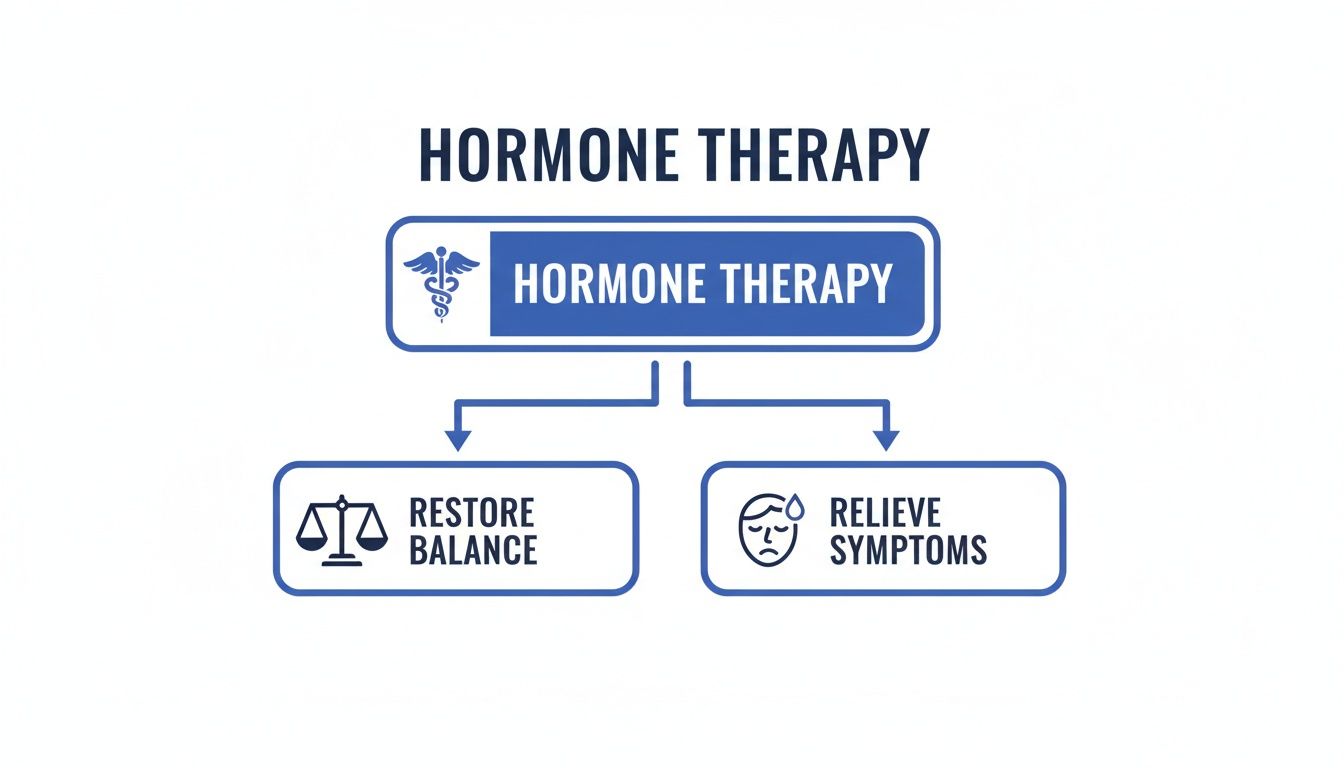
As you can see, the idea is to counteract the hormonal rollercoaster that’s causing so much disruption, helping you feel more like yourself again.
Systemic Hormone Therapy: The Whole-Body Approach
When menopause symptoms are affecting you from head to toe, systemic hormone therapy is often the answer. Think of it like a central heating system for your house—it circulates hormones through your bloodstream to bring relief to your entire body.
This is the most effective approach for tackling those widespread symptoms that can really impact your quality of life, such as:
Hot flashes and night sweats (also known as vasomotor symptoms).
Sleep problems, which are often a direct result of night sweats.
Mood swings, brain fog, and irritability.
Protecting your bones against osteoporosis.
Systemic therapy isn't a one-size-fits-all solution. It comes in several forms, so you can find one that fits seamlessly into your daily routine. You might use daily pills, a skin patch you change once or twice a week, or even gels, creams, and sprays that you apply to your skin.
Local Hormone Therapy: For Targeted Relief
On the other hand, sometimes the problem is concentrated in one area. That’s where local hormone therapy comes in. If systemic therapy is central heating, think of local therapy as a small space heater—it delivers relief exactly where you need it most.
This approach is specifically for the vaginal and urinary symptoms often referred to as Genitourinary Syndrome of Menopause (GSM). The tissues in this area are incredibly sensitive to the drop in estrogen, leading to dryness, pain, and urinary issues. You can read our detailed guide on the genitourinary syndrome of menopause for a deeper dive.
Local therapy is a fantastic option if your main complaints are things like vaginal dryness, painful sex, or urinary urgency. Because it delivers a very low dose of estrogen directly to the source, it doesn’t help with hot flashes or bone health, but it also comes with far fewer risks than systemic therapy.
These products are usually administered right where they're needed, using vaginal creams, insertable rings, or small tablets.
Estrogen, Progestogen, or Both?
After deciding between a systemic or local approach, the next conversation with your doctor will be about the specific hormones involved. This decision really comes down to one simple question: do you have a uterus?
Estrogen-Only Therapy Just as the name suggests, this therapy contains only estrogen. It’s the standard choice for women who have had a hysterectomy (an operation to remove the uterus).
Combined Estrogen Progestogen Therapy (EPT) If you still have your uterus, taking estrogen on its own isn't safe. It can cause the lining of the uterus (the endometrium) to thicken, which increases the risk of uterine cancer.
To prevent this, doctors add a progestogen, which is a synthetic version of the hormone progesterone. The progestogen’s only job is to protect your uterus by keeping the lining thin, which drastically reduces that cancer risk. This combination is the gold standard for anyone with a uterus using systemic hormone therapy.
The Real-Life Benefits of Taking Hormone Therapy
So, we’ve covered what hormone therapy for menopause is and the different types you might encounter. But the real question is, what can it actually do for you? The answer goes far beyond a simple checklist of symptoms. For so many women, it’s about finally reclaiming their quality of life and feeling like they're back in the driver's seat of their own bodies.
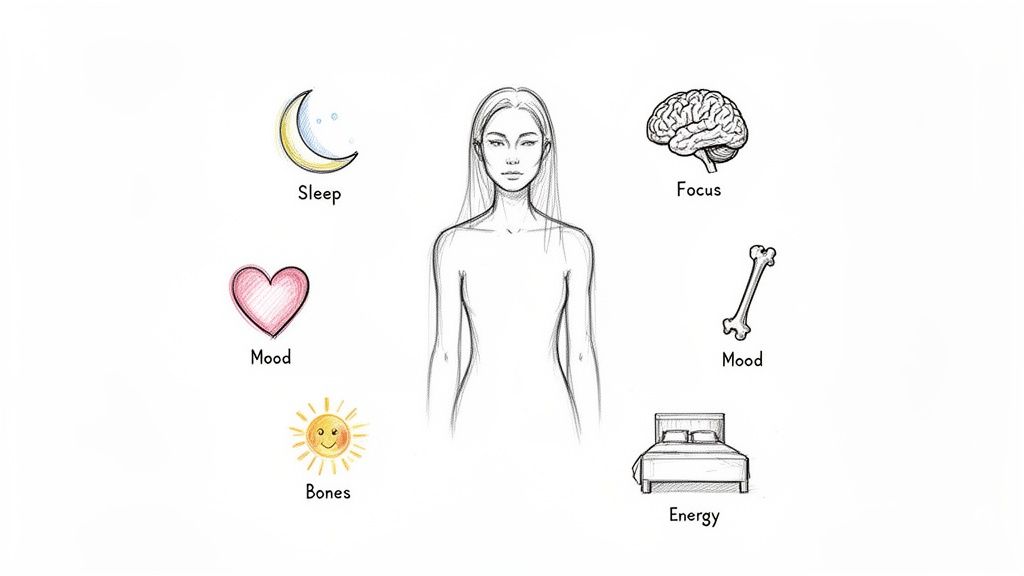
Just imagine getting a full night of uninterrupted sleep, without waking up completely drenched in sweat. Picture yourself feeling sharp and focused at work again, instead of constantly wrestling with that frustrating brain fog. This isn't just a wish—it's the reality that menopausal hormone therapy (MHT) can bring.
Halting Hot Flashes and Night Sweats
The most famous—and often most life-changing—benefit of MHT is its incredible effectiveness against vasomotor symptoms (VMS). That’s the clinical term for hot flashes and night sweats. And as anyone who has experienced them knows, these are not just minor annoyances. They can derail your sleep, tank your confidence at work, and disrupt your life in profound ways.
When it comes to moderate to severe VMS, hormone therapy is, hands down, the most effective treatment we have. In the United States, where 6,000 women begin their menopausal transition every single day, the majority report disruptive symptoms that interfere with their daily lives. Research confirms just how powerful MHT is, with modern low-dose therapies proven to slash VMS by an astounding 84.4%, compared to just a 48.1% reduction seen with a placebo. The numbers don't lie.
Think of it this way: MHT helps stabilize your body's internal thermostat. But the benefit doesn't stop there. It sets off a positive chain reaction—better sleep leads to a better mood, sharper thinking, and more consistent energy throughout your day.
Strengthening Your Bones for the Long Term
While immediate symptom relief gets most of the attention, one of MHT's most crucial long-term benefits is protecting your skeleton. Estrogen is a key player in keeping your bones strong and dense. As your estrogen levels fall during menopause, your body can begin to lose bone mass at a surprisingly rapid pace.
If this process goes unchecked, it can lead directly to osteoporosis. This is the condition that makes bones fragile and brittle, leaving you far more vulnerable to debilitating fractures from a simple fall or bump.
Systemic hormone therapy essentially puts the brakes on this accelerated bone loss. By replenishing some of the estrogen your body is no longer making, it helps preserve your bone strength. This proactive step significantly lowers your risk of developing osteoporosis and dealing with fractures later in life.
Restoring Comfort and Intimacy
The decline in estrogen doesn't just impact your body system-wide; it has a very direct and personal effect on vaginal and urinary health. This collection of symptoms is known as Genitourinary Syndrome of Menopause, or GSM.
For this, MHT—especially local estrogen therapy—can be a game-changer. It provides targeted relief from the symptoms of GSM, which often include:
Vaginal dryness and thinning: This can cause persistent itching, burning, and general discomfort.
Pain during sex (dyspareunia): A common symptom that can put a major strain on relationships and intimacy.
Urinary issues: This includes frustrating urgency and even an increase in recurrent urinary tract infections (UTIs) because the tissues of the urinary tract are also affected.
By delivering estrogen directly to these tissues, MHT helps restore lubrication, elasticity, and overall tissue health. This not only brings physical comfort back to your daily life but can make intimacy pleasurable and connection possible again.
Ultimately, the most powerful benefit I hear from women is simply feeling like themselves again. It’s about more than just managing symptoms; it’s about getting your energy, your focus, and your overall sense of well-being back.
Understanding the Risks and Who Should Avoid MHT
You can't have an honest conversation about menopausal hormone therapy (MHT) without talking about the risks. For a long time, that conversation was dominated by one thing: fear. This really goes back to the initial results of a major study called the Women’s Health Initiative (WHI) that came out in 2002.
Those first headlines were scary. They connected certain types of hormone therapy to a higher risk of breast cancer, blood clots, and stroke. As you can imagine, MHT use plummeted, and a cloud of uncertainty has lingered for both patients and doctors ever since. But that was over two decades ago, and we’ve learned a lot since then.
Putting the Risks in Perspective
Today, our understanding is much more nuanced. We now know the risks aren't a one-size-fits-all deal. The risk profile for any one person changes dramatically based on a handful of key factors:
Your age when you start therapy.
How many years it’s been since your last menstrual period.
Your personal health history and any existing risk factors.
The type and dose of the hormones you're prescribed.
It helps to know that the original WHI study mostly involved older women, with an average age of 63. Many were more than 10 years past their final period. This is a vastly different scenario from a healthy 48-year-old just beginning to deal with disruptive perimenopausal symptoms.
The Importance of the Timing Hypothesis
This key difference leads us to a really important concept called the "timing hypothesis." The easiest way to think about it is as a "window of opportunity."
The scientific consensus today is that for most healthy women under 60 (or within 10 years of their final period), the benefits of starting MHT usually outweigh the potential risks.
Starting MHT within this "window" seems to offer the most symptom relief at the lowest risk. When therapy is started later in life, that risk-benefit balance starts to shift, particularly concerning cardiovascular health.
It’s also important to get specific about cancer risk. For example, some data shows that using estrogen-only therapy for more than five years might increase the risk of invasive breast cancer 1.3-fold, while combination therapy could increase it 1.2-fold. You can find more details about market drivers in the global menopause treatments market report. While those numbers sound significant, it's crucial to remember that the absolute increase in risk for any single person remains very small.
Who Should Not Take Hormone Therapy
All that being said, MHT simply isn't a safe option for everyone. If you have certain medical conditions (what doctors call contraindications), the risks are too high. Your clinician will not prescribe systemic MHT if you have a personal history of:
Breast cancer or other estrogen-sensitive cancers.
Stroke or heart attack.
Blood clots, like deep vein thrombosis (DVT) in your legs or a pulmonary embolism (PE) in your lungs.
Unexplained vaginal bleeding that hasn't been properly checked out.
Significant liver disease.
Suspected pregnancy.
The goal here is to trade generalized fear for personalized facts. By understanding your own health profile, you can have a productive conversation with your doctor, weigh your unique pros and cons, and make a decision that feels right for you.
Exploring Effective Alternatives to Hormone Therapy
Hormone therapy can be a game-changer for many, but it's certainly not the only path forward. Maybe you have a medical history that rules it out, or perhaps you simply prefer a non-hormonal approach. Whatever your reason, you're not out of options. Far from it. There are several evidence-based strategies that can bring significant relief from menopause symptoms.
Let's walk through some of the most effective alternatives, from prescription medications to powerful lifestyle adjustments.
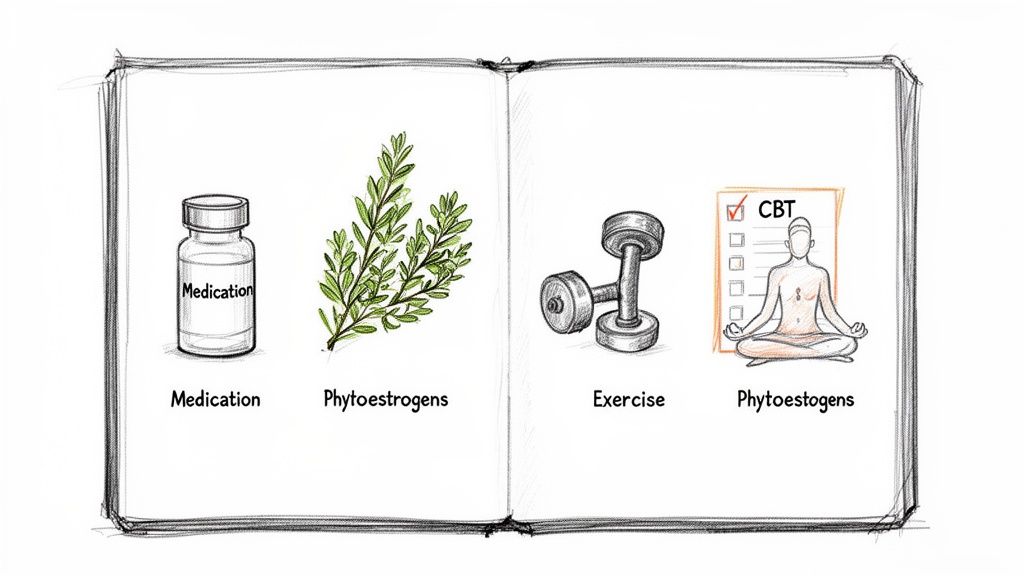
Non-Hormonal Prescription Medications
If you're looking for a science-backed route that doesn't involve hormones, other prescription medications can be incredibly helpful. These drugs work on different pathways in your body to target specific symptoms.
For instance, if hot flashes are your biggest challenge, certain antidepressants can work wonders. Low-dose SSRIs (selective serotonin reuptake inhibitors) and SNRIs (serotonin-norepinephrine reuptake inhibitors) have been shown to help regulate the body's internal thermostat, effectively turning down the heat on hot flashes.
Another standout is gabapentin, a medication originally used for seizures that has proven to be excellent for calming night sweats. By soothing nerve activity, it can help you get the restorative sleep you need. These are powerful, well-researched options that give you more control over your menopause experience.
Lifestyle and Complementary Approaches
Never underestimate the power you have in your daily choices. The changes you make to your diet, exercise routine, and stress management can make a huge impact on how you feel. These aren't just "nice-to-haves"—they are foundational strategies for wellness.
What you eat can either fan the flames of your symptoms or help soothe them. Some key things to consider are:
Adding Phytoestrogens: These are plant compounds found in foods like soy, chickpeas, and flaxseed. They have a mild, estrogen-like effect that can help take the edge off symptoms for some women.
Spotting Your Triggers: Pay attention to how you feel after eating spicy foods or drinking caffeine or alcohol. For many, these are common triggers for hot flashes. A little detective work can go a long way.
Of course, exercise is a cornerstone of well-being during this transition. It does more than just help manage weight and protect your bones; regular physical activity is a fantastic mood booster and stress reliever.
Finally, don't overlook your mental and emotional health. Techniques like Cognitive Behavioral Therapy (CBT) are clinically proven to help women reframe their response to symptoms like hot flashes, making them feel less disruptive. Practices like mindfulness and meditation are also brilliant for calming the nervous system, which can help with everything from stress to sleep.
For a deeper dive into these strategies, check out our guide on natural menopause treatments that really work.
How to Talk to Your Doctor About Hormone Therapy
▶ PlayWalking into your doctor's office to discuss menopause can feel a little daunting. But this conversation is a partnership, and you're the most important member of the team. Getting the right care isn't about finding a one-size-fits-all solution; it’s about finding what works for you. Being ready to clearly explain your experience is the best way to advocate for yourself.
To get the most out of your visit, you'll want to bring more than a general sense of "not feeling like myself." Your doctor needs the specifics to understand the complete picture and guide you toward the best treatment path.
What to Do Before Your Appointment
The single best thing you can do is track your symptoms for a week or two before your appointment. This isn't just a list; it's the story of what you're going through, and it gives your doctor concrete information to work with.
List everything you're experiencing. Don't hold back. Note the hot flashes, sleep disruptions, mood shifts, brain fog, and anything else that feels different.
Track the frequency. Are night sweats waking you up every single night, or just a few times a week? Note the patterns.
Measure the impact. On a scale of 1 to 10, how much is each symptom affecting your daily life? A mild hot flash is one thing; one that derails a work presentation is another entirely.
The toll of menopause isn't just physical. If you're feeling anxious, irritable, or just plain overwhelmed, that’s a critical part of the story. You are not alone in feeling this way, and it can be incredibly helpful to find counselling support to navigate the emotional side of this transition.
Questions to Bring to Your Doctor
Arming yourself with a few key questions ensures you don’t leave the office with more confusion than clarity. This isn't about grilling your doctor—it's about opening a dialogue so you can make an informed decision together. And if you’re curious about the diagnostic process itself, it’s worth reading up on how doctors test for menopause.
With a global life expectancy of 21 more years after age 60, finding a long-term, sustainable way to feel good is more important than ever. The focus is shifting toward an integrated approach that often combines hormone therapy for significant symptoms with lifestyle strategies for daily wellness.
Here are a few essential questions to get the conversation started:
Looking at my personal health and my family's medical history, am I a good candidate for hormone therapy?
What are the specific benefits you see for me with MHT, and what are the risks I should be aware of?
Which type of hormone therapy would you recommend for my particular symptoms (systemic vs. local, estrogen-only vs. combination), and why?
If we move forward with therapy, what’s our follow-up plan? How often will we monitor how it's working?
What are the non-hormonal options we should consider, either as an alternative or in addition to MHT?
Frequently Asked Questions About Menopause Hormone Therapy
If you're looking into hormone therapy, you've probably got a lot of questions. That's completely normal. Deciding if it's right for you involves thinking through the practical side of things, and it helps to have clear, straightforward answers.
Here’s a look at some of the most common questions we hear from women just like you, answered in a way that will hopefully make you feel more confident and informed.
How Long Can I Safely Take Hormone Therapy?
A big question I always get is, "How long can I stay on this?" In the past, there were much stricter rules about stopping hormone therapy after a certain number of years, but thankfully, that thinking has evolved.
Today, there’s no universal "stop date." The goal is to use the lowest effective dose for the time needed to manage your symptoms and improve your quality of life. This means having a regular conversation—usually once a year—with your doctor to check in and see if the benefits still outweigh any potential risks for you. For some women, that might mean just a few years to get through the peak of their symptoms. For others, staying on a low dose long-term is the right choice for their health and well-being.
Will Hormone Therapy Make Me Gain Weight?
Let's tackle a big one: weight gain. It's probably the number one fear I hear about starting hormone therapy, and it’s a valid concern. During the menopausal transition, many women notice their metabolism slowing down and fat accumulating around their middle.
But here’s the good news: MHT does not cause weight gain. Study after study has shown this. The weight changes you might be experiencing are tied to the hormonal shifts of menopause itself, not the therapy designed to treat it. In fact, some studies even suggest hormone therapy can help prevent that shift in fat storage from your hips to your abdomen.
The key takeaway is that hormone therapy is considered weight-neutral. It's a powerful tool for managing your symptoms that won't make the number on the scale go up.
Is There a Best Time to Start Hormone Therapy?
Yes, timing really does matter. You may hear experts talk about the "timing hypothesis" or the "window of opportunity," and it’s a crucial concept to understand. A large body of research has found that the balance of benefits to risks is most positive when you begin MHT earlier in your menopause journey.
For most healthy women, starting hormone therapy before age 60 or within 10 years of their final menstrual period is the sweet spot. When started in this window, MHT offers the greatest symptom relief and potential protective benefits for your bones and heart, all with minimal risk.
Do I Have to Be on Hormone Therapy Forever?
Absolutely not. Deciding to stop hormone therapy is just as personal as the decision to start, and it's a conversation you should have with your clinician. There is no rule that says you have to be on it for life.
Many women are able to successfully taper off their dose over a few months without their worst symptoms roaring back. For others, symptoms like hot flashes might return, meaning a slower, more gradual taper is a better approach. And in some cases, women and their doctors decide that staying on a very low dose is the best way to maintain their quality of life. It’s all about what works for you.
Managing your menopause symptoms is a journey, and you don't have to do it alone. The Lila app provides AI-powered, personalized plans to help you ease symptoms like sleep disruption, hot flashes, and mood changes. Take control of your health with data-informed support by visiting https://getlila.com to learn more.
Get Lila, your personal coach for perimenopause.
Built for women in their 40s. 24/7 coaching, in your pocket.