Stop Hot Flashes Morning: Strategies for Relief
Tired of hot flashes morning? Discover causes, actionable strategies for better sleep, symptom management, and reclaim your day.
 Michelle
That familiar, frustrating experience of waking up in a pool of sweat, often before your alarm has even had a chance to go off, is something so many of us know all too well. Those intense morning hot flashes aren't just a random annoyance; they're the direct result of a hormonal tango that happens overnight, leaving you drained before the day has even begun.
Why Hot Flashes Hijack Your Mornings
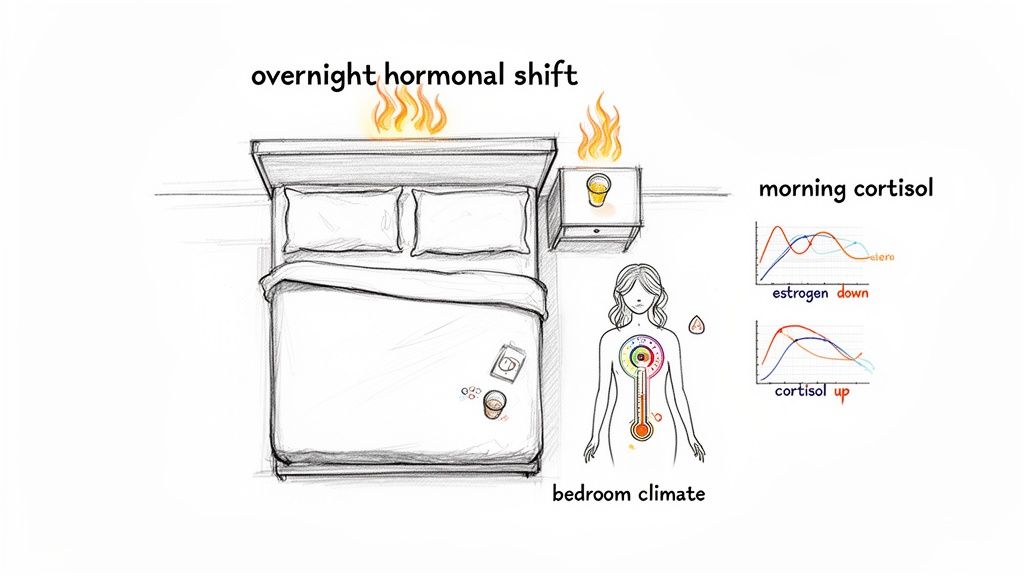
If you've ever felt your internal furnace kick into overdrive the second you open your eyes, you're definitely not imagining things. There’s a very real biological reason why hot flashes seem to stage a coup first thing in the morning, and it all comes down to the perfect storm created by perimenopause and menopause.
The main driver behind this is the rollercoaster ride our estrogen levels take. Estrogen is a powerhouse hormone that, among many other things, helps regulate the hypothalamus—your brain’s thermostat. As estrogen levels dip and fluctuate, the hypothalamus gets confused and overly sensitive. It can easily misread your body's temperature and hit the panic button, triggering a hot flash to cool you down, even when you don't need it.
The Cortisol Connection
But declining estrogen is only part of the equation. There’s another key player that shows up right on cue: cortisol, your body's natural "wake-up call" hormone.
Cortisol naturally peaks in the morning to pull you out of sleep and get you ready for the day. Under normal circumstances, this is a good thing. During perimenopause, however, this morning cortisol surge collides with your low estrogen levels.
Think of it this way: your thermostat is already on the fritz (thanks, estrogen dip), and then cortisol comes in and cranks up the heat. This hormonal clash is a primary reason that wave of heat feels so intense right after you wake up.
If you’re waking up to these heat surges, you are far from alone. It's a widespread biological reality. Vasomotor symptoms, which include hot flashes and night sweats, impact a staggering 85% of menopausal women worldwide. Research also shows that for many, these symptoms start early, with 55% of women reporting them as soon as their periods become irregular. Find more details in the global prevalence study.
How Night Sets the Stage for Morning
What happens while you sleep has a massive impact on how you feel when you wake up. Several factors can disturb your sleep and prime your body for a morning hot flash.
Let's look at some of the common internal and external factors that can make those morning episodes worse.
Trigger Category | Specific Examples | How It Contributes to Morning Episodes |
|---|---|---|
Hormonal Shifts | Declining estrogen, morning cortisol spike. | Low estrogen makes your internal thermostat sensitive; the cortisol surge acts as a trigger on this sensitive system. |
Sleep Disruptors | Night sweats, restless sleep. | Waking from a night sweat leaves your system dysregulated and more prone to another flash upon waking. |
Bedroom Environment | Warm room temperature, heavy bedding, non-breathable pajamas. | These trap heat, raising your core body temperature overnight and making you more susceptible to a flash. |
Evening Lifestyle Choices | Alcohol, caffeine, spicy foods, high-sugar snacks. | These can act as delayed-reaction triggers, with their effects peaking and causing a hot flash hours later in the morning. |
As you can see, a morning hot flash isn't just one thing. It's really the grand finale of a complex chain reaction involving your hormones, your daily rhythms, and your sleep environment.
Getting a handle on this connection is the first real step toward finding relief. If you want to explore this topic in more detail, you can learn more about why you're having hot flashes in our comprehensive guide.
Build Your Anti-Hot Flash Sleep Sanctuary
A calm, cool morning doesn’t just happen by chance—it’s often the result of smart planning the night before. If you want to stop waking up in a rush of heat, you need to turn your bedroom into a sanctuary that actively fights back against night sweats and those dreaded hot flashes morning episodes.
It all starts with getting your room’s climate just right. The sweet spot, according to sleep experts, is keeping your thermostat somewhere between 60-67°F (15-19°C). This cooler air helps keep your core body temperature from creeping up overnight, which is a major trigger for night sweats. A well-placed fan can be a game-changer, too. Set your ceiling fan to run counter-clockwise in warmer months to push cool air down, or point a tower fan so it sweeps across your bed. It’s a simple trick that makes a world of difference.
Master the Art of Layering
Think of your bedding like a wardrobe you can adjust without getting up. Tossing off a single, heavy comforter is an all-or-nothing move that often leaves you either sweating or shivering. Layering gives you back control.
Start with a light top sheet: This is your base layer, simple and breathable.
Add a thin blanket or quilt: This layer provides just enough weight and warmth for comfort.
Keep a duvet or comforter folded at the foot of your bed: If a chill sets in, you can pull it up. If you start to feel warm, you can easily kick it off without fumbling around in the dark and disrupting your sleep.
This strategy lets you react instantly to your body's own internal thermostat, heading off the overheating that so often leads to a full-blown morning hot flash.
Choose Your Fabrics Wisely
What you sleep in and on matters just as much as the temperature in the room. Some fabrics are like a personal sauna, trapping heat and moisture, while others are designed to breathe and keep you dry.
"Waking up in a sweat can be a side effect of certain medications or even a normal part of some people’s circadian rhythm...but it can also be a sign of underlying illness." - Dana Habash-Bseiso, MD, Internal Medicine Specialist at University Hospitals. While hormonal shifts are a common culprit, if persistent night sweats are ruining your sleep, it's always worth a chat with your doctor.
This is where your choice of bedding becomes a crucial part of your anti-hot flash toolkit. Materials like bamboo, TENCEL™, and even certain high-quality microfibers are superstars for their breathability and moisture-wicking abilities, often leaving traditional cotton in the dust. You can dive deeper into this topic by Finding the Best Breathable Bed Sheets for Hot Sleepers.
Apply the same logic to your pajamas. Ditch the heavy flannel and opt for loose, airy sleepwear made from these same fabrics. These small, intentional tweaks to your sleep environment can dramatically cut down on nighttime disruptions, helping you wake up feeling refreshed and comfortable—not drenched in sweat.
Your Morning Cool-Down Action Plan
Waking up already in the middle of a hot flash is a truly jarring way to start the day. It can feel frantic and overwhelming, but having a simple plan in your back pocket can make all the difference. This is about taking back control, calmly and quickly, with a few steps you can take before your feet even hit the floor.
The first few seconds are crucial. Instead of flailing around and fighting the heat—which only makes it worse—your first move is to stay as still and calm as possible. Your breath is your most powerful tool here.
Start with Mindful Breathing
As soon as you feel that heat rising, focus on your breath. This isn't just about distracting yourself; you're actively sending a signal to your nervous system to calm down. During a hot flash, your "fight or flight" response kicks in, and paced breathing is the perfect antidote.
A wonderfully effective technique is 4-7-8 breathing:
Breathe in quietly through your nose for a count of four.
Hold that breath for a count of seven.
Exhale completely through your mouth—making a gentle "whoosh" sound—for a count of eight.
Try to repeat this little cycle three or four times. That long exhale is the magic ingredient; it helps slow your heart rate and essentially tells your body's internal thermostat to ease up.
Don't underestimate the power of your breath. When a hot flash strikes, your heart rate can jump by 7 to 15 beats per minute. Paced breathing is a direct physical intervention that works against this surge, offering both mental and physical relief almost instantly.
Cool Down with Pre-Prepped Tools
While you’re focusing on your breath, it's time to reach for your bedside cool-down kit. Having these items within arm's reach means you don't have to scramble out of bed, which can spike your adrenaline and make the hot flash hang on even longer.
Sip cool water: Keep an insulated tumbler of cool water on your nightstand. A splash of lemon can make it feel extra refreshing. Just be sure it's cool, not ice-cold, as a sudden shock can sometimes backfire.
Use a cooling tool: A jade roller you kept in the fridge, a gel eye mask, or a cooling facial mist can provide immediate, targeted relief to your face and neck.
Apply a damp cloth: This is a simple but classic trick. Keeping a damp washcloth in a zip-top bag on your nightstand is an easy, no-fuss way to cool your forehead or the back of your neck.
Of course, a good morning routine starts with a good night's sleep. Creating the right environment beforehand can dramatically reduce the odds of waking up to a hot flash in the first place.
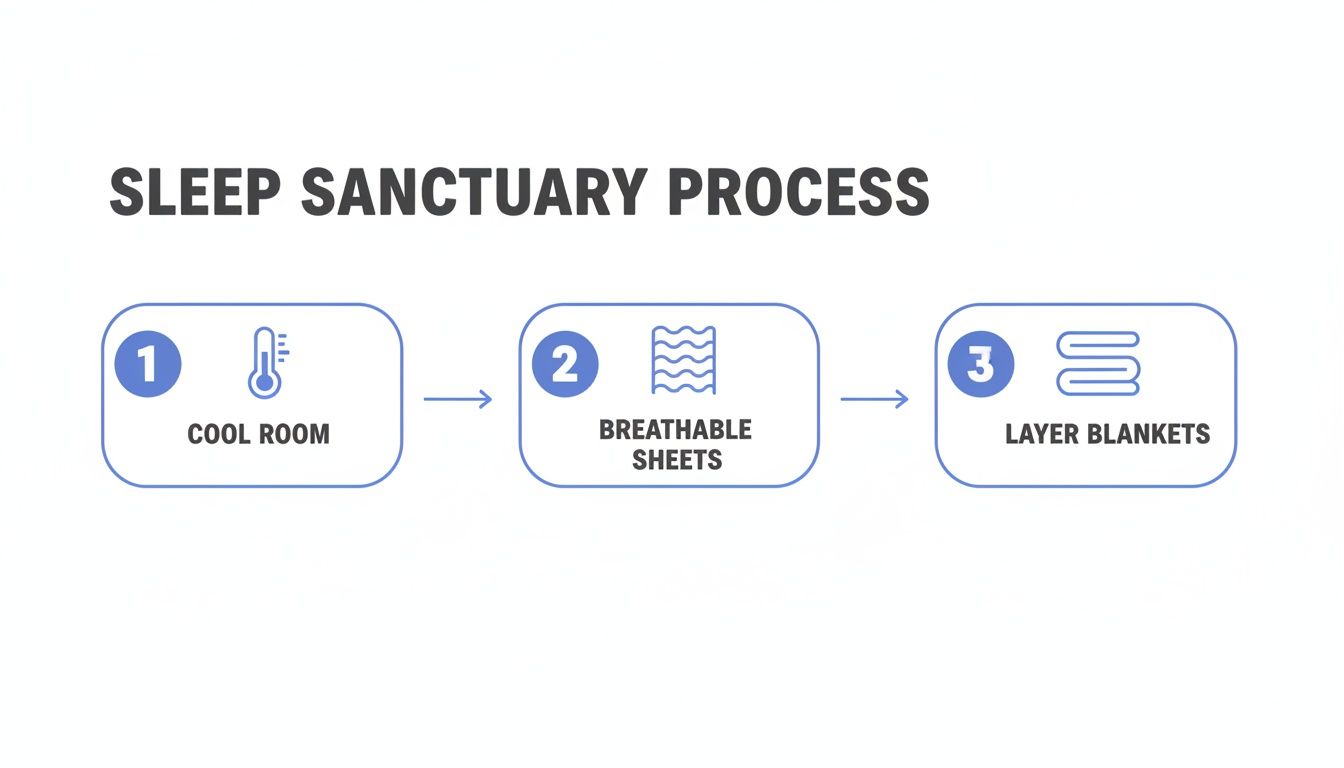
This simple process—a cool room, the right sheets, and blankets you can easily add or remove—is a cornerstone of managing nighttime and morning symptoms.
Once the worst of the hot flashes morning episode subsides, think about your clothes. If your pajamas feel damp, swap them out for something fresh and dry. Stick with loose, lightweight fabrics like cotton, bamboo, or linen that let your skin breathe and release any lingering heat.
This isn't just about surviving the moment. It's about building a reliable routine that empowers you to start your day feeling confident, not chaotic.
Rethink Your Breakfast to Tame Morning Hot Flashes
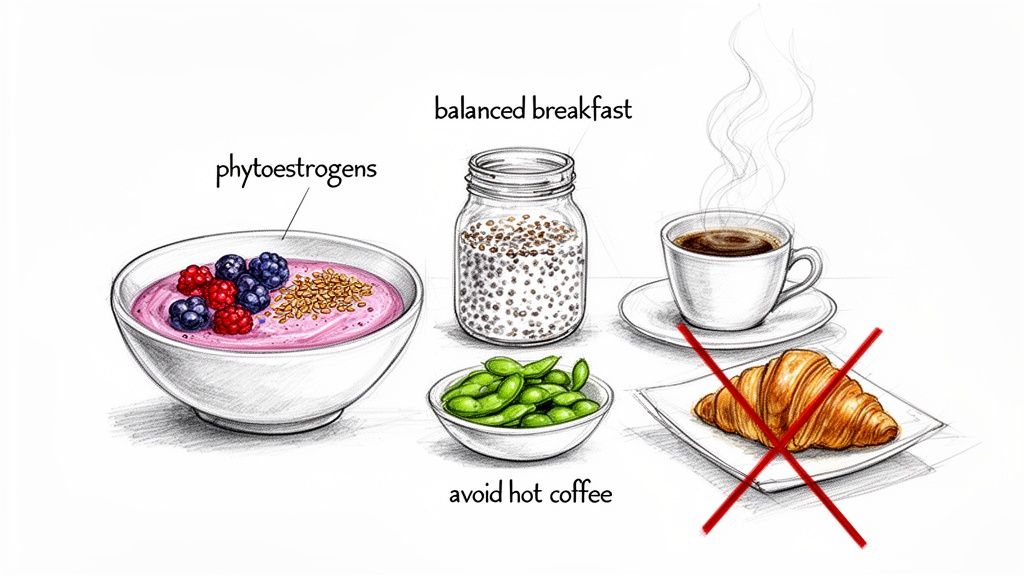
When you're dealing with morning hot flashes, what you eat and drink can either be your best friend or your worst enemy. The link between diet and these intense heat waves is incredibly strong, and a few smart changes to your first meal of the day can make a world of difference.
I get it—that hot cup of coffee and a sweet pastry are a comforting morning ritual. But here’s the problem: that very combination can be a major trigger. The caffeine and sugar can send your blood sugar on a rollercoaster and kick your stress response into high gear, basically rolling out the red carpet for a hot flash. This doesn’t mean you have to abandon your morning routine, just that it might need a little rethink.
Dodge Common Morning Triggers
Some foods and drinks are notorious for flipping the switch on your internal thermostat. If you can learn to recognize and sidestep them, you’ll start your day on a much cooler, calmer note.
Hot Drinks: That steaming mug of coffee or tea might feel essential, but it can literally raise your core body temperature and bring on a flash. Try switching to an iced version or just letting it cool down significantly before you start sipping.
Refined Sugars: Think sweet pastries, sugary cereals, and even many flavored yogurts. They cause a sharp spike—and then a crash—in your blood sugar, which can throw your hormones out of whack and trigger symptoms.
Spicy Foods: While maybe not a breakfast staple for everyone, if you enjoy a little spicy sauce on your eggs, be aware that it can be a direct trigger for a lot of women.
And you're not alone in this. Morning hot flashes are a global phenomenon, though rates are much higher in North America than in East Asia, which may point to dietary and lifestyle differences. For some, it’s a few episodes a week; for others, it's a draining 20-30 times a day, often starting overnight and wrecking the morning.
Build a "Cooling" Breakfast
Instead of adding fuel to the fire, your breakfast should be about helping your body find its equilibrium. The goal is to choose foods that stabilize your blood sugar and introduce beneficial compounds like phytoestrogens. These plant-based estrogens can gently help make up for your body’s declining estrogen levels.
My favorite tip? Make the very first thing you drink a cool glass of water. It’s incredibly hydrating and cools you from the inside out before you even think about food. A little squeeze of lemon is a nice touch, too.
Here are a few simple, delicious ideas for a breakfast that works for you, not against you:
Cooling Berry Smoothie: Blend frozen berries (the "frozen" part is key!), a handful of spinach, unsweetened almond milk, and a scoop of protein powder to keep you full. For an extra punch of phytoestrogens, add a tablespoon of ground flaxseed.
Overnight Chia Pudding: This is the ultimate grab-and-go solution. The night before, just mix chia seeds with coconut milk, a little cinnamon, and top with fresh berries. It's packed with fiber and healthy fats to keep you steady all morning.
By making these simple swaps, you can take back control and start your day feeling cool and empowered. For even more inspiration, check out our guide on 9 foods that fight hot flashes.
When to Talk to Your Doctor About Medical Support
Making changes to your daily routine is a fantastic foundation for managing symptoms. But let's be honest—sometimes, it's not enough. When you’re waking up to hot flashes day after day, and they’re starting to disrupt your life, it’s time to bring in more support. Knowing what medical options are on the table helps you walk into that doctor's appointment feeling prepared and confident.
It’s so important to take these symptoms seriously, not just for your own comfort, but for your future health. We now have research showing that frequent hot flashes can be linked to higher cardiovascular risks down the road, along with potential connections to dementia and osteoporosis. And considering that for about a third of women, symptoms can stick around for 10 years or more after menopause, being proactive is just smart. You can read more about these study findings to understand the long-term picture.
Hormone Therapy and Prescription Medications
For a lot of women, Hormone Therapy (HT) is a game-changer. It works by giving your body back some of the estrogen it's no longer making, which gets right to the root cause of the hot flashes. Options like Hormone Therapy can bring incredible relief, but it’s a decision that needs to be made after a good, long talk with your doctor about your personal health history.
But HT isn't for everyone, and that's perfectly okay. Thankfully, we have some excellent non-hormonal prescription medications that can also make a huge difference.
Antidepressants: Don't let the name fool you. In very low doses, certain antidepressants (SSRIs and SNRIs) can significantly cool down the frequency and intensity of hot flashes. They work on the brain chemicals that control your body's internal thermostat.
Other Prescriptions: There are also medications originally created for things like nerve pain or high blood pressure that have been found to be surprisingly effective for calming those sudden waves of heat.
If you’re curious to learn more, our guide explains what is hormone therapy for menopause in more detail to help you figure out if it's a path you want to explore.
Supplements Backed by Evidence
If a prescription doesn't feel right for you yet, you might be looking at supplements. Some have a decent amount of research behind them for easing hot flash symptoms.
Before you start any new supplement, please talk to your doctor. I can't stress this enough. Just because something is "natural" doesn't mean it's risk-free. It's crucial to make sure it won't interact with any other medications you're taking.
Here are a couple of the most well-regarded options:
Black Cohosh: This is probably one of the most-studied herbal remedies for menopausal symptoms. Many women I know have found it helpful for taking the edge off their hot flashes.
Magnesium: Famous for its calming effect on the nervous system, magnesium can be a huge help with sleep and may also play a role in reducing how often hot flashes strike.
Ultimately, finding the right solution is a partnership between you and your healthcare provider. When you track your symptoms, you're gathering priceless information. It gives your doctor the clear, specific data they need to see the whole picture and help you build a plan that truly works for you.
See the Patterns in Your Symptoms with Lila
Let’s be honest: trying to remember if that glass of wine last night is to blame for this morning's surprise heatwave is exhausting. When you're in the thick of it, connecting the dots between your daily habits and your morning hot flashes can feel like an impossible puzzle.
This is where an app like Lila can be a game-changer. Think of it as a personal health journal that does the heavy lifting for you, helping you move from guessing what’s going on to actually knowing.
With a quick daily check-in, you can log everything in one spot—your symptoms, what you ate, how you slept, your stress levels. It might not seem like much day-to-day, but over time, a clear picture of your body's unique patterns begins to take shape.
You might start to see things you’d never have noticed on your own. For example, maybe you'll realize those really intense morning hot flashes only show up after a night of poor sleep. Or you could discover they're much milder on days when you’ve had a phytoestrogen-rich smoothie for breakfast.
This screenshot gives you a peek at how Lila helps you log your daily symptoms, making it easy to track how you're feeling. When you can see your own data laid out so clearly, spotting the trends that matter becomes so much easier.
Get Guidance That's Actually for You
Once Lila starts recognizing these patterns, its AI coach can offer guidance that’s truly personalized. It's not about spitting out generic advice you’ve already heard a hundred times. Instead, it offers practical suggestions based on your life and your data.
It’s all about turning your personal insights into real action. For instance, if the app notices a link between evening wine and morning misery, it might suggest swapping it for a calming herbal tea to see if that makes a difference.
This is what makes tracking so powerful. You're not just collecting data for the sake of it; you're creating a feedback loop. You can make small, informed adjustments and see for yourself what works.
Ultimately, it’s about building a roadmap that’s 100% customized for you. Lila helps you celebrate the wins, understand the triggers, and develop sustainable habits that finally put you in control of your well-being.
Your Questions About Morning Hot Flashes, Answered
If you're wrestling with hot flashes that seem to strike right as you start your day, you're not alone. It's a confusing experience, and you've probably got questions. Let's get some of the most common ones answered.
Can Stress and Anxiety Make Morning Hot Flashes Worse?
There’s a direct link here, and it comes down to the stress hormone, cortisol. Your cortisol levels are designed to peak in the morning—it’s what helps your body wake up and get moving.
But when you’re already feeling stressed or anxious, that morning cortisol surge can go into overdrive. This spike can directly mess with your brain's internal thermostat (the hypothalamus), making a hot flash much more likely.
I often recommend a simple 5-minute paced-breathing or mindfulness exercise right after waking. It's a surprisingly effective way to calm that cortisol surge, signal to your nervous system that all is well, and often dial down the intensity of a morning flash.
Is It Normal to Only Get Hot Flashes in the Morning?
It’s incredibly common. Think about what your body goes through overnight. Your hormone levels and internal rhythms are in constant flux. For many women, the dip in estrogen feels most pronounced after a long period of rest.
At the same time, your core body temperature naturally starts to rise to prepare you for the day ahead. This combination can create the perfect storm for a hot flashes morning episode, even if you feel completely fine the rest of the day. It's a very specific pattern, and it’s valuable information to share with your clinician.
How Quickly Can Lifestyle Changes Improve Morning Hot Flashes?
You might be surprised at how fast you can start to feel a difference. Many women tell me they feel noticeable improvements within just one to two weeks of making consistent changes.
Some adjustments offer almost immediate relief. For example, tweaking your sleep environment—cracking a window, switching to bamboo sheets, or lowering the thermostat—can make a difference after just one night.
Other strategies, like adding more phytoestrogens to your diet, are more of a slow burn and might take a few weeks to show a real impact. The goal isn't perfection; it's consistency. Tracking what you do and how you feel is the best way to see which changes are giving you the most relief.
Take the guesswork out of managing your symptoms with Lila. Our AI-powered app helps you track your triggers and discover a personalized plan that works for you. Start feeling better with Lila today.
Get Lila, your personal coach for perimenopause.
Built for women in their 40s. 24/7 coaching, in your pocket.