
How Can I Increase My Estrogen Levels Safely
Learn how can I increase my estrogen levels with evidence-based medical, lifestyle, and diet strategies—plus testing tips and what to ask your doctor.
You're awake at 3 a.m. after another hot flash, your sleep is broken, your period has become unpredictable, and you're wondering whether estrogen is the missing piece. Searching “how can I increase my estrogen levels” makes sense, but the answer isn't a universal list of foods or supplements.
The right approach depends on which symptoms you're treating, whether you need local or whole-body estrogen, when your transition began, and your personal risk profile. Some women need systemic treatment. Others need only local vaginal therapy. Many can improve daily symptoms with lifestyle support, but lifestyle changes shouldn't be expected to replace medical treatment when symptoms are severe.
Table of Contents
- Why This Question Matters in Perimenopause and Beyond
- How Estrogen Works and What Low Levels Actually Look Like
- Medical Options That Raise Estrogen Effectively
- Choosing Between Systemic and Local Estrogen Therapy
- Lifestyle Diet and Supplement Strategies That May Help
- Testing Your Levels and Talking to a Clinician
- Your Next Steps and Common Questions Answered
Why This Question Matters in Perimenopause and Beyond
A woman in her mid-40s may notice several changes at once. Her periods arrive earlier or later, sleep becomes lighter, and a warm room suddenly feels unbearable. She may also experience vaginal dryness, mood shifts, reduced concentration, or aching joints. It's natural to assume that all of these symptoms point to one low hormone level, but perimenopause is often defined by hormonal fluctuation, not a smooth decline.
During the transition, the ovaries produce less estrogen and progesterone. After menopause, estrogen remains much lower. The difference between perimenopause and menopause matters because symptoms, testing, and treatment decisions can look different at each stage.
Estrogen also affects far more than reproduction. It interacts with tissues involved in bone strength, blood vessels, the brain, skin, vaginal tissue, and urinary comfort. That's why a change in estrogen can feel like a whole-body event rather than a menstrual change. A woman may be dealing with hot flashes and poor sleep while also noticing painful sex, brain fog, or a new concern about bone health.
Low estrogen can happen for reasons beyond menopause
Menopause is the most familiar cause, but it isn't the only one. Estrogen may fall after the ovaries are surgically removed, during some postpartum or breastfeeding periods, with certain medications, or when the body isn't receiving enough energy to support normal reproductive function. Younger women with new symptoms need an assessment rather than an assumption that they're just experiencing “early menopause.”
The first practical distinction is simple:
- Whole-body symptoms, such as hot flashes, night sweats, and sleep disruption, may respond to systemic treatment.
- Vaginal or urinary symptoms, such as dryness, burning, pain with sex, or urinary discomfort, may respond to local treatment.
- Milder or fluctuating symptoms may improve with sleep support, resistance exercise, balanced nutrition, stress management, and symptom tracking.
Practical rule: Don't ask only, “How do I raise estrogen?” Ask, “Which tissue needs help, and which symptoms are interfering with my life?”
A clinician can then help you consider prescription estrogen, a non-estrogen option, local therapy, or supportive lifestyle changes. The goal isn't to chase a perfect lab result. It's to restore comfort and function with the least complicated treatment that fits your needs.
How Estrogen Works and What Low Levels Actually Look Like
Estrogen works by binding to receptors throughout the body. Those receptors are found in the brain, bones, cardiovascular system, skin, and genitourinary tissue. This helps explain why estrogen changes can affect temperature regulation, sleep, vaginal moisture, urinary comfort, bone remodeling, and aspects of mood and cognition.
The three main forms are estradiol, estrone, and estriol. Estradiol is the most potent form and the main estrogen before menopause. Estrone becomes the predominant form after menopause, while estriol is associated most strongly with pregnancy. These forms don't appear in identical amounts at every life stage, so a test result needs context.
Why perimenopause feels so unpredictable
In a typical menstrual cycle, estradiol rises as a follicle develops and reaches a high point before ovulation. It then changes again during the second half of the cycle. Perimenopause is different because ovulation becomes less reliable. Estrogen may swing high, fall sharply, or change without the predictable rhythm a woman had earlier in life.
After menopause, the decline becomes more consistent. The ovaries produce less estrogen and progesterone, and postmenopausal estradiol commonly falls below 15 pg/mL. Estrone is often reported around 7 to 40 pg/mL in plasma measurements, and one postmenopausal cohort found that more than 97% of women had estradiol below 23 pg/mL. These figures come from the NCBI overview of menopause-related hormone changes, but they don't turn one blood result into a diagnosis.
Symptoms provide important context. Common signs associated with low estrogen include:
- Vasomotor symptoms: Hot flashes and night sweats.
- Genitourinary symptoms: Vaginal dryness, painful intercourse, irritation, and urinary discomfort.
- Sleep changes: Difficulty falling asleep or waking after night sweats.
- Cognitive and emotional changes: Brain fog, mood shifts, and reduced mental clarity.
- Musculoskeletal changes: Joint aches and concern about accelerated bone loss.
Treat the person, not a number
A single estradiol value may be difficult to interpret during perimenopause because the level can change across the cycle. A result that looks low one day may not represent your average exposure, and a result that looks higher doesn't rule out estrogen-related symptoms.
That's why the decision to treat should consider symptom severity, menstrual pattern, age, time since menopause, medical history, and treatment goals. A woman with painful sex but no hot flashes may need a different option from a woman whose nights are interrupted by repeated hot flashes.
If you're trying to understand a result, compare it with the clinical context discussed in this guide to normal estradiol levels. The number matters, but it's only one part of the decision.
Medical Options That Raise Estrogen Effectively
When symptoms are moderate or severe, prescription treatment is the most direct way to increase estrogen activity. Menopausal hormone therapy is the best-studied option and is described as the most effective treatment for moderate-to-severe vasomotor symptoms. It can reduce hot-flash frequency by about 85%, while also improving sleep and quality of life, according to NCBI's clinical review of menopausal hormone therapy.
Systemic therapy enters the bloodstream. It may be delivered as an oral tablet, patch, gel, or spray. If you have a uterus, systemic estrogen generally needs to be paired with a progestogen to protect the uterine lining. If you don't have a uterus, estrogen alone may be appropriate, depending on your history and clinician's assessment.
Match the prescription to the symptom
Low-dose vaginal estrogen is a different treatment. Creams, tablets, rings, and similar preparations act primarily on vulvovaginal tissue and have negligible systemic absorption. They're often the better fit for dryness, burning, painful intercourse, or urinary symptoms when whole-body symptoms aren't the main problem. Some women, including some breast cancer survivors, may be considered for local therapy after discussion with their oncology and gynecology teams.
Other prescription options can target vaginal symptoms without functioning exactly like systemic estrogen. These include vaginal DHEA, also called prasterone, and ospemifene. They require individualized review, particularly if you have a history of hormone-sensitive cancer, blood clots, cardiovascular disease, liver disease, or unexplained vaginal bleeding.
| Option | Delivery | Best-fit symptoms | Key safety note | Ideal candidate |
|---|---|---|---|---|
| Systemic estrogen | Pill, patch, gel, or spray | Hot flashes, night sweats, sleep disruption, and broader menopausal symptoms | A uterus usually requires progestogen protection | A healthy candidate with disruptive whole-body symptoms |
| Local vaginal estrogen | Cream, tablet, ring, or insert | Dryness, burning, painful sex, and urinary discomfort | Minimal systemic absorption, but disclose your complete history | Someone whose symptoms are mainly genitourinary |
| Vaginal DHEA or prasterone | Vaginal insert | Pain with intercourse and vaginal symptoms | Requires clinical review and correct diagnosis | Someone needing a local prescription alternative |
| Ospemifene | Oral prescription | Painful intercourse related to vaginal tissue changes | Not appropriate for every clot or cancer risk profile | A patient needing a non-estrogen oral option for a specific symptom |
Timing matters. For appropriate candidates, starting systemic therapy within 10 years of menopause onset or before age 60 is commonly associated with a more favorable benefit-risk balance. That isn't a universal permission slip. Your cardiovascular history, clotting history, breast health, liver function, migraine history, and family history still matter.
For a plain-language overview of the tradeoffs, HRT benefits and risks can help you prepare for a clinician conversation. Avoid treating custom-compounded “bioidentical” hormones as automatically safer. FDA-approved products have more consistent manufacturing and oversight, while evidence and quality control for compounded products are more limited. You can also review what hormone therapy for menopause involves before your appointment.
Choosing Between Systemic and Local Estrogen Therapy
The most useful decision is often not whether estrogen is “good” or “bad.” It's whether your symptoms require estrogen throughout the body or mainly in vaginal and urinary tissues.
Systemic estrogen travels through the bloodstream and can affect temperature regulation, sleep, bones, and other estrogen-responsive tissues. Local estrogen is placed in or around the vagina and is designed to restore local tissue comfort with minimal systemic absorption. The two approaches aren't interchangeable.
| Factor | Systemic, pills, patches, gels | Local, creams, tablets, rings |
|---|---|---|
| Absorption | Enters the bloodstream | Primarily acts on vaginal and vulvar tissue |
| Main targets | Hot flashes, night sweats, sleep disruption, and bone-related goals | Dryness, burning, painful sex, and urinary discomfort |
| Best fit | Whole-body symptoms that affect daily life | Genitourinary symptoms without significant vasomotor symptoms |
| Main caution | Requires review of clot, cardiovascular, breast, liver, and uterine risks | Still requires a complete medical history and evaluation of unexplained bleeding |
| Time to relief | Depends on the symptom and formulation | Depends on tissue severity, consistency, and treatment plan |
Use the symptom match
If your main complaints are hot flashes, night sweats, mood changes, or a need to address broader menopause-related concerns, systemic therapy is usually the conversation to have. If your only problem is dryness, pain with sex, burning, or recurrent urinary discomfort, local therapy often makes more sense than exposing the whole body to systemic treatment.
Route also affects risk. Evidence summarized in a recent review indicates that oral estrogen is associated with higher venous thromboembolism risk than transdermal estrogen, while conjugated equine estrogens carry higher risk than oral estradiol. That makes the formulation and route relevant, not just the word “estrogen.” The hormone replacement therapy resources from Longevity Medical Institute offer additional background for a treatment discussion, but your clinician should make the final recommendation.
A woman with a uterus needs progesterone alongside systemic estrogen in most treatment plans. Local therapy usually doesn't require the same uterine protection because systemic exposure is negligible, but don't self-prescribe based on that distinction. Any unexpected bleeding, new breast symptom, or severe reaction deserves medical review.
Lifestyle Diet and Supplement Strategies That May Help
Lifestyle changes can support comfort, bone health, sleep, and general hormone resilience. They usually don't produce replacement-level estrogen, so I don't recommend using them as a substitute for prescription treatment when hot flashes, vaginal pain, or sleep disruption are significantly affecting your life.
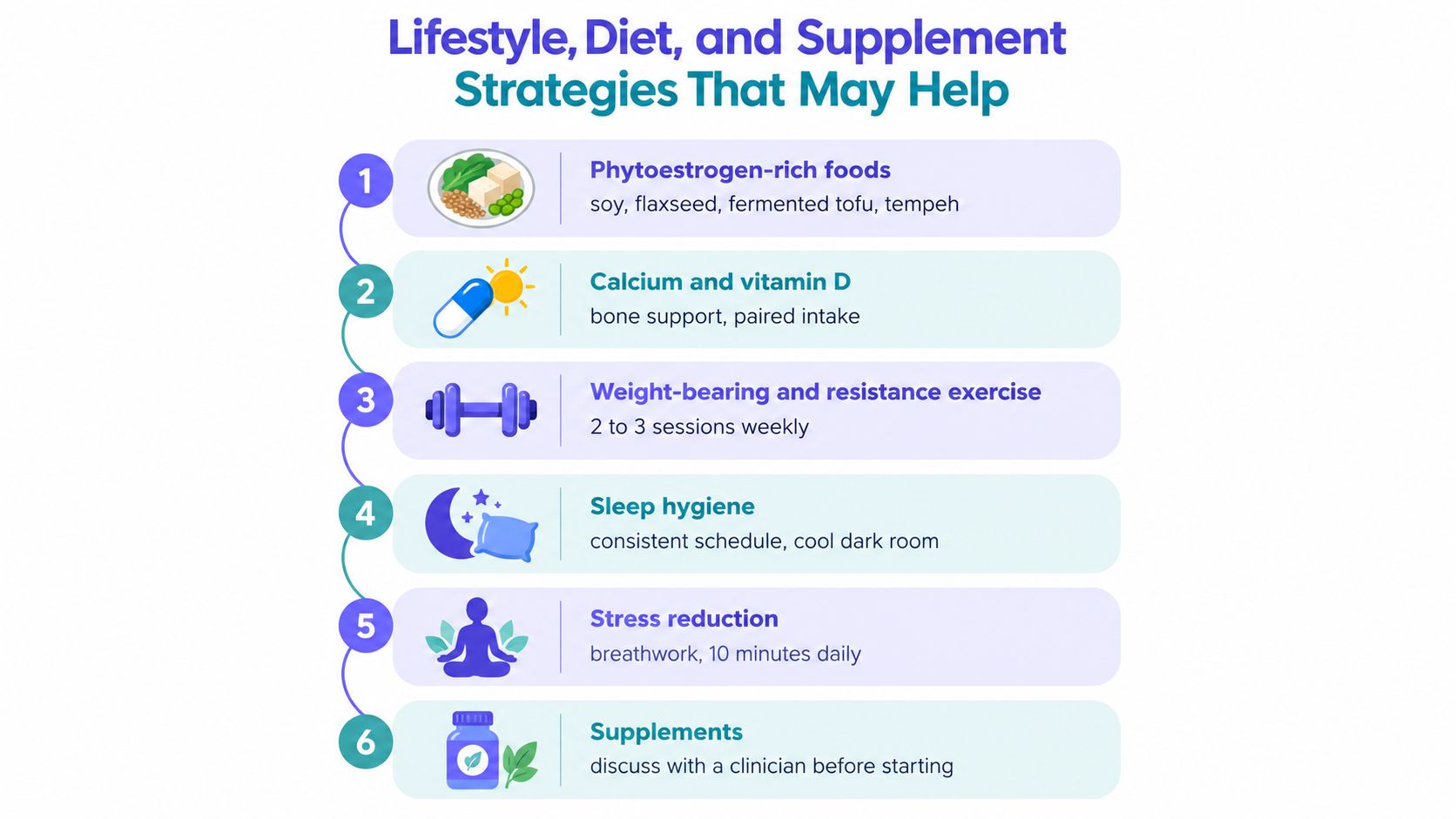
Phytoestrogens are plant compounds that interact with estrogen receptors. Soy foods, tempeh, fermented tofu, flaxseed, and other legumes are practical additions to meals. A review of foods high in estrogenic compounds can help you build variety without turning your diet into a hormone experiment.
The evidence is modest. A JAMA meta-analysis found that phytoestrogen supplements were associated with modest reductions in hot-flash frequency and vaginal dryness, but they didn't significantly reduce night sweats. Another review found that serum estradiol increased in some trials, yet the evidence was too inconsistent to recommend phytoestrogens as a replacement for prescription estrogen. The JAMA evidence review is the reason I tell patients to view these foods as supportive, not medicinal estrogen.
Build support around the hormone
Resistance and weight-bearing exercise help preserve bone and maintain strength. A consistent sleep schedule, a cool dark bedroom, and a wind-down routine can make night sweats easier to manage. Stress reduction won't directly replace estrogen, but breathwork, walking, yoga, or quiet time can reduce the overall load that makes symptoms feel harder to handle.
Calcium and vitamin D support bone health, particularly when estrogen is low. Get guidance before adding supplements, especially if you have kidney disease, take medications, or already consume fortified foods.
I'm cautious about chasteberry, black cohosh, and evening primrose. Their results are inconsistent, and they don't reliably raise estrogen. Over-the-counter “estrogen boosters” are also poorly standardized, so a label promising hormone balance isn't evidence that the product will deliver a clinically meaningful effect.
A practical starter routine
For the first two weeks, add a phytoestrogen-rich food to a meal you already eat, schedule regular strength work, and protect your sleep environment. Keep the plan manageable. You don't need an elaborate supplement stack or a restrictive diet to learn whether a routine is helping.
Track hot flashes, sleep interruptions, vaginal symptoms, mood, and energy. If symptoms remain disruptive, take that record to a clinician rather than adding more products. A routine can support treatment, but it shouldn't delay care.
▶ PlayTesting Your Levels and Talking to a Clinician
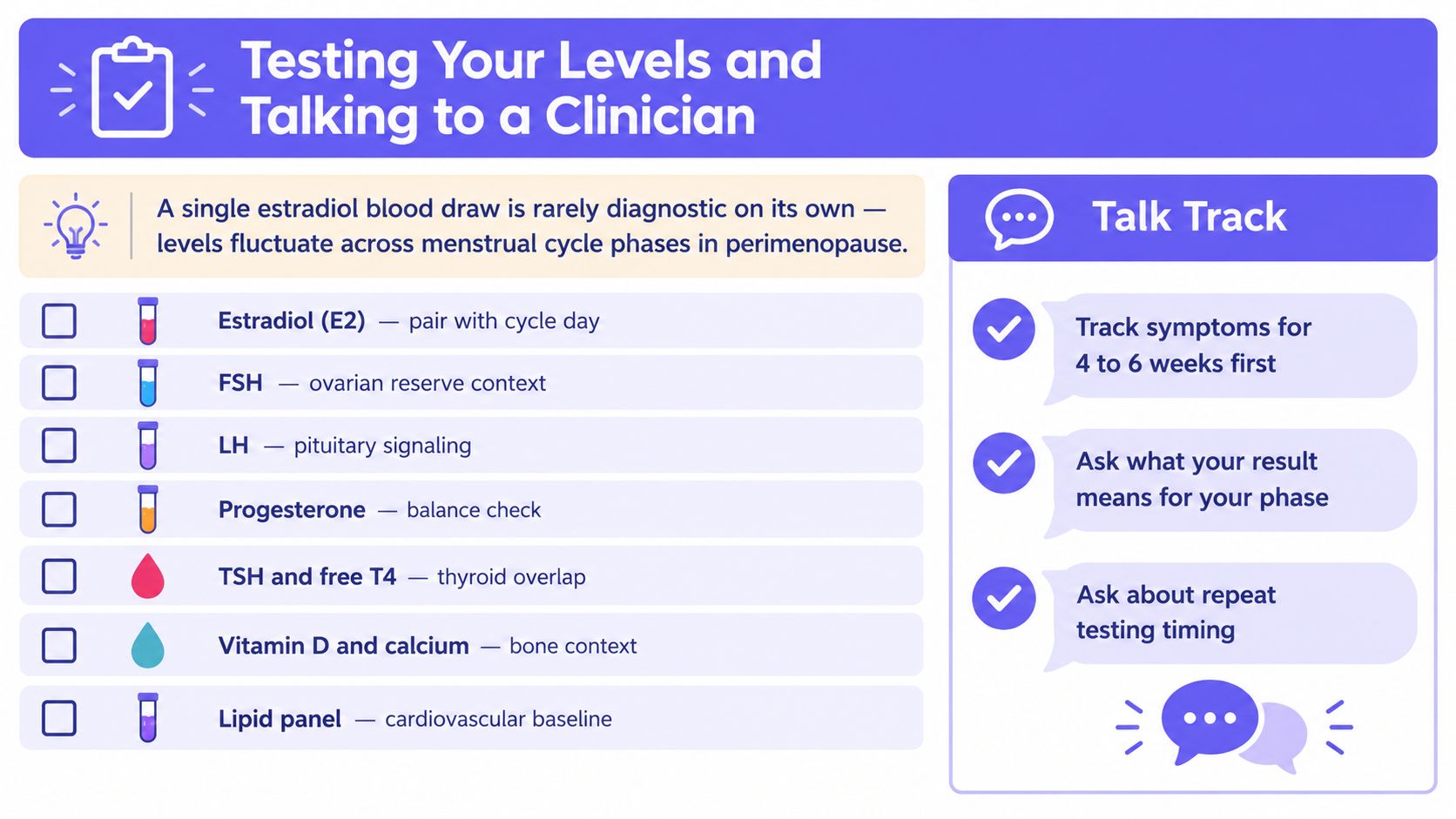
A single estradiol blood test rarely answers the entire question during perimenopause. Estrogen changes throughout the menstrual cycle, and an isolated result may reflect the day it was drawn rather than your broader hormonal pattern.
Testing can still be useful when it's chosen for a clear reason. A clinician may consider estradiol, FSH, LH, thyroid testing, prolactin, progesterone, and sex hormone-binding globulin. The right panel depends on your symptoms, menstrual pattern, age, medication history, and possible alternative causes.
Put the result in context
If you still have cycles, tell the clinician the date of the blood draw and where you were in your cycle. A high FSH paired with low estradiol can support the picture of an ovarian transition, but the result still needs to be interpreted alongside symptoms and bleeding patterns. After menopause, readings tend to be more stable, but testing isn't automatically necessary for every woman with typical symptoms.
Don't order a large hormone panel because more numbers feel more precise. The useful question is, “What decision will this test change?” If the answer is unclear, symptom history and a physical assessment may be more valuable.
Bring these questions to your appointment:
- Treatment fit: Am I a candidate for systemic or local estrogen?
- Uterine protection: If I use systemic estrogen, do I need progesterone?
- Route: Would a patch, gel, pill, cream, tablet, or ring better fit my risk profile?
- Safety: How do my breast, cardiovascular, clotting, liver, migraine, and family histories affect the choice?
- Monitoring: Which symptoms or side effects should prompt a call?
- Alternatives: What can I use if estrogen isn't appropriate?
If access is limited, telehealth or a menopause-focused clinician may provide another route to a structured evaluation. Before the visit, keep a symptom record that includes sleep, temperature symptoms, bleeding, vaginal discomfort, mood, and medications. You can also review how menopause testing works so you know what a blood test can and can't tell you.
Your Next Steps and Common Questions Answered
You don't need to solve your hormone health in one appointment. A better plan is to gather useful information, choose the smallest appropriate intervention, and review the result with a clinician.
A focused 30-day starting plan
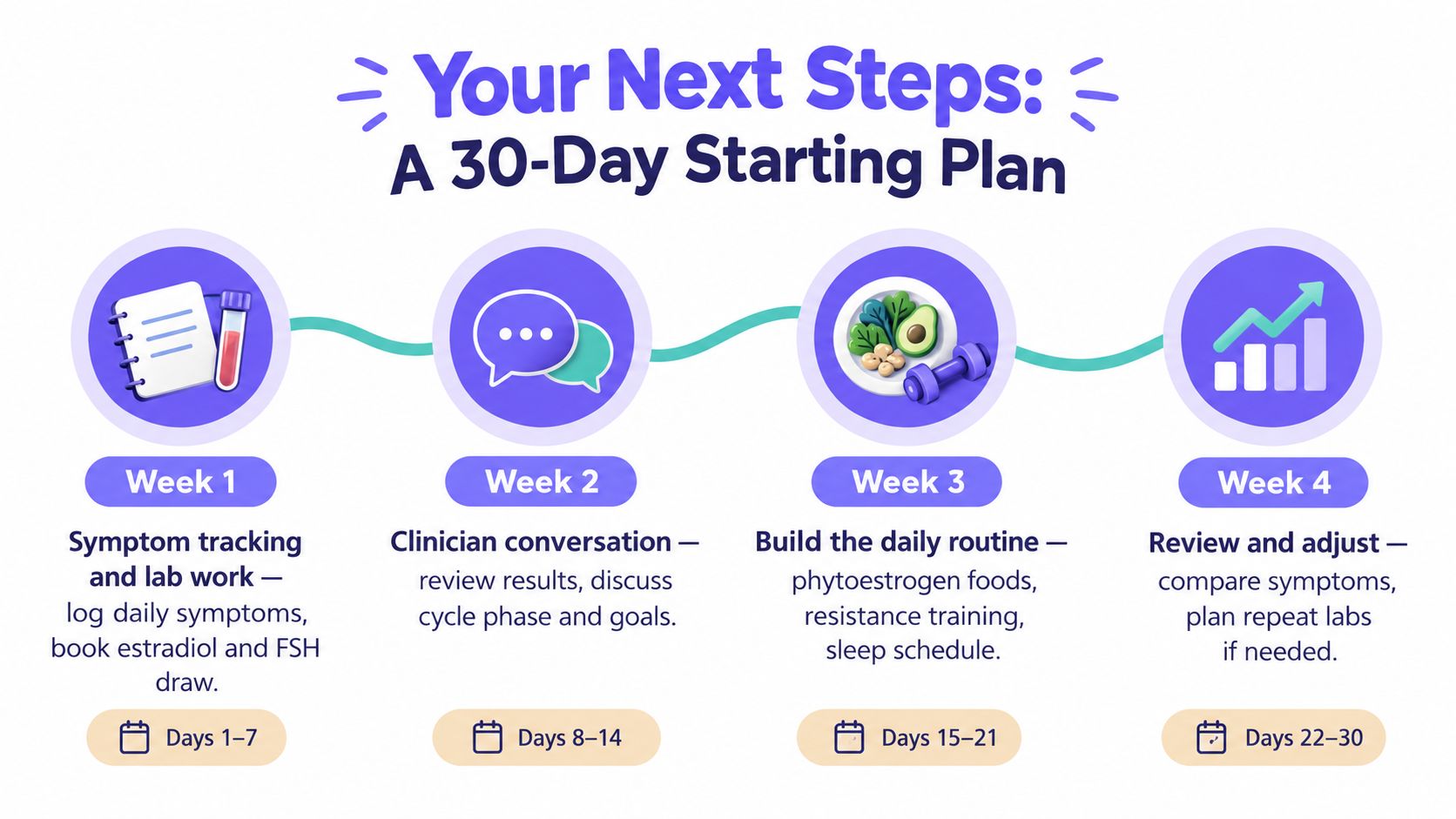
Week one: Record symptoms daily and arrange an appointment. Note when hot flashes occur, how often sleep is interrupted, whether sex is painful, and how your cycle has changed. Ask whether estradiol or other testing is useful for your situation.
Week two: Have the clinician conversation. Bring your history of breast problems, blood clots, cardiovascular disease, liver disease, migraines, medications, and family history. Ask directly whether your symptoms point toward systemic therapy, local therapy, lifestyle support, or another diagnosis.
Week three: Start the agreed plan. That might mean a prescribed treatment, a food routine, strength exercise, improved sleep habits, or a combination. Don't change several medications and supplements at once, because you'll lose the ability to tell what helped.
Week four: Review the pattern rather than judging one good or bad day. Discuss symptom response, side effects, bleeding changes, and whether follow-up or repeat testing is useful.
Common questions
When should I start treatment?
Start the conversation when symptoms interfere with sleep, work, sex, mood, or daily comfort. For suitable candidates, systemic therapy tends to have its most favorable benefit-risk balance when started within 10 years of menopause onset or before age 60, as described in the clinical evidence reviewed earlier. Timing alone doesn't determine eligibility.
How long should I wait before judging treatment?
Give the treatment enough time for your clinician to assess its effect, and track symptoms rather than relying on memory. Don't increase a dose or add another product because of one difficult night.
When should I contact a clinician urgently?
Seek prompt medical advice for unexpected vaginal bleeding, severe chest pain, sudden shortness of breath, one-sided leg swelling, new neurological symptoms, or a serious allergic reaction. These symptoms need assessment regardless of whether you're using hormones.
When does retesting make sense?
Retesting is most useful when it answers a specific clinical question, such as clarifying a changing cycle pattern or reviewing a treatment concern. Ask what decision the result will inform and whether the timing of the draw makes the result interpretable.
The safest answer to “how can I increase my estrogen levels” is individualized. Match the route to the symptom, match the timing to your stage, and match the treatment to your health history. That approach is more reliable than chasing a supplement label or a single lab value.
Lila can help you track symptoms, sleep, mood, energy, meals, and cycles while you work out which patterns need attention. Visit Lila to use a structured daily check-in and personalized action plan as you prepare for a clinician conversation.
Get Lila, your personal coach for perimenopause.
Built for women in their 40s. 24/7 coaching, in your pocket.