
How to Ease Menopause Symptoms: A Practical Guide
Learn how to ease menopause symptoms with practical steps for hot flashes, sleep, mood, and weight. A guide to creating your personalized, data-driven plan.
 Michelle
You wake at 3 a.m. too hot, kick off the covers, then lie there wide awake wondering why your body suddenly feels unfamiliar. A week later your period arrives early. Then it doesn't show up when you expect it. You're more irritable, more tired, maybe a little bloated, and none of it seems consistent enough to make sense of.
That confusion is one of the hardest parts of perimenopause and menopause. Symptoms can shift from day to day, and generic advice often feels too broad to be useful. "Eat better" and "exercise more" isn't much help when one day you feel fine and the next day you're exhausted, overheated, and on the verge of tears.
The good news is that there are effective ways to ease menopause symptoms. Some are lifestyle-based. Some are behavioral. Some involve medical treatment. A key turning point usually comes when you stop guessing and start looking for your own patterns. Once you can see what your body is doing, it's much easier to respond in a way that helps.
Navigating the Transition with Confidence
Menopause often starts as a collection of small, easy-to-dismiss changes. A period gets heavier. Patience gets shorter. Sleep gets lighter. Then a hot flush hits in the grocery line, or you wake up sweating and suddenly realize this is not random.
I see one mistake all the time. Women treat each symptom as a separate crisis and end up chasing relief without a clear plan. That approach is exhausting.
What helps is a wider view. Perimenopause and menopause can affect bleeding patterns, temperature regulation, sleep, mood, energy, and digestion in ways that shift from week to week. Irregular does not mean imaginary. It usually means hormones are fluctuating, and your body is giving signals in a pattern you have not mapped yet.
Menopause symptoms feel less chaotic once you stop reacting to each one in isolation and start looking for patterns across your days and weeks.
Confidence comes from structure. Notice what is changing. Write down when symptoms show up. Look for links between rough days and sleep, stress, food, alcohol, workouts, or cycle timing. Then make one adjustment at a time so you can tell what helps.
If you want a broader overview of the symptoms that can show up during this phase, this detailed guide to menopause symptoms and treatment options offers a useful starting point: https://getlila.com/blog/navigating-menopause-symptoms-comprehensive-guide
You do not need to figure everything out in a week. You need a method you can trust. Once you have that, this transition usually feels less like your body has turned against you and more like a problem you can work through with better information.
Decoding Your Body's Unique Signals
Generic menopause advice breaks down fast because symptoms don't arrive in a neat package. One woman gets intense hot flashes. Another struggles more with sleep, mood, bloating, or energy crashes. Many get a mix that changes week to week.
That's why symptom tracking is so useful. It turns "I feel off" into something concrete. You start seeing whether your rough days follow poor sleep, whether afternoon caffeine sets off flushing, or whether certain meals leave you feeling puffy and sluggish.
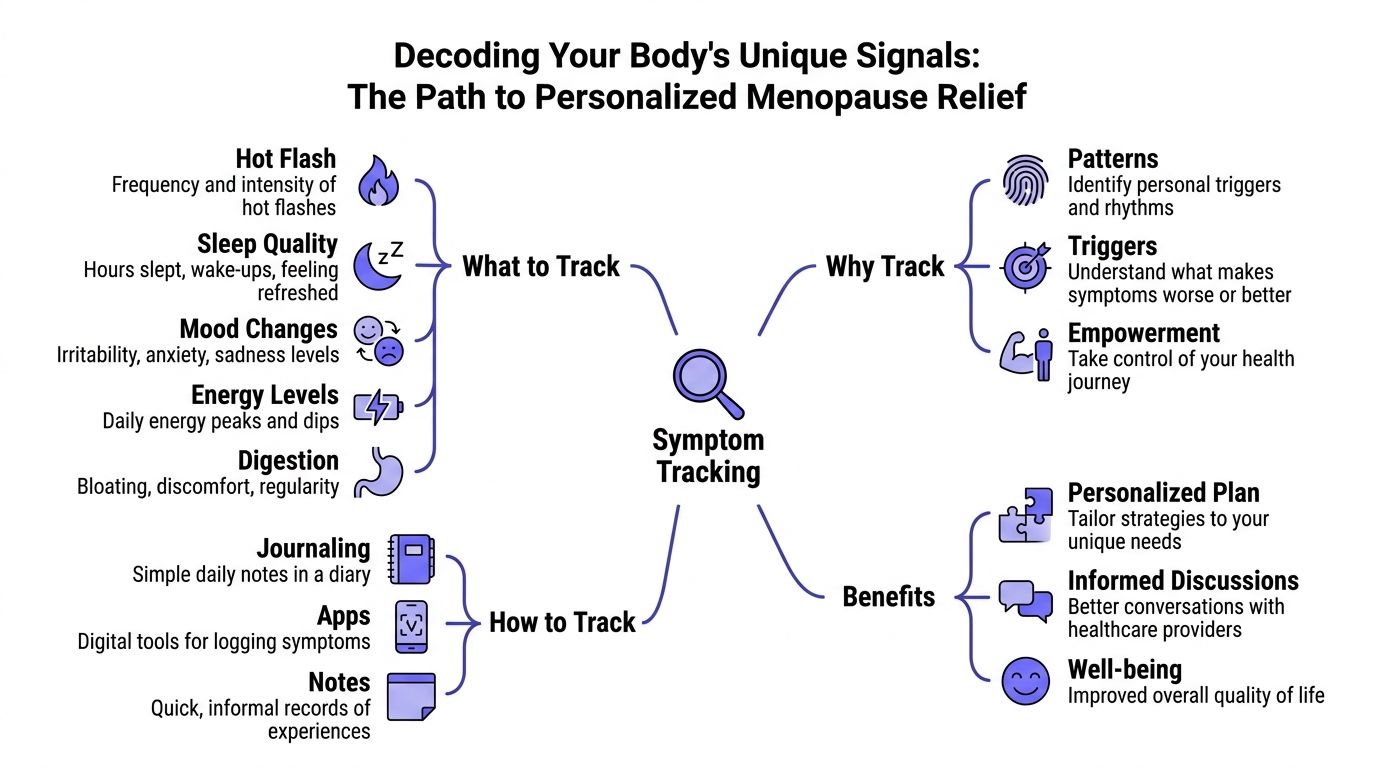
A 2025 Journal of Women's Health study found that 68% of perimenopausal women who used app-based tracking and personalized action plans reported better symptom control within 7 days, with a 32% reduction in hot flashes and a 28% improvement in sleep compared with generic advice according to this summary from Frederick Health.
What to track each day
Keep it simple. You are not building a medical chart. You're looking for repeatable clues.
Hot flashes and night sweats. Note when they happen, how intense they feel, and what was going on beforehand.
Sleep quality. Track bedtime, wake-ups, how rested you feel, and whether overheating woke you.
Mood. Irritable, flat, anxious, calm. A few words is enough.
Energy. Look for dips, especially mid-morning or late afternoon.
Digestion. Bloating, constipation, discomfort, or a heavy feeling after meals.
Food and drink. Not every bite forever. Just enough to spot patterns, especially with caffeine, alcohol, spicy food, and larger evening meals.
Cycle changes. If you're still getting periods, log timing, flow, and any symptoms before or during them.
How to make tracking sustainable
Many people quit tracking because they try to record too much. The answer isn't more discipline. It's less friction.
Try this:
Use one place for notes. A paper journal works. A phone note works. An app works if you want symptom, meal, sleep, and cycle data together.
Check in once or twice a day. Morning and evening is plenty.
Use short labels. "2 a.m. wake-up, sweaty." "Coffee and flush by 11." "Bloated after lunch."
Review weekly, not hourly. You're looking for trends, not perfection.
A simple table can help:
What happened | Possible trigger | What to test |
|---|---|---|
Afternoon hot flash | Coffee, stress, warm room | Switch to half-caf, short walk before usual time |
Bloated after dinner | Large meal, dairy, late eating | Smaller portion, earlier dinner, test dairy reduction |
Restless sleep | Alcohol, hot bedroom, late screen time | Cooler room, lighter bedding, earlier wind-down |
What patterns are worth acting on
Not every bad day means something. Repetition is what counts.
Look for clusters like these:
Poor sleep followed by low mood
Hot flashes after caffeine or alcohol
Bloating after specific foods
Energy crashes on low-protein mornings
More symptoms during certain cycle phases in perimenopause
Practical rule: if you notice the same pattern three or four times, it's worth testing a change for a week.
This is how to ease menopause symptoms in a way that fits your body, not an average woman's body on a checklist.
Building Your Foundational Daily Routine
Once you've got a clearer picture of your patterns, daily habits become more targeted. You're not trying to become perfect. You're trying to build a routine that steadies blood sugar, supports bone and muscle, and reduces the day-to-day friction that can make symptoms feel worse.
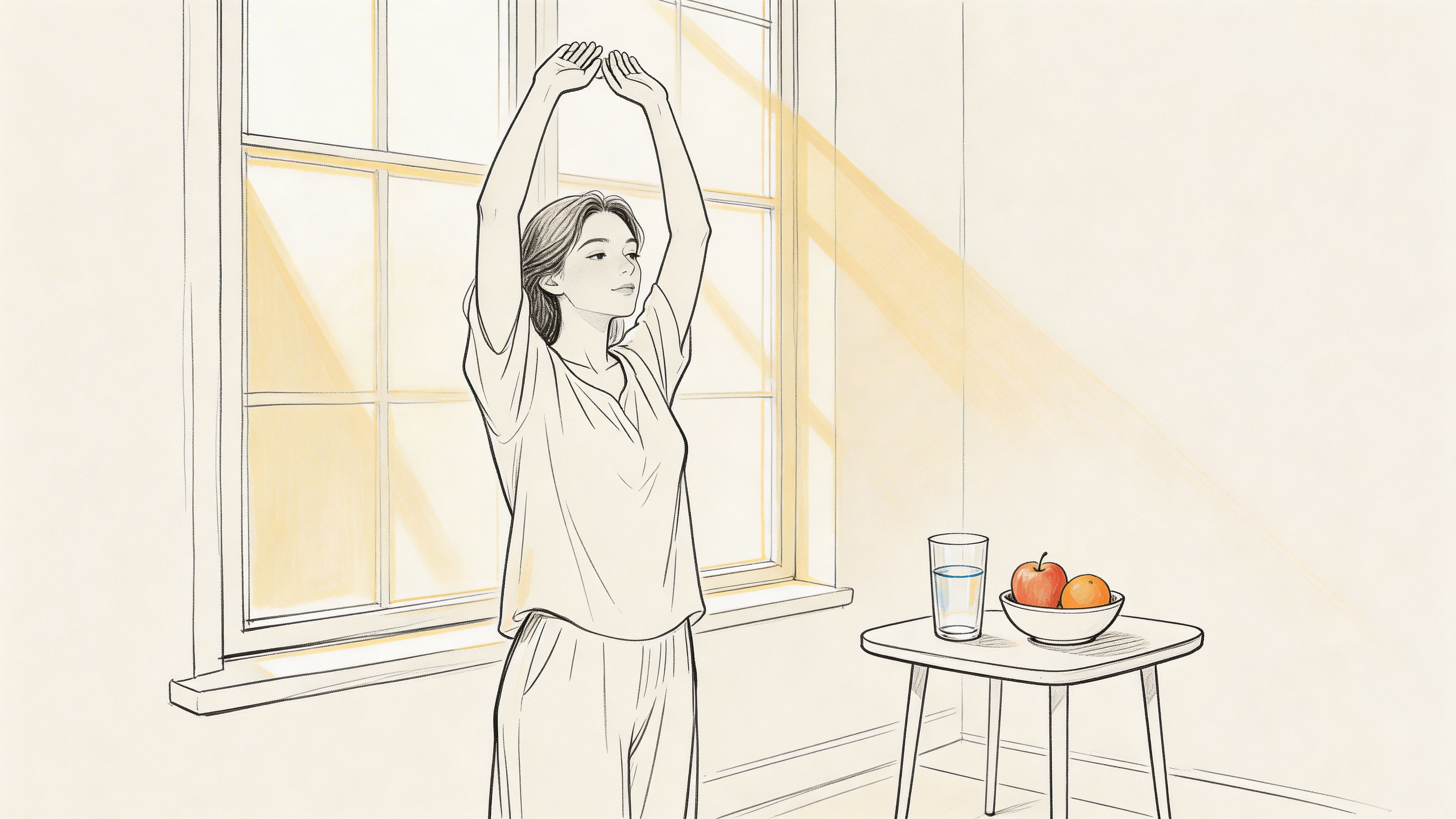
The strongest place to start is movement. The US Office on Women's Health notes that at least 30 minutes of daily physical activity can alleviate hot flashes, and that combining aerobic and weight-bearing exercise can reduce their frequency by 40 to 50% and enhance bone density.
Food and movement work better together
A lot of women treat food and exercise as separate projects. In menopause, they work best as a pair.
When meals are more balanced, energy tends to be steadier. When you move regularly, sleep, mood, and body composition often improve. Together, those shifts can make hot flashes, bloating, and fatigue easier to manage.
That doesn't require a strict plan. It usually means making meals more grounding and workouts more consistent.
Build meals that do more than fill you up
Think in terms of a "power plate" instead of dieting.
Breakfast could be Greek yogurt with berries and seeds, or eggs with greens and toast.
Lunch might be a grain bowl with beans or chicken, lots of vegetables, and a fat source like olive oil or avocado.
Dinner can be salmon or tofu, roasted vegetables, and a starchy side that satisfies you.
If bloating is one of your biggest complaints, avoid making dinner your largest meal every night. A lighter evening meal often sits better, especially if you know late eating affects sleep.
For a more detailed way to structure meals during this phase, this menopause diet plan is a useful companion: https://getlila.com/blog/menopause-diet-plan
A realistic weekly movement rhythm
You don't need punishing workouts. You need enough repetition for your body to adapt.
Here's a realistic structure many women can sustain:
Most days. A brisk walk or similar aerobic movement for at least 30 minutes.
Two to three times a week. Strength work using weights, machines, or bodyweight. Focus on major muscle groups.
Once or twice a week. Yoga, mobility, or stretching for stiffness and recovery.
Short movement breaks. A 10-minute walk after meals or between work blocks can help energy and mood.
A simple week might look like this:
Day | Focus |
|---|---|
Monday | Walk + short strength session |
Tuesday | Walk + mobility |
Wednesday | Strength training |
Thursday | Walk only |
Friday | Strength training |
Saturday | Longer walk or yoga |
Sunday | Light movement and recovery |
What tends to help and what tends to backfire
The women who do best aren't the ones doing the most. They're the ones doing enough, consistently.
What often helps:
Protein-forward meals that prevent the crash-and-snack cycle
Regular walks for mood and heat regulation
Strength training for muscle and bone support
Calcium- and vitamin D-rich foods as part of an overall eating pattern
What often backfires:
Skipping meals then overeating later
Overtraining when you're already exhausted
Cutting too many foods at once
Using exercise as punishment instead of support
A routine should lower stress on your body, not add more of it.
Mastering Sleep and Managing Mood
Sleep and mood problems don't stay in separate lanes during menopause. One bad night can leave you wired, flat, tearful, or foggy the next day. Ongoing stress can make it harder to sleep, and disrupted sleep can make everything feel sharper and more unmanageable.
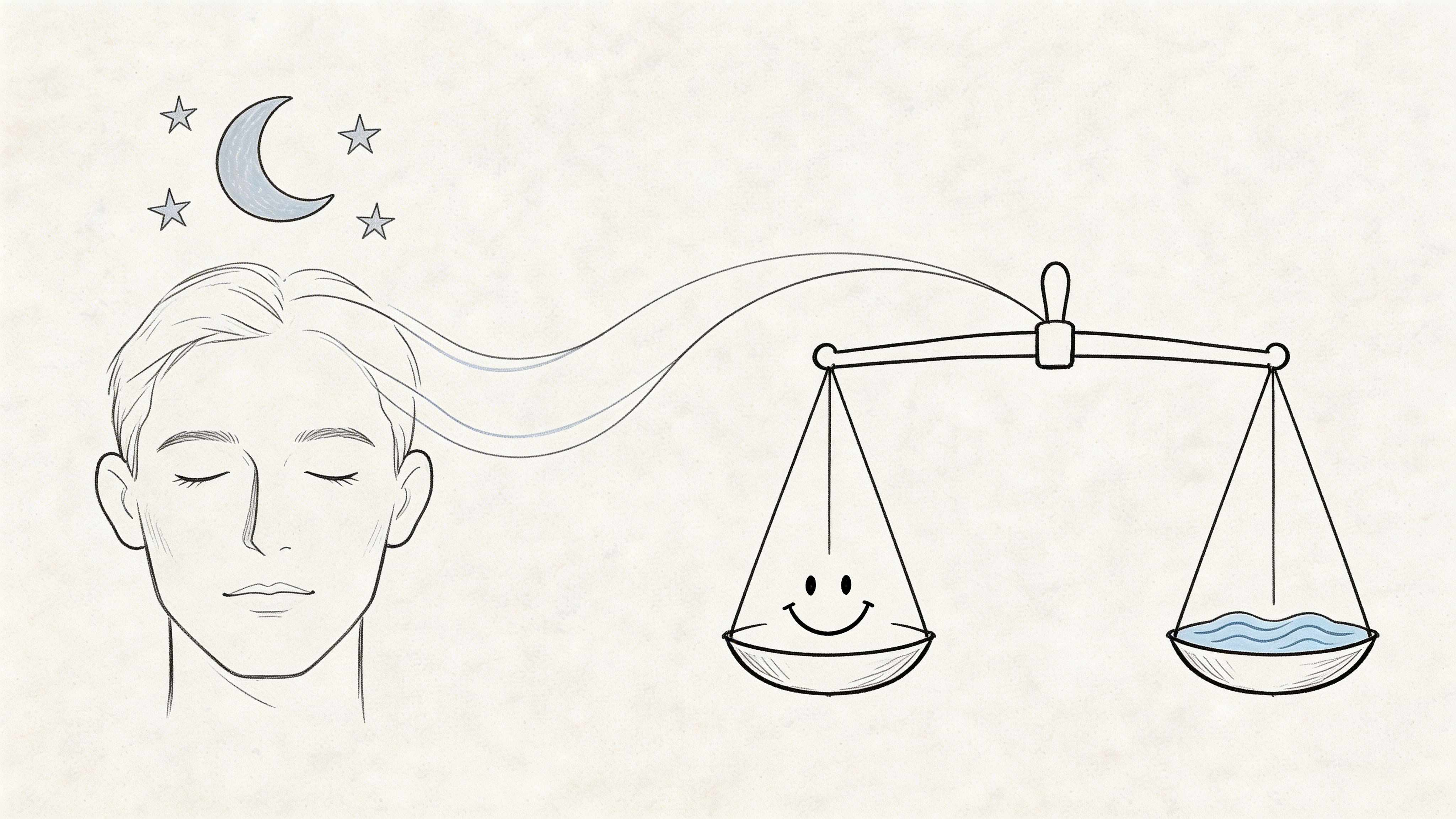
The first step is dropping the idea that you should push through it. Sleep support and mood support are treatment tools.
The American Psychological Association notes that Cognitive Behavioral Therapy for Insomnia and menopause-related behavioral strategies have documented benefit for menopause-related sleep disruption. Women using CBT-informed strategies also reported better work adjustment, social functioning, sleep quality, and lower symptom severity at a 20-week follow-up.
Make nights easier on your body
If night sweats are waking you, start with your environment before assuming nothing can help.
Try a short cool-down routine in the hour before bed. Keep the room cooler if possible. Avoid going to sleep overheated from a hot shower, heavy pajamas, or dense bedding. If bedding is part of the problem, a practical guide to best bedding for night sweats can help you compare fabrics and temperature-regulating options.
A useful evening reset looks like this:
Dim things down. Lower lights and stop doing stimulating tasks.
Cool your body. Lukewarm shower, cool washcloth, lighter sleepwear.
Reduce triggers late in the day. If your tracking has linked evening alcohol, caffeine, or spicy meals to overnight wake-ups, adjust those first.
Keep a simple plan for wake-ups. If you wake sweaty, change what you need to change quickly and avoid turning the moment into a full mental spiral.
What to do with the 3 a.m. racing mind
The body may wake you, but the mind often keeps you up.
CBT-style skills help because they interrupt the chain reaction of symptom, panic, and more wakefulness. Instead of "I'll be useless tomorrow," try a more accurate replacement thought: "This is uncomfortable, but I know what to do next."
That isn't fake positivity. It's nervous system management.
If your brain gets loud at night, don't argue with every thought. Give it one calm sentence and a simple task, like breathing or reading something boring.
You can also use a short breathing drill. Box breathing works well for many women: inhale, hold, exhale, hold, all for the same count. Keep it gentle, not forced.
If fatigue is becoming a daily drag, this guide on menopause fatigue relief can help you think through the common drivers and practical adjustments: https://getlila.com/blog/menopause-fatigue-relief
A short guided practice can also help settle the body before bed or after a wake-up:
▶ PlayProtect your mood during the day
Mood support doesn't start when you're already overwhelmed. It starts earlier.
Some of the most effective tools are also the least glamorous:
Scheduled downtime. Put it on the calendar like an appointment.
Brief movement when stress is building
Less self-criticism about fluctuating capacity
Clearer boundaries around work, caregiving, and constant availability
If anxiety or low mood keeps building, don't assume it's something you have to white-knuckle through. Behavioral support, therapy, and medical options can all be part of the conversation.
Creating Your Data-Driven Action Plan
Guessing is exhausting. A data-driven approach works better because it helps you make smaller, smarter changes instead of changing everything at once and hoping for the best.
Start with the information you've already gathered. If your notes show afternoon hot flashes after a second coffee, that's a testable pattern. If bloating keeps showing up after certain meals, that's useful. If poor sleep predicts a rough mood day, that tells you where to put your energy first.
Use a test-and-learn method
Pick one pattern. Change one thing. Watch it for several days.
That might look like this:
Pattern. Night sweats are worst after alcohol. Test. Remove alcohol for a week and compare sleep notes.
Pattern. Afternoon flushes hit on workdays. Test. Add a walk or breathing break before the usual window.
Pattern. You wake unrefreshed after heavy dinners. Test. Shift dinner earlier or make it lighter.
This method is slower than a complete overhaul, but it's more reliable. You learn what helps your body.
Know when to bring in medical support
Lifestyle changes matter, but they're not the only option. If symptoms are frequent, intense, or affecting sleep, work, or quality of life, talk with a clinician and bring your tracking with you.
That conversation gets more productive when you can say things like:
How often symptoms happen
What time of day they peak
What you've already tried
How they affect sleep, work, and daily function
What you've already tried
For many women with hot flashes and related symptoms, estrogen therapy remains the most effective treatment. Hot flashes affect up to 80% of menopausal women, and estrogen therapy reduces frequency by 70 to 90% in responsive patients. The North American Menopause Society endorses its use for women under 60 or within 10 years of menopause onset, as summarized by Mayo Clinic menopause treatment guidance.
If you're trying to understand the basics before an appointment, this overview of Hormone Replacement Therapy (HRT) gives a plain-language explanation of patch-based treatment and common questions.
Use tools that reduce the workload
Manual tracking works. Many women do better, though, when the process is centralized and easier to review.

An app like Lila can keep symptoms, mood, sleep, meals, energy, and cycles in one place, then turn that information into a more personalized action plan. That's especially useful in perimenopause, when symptoms fluctuate enough that memory alone isn't very reliable.
Your plan doesn't need to be rigid. It needs to be responsive.
The goal isn't to monitor yourself endlessly. It's to gather enough evidence to make better decisions, then adjust as your body changes.
Frequently Asked Questions About Menopause Relief
Is hormone therapy the best option for everyone
No. It can be very effective, but it isn't one-size-fits-all.
The strongest evidence in the material above supports estrogen therapy as the most effective treatment for hot flashes and related symptoms, especially when started before age 60 or within 10 years of menopause onset. But whether it's appropriate depends on your medical history, your symptoms, and your preferences. That's a clinician conversation, not a social media poll.
Do I need to wait until menopause is official to get help
No. Perimenopause is often when symptoms first become disruptive.
If your cycles are changing and you're also dealing with sleep disruption, mood shifts, hot flashes, bloating, or fatigue, it's reasonable to start tracking and discussing it with a healthcare professional. You don't need to wait until you've gone a full year without a period to take symptoms seriously.
Do supplements work
Some women try supplements first, but evidence is uneven.
In the verified guidance provided for this article, black cohosh is specifically described as lacking strong evidence and carrying liver risks. If you're considering supplements, bring them up with your clinician instead of assuming they're harmless.
How long do symptoms usually last
It varies more than most women expect.
Vasomotor symptoms such as hot flashes can persist for an extended period, and for some postmenopausal women, they can last for a very long time. That's one reason long-term management habits matter. Relief is possible, but expecting a quick universal finish line can set you up for frustration.
What's the most effective non-hormonal place to start
Start with the symptoms that affect your days the most.
For many women, that means regular exercise, sleep protection, trigger reduction, and CBT-based strategies for insomnia or stress. If your symptoms are milder, those may be enough. If they're not enough, they still give you a stronger baseline before you explore medical treatment.
What should I bring to a menopause appointment
Bring observations, not just complaints.
Useful notes include:
Your main symptoms and when they started
How often they happen
What time of day they peak
What you've already tried
How they affect sleep, work, and daily function
What you've already tried
That kind of information helps a clinician move from vague reassurance to an actual plan.
Can I ease symptoms without trying to do everything at once
Yes, and that works better.
Pick the symptom causing the most disruption. Track it. Test one or two changes. Keep going from there. Menopause care is often more effective when it's personalized and paced, not all-or-nothing.
If you want help turning your symptoms into a clear daily plan, Lila can help you track patterns in sleep, mood, energy, meals, cycles, and hot flashes, then use that information to guide next steps without the overwhelm.
Get Lila, your personal coach for perimenopause.
Built for women in their 40s. 24/7 coaching, in your pocket.


