
Longer Menstrual Cycle: What It Means and What to Do
Longer Menstrual Cycle. Wondering why your period is late or your cycle is getting longer? Learn the common causes, when to talk to a clinician, and how
You check the calendar because your period should have arrived several days ago. You're in your early 40s, your cycles have usually been predictable, and now the date keeps moving. Ten days later, you're wondering whether this is just a stressful month, the beginning of a new pattern, or something you should investigate.
A longer menstrual cycle can be a temporary response to stress, illness, travel, weight change, or altered ovulation. It can also be an early sign of perimenopause, thyroid dysfunction, polycystic ovary syndrome, or another hormonal issue. The important clue usually isn't one late period. It's the pattern that develops across several cycles, especially when the timing change appears alongside shifts in bleeding, sleep, mood, body composition, or temperature symptoms.
Table of Contents
- When Your Period Starts Showing Up Late
- What Counts as a Normal Cycle Length
- Common Causes of a Longer Menstrual Cycle
- How to Read the Signals Your Cycle Is Sending
- When to See a Clinician About a Longer Cycle
- Tracking Your Cycle So the Data Actually Helps
- What Longer Cycles Mean for Your Long-Term Health
When Your Period Starts Showing Up Late
At first, the change may seem too small to name. One month, your period arrives five days later than expected. The next month looks almost normal. Then you notice that your usual cycle length no longer feels usual at all.
That uncertainty can be frustrating because cycle length often changes gradually. You may not remember the exact start date of every period, and a busy month can make a delay easy to dismiss. A woman who has always started bleeding near the same point on the calendar may only recognize the shift when she compares several months side by side.
A late period is information, not a diagnosis.
A longer cycle means there are more days between the first day of one period and the first day of the next. In many cases, the extra time develops before ovulation because the ovary takes longer to mature and release an egg. In other cycles, ovulation may not happen, which can make the timing especially difficult to predict.
That doesn't automatically mean something is wrong. A single unusual cycle can follow emotional strain, poor sleep, a recent infection, a major change in exercise, or a change in contraception. The concern grows when the delay repeats, becomes more pronounced, or comes with symptoms that weren't part of your usual experience.
This article will help you sort those possibilities without treating every late period as an emergency. You'll learn what cycle length measures, why perimenopause often produces longer or more variable cycles, which non-menopausal causes deserve attention, and how to decide when tracking is enough and when it's time to contact a clinician.
Your observation is a useful starting point. The goal isn't to force your body into a textbook schedule. It's to understand your own baseline and recognize when that baseline is changing.
What Counts as a Normal Cycle Length
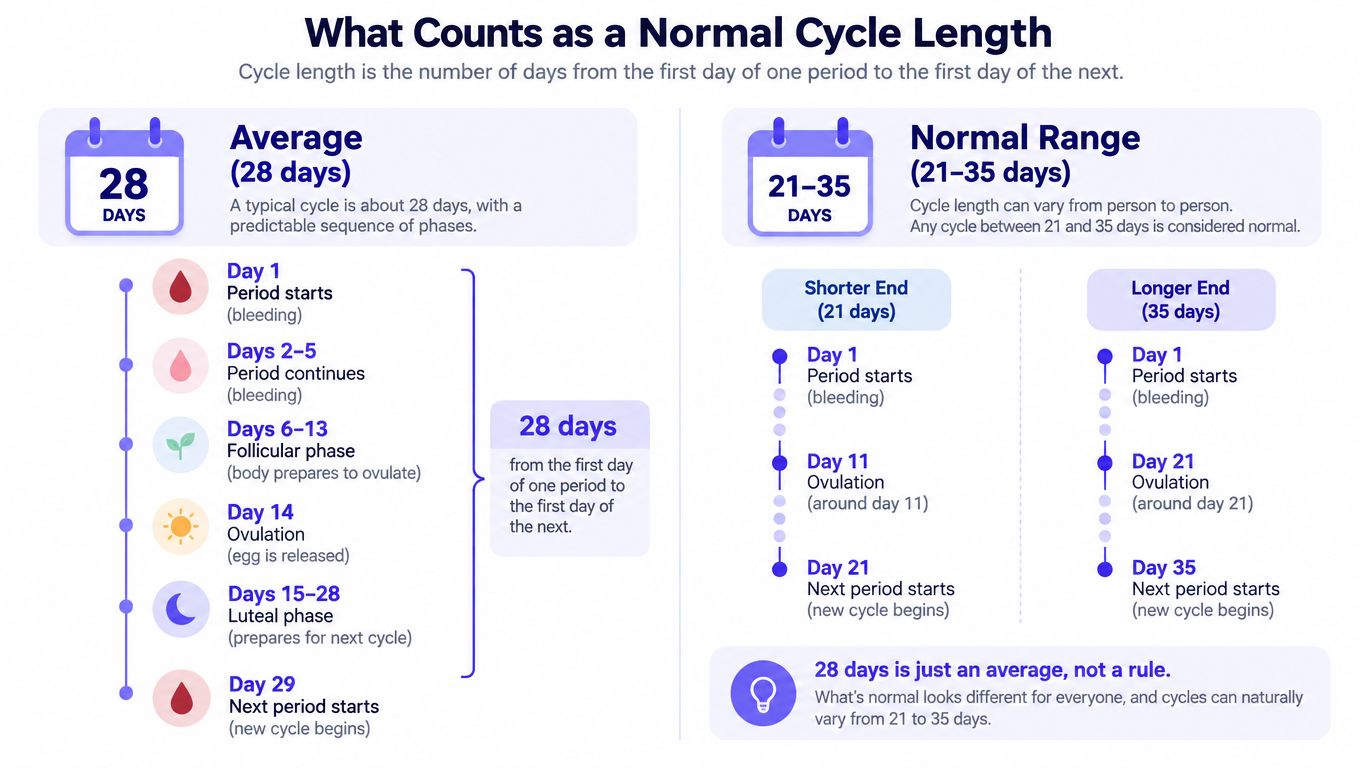
Cycle length is counted from day one of bleeding to day one of the next period. Day one isn't the final day of spotting or the day bleeding becomes heavy. It's the first day of menstrual bleeding that represents the beginning of a new cycle.
The familiar 28-day cycle is an average, not a target. For adults, a cycle between 21 and 35 days is generally considered within the normal range, as described by guidance on menstrual cycle length from OSF HealthCare. Adolescents often have longer or less predictable cycles while ovulation patterns mature.
Your personal baseline matters more than comparison with someone else. If your cycle has reliably been 26 days for years, that may be completely normal for you. Another person may regularly have a 34-day cycle and feel equally predictable. Regularity means consistency for your body, not perfect alignment with an average.
Separate a one-off delay from a pattern
An occasional 40-day cycle can happen without indicating a lasting health problem. A repeated pattern of cycles becoming longer, more variable, or separated by increasingly long gaps deserves a closer look.
Use this simple self-check:
- Write down the first day of each period for the past six months.
- Calculate the length of each cycle.
- Subtract your shortest cycle from your longest cycle.
- Note whether the longest cycles are becoming more frequent.
The result won't diagnose the cause, but it gives you a clearer starting point for a healthcare conversation. A calendar, spreadsheet, paper journal, or menstrual cycle calculator can help you avoid relying on memory.
If you prefer a visual explanation of the phases and timing, watch this overview after reviewing your own dates:
▶ PlayCommon Causes of a Longer Menstrual Cycle
A longer cycle has several possible explanations, and the timing of the change often supplies useful context. A person in her 40s with gradually lengthening cycles and new night sweats may be experiencing a different process from someone whose cycles became long after stopping hormonal contraception or developing fatigue and cold sensitivity.
Perimenopause often changes ovulation first
During perimenopause, ovarian hormone production becomes less predictable. The follicular phase, the part of the cycle before ovulation, may take longer, and ovulation may occur less consistently. This can produce longer cycles before classic symptoms such as hot flashes become obvious.
A large analysis from the Apple Women's Health Study found that average cycle length varies across the reproductive lifespan. People under 20 averaged 30.3 days, while those aged 35 to 39 averaged 28.7 days. People over 50 averaged 30.8 days, and the over-50 group had cycles about 2.0 days longer than the reference age band. These findings reinforce that cycle timing isn't static across age.
Hormonal contraception can also change what you see. Cycles may remain irregular for a time after stopping a hormonal IUD, pill, or injection, although the effect depends on the method and the individual. A clinician can help distinguish a contraceptive transition from a separate ovulation problem.
Medical and lifestyle causes can overlap
Hypothyroidism may delay menstrual timing and often appears with fatigue, feeling unusually cold, constipation, dry skin, or changes in hair. Thyroid disease is one reason not to assume every longer cycle is perimenopause.
Chronic stress, inadequate sleep, substantial weight change, and intense endurance training can affect the brain-ovary signaling system that coordinates ovulation. A delayed or absent ovulation can stretch the cycle, particularly when several pressures occur at once.
PCOS has a broad range of presentations. Some people with PCOS have long cycles because ovulation occurs infrequently, while others notice different patterns. For a plain-language overview, see PCOS and irregular periods explained, especially if long cycles appear with acne, increased facial hair, or persistent difficulty predicting ovulation.
| Cause | Typical effect on cycle | Key clues |
|---|---|---|
| Perimenopause | Longer or more variable cycles, sometimes with skipped ovulation | New changes in the 40s or 50s, hot flashes, sleep disruption, mood changes |
| Hormonal contraception changes | Temporary irregularity or delayed return of a familiar pattern | Recent start, stop, or change in contraception |
| Thyroid dysfunction | Delayed or irregular bleeding | Fatigue, cold sensitivity, constipation, skin or hair changes |
| Chronic stress or under-recovery | Delayed ovulation or absent periods | Major stress, poor sleep, heavy training, under-fueling |
| PCOS | Infrequent ovulation and long cycles in some presentations | Acne, facial hair, weight changes, long-standing irregularity |
Cycles longer than 35 days are classified as oligomenorrhea in endocrine medicine. The differential diagnosis includes PCOS, thyroid disease, Cushing's syndrome, diabetes, and other endocrine disorders, so repeated cycles beyond this range may warrant evaluation rather than indefinite observation, as outlined in this clinical review of oligomenorrhea.
How to Read the Signals Your Cycle Is Sending
Cycle length is only the first layer. The meaning becomes clearer when you combine timing with bleeding duration, flow, and symptoms.
Suppose your usual cycle is 28 days. A cycle that lasts 30 days may not tell you much on its own. A cycle that runs 7 days or more longer than your personal pattern, repeatedly rather than once, is more meaningful. Persistent variability of at least seven days is recognized as an early perimenopause pattern and may begin roughly 6 to 8 years before the final menstrual period, according to this review of the menopausal transition.
The direction matters, too. Some people alternate between short and long cycles. Others see a gradual lengthening. You might also notice that bleeding becomes heavier, lighter, longer, or separated by spotting. None of these details should be interpreted in isolation, but together they show whether your reproductive hormones are producing a stable ovulatory rhythm.
The 60-day marker
A gap of 60 days or more between periods is a clinically meaningful sign of the late menopausal transition. Research on cycle patterns found that late increases in cycle length appeared in 21.8% of participants as early as two years before the final menstrual period, while 16.2% showed an early increase as early as five years before it. The same review notes that amenorrhea can last at least 60 days during the late transition, and cycles of 90 days or longer occurred later in the transition. These findings are summarized in this review of menstrual cycle patterns around the final menstrual period.
A long gap after travel or illness is different from repeated gaps that occur without an obvious trigger. Persistent lengthening reflects less predictable ovarian hormone production and less frequent ovulation, not a stable new cycle length.
Look for accompanying changes
Track whether cycle changes occur alongside:
- Temperature symptoms: Hot flashes or night sweats that are new for you.
- Bleeding changes: Mid-cycle spotting, unusually heavy bleeding, or bleeding that lasts longer than expected.
- Pain: New pelvic pain, worsening cramps, or pain during sex.
- Hair and skin changes: New acne, increased facial hair, scalp hair thinning, or markedly dry skin.
- Daily health shifts: Poor sleep, mood changes, fatigue, appetite changes, or changes in body composition.
For more detail about bleeding between periods, use this guide to spotting during perimenopause. The strongest clue is the trend, not the single data point.
When to See a Clinician About a Longer Cycle
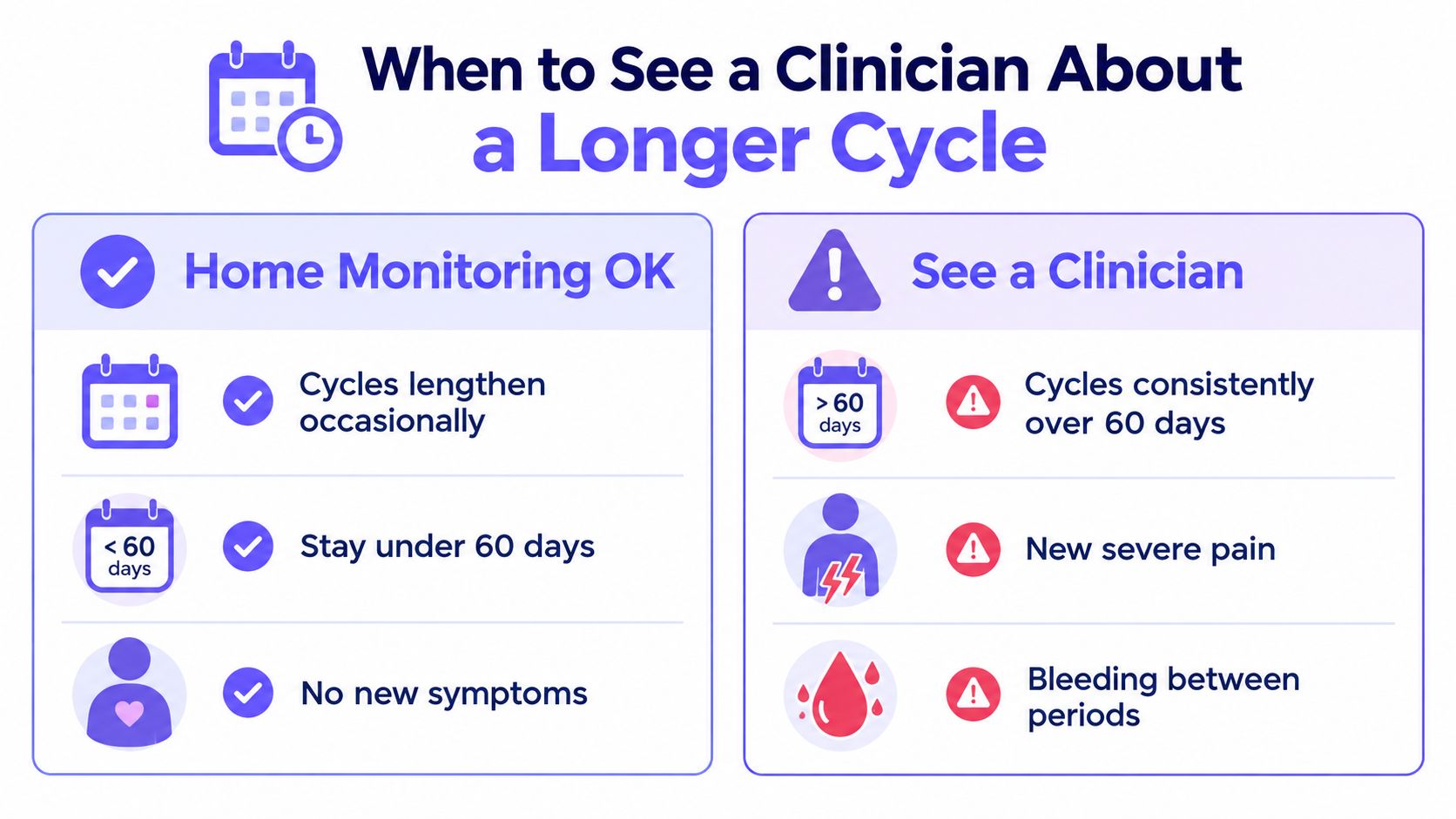
Home monitoring is reasonable when a cycle runs late occasionally, remains under 60 days, and doesn't bring new or troubling symptoms. Continue recording dates rather than trying to predict the next period from one unusual month.
Arrange a clinical appointment when your previous pattern changes suddenly or when long cycles keep repeating. You should also seek advice if the change occurs with heavy bleeding, new pelvic pain, hot flashes, hair loss, or a period absence lasting several months.
Bring a useful record
A clinician can interpret your situation more effectively when you bring specific observations. Record:
- Cycle dates: The first day of each period and the number of days until the next one.
- Bleeding pattern: Duration, heaviness, clots, and any spotting between periods.
- Related symptoms: Sleep disruption, mood changes, hot flashes, pain, hair changes, or fatigue.
- Recent context: Stress, illness, weight change, exercise changes, and new medications.
- Hormonal details: Current contraception, recent contraception changes, and pregnancy possibility when relevant.
Possible evaluation may include thyroid-stimulating hormone, prolactin, follicle-stimulating hormone, or a pelvic ultrasound. The right tests depend on your age, symptoms, medical history, pregnancy possibility, and examination findings. A blood test can be useful in some situations, but perimenopause is often identified from the overall pattern rather than a single result, as explained in this guide to testing for perimenopause.
Don't wait for a routine visit if bleeding is unusually heavy, pain is severe, or you feel faint or acutely unwell. Those symptoms need prompt medical assessment.
Tracking Your Cycle So the Data Actually Helps
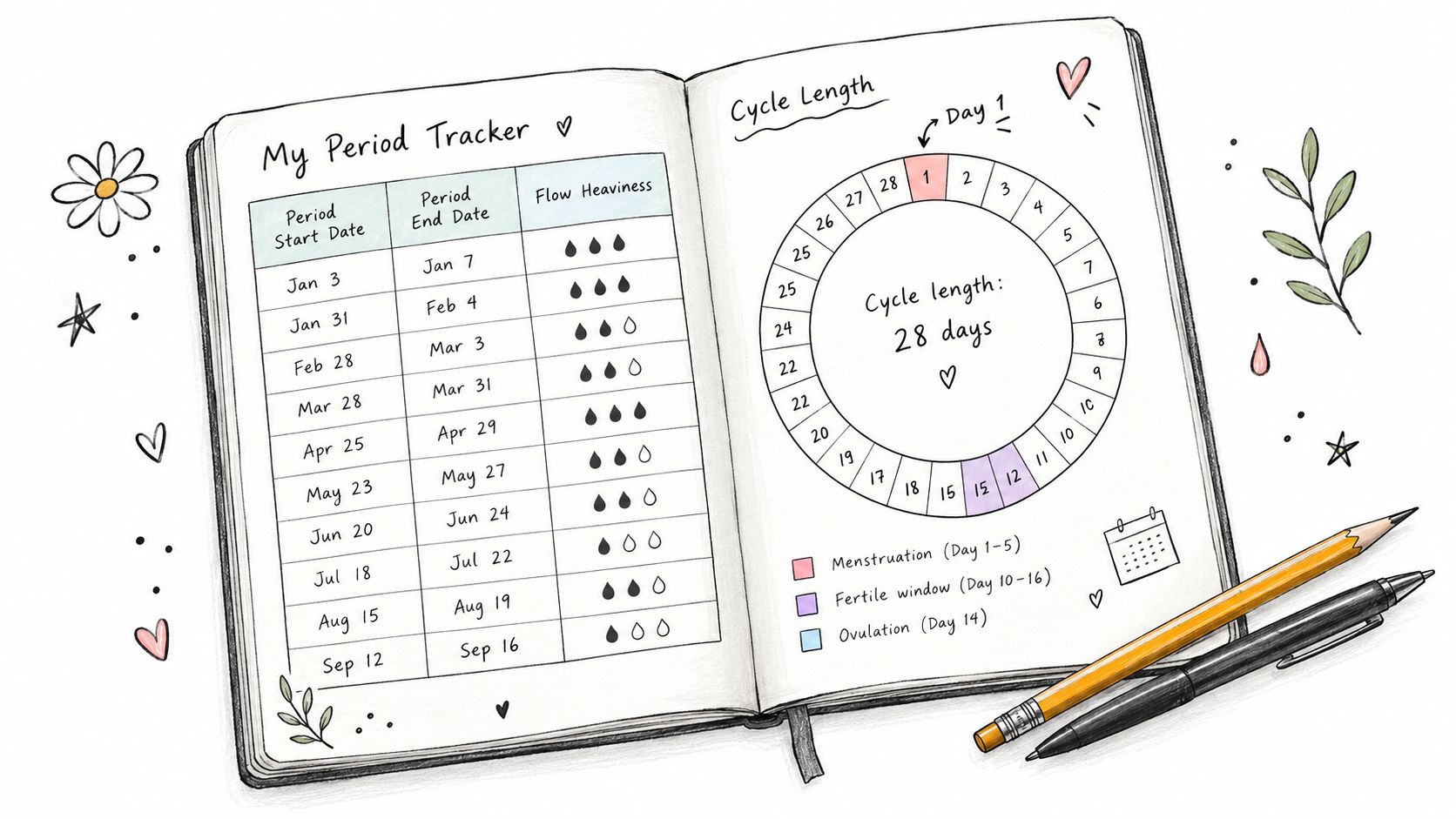
A useful tracker captures more than the day your period starts. Begin with the basics:
- Mark the first day of bleeding.
- Record the final day of bleeding.
- Note whether flow is light, moderate, or heavy.
- Mark the first day of the next period.
- Add short daily notes about sleep, stress, exercise, cramps, mood, energy, and hot flashes.
You don't need a detailed diary for every moment of the day. A few consistent observations can reveal whether a longer menstrual cycle appears after poor sleep, high stress, a change in training, or a cluster of temperature and mood symptoms.
Keep the record for at least three consecutive cycles before drawing conclusions about a gradual shift. If one cycle changes suddenly, mark it clearly rather than averaging it away. The unusual cycle may be the most useful detail to show your clinician.
A dedicated cycle tool such as Lila can place cycle dates, symptoms, mood, sleep, energy, meals, and related observations in one record. It can help visualize length trends, flag long cycles, and create a summary you can take to an appointment. If you're building a tracking routine from scratch, this guide to how to track your cycle provides a practical starting point.
What Longer Cycles Mean for Your Long-Term Health
A longer menstrual cycle isn't only a fertility question. It can act as a visible sign that ovarian activity and hormone patterns are becoming less predictable, particularly during the perimenopausal transition.
Research has linked longer cycles during reproductive life and the transition with older age at menopause, while some studies have reported an association between longer cycles and greater cardiovascular risk. These findings don't mean that a long cycle predicts heart disease for one individual. They do mean that persistent cycle changes deserve to be considered alongside blood pressure, cholesterol, glucose regulation, body composition, sleep, activity, and family history.
The connection matters because perimenopause can affect several systems at once. Longer or skipped cycles may appear alongside hot flashes, disrupted sleep, mood changes, reduced energy, or weight shifts. A woman who has few obvious hot flashes can still experience meaningful changes in cycle timing and may benefit from broader health monitoring.
A practical response is to:
- Confirm the pattern: Track cycle dates and symptoms across at least three cycles.
- Book a well-woman visit: Bring the record, medication list, contraception history, and relevant family history.
- Discuss evaluation: Ask whether thyroid, prolactin, ovarian hormone testing, metabolic screening, or imaging fits your symptoms.
- Review daily foundations: Look at sleep regularity, nourishing meals, movement, recovery, stress, and alcohol or caffeine habits.
- Choose symptom support: Decide with a clinician whether sleep, mood, bleeding, hot flashes, or other symptoms need treatment now.
Perimenopause and menopause aren't identical stages. This explanation of perimenopause versus menopause can help you understand why periods may continue even while the transition is already underway.
Lila brings cycle dates and daily observations together with tracking for sleep, mood, energy, meals, and symptoms, helping you see whether a longer menstrual cycle is part of a wider pattern. Visit Lila to start organizing your data and receive practical, personalized support for the changes you're noticing.
Get Lila, your personal coach for perimenopause.
Built for women in their 40s. 24/7 coaching, in your pocket.