
Menopause Bloating and Constipation: What Actually Helps
Why menopause bloating and constipation happen and what actually helps. Learn practical diet, hydration, movement, and tracking steps that ease digestive

You're in your late forties, and your waistband feels tight by afternoon. Bowel movements have become less predictable, and adding a high-fiber cereal seems to make the pressure worse. It's easy to blame hormones and hope the discomfort will pass, but a new digestive pattern deserves more than a guess.
Menopause bloating and constipation can overlap, yet they don't always have the same cause or solution. A useful starting point is to record what's happening, make changes gradually, and know when symptoms need medical assessment.
Table of Contents
- Why Bloating and Constipation Happen During Menopause
- Build a Symptom Baseline Before You Change Anything
- Diet and Hydration Changes That Ease Digestion
- Movement and Daily Habits That Get Things Moving
- Supplements and Medications Worth Considering
- When to See a Doctor and What to Track
Why Bloating and Constipation Happen During Menopause
A 2024 survey of 564 women aged 44–73 found that 94% reported at least one digestive-health problem. Bloating affected 77% and constipation 54%, while 82% said digestive symptoms began or worsened during perimenopause or menopause, according to The Menopause Society's survey summary. A related summary reported that 38% experienced digestive symptoms for the first time when perimenopause began.
Those figures can be reassuring if you've wondered whether your experience is unusual. They don't, however, prove that menopause directly caused every participant's symptoms. A survey can show that symptoms and a life stage often coincide, but it can't establish the cause of each person's bloating or constipation.
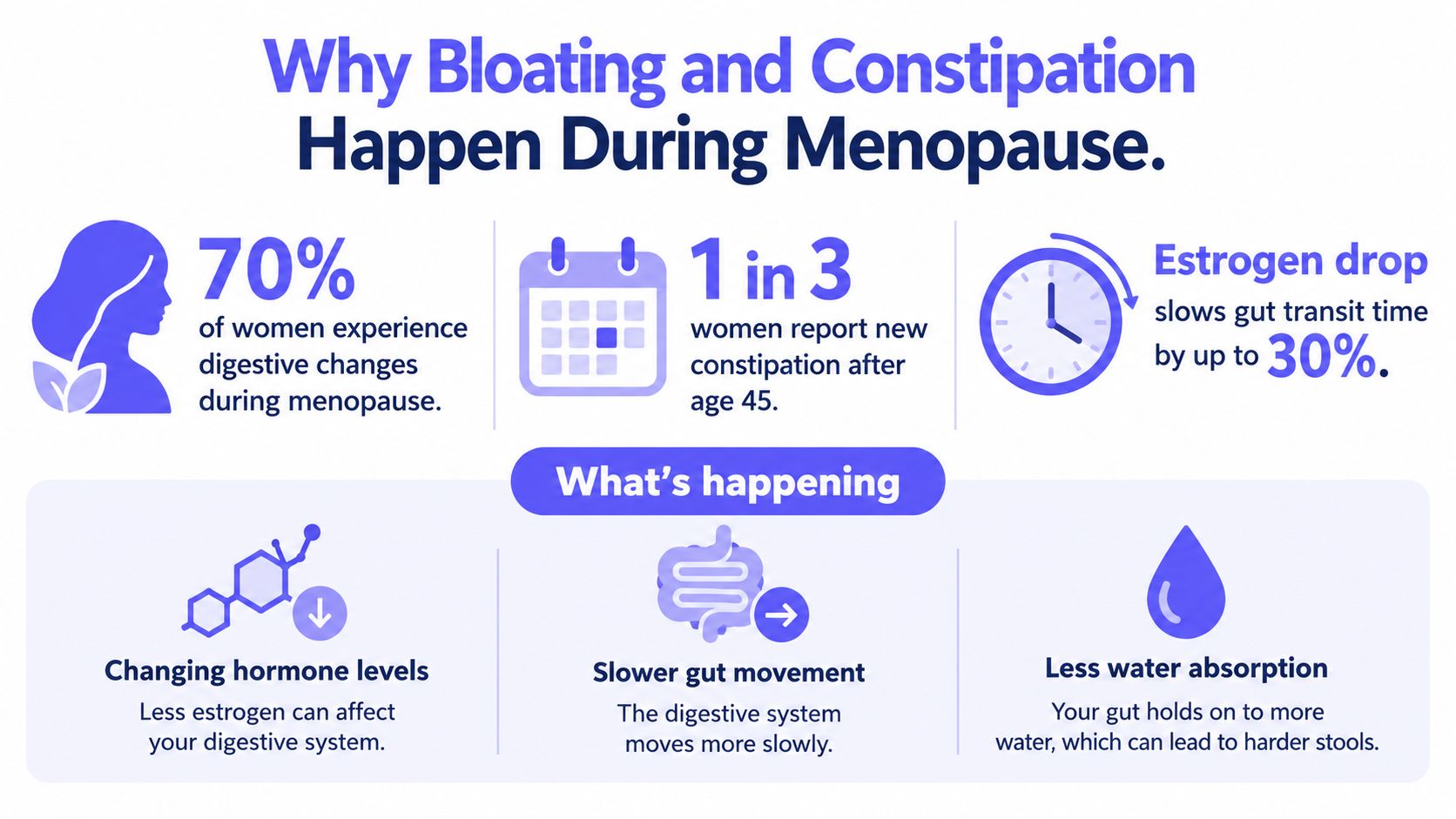
Hormonal fluctuations may affect gut motility, the movement of food through the digestive tract, and visceral sensitivity, how strongly you feel sensations from your internal organs. But the pathway isn't fully established, and other influences can produce similar symptoms. Diet, daily routines, irritable bowel syndrome (IBS), and medications may all be relevant. Menopause can be part of the picture without being the whole explanation.
A common experience still deserves attention
A prospective study of 228 women found altered bowel function in 38% of postmenopausal participants versus 14% of premenopausal participants. IBS-type complaints peaked at 36% among participants aged 40–49, while excessive gas affected 48% of postmenopausal participants, according to the published study. These results describe an association in a particular clinical setting, not a diagnosis or prediction for any individual.
The practical point is that symptoms can be common and still have a meaningful effect on daily life. The survey found that many participants said digestive symptoms regularly or significantly affected quality of life. You don't have to dismiss discomfort as a minor annoyance just because it happens to other women, or conclude that it's automatically “just hormones.”
A useful distinction: Menopause can be a plausible context for digestive changes, but it isn't a diagnosis. Track the pattern and stay open to other explanations.
For more background on the possible relationship between hormones and digestion, see Lila's guide to gut health and hormone balance. Use that context to inform questions, not to replace an individual assessment.
Build a Symptom Baseline Before You Change Anything
Before cutting foods, buying supplements, or adding fiber, record your current pattern. A baseline helps you tell whether a change is useful, ineffective, or making bloating worse. It also gives a clinician a clearer account than “my stomach has been off lately.”
Keep a simple daily log for one to two weeks. Note bowel movements, stool form, symptoms, meals, fluids, and medications. You don't need to measure every bite or make the log perfect. Consistency matters more than detail.
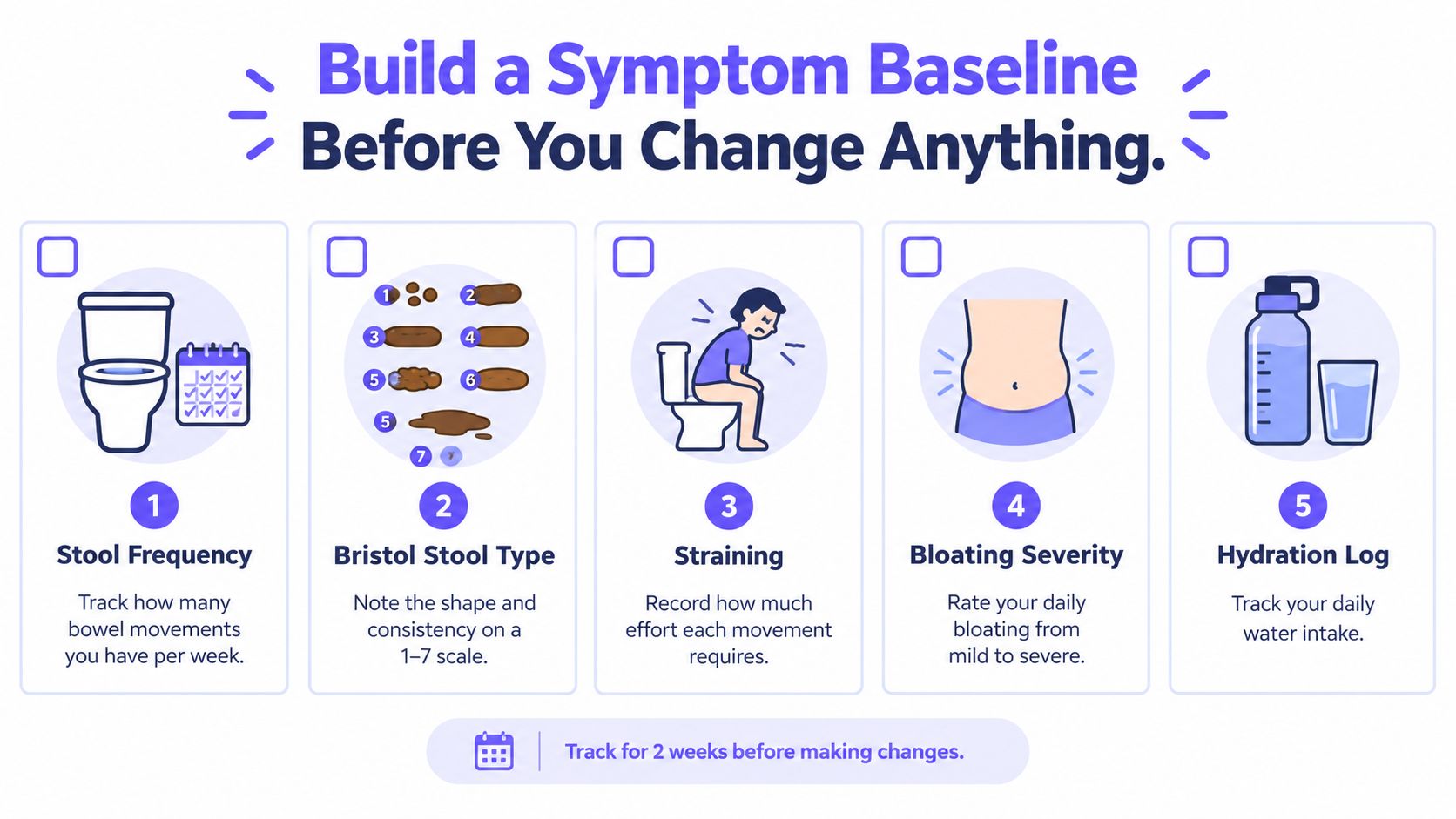
Record the details that distinguish one pattern from another
For each day, write down:
- Bowel movements: Note when they happen and whether your pattern changes.
- Stool form: Use the Bristol stool chart as a reference, and record whether stool is hard, formed, loose, or varies.
- Effort and completion: Note straining, a sense of blockage, or feeling that you haven't fully emptied.
- Bloating: Record when it appears, how uncomfortable it feels, and whether your abdomen looks or feels distended.
- Food and fluids: Note meals, fiber-rich foods, drinks, and anything that seems to precede symptoms.
- Medications and supplements: Include prescription and over-the-counter products, especially if a treatment started or changed around the time symptoms did.
- Other symptoms: Record pain, nausea, or any warning sign that concerns you.
The prospective study described above found a difference in altered bowel function between postmenopausal and premenopausal participants, but group-level findings can't tell you what's driving your own symptoms. Your log can show whether bloating tracks with harder stools, a particular meal, a medication change, or a pattern that doesn't fit a simple constipation explanation.
Bring the record to an appointment, especially if symptoms persist or worsen. A perimenopause symptom tracker can help organize observations, but the aim is to support your understanding and conversation with a clinician, not to diagnose yourself.
Diet and Hydration Changes That Ease Digestion
A common pattern looks like this: stools slow down, so fiber goes up fast, then pressure and bloating get worse and the whole experiment gets abandoned. Use your baseline record first. If constipation is the dominant problem, gradual fiber can be reasonable. If fullness, pain, diarrhea, or a new medication sits in the foreground, fiber alone may not answer it.

A meta-analysis of seven placebo-controlled trials, summarized in the Cochrane review of fiber for chronic constipation, found that fiber improved treatment response compared with placebo, increased stool frequency, and softened stool. Several included studies reported bloating as an adverse effect, often more often with fiber, so the practical move is a slow increase rather than an abrupt high-fiber overhaul.
Make changes one at a time
Start with a modest serving of a food you already tolerate, such as oats, fruit, beans, or lentils. Hold that change steady long enough to read the result: stool form, ease of passage, belly fullness, and whether symptoms track with particular meals. If bloating clearly worsens, return to the last comfortable amount and bring the pattern to a clinician instead of pushing through.
Fluids matter beside fiber. Increasing roughage while drinking too little can leave stools harder to pass, but there is no single water target that fits every midlife woman. Use thirst, routine, medications, health conditions, and guidance from your care team. If home water quality is part of the routine you are reviewing, this resource on filtration importance for your household gives background.
Keep meals fairly consistent while testing one change, or the signal gets muddy. Separate two outcomes in your notes: whether bowel movements become easier, and whether abdominal fullness settles. A fiber intake calculator can estimate current intake and help you adjust gradually, not justify a rapid jump.
For an additional overview of food and digestion, you can watch this video:
▶ PlayMovement and Daily Habits That Get Things Moving
A steady routine often helps more than an occasional intense workout. Gentle movement supports regular activity through the day, while unhurried bathroom habits give your body the chance to respond to normal urges.
A short walk after a meal is a practical place to start. Choose a pace and distance that feel manageable, and repeat the habit regularly rather than waiting for a day when you have time for a demanding workout. If walking isn't comfortable, try another form of gentle movement that fits your mobility and health needs.
Build a routine around ordinary moments
Consider these habits, then keep the ones that suit you:
- Respond to the urge: Don't routinely delay a bowel movement when you can get to a bathroom.
- Allow unhurried time: Sit comfortably and avoid turning the toilet into a place to strain or rush.
- Use a consistent cue: A regular time, such as after breakfast, may help you establish a predictable bathroom routine.
- Move through the day: A walk, gentle stretching, or light core work can be easier to maintain than sporadic strenuous exercise.
- Notice stress and tension: If symptoms flare during stressful periods, record that alongside meals and bowel patterns. Stress may influence how the gut behaves and how strongly discomfort is felt, so relaxation practices may be worth trying as part of your routine.
Don't judge progress by one day. Look at whether symptoms become easier to manage over time, and keep tracking so you can tell movement-related changes from diet or medication effects.
For ideas that can be adapted to your schedule and comfort, explore these exercises for menopause. If a movement causes pain or you have a health condition that affects exercise, ask a healthcare professional about safe options.
Supplements and Medications Worth Considering
A woman may do everything “right” with meals, fluids, and walking and still feel six months pregnant by late afternoon, or pass stool twice a week with effort. At that point I look at supplements and medicines as targeted tools, layered onto the baseline rather than substituted for it.
Pooled results from randomized, placebo-controlled constipation trials point in two directions: fiber can improve treatment response for some patients, while PEG has stronger evidence for treatment success when constipation itself is the problem. Those findings describe averages across studies, so your own bowel diary still decides whether a trial is working.
| Intervention | What the evidence suggests | Practical cautions |
|---|---|---|
| Fiber supplement | Better treatment response than placebo in pooled randomized trials. | Increase slowly and pair with fluids; a fast jump can worsen gas and visible distension. |
| PEG osmotic laxative | Higher pooled treatment success than placebo in controlled trials. | Often discussed after a tolerable fiber plan and hydration have failed; dosing should fit your health history and other medicines. |
Choose based on the symptom you're treating
Match the tool to the dominant complaint. If stool is hard, infrequent, or incomplete, fiber or an osmotic agent may be reasonable to discuss. If your abdomen expands through the day while bowel movements stay regular, pushing laxatives harder can miss the driver and leave you chasing the wrong target.
Products marketed for constipation are not interchangeable. Fiber supplements add bulk, stool softeners change water balance, stimulant laxatives provoke contractions, and PEG draws water into the bowel. A pharmacist or clinician can help you choose one change at a time, review interactions, and set a stop date if nothing improves.
Keep the baseline running during any trial: stool form, frequency, straining, bloating timing, foods, stress, and dose changes. If probiotics enter the conversation, review what probiotics may help during menopause and bring focused questions to your clinician rather than treating the page as personal medical advice.
When to See a Doctor and What to Track
A new digestive symptom during perimenopause may be related to this life stage, but timing alone can't confirm the cause. IBS, medication effects, and other health conditions can create overlapping symptoms. Persistent or worsening changes deserve assessment rather than indefinite self-management.
Medication timing is useful information to bring to an appointment. Iron and GLP-1 medicines may contribute to constipation for some people, so tell your clinician what you take and when symptoms began. Don't stop a prescribed medicine without discussing it with the prescriber.
Use a clear triage framework
Arrange medical assessment if you have persistent or worsening bloating, chronic constipation, early satiety, appetite loss, blood in your stool, unintentional weight loss, or symptoms that alternate between constipation and diarrhea. A clinician can consider the full pattern and decide whether further evaluation is appropriate. If symptoms feel severe or rapidly worsen, seek care promptly.
A 2025 review identified 122 studies on gastrointestinal symptoms across peri- and postmenopause, with constipation studied most often and other symptoms receiving less attention, according to the review of the evidence. That uneven evidence is another reason not to rely on a single explanation for every person.
Bring your symptom baseline, medication and supplement list, and a note of changes you've tried. Include when symptoms began, whether they fluctuate, and whether they coincide with food, bowel movements, or medication changes. If thyroid concerns are part of the picture, a clinician can help decide whether evaluation is appropriate; information about Life Primary Care thyroid services may help you understand that area of care.
Menopause bloating can be a real experience without being a sufficient diagnosis. Tracking is most useful when it helps you recognize when to ask for a closer look.
Lila offers a perimenopause app with daily symptom check-ins, personalized action plans, and tracking for patterns such as bloating and bowel changes. If you'd like structured support for building and reviewing those habits, visit Lila.
Get Lila, your personal coach for perimenopause.
Built for women in their 40s. 24/7 coaching, in your pocket.