
Natural Relief for Hot Flashes: 7 Ways That Work
Discover natural relief for hot flashes with 7 evidence-informed strategies—breathing, cooling, CBT, diet and more—for cooler days and better sleep.
Why do so many hot-flash remedies promise fewer episodes when what you really need might be a less disruptive night, a calmer response, or a way to cool down at work? Sudden heat, a flushed face, and sweat-soaked sleep can affect you differently, so relief needs more than a generic remedy list.
Hot flashes and night sweats are vasomotor symptoms, associated with changes in the body's temperature regulation during menopause. Non-hormonal approaches are worth considering alongside medical care, especially when you want practical tools you can use yourself. But natural relief for hot flashes isn't a single treatment, and natural doesn't automatically mean effective or safe.
The strategies below include breathing, CBT, cooling, trigger tracking, movement, mindfulness, and soy foods. Some support comfort or coping more reliably than they reduce flashes. Track frequency and daily impact separately, introduce changes gradually, and keep what helps rather than assuming every improvement comes from the newest remedy.
Table of Contents
- 1. Paced Slow Breathing
- 2. Cognitive Behavioral Therapy (CBT) for Hot Flashes
- 3. Cooling Strategies and Layered Clothing
- 4. Trigger Identification and Avoidance
- 5. Regular Physical Activity and Weight Management
- 6. Mindfulness Meditation and Stress Reduction
- 7. Soy Isoflavones and Dietary Phytoestrogens
- 7 Natural Strategies for Hot Flashes at a Glance
- Putting It All Together for Your Personal Hot Flash Plan
1. Paced Slow Breathing
Use slow breathing as a coping tool, not a proven way to stop a hot flash. It costs nothing and gives you something manageable to focus on when heat arrives during a meeting or while you're trying to sleep.
A comfortable, supported position makes practice easier.
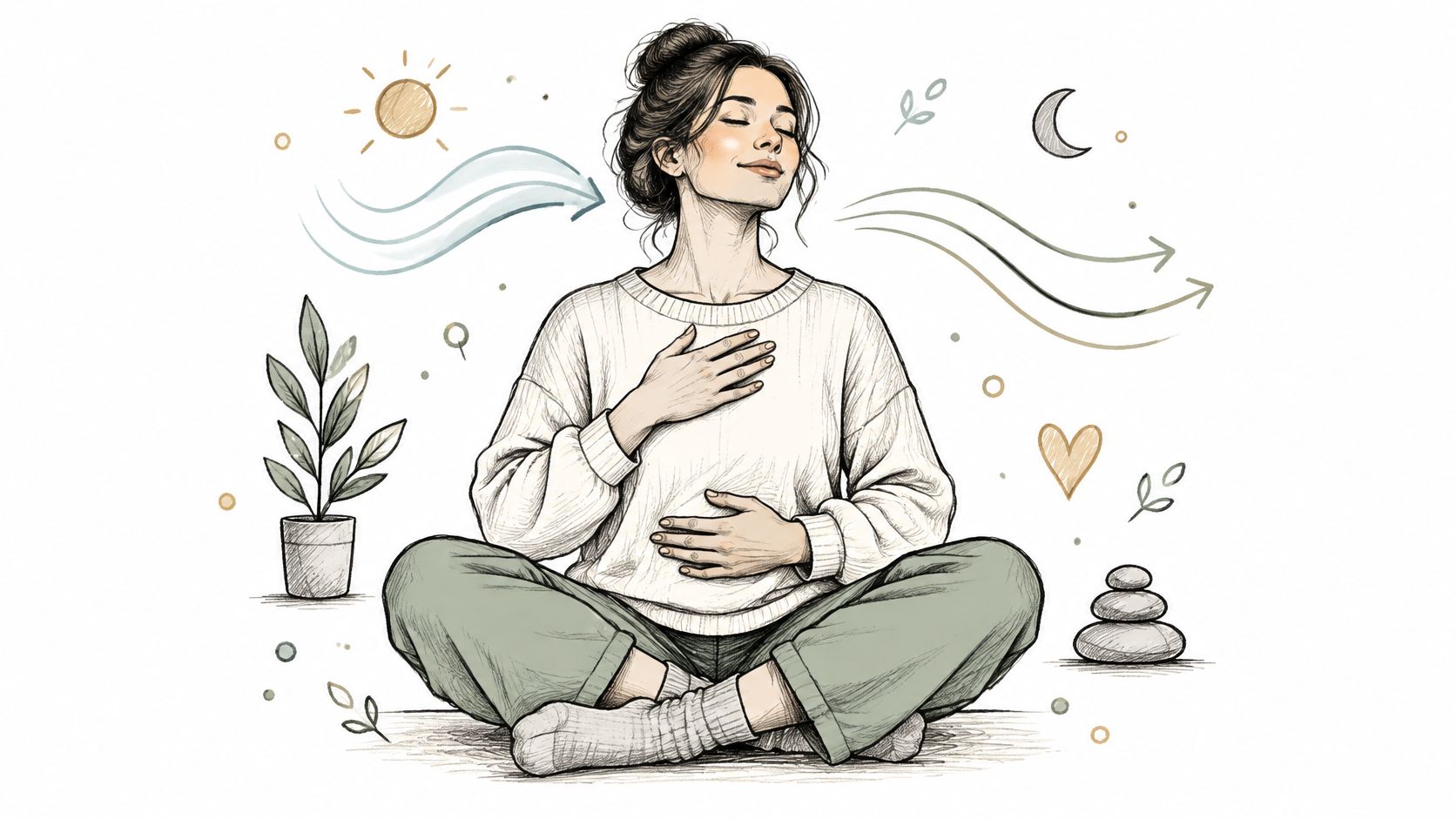
Let your shoulders drop, inhale gently through your nose, and exhale slowly without forcing your lungs empty. Keep your breathing comfortable rather than taking exaggerated deep breaths; return to normal breathing if you feel dizzy or short of breath.
Practice and verify
Try breathing while seated and comfortable before relying on it during symptoms. When a flash starts, loosen restrictive clothing and breathe gently rather than trying to suppress the heat.
- Record the episode: Note its intensity and whether you needed to stop what you were doing.
- Record the response: Log whether breathing helped you feel calmer, even if the heat continued.
- Compare similar situations: A flash during a stressful presentation isn't directly comparable with one while relaxing at home.
Therapy with Ben's vagus nerve guide offers background on calming practices, but it shouldn't be treated as evidence that breathing treats menopausal symptoms. For immediate comfort options, use this guide on how to stop hot flashes fast with realistic expectations.
If you prefer an audiovisual prompt, you can explore this breathing video.
▶ Play2. Cognitive Behavioral Therapy (CBT) for Hot Flashes
A hot flash during a presentation can bring more than heat. You might worry that everyone notices, anticipate another episode, and begin avoiding situations you previously enjoyed.
Menopause-focused CBT addresses that cycle of thoughts, distress, and behavior. The North American Menopause Society's nonhormone therapy position statement recommends CBT, while not recommending paced respiration, cooling, exercise, or mindfulness as established hot-flash treatments.
That distinction matters: something can help you cope without reliably reducing the underlying episodes. CBT isn't about pretending symptoms are harmless or thinking yourself out of menopause.
Look for symptom-specific support
Ask a clinician or therapist for CBT designed for menopausal symptoms. If sleeplessness is the main problem, ask whether CBT for insomnia would be appropriate rather than choosing a generic relaxation course.
A practical exercise is to identify a thought such as “I won't get through this meeting,” then replace it with a workable response: “I can pause, take off my cardigan, and continue.” Practice the response outside stressful situations so it's familiar when you need it.
Judge CBT by how much symptoms interfere with your life, not only by how often your face feels hot.
Track meeting avoidance, interrupted activities, bedtime worry, and difficulty returning to sleep. If flashes continue but you're less distressed and participating more fully in daily life, that's a meaningful outcome, not a failed treatment.
3. Cooling Strategies and Layered Clothing
Cooling is an immediate comfort strategy, not a dependable way to prevent hot flashes. A fan may make an episode easier to tolerate without changing how often it happens.
Keep cooling tools where symptoms interrupt you most.
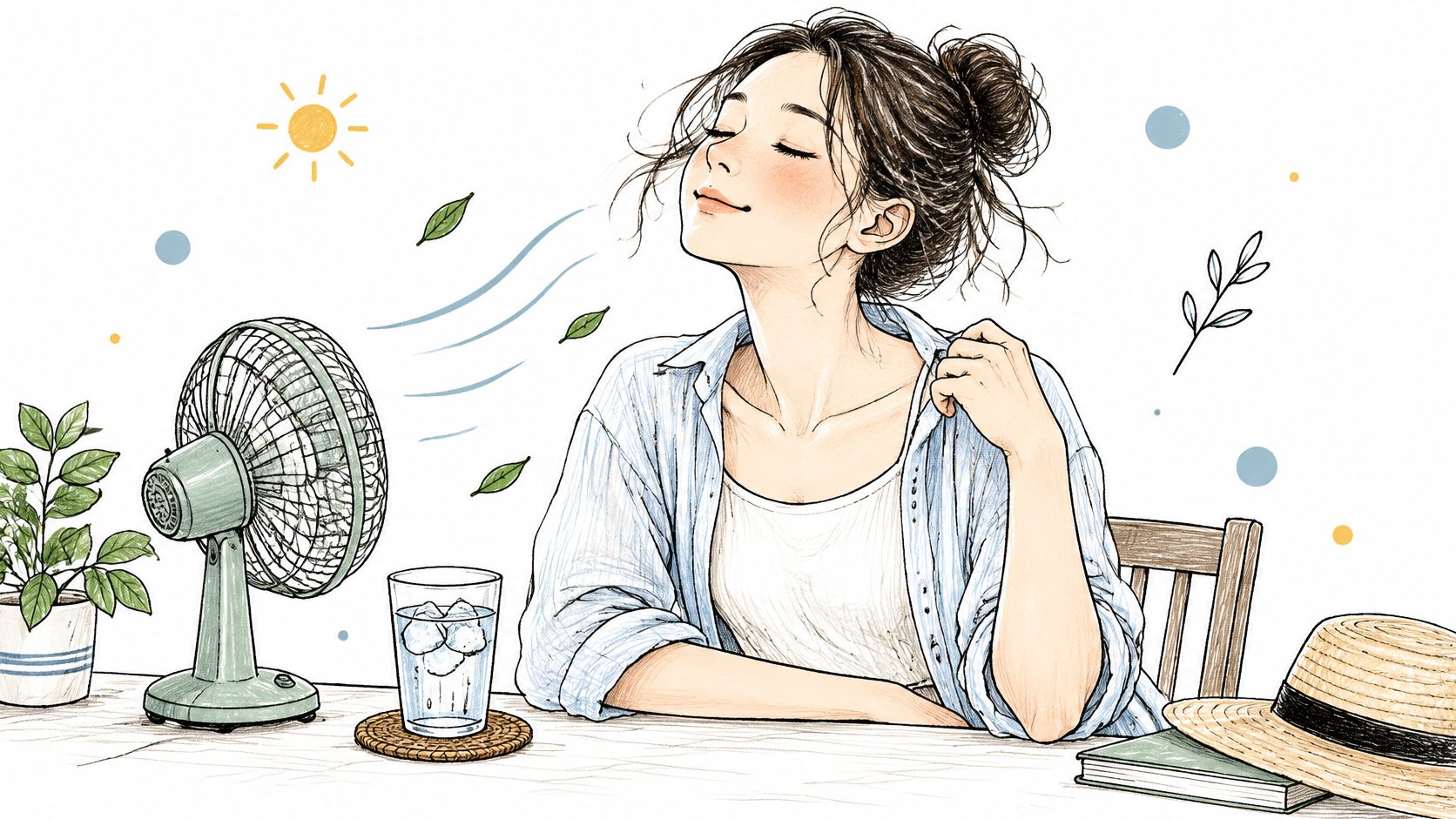
At work, choose an easily removable cardigan over a breathable base layer rather than an outfit you can't adjust. Keep a handheld fan and drinking water within reach, so cooling doesn't require leaving your desk.
For sleep, use bedding you can peel back independently. Set out spare nightwear if changing out of damp clothing helps you settle again, and position a bedside fan where you can adjust it without fully getting up.
Test comfort, not just temperature
Say you wake hot and then spend a long time finding dry clothes. Preparing those clothes may shorten the disruption even if the night sweat still happens.
- Change the setup: Try lighter bedding or a fan before buying a specialized cooling product.
- Track the right outcome: Record awakenings, clothing changes, and how easily you return to sleep.
- Keep useful adjustments: Better comfort matters even when episode frequency stays unchanged.
The guide to reducing hot flashes at night offers additional practical options. Avoid making your room so cold that discomfort creates a different sleep problem.
4. Trigger Identification and Avoidance
Don't cut out coffee, spicy food, and every social drink just because they're commonly described as triggers. A suspected trigger should earn its place in your personal plan.
The National Institute on Aging's hot-flash guidance supports noting possible triggers and trying practical lifestyle adjustments, while recognizing that troublesome symptoms may need medical treatment. A diary helps you test a possibility rather than follow a universal forbidden-food list.
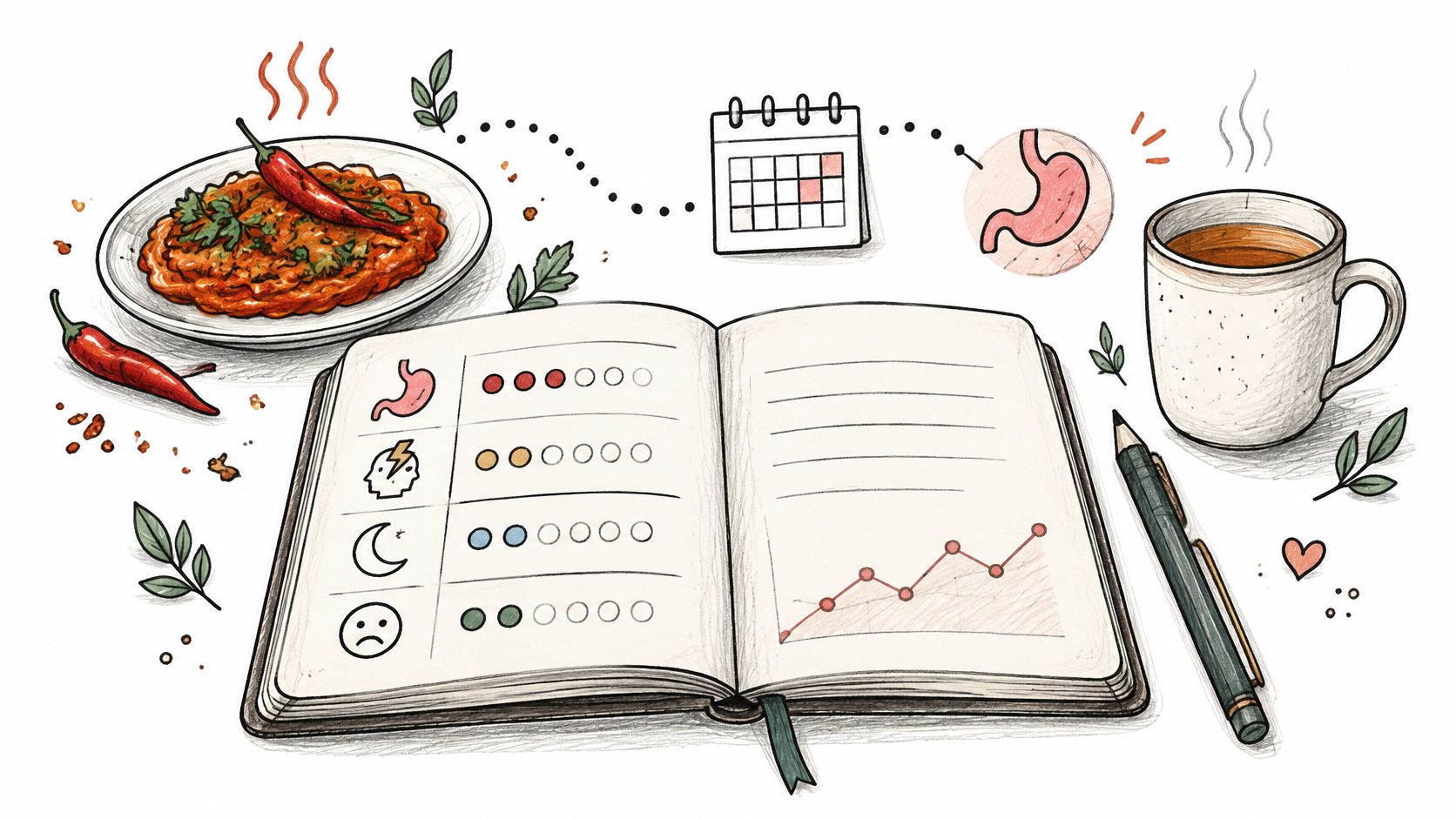
Keep food and symptom notes together so comparisons are easy.
Run a fair personal experiment
Record meals, drinks, stress, room conditions, sleep, and symptom timing. Once you notice a recurring pattern, change a suspected trigger while keeping the rest of your routine reasonably stable.
For example, if evening wine repeatedly accompanies disrupted sleep, try alcohol-free evenings and compare both night sweats and awakenings. Don't simultaneously replace your bedding, start supplements, and eliminate caffeine, because you won't know which change helped.
Practical rule: A pattern is a reason to investigate, not proof that a food caused your symptoms.
Use this guide to foods that may trigger hot flashes to generate possibilities, not restrictions. If removing a food doesn't produce a repeatable benefit, reconsider whether the restriction is worth keeping.
5. Regular Physical Activity and Weight Management
Choose movement you can sustain, not a punishing workout marketed as a menopause cure. Exercise is valuable even when your hot-flash count doesn't change.
A BMC Women's Health overview found some evidence that yoga may improve menopause symptoms, but evidence for exercise specifically reducing vasomotor symptoms remained inconclusive. That's a reason to set broader goals, not abandon activity.
For someone who feels depleted after poor sleep, a manageable walk may be a better starting point than an intense class in a heated studio. Add resistance exercises suited to your ability, such as chair sit-to-stands, wall push-ups, or exercises with resistance bands.
Separate fitness progress from flash relief
- Start comfortably: Choose a walking route or workout you can finish without feeling overwhelmed.
- Control the environment: Exercise somewhere ventilated and adjust clothing if you become uncomfortable.
- Track beyond flashes: Note sleep, mood, energy, recovery, and whether activity feels easier over time.
If weight management is a goal, avoid treating every hot flash as evidence that you need to lose weight. Discuss individualized nutrition and activity goals with your clinician, especially if restrictive eating or fatigue is becoming a problem.
The guide to the best exercises for menopause can help you choose practical options. Keep exercising for benefits you can identify, rather than demanding that every workout prevent symptoms.
6. Mindfulness Meditation and Stress Reduction
Mindfulness asks you to notice a hot flash without adding an immediate struggle against it. You don't have to enjoy the sensation, and you haven't failed if your attention wanders.
A quiet space can help you begin, but an elaborate meditation setup isn't necessary.
Sit comfortably and notice contact between your feet and the floor. When heat appears, name what you feel, such as warmth, sweating, or tension, then return attention to your surroundings or natural breathing.
Measure bother separately
For bedtime practice, gently move your attention through your body without trying to force sleep. If focusing inward makes you more anxious, use external sounds or the feeling of the mattress instead.
Track distress, bedtime worry, and how readily you resume an activity after symptoms. Don't assume a calmer response means the physical episode was weaker.
A pilot study of peri- and postmenopausal women documented substantial use and perceived benefit of complementary approaches, including mind–body practices, but perceived satisfaction doesn't establish treatment efficacy. Your own notes need the same distinction.
Less distress is worthwhile. It isn't the same outcome as fewer hot flashes.
For example, mindfulness may be worth keeping if you stop spending the evening dreading another night sweat, even when your diary shows no clear reduction in episodes.
7. Soy Isoflavones and Dietary Phytoestrogens
Tofu in a stir-fry and a concentrated menopause supplement aren't interchangeable. Trying soy foods as part of balanced meals is a different decision from taking a high-dose extract.
The National Center for Complementary and Integrative Health's evidence digest describes inconsistent or inconclusive findings for soy isoflavones and other supplements. It also explains why findings from a particular standardized botanical product shouldn't be generalized to every preparation on the shelf.
Start with food, review supplements
If you enjoy soy, try tofu, tempeh, edamame, or soy milk in meals you already eat. Keep your broader routine stable and log portions in ordinary terms, alongside symptoms and sleep.
For example, replace an existing meal ingredient with tofu rather than adding soy, a new herbal blend, and a restrictive diet together. Use these foods for menopause for meal ideas, not as a promise of symptom relief.
Before taking an extract, discuss your medicines, cancer history, liver health, and planned procedures with a clinician or pharmacist. The NCCIH menopause safety guidance highlights supplement interactions and safety concerns, including reported liver damage associated with black cohosh products.
Don't assume plant-based means risk-free. If soy foods fit your diet but don't change your flashes, they can remain food without being labeled treatment; there's no need to escalate automatically to supplements.
7 Natural Strategies for Hot Flashes at a Glance
| Item | Effort Required | Time to Notice Effects | Best For |
|---|---|---|---|
| Paced Slow Breathing | Low; practice regularly | During practice; results vary | Calming and easing hot flashes |
| Cognitive Behavioral Therapy (CBT) for Hot Flashes | Moderate; requires sessions and practice | Over the course of the program | Reducing hot flash distress and improving sleep |
| Cooling Strategies and Layered Clothing | Low; simple adjustments | Immediate | Quick comfort during hot flashes and night sweats |
| Trigger Identification and Avoidance | Low to moderate; track symptoms and test changes | A few weeks to identify patterns | Finding and reducing personal triggers |
| Regular Physical Activity and Weight Management | Moderate; requires consistent activity | Weeks or months | Supporting overall health, sleep, mood, and weight |
| Mindfulness Meditation and Stress Reduction | Low to moderate; regular practice | Gradual with consistent practice | Managing stress and reducing symptom distress |
| Soy Isoflavones and Dietary Phytoestrogens | Low for food changes; consult a clinician about supplements | Several weeks | Trying a food-based option for modest symptom relief |
Putting It All Together for Your Personal Hot Flash Plan
The most useful plan separates fewer flashes from better coping. Both can improve daily life, but knowing which outcome changed helps you decide what to keep.
Start by recording your usual symptoms before adding an intervention. Include timing, intensity, nighttime awakenings, and what you had to stop doing, then introduce changes gradually rather than starting everything together.
Keep the experiment manageable
Combine practical support without making the plan exhausting. You might keep a fan nearby, practice comfortable breathing, and test a suspected dietary trigger, while introducing changes separately enough to understand their effects.
Look for a repeated pattern across ordinary days, not a dramatic result after an unusually good night. If tracking starts to feel burdensome, simplify the record to the details that affect your decisions.
At Lila, our AI-powered perimenopause app combines symptom tracking, photo meal logging, and a 24/7 AI nutrition coach. Our 2-minute setup builds a personalized nutrition plan; meal photos help pinpoint foods associated with symptom spikes, while logged hot flashes can be considered alongside meals, sleep, alcohol, and HRT doses.
“I managed to get better nights with fewer hot flashes in the first week.”
Lea S., App Store
That's an individual experience, not a promised result. Natural strategies complement medical care rather than replace it, and persistent symptoms deserve a conversation with your doctor, especially when sleep or daily functioning is suffering.
You don't need to exhaust every natural option before asking about medical treatment. This week, choose a comfortable breathing practice and a simple tracking habit, then bring what you learn to your next appointment.
Our app brings meal logging, symptom tracking, and nutrition guidance together so you can explore hot-flash patterns without juggling separate diaries. Visit Lila to start recording your symptoms alongside meals and sleep, and choose a manageable change to test this week.
Get Lila, your personal coach for perimenopause.
Built for women in their 40s. 24/7 coaching, in your pocket.