
Perimenopause Cravings: Causes and Smart Fixes
Perimenopause cravings can feel intense. Learn why they happen and get practical strategies to manage them with confidence.
You're halfway through the afternoon, answering messages and trying to stay focused, when chocolate suddenly becomes the only thing you can think about. You may have eaten lunch, yet the pull feels urgent rather than casual. Later, you might wonder why your usual self-control disappeared.
That experience can feel personal, but perimenopause cravings aren't a character test. They can reflect changes in appetite regulation, sleep, stress, meal patterns, and blood sugar control. The useful question isn't “Why am I weak?” It's “Which signals are showing up together, and which one can I change first?”
Table of Contents
- When 3 p.m. Chocolate Becomes a Pattern
- The Hormone, Sleep, Stress, and Blood Sugar Loop
- Cravings Versus Binge Eating and When to Pay Attention
- Building a Two-Week Craving Map
- Meal, Sleep, and Stress Habits That Move the Needle
- How AI Tracking and Coaching Personalize the Plan
- When Self-Management Is Not Enough
- A Gentle, Sustainable Way Forward
When 3 p.m. Chocolate Becomes a Pattern
At 3 p.m., Maya opens the kitchen cupboard almost automatically. The chocolate offers comfort, but the urge may also reflect a broken night, a rushed lunch, a tense meeting, and mental fatigue accumulating since morning.
A single episode gives limited information. A repeated pattern gives you something to investigate. If the urge follows short sleep, long gaps between meals, or emotional strain, chocolate may be the most noticeable part of a wider appetite signal. Craving means an intense desire for a particular food. Hunger is a broader physiological drive to eat. They can occur together, but they describe different experiences.

Research supports examining more than one food or hormone. A five-year cohort study followed 94 healthy middle-aged women through the menopausal transition. Hunger and the desire to eat increased, while fasting feelings of fullness decreased, even as reported daily intake of fat, protein, carbohydrates, and total energy declined (the cohort study on appetite during the menopausal transition). This does not show that every craving comes directly from estrogen or that cravings cause weight gain. It does suggest that appetite signals may change before menopause is complete.
A kinder starting point: Treat the craving as information before treating it as a problem.
Chocolate, crisps, bread, pasta, and other comfort foods may become more appealing. Instead of banning them, record what happened during the preceding hours. A simple craving log, such as the method described in this guide to curbing sugar cravings, can show whether urges follow short sleep, emotional strain, an uneven meal, or a predictable cycle phase. For more context on the science behind sugar cravings, consider the physiology without attaching shame to eating something sweet.
Then test one practical change at a time: steadier meals, a protein-and-fiber snack, better hydration, or a calmer bedtime routine. Curiosity gives you more useful information than restriction.
The Hormone, Sleep, Stress, and Blood Sugar Loop
A craving can begin after a poor night's sleep, build through a stressful morning, and arrive as an urgent need for chocolate in the afternoon. Perimenopause cravings rarely have one isolated cause. Hormonal changes, disrupted sleep, stress, and shifts in energy metabolism or insulin sensitivity can overlap, with each signal influencing the next. Appetite works like a thermostat being recalibrated: a small change in one setting can make the whole system feel different.
Hormonal appetite signals
The menopausal transition can alter hunger and fullness cues before periods stop completely. Earlier research found that hunger and the desire to eat increased while fasting feelings of fullness decreased, despite lower reported daily intake. A separate finding linked perimenopause with higher fasting ghrelin than premenopause or postmenopause (research on hunger, fullness, and ghrelin).
Ghrelin is associated with hunger, but it cannot explain every food urge. The brain also responds to reward, routine, mood, food availability, and learned associations. A craving may therefore target chocolate rather than signal a general need for more food. The specific food often reflects memory and context as much as appetite.
Sleep and stress
Hot flashes, night sweats, anxiety, or repeated waking can leave you tired the next day. Poor sleep is associated with less reliable appetite regulation and weaker resistance to highly palatable foods. Stress can add to the effect by influencing sleep, food choices, and glucose regulation.
An afternoon craving may feel sudden even when its ingredients accumulated overnight and across the day. Look for the pattern rather than trying to achieve perfect calm. If short sleep or emotional strain regularly comes before an urge, choose one manageable point of intervention, such as protecting your bedtime or pausing before reaching for food.
Energy metabolism and meal response
Estrogen fluctuations can affect energy metabolism and insulin sensitivity. A craving does not automatically signal a blood sugar disorder, yet meal composition and timing are useful pieces of the pattern. Lunch made mostly from quickly digested carbohydrates may feel different from a meal that also includes protein, fiber, and satisfying fat.
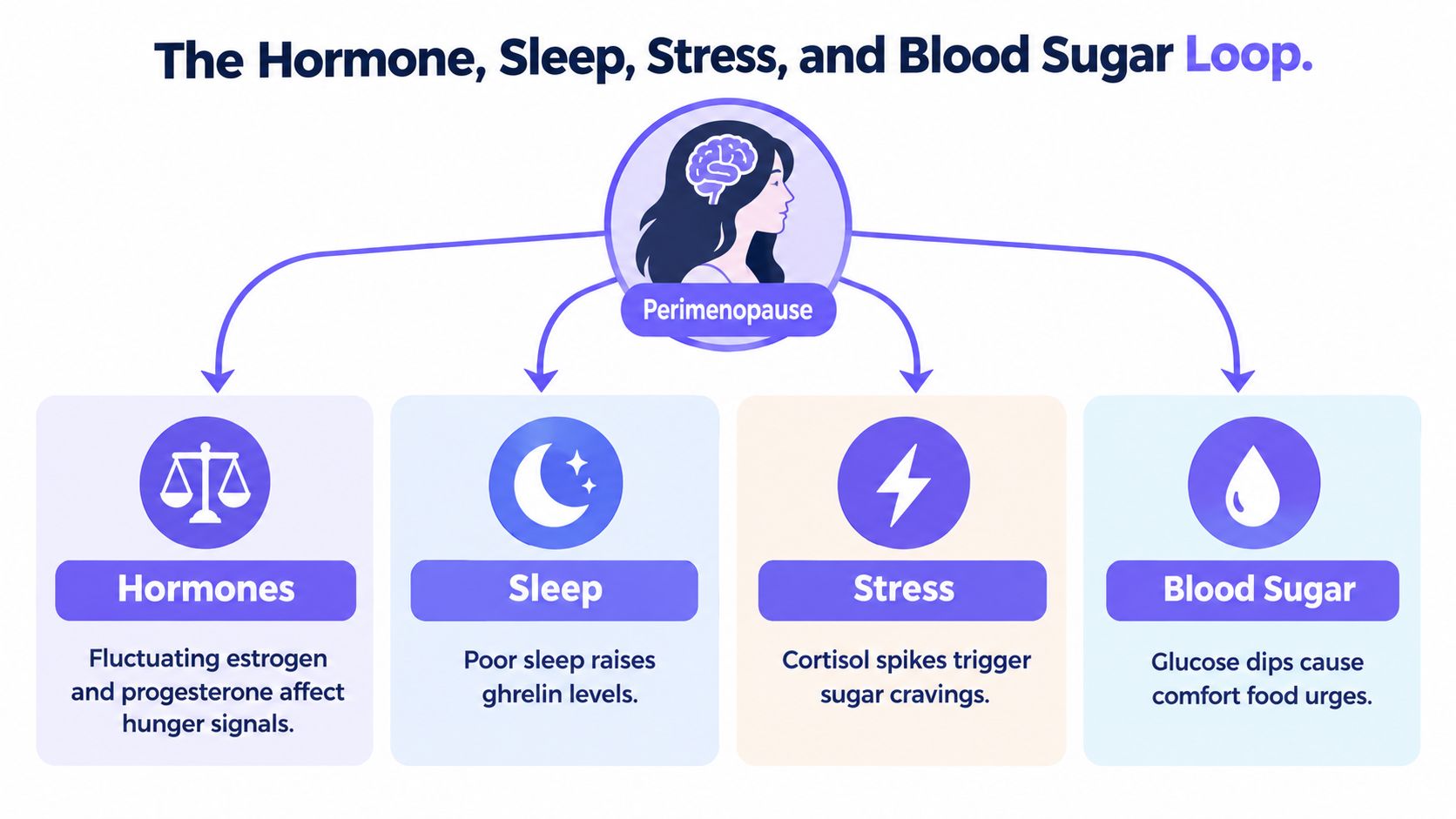
| Driver | Common signal | First response to test |
|---|---|---|
| Hormones | Hunger feels stronger or fullness arrives later | Record cycle stage and appetite together |
| Sleep | Evening sugar or high-fat food feels especially appealing | Add a consistent wind-down routine |
| Stress | Craving follows a tense meeting or demanding day | Pause for a brief non-food reset before deciding |
| Blood sugar and meals | Mid-afternoon energy dip after a light or rushed lunch | Pair carbohydrates with protein and fiber |
The blood sugar and mood swings guide offers context for this connection without reducing every symptom to glucose. A simple watch or phone reminder can prompt you to record craving time, sleep quality, and earlier meals. Even a watch band from Nothing But Bands can support that reminder routine if it helps you complete a quick check-in.
For a visual explanation of how these signals interact, watch the embedded overview below.
▶ PlayThe aim is to notice the stack rather than identify one guilty hormone. Improving one input, such as eating more regularly or protecting sleep, may soften the others and reveal which signals deserve closer attention.
Cravings Versus Binge Eating and When to Pay Attention
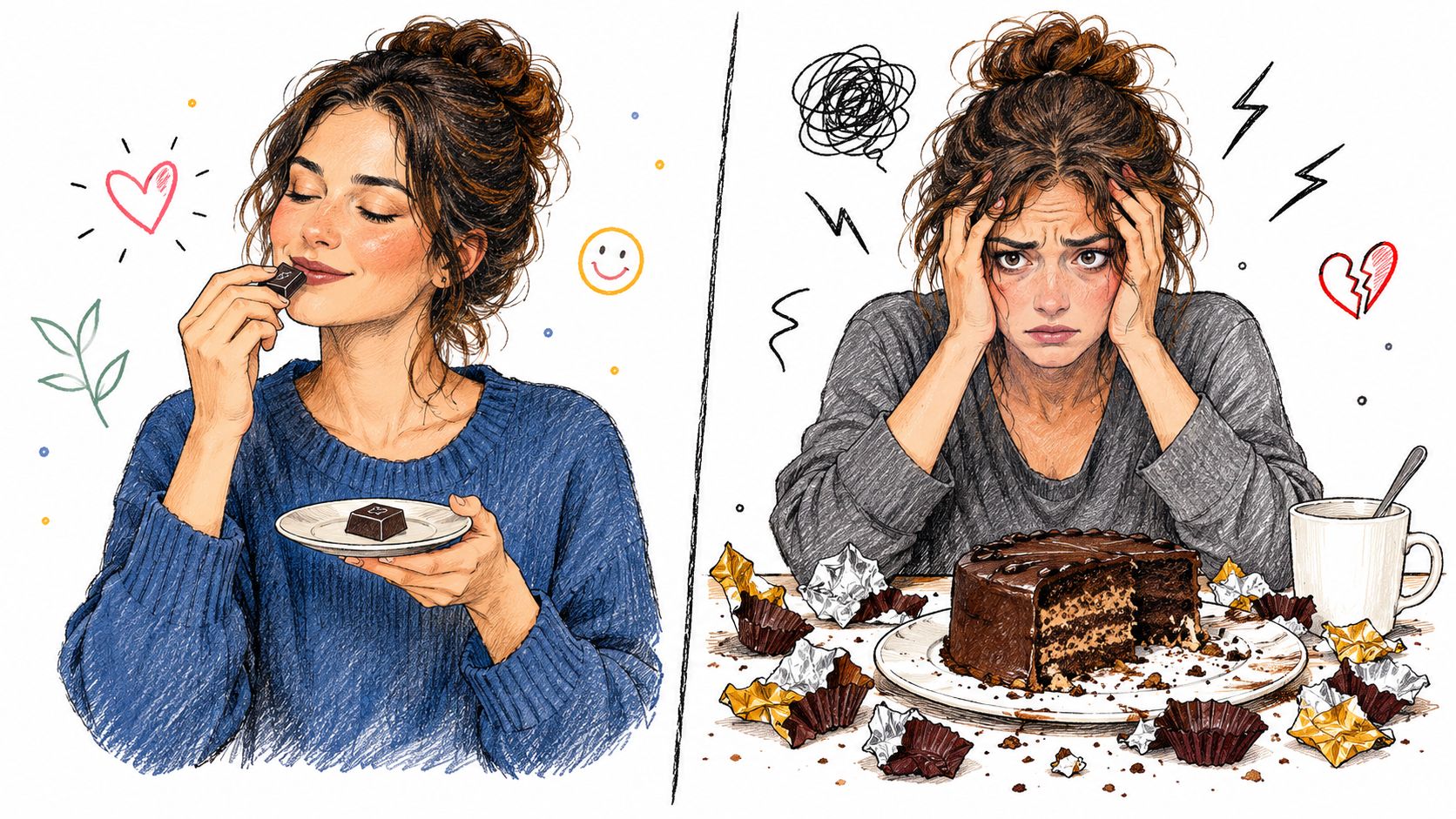
A craving may arrive suddenly, feel powerful, and still be ordinary. You might want chocolate after dinner, eat some, enjoy it, and carry on. Binge eating involves a more troubling pattern, especially recurrent loss of control, significant distress, or both. The key question is not whether a food is sweet or high in calories. It is whether eating feels increasingly outside your control and leaves you distressed.
Research offers context without suggesting that every woman with perimenopause cravings has binge-eating disorder. One midlife sample reported binge-eating disorder prevalence of 3.6% during perimenopause, compared with 0.5% before menopause and 1.5% after menopause. A separate study found 45% higher adjusted odds of binge eating during perimenopause compared with premenopause (adjusted odds ratio 1.45, p = 0.04) (review of eating symptoms during midlife). These findings describe group patterns, not an individual diagnosis.
Three gentle questions
Ask yourself:
- Do I feel unable to stop or choose what I'm eating once an episode begins?
- Do I feel marked distress, shame, fear, or secrecy around these episodes?
- Does this happen repeatedly enough to interfere with daily life, relationships, health, or peace of mind?
One “yes” does not diagnose anything. It does create a sensible reason to speak with a qualified professional, especially if fasting or severe restriction follows and strengthens the cycle. A therapist's CBT guide for extreme thinking can help you spot rules such as “I've ruined the day, so I may as well keep eating.”
Stress can make food feel like the quickest available way to regulate difficult emotions. Guidance on managing stress eating may help you identify that pattern and develop other responses. You do not need to wait until the problem feels dramatic. Asking for support is a practical response when willpower alone is no longer enough.
Building a Two-Week Craving Map
A craving becomes more useful when you record its setting, not just the food. You are looking for a pattern across sleep, meal timing, stress, mood, and cycle changes. The aim is not to create a perfect food diary or judge your choices. It is to gather enough context to test what may be driving the urge.
A 2025 review recommends tracking craving timing, sleep duration, meal composition, perceived stress, and menstrual-cycle phase for two to four weeks (review of metabolic and gut-hormone changes in menopause). Keep each entry short enough to maintain, even on a difficult day.
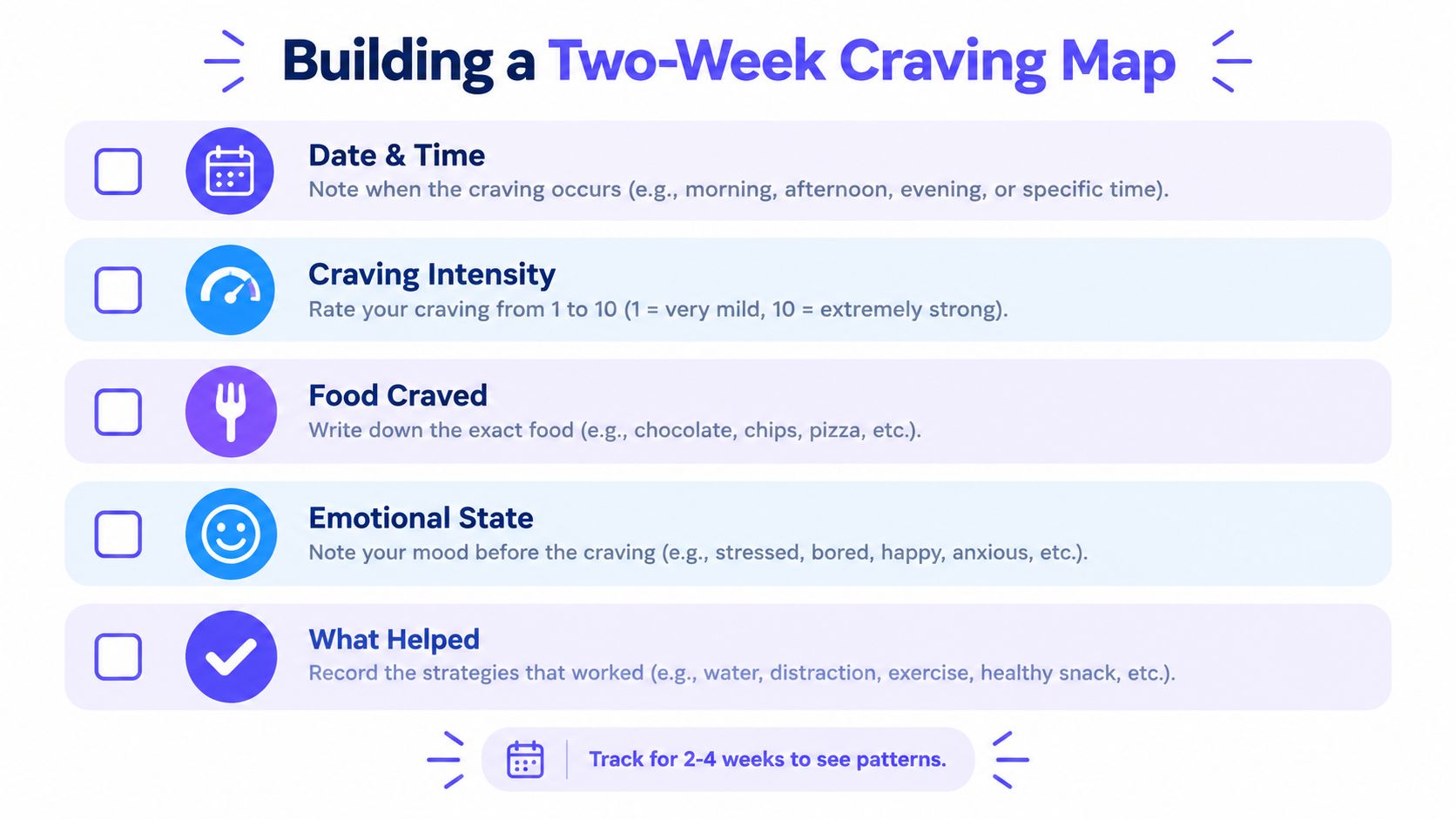
What to record
Write down these details near the time the craving appears:
- Date and time: Mark whether it occurred in the morning, afternoon, evening, or overnight.
- Craving details: Name the food, such as milk chocolate, crisps, toast, or ice cream.
- Intensity: Rate it from 1 to 10, with 1 meaning mild and 10 meaning urgent.
- Recent meals: Note the main protein, fiber-rich foods, and carbohydrates in your previous meal.
- Sleep: Describe sleep as restorative, fragmented, or unusually short.
- Stress and mood: Use simple words such as tense, bored, sad, rushed, or calm.
- Cycle stage: If you still bleed, record where you are in your cycle. With irregular cycles, note the symptoms you notice instead.
- What happened next: Record what you ate and whether it satisfied you.
Review several entries for clusters, rather than treating each craving as a separate problem. An evening urge after fragmented sleep suggests a different experiment from an afternoon urge after a small lunch. A recurring pattern at one cycle stage may support preparing a satisfying snack, rather than imposing stricter food rules.
| Pattern you notice | First experiment |
|---|---|
| Cravings follow fragmented sleep | Protect a calm, consistent bedtime routine |
| Cravings arrive after a rushed or light lunch | Add protein, fiber, and enough food at lunch |
| Cravings appear during high-stress periods | Pause briefly, then decide whether you need food, rest, connection, or all three |
Change one variable first. Altering breakfast, lunch, exercise, bedtime, and snacks at once makes it difficult to identify what helped. A perimenopause symptom tracker can keep sleep, mood, meals, and cycle information together.
At the end of each week, review the map. Circle the most repeatable pattern and choose one response to test. The result should be a personal feedback loop that helps you learn, not a record you must complete perfectly.
Meal, Sleep, and Stress Habits That Move the Needle
Once a craving pattern is visible, test one small adjustment. Regular nourishment can help prevent the swing from restriction to intense hunger, while sleep and stress habits address other signals that may shape appetite.
Build meals that last
Give meals a clear protein source and a fiber-rich food. Greek yogurt with berries and seeds, eggs with beans and vegetables, tofu with brown rice and greens, or chicken with lentils and salad can provide steadier staying power than a carbohydrate eaten alone.
Protein and fiber support fullness. A balanced meal may also soften the contrast between feeling comfortable and suddenly feeling desperate for a highly palatable snack. If an afternoon craving follows a light lunch, add chickpeas to a salad or pair toast with eggs. Removing bread may leave the underlying hunger unresolved.
Make timing predictable
You do not need to follow a rigid clock, yet long, unplanned gaps can make you handle hunger and fatigue at once. Keep an easy option within reach, such as fruit with nut butter, hummus with whole-grain crackers, or yogurt with seeds.
Practical rule: Choose food before a craving becomes an emergency.
Keep water accessible during work, commuting, or errands, and drink regularly. Hydration will not explain every craving, but it can remove one avoidable source of physical discomfort. If drinking water does not change the urge, return to the wider pattern rather than blaming yourself.
Protect the transition to sleep
Create a 30-minute pre-sleep wind-down that you can repeat on most nights. Dim the lights, leave the phone away from the bed, prepare clothes for morning, read something calming, or take a warm shower. The routine works by reducing stimulation and giving sleep a consistent starting signal.
Evening eating can also follow accumulated tension. Before opening the cupboard, try slow breathing, a brief walk, stretching, a shower, or a message to someone supportive. Then decide whether you still want the snack. Food does not need to be earned by calming down. A pause gives you another way to respond.
For the first week, choose one meal habit and one sleep or stress habit. Keep both realistic for your schedule, including difficult days. Note what changes, if anything, and use that response to choose the next experiment.
How AI Tracking and Coaching Personalize the Plan
A notebook may show that cravings follow poor sleep, yet the harder question is what to test tonight when several symptoms overlap. Data becomes useful when it leads to a small, specific action. The aim is not to collect more information. It is to connect one recurring pattern with one manageable experiment.
An AI-powered perimenopause app such as Lila can bring together check-ins about meals, sleep, mood, energy, symptoms, and cycle changes. Seeing these signals together can prevent an overly simple explanation. An evening craving after fragmented sleep and a stressful day may call for a different experiment than an urge after a satisfying lunch on a well-rested day.
Use technology as a pattern assistant
For example, two logged days might show a similar sequence: a short night, a rushed morning, and a strong craving late in the day. An app could turn that sequence into a suggestion to prepare a more substantial afternoon option on nights when sleep was poor. The suggestion is useful because it is specific, reversible, and easy to evaluate. If the urge remains unchanged, that result is information too.
Another pattern might connect cravings with cycle symptoms rather than with one food or one meal. A tool can help you compare those occasions without treating the comparison as proof of a cause. The 2025 review cited in the craving map section supports examining several interacting influences rather than isolating a single explanation.
A chat-based accountability partner can turn an intention into a same-day action, such as choosing the experiment before the afternoon becomes difficult. This differs from using an app only as a calorie counter. Useful prompts include, “What has repeated?” and “What small change can I test today?”
Treat every app output as a prompt, not a diagnosis. If a suggestion conflicts with your symptoms, medical history, or professional advice, set it aside and discuss the situation with a clinician.
Choose a tool that is easy to understand, realistic to use, and simple to share with a healthcare professional. Technology can reduce the work of spotting connections. It cannot replace nourishing food, sleep, medical assessment, or compassionate support.
When Self-Management Is Not Enough
Self-management has limits. Arrange a clinical conversation if your appetite changes are sudden or extreme, if eating regularly feels impossible, or if cravings come with persistent loss of control, marked distress, or recurrent binge episodes.
Also seek help when anxiety, low mood, or sleep disruption is new, worsening, or interfering with daily life. A craving may be part of the menopausal transition, but it can also accompany medication effects, thyroid disease, diabetes, or clinically significant mood and sleep disorders. A clinician can help separate overlapping causes instead of asking you to guess.
Match the support to the problem
- Primary care clinician: Can review symptoms, medications, relevant medical conditions, and possible thyroid or blood sugar concerns.
- Registered dietitian: Can build a satisfying eating pattern around your preferences, symptoms, health needs, and relationship with food.
- Gynecologist or menopause-focused clinician: Can assess the broader transition and discuss appropriate options for hormone-related symptoms.
- Therapist or eating-disorder specialist: Can help with binge eating, emotional distress, body image, anxiety, or rigid food rules.
Bring your craving map, whether it's on paper or in an app. A short record of sleep, meals, cycle symptoms, mood, and episodes of loss of control can make the appointment more focused.
You could say:
“I'm having stronger cravings and changes in appetite during what may be perimenopause. I've tracked my sleep, meals, stress, cycle symptoms, and eating episodes, and I'm concerned about [specific symptom]. Could we review possible medical causes and discuss support?”
You don't need to prove that hormones are responsible before asking for help. Your experience is enough reason to start the conversation.
A Gentle, Sustainable Way Forward
Perimenopause cravings are often a multi-signal pattern, not a simple estrogen story and not a test of discipline. Hormonal changes can interact with hunger and fullness cues, while sleep disruption, stress, meal timing, and energy metabolism shape what you want and when you want it.
Start small:
- Choose one anchor habit, such as adding protein and fiber to lunch or creating a 30-minute wind-down.
- Track cravings for two to four weeks, including sleep, meals, stress, mood, and cycle stage.
- Review the clusters, then test one change rather than rebuilding your entire diet.
- Use a tracking or coaching tool if it helps you stay consistent and act on patterns.
- Book a clinician appointment if you notice sudden appetite changes, repeated loss of control, marked distress, or worsening mood and sleep symptoms.
You're allowed to enjoy chocolate, bread, crisps, and other foods without turning them into moral tests. You're also allowed to want more support when the pattern feels bigger than a snack. Progress during the menopausal transition is rarely linear, so aim for steadier signals, kinder decisions, and a plan you can return to after an imperfect day.
Lila brings meals, sleep, mood, symptoms, energy, and cycle tracking into one place, with personalized guidance and chat-based coaching that can help you spot and respond to recurring craving patterns. Visit Lila to make your perimenopause craving map easier to use in everyday life.
Get Lila, your personal coach for perimenopause.
Built for women in their 40s. 24/7 coaching, in your pocket.