
Perimenopause Hot Flashes at Night: A Night Plan
Manage perimenopause hot flashes at night with a cooler bedroom, a 7-day burden log, and clear signs to see a clinician.
Hot-flash-related wakefulness accounted for 27.2% of the time spent awake overnight in an objective sleep study of perimenopausal women, according to a study of hot flashes and nighttime wakefulness. That reframes perimenopause hot flashes at night: the problem isn't only how often you get hot, but how much sleep you lose afterward.
A useful night plan measures what happened first, how long you stayed awake, and how you felt the next day. Those details can help you decide whether home comfort measures are enough or whether it's time to book care.
Table of Contents
- What Night Sweats Do to Sleep
- How to Set the Bedroom for a Hot Night
- Log the Sequence and Spot Other Wakers
- Treatments That Cut Frequent Night Flashes
- Start the Seven Night Test
What Night Sweats Do to Sleep
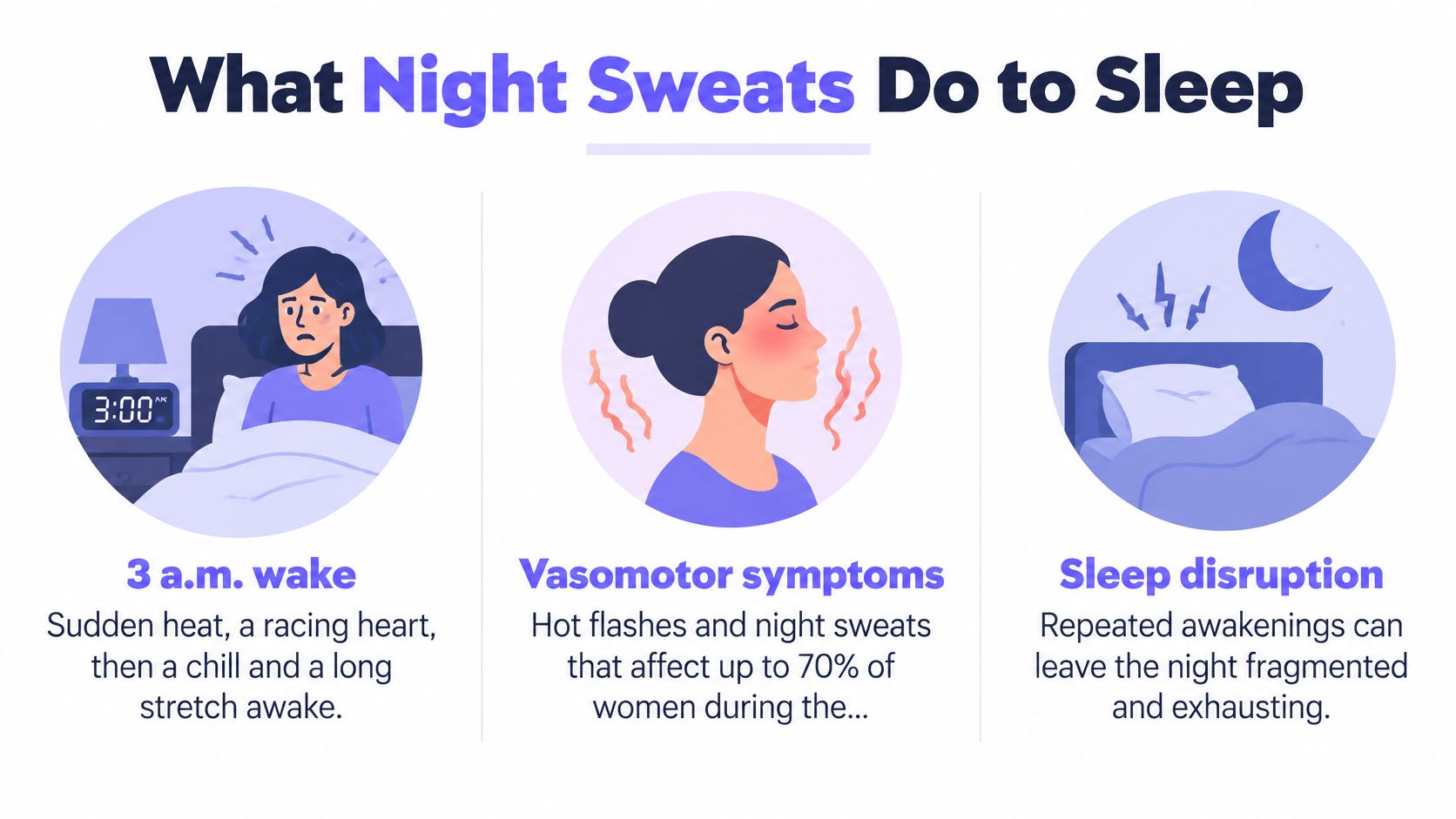
A hot flash may last only briefly, yet the time it takes to settle afterward can shape the whole night. You wake with sudden heat, a racing heart, and damp pajamas, throw off the covers, then feel chilled. By the time you are comfortable again, you may be fully awake and thinking about tomorrow.
Hot flashes and night sweats are vasomotor symptoms, the clinical term for episodes of heat and sweating. A nighttime hot flash is often called a night sweat when sweating is prominent. Anxiety or chills can accompany an episode, but not everyone experiences the same symptoms.
The heat and the lost sleep aren't the same thing
A sleep study measured hot flashes objectively, rather than relying only on what participants remembered in the morning. In that study, 69.4% of measured flashes were associated with an awakening, and hot flashes accounted for 16.6 minutes, or 27.2% of all wake time. These findings do not mean every flash wakes you, or that every person will lose the same amount of sleep. You can read more about sleep disruption during menopause.
Many women experience night sweats, but the number of episodes varies widely. The count alone cannot show how disruptive a night was. A brief awakening followed by an easy return to sleep has a different effect from lying awake for a long stretch, even if both nights include the same number of flashes.
What a night of hot flashes does to sleep
| Measure | Finding | What it means |
|---|---|---|
| Flashes associated with an awakening | 69.4% | A flash may interrupt sleep, but not every flash leads to waking |
| Time awake from hot flashes | 16.6 minutes; 27.2% of all wake time | The time spent awake afterward can add up |
The sequence matters. Note whether heat or sweating woke you, how long you stayed awake, and whether you felt alert, anxious, or chilled afterward. If you cannot tell what came first, record what you remember without guessing. The next day, note whether you felt restored or tired. That small record can distinguish a night with frequent but quickly resolved flashes from one with fewer episodes and a heavier sleep burden.
What improvement can look like
Improvement may mean less sweating, fewer awakenings, or getting back to sleep without a prolonged stretch of worry. Daytime flashes do not have to disappear for your nights to feel better.
A useful measure: Track how many minutes an episode keeps you awake, not just whether it happened.
Cooling and changing layers can make a hot night easier to manage, but they do not cure vasomotor symptoms. Use a week of notes to see whether the burden is easing or still disrupting your sleep. If symptoms remain difficult to manage, or you are unsure what is waking you, discuss them with your doctor.
How to Set the Bedroom for a Hot Night
Prepare the room while you're comfortable, not while you're sweaty and half asleep. The aim is to remove small obstacles: a blanket you can't easily shed, a fan beyond reach, or a dry top in another room.
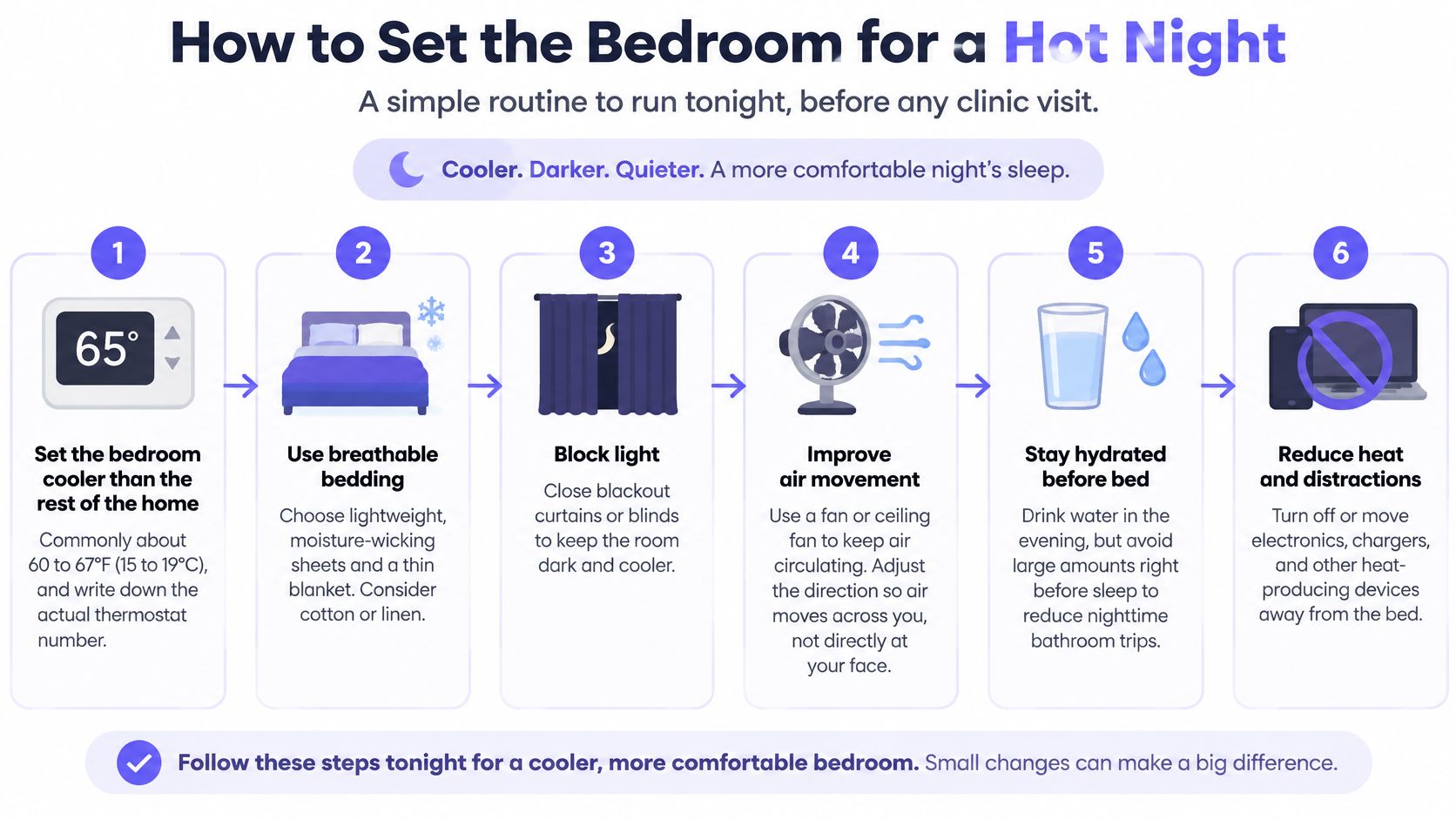
Use this routine as a practical comfort checklist.
Make cooling easy without making yourself cold
Choose a comfortably cool room. Set the bedroom cooler than your daytime living space if that feels good, and write down the actual thermostat setting. There's no need to chase a universal number. Your target is a room that doesn't feel stuffy but doesn't leave you shivering before sleep.
Build bedding you can adjust. Try a sheet with a separate light blanket instead of relying on a heavy duvet. Wear a loose, moisture-wicking sleep layer that you can change easily. If you share a bed, separate blankets let you adjust yours without changing your partner's setup.
Put supplies within reach. Position a fan so you can direct airflow toward your torso. Keep drinking water and a dry sleep top beside the bed, with a place to put damp clothing. Check the fan controls before lights-out so you don't need bright light to find them.
Keep evening habits simple. Try moving caffeine earlier and leaving alcohol, very spicy food, and steaming meals out of the period before bed. Treat this as a personal experiment, not a rule that every woman has the same triggers. Record what you ate or drank rather than guessing afterward.
When you wake hot, make a small adjustment. Sit up if that feels comfortable, remove a layer, and briefly cool your neck or wrists with a cool cloth. Sip water if you're thirsty. Keep lighting dim and avoid opening your phone to investigate the time.
Respond to the chill, too. Once the heat passes, pull the light blanket back over you. Don't stay uncovered just because you were hot moments earlier. The goal is comfort throughout the episode, not maximum cooling.
These steps are for comfort and easier resettling, not a proven cure for vasomotor symptoms. Removing a suspected trigger may help you feel more comfortable, but it doesn't establish the cause of your flashes or replace treatment when symptoms are disruptive.
Prepare for later awakenings
Among 60 healthy perimenopausal women aged 43–54, 59% of objectively measured nighttime flashes occurred in the second half of the night, compared with 41% in the first half, according to a study reported by The Menopause Society. That doesn't predict your schedule, but it supports leaving your fan, water, and dry clothes accessible all night.
For practical ideas about bedding and airflow, Giorgi Bros. Furniture's guide to bedroom changes to reduce nighttime heat can help you assess your setup. Start with adjustments to what you own rather than assuming you need new furniture or specialty bedding.
This video provides another resource to consider alongside your night routine.
▶ PlayKeep your setup reasonably consistent while you observe your symptoms. A bedtime routine for better sleep can support that consistency without turning bedtime into a complicated project.
Log the Sequence and Spot Other Wakers
Say you wake feeling anxious, go to the bathroom, and notice sweat when you return to bed. That's different from feeling a wave of heat first and waking as you throw off the covers.
Neither sequence proves a diagnosis. But recording the order gives a clinician more useful information than a note that says only “bad night.”
Record the sequence without becoming a clock-watcher
A review of vasomotor symptoms and sleep explains that objectively measured flashes often coincide with awakenings, but the timing and direction of that relationship remain unclear. You can't always tell whether heat woke you or whether you noticed heat after waking for another reason.
That uncertainty belongs in the diary. Write unsure when you don't know, rather than forcing every awakening into the hot-flash category.
Use a short baseline log, not a permanent spreadsheet. This tracker shows the core fields.
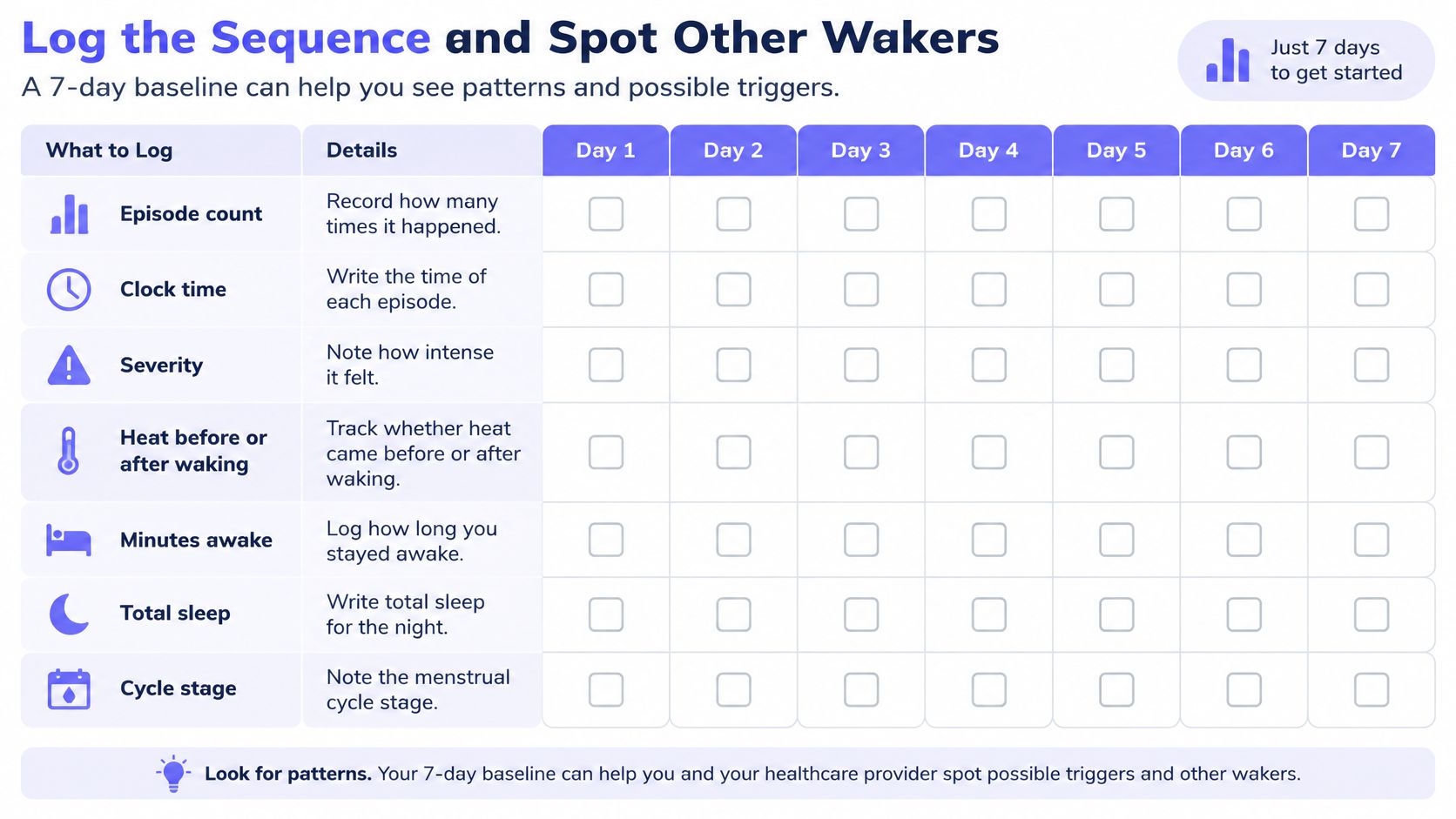
Complete the details in the morning, with brief overnight notes only if they don't keep you awake:
- Episode details: Record remembered flashes, approximate timing, and whether sweating required a clothing or bedding change.
- What came first: Note heat, waking, anxiety, a bathroom trip, noise, snoring or gasping, or an unexplained awakening.
- Sleep cost: Estimate minutes awake and total sleep. Approximate timing is more useful than repeatedly checking a bright clock.
- Morning burden: Describe sleep quality, fatigue, concentration, and whether you feel safe doing your usual activities.
- Context: Include menstrual bleeding or cycle stage if known, alcohol, caffeine, medicines, prescribed hormone doses, and room temperature.
Don't change prescribed medication to make the experiment cleaner. Record changes your clinician recommends, and avoid introducing a new supplement while you're trying to understand the pattern.
Build a burden line, not just a flash total
A review of sleep disturbance across menopause describes evidence linking more severe evening flashes with longer time to fall asleep and nocturnal flash frequency with poorer same-night sleep quality. It also describes temporary increases in heart rate and blood pressure when flashes occur with arousal.
That doesn't mean you need to monitor your blood pressure in bed. It means an episode can involve more than sweaty skin, and count alone doesn't capture its impact.
A useful burden line combines:
- Timing and intensity: Did heat delay falling asleep, interrupt established sleep, or occur near morning? Was it mild warmth or a drenching episode?
- Recovery: Did you resettle easily, or remain alert, worried, or uncomfortable after the heat stopped?
- Next-day function: Could you concentrate, work, exercise, and drive as usual?
- Cycle context: Were you bleeding, expecting a period, or unsure because cycles have become irregular?
For example, a hypothetical morning entry might read: “Heat seemed to come first. Strong sweating, changed my top, then lay awake worrying. Sleep felt broken; unusually tired at work. Period timing uncertain.”
That entry tells a clearer story than “night sweats again.” If you can estimate minutes awake, add them, but don't invent precision.
An incomplete but honest log is more useful than a perfectly filled chart based on guesses.
Match the pattern to the next check
The table offers possibilities to discuss, not diagnoses to make at home. More than one cause can contribute to the same night.
Night sweat patterns and what to check next
| Pattern | What to suspect | Next check |
|---|---|---|
| Heat, then wake | Vasomotor flash may be leading | Cooling routine plus the burden log |
| Wake, then notice sweat | Another arousal may have come first | Note bathroom trips, anxiety, noise, or clock-watching |
| Snoring, gasping, or witnessed pauses | Sleep-disordered breathing | Clinician evaluation for sleep apnea |
| Urge to move the legs | Restless legs or a movement disorder | Ask for assessment separately from night sweats |
| New medicine, fever, or thyroid symptoms | A mimic or an amplifier | Medication and medical review |
| Awakenings remain after flashes ease | Insomnia or mood-related sleep loss may contribute | Ask about insomnia care, not another fan |
Persistent waking deserves attention even if the sweating improves. A clinician may need to assess insomnia, breathing problems, movement disorders, mood symptoms, or medication effects rather than intensifying hot-flash treatment.
Give the week a practical summary
For your own summary, use mild burden when symptoms are manageable and you generally resettle without meaningful daytime consequences. Use moderate burden when prolonged waking or next-day fatigue keeps recurring. Use severe burden when disrupted nights substantially affect function, work, or safety.
These are conversation prompts, not validated diagnostic cutoffs. Frequency alone shouldn't make a manageable week severe, and an occasional episode can still warrant care if its consequences are substantial.
A perimenopause symptom tracker can help organize the context. Bring both the summary and the individual entries to an appointment so your clinician can assess what the label leaves out.
Treatments That Cut Frequent Night Flashes
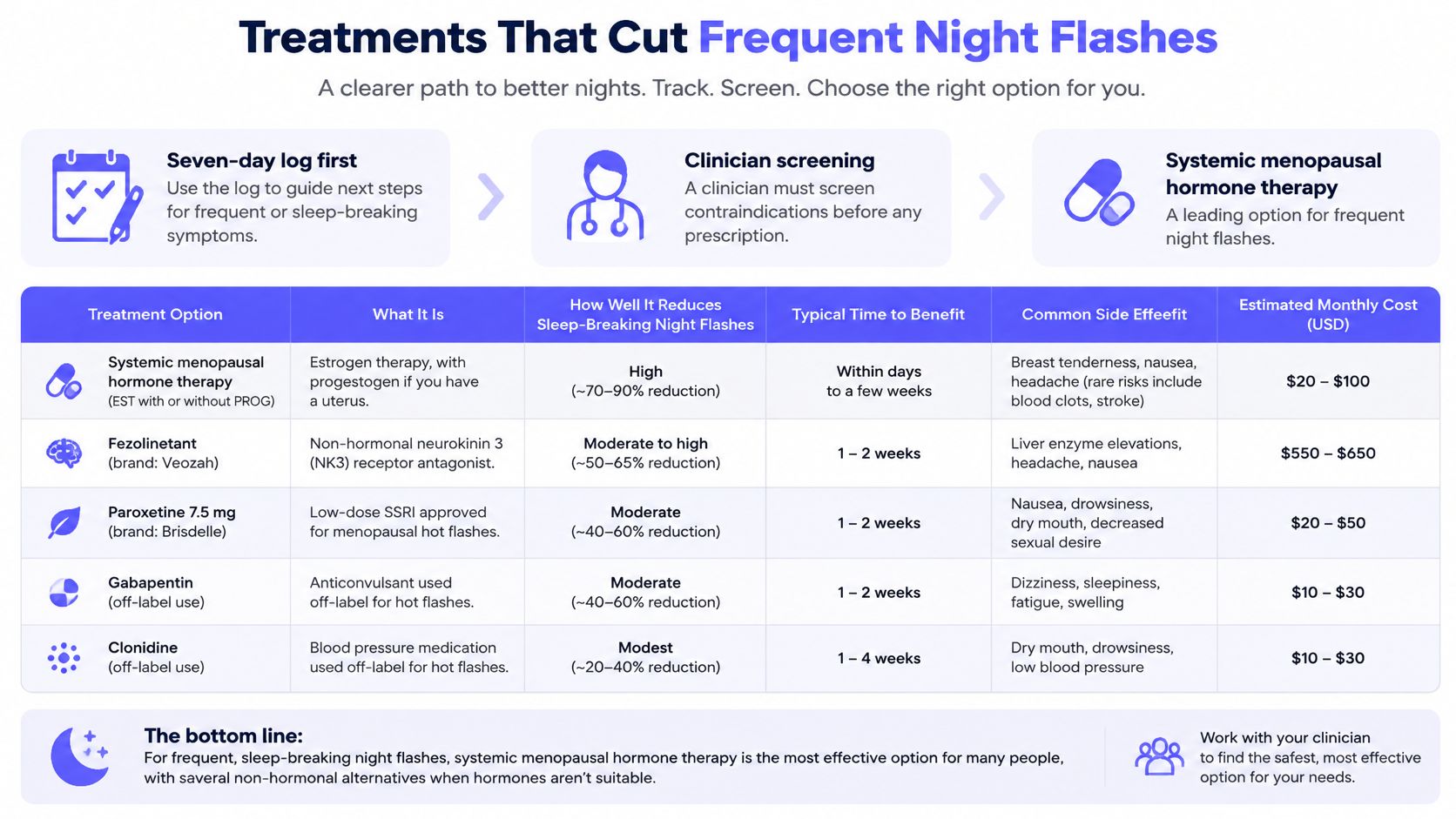
When symptoms repeatedly disrupt sleep, treatment should address the likely cause rather than add more bedtime tasks. Your clinician needs to review your medical history, medicines, bleeding pattern, and possible contraindications before choosing a prescription.
The most useful appointment question is specific: Which option fits my health history, and what change should we expect in my nights?
Compare benefit with suitability
Systemic menopausal hormone therapy is the most effective evidence-supported treatment for vasomotor symptoms. The NAMS hormone therapy position statement cites pooled evidence of approximately 75% fewer weekly symptoms versus baseline, with a 95% confidence interval of 64.3%–82.3%, and evidence that micronized progesterone 300 mg at night reduced flashes and night sweats versus placebo and improved sleep.
Those findings don't make either treatment a self-selected prescription. If you have a uterus, systemic estrogen generally needs a progestogen to protect the uterine lining. The progesterone regimen studied for symptoms shouldn't be assumed to be the appropriate regimen for every estrogen prescription.
For a nonhormonal comparison, the FDA review of fezolinetant evaluated trials involving 1,022 women with at least seven moderate-to-severe vasomotor symptoms daily; the 45-mg dose produced approximately 2.07–2.55 fewer daily episodes than placebo at week 4 and 2.53–2.55 at week 12. Those trials counted symptoms across the full day, so their results aren't a promise of the same reduction in nighttime awakenings.
The comparison below summarizes those cited findings and the decisions that belong with the prescriber.
Options when nighttime flashes keep breaking sleep
| Option | Who it fits | Cited effect | Clinician watch-out |
|---|---|---|---|
| Systemic menopausal hormone therapy | Frequent sleep-disrupting flashes without a contraindication | About 75% fewer weekly symptoms versus baseline, 95% CI 64.3–82.3% | A uterus generally requires progestogen protection; dose and route are individualized |
| Micronized progesterone 300 mg at night | Selected patients after clinician assessment; progesterone may also accompany estrogen when a uterus is present | Fewer flashes and night sweats versus placebo, plus better sleep in cited evidence | Not a self-selected dose or a universal estrogen-protection regimen |
| Fezolinetant 45 mg | Moderate-to-severe symptoms when hormones aren't suitable or aren't preferred | About 2.07–2.55 fewer daily episodes versus placebo at week 4; 2.53–2.55 at week 12 | Liver monitoring and medication interactions; 30 mg showed less consistent clinical meaningfulness |
| Cooling and trigger changes | Comfort support starting at home | May ease discomfort; not a proven vasomotor treatment | Don't delay assessment when sleep or function is substantially affected |
This visual highlights the role of assessment before treatment selection.
Agree on a reassessment plan
Ask your prescriber to define success in terms that matter to you: fewer drenching episodes, less time awake, or better daytime functioning. Keep nighttime symptoms separate from daytime totals so improvement in one doesn't hide persistent trouble in the other.
For fezolinetant, liver-safety assessment, blood-test monitoring, and interaction checks are essential. Follow your prescriber's current safety schedule, not just symptom-review appointments, and don't wait for a planned review if you develop concerning symptoms.
Our explanation of hormone therapy for menopause can help you prepare questions about options. Pause Medical's resource on treatment planning for perimenopause symptoms offers another way to organize that conversation.
Before leaving the appointment: Know what you're trying, how safety will be monitored, and when you'll review whether it's helping.
Start the Seven Night Test
Start tonight with the bedroom adjustments you can make easily, then use the same diary fields each morning. Keep the setup reasonably steady across the test so you can describe what happened without trying to untangle a different experiment every night.
You don't need to do everything perfectly. If you have alcohol, sleep somewhere else, or receive a prescribed medication change, record it rather than discarding the night.
Choose the next step from the burden
At the end of the test, read the entries together rather than judging only the worst night. Look for repeated prolonged awakenings, trouble functioning the following day, or waking that doesn't begin with heat.
- Continue home steps if symptoms are manageable, resettling is comfortable, and daytime functioning is intact. Set another short review point rather than tracking indefinitely without a decision.
- Book a clinician visit if moderate or severe burden repeats, flashes occur on most nights and trouble you, or awakenings continue despite less sweating. Bring the diary and your medication list.
- Seek urgent care now for chest pain, fainting, or significant breathlessness during an episode. Don't assume these symptoms are hormonal or wait for the test to finish.
If caffeine timing is a possible contributor, use our guide to caffeine and hot flashes to frame a focused experiment. Changing a single habit is easier to interpret than cutting out several foods and drinks at once.
Keep tracking in perspective
Paper or a notes app can hold the same information. In Lila, when you log a hot flash, we know the sleep and heart rate data from that night, giving the symptom entry additional context.
One App Store reviewer, Lea S., described her experience this way:
“I managed to get better nights with fewer hot flashes in the first week.”
That's an individual experience, not a treatment result you should expect or a deadline for improvement. If your nights remain difficult, that doesn't mean you tracked badly or failed at the routine.
This guide and Lila are not substitutes for medical advice. Always consult your doctor about perimenopause symptoms, and make decisions about hormone therapy, fezolinetant, or any other prescription with your clinician. The useful outcome of the test is a clear choice: continue manageable home steps with a review point, or book care with a diary that explains the burden.
At Lila, we combine symptom tracking with sleep, meal, and cycle context to help you organize patterns around nighttime hot flashes. Visit Lila to start consistent daily check-ins and build a clearer record of your nights to discuss with your doctor.
Get Lila, your personal coach for perimenopause.
Built for women in their 40s. 24/7 coaching, in your pocket.