
Plant Based Diet for Menopause: A Complete Guide
Explore how a plant based diet for menopause can reduce hot flashes, aid weight loss, and improve mood. Get meal plans, nutrient guides, and practical tips.
 Michelle
The day often starts before you’re ready for it. You wake up warm, then suddenly hot. You kick off the covers, fall back asleep, and wake again an hour later. By morning, you’re tired, a little puffy, and wondering why the foods and routines that used to work now seem to do nothing.
That can feel extremely unsettling. Many women in perimenopause and menopause describe a loss of predictability more than any one symptom. Your body seems to change the rules without warning.
Food won’t solve every part of menopause. But it can become one of the most practical levers you control every single day. A plant based diet for menopause is not just a list of “healthy foods.” It’s a system. When you use it well, you’re not only choosing meals. You’re changing what signals your body receives, what nutrients it can work with, and how clearly you can connect those choices to hot flashes, sleep, mood, and weight.
Navigating Menopause Your Way
A lot of women arrive at this topic after trying to “eat healthier” in a vague way. Maybe that meant cutting sugar for a week, drinking more water, or buying a few salads. Sometimes that helps a little. Often it doesn’t feel targeted enough.
The missing piece is usually this. Menopause symptoms aren’t random, even when they feel random. They’re linked to changes in hormones, metabolism, body fat distribution, and temperature regulation. Food can influence each of those.
A plant based diet for menopause works best when you think of it as replacement, not restriction. The question isn’t “What do I remove so I can be good?” It’s “What do I put in place of the foods that may be making symptom control harder?”
That shift matters.
If breakfast used to be eggs and cheese, maybe it becomes oats with soy milk, berries, and ground flax. If lunch used to be chicken and a low-fiber wrap, maybe it becomes lentil soup with whole grain toast and a side salad. If dinner used to revolve around meat, maybe tofu, tempeh, beans, or edamame take over that role.
Those swaps can feel small, but they change the pattern of your day. You get more fiber. You usually get less saturated fat from animal foods. You can build in soy foods that are especially relevant during menopause. And because meals become easier to track, you can see what helps your body instead of guessing.
Menopause can make you feel like your body is doing things to you. A thoughtful eating pattern helps you start working with it again.
That’s the mindset to bring into this. Not perfection. Not punishment. A steady, test-and-learn approach that gives you more information, more stability, and often more relief.
How Plants Help Balance Your Body During Menopause
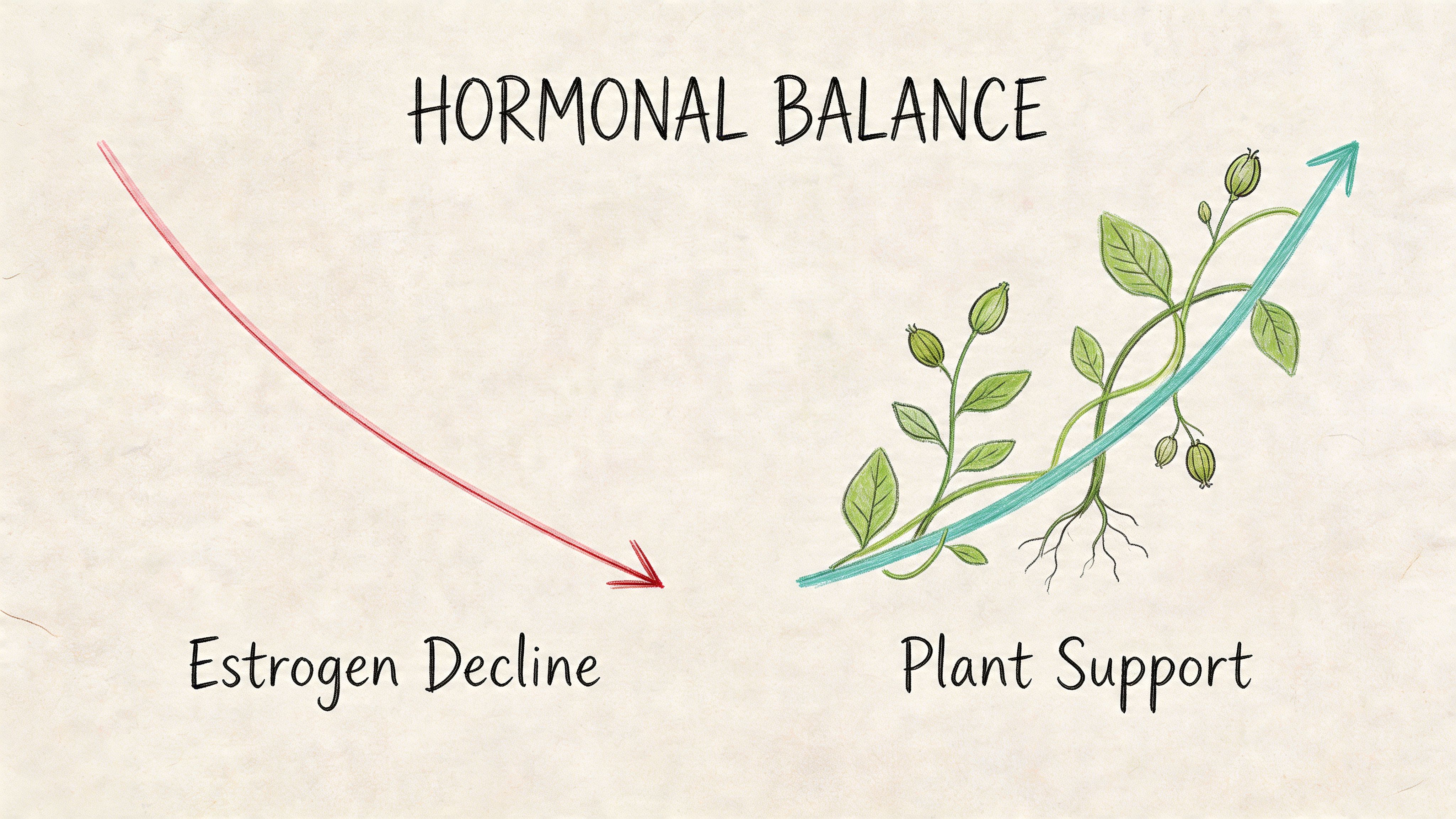
Menopause changes the body’s internal signaling. One of the most important shifts is the decline in estrogen. That affects far more than periods. It also influences temperature regulation, blood vessel behavior, fat storage, and how steady you feel through the day.
Why hot flashes happen
A simple way to picture it is this. Your brain has a thermostat. Part of that thermostat sits in the hypothalamus, which helps regulate body temperature. As estrogen declines, that control system can become more sensitive and less stable.
That’s why a minor internal change can suddenly feel huge. A room that felt comfortable an hour ago now feels stifling. You flush, sweat, and then often feel chilled afterward.
Food can affect that whole system. The way you eat may influence inflammation, blood vessel function, and the hormonal signals that interact with that temperature control center.
How soy acts like a gentle helper
Soy gets a lot of attention in menopause nutrition, and for good reason. Soy contains isoflavones, plant compounds that can interact with estrogen receptors.
A helpful analogy is a key and lock.
Your body’s own estrogen is like the original master key. It fits the lock well and creates a strong signal. Soy isoflavones are more like a gentler backup key. They don’t act the same way, and they don’t fit every lock equally, but they can still turn certain locks enough to create useful effects.
That’s why some experts describe soy isoflavones as acting like Selective Estrogen Receptor Modulators, or SERMs. They can mimic some of estradiol’s stabilizing effects on the brain’s thermoregulatory center without acting like hormone therapy in the same way. In the WAVS trial, a low-fat vegan diet with soy reduced moderate-to-severe hot flashes by 88%, an effect described as comparable to hormone replacement therapy’s 70-90% range in that context, with the mechanism linked to eliminating animal products, reducing total fat, and adding soy isoflavones (PCRM summary of the WAVS trial).
Why it’s not just about soy
Soy matters, but the pattern matters too.
Three parts appear to work together:
Replacing animal products: This changes the overall mix of fats and other compounds in the diet.
Lowering total fat: A lower-fat eating pattern may support better vascular and thermoregulatory stability.
Increasing plant foods: That usually means more fiber and a different nutrient profile overall.
Imagine adjusting a room that keeps overheating. You don’t just change the thermostat. You also improve airflow, close the blinds, and remove the space heater. Menopause nutrition works in a similar way. Several smaller changes can create a noticeable combined effect.
If you want more ideas for symptom-friendly foods before building full meals, this guide to best foods for perimenopause is a useful companion.
Practical rule: Aim to make plants the default and animal foods the exception. The benefit seems to come from the swap itself, not from chasing perfection.
Targeting Hot Flashes Weight Gain and Mood
When women ask whether a plant based diet for menopause is “worth it,” they usually mean one thing. Will I feel different?
For many, the answer depends on which symptom is driving daily life the most. Hot flashes may be the headline complaint, but weight changes, poor sleep, and a shorter emotional fuse often travel together.
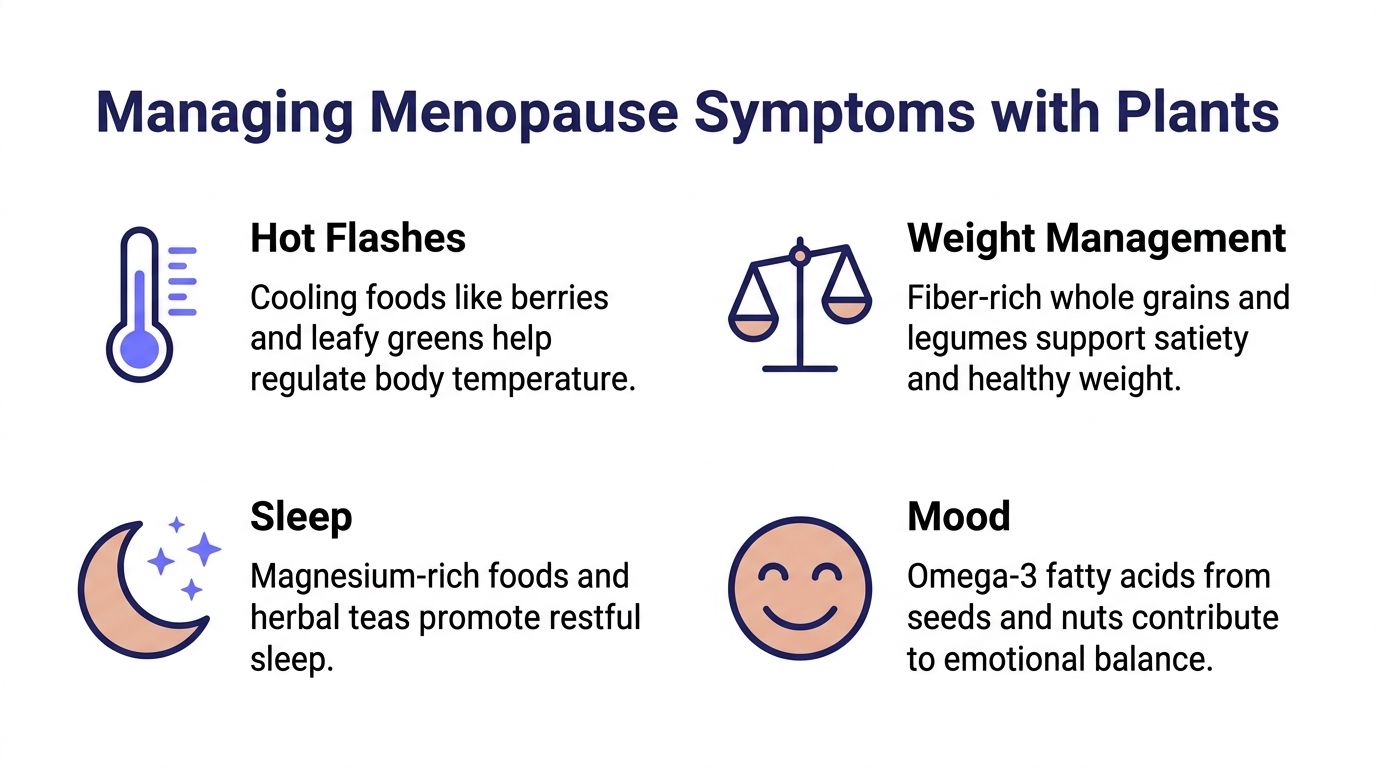
Hot flashes
The strongest clinical result stands out here.
A 2025 clinical trial found that postmenopausal women following a low-fat vegan diet with daily soy had a 92% reduction in severe hot flashes, and 59% became completely free of moderate to severe hot flashes by 12 weeks. The same group also lost an average of 8 pounds (3.6 kg) (PCRM trial summary).
That matters because hot flashes aren’t just brief annoyances. They interrupt meetings, wake you at night, and can make women feel self-conscious in public. A meaningful reduction can change the texture of an entire day.
Weight gain
Menopause often changes where weight shows up. Many women notice more abdominal weight even when they’re eating roughly the same way they always have.
That’s frustrating, but it isn’t a personal failure. Hormonal shifts can push the body toward storing more fat centrally and handling blood sugar less smoothly. A plant-forward pattern can help because meals built around beans, soy foods, vegetables, fruits, and whole grains usually bring more fiber and more volume with fewer animal foods.
Instead of thinking “How do I eat less?” it often helps to ask “How do I build a plate that keeps me steady longer?” A bowl with tofu, brown rice, roasted vegetables, and edamame often does that better than a meal that’s lower in fiber and easier to overeat.
Sleep
Sleep can improve for more than one reason.
First, fewer intense hot flashes can mean fewer overnight wake-ups. Second, meals with more fiber and steadier energy may reduce the roller-coaster feeling that leaves you dragging by day and restless by night. Third, feeling physically less uncomfortable often makes bedtime less loaded.
The quality-of-life findings in the same body of research support this broader effect. The Menopause-Specific Quality of Life Questionnaire showed significant improvements in vasomotor, psychosocial, physical, and sexual domains in the vegan group, as reported in the trial summary already cited earlier in this article.
Mood
Mood during menopause is never “just hormones” and never “just mindset.” It’s usually a mix. Poor sleep, blood sugar swings, repeated hot flashes, body image stress, and everyday life all pile together.
Food won’t remove every stressor, but it can reduce some of the physiological noise.
A simple way to think about it:
Fewer symptom spikes can mean fewer moments of overwhelm.
More consistent meals can support steadier energy.
Better sleep can lower the chance that everything feels harder than it is.
If your mood feels worse in menopause, it doesn’t mean you’re weak. It often means your body is asking for more stability than it used to.
That’s why the goal isn’t to eat “perfectly.” The goal is to create enough consistency that your body stops getting jolted all day long.
Your Menopause Nutrient Toolkit on a Plant-Based Diet
A plant based diet for menopause can be powerful, but only if it’s built well. Many women encounter difficulties in this process. They hear “eat more plants,” then end up under-eating protein, missing key nutrients, or assuming spinach covers all calcium needs.
It doesn’t work that way.
During menopause, age-related changes can decrease stomach acid and nutrient absorption by 20-30%, which makes planning more important. The same source also notes that oxalates in leafy greens can hinder calcium absorption and that Vitamin D and especially B12 often need special attention (Menopause Centre article on plant-based eating in menopause).
The nutrients that deserve your attention
Nutrient | Role in Menopause | Top Plant-Based Sources | Pro Tip |
|---|---|---|---|
Soy isoflavones | Supports menopause symptom management, especially hot flashes | Soybeans, tofu, tempeh, edamame, soy milk | Include soy regularly rather than rarely |
Protein | Supports muscle, fullness, and recovery | Tofu, tempeh, edamame, lentils, beans, soy yogurt, seitan | Build meals around a protein source instead of adding it as an afterthought |
Calcium | Important for bone health | Calcium-set tofu, fortified plant milks, tahini, lower-oxalate greens, fortified yogurt alternatives | Don’t rely only on spinach or chard, since absorption can be limited |
Vitamin D | Works with calcium and supports overall health | Fortified foods, supplements when needed | Many women need a supplement plan from a clinician |
Iron | Supports energy and helps prevent fatigue | Lentils, beans, tofu, pumpkin seeds, fortified cereals | Pair iron-rich foods with vitamin C-rich produce |
Vitamin B12 | Essential for nerves, energy, and red blood cell health | Fortified foods, supplements | This is not optional on a fully plant-based diet |
Omega-3 fats | Supports overall health and may help round out a balanced plan | Flax, chia, walnuts, algae-based supplements | Use ground flax or chia regularly for better practical intake |
Zinc | Supports immune and metabolic function | Beans, lentils, seeds, whole grains, nuts | Rotate food sources instead of relying on one “superfood” |
Where women often get confused
The most common misunderstanding is assuming “plant-based” automatically means “nutritionally complete.” It can be. It can also be lopsided.
A breakfast of toast and fruit, a salad for lunch, and pasta for dinner might be plant-based, but it may leave you hungry, under-fueled, and low in several nutrients over time.
A stronger day looks more like this:
Breakfast: Soy yogurt with berries, chia, and walnuts
Lunch: Lentil bowl with quinoa, roasted vegetables, and tahini
Dinner: Tofu stir-fry with broccoli and brown rice
Snack: Edamame or hummus with vegetables
That pattern covers more bases without feeling clinical.
A few absorption tips that matter
Some foods contain nutrients, but your body won’t absorb all of them equally.
Keep these practical points in mind:
For calcium: Fortified foods and calcium-set tofu can be more dependable than assuming all greens perform the same way.
For iron: Add citrus, berries, bell peppers, or tomatoes alongside beans and lentils.
For B12: Use a supplement or reliable fortified food strategy. This is one nutrient you don’t want to leave to chance.
For Vitamin D: Food alone may not cover your needs, especially if sun exposure is limited.
For protein: Spread it across the day so every meal does some work.
If you want to calculate the nutrition of a recipe with confidence, using a recipe analysis tool can help you spot gaps before they become habits.
For a broader look at nutrients many midlife women discuss with clinicians, this guide on supplements for women over 40 can help you prepare smarter questions.
Small check: If a plant-based day leaves you tired, ravenous, or snacky all evening, it may not be “detox.” It may just be underpowered.
A Sample 3-Day Plant-Based Menopause Meal Plan
Theory matters, but meals decide what happens in real life. A useful plan should feel ordinary enough to repeat on a workweek and flexible enough to survive a busy evening.
This sample menu shows what a plant based diet for menopause can look like when it’s built around soy, fiber, and satisfying meals rather than perfection.
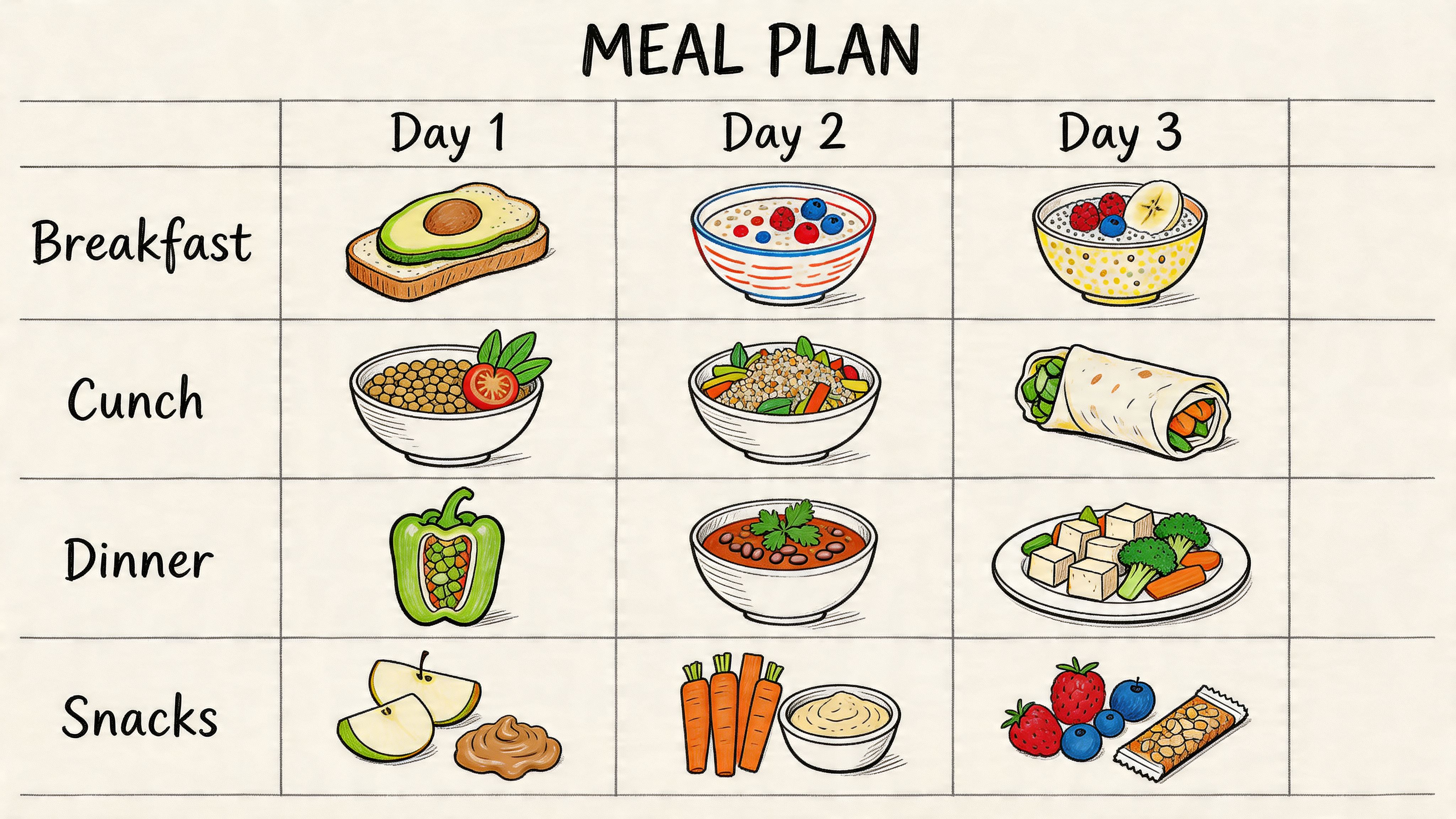
Day 1
Breakfast is warm and grounding. Try oatmeal made with soy milk, topped with berries, ground flaxseed, and a spoonful of tahini or walnuts.
Lunch can be simple. A lentil soup with whole grain toast and a crunchy side salad works well, especially if you add pumpkin seeds or chickpeas.
Dinner is a tofu stir-fry with broccoli, carrots, mushrooms, and brown rice. Keep the sauce easy. Soy sauce, garlic, ginger, and a splash of lime can go a long way.
For snacks, think steady energy:
Mid-morning: Edamame with a little sea salt
Afternoon: Apple slices with peanut butter
Day 2
Breakfast could be a smoothie if mornings are rushed. Blend soy milk, frozen berries, silken tofu, chia seeds, and oats. It’s quick, but still substantial.
Lunch might be a grain bowl with quinoa, black beans, corn, tomatoes, avocado, and greens. A squeeze of lemon helps brighten the iron-rich ingredients.
Dinner can lean cozy. Try a chickpea and vegetable curry with cauliflower and peas over brown rice.
If you want more variety than a fixed sample menu gives, a customizable general plant-based meal plan can help you generate ideas around your schedule and preferences.
Day 3
Breakfast can be savory. Scramble tofu with turmeric, onions, spinach, and mushrooms, then serve it with whole grain toast.
Lunch could be a hummus and roasted vegetable wrap with a side of fruit. Add extra tofu or tempeh if you want it to carry you longer.
Dinner works well as a tray-bake meal. Roast cubes of tempeh, sweet potatoes, Brussels sprouts, and red onion, then serve with a drizzle of tahini sauce.
Smart snacks for this day:
Morning: Soy yogurt with berries
Evening: A small handful of walnuts and kiwi, or hummus with cucumber
A visual meal idea can make this even easier to picture:
▶ PlayWhat makes this meal plan work
It isn’t fancy. That’s the point.
Several habits repeat across all three days:
Soy shows up regularly: tofu, soy milk, edamame, or soy yogurt
Fiber is built in: oats, legumes, vegetables, fruit, and whole grains
Meals have structure: protein, color, and staying power
Snacks are purposeful: they prevent the crash-and-graze cycle
Hydration matters too. Many women notice that feeling slightly dehydrated makes hot periods feel worse. Keep water visible and easy to reach.
If you want a more detailed framework for planning meals around symptom goals, this menopause diet plan gives additional ideas.
Avoiding Pitfalls and Tracking Your Progress
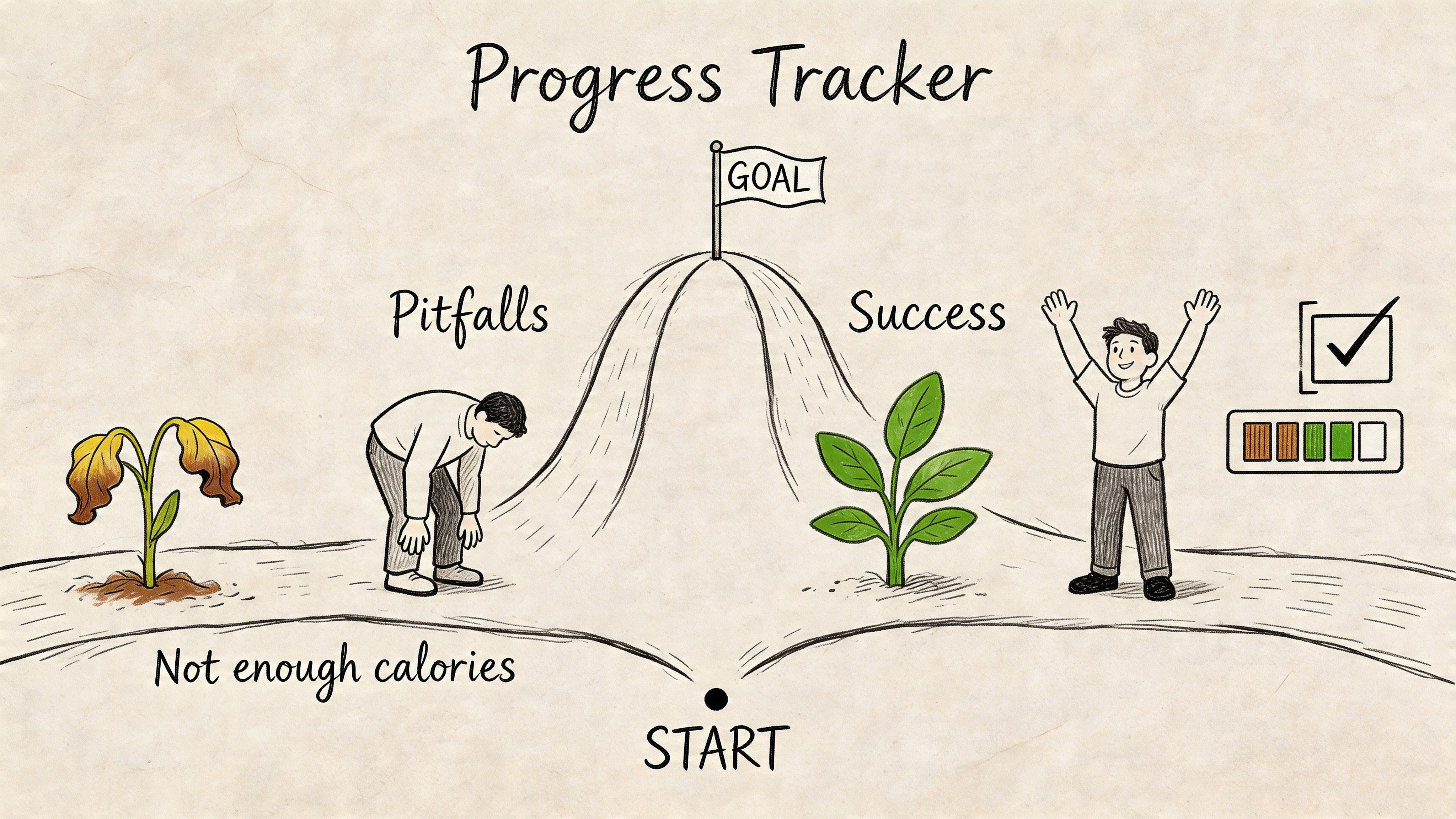
By the second week, this often gets harder in a very specific way. You may be eating more plants and still wondering why your energy dips at 3 p.m., why cravings feel louder, or why hot flashes have not changed yet. That usually does not mean a plant based diet for menopause is a poor fit. It usually means you need better inputs, better timing, or better tracking.
Common mistakes that make the plan harder
A common problem is under-fueling. Some women remove animal foods but do not add enough beans, tofu, soy yogurt, whole grains, nuts, seeds, or fortified staples to replace the protein, calories, and nutrients those meals used to provide. The result can feel like the diet is failing, when the underlying issue is that the plate is incomplete.
Another snag is building the plan around convenience foods alone. Vegan frozen meals, meat substitutes, and snack foods can absolutely have a place. But if they become the whole routine, it gets harder to meet fiber and protein needs consistently, and harder to tell which food patterns help your symptoms.
Expectations matter too.
Hormones do not respond like a light switch. They act more like a thermostat. Small daily inputs, repeated over time, can gradually shift how your body regulates temperature, appetite, sleep, and energy. If you expect one food to stop symptoms overnight, you are likely to miss the quieter improvements that matter first, such as fewer energy crashes or less intense evening hunger.
What to watch instead of chasing perfection
A more useful question is: what happened when this meal replaced the version I used to eat?
That shift matters because replacement is often what changes the bigger pattern. In a secondary analysis summarized by Rheumatology Advisor, researchers reported that replacing animal foods with plant-based alternatives was linked with weight loss and fewer severe hot flashes in postmenopausal women. The practical lesson is simple. A soy burger, bean chili, or tofu stir-fry does not need to be perfect to be useful. It needs to help you repeat a better pattern often enough for your body to respond.
That is a very different mindset from food policing.
Why tracking changes the process
Tracking turns guesswork into feedback. It helps you stop asking, "Was I good today?" and start asking, "What tends to happen after this breakfast, this bedtime snack, or this glass of wine?"
Menopause symptoms rarely move in a straight line. Sleep affects hunger. Hunger affects food choices. Food choices can affect energy, digestion, and hot flash intensity. Tracking helps you catch those links the way a budget helps you see where money is going. Without a record, it is easy to blame the wrong thing.
A dedicated symptom-and-meal tracking app can help, but a notes app or paper log works too. The tool matters less than the consistency.
Try tracking for two to four weeks and keep it simple:
Meals and snacks: What you ate, and roughly when
Hot flashes: Time of day, intensity, and what happened before them
Sleep: Bedtime, wake-ups, and how rested you felt
Energy: Especially mid-morning and mid-afternoon
Mood and cravings: Any pattern around skipped meals, poor sleep, or alcohol
Repeatable swaps: Which plant-based meals felt satisfying enough to do again
Short notes are enough. "Tofu grain bowl at lunch, steady afternoon." "Large sugary snack at 4 p.m., hungry again by 6." "Two glasses of wine, woke up hot at 2 a.m." Over time, those notes become your own evidence.
The goal is pattern recognition, not self-criticism.
That is how a plant-based approach becomes a system instead of a list of approved foods. You learn which meals support steadier energy, which habits seem to aggravate symptoms, and which changes are realistic enough to keep.
When to Partner With Your Healthcare Provider
Food can help a lot, but it shouldn’t carry the whole burden alone.
It’s smart to talk with a healthcare provider before making major diet changes if you have an existing medical condition, take regular medication, have a history of disordered eating, or already know you struggle with anemia, bone health, or digestive issues.
Situations that deserve a conversation
Severe symptoms: Hot flashes, sleep disruption, or mood changes are interfering with daily function.
Persistent fatigue: You may need evaluation for nutrient gaps or other causes.
Bone health concerns: Calcium, Vitamin D, and overall bone support may need individual planning.
Supplement questions: B12 and Vitamin D often need a more deliberate approach on plant-based eating.
Unintended weight change: Rapid loss or ongoing gain deserves context, not guesswork.
You don’t need to wait until things feel extreme. A clinician can help you interpret symptoms, order labs when appropriate, and decide whether food changes should sit alongside other treatments.
A good partnership usually works best when you bring details. A short record of meals, symptoms, sleep, and energy is often more helpful than trying to remember the last month from memory.
Take Control of Your Menopause Journey Today
The most useful shift often starts in an ordinary moment. You finish breakfast, get through part of the morning, and realize your energy feels steadier than it did last week. That is how progress usually appears. Through patterns you can notice and repeat.
A plant based diet for menopause works best as a system, not a short list of "healthy foods." Your meals supply raw materials for hormones, blood sugar control, digestion, and bone support. Your notes on sleep, hot flashes, mood, and appetite help you see which choices are helping your body and which ones need adjusting. Food is the input. Your symptoms are the feedback.
That feedback matters.
Once you understand why soy foods, beans, whole grains, nuts, seeds, fruits, and vegetables can help, meals stop feeling random. They start to work more like settings on a thermostat. You make a change, watch the response, and adjust with more confidence. That process can make menopause feel less confusing and more manageable.
Start small and make it measurable. Pick one breakfast you can repeat for a week. Add one plant protein you will use often, such as tofu, edamame, lentils, or tempeh. Track a few simple signals each day: sleep quality, hot flash frequency, energy, mood, and how satisfied you feel after meals.
Small experiments teach you more than a perfect plan on paper.
Over time, those notes can show you your own pattern. Maybe a higher-fiber lunch helps with afternoon cravings. Maybe regular soy foods line up with fewer temperature swings. Maybe eating too lightly early in the day leaves you irritable by evening. That is the ultimate goal here. To build a way of eating that fits your symptoms, your schedule, and your life.
If you want a simple way to connect meals, symptoms, sleep, and mood in one place, Lila can help you turn a plant-based approach into a personalized menopause plan you can follow.
Get Lila, your personal coach for perimenopause.
Built for women in their 40s. 24/7 coaching, in your pocket.


