Your Guide to Supplements for Women Over 40
Feeling different after 40? Explore the best supplements for women over 40 to manage symptoms, boost energy, and support your long-term health and wellness.
 Michelle
Welcome to your 40s. If you’re here, you’ve probably noticed things are… different. Suddenly, the strategies that kept you feeling good for decades don't seem to be working anymore. That’s because they aren’t.
This is the decade where targeted supplements for women over 40 stop being a wellness trend and become a necessary part of your self-care toolkit. This isn’t about chasing a younger version of yourself; it's about feeling vibrant, strong, and clear-headed right now.
Why Your Body’s Needs Change After 40

Think of your body as a finely tuned engine. For the first few decades, it ran beautifully on a standard fuel mix. But as you cross the 40-year mark, that engine starts to require a more specialized blend to maintain its performance. This is exactly what happens as we enter perimenopause.
This transition isn't just about the well-known symptoms like hot flashes or irregular cycles. It's a full-body event, driven by the natural decline and fluctuation of estrogen. These hormonal waves affect nearly every system you have, from your bones and brain to your metabolism and mood, often leading to frustrating symptoms that seem to pop up out of nowhere.
Your New Normal Is Hormonal
That deep-seated fatigue that a second cup of coffee won't fix? The brain fog that makes you forget a word mid-sentence? That stubborn weight gathering around your middle, even though your diet and exercise habits haven't changed? These aren't just random signs of aging. They are direct results of your new hormonal reality.
As estrogen levels change, your body's old rulebook gets thrown out:
Nutrient Absorption: Your gut isn't as efficient at pulling key nutrients like calcium and vitamin B12 from your food.
Bone Health: Bone density can start to decline more rapidly, which is why long-term fracture risk becomes a bigger conversation.
Muscle Mass: It becomes much harder to build and even just maintain lean muscle, the very engine of your metabolism.
Brain Chemistry: Estrogen plays a huge role in regulating neurotransmitters like serotonin and dopamine. When it fluctuates, so can your mood and sleep quality.
Because of these fundamental shifts, the standard one-a-day multivitamin you’ve relied on for years might not cut it anymore. It's like trying to use a generic wrench on a highly specialized piece of machinery—it just doesn't fit the job.
To give you a clear roadmap of what we'll be covering, this table summarizes the key health shifts women experience after 40 and the nutrients that can offer support.
Key Health Shifts for Women Over 40 and Related Nutrients
Health Concern | Primary Driver | Key Supportive Supplements |
|---|---|---|
Bone Density Loss | Declining estrogen | Calcium, Vitamin D3, Vitamin K2, Magnesium |
Metabolic Changes & Weight Gain | Insulin resistance, muscle loss | Berberine, Magnesium, Fiber, Protein |
Poor Sleep & Night Sweats | Low progesterone, estrogen dips | Magnesium Glycinate, Melatonin, Black Cohosh |
Mood Swings & Brain Fog | Neurotransmitter disruption | Omega-3s, B Vitamins, Magnesium |
Menopausal Symptoms | Estrogen fluctuations | Black Cohosh, Maca, Phytoestrogens |
This guide is designed to move beyond generic advice and get into the specifics of why these nutrients matter during this life stage.
Bridging the Gap With Smart Supplementation
This is where a strategic approach to supplements becomes so incredibly helpful. It’s not about guessing or grabbing whatever is trending online; it’s about intelligently filling the specific nutritional gaps created by this hormonal transition.
And you're not alone in seeking this kind of support. Data from 2017–2018 showed that 63.8% of women were already using dietary supplements, and that number skyrockets to 80.2% for women over 60. For those of us in the 40-59 age bracket, vitamin D use was more than double that of younger women, proving that we're actively responding to our bodies' changing needs. You can explore the complete dataset on supplement use in this NCHS Data Brief from the CDC.
In the sections ahead, we'll dive into the evidence-backed supplements that truly address the core challenges of this life stage. We'll cover what each one does, who really needs it, and how to create a personalized plan that helps you feel strong, sharp, and firmly in the driver's seat of your own health.
The Foundational Supplements Every Woman Over 40 Needs
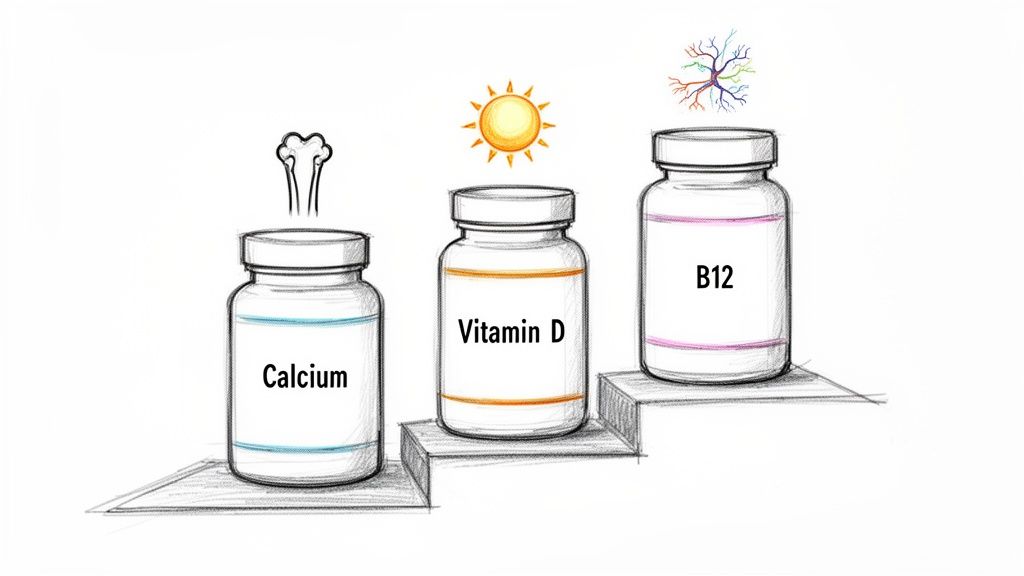
As our bodies start to shift in our 40s, it's a smart move to get back to basics and strengthen our health from the ground up. I like to think of it as shoring up the very foundation of our well-being. Three nutrients, in particular, become absolute non-negotiables in my book: Calcium, Vitamin D, and Vitamin B12. Together, they form the bedrock for bone density, cellular energy, and nerve function.
These aren't just random "good for you" vitamins. Their importance really kicks into high gear during perimenopause because of specific physiological changes happening behind the scenes. For instance, declining estrogen directly messes with how your body maintains bone mass, and shifts in stomach acid can make it harder to absorb key nutrients from your food.
Understanding why you need them is the first step toward building a supplement plan that actually works for you.
Calcium: Your Bone's Best Friend
Our skeletons are living tissue, constantly breaking down and rebuilding themselves. Calcium is the main building block for that entire process. The tricky part is, as estrogen levels fall, our bodies get less efficient at depositing that calcium into our bones. Over time, this can lead to a gradual loss of bone density, which is what increases our fracture risk down the road.
Bone health truly demands our attention after 40. Data shows that by age 50, nearly one in five women may already have osteoporosis in their lower spine—a change largely driven by the estrogen drop during perimenopause. The official recommendation is 1,000 mg of calcium daily for women in their 40s, which bumps up to 1,200 mg after 50. For a deeper dive, you can explore more about these key nutrient needs from the insights at Perelel Health.
A Quick Tip: Not all calcium is the same. I often suggest Calcium citrate because you can take it with or without food, and it’s more easily absorbed if you have lower stomach acid—a common issue as we age.
To make sure your body is getting what it requires, here’s a quick rundown:
Who Needs It: Honestly, nearly every woman over 40 should be mindful of her calcium intake. This is especially true if you have a family history of osteoporosis or don’t get much dairy or leafy greens in your diet.
When to Test: A bone density scan (DEXA) is the gold standard for checking your bone health. Your doctor can tell you when it’s time to get one based on your personal risk factors.
Safety Note: It’s best to split your dose. Your body can only really absorb about 500 mg of calcium at one time, so taking too much at once can just lead to an upset stomach.
Vitamin D: The Calcium Gatekeeper
Think of Vitamin D as the bouncer at the club for calcium. You can take in all the calcium in the world, but without enough Vitamin D, your body can’t absorb and use it to strengthen your bones. It’s the key that unlocks the door, letting calcium into your bloodstream to get to work.
Unfortunately, Vitamin D deficiency is incredibly common, affecting a huge number of women over 40. This is especially true if you live in a northern climate or spend most of your days indoors. This deficiency not only weakens your bones but can also impact your immune system and even your mood.
When you're picking a supplement, the choice is simple: look for Vitamin D3 (cholecalciferol). It’s the same form your body makes from sun exposure and is much better at raising your blood levels than the D2 version.
Vitamin B12: The Energy and Nerve Protector
As we get older, another change happens: our stomachs tend to produce less acid. While that might sound like a good thing, it actually makes it tougher for our bodies to pull Vitamin B12 from the protein in our food. This can easily lead to a deficiency that shows up as fatigue, brain fog, or even nerve issues like tingling in your hands and feet.
For women over 40, keeping B12 levels up is crucial for a few big reasons:
Energy Production: B12 is absolutely essential for turning the food you eat into energy your cells can actually use.
Nerve Function: It helps maintain the protective coating around your nerves (the myelin sheath), making sure the signals between your brain and body are firing correctly.
Red Blood Cell Formation: It's a key player in making healthy red blood cells, which are responsible for carrying oxygen everywhere in your body.
When you're shopping for a B12 supplement, try to find methylcobalamin. It’s the active form of the vitamin, which means your body can use it right away without any extra conversion steps.
A great place to start is by looking into the Best Multi Vitamins For Women, as a quality formula will often be designed to address these foundational needs for hormonal balance, bone health, and energy as you age.
Boosting Strength and Metabolism with Creatine and Protein
If you still think of creatine as something just for male bodybuilders, it’s time for a fresh look. This incredible supplement is quickly becoming one of the most trusted tools for women over 40 to help manage the changes that come with age. It’s a powerful ally for holding onto muscle, keeping your mind sharp, and supporting a healthy metabolism.
Think of creatine as a quick-charge power bank for your cells. It helps your body rapidly produce more of its main energy source, adenosine triphosphate (ATP), which fuels every single muscle movement and brain signal. This is so important because, starting in our 40s, we naturally begin to lose muscle mass—a process called sarcopenia. That slowdown in muscle directly impacts our metabolism, making it easier to gain weight.
Reclaiming Your Strength with Creatine
Creatine gives you a direct way to fight back against that decline. By making more energy available on demand, it helps you push just a little bit harder during your workouts. That might mean squeezing out one more rep or feeling strong enough to pick up a slightly heavier weight. Over time, those small, consistent efforts are exactly what builds a stronger, more metabolically active body.
This is a game-changer for women in particular. New research shows that women tend to have 70-80% lower natural creatine stores than men. As these levels drop further with age, it can contribute to not just muscle loss but also thinning bones and that frustrating brain fog. Supplementing with a simple 3-5 grams daily can help you close that gap. When combined with resistance training, it's been shown to boost strength, cognitive performance, and even mood. It effectively helps your body overcome what scientists call "anabolic resistance," where our aging systems need a bigger push to build and maintain muscle. You can find more on this in recent papers from research at Stanford Lifestyle Medicine.
A common worry about creatine is that it causes bloating. While some people notice a slight initial increase in water weight, this is mostly water being pulled into the muscle cells, which is actually a good thing! With a consistent, low daily dose, studies show significant bloating isn't a common side effect for most women.
The benefits of creatine become even more noticeable for women navigating perimenopause and menopause. If you want to take a closer look at how it helps during this specific phase, our guide on creatine for menopause benefits and usage is a great resource.
Choosing and Using Creatine Effectively
Getting started is simple. Here’s what you need to know:
Best Type: Stick with creatine monohydrate. It’s the most studied, most effective, and by far the most affordable form on the market.
Dosage: A daily dose of 3-5 grams is the sweet spot. You don’t need to do a "loading phase" with higher doses; consistency is what really counts.
When to Take It: Honestly, anytime that works for you. It’s tasteless and dissolves well, so many people just add it to their morning coffee or a post-workout shake.
The Power of Protein in Partnership
While creatine gives you the energy to do the work, protein provides the raw materials to repair and build your muscles afterward. And as we get older, our protein needs actually go up. The hormonal shifts that come with perimenopause can make it tougher for our bodies to efficiently use the protein we eat for muscle synthesis.
This is where the magic happens. Pairing creatine with enough protein creates a powerful synergy for building and maintaining lean muscle. More muscle equals a higher resting metabolism, which is a cornerstone of weight management and overall health after 40. A good goal to aim for is about 25-30 grams of protein with each meal.
Many people wonder, “Can I Mix Creatine and Protein Powder?” The answer is a definite yes! Tossing both into a post-workout smoothie is a super efficient way to give your body exactly what it needs for recovery and growth. This one-two punch is one of the best strategies for building a strong, resilient body that will carry you through your 40s and well beyond.
Navigating Perimenopause: Supplements for Symptom Relief
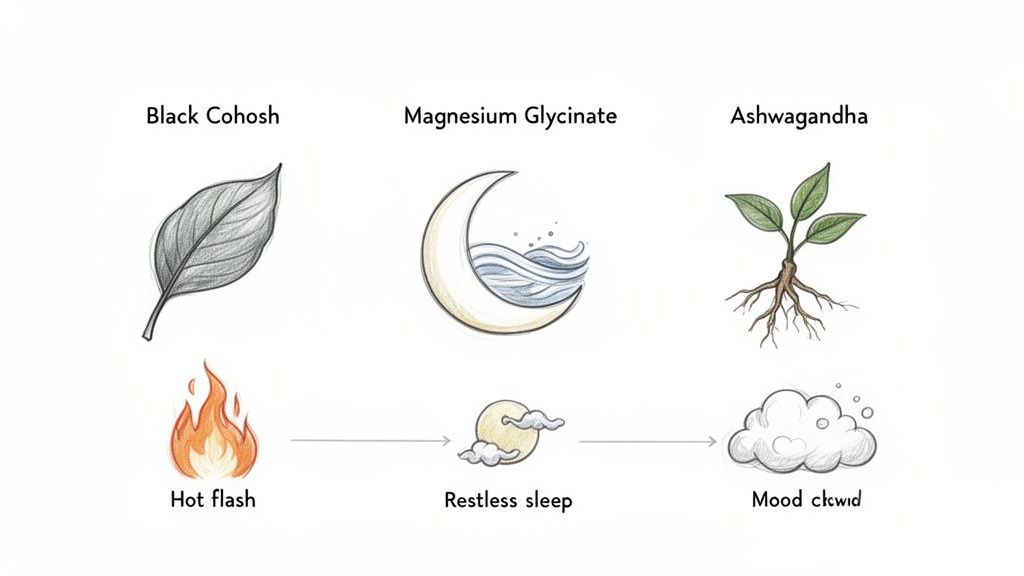
Beyond the foundational vitamins and minerals, many of us in our 40s are looking for something more specific—relief. When hot flashes, restless nights, and sudden mood swings show up uninvited, it can feel like you’re a passenger in your own body.
This is where targeted, non-hormonal supplements can come into play. Think of them as specialists you bring in to help manage some of the most common and disruptive symptoms of perimenopause. Let’s walk through a few evidence-backed options that you can discuss with your doctor.
Soothing Hot Flashes with Black Cohosh
Those sudden, intense waves of heat—hot flashes—are probably the most infamous symptom of perimenopause. They happen when hormonal shifts mess with your body's internal thermostat. For women seeking a non-hormonal approach, Black Cohosh is one of the most well-studied herbs out there.
While researchers are still mapping out exactly how it works, the leading theory is that it influences serotonin pathways in the brain, which help regulate body temperature. For many women, this can mean fewer hot flashes and less intense ones when they do occur.
If you're considering it, here’s what to know:
Who It Might Help: Women dealing with mild to moderate hot flashes and night sweats who prefer to start with a non-hormonal option.
Typical Dosage: Dosing varies by brand, but clinical studies often use extracts standardized to provide 1 mg of triterpene glycosides, with a total daily intake around 40-80 mg.
Important Note: This isn't an overnight solution. Give it at least 4-8 weeks of consistent use to gauge its effects. Because of a small but documented risk of liver stress, it's absolutely crucial to use it under a doctor’s supervision, particularly if you have any history of liver issues.
Calming Restless Nights with Magnesium Glycinate
Does a solid night of sleep feel like a thing of the past? Between racing thoughts, anxiety, and night sweats, it's no wonder so many of us are exhausted. This is where Magnesium Glycinate shines as a true ally for rest.
Imagine your nervous system is a tightly wound guitar string, vibrating with the day's stress. Magnesium helps to loosen that tension, signaling to your body that it's safe to relax. The "glycinate" form is a dream team, pairing magnesium with the amino acid glycine, which also has a calming effect on the brain.
This gentle combination is well-absorbed and much less likely to cause the digestive upset some other forms of magnesium are known for. It supports GABA, a neurotransmitter that essentially tells your brain to switch off and get some rest.
We dive much deeper into how this powerful mineral can support you during this transition in our dedicated article on magnesium for menopause relief.
Balancing Mood with Ashwagandha
If you're feeling more on-edge, irritable, or just plain overwhelmed lately, you're not imagining it. The hormonal fluctuations of perimenopause place significant demands on your body, often cranking up production of the stress hormone, cortisol. Ashwagandha can help.
As an adaptogenic herb, Ashwagandha doesn’t just stimulate or sedate you. Instead, it helps your body become more resilient by modulating your stress response system. It helps smooth out the dramatic cortisol spikes and drops that can leave you feeling frazzled one minute and depleted the next.
Here’s how it might fit into your routine:
Who It Might Help: Women who are feeling the mental and emotional strain of perimenopause through increased anxiety, stress, and moodiness.
Typical Dosage: Look for a quality, standardized root extract. Most studies use doses in the 300-600 mg range per day, which you can take all at once or split between morning and evening.
Realistic Expectations: Like other herbs, Ashwagandha builds its effects over time. You'll want to use it consistently for several weeks before assessing how you feel.
By thoughtfully incorporating targeted supplements for women over 40, you can start to regain a sense of control over perimenopause symptoms. Just remember the golden rule: start one new thing at a time, track your symptoms, and work with your healthcare provider to find what works best for you.
Taking Care of Your Heart and Aging Well
Let’s talk about heart health, because after 40, the game changes a bit. For years, estrogen has been like a silent bodyguard for our cardiovascular system, but as its levels start to fluctuate and decline, that natural protection lessens. This shift can cause things like cholesterol, blood pressure, and inflammation to creep up, putting heart health front and center on our priority list.
Taking a proactive stance on your cardiovascular health is one of the most empowering things you can do as you age. While lifestyle is always king, certain supplements can offer targeted support, helping to keep inflammation in check and properly fuel the hardest-working muscle you have—your heart.
Omega-3s for Taming Inflammation and Triglycerides
Think of omega-3 fatty acids—specifically EPA (eicosapentaenoic acid) and DHA (docosahexaenoic acid)—as your body's internal fire department. They are essential fats that excel at cooling the low-grade inflammation that can silently contribute to chronic diseases over time.
This becomes incredibly relevant after 40. As estrogen dips, it’s common to see triglyceride levels (a type of fat in your blood) start to rise. Omega-3s are remarkably effective at helping to keep those numbers in a healthy, happy range.
It helps to know what each one does best:
EPA is the true anti-inflammatory powerhouse and is particularly great for managing those pesky triglycerides.
DHA is a critical building block for your brain and eyes, but it also supports heart health by promoting a steady heart rhythm and healthy blood pressure.
When it comes to picking an omega-3 supplement, quality is everything. You absolutely want a high-quality fish oil that has been third-party tested and purified to remove heavy metals like mercury. For general heart maintenance, a combined dose of at least 1,000 mg of EPA and DHA daily is a great starting point, but always check with your doctor, who might suggest a different dose based on your personal health needs.
CoQ10 for Cellular Energy and Heart Protection
If omega-3s are the fire department, then Coenzyme Q10 (CoQ10) is the premium fuel that powers your cellular engines. It’s a compound your body makes naturally and is found in high concentrations in organs that burn a ton of energy—especially the heart. CoQ10 is absolutely essential for creating ATP, which is the basic energy currency for every single cell.
The catch? Our natural production of CoQ10 starts to drop off in our 30s and continues to decline with age. On top of that, some common medications, like statins for cholesterol, can deplete CoQ10 levels even further. This makes supplementation a really important consideration for many of us.
CoQ10 also moonlights as a powerful antioxidant. It acts as a personal bodyguard for your cells, shielding them from the oxidative stress and free radical damage that can wear down your cardiovascular system and speed up aging.
Imagine your heart is a battery that has to stay on, working hard, 24/7. CoQ10 is the key ingredient that helps keep that battery fully charged, ensuring your heart has the raw energy it needs to pump strong for decades.
When you're shopping for CoQ10, you’ll likely see two forms: ubiquinone and ubiquinol. Ubiquinone is the classic, well-studied form. Ubiquinol is the "active" version that your body can use more readily, which might make it a better choice as we get older and our conversion processes aren't as efficient. A typical dose is 100 to 200 mg per day, and you'll want to take it with a meal containing some fat to help your body absorb it properly.
Targeted Supplement Quick Reference Guide
To help you keep track, here is a simple guide comparing the heart-focused supplements we've just discussed. This chart breaks down their primary job, typical dosage, and a key consideration for each.
Supplement | Primary Target Symptom | Common Dosage Range | Important Note |
|---|---|---|---|
Omega-3s (EPA/DHA) | High Triglycerides & Inflammation | 1,000–2,000 mg combined daily | Choose a purified fish or algal oil. Talk to your doctor if you take blood thinners. |
Coenzyme Q10 (CoQ10) | Cellular Energy & Oxidative Stress | 100–200 mg daily | Best absorbed with a fatty meal. The ubiquinol form may be easier for the body to use. |
Bringing these kinds of targeted supplements into your routine can be a smart, proactive way to fortify your heart for the long haul. By managing inflammation and making sure your heart has the fuel it needs, you're not just taking a supplement—you're investing in a healthier, more vibrant future.
How to Build Your Personalized Supplement Plan
▶ PlayAlright, we’ve covered a lot of ground. Now for the most important part: turning all this information into a plan that actually works for you. Creating a personalized strategy is key because no two women experience their 40s and beyond in the same way. Your body, your lifestyle, and your symptoms are unique.
This isn’t about buying a dozen new bottles and hoping for the best. It's about becoming a detective in your own health journey. By starting with a few focused, intentional choices, you can see real results without getting overwhelmed.
Start by Tracking Your Patterns
Before you add anything new, just observe. For one or two weeks, keep a simple journal. You don’t need anything fancy—a notes app on your phone or a small notebook works perfectly.
Jot down your energy levels, mood, sleep quality, and any physical symptoms like hot flashes, bloating, or joint aches. This creates your personal baseline. It gives you a clear, honest picture of your day-to-day reality and helps you pinpoint what’s bothering you most. Maybe you'll notice that 3 PM energy slump is a daily event, or that a poor night's sleep almost always leads to a day of irritability.
Choose One or Two Supplements to Start
Armed with your notes, look back through this guide. Which one or two supplements most directly target the patterns you’ve identified? If fatigue is your biggest frustration, something like B12 or CoQ10 might be a logical first step. If sleep is the main issue, Magnesium Glycinate could be a great place to start.
It's so tempting to try everything at once, but that's a recipe for confusion. If you start slow with just one or two things, you can clearly see what's working. Add five new supplements, and you'll have no idea which one is making a difference—or which one might be causing a new issue.
This decision tree gives you an idea of how to think through your choices for a specific goal, like heart health.
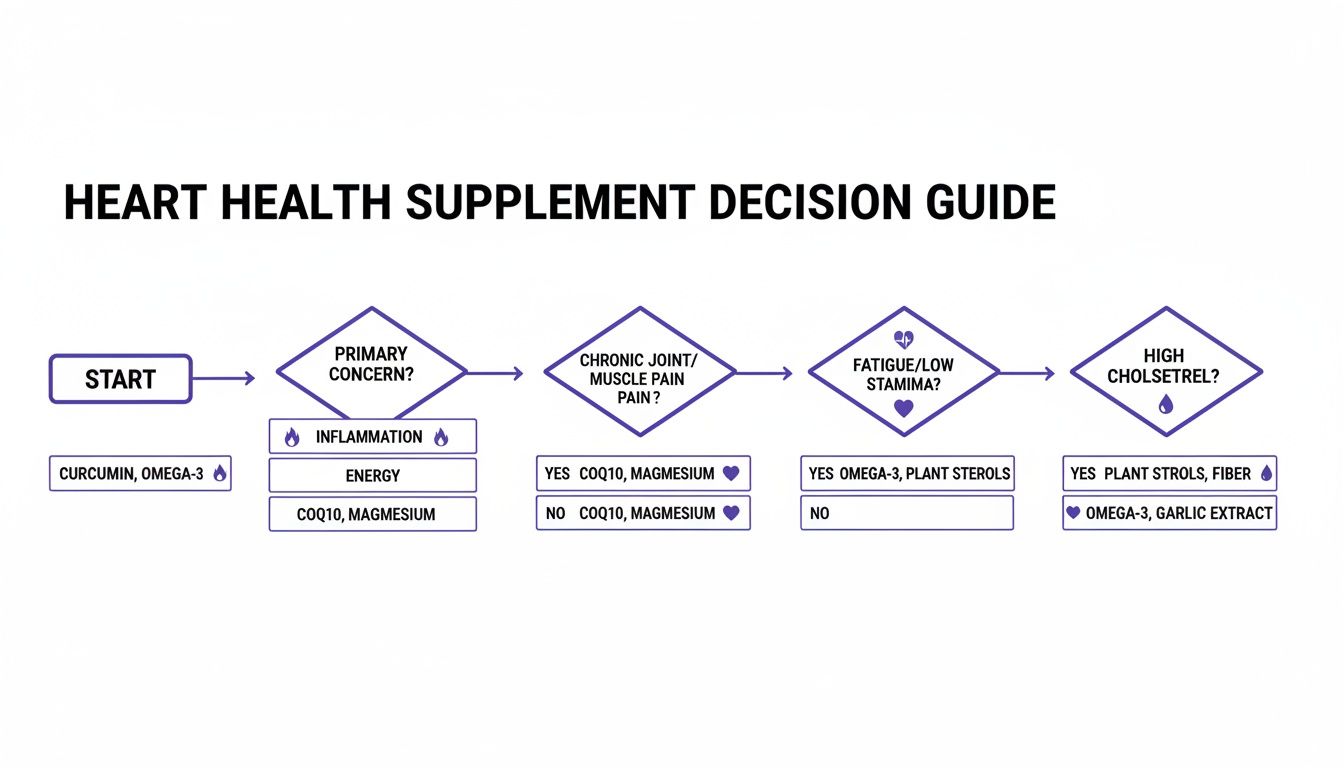
As you can see, if inflammation is your concern, you might lean toward Omega-3s. If low energy is the problem, CoQ10 is a strong candidate. This process helps you narrow down your options based on your specific needs.
Discuss Your Plan and Continue Tracking
Before starting any new supplement, have a quick chat with your doctor or a qualified healthcare provider. They can review your plan to make sure it’s safe, won't interfere with any medications you're taking, and is truly a good fit for your overall health.
Once you get the green light, be consistent and keep tracking your symptoms. After about 4-6 weeks, compare your new notes to your original baseline. Are you sleeping more soundly? Is your energy more stable throughout the day? This data is proof, and it empowers you to decide whether to continue, adjust your dosage, or try something else.
And remember, supplements are just one piece of the puzzle. They work best alongside a nutrient-rich diet. You can learn more about how food can support you in our guide on beneficial foods for menopause.
Frequently Asked Questions
It's completely normal to have questions as you start exploring supplements. Let's tackle some of the most common ones I hear from women over 40, so you can move forward with confidence.
Can I Get All These Nutrients From Food Alone?
I wish the answer were a simple "yes." A whole-food, nutrient-rich diet is, without a doubt, the most important thing you can do for your health. It’s the foundation everything else is built on.
But after 40, our bodies change. For instance, many of us produce less stomach acid, which makes it much harder to absorb crucial nutrients like vitamin B12 from our food. So even with a picture-perfect diet, you might still fall short. Think of supplements not as a replacement for good food, but as a smart way to fill in those specific, predictable gaps.
How Long Until I See Results From Supplements?
This really depends on what you’re taking and what you’re taking it for. It’s a classic "it depends" situation.
Some supplements offer pretty quick feedback. You might notice a difference in your sleep quality from magnesium glycinate within just a few nights. But for things that work on a deeper level, like supporting bone density or rebuilding collagen, you’re playing the long game. Those require months of consistent use before you'll see a measurable change.
The key is consistency and patience. Tracking your symptoms is the single best way to monitor your personal progress and see how your body is responding over time.
Should I Start Taking All These Supplements at Once?
Please don't! It’s a surefire way to get overwhelmed and have no idea what’s actually helping. A slow, methodical approach is always the way to go.
Pick your single biggest frustration right now—whether it's brain fog, hot flashes, or terrible sleep. Then, choose just one supplement that targets that specific issue and start there.
By introducing new things one at a time, you can truly see how your body reacts. And, as always, run your plan by your healthcare provider first. It's the safest way to make sure a new supplement is right for you, especially if you’re already taking other medications.
Ready to create your own personalized plan? Lila uses AI to analyze your unique symptoms and build a daily action plan just for you. Take control of your perimenopause journey by downloading the app at https://getlila.com and start feeling better today.
Get Lila, your personal coach for perimenopause.
Built for women in their 40s. 24/7 coaching, in your pocket.