
Achieve Relief: Balancing Hormones During Menopause
Navigate menopause with confidence with our 2026 guide. Get a step-by-step plan for balancing hormones during menopause: nutrition, HRT, sleep, tracking.
 Michelle
Some mornings you wake up already overheated. By midafternoon, your patience is gone, your jeans feel tighter for no clear reason, and the thought that keeps circling is, “Why does my body suddenly feel unfamiliar?”
That experience is common, and it’s also personal. One woman gets slammed with night sweats and broken sleep. Another notices anxiety, irritability, and a shorter fuse. Someone else feels mostly flat, foggy, and disconnected from the version of herself she used to trust.
Balancing hormones during menopause rarely happens because you found one magic supplement or copied someone else’s routine. It usually happens when you build a system. You learn your patterns, identify your triggers, track what changes your symptoms, and adjust with enough consistency to see what your body is telling you.
Your Guide to Navigating the Menopause Transition
You may be in the stage where your period is still showing up, but not on schedule. Or maybe it’s gone, yet your sleep, mood, and energy still feel unpredictable. That confusion can make you second-guess yourself.
It helps to know this isn’t rare. Approximately 1.5 million women annually enter the menopause transition, with 6,000 women officially reaching menopause each day in the United States alone. About four in five midlife women, roughly 80%, experience problematic symptoms such as hot flashes, night sweats, and sleep disturbance according to this review on menopause symptoms and prevalence.
What often gets missed is that menopause isn’t just a symptom list. It’s a phase of major hormonal recalibration. Estrogen and progesterone aren’t “low.” In perimenopause, they can swing sharply. Those shifts affect temperature regulation, sleep quality, mood stability, appetite, and how resilient you feel under stress.
You are not failing at coping. Your body is moving through a real biological transition.
Relief usually comes faster when you stop asking, “What’s the one fix?” and start asking, “What pattern am I seeing?” That mindset changes everything. Instead of chasing random advice, you start building a personal operating manual.
If you’re still unsure what stage you’re in or what testing might be useful, this guide to every test for menopause can help you sort through the options before you bring questions to your clinician.
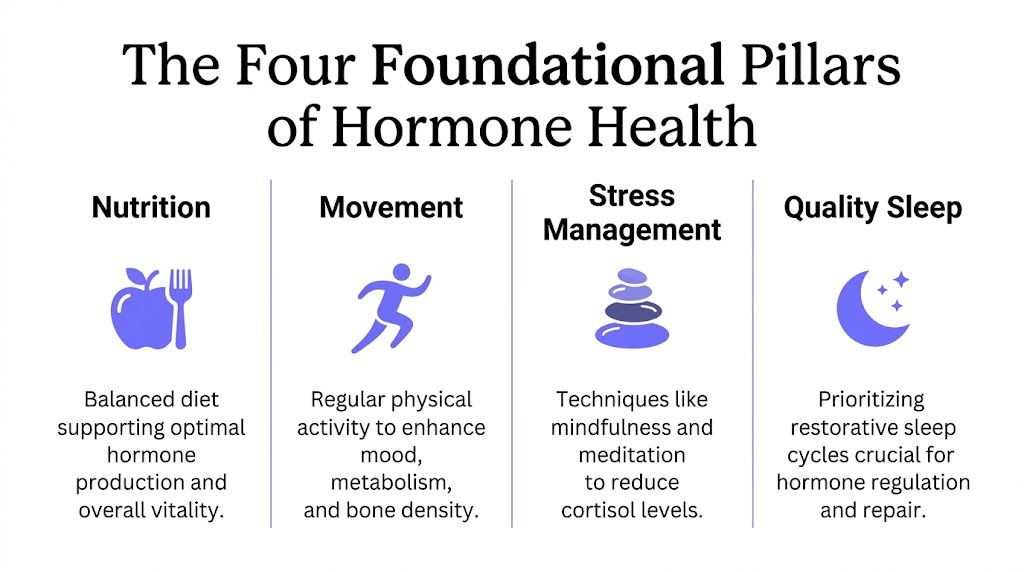
The Four Foundational Pillars of Hormone Health
The women who do best over time usually don’t start with a shelf full of products. They start with the basics that make hormones easier to regulate and symptoms easier to recover from.
Clinical guidance in this area consistently points in the same direction. Diet and lifestyle come first because supplements alone often produce poor results. A common foundation includes 150 minutes of weekly moderate aerobic exercise plus strength training, and aiming for 7 to 9 hours of sleep. Exercise can improve insulin sensitivity by 20% to 30%, while sleep disruption can increase cortisol by up to 50% and impair progesterone as outlined in this menopause hormone-balance protocol.com/how-to-balance-hormones-in-menopause/).
Nutrition that supports steadier hormones
Food won’t erase menopause, but it can reduce the volatility.
A helpful starting point is an anti-inflammatory plate. That means building meals around leafy greens, beans, fruit, nuts, seeds, olive oil, and fish if you eat it. These foods support blood sugar steadiness and make energy dips less dramatic.
A few practical rules matter more than perfection:
Build meals, not snack patterns. A real breakfast and lunch often reduce late-day cravings and evening overeating.
Cut back on ultra-processed sugar hits. They tend to intensify energy crashes, irritability, and appetite swings.
Include fiber daily. Hormone metabolism and digestion are closely linked, so constipation and bloating often improve when fiber and hydration improve.
Notice trigger foods instead of banning everything. Alcohol, large desserts, or spicy dinners can worsen symptoms for some women, but not for all.
If you’re sorting through nutrient support and want a general overview, this guide to vitamins that balance female hormones is a useful companion to discuss with your clinician or pharmacist.
Movement that helps more than the scale
Exercise during menopause isn’t just about weight. It’s one of the strongest levers you have for mood, insulin sensitivity, sleep pressure, and metabolic resilience.
A simple weekly template works well:
Focus | What to do |
|---|---|
Cardio base | Brisk walking, cycling, swimming, or other moderate movement across the week |
Strength work | Full-body resistance training a few times weekly |
Mobility | Short stretching or yoga sessions to reduce stiffness and improve recovery |
Daily movement | Walk after meals, stand more, take stairs, break up long sitting blocks |
Strength training deserves special attention. Women often underdose it. If your body composition is changing, muscle-supportive exercise can help you feel more stable, capable, and physically grounded.
Sleep that protects your hormones
Poor sleep makes every symptom feel louder.
If hot flashes wake you up, don’t judge your whole routine by that alone. Instead, control what you can:
Keep a repeatable sleep window. Going to bed and waking at roughly the same time helps.
Lower stimulation late at night. Heavy meals, alcohol, doom-scrolling, and late work often backfire.
Cool the room. Menopause sleep often improves when the environment is cooler and bedding is breathable.
Create a short wind-down ritual. A shower, light stretching, breathwork, or reading sends a stronger cue than “just try to sleep.”
Practical rule: Protect sleep before you add another supplement. A tired nervous system reacts harder to every hormone shift.
Stress management that lowers symptom intensity
Stress doesn’t cause menopause, but it can magnify it.
Many women notice that hot flashes, impatience, cravings, and anxious spirals all worsen during busy stretches. That’s why stress management should be treated like a real intervention, not an optional extra.
Useful options include:
Breathing practices: Short, slow breathing sessions can help you downshift quickly.
Mindfulness or meditation: Especially helpful for racing thoughts and emotional reactivity.
Boundary work: Overcommitting is one of the most overlooked symptom triggers.
Nervous system breaks: Five minutes of silence, a walk outside, or stepping away from screens can reset more than people expect.
Balancing hormones during menopause works better when these four pillars support each other. Better meals improve workouts. Better workouts improve sleep. Better sleep improves stress tolerance. That’s the kind of compounding effect you want.
Targeted Strategies for Common Menopause Symptoms
Once the foundation is in place, it’s easier to address the symptoms that are making daily life harder right now. The trick is to match the tool to the pattern instead of throwing everything at once.
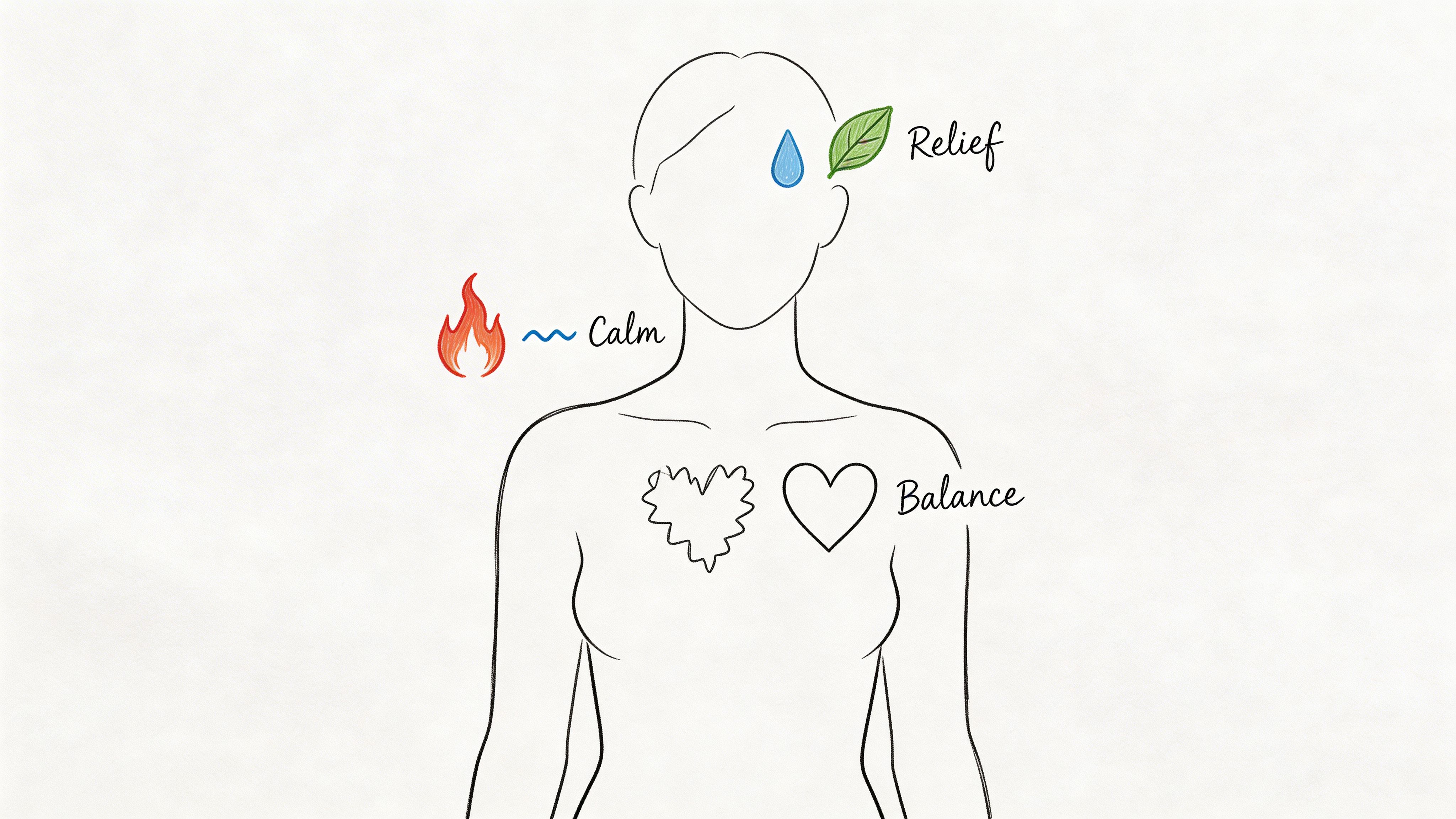
Hot flashes and night sweats
These symptoms often become more noticeable when sleep is poor, stress is high, or the room and bedding trap heat.
Start with your environment before you assume you need a bigger intervention:
Cool your bedroom. A lower room temperature and breathable sleepwear can make a real difference.
Watch evening triggers. Alcohol, spicy meals, and heavy dinners can intensify overnight symptoms.
Use a symptom log. If you keep waking at the same time after similar evenings, that pattern matters.
If you want a sleep-focused explanation of triggers and practical adjustments, this piece on understanding night sweats during menopause is worth reading.
Mood swings and emotional volatility
This one deserves more attention than it usually gets. Erratic estrogen fluctuations during perimenopause can disrupt serotonin production, and estrogen is closely tied to serotonin, a key mood regulator. More than 35% of women report significant mood issues during menopause according to the Endocrine Society’s menopause overview.
That’s why mood symptoms can feel sudden and unfamiliar. You may not think of yourself as anxious or irritable, yet now small stressors hit harder.
A practical mood-stabilizing toolkit looks like this:
Prioritize consistent sleep timing. Mood becomes much less predictable after several broken nights.
Reduce blood sugar swings. Skipping meals can mimic anxiety and worsen irritability.
Use brief calming practices before you think you need them. Morning breathwork or a midday walk often works better than waiting until you’re overwhelmed.
Track the timing. Mood changes that line up with cycle shifts, poor sleep, or certain foods are easier to manage once you can see them.
Here’s a helpful overview if you want a visual explanation of symptom relief strategies:
▶ PlayBrain fog and low mental sharpness
Brain fog often gets brushed off, but it can affect work, confidence, and relationships.
What helps most is reducing the total load on your system. Better sleep, steadier meals, hydration, and less task-switching usually beat trying to “push through.” Some women also notice that brain fog worsens after poor-quality sleep even more than after a short night.
Try this short reset plan:
Write things down immediately. Don’t rely on recall when your brain is overloaded.
Single-task for one block of time. Menopause brain fog often gets worse with constant interruptions.
Eat lunch with protein and fiber. Afternoon crashes often feel cognitive before they feel physical.
When your brain feels unreliable, simplify inputs before you assume you need more willpower.
Weight gain and body composition changes
This part can feel discouraging because old habits may stop working.
The most effective response is usually not eating less and exercising harder. It’s becoming more precise. Build meals that keep you full, strength train consistently, walk more often, and stop using your hardest symptom days to judge whether your plan is working.
Signs your current approach may be backfiring:
You’re under-eating early and overeating late
You’re doing lots of cardio but little resistance training
You’re treating every bad week as failure
You’re changing too many things to know what helped
Menopause asks for steadier systems, not harsher ones.
Navigating Supplements and Hormone Replacement Therapy
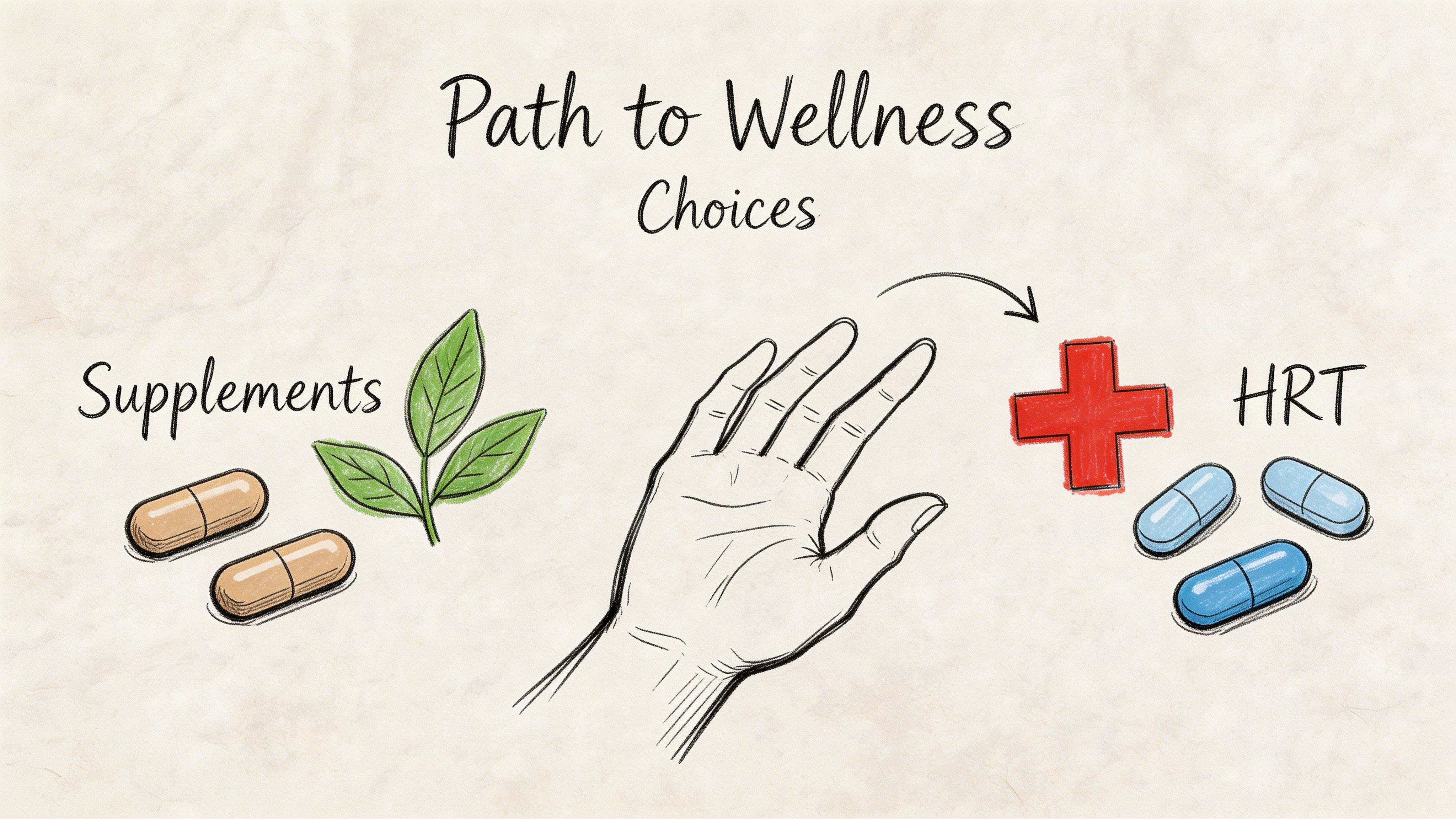
Many women feel torn. One camp says supplements can do everything. Another says hormone therapy is the only thing that works. Real life is more nuanced.
Some women improve substantially with lifestyle work plus a targeted supplement plan. Others need hormone therapy because symptoms remain intense or disruptive. Both paths require judgment, not trend-following.
What supplements can and can’t do
Supplements can help. They can also distract you if you use them to avoid fixing the basics.
Some commonly discussed options include black cohosh, red clover, and DIM. In practice, these tend to work best when they’re chosen for a clear reason, introduced one at a time, and judged by symptom changes over time instead of hope alone.
A reasonable approach looks like this:
Option | Best use case | Watch-out |
|---|---|---|
Black cohosh | Hot flashes and general menopausal symptom support | Not every woman responds |
Red clover | Women looking for plant-based phytoestrogen support | Effects can be subtle |
DIM | When estrogen metabolism support is part of the plan | Can be the wrong fit if used casually |
The main trade-off is simple. Supplements are easier to buy than habits are to build, so women often over-rely on them. If your sleep is chaotic, meals are irregular, and stress is constant, even a good supplement may underperform.
When hormone therapy enters the conversation
Hormone replacement therapy can be life-changing for the right person. It can also be the wrong choice for someone with certain medical risks, poor follow-up, or the wrong timing.
The most useful way to think about it is this: hormone therapy isn’t a shortcut. It’s a medical option that can reduce symptoms significantly when used thoughtfully and monitored well.
In clinical settings, compounded bioidentical hormone therapy provides over 50% symptom relief for 75% to 85% of patients. Studies such as KEEPS and ELITE also found an 80% to 94% reduction in hot flashes and indicate cardiovascular safety for women who start before age 60 or within 10 years of menopause, as summarized by OHSU’s overview of hormone balancing in menopause.
That timing piece matters. So does formulation. Some women use transdermal estrogen, others use oral progesterone, and regimens differ depending on whether someone is in perimenopause or postmenopause and whether she has a uterus.
If you want a clearer overview of routes, benefits, and discussion points before a medical appointment, this explainer on hormone therapy for menopause is a good starting point.
Questions worth asking before you start anything
Bring these to your clinician or menopause specialist:
What symptom am I trying to treat first
How will I know if this is working
What side effects should I watch for
How long should I trial this before deciding
What else in my health picture changes the decision
Clinical reality: The right treatment is the one that fits your symptoms, timing, history, and willingness to monitor it.
A sensible decision framework
Use this if you feel stuck between “natural” and “medical” options.
Choose lifestyle first if symptoms are present but manageable, and your routines are still inconsistent.
Consider targeted supplements if you’ve built a solid foundation and want added support for a specific issue.
Discuss HRT promptly if symptoms are intense, sleep is collapsing, or your quality of life is dropping.
There’s no prize for suffering longer than necessary. There’s also no benefit in rushing into treatment without a clear plan.
Creating Your Personalized Tracking and Monitoring System
The women who get traction usually become good observers. They stop guessing and start collecting enough information to make better decisions.
That doesn’t mean turning your life into a spreadsheet. It means tracking a few useful signals long enough to notice what repeats.
What to track first
Keep it simple. If you track too much, you’ll quit.
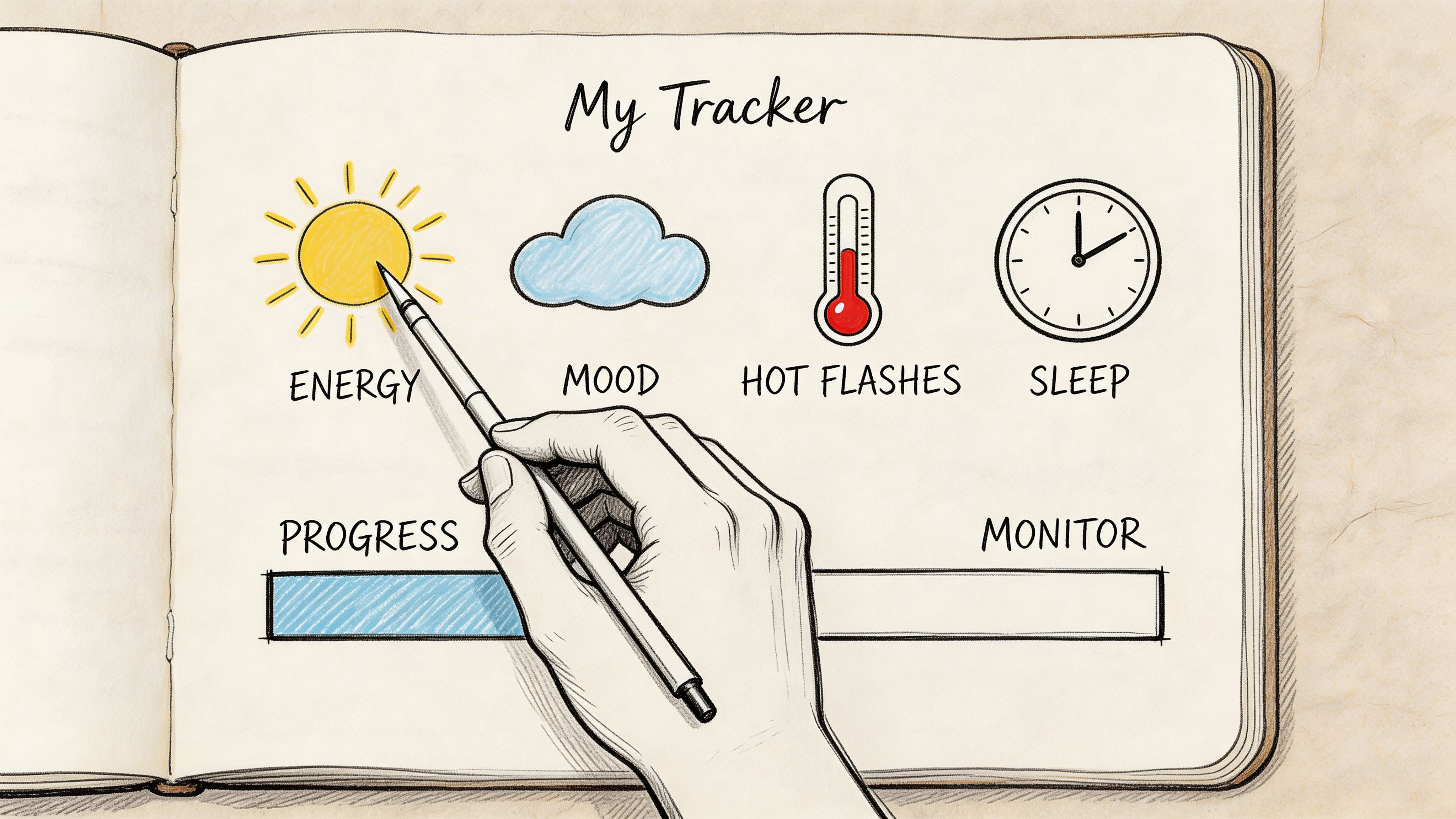
Start with five categories:
Sleep: bedtime, wake time, night waking, and how restored you feel
Mood: calm, flat, anxious, irritable, tearful, or steady
Symptoms: hot flashes, bloating, headaches, cravings, breast tenderness, joint aches
Meals: especially skipped meals, alcohol, large desserts, or obvious trigger foods
Energy: morning, afternoon, and evening patterns
Add cycle notes if you’re still menstruating. Even irregular cycles can reveal patterns.
The Track, Analyze, Adjust method
This is the part most women miss. Tracking without acting on the data just creates more noise.
Use this three-step process:
Track Log symptoms daily in brief language. “Woke at 2 a.m. sweating” is enough. “Snapped at everyone” counts too.
Analyze At the end of the week, look for clusters. Did poor sleep come before cravings? Did wine line up with a worse night? Did mood dips show up before bleeding or after high-stress days?
Adjust Make one small change at a time. If dairy seems connected to bloating, test a short removal. If evenings are chaotic, move your workout earlier. If you get wired at night, stop late caffeine.
A tracking system should answer questions like:
Question | What to look for |
|---|---|
Why am I waking up at night | Heat, alcohol, stress, late meals, inconsistent bedtime |
Why is my mood suddenly unstable | Sleep debt, cycle shifts, missed meals, overload |
Why am I craving sugar every evening | Under-eating earlier, poor sleep, high stress |
Why does my weight feel stuck | Inconsistent routines, low protein meals, low strength training, frequent plan changes |
How to keep tracking useful
Tracking becomes powerful when it stays honest and low-friction.
A few rules help:
Use plain language. Don’t over-interpret every symptom.
Record the hard days too. Those days often reveal the clearest patterns.
Review weekly, not hourly. Day-to-day fluctuations can make you panic.
Change one variable at a time. Otherwise you won’t know what worked.
For women who want everything in one place, a symptom-tracking tool or app can make this much easier. One option is the menopause symptom tracker app, which explains how centralized logging of symptoms, sleep, mood, energy, meals, and cycles can help you connect the dots faster.
The goal isn’t perfect data
The goal is self-awareness that leads to better choices.
A useful log doesn’t prove you’re disciplined. It shows you what your body does under real conditions.
Balancing hormones during menopause gets more realistic when your plan reflects your actual life. Not an ideal week. Not someone else’s routine. Yours.
Partnering With Your Clinician for Long-Term Success
Self-awareness is powerful. It’s not a replacement for medical care.
Menopause symptoms can overlap with thyroid issues, sleep disorders, depression, iron problems, medication effects, and metabolic changes. A good clinician helps you separate what’s hormonal from what needs a different workup.
This partnership matters for long-term health too. The Study of Women’s Health Across the Nation confirmed that declining estradiol is a primary factor in increased cardiometabolic disease risk during menopause. Cardiovascular disease is the leading cause of death for women in the U.S., and the menopausal transition significantly increases this risk according to this review of cardiometabolic shifts in menopause.ncbi.nlm.nih.gov/articles/PMC12431702/).
Bring data, not just frustration
Appointments go better when you arrive with a short summary instead of a vague “I feel off.”
Bring:
Your top three symptoms
How often they happen
What seems to trigger or improve them
Any treatment or supplement you’ve already tried
Questions about sleep, mood, bleeding, weight, or heart health
That shifts the conversation from venting to problem-solving.
Know the red flags
Some symptoms shouldn’t be self-managed indefinitely.
Seek medical evaluation if you have:
Heavy or unusual bleeding
Symptoms that are rapidly worsening
New chest discomfort, shortness of breath, or palpitations
Severe mood changes or thoughts of self-harm
Persistent sleep problems that are breaking your daily function
Symptoms that don’t fit the usual menopause pattern
Ask for a long-view plan
A useful menopause appointment doesn’t stop at hot flashes.
Ask how your clinician is thinking about:
Topic | Why it matters |
|---|---|
Cardiovascular risk | Menopause affects long-term metabolic and heart health |
Bone health | Estrogen changes affect skeletal protection over time |
Sleep quality | Sleep problems can worsen nearly every other symptom |
Mood support | Emotional symptoms deserve direct treatment, not dismissal |
You want a clinician who listens, but also one who helps you think beyond today’s discomfort. Symptom relief matters. So does protecting your future health.
Your Path Forward Feeling Like Yourself Again
Balancing hormones during menopause isn’t about controlling every symptom every day. It’s about building enough stability that your body feels more predictable, your choices feel more effective, and you trust yourself again.
The path usually looks like this. Start with foundations that support hormone health. Use targeted tools for the symptoms that are hitting hardest. Get clear on where supplements may help and where medical care may be the smarter move. Then track your own patterns closely enough to personalize everything.
That last part changes the whole process. Once you stop treating menopause as a mystery and start treating it as a set of signals, you make better decisions with less panic.
You don’t need a perfect routine. You need a system you can repeat, review, and adjust. That’s what makes relief more likely and more sustainable.
If you want help putting all of this into practice, Lila gives you one place to track symptoms, sleep, mood, energy, meals, and cycles while turning those check-ins into a personalized action plan. It’s a practical option if you’re tired of guessing what’s driving your hot flashes, sleep disruption, bloating, mood changes, or weight shifts and want daily guidance that helps you respond with more clarity.
Get Lila, your personal coach for perimenopause.
Built for women in their 40s. 24/7 coaching, in your pocket.


