
Your Guide to Cramps in Perimenopause
Struggling with cramps in perimenopause? Understand why they happen, what's normal, and discover effective strategies to manage the pain and find relief.
 Michelle
If you're suddenly battling cramps that feel worse or more unpredictable than ever before, you're definitely not alone. The short answer? Your hormones are on a rollercoaster, and your body is just trying to keep up. These new or intensified cramps in perimenopause are a frustrating but very common part of the journey toward menopause.
Your Guide to Perimenopause Cramps
For decades, your body has run like a finely tuned orchestra, with the hormones estrogen and progesterone conducting your monthly cycle in perfect harmony. Perimenopause is like someone suddenly shuffling the sheet music. The hormonal rhythm becomes erratic, leading to a host of confusing symptoms—especially when it comes to pelvic pain.
This guide is here to help you make sense of it all. We’ll walk through the "why" behind these new cramps, explain the hormonal shifts causing them, and give you practical, actionable steps to find relief. It's time to turn that confusion into control.
Understanding Your New Normal
For many women, the first sign that perimenopause has arrived is a change in their menstrual cycle. Periods might get longer or shorter, and bleeding can become heavier or lighter. Right alongside these changes, you’ll probably notice your cramps feel different, too. They might be more intense or show up at unexpected times in your cycle.
This is all happening because the unpredictable dips and surges of estrogen directly affect your uterine lining. When estrogen spikes, it can cause the lining to build up much thicker than usual. To shed that thicker lining, your uterus has to contract more forcefully, which is what leads to those more painful cramps.
This isn't just a feeling; it's a well-documented experience. Realizing just how many other women are going through the exact same thing can be incredibly validating.
Data confirms just how common this is. In fact, a massive study analyzing over 145,000 symptom logs from women in midlife found that cramps are a major perimenopausal complaint, making up 4.38% of all logged symptoms. You can discover more insights from the full research data to see how they stack up against other issues.
To put this into perspective, here’s how cramps compare to other well-known signs of perimenopause.
Perimenopause Symptoms at a Glance
Symptom | Prevalence Rate |
|---|---|
Anxiety | 7.97% |
Hot Flashes | 5.37% |
Cramps | 4.38% |
Breast Tenderness | 4.31% |
Headaches | 4.09% |
Sleep Disturbances | 3.55% |
As you can see, cramps are right up there with the most frequently reported symptoms, making them a significant part of the perimenopause experience for many.
The Power of Tracking Your Symptoms
While these changes can feel completely overwhelming, you have an incredibly powerful tool at your disposal: information. By tracking your symptoms, you can start connecting the dots between your cramps and other things going on in your life. This simple act transforms vague discomfort into clear, actionable data.
Gaining a sense of control starts with spotting your personal patterns. For example, you might start to notice things like:
Dietary Triggers: Do your cramps get worse after you eat a lot of sugar or processed foods?
Stress Impact: Does a stressful week at work seem to lead to more intense pelvic pain a few days later?
Cycle Connections: Are your cramps showing up mid-cycle, or are they still tied only to your period?
When you log these details, you shift from passively experiencing symptoms to actively managing your health. This is the first step toward building a personalized strategy, giving you the confidence you need to navigate perimenopause and feel more like yourself again.
Understanding the Hormonal Rollercoaster
To really get why cramps in perimenopause can feel so intense and chaotic, it helps to picture your key hormones—estrogen and progesterone—as two musicians. For decades, they played a perfectly synchronized duet, creating the predictable rhythm of your monthly cycle.
Now, as perimenopause begins, it’s like they’ve lost their sheet music. Their performance is all over the place, with sudden, loud solos and long, confusing silences. This hormonal chaos is the real reason so many of us experience disruptive new cramps.
The Estrogen and Prostaglandin Connection
One of the biggest shifts during perimenopause involves estrogen. Instead of a smooth, predictable rise and fall each month, its levels can spike dramatically and then plummet without warning. These surges have a direct effect on the uterine lining, or endometrium.
When estrogen levels are unusually high, your body gets a signal to build up an extra-thick uterine lining. And that’s where the trouble begins. When it's time for your period, your uterus has to work much harder to shed this thicker, heavier lining.
Think of it like trying to wring out a thick, waterlogged beach towel versus a thin dishcloth. It just takes a lot more force. You feel that extra muscular effort as stronger, more painful cramps.
But that's only half the story. There's another key player involved: prostaglandins.
Prostaglandins are hormone-like compounds that trigger the uterine contractions needed to start your period. You can think of them as the "volume knob" for cramps—the more prostaglandins you have, the more intense the cramping gets.
Those high estrogen levels don't just thicken the uterine lining; they also tell your body to produce more prostaglandins. This creates a perfect storm: a thicker lining that needs stronger contractions, fueled by an excess of the very compounds that cause cramping pain. It’s no wonder perimenopause cramps can feel so much worse than what you were used to.
What Are Phantom Cramps?
Another baffling symptom that can pop up is "phantom cramps." These are cramping sensations you feel even when you’re not on your period. It might be a familiar dull ache or a sharp, stabbing pain in your lower abdomen, but with no bleeding to explain it.
This happens because your uterus can contract even without a lining to shed. The erratic hormonal signals—those random spikes and dips in estrogen and progesterone between cycles—can still trigger your uterine muscles to activate. It’s like the hormonal orchestra is holding random, noisy practice sessions, causing your uterus to react even when there's no "show" scheduled.
These cramps can be caused by a few different things:
Hormonal Fluctuations: A random surge of hormones can make the uterus contract at any point in your cycle.
Ovulation Pain: As ovulation becomes less regular, you might experience more noticeable mid-cycle pain, known as "mittelschmerz," which can feel a lot like period cramps.
Progesterone Drops: A sudden nosedive in progesterone levels can make the uterus irritable, leading to cramping all on its own.
Phantom cramps can definitely feel unsettling, but they're a common and logical result of your body's new hormonal reality. If you're looking for more clarity, exploring hormone panel testing can offer valuable clues about your unique hormonal patterns. This kind of information can help you and your doctor understand the why behind your symptoms and find the right path forward.
Ultimately, tracking these cramps and understanding the science behind them can help you feel more in control and less alarmed by the changes your body is going through.
Is It Perimenopause, Or Something Else?
▶ PlayAny new or different pelvic pain can be unnerving. While cramps in perimenopause are incredibly common thanks to a whirlwind of hormonal changes, it’s just as important to understand what’s not a typical part of this transition.
This isn't about trying to diagnose yourself at home. It's about becoming a knowledgeable advocate for your own health. When you know what to look for, you can have more confident and productive conversations with your doctor, ensuring you get the right care, right when you need it.
The Feel of Perimenopause Cramps
So, what does a typical perimenopause cramp feel like? In many ways, it’s just a more intense and unpredictable version of the menstrual cramps you've likely dealt with for decades. The key difference is its link to the hormonal rollercoaster of perimenopause.
Think of it this way: your old period cramps were a fairly predictable monthly event. Perimenopause cramps, on the other hand, are like an unruly houseguest who shows up without warning, makes a lot more noise, and sticks around for an undefined amount of time. They’re still connected to your now-irregular cycle, but they can hit harder and feel much more disruptive.
This guide can help you figure out if your cramps are part of the normal perimenopause chaos or if something else might be going on.
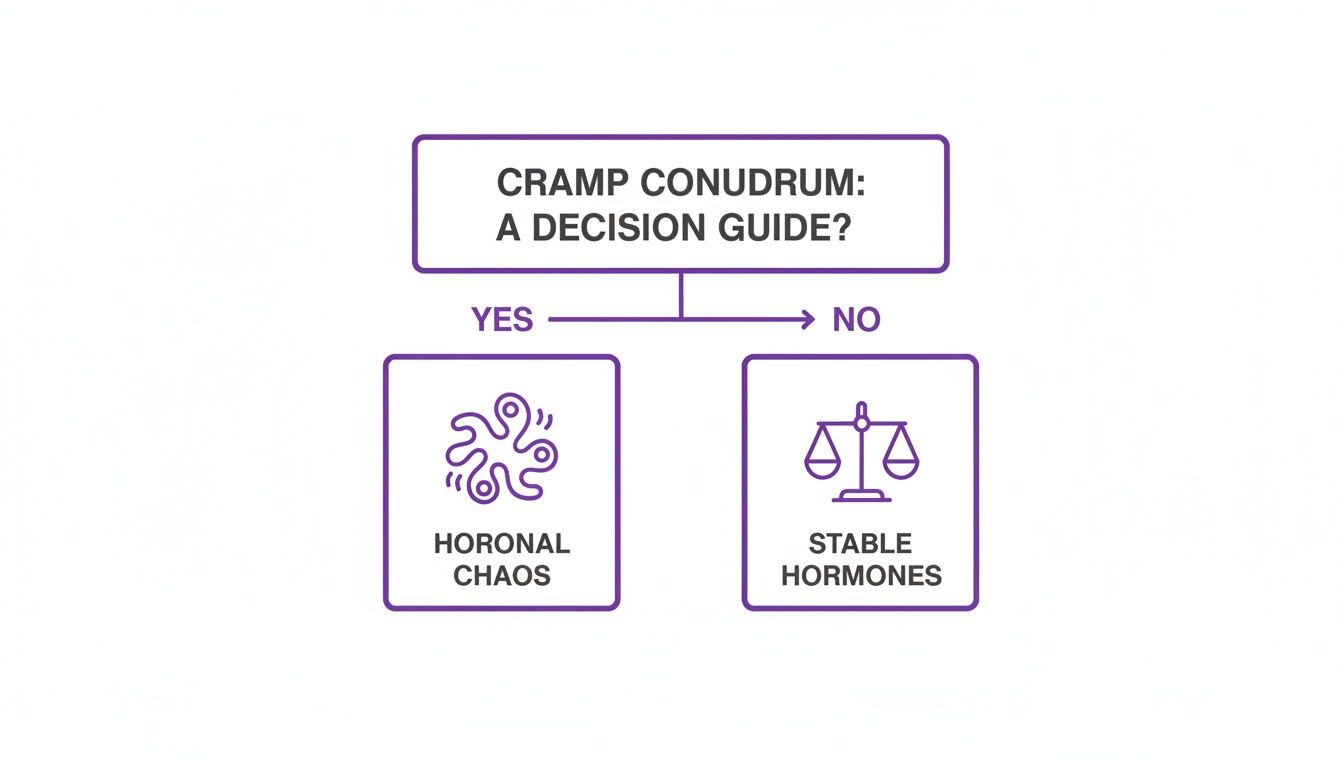
As the chart shows, worsening cramps often trace right back to those hormonal shifts. But if your cramping patterns seem to have a life of their own, it might be time to look a little closer.
When Cramps Could Be a Red Flag
While your hormones are usually the main culprit, certain symptoms should be considered red flags—signals that it’s time to investigate further with your doctor. Pay close attention to any pelvic pain that doesn't seem to fit the typical perimenopause pattern.
This kind of pain could point to other conditions that need medical attention, like uterine fibroids, endometriosis, or adenomyosis. These conditions are also influenced by hormones, but they often come with more severe or persistent symptoms.
Think of your body as sending you messages. Typical perimenopause cramps are like a standard "system update" notification. Red-flag symptoms are more like a critical "error alert" that needs an expert to check it out.
Perimenopause Cramps vs Other Pelvic Pain Conditions
It can be tough to tell what's what when you're in the middle of it. This table breaks down the differences between typical perimenopause cramps and symptoms that warrant a doctor's visit.
Symptom Feature | Typical Perimenopause Cramps | Potential Red Flags (See a Doctor) |
|---|---|---|
Pain Intensity & Pattern | Feels like more intense period cramps; often tied to your irregular cycle. Can be managed with over-the-counter pain relief. | Severe, debilitating pain that stops you from doing daily activities. Pain that is constant or occurs frequently outside of your cycle. |
Bleeding | Heavier periods are common, but manageable. Bleeding is still cyclical, even if irregular. | Extremely heavy bleeding (soaking a pad/tampon every hour). Passing blood clots larger than a quarter. |
Timing | Cramps pop up before or during your period, and sometimes randomly as "phantom cramps." | Pain during or after sex (dyspareunia). New pain that starts after you've gone 12 months without a period (postmenopause). |
Other Bleeding | Some light spotting between periods can be normal as your cycle changes. | Persistent or heavy bleeding between periods that isn’t just occasional, light spotting. |
Remember, this is a guide, not a diagnostic tool. If you’re ever in doubt, the best thing you can do is check in with your healthcare provider.
Documenting your symptoms in an app like Lila can make a world of difference. When you can show your doctor a clear record of not just the pain, but its timing, intensity, and any related bleeding, it paints a much clearer picture. This kind of detailed tracking turns a vague complaint like "I've been having bad cramps" into powerful data that helps your doctor pinpoint the cause and find the best path forward for you.
How to Manage Perimenopause Cramps: Your Action Plan
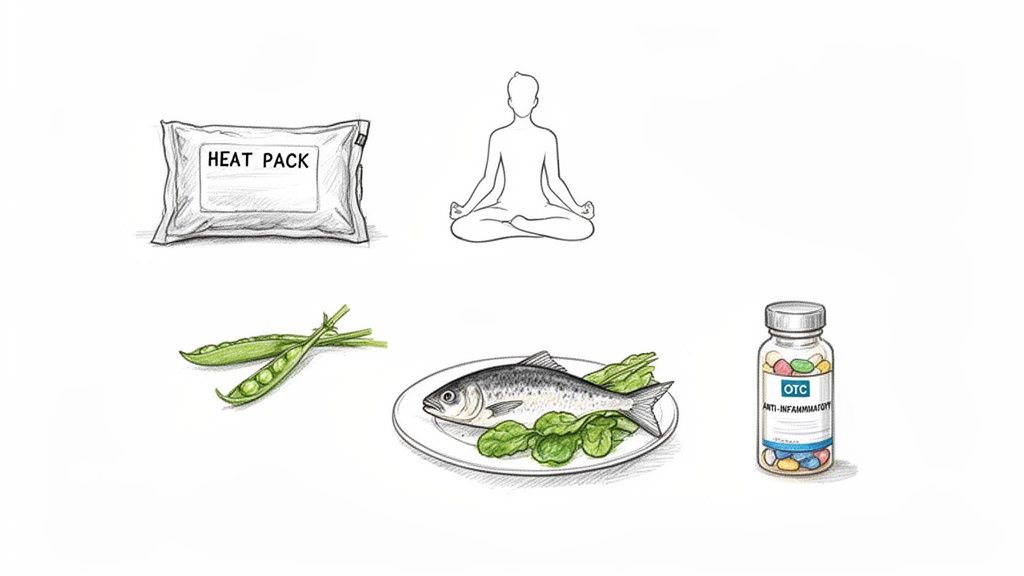
When you're dealing with the unpredictable cramps of perimenopause, it helps to have a game plan. The good news is there are plenty of effective strategies, from simple home comforts to medical treatments. It’s all about experimenting to find the right combination that brings you relief.
Let’s walk through some of the most reliable methods to ease that ache and help you feel more in control.
Start with Comfort and Lifestyle Shifts
Often, the most immediate relief comes from the simplest things. These first-line strategies are all about soothing your body, calming inflammation, and giving your muscles a chance to relax.
Bring on the Heat: A heating pad or a warm bath is a go-to for a reason. Heat helps relax the uterine muscles, which eases the intensity of the contractions. It’s like gently convincing a clenched fist to open up; the warmth encourages your muscles to let go of that tension.
Get Moving (Gently): I know, exercising might be the last thing you feel like doing. But gentle movement like yoga, stretching, or even a slow walk can work wonders. It boosts blood flow to your pelvic area and, even better, triggers the release of endorphins—your body’s own natural painkillers.
Eat to Fight Inflammation: Since prostaglandins are the main culprits behind cramps, an anti-inflammatory diet can make a real difference. Try to load up on foods rich in omega-3s, like salmon and walnuts, along with plenty of berries and leafy greens. At the same time, cutting back on sugar, processed foods, and too much caffeine can help keep inflammation in check.
Try Mind-Body Tactics and OTC Helpers
How you experience pain is closely tied to what's happening in your mind. By actively calming your nervous system, you can change your body's response to the pain signals. When you pair these techniques with the right over-the-counter (OTC) meds, you create a powerful defense against cramps.
Simple deep breathing exercises or a few minutes of meditation can do a lot to settle your central nervous system. When you're stressed, your body tenses and pain feels more intense. These practices help shift you out of that "fight or flight" mode, which can dial down how severe the cramps feel.
For more direct relief, nonsteroidal anti-inflammatory drugs (NSAIDs) are a great choice.
NSAIDs like ibuprofen work by directly blocking the production of prostaglandins. If you take them as soon as you feel cramps starting, you can head off the pain-causing compounds before they build up. This often stops the cramps from ever getting severe.
Some people also find that specialized devices help. For example, non-drug approaches like TENS for pain relief can provide a welcome distraction from the pain and bring a sense of comfort during a bad cramping episode.
When to Talk to Your Doctor About Medical Options
If you’ve tried lifestyle changes and OTC medicine and you're still struggling with your cramps in perimenopause, it’s time to bring in your healthcare provider. Several medical treatments can get to the hormonal root of the problem.
Supplements can also be a fantastic addition to your routine. Magnesium, for example, is well-known for its muscle-relaxing effects and can be a huge help for many women. If you want to dive deeper, we have a whole guide on using magnesium for menopause relief.
Medical treatments your doctor might discuss include:
Hormonal Birth Control: Low-dose birth control pills or a hormonal IUD can regulate your cycle by supplying a steady dose of hormones. This prevents the dramatic fluctuations that cause a thick uterine lining and, consequently, painful contractions.
Hormone Replacement Therapy (HRT): For many in perimenopause, HRT can be a game-changer. It works by supplementing your body’s declining estrogen and progesterone, which helps stabilize the hormonal chaos, often resulting in lighter periods and much milder cramps.
Your doctor is your best partner in figuring out the right path forward. They can help you weigh the pros and cons of each option based on your health and history. Remember, you absolutely do not have to just grit your teeth and bear it. There are solutions that can bring you lasting relief.
How Tracking Your Symptoms Puts You in Control
When you're dealing with the unpredictable nature of cramps in perimenopause, it’s so easy to feel like you're just along for the ride. But what if you could take back the steering wheel? The single most powerful tool you have is knowledge, and that starts with tracking your symptoms.
Think of yourself as a detective investigating your own body. By consistently logging how you feel each day, you start to uncover clues that were hidden in plain sight. You might notice that a particularly stressful week at work is always followed by intense cramping. Or maybe you'll find a link between certain foods and that familiar pelvic ache.
This simple act of paying attention transforms you from someone who just endures symptoms into someone who truly understands them. It’s the first real step toward connecting the dots between your daily life and your well-being, which is incredibly empowering.
Turning Data Into Action
Of course, just noticing your triggers isn't enough. The real magic happens when you use that information to make meaningful changes in your routine. This is where a good tracking tool can be a game-changer, taking the guesswork out of the equation.
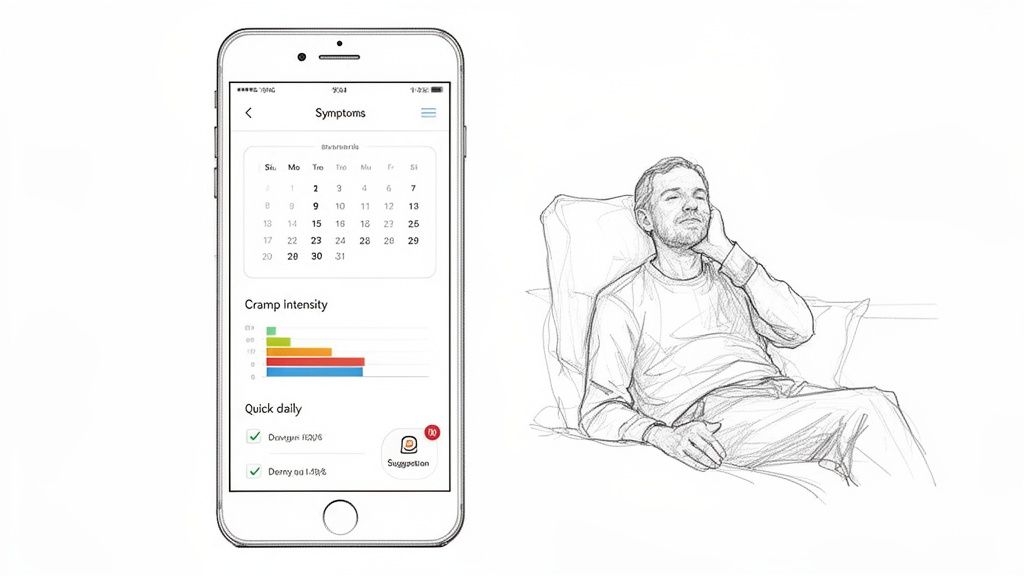
For instance, an app like Lila makes it easy to log your symptoms with quick, daily check-ins. You can track everything from cramp intensity and mood swings to your sleep quality and diet. It’s like having a detailed personal health journal, but without the hassle of pen and paper.
Imagine getting a prompt that’s tailored specifically to you. Instead of generic advice, you could get a suggestion to add more magnesium-rich foods to your shopping list after tracking severe cramps, or a reminder to do a gentle yoga flow on a day you’ve logged high stress.
This is what it means to stop throwing random remedies at the wall and hoping something sticks. You start making informed choices based on what your body is actually telling you. That level of personal insight is what leads to real, effective relief.
Seeing the Big Picture With an All-In-One App
Let's be honest—trying to juggle a period tracker, a food diary, and a separate notebook for symptoms is a recipe for frustration. When all your health data is siloed in different places, it’s nearly impossible to spot the subtle connections.
An integrated platform brings everything together, helping you see the whole story.
This kind of clear visualization can reveal patterns you’d never have noticed otherwise. You might suddenly see a direct line connecting poor sleep with the intensity of your cramps the next day, giving you a clear, tangible goal to work toward.
Ultimately, tracking gives you clarity. Many women find that using a dedicated menopause symptom tracker app helps them have more productive conversations with their doctors because they can show up with a clear record of their experiences. It puts you firmly back in the driver's seat, armed with the information you need to navigate perimenopause with confidence.
Your Questions About Perimenopause Cramps, Answered
When cramps start showing up at odd times or feel worse than ever, it’s natural to have questions. This new, unpredictable pain can be confusing and even a little scary. Let’s clear up some of the most common concerns we hear about cramps in perimenopause.
Can I Have Cramps Without a Period During Perimenopause?
Yes, and it’s one of the most confusing symptoms for many women. These are often called “phantom cramps” for good reason—they feel just like period pain, but nothing happens.
This is a direct result of the hormonal chaos of perimenopause. Your estrogen and progesterone levels are no longer rising and falling in a predictable rhythm. Instead, they can spike and crash randomly, causing your uterus to contract even when there’s no lining to shed. It’s a classic, though frustrating, sign of this transition.
How Long Will Perimenopause Cramps Last?
There’s no single answer here, because variability is the new normal. Some women describe a constant, dull ache that lingers for days before a period (finally) starts. Others get hit with short, sharp pains that pop up without any warning.
Since perimenopause can last anywhere from seven to ten years, the pattern you have this year might be completely different from the one you have next year.
The best thing you can do is let go of the idea of a predictable cycle. Understanding that this unpredictability is part of the process can help ease the anxiety that often comes with these strange new pains.
Once you accept this, you can shift your focus from being alarmed by every new ache to simply managing it as part of your body's journey.
Do Perimenopause Cramps Feel Different From My Old PMS Cramps?
For most women, the answer is a resounding yes. While it’s still that familiar uterine ache at its core, perimenopause cramps often come with a new level of intensity.
Here’s how they often differ:
They can be more severe. Many women report the pain is sharper and more intense than the PMS cramps they were used to.
The pain might spread. Instead of being centered in your lower abdomen, the cramping might radiate into your lower back or even down your thighs.
They're completely unpredictable. PMS cramps usually gave you a heads-up that your period was a day or two away. Perimenopause cramps can show up anytime, catching you completely off guard.
This all comes back to those more extreme hormonal swings we talked about, which can trigger much stronger uterine contractions.
When Should I See a Doctor for My Cramps?
This is the most important question of all. While many of these cramps are just a normal part of the transition, you should never ignore pain that feels wrong. It’s always best to get checked out.
Definitely book an appointment with your healthcare provider if you experience any of these red flags:
Severe, debilitating pain that stops you from going about your day.
Extremely heavy bleeding, like soaking through a pad or tampon every hour for a few hours, or passing blood clots bigger than a quarter.
New or worsening pain during or after sex.
Any new pelvic pain that starts after you’ve reached menopause (meaning you've gone 12 full months without a period), or cramps that come with a fever.
Your doctor can rule out other conditions that can cause similar pain, like fibroids or endometriosis, and make sure you get the right care.
Trying to make sense of these changes on your own can feel isolating. The Lila app is designed to help you connect the dots between your daily life and your symptoms, offering personalized insights from your own data. Discover how Lila can help you feel like yourself again.
Get Lila, your personal coach for perimenopause.
Built for women in their 40s. 24/7 coaching, in your pocket.


