
Decreased Estrogen Levels Symptoms: What to Expect and When
Decreased estrogen levels symptoms explained: hot flashes, sleep changes, mood, vaginal symptoms, timelines and when to see a clinician.
Can estrogen-related symptoms start while your periods still seem normal, or while a hormone blood test looks reassuring? Yes, and that's what a simple list of low-estrogen symptoms often misses. During perimenopause, unpredictable hormone swings can matter as much as the eventual decline.
If you're searching for decreased estrogen levels symptoms, look for connected changes rather than a single telltale sign. Temperature changes, disrupted sleep, mood shifts, and vaginal or urinary discomfort deserve attention, but they don't automatically establish a hormonal cause.
Table of Contents
- Decreased Estrogen Symptoms at a Glance
- How Symptoms Unfold Through the Transition
- Why Estrogen Swings Drive the Symptoms
- Sleep, Mood and Bone Changes Over Time
- Vaginal and Urinary Changes Most Women Skip
- Rating Symptom Severity and Tracking Patterns
- Basic Management and Support Options
- Decide When to Get Medical Help
Decreased Estrogen Symptoms at a Glance
Reported frequency of decreased estrogen symptoms
| Symptom | Reported frequency | Typical pattern |
|---|---|---|
| Hot flashes or night sweats | About 36%–87% | Can start before obvious menstrual irregularity |
| Sleep problems | 40%–60% | Trouble falling asleep, repeated waking, or early waking |
| Mood symptoms | 15%–78% | Irritability, anxiety, or low mood during hormone swings |
| Weight gain | 60%–70% | Often noticed alongside other midlife changes |
| Genitourinary symptoms | Roughly 50%–75% | Often persistent and may worsen without treatment |
The review of menopause symptoms reports the table's ranges of 36%–87% for hot flashes or night sweats, 40%–60% for sleep problems, 15%–78% for mood symptoms, and 60%–70% for weight gain, and notes that as many as 55% of women experience hot flashes during the early transition. The StatPearls menopause overview reports that genitourinary syndrome of menopause affects roughly 50%–75% of women.
These are ranges across different studies, not predictions of what will happen to you. Researchers studied different populations, used different symptom definitions, and assessed women at different stages. The figures also describe symptoms reported during menopause, not symptoms proven to result solely from estrogen.
What these changes can feel like
A night sweat might mean waking with damp hair and bedding rather than feeling warm. Mood changes might show up as a shorter temper with family, unexpected anxiety before an ordinary meeting, or a dip in confidence at work.
Weight-related changes may first become noticeable when clothes fit differently around the waist. Vaginal changes might mean friction during sex, soreness afterward, or dryness that makes everyday movement uncomfortable.
Practical rule: A symptom's effect on your life matters more than whether it appears near the top of a frequency table.
You don't need every symptom for a conversation with a clinician to be worthwhile. Nor does having several symptoms confirm perimenopause. Start a short daily record if you recognize a cluster, especially when changes in sleep, mood, temperature, and menstrual patterns arrive together.
Don't postpone care to finish tracking if you have concerning bleeding, severe depression, or another warning sign.
How Symptoms Unfold Through the Transition
Say your periods were once predictable, then began arriving earlier or later. Only afterward did you notice nighttime warmth and interrupted sleep. That sequence can fit the menopausal transition, although another woman may notice temperature symptoms before any obvious cycle change.
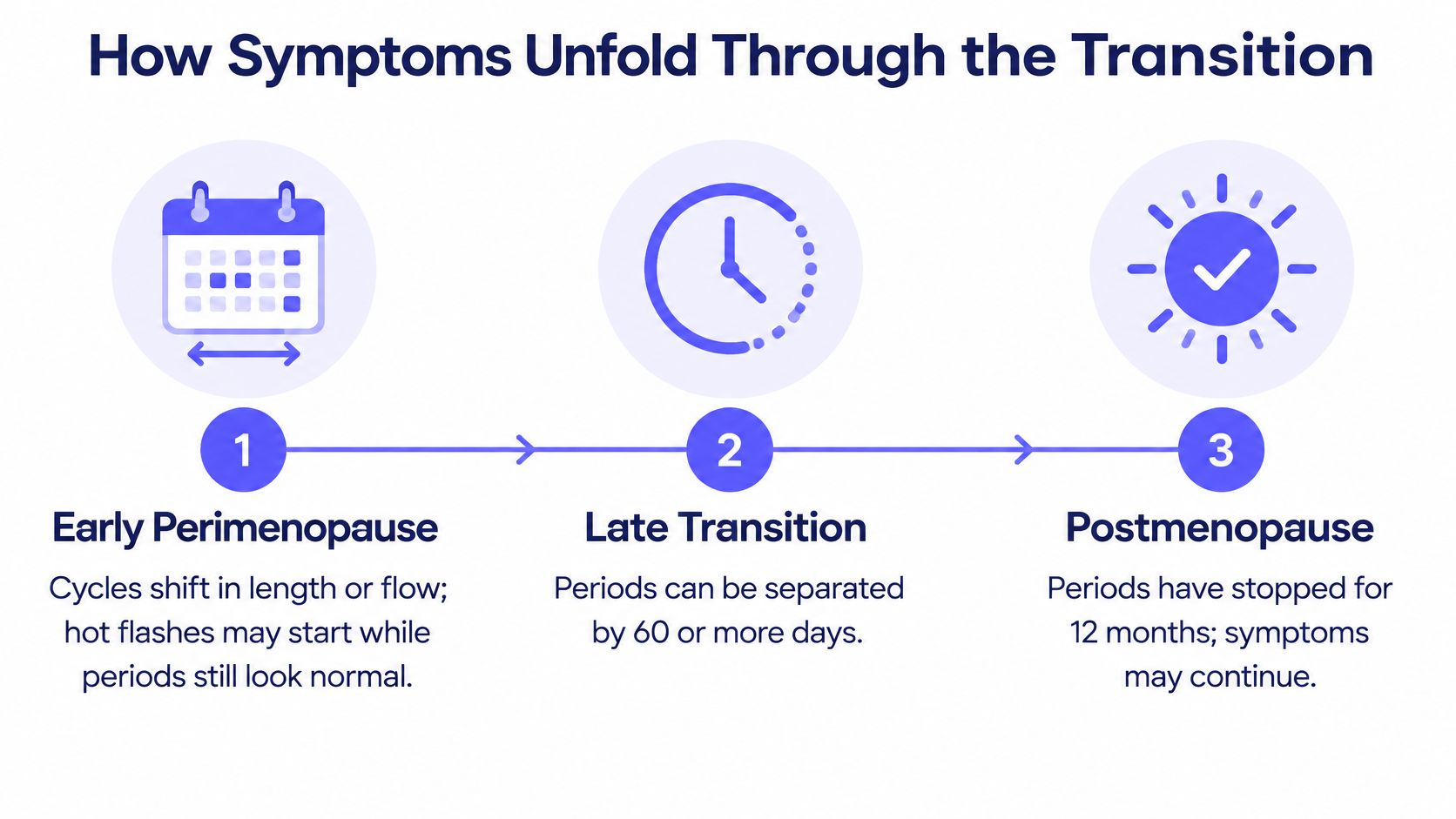
The timeline helps distinguish stages without suggesting that everyone follows an identical schedule.
Early changes and longer gaps
In early perimenopause, changes can be subtle. Your cycle may shorten, bleeding may become less predictable, or symptoms may come and go while periods still look familiar. A difficult stretch followed by a symptom-free stretch doesn't necessarily mean you imagined the earlier problem.
During the late transition, skipped periods and longer gaps become more noticeable. Temperature symptoms may become more troublesome, but their severity doesn't reliably tell you exactly where you are on the timeline.
After menopause, you enter postmenopause. The end of periods doesn't guarantee the immediate end of symptoms, and different symptoms can follow different courses. Vaginal and urinary discomfort, for example, shouldn't be dismissed because hot flashes have eased.
This video offers another way to understand the transition.
▶ PlayReconstruct your own sequence
Use a calendar or the menstrual history already saved on your phone. Mark when cycles changed, when nighttime symptoms appeared, and whether changes in mood or concentration came before or afterward.
- Cycle dates: Record the start of bleeding and whether flow changed.
- Symptom onset: Note when a new problem became noticeable, even if you can't remember an exact date.
- Important context: Include medication changes, illness, major stress, and changes in contraception.
The order helps a clinician judge whether your experience fits the transition. If hormonal contraception, surgery, or another condition makes menstrual patterns difficult to interpret, say so rather than trying to assign yourself a stage.
Why Estrogen Swings Drive the Symptoms
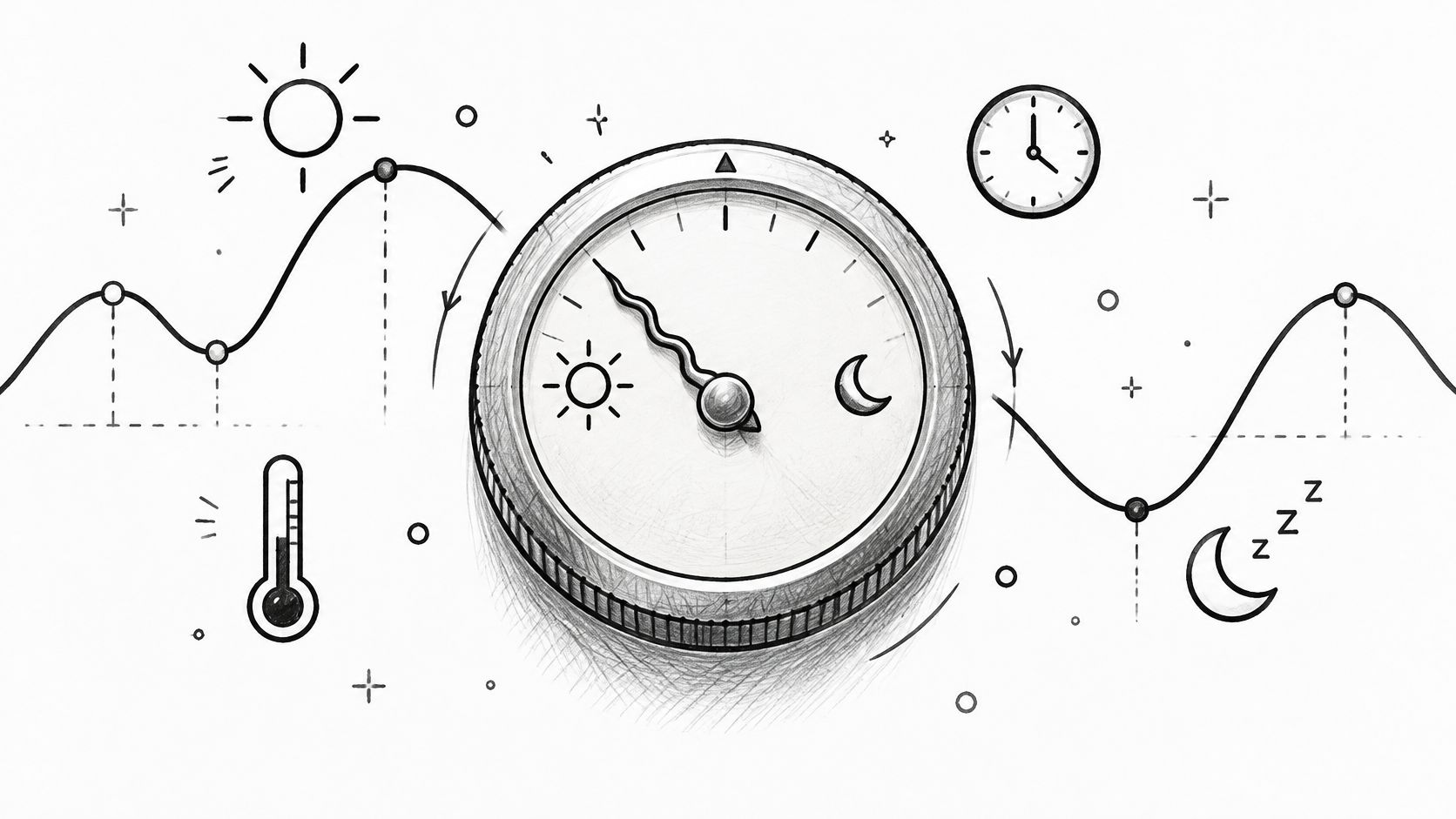
Think of a thermostat that has become unreliable. The room isn't getting steadily colder. Instead, the temperature swings, leaving you uncomfortable even though an occasional reading looks normal.
Estrogen doesn't fall in a straight line during perimenopause. Ovarian hormone production becomes less predictable, while progesterone and testosterone can change too. A clinical review of perimenopause explains why substantial hormone fluctuations can coexist with normal or high hormone measurements and why diagnosis usually depends on symptoms, age, and menstrual history rather than an isolated result.
The illustration below highlights temperature regulation and the day-night pattern that can make symptoms especially noticeable in bed.
Why a normal blood test doesn't settle the question
Hormone fluctuations affect the brain's temperature regulation, contributing to hot flashes and night sweats. The effects can extend into sleep, energy, emotional well-being, concentration, and sexual desire. That doesn't mean estrogen explains every symptom, only that the changes can be interconnected.
Can you have estrogen-related symptoms with normal laboratory results? Yes. An estrogen or follicle-stimulating hormone measurement captures a moment, not the full pattern across changing cycles.
Returning to the thermostat analogy, a comfortable reading at lunchtime doesn't explain why the room became unbearably hot overnight. Similarly, a normal result doesn't erase a consistent symptom history. Understanding normal estradiol levels can help you discuss what a result does and doesn't establish.
A normal hormone result isn't proof that your symptoms are insignificant.
Testing can still be useful when a clinician suspects another cause or needs to clarify an unusual presentation. The distinction is between targeted testing that answers a clinical question and repeatedly checking hormones in the hope that a single value explains everything.
Bring a record that connects symptoms with bleeding patterns and daily functioning. Unusually heavy bleeding, bleeding after sex, or severe mood changes need assessment rather than reassurance that hormones are fluctuating.
Sleep, Mood and Bone Changes Over Time
A disrupted night can affect much more than your morning energy. Say you wake sweating, change your sleepwear, and struggle to settle again. The following day, you may lose your train of thought, feel overwhelmed by ordinary decisions, or react sharply to someone you love.
Sleep and mood also influence each other. Anxiety can make it harder to fall asleep, while repeated poor nights can make anxiety and irritability harder to manage. Stress, depression, medication effects, and other sleep problems may overlap with menopausal symptoms.
Take emotional changes seriously
Write down what's changed in practical terms: avoiding social plans, struggling to finish work, or losing interest in activities you usually enjoy. That gives a clinician more useful information than describing yourself as merely emotional.
For readers seeking mental-health support, Refresh Psychiatry & Therapy's resource on Hormone-related depression care in Florida offers context for discussing perimenopause and depression. Persistent low mood deserves its own assessment, even when it begins alongside menstrual changes.
Protect bones even if symptoms are mild
Estrogen normally helps restrain bone breakdown. The North American Menopause Society hormone therapy position statement describes accelerated bone loss during approximately the first 4–8 years after menopause, and states that hormone therapy prevents bone loss and reduces fracture risk in appropriately selected women.
Bone protection requires more than judging how uncomfortable menopause feels. Someone with few hot flashes can still have important fracture risks.
- Build strength progressively. Use resistance exercises suited to your ability, adding challenge gradually rather than starting with heavy loads.
- Include weight-bearing movement. Walking, stair climbing, or other suitable activities load the skeleton through movement.
- Review food intake. Aim for adequate calcium, vitamin D, and protein, discussing supplements when diet or medical circumstances leave gaps.
- Address avoidable risks. Stop smoking, moderate alcohol, and reduce fall hazards such as loose rugs or poor lighting.
The guide to strengthening bones naturally can help translate these priorities into daily habits. Ask your clinician whether your history warrants bone-density testing or a formal fracture-risk assessment.
Previous fractures, medications, menopause timing, and medical conditions matter. Hormone therapy decisions require an individualized review of benefits, contraindications, and alternatives, not a decision based only on symptom intensity.
Vaginal and Urinary Changes Most Women Skip
Vaginal and urinary symptoms aren't minor extras. Pain during sex, burning when you urinate, or urgency that interrupts an outing deserves the same attention as disrupted sleep.
Reduced estrogen can affect the vulva, vagina, urethra, and bladder. The clinical guidance on genitourinary syndrome of menopause describes dryness, burning, painful intercourse, urinary urgency, and recurrent urinary infections, and explains that these symptoms can persist or worsen without treatment.
Name the discomfort clearly
Dryness doesn't always feel like dryness. You might notice stinging, friction, tenderness after sex, or irritation from clothing. Sexual desire may also change when you begin anticipating pain.
A clinician will usually ask about symptoms and may recommend a pelvic examination. Blood estrogen levels aren't the main way these tissue changes are assessed. The explanation of genitourinary syndrome of menopause and well-being provides further context for that conversation.
Other possible causes need consideration:
- Infection: Urinary or vaginal infections can cause overlapping symptoms.
- Skin conditions: Vulvar inflammation or dermatologic disease may cause burning and soreness.
- Pelvic-floor dysfunction: Muscle problems can contribute to pain and urinary difficulties.
- Sexually transmitted infections: Testing may be appropriate depending on symptoms and history.
Local treatment is a separate conversation
Low-dose vaginal estrogen is a first-line treatment option for genitourinary symptoms. Because local treatment differs from systemic hormone therapy, being unable to use systemic treatment doesn't automatically rule out every local option. Your clinician should review your medical history and any contraindications before recommending it.
Don't assume repeated urinary discomfort is always an infection, but don't assume it's always menopause either. Record when episodes occur, whether urine testing confirmed an infection, and which treatments helped.
You don't have to endure painful sex to prove that the problem is serious. Ask for assessment before discomfort becomes something you organize your life around.
Rating Symptom Severity and Tracking Patterns
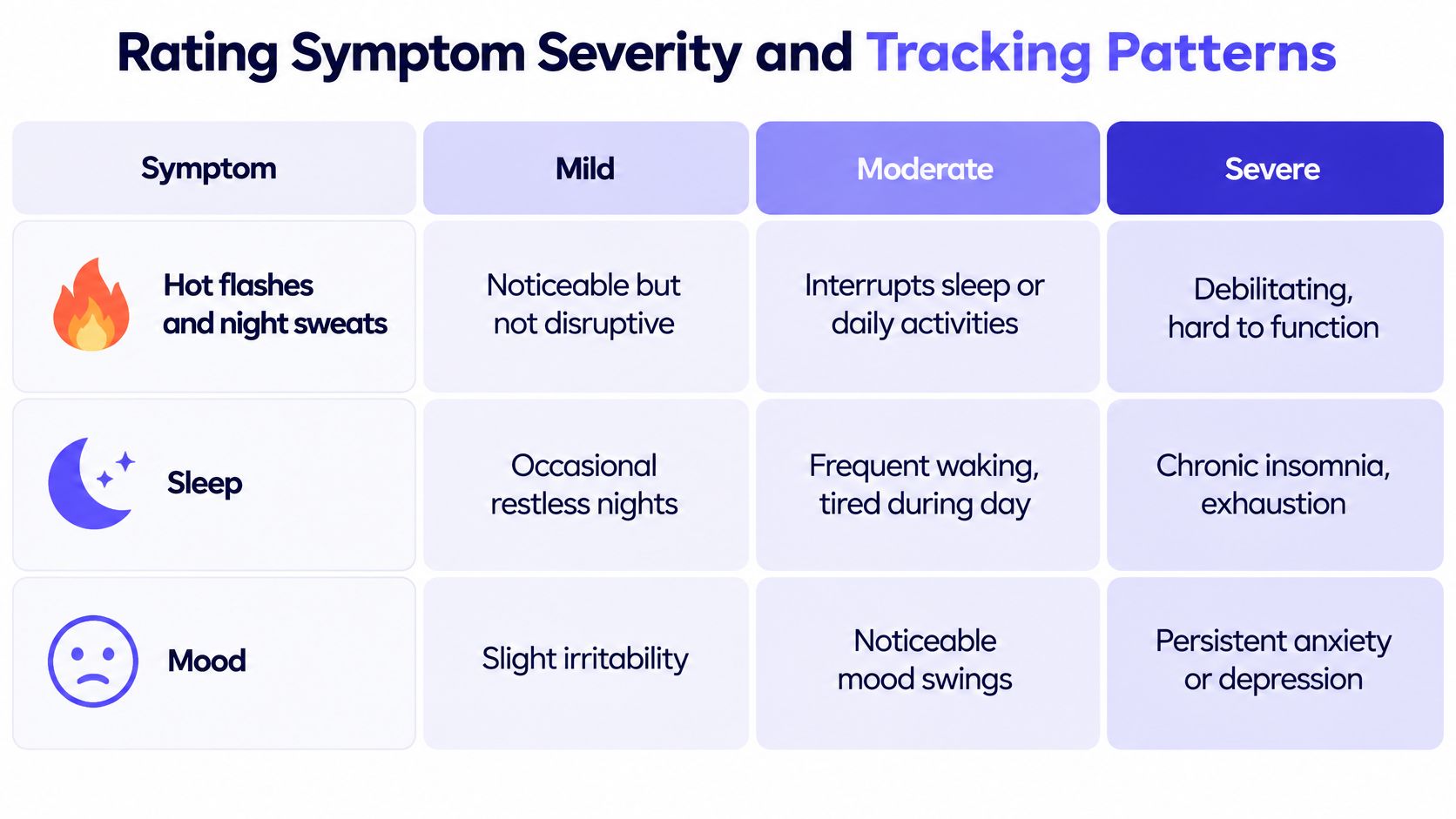
Rate disruption, not just frequency. A brief hot flash during a quiet afternoon may be manageable, while a similar episode during a presentation or repeated overnight episodes may have a substantial effect.
Severity levels for decreased estrogen symptoms
| Symptom | Mild | Moderate | Severe |
|---|---|---|---|
| Hot flashes or night sweats | Occasional, easily managed | Frequent, disrupts routine or sleep | Disrupts work, sleep, and social life |
| Sleep | Occasional waking, usually rested | Repeated waking with daytime tiredness | Exhaustion impairs work or safe driving |
| Mood | Brief, manageable irritability | Irritability or anxiety affects relationships | Low mood or anxiety with loss of interest or function |
| Bleeding pattern | Irregular timing, usual amount | Heavier or longer than usual | Very heavy, prolonged, or bleeding after sex |
| Daily function | Minor effect | Some work or tasks missed | Unable to manage usual responsibilities |
This is a practical description tool, not a validated diagnostic scale. Bleeding after sex warrants evaluation regardless of which severity column seems to fit.
The chart offers a visual reminder to judge symptoms by their impact.
Keep a record you can actually maintain
Cleveland Clinic's perimenopause guide describes the range of overlapping symptoms and the importance of clinical assessment when other conditions could be contributing. Recording context helps turn a vague sense of feeling different into information you can discuss.
- Record temperature episodes. Note timing and disruption, such as needing to stop an activity or change bedding.
- Describe the night. Include awakenings and how rested you felt, not just time spent in bed.
- Log caffeine and alcohol. Record what you drank and when so you can look for associations.
- Add menstrual information. Include bleeding, spotting, and changes from your usual pattern.
- Capture daytime function. Note concentration, irritability, energy, and tasks you couldn't complete.
- Review regularly. Look for recurring combinations and sustained changes rather than reacting to an isolated difficult day.
A simple notebook works, or you can use a structured perimenopause symptom tracker. Consistent, brief entries are more useful than elaborate records you abandon.
Interpret cautiously: A pattern after evening alcohol is a useful discussion point, not proof that alcohol caused every poor night.
Watch for symptoms moving from manageable to disruptive, or for recovery between difficult days becoming less complete. Don't drive when sleepiness makes it unsafe, and don't wait for a perfect log before asking for help.
Basic Management and Support Options
Start with comfort measures you can adjust easily. Use layered bedding, keep the bedroom cool, and try moisture-wicking sleepwear. Reduce an evening trigger only when your own record suggests it's relevant, rather than imposing an unnecessarily restrictive diet.
For sleep, keep a consistent wake time and create a wind-down routine that doesn't involve scrolling in bed. If insomnia persists, ask about cognitive behavioral therapy for insomnia, which addresses habits and thought patterns that keep sleep difficulties going.
Match support to the symptom
Regular movement, social contact, and talking therapy can support emotional well-being. Persistent low mood needs clinical attention rather than an instruction to exercise more.
For vaginal discomfort, non-hormonal moisturizers and lubricants serve different purposes. Moisturizers support ongoing comfort, while lubricants reduce friction during sexual activity. Avoid continuing an activity that hurts, and seek assessment when these measures aren't enough.
- Protect bone health: Keep strength work, suitable weight-bearing activity, and adequate nutrition in your routine.
- Check supplement overlap: Compare labels before combining a multivitamin with separate nutrients. Eve's Eden's guide to nutrient upper limits for daily use is a useful prompt for that review, not a reason to assume supplements treat menopause.
Prepare for treatment decisions
Non-hormonal prescription treatments and menopausal hormone therapy are available, depending on the symptoms you want to address. Understanding what hormone therapy for menopause involves can help you prepare questions.
Bring your symptom record and medical history. Ask which option targets your main problem, what risks apply to you, and how you'll judge whether treatment is helping.
Decide When to Get Medical Help
Decreased estrogen can explain many changes, but it shouldn't become the default explanation for every new symptom. Thyroid disease, anemia, medication effects, pregnancy, and mood disorders can mimic or worsen parts of the same picture.
Red-flag symptoms and the next step
| Symptom | Could also reflect | Next step |
|---|---|---|
| Bleeding after sex or after menopause | Polyps, infection, or other gynecologic causes | Book an evaluation promptly |
| Heavy or prolonged bleeding | Fibroids, thyroid disease, or blood loss causing anemia | See a clinician soon and ask about anemia testing |
| Persistent insomnia | Thyroid disease, medication effects, or mood disorder | Schedule a clinical review |
| New severe depression or anxiety | Mood disorder or thyroid disease | Seek care promptly |
| Palpitations | Thyroid disease, anemia, or a heart-rhythm problem | Book a clinical assessment |
| Recurrent urinary infections or painful urination | Infection, pelvic-floor dysfunction, or sexually transmitted infection | Ask about urine testing and a pelvic examination |
| Possible pregnancy | Pregnancy | Test before assuming symptoms are menopausal |
These actions aren't a reason to wait through an emergency. Seek urgent help for heavy bleeding accompanied by faintness, palpitations with chest pain or fainting, or thoughts of harming yourself.
Bring information that helps the appointment
Pack your symptom record, cycle dates, and details of bleeding. Include medications, contraception, supplements, recent changes in treatment, and the main activities your symptoms interfere with.
State your priority plainly: sleeping through the night, having comfortable sex, managing urinary urgency, or feeling able to function at work. That helps you and your clinician choose a focused starting point.
Our Lila daily check-ins track 20+ symptoms, including sleep quality, mood, hot flashes, vaginal dryness, and period changes. We also link symptoms with logged meals, sleep, alcohol, and HRT doses, helping you organize a record for discussion. Lila isn't a substitute for medical advice, and you should always consult your doctor about perimenopause symptoms.
Book an appointment promptly for a warning sign. For persistent symptoms without red flags, arrange a routine review rather than waiting until they become unmanageable.
Visit Lila to start recording the temperature, sleep, mood, and intimate-health changes you're noticing. Use daily check-ins to organize your patterns and prepare a clearer conversation with your clinician about what needs attention.
Get Lila, your personal coach for perimenopause.
Built for women in their 40s. 24/7 coaching, in your pocket.