
Hot Flashes and Fatigue: What's Really Happening
Hot flashes and fatigue often show up together for a reason. Learn the physiology, what really drains your energy, and practical ways
You wake before the alarm after another broken night. The coffee helps for a while, but by midmorning you're reaching for a second cup. You cancel the walk you'd planned, then hit a wall in the afternoon and wonder whether the occasional flush you've noticed could really explain feeling this depleted.
Hot flashes and fatigue often travel together, but they aren't the same problem. A flash can interrupt sleep, yet tiredness may also have other causes that need attention. The useful question isn't only how often you feel hot. It's whether your energy changes with your sleep and symptoms, and what might be contributing when it doesn't.
Table of Contents
- When the Exhaustion Arrives Before the Hot Flashes
- The Physiology Behind a Hot Flash and the Energy Drain
- Why Your Fatigue May Not Be About Hot Flashes at All
- Behavioral Tactics That Actually Cool Things Down
- Sleep Interventions That Protect Deep Sleep
- Diet, Movement, and Pacing for Steady Energy
- Medication and Supplement Options Worth Considering
- A Four-Week Tracking Plan and Red Flags Worth Knowing
When the Exhaustion Arrives Before the Hot Flashes
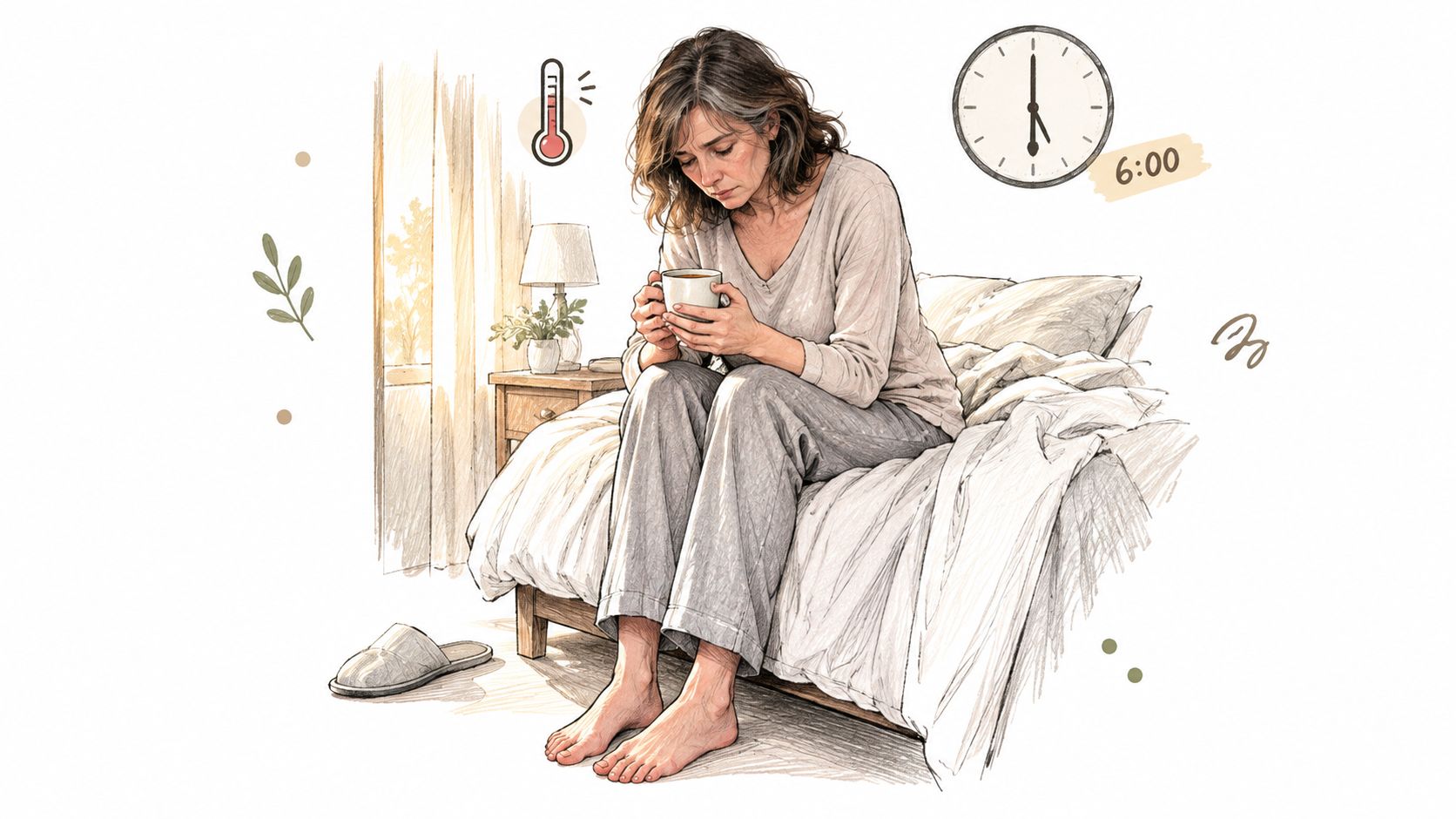
Familiar tasks can start taking more effort before you notice a clear change in your temperature. Concentration slips, sleep feels less refreshing, and you wonder why your usual routine has become tiring. Hot flashes may arrive later or remain mild, making the connection difficult to judge.
Persistent exhaustion deserves attention, even during perimenopause.
It can feel isolating to keep meeting your responsibilities while wondering whether this is how you're supposed to feel. Menopause may be part of the explanation, but treating fatigue as a puzzle with several pieces leaves room to identify other contributors.
A review of hot-flash prevalence and duration reported a global prevalence estimate of 52.65% and cited earlier clinical epidemiology estimates reaching 74% of perimenopausal women. These estimates concern hot flashes, not the proportion of women whose fatigue they explain. Symptoms can last for years, making comfort and sleep ongoing concerns, but frequency alone cannot establish the cause of exhaustion.
Start with the pattern, not a guess
Sort your observations into practical categories:
- a connection between hot flashes and fatigue doesn't prove that flashes explain all of your tiredness. Notice whether low energy follows episodes of heat or sweating.
- Sleep-related clues include feeling depleted after restless nights, whether or not you remember a flash.
- Fatigue that persists after more comfortable sleep, or occurs alongside mood changes, medication changes, or other physical symptoms, deserves a broader discussion with a clinician.
These categories can overlap. They are starting points for a conversation, not diagnoses.
Record what happened overnight, how you felt during the day, and any accompanying symptoms. That gives your clinician a clearer picture of what to investigate without expecting you to solve the puzzle alone.
The Physiology Behind a Hot Flash and the Energy Drain
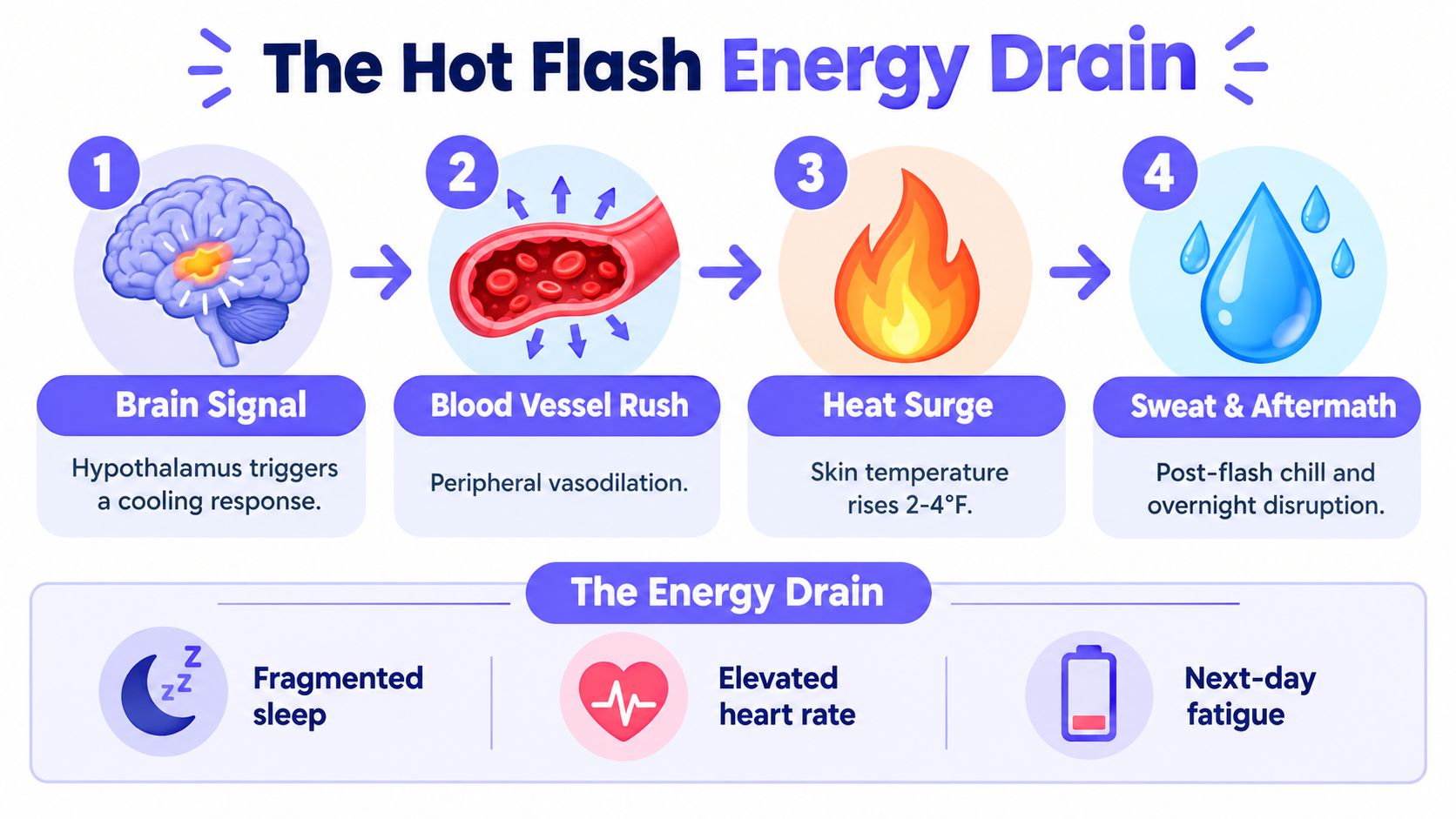
A hot flash begins with the brain's temperature-regulating system. During the menopause transition, changes in hormone signaling can make the hypothalamus more sensitive to small shifts in body temperature. It may trigger a cooling response even when your body isn't dangerously hot.
That response can bring a sudden wave of warmth, flushing, sweating, and sometimes a faster heartbeat. As the body loses heat through the skin, some people feel chilled afterward. If this happens at night, the discomfort or sweating can wake you, even if the episode itself feels brief.
Why total time in bed doesn't tell the whole story
A long stretch in bed can still contain repeated awakenings. You may fall back asleep quickly and not remember each interruption in the morning, yet fragmented sleep can leave you feeling as though you barely rested. That's why a single number for hours in bed may not reflect how restorative the night felt.
In a home-based study that monitored hot flashes and sleep, 78% of objectively detected flashes coincided with an actigraphy-defined awakening. During the five minutes beginning with a flash, the odds of wakefulness were 5.31 times higher than during the preceding reference period. (Study of hot flashes and sleep disruption)
The finding helps explain a plausible route from night sweats to next-day exhaustion: a flash can prompt wakefulness, and repeated interruptions may make sleep less restorative. It doesn't mean every flash causes a noticeable awakening, or that every tired morning has the same cause.
Practical rule: Track nighttime awakenings alongside flashes. A daily flash count alone can miss the sleep disruption that matters most to your energy.
Why Your Fatigue May Not Be About Hot Flashes at All
Reducing hot flashes may help if they're waking you, but it doesn't guarantee that fatigue will disappear. Sleep disorders, mood changes, medical conditions, medications, and everyday factors can overlap with menopause symptoms. Treating every case of exhaustion as a hot-flash problem can delay the right evaluation.
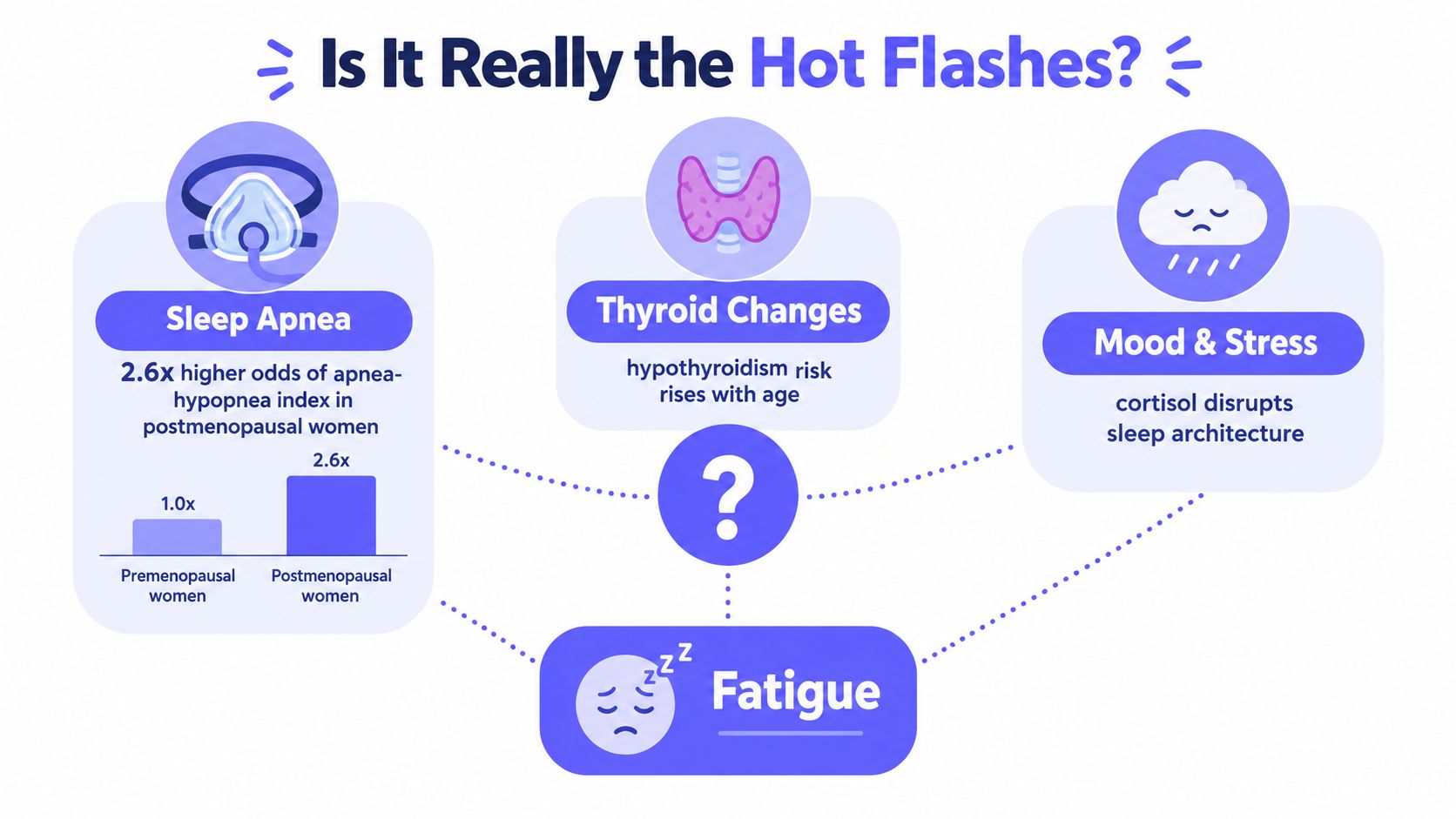
Sleep apnea is one condition worth considering, even if you don't have the stereotypical picture of loud snoring. In the Wisconsin Sleep Cohort, postmenopausal women had 2.6-fold higher odds of an apnea-hypopnea index of at least five events per hour and 3.5-fold higher odds of an index of at least fifteen, compared with premenopausal women after adjustment for age, BMI, and smoking. (Sleep apnea findings in the Wisconsin Sleep Cohort)
When to widen the investigation
Sleep apnea can cause daytime tiredness. Morning headaches, excessive sleepiness, or someone noticing pauses in your breathing are reasons to raise the possibility with a clinician. You don't need to wait until you've tried every cooling strategy first.
Mood symptoms can affect both sleep and energy. Anemia, thyroid disease, medication effects, and other health concerns may also contribute. If fatigue is severe, persistent, or making it difficult to function, a clinician can decide whether an assessment or blood tests are appropriate. If you're also wondering whether thyroid symptoms overlap with menopause, this guide to hypothyroidism and menopause offers further context.
A practical way to sort the pattern is to ask:
- Does fatigue follow disrupted nights? Record flashes, awakenings, and how rested you feel.
- Does it persist when sleep improves? Tell your clinician, especially if daily functioning remains difficult.
- Are there warning clues? Mention morning headaches, witnessed breathing pauses, significant mood changes, or medication changes.
The goal isn't to assume the worst. It's to avoid assuming that one symptom explains everything.
Behavioral Tactics That Actually Cool Things Down
Small adjustments can make a flash easier to manage, even when they don't prevent every episode. Think of these as experiments: change one thing, observe what happens, and keep what helps you. A cooling routine should support comfort and sleep, not become another complicated job.
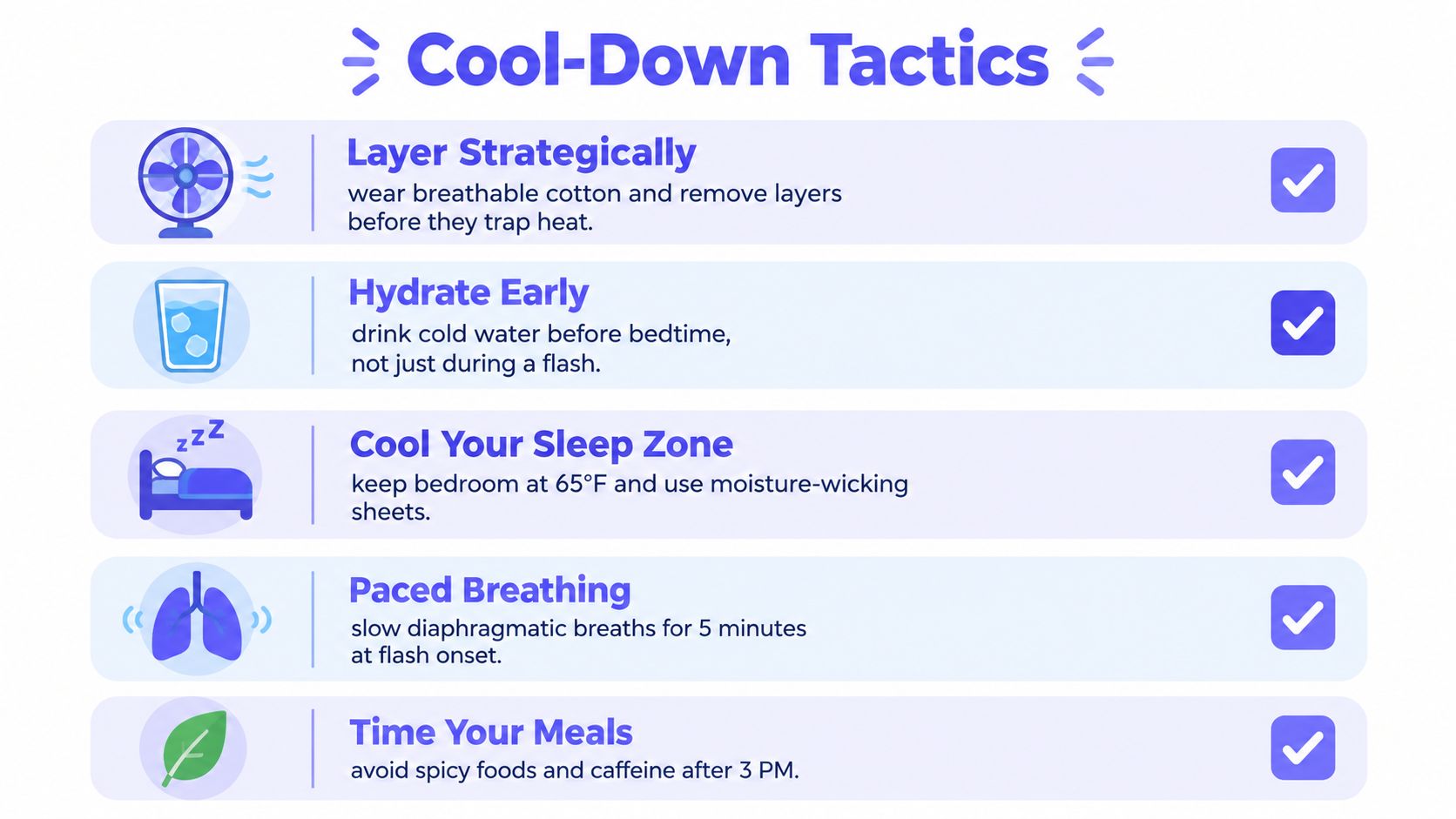
Start with what you wear. Breathable layers are easier to adjust than a single heavy outfit, whether you're at work or getting ready for bed. Keep a fan or cool cloth nearby if those feel helpful, and make it simple to remove a layer when heat starts.
Test your own triggers
Alcohol, spicy foods, hot beverages, caffeine, and warm rooms may be useful things to observe, but a trigger isn't universal just because it appears on a list. Rather than cutting out several foods at once, note what you ate or drank before a flash and look for a pattern. This guide to foods that may trigger hot flashes can help you think through what to track.
Paced breathing is another low-effort option to try when a flash starts. Slow, gentle breaths may help you stay calmer through the sensation, although it shouldn't be treated as a guaranteed way to stop the episode. Choose a pace that feels comfortable, and stop if you feel light-headed.
Try this: Keep a spare top, water, and a cool cloth within reach at night. Reducing the effort needed to settle after a flash may make it easier to get back to bed.
For daytime planning, notice when symptoms tend to occur and whether particular settings make them harder to manage. If warm rooms or a stressful meeting seem to coincide with flashes, adjusting the room or taking a brief pause may improve comfort. The aim is to reduce disruption where you can, not to blame yourself for symptoms you can't fully control.
Sleep Interventions That Protect Deep Sleep
If flashes are disrupting your nights, improving the sleep environment may help. It's a separate aim from reducing flash frequency. A cooler, quieter room won't address every cause of waking, but it can make it easier to settle again.
Tiredness is widely reported among postmenopausal women. In a global survey, feeling tired or worn out was reported by 74% of European participants, 75% in the United States, and 75% in Japan. Difficulty sleeping was reported by 69%, 66%, and 60%, respectively. (Global survey of menopause symptoms)
| Intervention | Targets flash awakenings | Targets sleep architecture | Evidence strength | Effort level |
|---|---|---|---|---|
| Cooler, comfortable bedroom and breathable bedding | May improve comfort after a flash | Supports a more sleep-friendly environment | Practical measure, individual response varies | Low |
| Consistent wake time and calming bedtime routine | Doesn't prevent flashes | Supports regular sleep habits | Useful sleep-habit approach | Moderate |
| CBT-I with a qualified clinician | Doesn't directly stop flashes | Addresses insomnia and sleep-related habits | Established behavioral treatment for insomnia | Moderate to high |
| Reviewing caffeine timing | May reduce a possible contributor to wakefulness | Can support sleep for people who are sensitive | Response varies | Low |
| Reviewing alcohol use | May help if it worsens nighttime symptoms | Can support sleep continuity when alcohol disrupts rest | Response varies | Low |
Treat insomnia as its own problem
If you're lying awake for long stretches or worrying about sleep night after night, mention that specifically. Cognitive behavioral therapy for insomnia (CBT-I) is a structured treatment that works on sleep-related habits and thoughts, rather than offering general relaxation advice. A clinician can help determine whether it fits your situation.
Practical sleep routines can be useful, but you don't have to follow a rigid set of rules. For additional ideas on better sleep hygiene strategies, focus on changes you can sustain, such as a comfortable room and a steady wind-down routine. For menopause-specific suggestions, see how to sleep better during perimenopause.
Track whether the changes affect awakenings and next-day energy, not just whether you spent more time in bed. If sleep improves but fatigue does not, keep investigating rather than treating that result as a failure.
Diet, Movement, and Pacing for Steady Energy
A better-energy morning can tempt you to catch up on everything, then leave you exhausted by afternoon. Regular meals, manageable movement, and planned breaks give you a steadier foundation. Your energy budget works like a household budget: spending everything early leaves less for later.
At meals, include a source of protein alongside foods you enjoy and can prepare consistently. Keep the routine practical enough for tired days. If a particular drink seems to worsen flashes or disturb sleep, record what happens and adjust gradually. One observation doesn't need to become a long list of food restrictions.
Symptom patterns vary, as discussed in this Review of hot-flash prevalence, so population averages cannot tell you which routine will suit your day.
Use your own pattern to guide decisions: does tiredness follow flashes, a disrupted night, or demanding activity? Fatigue that persists without those connections deserves attention too. Fewer flashes do not guarantee restored energy.
Move without setting up a crash
Start with a short walk, gentle mobility, or resistance exercises suited to your health and experience. Choose an amount you can recover from and repeat. If activity leaves you wiped out, reduce the demand and discuss persistent or unusual exercise-related symptoms with a clinician.
Pacing means leaving room for recovery before you're completely spent.
Alternate demanding tasks with simpler ones rather than filling every good-energy stretch. A short break between activities can help make the day more manageable; needing one isn't a failure of willpower.
Keep the week flexible, with movement when it fits, restorative rest, and realistic limits during busy stretches. If fear of feeling worse is making you increasingly inactive, ask a clinician how to adapt activity safely. Meals and movement can support daily functioning while other causes of fatigue are investigated.
Medication and Supplement Options Worth Considering
If symptoms disrupt sleep or daily life, you can discuss medical options with a clinician. The right choice depends on your health history, preferences, and the symptoms you most want to address. A treatment that reduces hot flashes may not resolve fatigue if another factor is driving it.
Hormone therapy can be one option for managing menopause symptoms for people who are appropriate candidates. Non-hormonal prescription treatments are also available, and clinicians may consider different medicines depending on symptom pattern and medical history. Ask what each option is intended to treat, what trade-offs to expect, and when to check whether it's helping. This overview of hormone therapy for menopause can help you prepare questions for your appointment.
Keep the treatment goal specific
Persistent insomnia may deserve attention in its own right, rather than being treated only as a side effect of hot flashes. A review discussing menopause and sleep reported an association between vasomotor symptoms and sleep disorders, and summarized findings linking persistent insomnia symptoms with higher cardiovascular risk. These findings are a reason to take ongoing sleep problems seriously, not proof that hot flashes themselves cause cardiovascular events. (Review of sleep disorders and menopausal symptoms)
Supplements can sound appealing, but “natural” doesn't establish that a product is effective or right for you. Evidence and safety can vary, and supplements may interact with medicines or be unsuitable for some health conditions. Discuss a product with your clinician or pharmacist before starting it. If you're weighing herbal products marketed for stress, this overview of rhodiola rosea stress relief evidence can be one starting point for questions, not a substitute for personalized medical advice.
Make the conversation concrete: describe the symptoms that bother you most, how they affect sleep and energy, and what you've already tried. Ask how you'll judge benefit, and what the next step would be if fatigue continues even after the flashes improve.
A Four-Week Tracking Plan and Red Flags Worth Knowing
Keep a brief daily record of flash timing and intensity, nighttime awakenings, sleep duration, mood, caffeine or alcohol, and your energy at consistent points in the day. A perimenopause symptom tracker can help you keep those observations together.
At the end of each week, look for a pattern: are harder days following more disrupted nights, or is fatigue continuing regardless of sleep? A 2025 qualitative study of people unable to use hormone therapy found that 94% reported difficulty sleeping and 75% reported tiredness from sleep interruptions, supporting the value of tracking symptoms, sleep, and energy together. (Qualitative study of sleep and tiredness)
Use the first week to establish a baseline, then make a manageable change and observe what happens. Review your notes with a clinician if symptoms remain disruptive or the pattern is unclear. Seek medical advice for persistent fatigue despite improved nights, morning headaches, witnessed breathing pauses, palpitations, unexplained weight changes, heavy bleeding, or mood symptoms that interfere with daily life.
Lila helps people track symptoms, sleep, energy, mood, meals, and cycles, then use those patterns to guide a personalized action plan. If you'd like a structured way to connect hot flashes with your nights and daytime energy, visit Lila to explore its daily check-ins and chat-based coaching.
Get Lila, your personal coach for perimenopause.
Built for women in their 40s. 24/7 coaching, in your pocket.