
Hot Flashes and Itchy Skin: A Guide to Relief
Learn how hot flashes and itchy skin are linked during menopause and discover effective strategies to find relief and improve your comfort.
About 75% to 85% of women experience hot flashes, while dryness or itch affects many women after menopause. Both symptoms are connected to estrogen loss, but they often need different treatments because hot flashes involve temperature regulation and itchy skin involves the skin barrier.
You may recognize the pattern. You wake at night overheated, push away the covers, and then notice an itch along your arms, chest, or back. There may be no visible rash, yet your skin feels tight, prickly, or impossible to ignore. By morning, poor sleep and repeated scratching have left you exhausted.
This combination can feel confusing because the symptoms arrive together but don't always respond to the same remedy. Cooling the bedroom may help a hot flash, for example, but it won't necessarily restore dry skin. A moisturizer may calm the itch, but it won't stop the internal temperature surge.
The connection is real, though. The hormonal changes of perimenopause can affect both the brain's thermostat and the skin's protective outer layer. Understanding that shared root, and the important difference between the two pathways, makes relief more practical.
Table of Contents
- Introduction to Hot Flashes and Itchy Skin in Perimenopause
- The Science Behind the Connection
- Treatment Options for Hot Flashes
- Managing Itchy and Dry Skin
- The Role of Symptom Tracking
- When to See a Clinician
- Conclusion and Next Steps
Introduction to Hot Flashes and Itchy Skin in Perimenopause
A woman can move through the night in a familiar sequence: heat rises through her chest and face, sweat dampens her clothing, and a few minutes later her forearms begin to itch. She changes position, reaches for a glass of water, and wonders whether the itching comes from sweat, a new detergent, or something more serious.
Sometimes it comes from several factors at once. Hormonal changes can make the skin drier and more reactive, while heat and sweat can amplify uncomfortable sensations. The absence of a rash doesn't mean the symptom isn't real.
Hot flashes affect an estimated 75% to 85% of women during the menopausal transition, according to a clinical review of menopausal vasomotor symptoms published in the medical literature. Skin changes are also widespread. A review cited in dermatology research found that dryness was the most frequently reported skin symptom, affecting roughly 60% of postmenopausal women, while pruritus, the medical term for itch, affected nearly half in a clinical population reviewed by the Journal of Integrative Dermatology.
Your symptoms aren't “in your head.” Hormonal shifts can change heat regulation, moisture retention, and sensory sensitivity at the same time.
Perimenopause can begin with irregular cycles, changing flow, sleep disruption, mood changes, or new temperature sensitivity. If you're trying to understand whether your symptoms fit this transition, Lila's guide to what perimenopause is can help you place the changes in context.
For immediate comfort, some people keep a cool pack or portable cooling device nearby. Athletes often use portable heat and cooling tools for muscle recovery, and a resource on portable heat therapy for athletes offers useful context on using temperature-based comfort measures safely. These tools may ease the sensation of heat, but they shouldn't replace evaluation or treatment when symptoms are persistent.
The central lesson is simple: hot flashes and itchy skin may travel together, but they aren't identical symptoms. Treating both requires attention to the nervous system and the skin's surface.
The Science Behind the Connection
Estrogen supports several systems that become noticeable when its levels fluctuate and later decline. During perimenopause, the hypothalamus, a small area in the brain that helps regulate body temperature, can become more sensitive to small changes in internal heat.
That narrower comfort range acts like a thermostat with less tolerance. A minor rise in body temperature may trigger blood vessels near the skin to widen, followed by sweating and the sudden feeling of heat known as a hot flash. Hot flashes are therefore vasomotor symptoms, not evidence that the skin itself is overheating because of an infection or rash.
At the same time, estrogen helps the skin maintain its moisture and protective structure. Declining estrogen reduces surface lipids, including ceramides, and lowers the skin's water-holding capacity. The result is greater transepidermal water loss, meaning water escapes through the skin more easily.
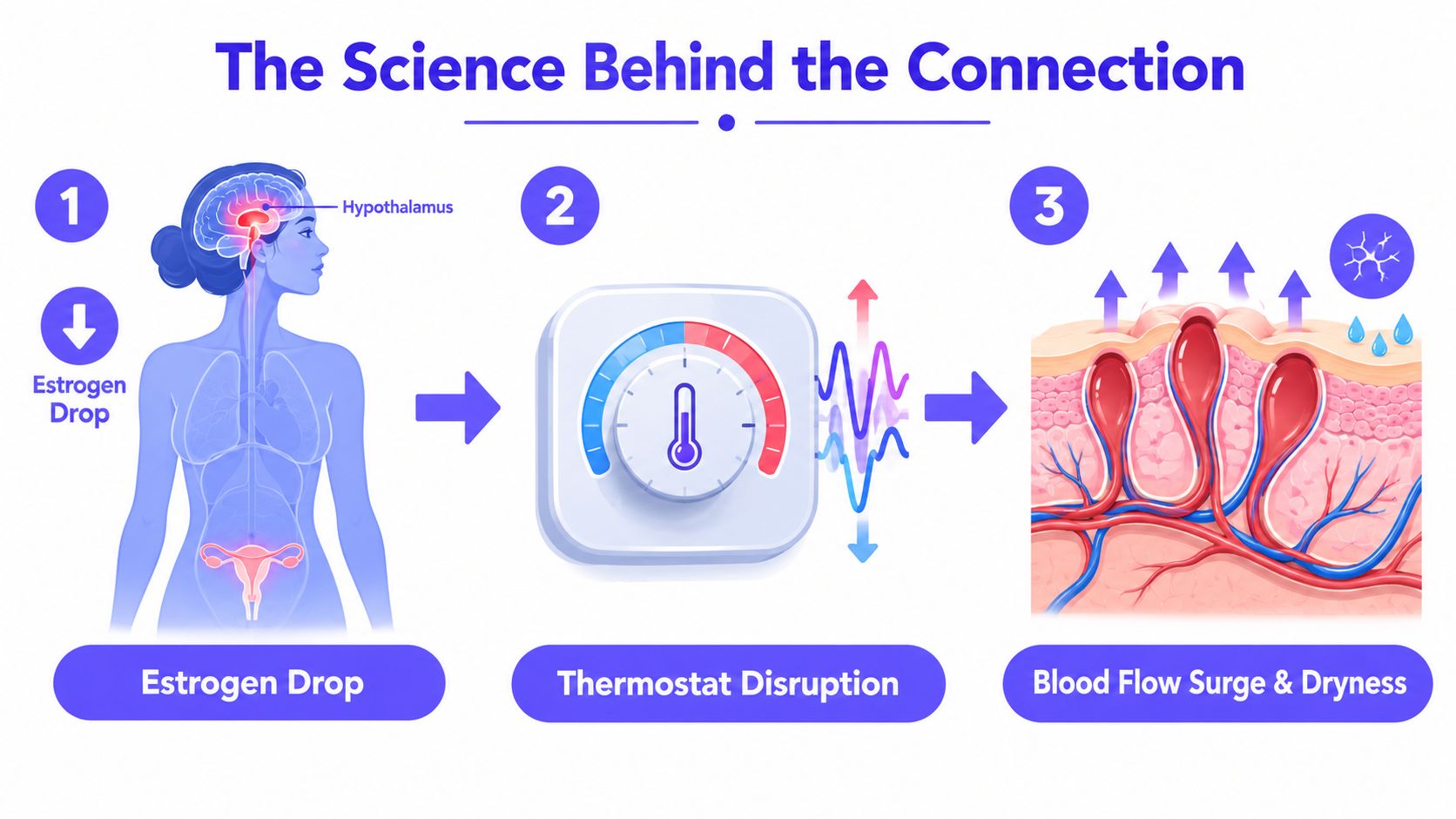
Two pathways from one hormonal shift
Think of the skin barrier as a wall made of bricks and mortar. Skin cells form the bricks, while lipids such as ceramides help fill the spaces between them. When the lipid “mortar” becomes less effective, water leaves more readily and irritants can reach sensitive nerve endings more easily.
Research supports this moisture-to-itch relationship. One menopause skin-barrier study found that subjective itchiness was inversely correlated with skin hydration, meaning itch tended to be greater when hydration was lower as reported in the study. Skin sensitivity also showed a positive relationship with itchiness and dryness.
This explains why a person may feel itchy without seeing a rash. Dryness can increase nerve sensitivity, and repeated heat, sweat, or friction can make the sensation louder. Scratching then creates tiny injuries that weaken the barrier further, forming a self-reinforcing cycle.
Why cooling isn't the same as moisturizing
Cooling the body can make a hot flash feel more manageable, especially when the discomfort is intense. Some people explore temperature routines, including information about how cold showers aid recovery, but very cold or prolonged water exposure may not suit sensitive, dry skin.
A short cool compress can calm the sensation without stripping surface oils. For a clearer explanation of the internal trigger, see Lila's guide to why menopause causes hot flashes. The practical distinction matters: cooling addresses heat perception, while emollients address moisture loss.
Treatment Options for Hot Flashes
Treatment choices depend on your health history, age, time since the final menstrual period, symptom severity, and personal preferences. A clinician should review those factors before recommending prescription therapy.
For bothersome vasomotor symptoms, menopausal hormone therapy remains the most effective option for healthy women under 60 or within 10 years of the final menstrual period, according to an evidence-based clinical review on hormone and nonhormone management. That doesn't mean it's suitable for everyone. The potential benefits and risks must be considered individually, including medical history and contraindications.
Hormone therapy may also support some estrogen-sensitive skin functions, but you shouldn't assume that reducing hot flashes will automatically eliminate itch. The two symptoms share a hormonal background, yet the skin may still need direct barrier care.
Comparing the practical approaches
| Approach | Main target | What to discuss |
|---|---|---|
| Menopausal hormone therapy | Vasomotor symptoms and broader estrogen-related changes | Personal benefits, risks, route, dose, and medical history |
| Nonhormonal prescription options | Hot flashes through other nervous-system pathways | Side effects, interactions, and suitability |
| Environmental changes | Heat exposure and sleep disruption | Bedroom temperature, clothing, bedding, and trigger patterns |
| Skin-focused care | Dryness, water loss, and itch sensitivity | Cleanser, moisturizer, bathing routine, and possible skin disease |
Nonhormonal medicines may be appropriate when hormone therapy isn't preferred or isn't medically suitable. Lifestyle measures can also reduce exposure to personal triggers, although they may not address the underlying temperature-regulation changes on their own. Itchy skin usually requires a separate plan centered on restoring the barrier.
A useful question for your appointment: “Which part of my treatment is intended to reduce hot flashes, and what will specifically support my itchy skin?”
Lila's overview of hot flash management can help you organize questions and notice which approaches affect your daily symptoms. Don't start, stop, or change prescription treatment without speaking with a qualified clinician.
Managing Itchy and Dry Skin
Skin care works best when it protects the barrier instead of repeatedly stripping it. The aim isn't to scrub away the itch. It's to reduce water loss, limit irritants, and give the outer layer a chance to recover.
A 2024 review reported that 82.7% of menopausal women noticed one or more skin changes, with dryness cited by 60.19%. Another review found xerosis, or clinically dry skin, in 78% of a postmenopausal group and pruritus in 46% the dermatology review summarizes these findings.
Build a gentler routine
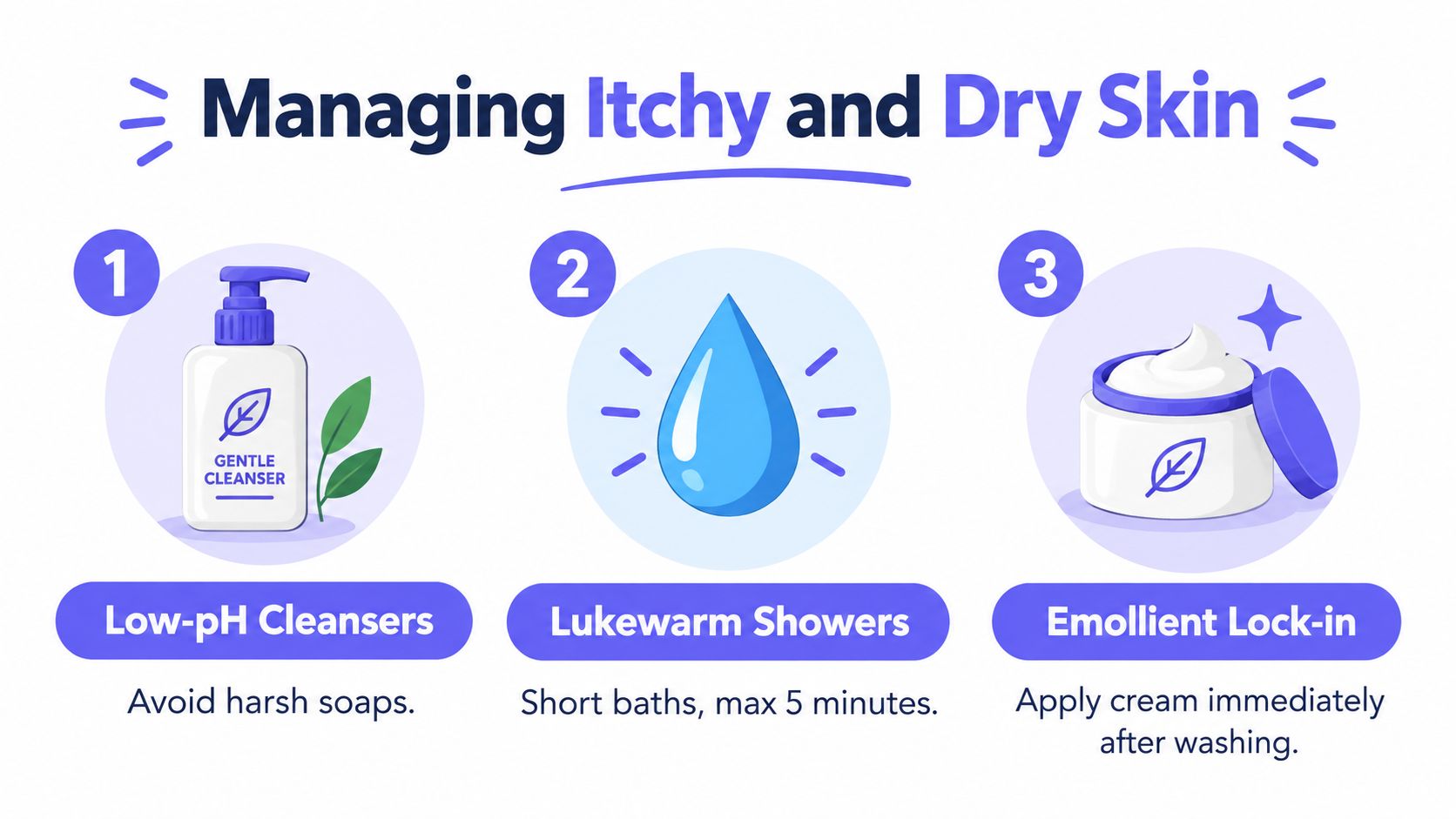
- Cleanse selectively: Use a fragrance-free, low-pH cleanser rather than harsh soap, and avoid washing unaffected skin more than necessary.
- Shorten bathing: Choose lukewarm water and keep showers brief. Hot water can remove protective surface oils and worsen tightness.
- Seal in moisture: Apply a fragrance-free emollient while the skin is still slightly damp. Creams or ointments generally create a stronger moisture seal than thin lotions.
- Reduce scratching: Keep nails short and use a cool, damp cloth when an itch flare starts. Scratching can create small breaks that invite more irritation.
- Improve the environment: A humidifier may help when indoor air feels dry, especially overnight. Clean the device according to its instructions.
- Remove common irritants: Fragrance, rough fabrics, strongly scented laundry products, and abrasive exfoliants can all challenge a weakened barrier.
Lila's resource on menopause itchy skin causes, relief, and prevention offers another way to review these habits. For broader information about itching without a visible rash, you can also consult this Sphagnum Botanicals itch guide.
A visual demonstration can make the routine easier to follow:
▶ PlayIf a product stings, stop using it and simplify your routine. Persistent burning, scaling, or redness may signal a condition that needs more than moisturizer.
The Role of Symptom Tracking
A symptom diary can turn “I feel awful” into information you and your clinician can use. Record the time of each hot flash, what you were doing beforehand, itch intensity, visible skin changes, sleep quality, mood, meals, exercise, alcohol or caffeine, and any products applied to your skin.
You don't need a complicated spreadsheet. A quick daily check-in works if you complete it consistently. Note whether the itch appeared before a hot flash, during sweating, after showering, or several hours later. That timing can help distinguish heat-related aggravation from a more persistent barrier problem.
Look for patterns, not perfect explanations
One evening of symptoms doesn't prove that a particular food, product, or activity caused them. Patterns become more useful when the same sequence appears repeatedly.
Try grouping observations into questions:
- Timing: Does itching peak at night, after bathing, or during a hot flash?
- Location: Is it widespread, or does it stay in one area?
- Skin appearance: Is there dryness, scaling, redness, or no visible change?
- Treatment response: Did cooling help the heat but leave the itch unchanged?
- Daily impact: Did the symptoms interrupt sleep, concentration, or exercise?
A pattern such as “cooling reduces heat quickly, while moisturizer helps the itch later” suggests that two interventions are doing different jobs. That insight can prevent you from abandoning a useful treatment just because it doesn't solve every symptom.
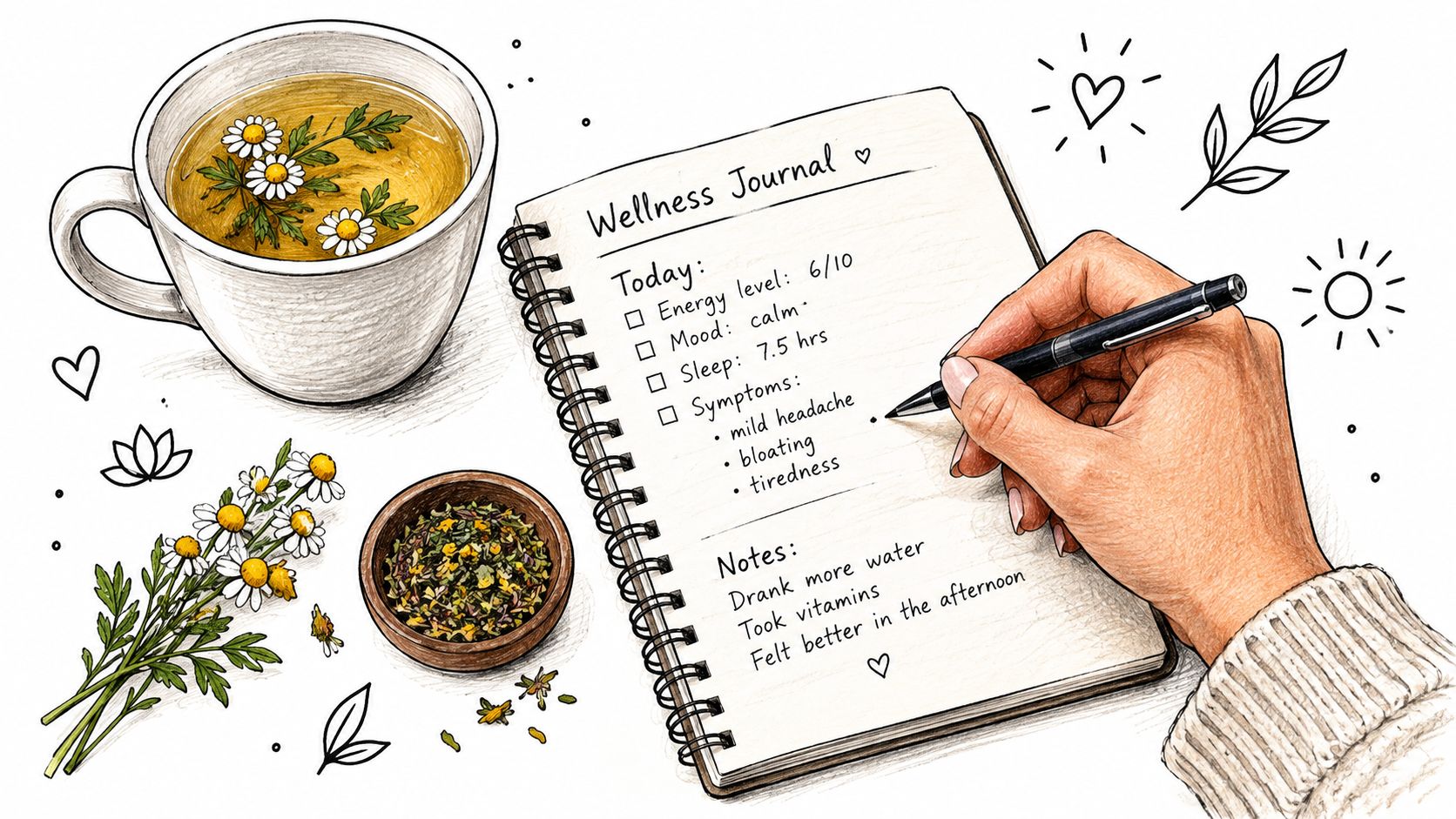
Digital tracking may make this easier. Lila can be used as one option for logging symptoms, mood, sleep, energy, meals, and cycles in one place, helping you compare daily experiences with possible triggers. Its guide to tracking perimenopause symptoms provides a starting framework.
Bring your notes to an appointment. Clear observations help a clinician decide whether to adjust vasomotor treatment, recommend a dermatology assessment, or focus more closely on skin-barrier care.
When to See a Clinician
Menopause can explain new hot flashes and itch, but it shouldn't become a reason to dismiss every new skin symptom. A clinician can check for eczema, contact dermatitis, medication reactions, infection, or other causes that may occur during the same life stage.
Arrange an evaluation if itching is severe, persistent, or repeatedly disrupts sleep. You should also seek care when a rash spreads quickly, blisters, develops open sores, becomes painful, or shows signs of infection such as increasing warmth, swelling, or drainage.
Don't wait for a visible rash before asking for help. Persistent itch without obvious skin changes still deserves an assessment when self-care isn't working.
The location and behavior of the symptom can provide useful clues. Itching confined to one spot, itching that continues despite consistent moisturizing, or a sudden change after starting a medicine or personal-care product warrants professional review. A clinician may ask about your full symptom pattern, examine the skin, and decide whether testing or a specialist referral is appropriate.
Hot flashes also deserve attention when they're severe, new, or accompanied by symptoms that don't fit your usual pattern. Seek urgent medical care for chest pain, fainting, severe breathing difficulty, sudden weakness, or other emergency symptoms rather than assuming they're part of menopause.
Treatment conversations should include your priorities. Tell the clinician whether your main problem is nighttime waking, daytime heat, skin discomfort, visible inflammation, or the combination. That distinction helps separate therapies aimed at the hypothalamic temperature response from treatments that repair or protect the skin barrier.
Self-care is valuable, but it has limits. Getting the right diagnosis can prevent weeks of scratching, product changes, and sleep loss while also ensuring that a treatable skin condition isn't overlooked.
Conclusion and Next Steps
Hot flashes and itchy skin can make a normal day feel unpredictable. The heat may interrupt a meeting or wake you from sleep, while persistent itching keeps your attention fixed on your skin. These symptoms are common, but you don't have to accept constant discomfort as the price of menopause.
The most useful approach treats the two pathways separately. Discuss vasomotor treatment with a clinician, and support the skin directly with gentle cleansing, short lukewarm showers, regular emollient use, and reduced exposure to irritants. Tracking the timing of both symptoms can show whether they rise together, whether one follows the other, or whether they respond to different changes.
A woman who notices that a cool room reduces her hot flashes but doesn't touch her nighttime itch has learned something important. She may need a temperature plan for the first symptom and a barrier-repair plan for the second. That isn't treatment failure. It's a clearer map of what her body needs.
Start with one small action today. Write down when the next hot flash or itch begins, simplify your evening skin routine, and bring the record to a healthcare professional if symptoms persist or interfere with sleep.
Lila offers daily symptom tracking, personalized action plans, and chat-based guidance for patterns involving hot flashes, sleep, mood, energy, meals, and cycles. Visit Lila to turn your observations into practical next steps for managing perimenopause symptoms.
Get Lila, your personal coach for perimenopause.
Built for women in their 40s. 24/7 coaching, in your pocket.