What Is Hot Flashes in Menopause? Causes and Symptoms
Wondering what is hot flashes in menopause? Learn the causes, typical duration, triggers and when to see a doctor.
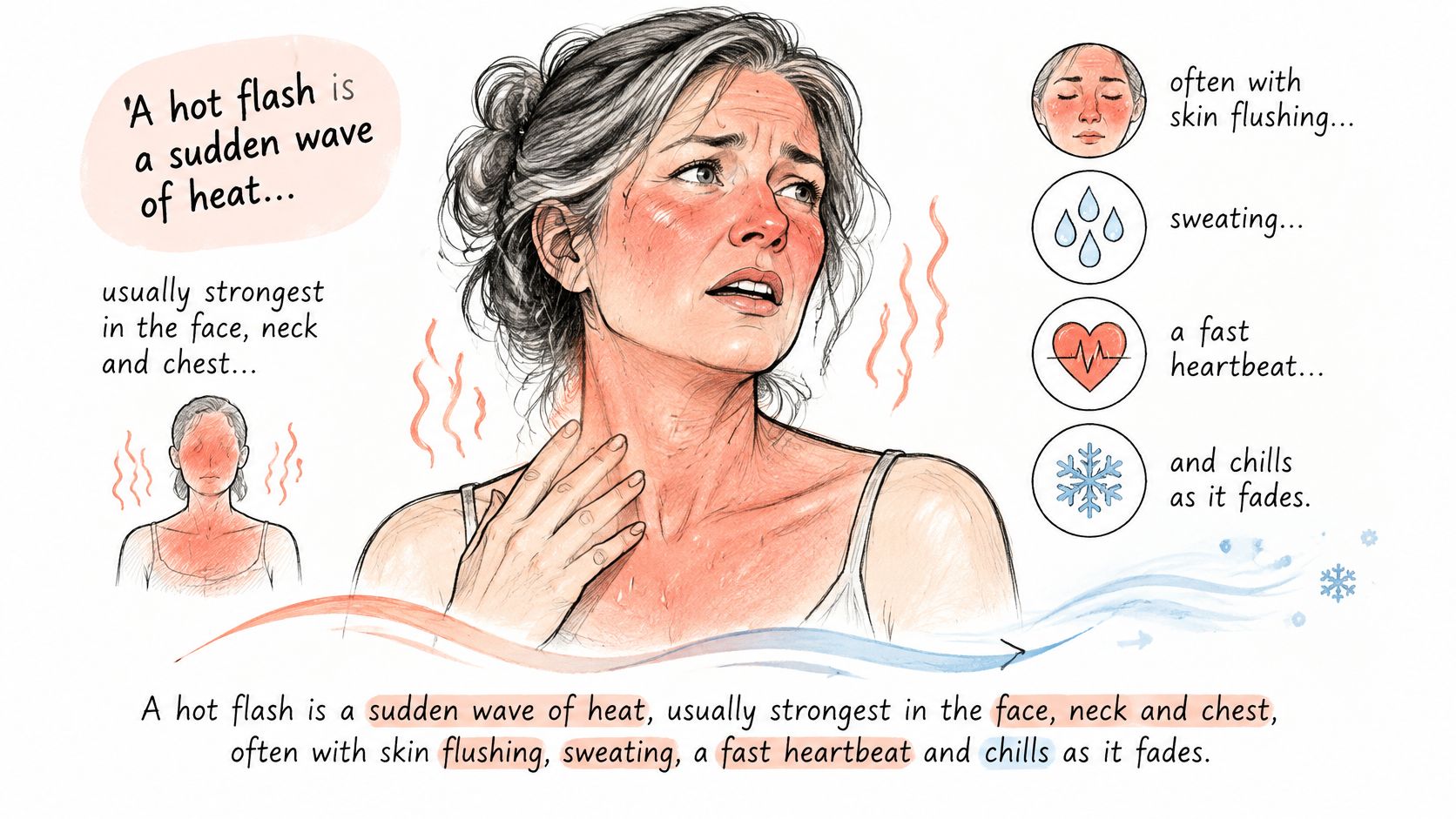
A hot flash is a sudden wave of heat, usually strongest in the face, neck and chest, that typically lasts 1 to 5 minutes and is driven by falling estrogen.
But if the heat passes so quickly, why can it affect your sleep, work and confidence for so long? The answer involves more than the episode itself. How often it happens, when it interrupts you, and whether you can get effective care all shape the burden.
Understanding hot flashes means recognizing both the body's temperature response and the longer, sometimes uneven experience of living with it.
Table of Contents
- What a Hot Flash Is and What Triggers It
- How Long Hot Flashes Last Through the Transition
- Who Is More Likely to Have Severe Hot Flashes
- Hot Flashes Versus Other Causes of Heat and Sweating
- When Hot Flashes Need Medical Care
- Treatment Options and Their Trade-offs
- Track Your Symptoms and Take the Next Step
What a Hot Flash Is and What Triggers It
Why can a room that feels comfortable to everyone else suddenly feel too warm to you? The answer starts in the brain, not in the skin. A hot flash is a temperature-regulation event: blood vessels near the skin widen, sweat glands turn on, and the body acts as if it needs to cool down quickly. Your face, neck or chest may flush, your heartbeat may speed up, and you may feel chilled once the episode passes.
According to Mayo Clinic's hot flash guide, these episodes typically last 1 to 5 minutes, although intensity and duration differ substantially between people. Clinicians call them vasomotor symptoms, a term describing changes involving blood vessels and temperature regulation. The name sounds technical, but it points to the vessels and the body's heat controls.
Why the body reacts
The hypothalamus works like a thermostat. It monitors internal temperature and tells the body when to heat up or cool down. When estrogen falls, that thermostat becomes more sensitive to small shifts. A slightly warm room, a stressful moment, or a glass of wine can be enough to trigger the cooling response. Your body can respond as though it needs urgent cooling, widening blood vessels near the skin and producing sweat.
That explains why you can suddenly feel overheated while everyone around you feels comfortable. The Axelrad Clinic's resource on understanding what causes hot flashes offers another explanation of this temperature-regulation response.
Night sweats are hot flashes that happen at night and may interrupt sleep. Symptoms can also begin before periods become clearly irregular, so a familiar menstrual pattern doesn't rule them out. Hot flashes are common during the menopause transition, but frequency and disruption vary widely. Two women can report the same number of episodes and have very different experiences, depending on sleep, work demands, and whether they can get care that helps.
Describe the impact, not just the heat
Use a simple personal scale when recording episodes:
- Mild: You notice the warmth but continue what you're doing.
- Moderate: You briefly interrupt a task or wake from sleep.
- Severe: You stop an activity, soak clothing or struggle to function afterward.
Sudden heat that comes and goes without an obvious cause is worth tracking, not automatically diagnosing. If alcohol seems connected, the guide to alcohol and hot flashes can help you frame what to observe.
How Long Hot Flashes Last Through the Transition
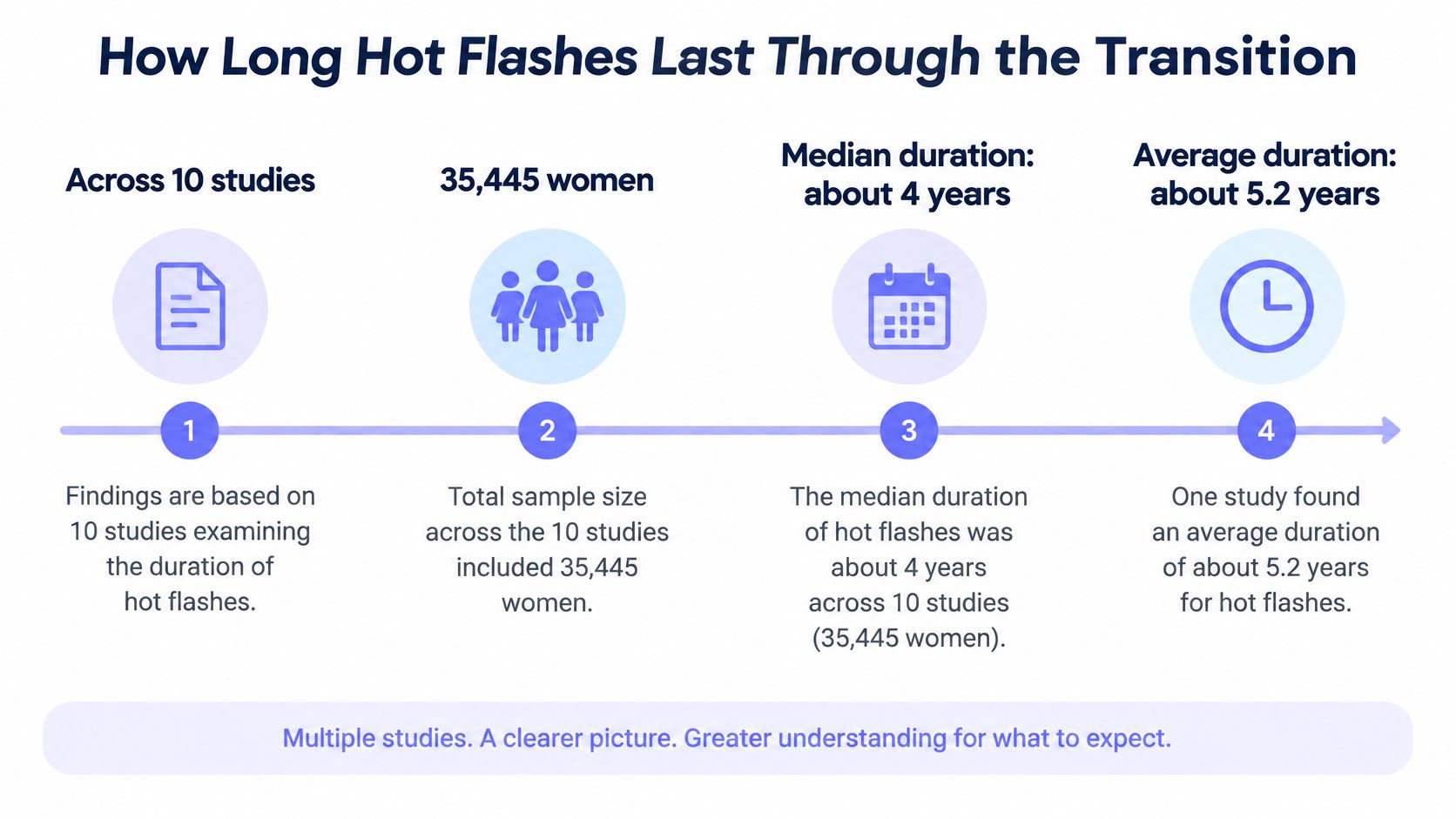
Hot flashes often continue for years, not just a brief stretch around the last period. Mayo Clinic Press's review of menopause myths describes a median overall duration of about 4 years across 10 studies covering 35,445 women, while a Melbourne cohort of 438 women had an average duration of approximately 5.2 years.
Those are different measures from different groups. A median describes the midpoint of the durations observed; an average combines everyone's duration. Neither tells you exactly when your symptoms will end.
The timeline puts those overall estimates in context.
Hot flash duration by stage of the menopause transition
| Stage | Typical pattern | Research figure |
|---|---|---|
| Early perimenopause | Can begin before periods become clearly irregular | Symptoms may precede recognizable menstrual changes |
| Late transition, around final period | Episodes generally become more frequent and severe | Overall median duration described above covers the transition, not this stage alone |
| Postmenopause | Symptoms generally decline, but can persist | Continuing symptoms aren't limited to the transition itself |
| Long-term persistence | Some people remain symptomatic well beyond menopause | The Melbourne average describes the whole cohort, not a deadline for recovery |
The distinction between an episode's duration and the years during which episodes recur matters. A short individual episode can still be part of a prolonged health concern, particularly when nights are repeatedly interrupted.
A difficult month doesn't establish your future pattern. Look for changes over time rather than treating every flare as a permanent setback.
Some people notice stretches of improvement followed by renewed symptoms. Others experience a steadier decline. Neither pattern means you've failed to manage menopause correctly.
Make the timeline useful
Record when you first noticed symptoms, whether they occur during the day or night, and whether your periods have changed. If you're unsure which stage you're in, write that uncertainty down rather than assigning yourself a diagnosis.
For more context on individual episodes versus the longer transition, see how long hot flashes last.
This video offers an additional way to explore the experience.
▶ PlayWho Is More Likely to Have Severe Hot Flashes
Smoking and higher body mass index are associated with a greater likelihood of hot flashes. But a risk factor isn't a prediction, and it doesn't tell you how much a particular person will struggle.
Reported symptoms also differ across racial and ethnic groups. A database study indexed in PubMed describes higher odds and greater severity of vasomotor symptoms among Black women compared with White women, and lower reported odds among Asian women; the 2025 study also found lower diagnosis and treatment rates among Black, Hispanic and Asian women than among White women.
Separate symptoms from access to care
Symptom severity and access to treatment are different questions. Someone can have substantial symptoms yet never receive a diagnosis, an explanation or a treatment discussion.
These differences shouldn't be attributed to biology or culture alone. Healthcare access, stress, coexisting conditions and whether a clinician takes the concern seriously can all affect the experience.
Factors linked to hot flashes and their severity
| Factor | Reported link | Practical step |
|---|---|---|
| Smoking | Associated with higher risk of hot flashes | Ask your clinician about quitting support |
| Higher body mass index | Associated with higher risk of hot flashes | Record weight changes alongside symptoms |
| Black women compared with White women | Higher odds and greater severity | Request evaluation when symptoms disrupt daily life |
| Asian women compared with White women | Lower reported odds | Don't dismiss disruptive symptoms because of a group average |
| Obesity, hypertension, diabetes | Shape overall burden and treatment choices | Review these conditions alongside your symptoms |
| Stress and poor sleep | Can make symptoms harder to live with | Include stress and sleep quality in your notes |
Earlier onset, longer persistence and disrupted sleep can make the burden heavier. A person managing diabetes or high blood pressure may also need a more coordinated treatment plan, rather than isolated advice to stay cool.
We built Lila because our founders were told that women's symptoms were just aging or stress. That dismissal can leave people blaming themselves instead of asking for evaluation.
Describe what you can no longer do comfortably, not just how warm you feel.
At an appointment, explain the effect on work, rest and mood. Then ask whether your symptoms and other health conditions call for earlier evaluation or a broader plan.
Hot Flashes Versus Other Causes of Heat and Sweating
Not every episode of sweating is a menopausal hot flash. The useful question is whether you have a recurring wave of heat or a different pattern that needs investigation.
For example, feeling suddenly flushed while sitting comfortably is different from feeling overheated throughout the day with a persistently racing heart. Timing, accompanying symptoms and recent medication changes help a clinician distinguish possible causes.
Patterns worth describing
These clues aren't a home diagnostic test. They help you explain what's happening without assuming menopause is the answer.
- Thyroid overactivity: More sustained heat intolerance, tremor, unexplained weight loss or a persistently fast heartbeat can point toward a thyroid problem.
- Infection or fever: Sweating with an ongoing raised temperature, body aches or feeling generally ill needs a different assessment.
- Low blood sugar: Sweating accompanied by hunger, shakiness or weakness may be relevant, especially if you use glucose-lowering medication.
- Medicines and supplements: Some antidepressants, steroids and niacin can contribute to sweating or flushing. Note anything you recently started or changed.
- Anxiety or panic: A racing heart, breathlessness and intense fear may accompany sweating. These symptoms can overlap with hot flashes rather than neatly excluding them.
Don't stop prescribed medication or use food response alone to decide what caused an episode. If you have diabetes and suspect low blood sugar, follow your established treatment plan.
Bring the uncertainty to your clinician
Write down whether the heat arrives in waves, whether you return to your usual temperature between episodes, and what else happens at the same time. Include whether symptoms occur only in a warm room or also when the environment is comfortable.
The night sweats cause checker can help organize your observations, but it can't establish a diagnosis.
Practical rule: When the pattern doesn't fit, investigate rather than stretching the menopause explanation to cover everything.
Overlapping causes are possible. A clinician may need to review your medical history, examine you or arrange targeted tests before attributing the sweating to menopause.
When Hot Flashes Need Medical Care
Arrange a clinical appointment when symptoms interfere with sleep, work, concentration, mood or your ability to cope. You don't need to wait until you consider them severe, and you don't need someone else's symptoms as a benchmark.
Repeatedly changing bedding, avoiding meetings or feeling exhausted after interrupted nights are meaningful effects. Tell the clinician about those consequences, even if the heat itself seems manageable.
Warning signs that change the urgency
Some accompanying symptoms shouldn't be treated as routine menopause discomfort:
- Chest pain or significant breathlessness: Seek emergency care, particularly if symptoms are new, severe or accompanied by faintness.
- A racing heartbeat that persists: Arrange prompt assessment rather than assuming it's part of a passing hot flash.
- Bleeding after menopause: Contact your clinician promptly. New or concerning irregular bleeding also deserves review.
- Night sweats with fever or unexplained weight loss: Seek medical assessment for causes beyond menopause.
- Symptoms that seem unusually early: Ask for evaluation rather than assuming you're entering a typical menopausal transition.
Don't postpone assessment to finish a symptom diary. A record helps, but urgent symptoms take priority over collecting a complete history.
Prepare for a useful appointment
Your personal history can change which options are appropriate. Mention breast cancer, blood clots, liver disease, migraine and cardiovascular disease, along with all medicines and supplements you take.
Bring a short written agenda:
- Your main difficulties: Name the symptoms that most interfere with daily life.
- Your observations: Include the pattern, associated symptoms and any changes you've already tried.
- Your questions: Ask what needs investigation and which treatments fit your history.
Our founders watched women they love be dismissed, left guessing and blame themselves during perimenopause. If you leave without understanding the plan, ask what the next step is and when you should return.
Always talk to your doctor about hormone replacement therapy, hormone testing or any health condition. Testing and treatment should answer a clinical question, not replace a careful conversation about symptoms.
Treatment Options and Their Trade-offs
The right treatment depends on symptom burden, medical history and your preferences, not a universal remedy. Cooling measures may be sufficient for manageable episodes, while symptoms that repeatedly interrupt daily life justify a prescription discussion.
The Society for Women's Health Research menopause fact sheet summarizes The Menopause Society's identification of hormone therapy as the most effective FDA-approved treatment for bothersome hot flashes and lists nonhormonal options including paroxetine and fezolinetant. It also describes significant reductions in hot flash frequency with fezolinetant by four and twelve weeks, alongside the need for liver monitoring.
Hot flash treatment options compared
| Option | Evidence noted | Monitoring or caution |
|---|---|---|
| Hormone therapy | Most effective FDA-approved treatment for bothersome hot flashes | Review breast cancer, clotting, liver and cardiovascular history first |
| Paroxetine | Nonhormonal option listed by The Menopause Society | Discuss side effects, other medicines and personal history |
| Fezolinetant | Significantly reduced hot flash frequency at the assessment points described above | Baseline and repeated liver-function tests are required |
| Lifestyle and cooling measures | May be enough for mild symptoms | Record whether changes improve comfort and daily functioning |
Hormone therapy isn't appropriate for everyone, but neither is it a treatment to rule out without an individualized discussion. Our explanation of hormone therapy for menopause can help you prepare questions about what treatment involves.
Nonhormonal doesn't mean monitoring-free. Fezolinetant can raise liver enzymes, so the blood-test plan is part of treatment, not an optional extra.
Choose an outcome that matters
For manageable symptoms, try practical comfort measures such as removable clothing layers, a bedside fan and lighter bedding. Judge them by whether you're more comfortable and functioning better, not by whether every episode disappears.
If you remain exhausted, avoid activities or struggle to concentrate, discuss prescription options. You don't have to exhaust every lifestyle adjustment before asking.
Natural supplements aren't automatically safer. Bring the actual product names and ingredient lists to your clinician or pharmacist so they can check safety and interactions.
New nonhormonal therapies may sound appealing when promoted as fast-acting. Ask what evidence supports the claim, whether the treatment is approved for your situation, and what follow-up it requires.
Before starting treatment, agree on the essentials:
- Expected benefit: What should improve, and when might you notice it?
- Reasons to avoid it: Which conditions or medicines make it unsuitable?
- Monitoring: What tests or symptom checks are necessary?
- Follow-up: When will you review benefit, side effects and the next decision?
Track Your Symptoms and Take the Next Step
A useful symptom record captures patterns, not perfect detail. You don't need to document every sensation or prove that a particular food caused an episode.
Start with a brief daily record you can maintain. Review it over time, while remembering that an association isn't proof of a trigger.
Build a record you can use
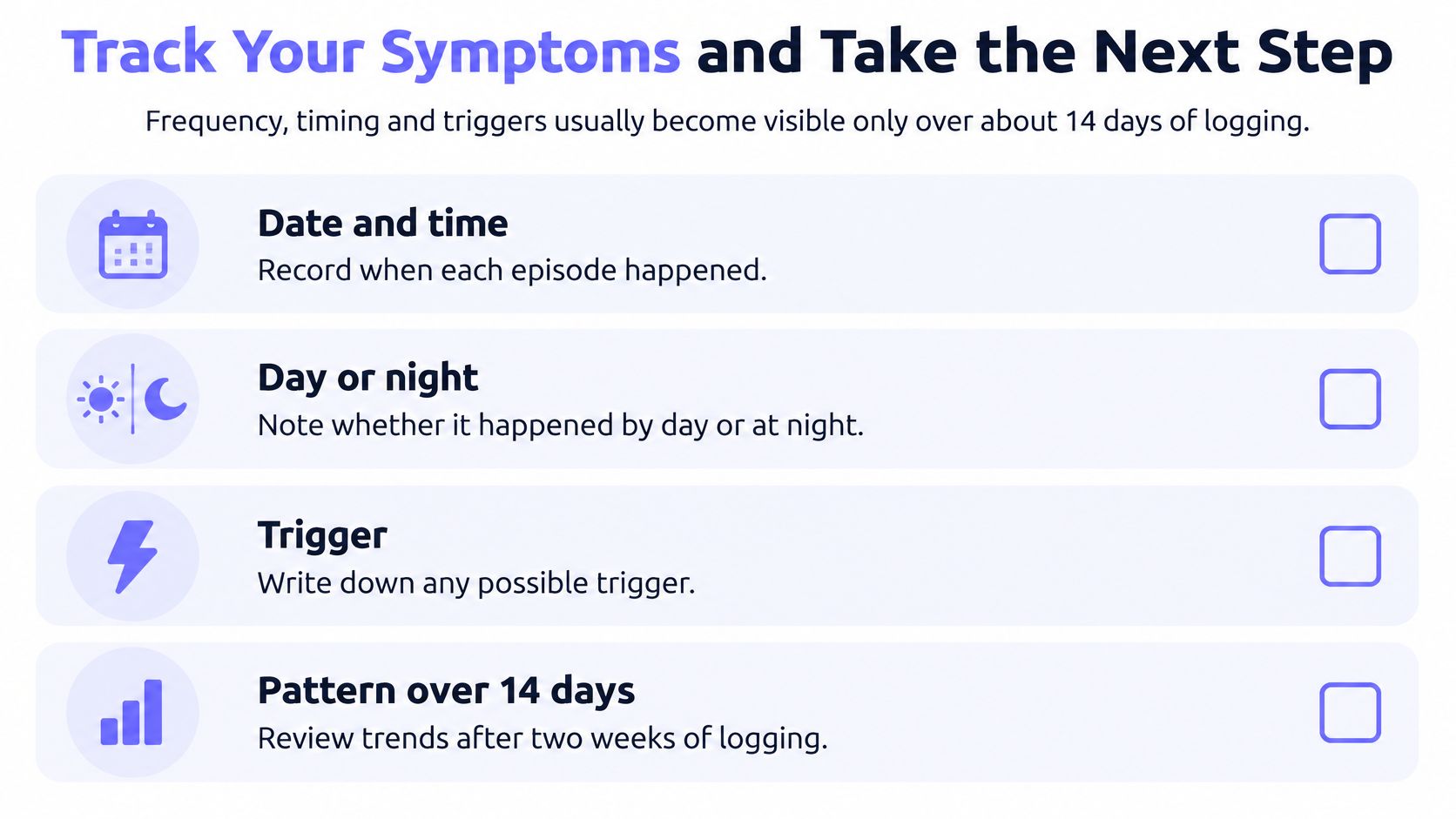
Record the episode. Note the date, time, whether you were awake or asleep, approximate duration and impact. Add what you were doing immediately beforehand.
Include the surrounding day. Write down sleep quality, stress, meals, alcohol and any medication changes. A simple note such as “woke sweating, changed top, struggled to return to sleep” is more informative than “bad night.”
Change one possible trigger at a time. If you suspect caffeine, alcohol, spicy food, heavy bedding or large meals, choose one to examine while keeping other habits reasonably steady. Compare the pattern without treating a short improvement as proof.
Identify your priorities. Highlight the symptoms that interfere most with your life. That keeps the appointment focused on what you need help with.
Bring questions as well as observations. Ask which options fit your history, what monitoring is needed and when to review progress. Seek care sooner if warning signs appear.
This checklist can help you keep the record consistent.
Choose a practical tracking method
A notebook, phone note or perimenopause symptom tracker can keep the information together. A registered dietitian can also help interpret meal-related patterns without unnecessary food restrictions; Rebecca Rumsey, MSc, RD, is our Registered Dietitian and perimenopause nutrition lead.
Our AI-powered perimenopause app offers daily check-ins covering 20+ symptoms, including hot flashes, night sweats, sleep quality and mood. It links symptoms with logged meals, sleep, alcohol and HRT doses in one place.
Lila isn't a substitute for medical advice. Your clinician is the person to discuss persistent symptoms, hormone therapy, testing and any health condition with.
Visit Lila to keep your hot flashes, sleep changes and daily habits together in a symptom record. Use your check-ins to prepare a clearer conversation with your clinician about what's disrupting your life and which next steps fit your history.
Get Lila, your personal coach for perimenopause.
Built for women in their 40s. 24/7 coaching, in your pocket.