
How to Stop Bloating in Menopause: A Practical Guide
Learn how to stop bloating in menopause with practical tips on diet, exercise, and stress. Our guide helps you find relief and feel like yourself again.
 Michelle
Some days it seems to appear out of nowhere. You wake up feeling mostly fine, eat a normal lunch, and by late afternoon your waistband feels tight, your stomach feels puffy, and you are wondering how your body changed this fast.
That experience is common in perimenopause and menopause, and it can be maddening. The discomfort is physical, but the frustration is emotional too. Many women tell me the hardest part is not knowing what caused it. Was it hormones, stress, salt, constipation, dinner, poor sleep, or all of the above?
The good news is that bloating in menopause is not random. It follows patterns. Once you start spotting those patterns, relief gets much more realistic.
That Uncomfortable Feeling You Can’t Ignore
A lot of women describe the same sequence. Their clothes fit in the morning. By evening, their abdomen feels stretched, heavy, or full. Sometimes they look down and feel as if they gained weight in a single day. Usually, they did not. They are dealing with bloating, and menopause can make it much more frequent.
This is one of those symptoms people often minimize because it is so common. But common does not mean minor. Bloating can change how you eat, how you move, how you dress, and how you feel in your own skin.
I see two mistakes over and over. The first is assuming nothing can help because “it’s just hormones.” The second is swinging hard into restrictive diets, detoxes, or punishing workouts. Neither approach works well for long.
Relief usually comes from a steadier method. You look at a few likely drivers, test one change at a time, and track what happens. That matters because menopause bloating is not identical from woman to woman. One person reacts most to large meals. Another gets puffy after poor sleep and salty takeout. Another notices a clear link with constipation.
Key takeaway: The fastest way to reduce bloating is not to try everything at once. It is to identify your pattern and make targeted changes you can keep doing.
If you are trying to figure out how to stop bloating in menopause, think less about finding a miracle fix and more about building a short list of reliable levers. Food timing, movement, hydration, bowel regularity, and a few smart supplements usually matter more than trendy hacks.
Why Is Menopausal Bloating Happening Now
Menopausal bloating usually has more than one cause. Hormones shift, digestion slows, and fluid regulation gets less predictable. That combination can make your abdomen feel tight and swollen even when your eating habits have not changed much.
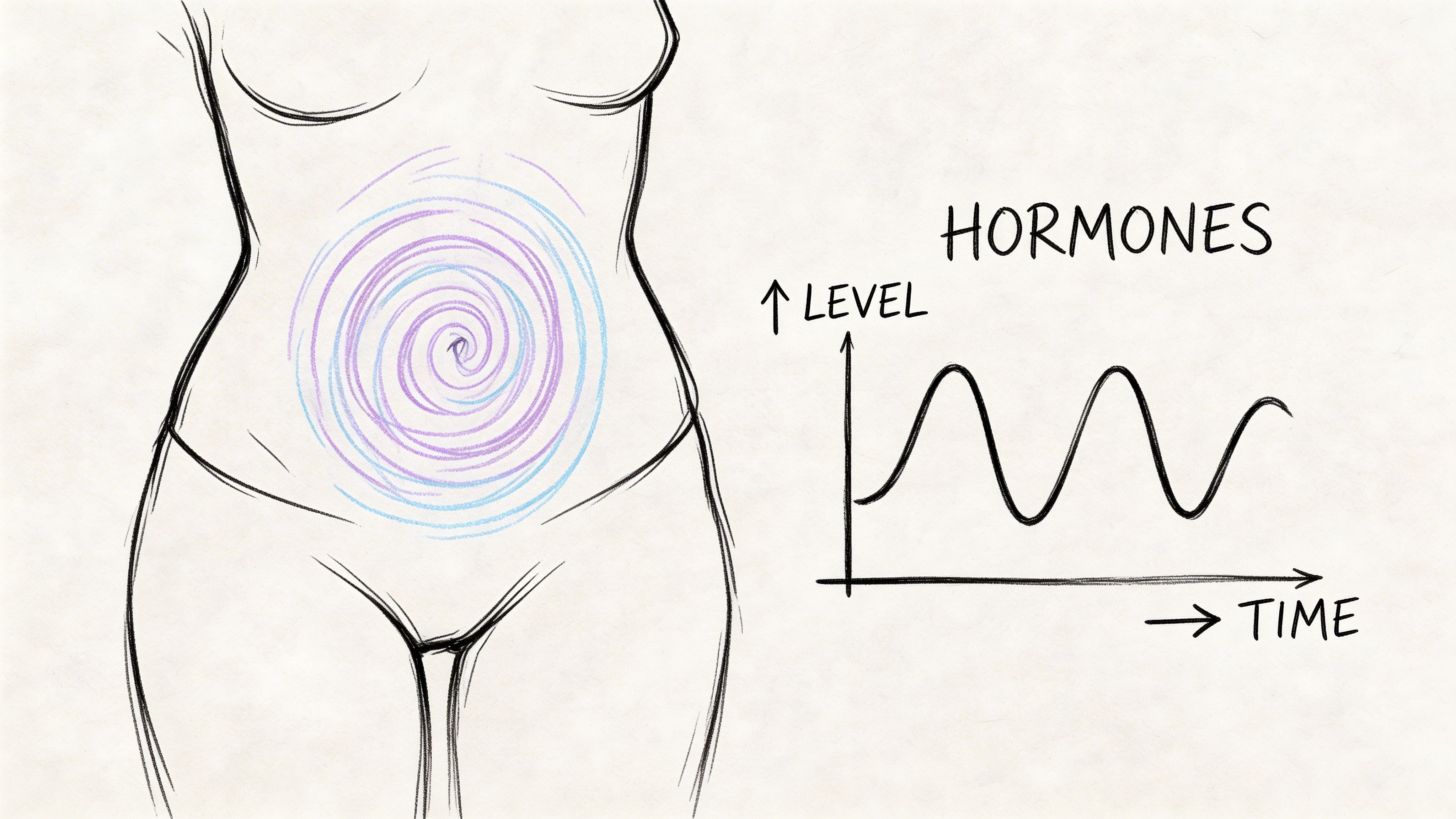
Hormones change the pace of digestion
Declining estrogen can slow gut motility, which is the movement that pushes food and gas through the digestive tract. Imagine it as a traffic jam. When movement slows, gas hangs around longer, stool can back up, and your belly feels more distended.
This is not rare. Abdominal distension is reported by up to 70% of perimenopausal women in major markets like the US and Europe, and regular aerobic activity can help. Studies highlighted by Alloy note that 20 minutes of aerobic exercise three times per week can significantly reduce bloating linked to hormonal fluctuation, in part because movement stimulates peristalsis and helps clear trapped gas (Alloy menopause bloating overview).
Water retention adds another layer
Hormonal shifts do not just affect digestion. They also affect how your body handles fluid. That is why some bloating feels less like gas and more like generalized puffiness or pressure.
This can be confusing because the symptom shows up in the same area, but the mechanism is different. One day the problem is sluggish digestion. Another day it is fluid retention. Sometimes it is both.
If you are still unsure whether hormone shifts are part of what you are experiencing, a resource on perimenopause blood test can help you understand what testing can and cannot tell you during this transition.
Your gut may respond differently to familiar foods
Many women notice that foods they tolerated for years suddenly feel heavier. That does not mean your body is failing. It means the context changed.
A few patterns often show up:
Slower transit: Food sits longer, which can increase fermentation and gas.
More sensitivity: Even a normal amount of pressure in the gut can feel more uncomfortable.
Less resilience after stress or poor sleep: Digestion often gets worse when the nervous system is overloaded.
Think of bloating as a signal, not a verdict. Your body is telling you that timing, movement, meal size, stress, or fluid balance needs attention.
The practical implication is simple. If menopause changed the environment, your anti-bloating plan has to match the new environment. The strategies that worked in your thirties may not be enough now.
Your Foundational Diet Plan to Beat the Bloat
Food matters, but not in the overly simplistic way social media suggests. Most women do not need a severe elimination diet. They need a structure that lowers digestive strain and makes triggers easier to spot.
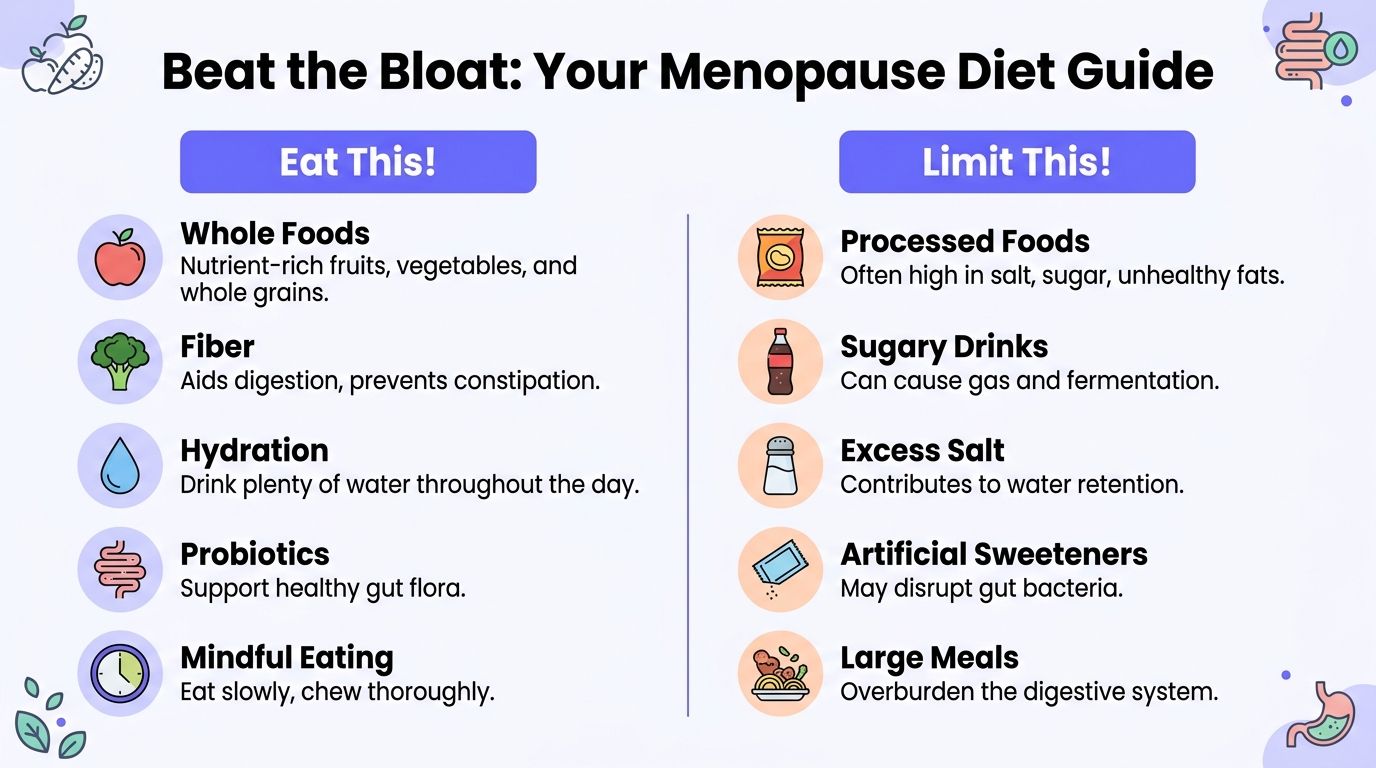
Start with meal size before food restriction
Large meals often create the biggest problem because they overload a digestive system that is already moving more slowly. Clinical observations from menopause specialists indicate 70-80% symptom reduction within 2 weeks when women shift from large meals to a smaller, more frequent meal pattern, with mindful chewing and symptom monitoring included in the approach (Jude on menopause bloating).
A practical version looks like this:
Track first: Keep a short food and symptom log for several days.
Shrink the load: Move from three large meals to smaller meals and snacks.
Slow down: Chew thoroughly and eat sitting down.
Rate the result: Notice whether bloating improves after lunch, dinner, or both.
App-based tracking can be useful here. Instead of guessing, you compare meal size, timing, and symptoms in one place. If you want a broader framework for meal planning, this guide on a menopause diet plan for symptom relief is useful: https://getlila.com/blog/your-menopause-diet-plan-for-real-symptom-relief
Hydration helps more than most women expect
Many women drink less when they feel puffy because they assume water will make the problem worse. Usually, the opposite happens. Poor hydration can worsen constipation, and constipation often drives bloating.
What works better is consistent intake across the day. Not chugging at night. Not trying to “flush out” a salty meal with extremes. Just steady hydration.
A few useful adjustments:
Front-load fluids: Drink earlier in the day rather than trying to catch up before bed.
Watch sodium-heavy meals: Restaurant food, packaged soups, deli items, and takeout often worsen that swollen, tight feeling.
Use warm fluids strategically: Some women find a warm drink after meals supports comfort more than iced drinks do.
If you like using tea as part of your routine, this overview of the best tea for gut health gives a practical starting point for choosing blends that feel easier on the digestive system.
Handle fiber carefully
Fiber helps, but the dose and pace matter. Women often get into trouble by increasing it too quickly.
You need enough fiber to support regularity, but a sudden jump can backfire. In the menopause meal protocol described by Jude, a rapid fiber increase can cause a temporary gas spike. That is why I usually tell women to treat fiber like a dial, not a switch.
Consider this simple perspective:
Approach | What usually happens |
|---|---|
Gradual increase | Digestion adapts more comfortably |
Sudden high-fiber push | More gas, pressure, and frustration |
Balanced meals with protein and fat | Better satiety, less urge to overeat later |
Use a short trigger-food experiment
Some foods are nutritious and still happen to be hard on your system right now. That can include onions, garlic, beans, cruciferous vegetables, carbonated drinks, or certain sweeteners.
The answer is not to ban everything forever. It is to test likely triggers briefly and systematically.
Try this:
Pick one category at a time: For example, carbonated drinks or onion-heavy meals.
Keep the rest stable: That way you know what changed.
Reintroduce on purpose: If symptoms improve, test the food again rather than assuming forever avoidance.
A good food plan reduces symptoms and preserves sanity. If your plan makes eating feel tense, rigid, or socially exhausting, it probably needs adjustment.
Many women eventually find that the primary issue is not one “bad” food. It is the combination of large meals, rushed eating, low hydration, and a couple of personal triggers layered together.
Strategic Movement and Core Exercises
If diet changes help only part of the problem, movement is often the missing piece. Not boot-camp workouts. Not hours at the gym. Just regular movement that helps your gut do its job.
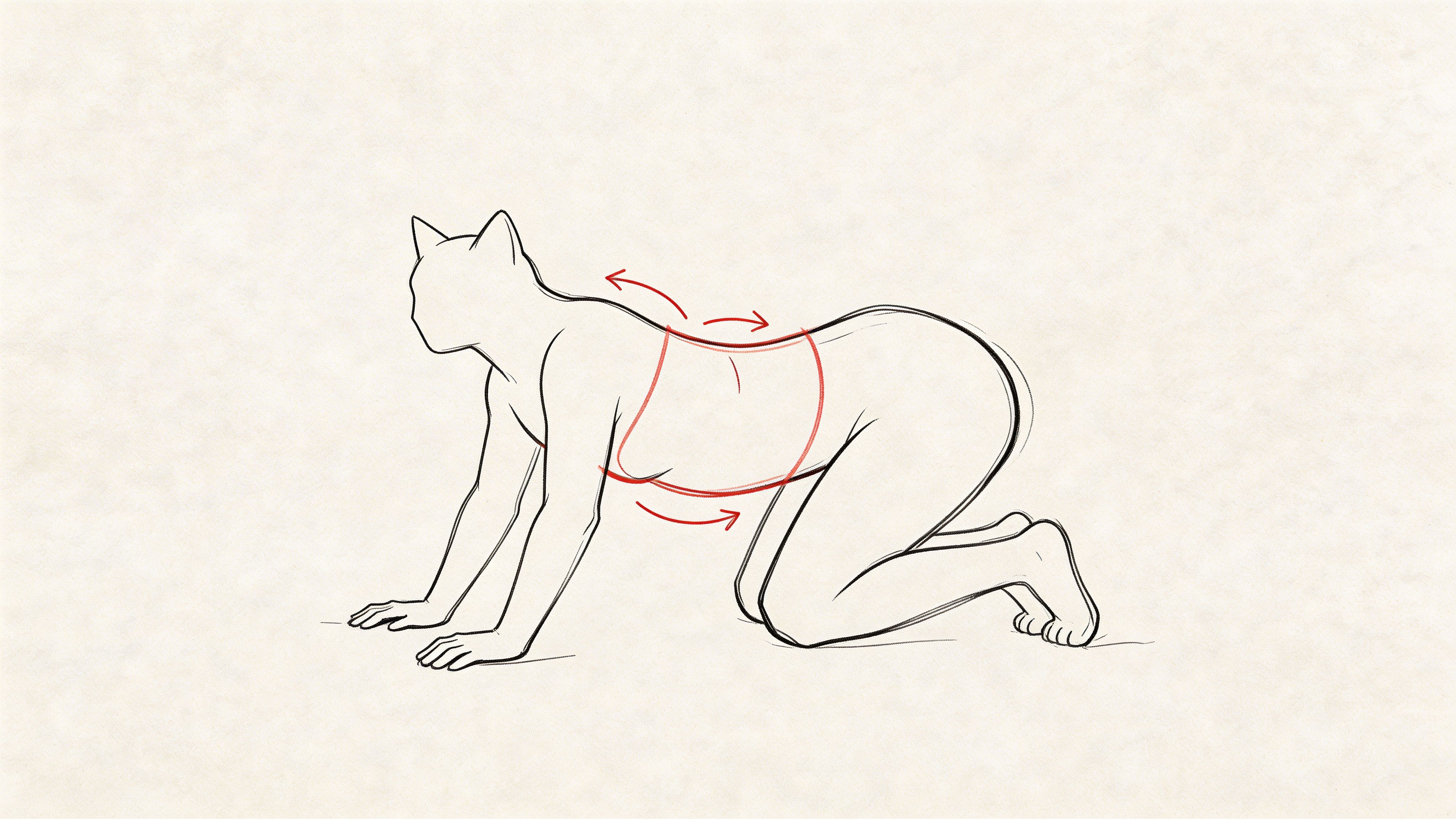
Gentle movement works because it is repeatable
The women who improve most are usually not the ones doing the hardest workouts. They are the ones who stop having long stretches of inactivity.
A short walk after a meal can be more useful for bloating than a tough workout done inconsistently. The reason is practical. Gentle movement stimulates digestion without adding a lot of physical stress.
Three forms of movement help most:
Walking after meals: This is the easiest first step.
Yoga positions that open and rotate the torso: Twists, knee-to-chest, and cat-cow can ease pressure.
Gentle core training: Think support and coordination, not ab punishment.
Core work should reduce pressure, not create more
A lot of women start doing aggressive ab routines when they feel puffy because they want their stomach to “flatten.” That usually misses the point. If your gut is irritated or backed up, hard core work can feel worse.
Better choices include:
Breath-led core activation
Pelvic tilts
Dead bugs
Modified bridges
These support the trunk without creating a lot of abdominal bracing. If you want ideas for building a routine, this exercise guide is a solid companion: https://getlila.com/blog/best-exercises-for-menopause
A guided routine can also help when you are trying to stay consistent:
▶ PlayDo not ignore the gut side of the equation
Movement and digestion are tightly connected, but so is the microbiome. Probiotic supplementation paired with prebiotic foods such as onions and garlic has been used as a structured approach to menopause bloating, and menopause-specific clinician data reported 65% improvement in 70% of users after 8 weeks in the protocol described by WeightWatchers (probiotics and menopause bloating).
That matters because exercise alone may not solve bloating if your gut is also reacting to food choices, constipation, or microbiome disruption. The best results often come from pairing regular movement with a gut-supportive food pattern.
If exercise leaves you drained, you did too much for the problem you are trying to solve. For bloating, consistency beats intensity.
Helpful Supplements and Medications to Consider
Supplements can help, but they work best as add-ons to the basics. If meal size, hydration, bowel regularity, and movement are chaotic, a supplement usually disappoints. If those basics are in place, the right one can make a noticeable difference.
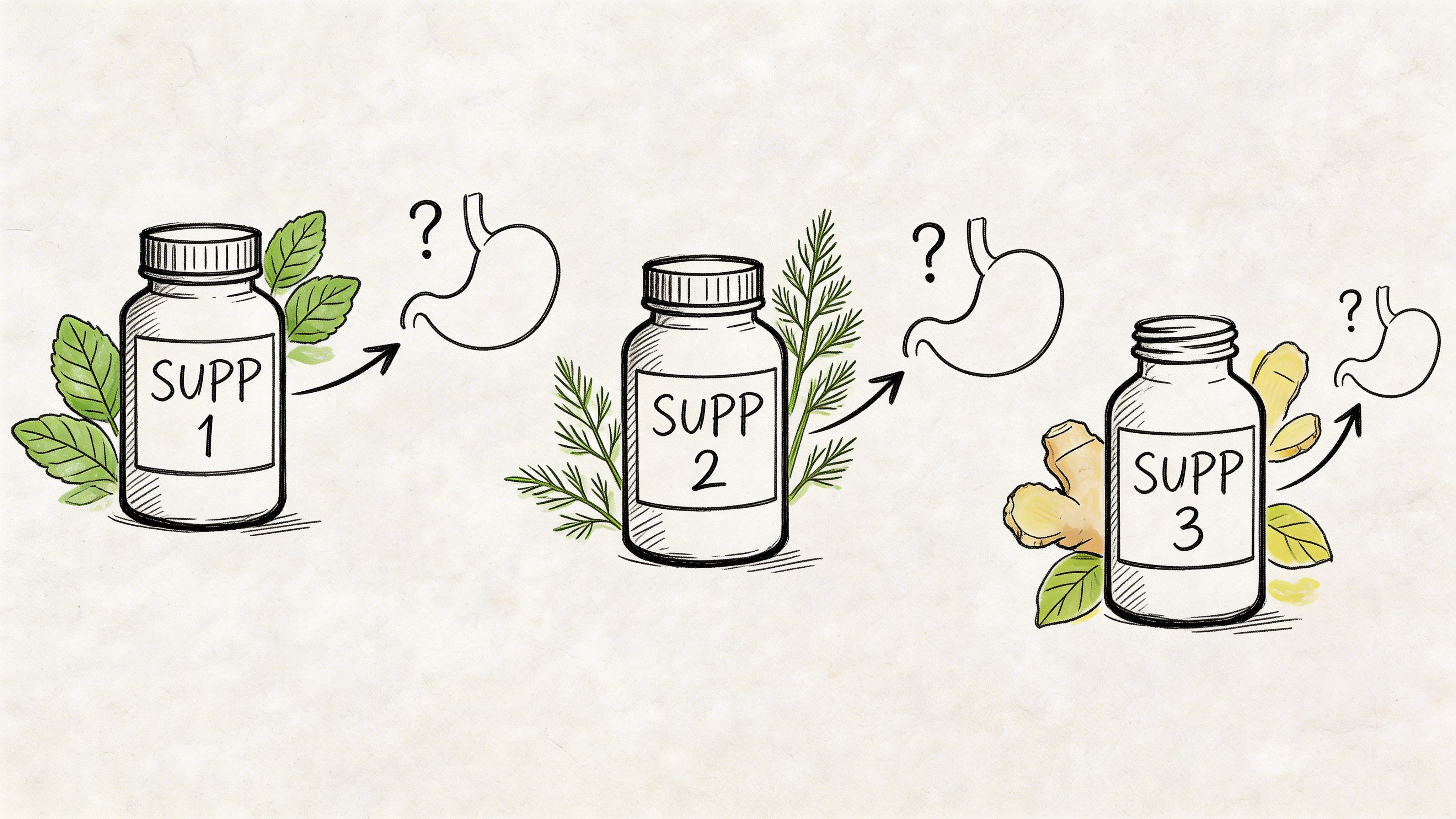
Magnesium is often the first place to look
For women whose bloating has a strong fluid-retention or constipation pattern, magnesium is often a reasonable option to discuss with a clinician. A daily dose of 200mg can reduce menopausal fluid retention and bloating after one month, and clinical trials reported a 25-30% reduction in bloating severity within 4 weeks in the summary provided by WeightWatchers (magnesium for menopause bloating).
This is one of the cleaner examples of a supplement matching a mechanism. Magnesium can help relax digestive tract muscles and may support bowel regularity while also helping with the water-retention side of bloating.
A few practical points matter:
Start simple: Do not combine multiple new supplements on the same day.
Match the pattern: Magnesium makes more sense for constipation and fluid retention than for every kind of post-meal gas.
Check tolerability: Some forms are easier on the stomach than others.
Probiotics can be useful, but they are not instant
Women often buy a random probiotic and expect relief by the weekend. That is not how this usually works.
A more sensible approach is to choose a product with Lactobacillus or Bifidobacterium, give it time, and pay attention to what happens with bowel habits, gas, and abdominal pressure. In practice, probiotics tend to help most when the picture includes irregular stools, IBS-like symptoms, or a clear food-reactivity pattern.
Short-term medications have a role
Not every solution has to be long-term. Sometimes you just need relief for a bad day.
A few options to discuss with your pharmacist or clinician:
Option | Best use |
|---|---|
Simethicone | Temporary gas relief when you feel trapped air and pressure |
Digestive enzymes | More useful when symptoms consistently follow specific foods |
Magnesium | Better for recurring constipation and fluid-related bloating patterns |
If you are sorting through several choices, this overview of supplements for women over 40 can help you compare where each one fits: https://getlila.com/blog/supplements-for-women-over-40
The main trade-off is this. Supplements can support the process, but they rarely correct a pattern created by oversized meals, rushed eating, low movement, and inconsistent hydration. They are support tools, not substitutes.
Create Your Plan and Know When to See a Doctor
The women who make the fastest progress usually stop treating bloating as one giant mystery. They narrow it down. They track what happens after certain meals, on lower-movement days, during higher-stress weeks, and when bowel habits change.
Build a simple two-week experiment
Keep the process boring and clear. That is what makes it useful.
Try this framework:
Choose one main target Pick the issue that seems most likely. Large meals, constipation, low movement, or late-night eating.
Add one supporting habit That might be a post-meal walk, steadier hydration, or slower eating.
Log symptoms daily Note when bloating happens, how strong it feels, and what else was going on that day.
Review before changing again If you change five things at once, you learn almost nothing.
A structured tracking tool can help with this. Logging meals, symptoms, sleep, energy, and cycle changes in one place makes patterns easier to see than trying to remember them from memory.
Watch for red flags
Menopause is a common cause of bloating, but it is not the only cause. You should not assume every abdominal symptom is hormonal.
Make an appointment with a healthcare professional if bloating is:
Persistent or worsening
Painful or severe
Accompanied by unexplained weight loss
Paired with blood in the stool
Linked to major changes in bowel habits
Associated with urinary symptoms or other concerning changes
If bloating does not respond to sensible lifestyle changes, it deserves a medical review.
Think progress, not perfection
You do not need a flawless diet or a perfect routine to feel better. You need a repeatable plan. For most women, that means smaller meals, fewer digestive surprises, regular movement, and enough tracking to make good decisions.
That is how to stop bloating in menopause in real life. Not by chasing a single cure, but by learning which levers your body responds to and using them consistently.
If you want a structured way to do that, Lila is one option. It helps women track symptoms, meals, sleep, mood, and energy in one place, then use that information to test practical changes with more clarity and consistency.
Get Lila, your personal coach for perimenopause.
Built for women in their 40s. 24/7 coaching, in your pocket.


