
Management of Menopausal Symptoms: A Practical Guide
Evidence-informed management of menopausal symptoms covering lifestyle, hormone therapy, sleep, mental health, and tracking to build a plan that actually works.
You wake at 2 a.m. overheated, kick away the sheets, and spend the next day trying to remember why you walked into the kitchen. Later, a sudden heat wave interrupts a meeting, while poor sleep and an unfamiliar irritability make ordinary tasks feel harder than they should. You may have tried exercising more or changing your diet, but those steps alone haven't answered the more important question: what should you do next?
Management of menopausal symptoms works best as a personalized decision, not a single remedy. The right plan considers symptom burden, timing, medical history, treatment preferences, and the way symptoms affect sleep, mood, work, relationships, and health. A simple record of those changes can turn a confusing experience into a focused conversation, much like the broader approach described in this comprehensive health assessment.
Table of Contents
- Why Menopausal Symptom Management Is a Multi-Domain Decision
- What Is Actually Happening During the Transition
- The Main Management Approaches at a Glance
- Easing Hot Flashes and Night Sweats
- Sleep, Mood, Brain Fog, and Sexual Health
- Weight, Metabolism, and Honest Expectations
- Turning Tracking Into a Personalized Plan
- Your First-Week Plan and What to Do Next
Why Menopausal Symptom Management Is a Multi-Domain Decision
Hot flashes may be the easiest symptom to name, but menopause can affect several systems at once. In a U.S. electronic-health-record study of women seeking menopausal care, hot flashes appeared in 91.2% of records, sleep problems in 49.9%, and vaginal dryness in 47.0% (study in Menopause). These experiences overlap rather than staying in separate boxes. Night sweats can interrupt sleep, poor sleep can reduce concentration, and discomfort during sex can affect mood and relationships.
Practical rule: Treat the symptom that limits your life most, while checking the other domains that may be maintaining it.
A useful assessment covers vasomotor symptoms, sleep, mood, cognition, sexual and genitourinary health, bleeding patterns, energy, movement, and metabolic concerns. The same option may suit one person and be unsuitable for another. Occasional warmth with manageable sleep disruption may call for behavioral measures first. Frequent night sweats with severe daytime impairment may justify a clinician-guided medication discussion.
Tracking turns these details into a usable record. Note what happens, when it happens, how long it lasts, and how it affects sleep, work, relationships, or daily tasks. A simple record can turn a confusing experience into a focused conversation, much like the broader approach described in this full health assessment.
Emotional symptoms deserve the same attention as physical ones. Persistent sadness, anxiety, hopelessness, or loss of interest should not be dismissed as “just hormones.” Vernon depression counselling may help alongside medical assessment when low mood disrupts daily life.
The useful question is “Which combination matches my symptoms, goals, timing, and risks?” Tracking helps answer it by showing patterns instead of isolated difficult days, while giving a clinician information that memory may miss during a short appointment.
What Is Actually Happening During the Transition
Estrogen behaves less like an on-off light and more like a dimmer switch connected to several rooms in the house. During the transition, the setting changes unevenly. One week may bring relatively stable energy and sleep, while another brings irregular bleeding, warmth, irritability, or restless nights.
Perimenopause is the transition before the final menstrual period. Hormone levels fluctuate, ovulation becomes less predictable, and menstrual cycles may change in timing or flow. Symptoms can arrive in waves because the hormonal pattern is variable rather than steadily declining.
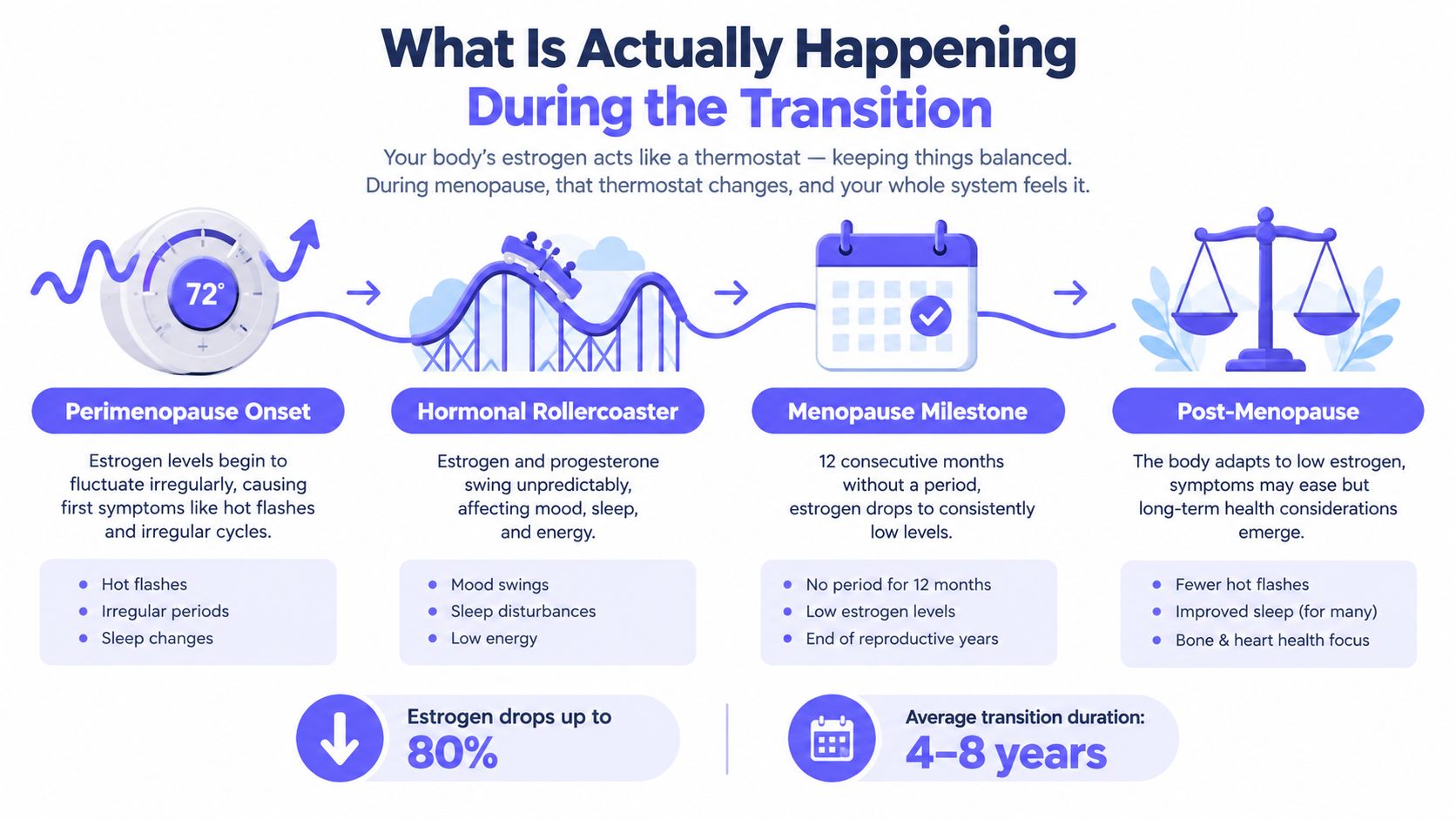
Menopause is identified retrospectively after 12 consecutive months without a menstrual period, when there isn't another explanation for the change. Postmenopause follows that milestone. Estrogen remains consistently lower, although symptoms don't necessarily disappear immediately or affect every person in the same way.
Why the pattern matters
Hormonal fluctuation can influence temperature regulation, sleep, mood, vaginal tissues, and the menstrual cycle. That doesn't mean every symptom is caused by menopause. Thyroid disease, anemia, medication effects, depression, sleep disorders, and other conditions can overlap with this stage, so persistent or unusual symptoms deserve appropriate evaluation.
A guide to perimenopause versus menopause can help clarify the terminology, but a label isn't a treatment plan. The practical value of understanding the transition is that it gives you something to observe: cycle changes, symptom timing, triggers, nighttime awakenings, and how symptoms affect function.
Once those observations are recorded, management becomes less like guessing at a moving target and more like adjusting a thermostat based on what the room feels like.
The Main Management Approaches at a Glance
Management of menopausal symptoms works best as a set of adjustable tools, not a single remedy. Four broad approaches often form the starting point. Their balance can change as symptoms, health history, and preferences change.
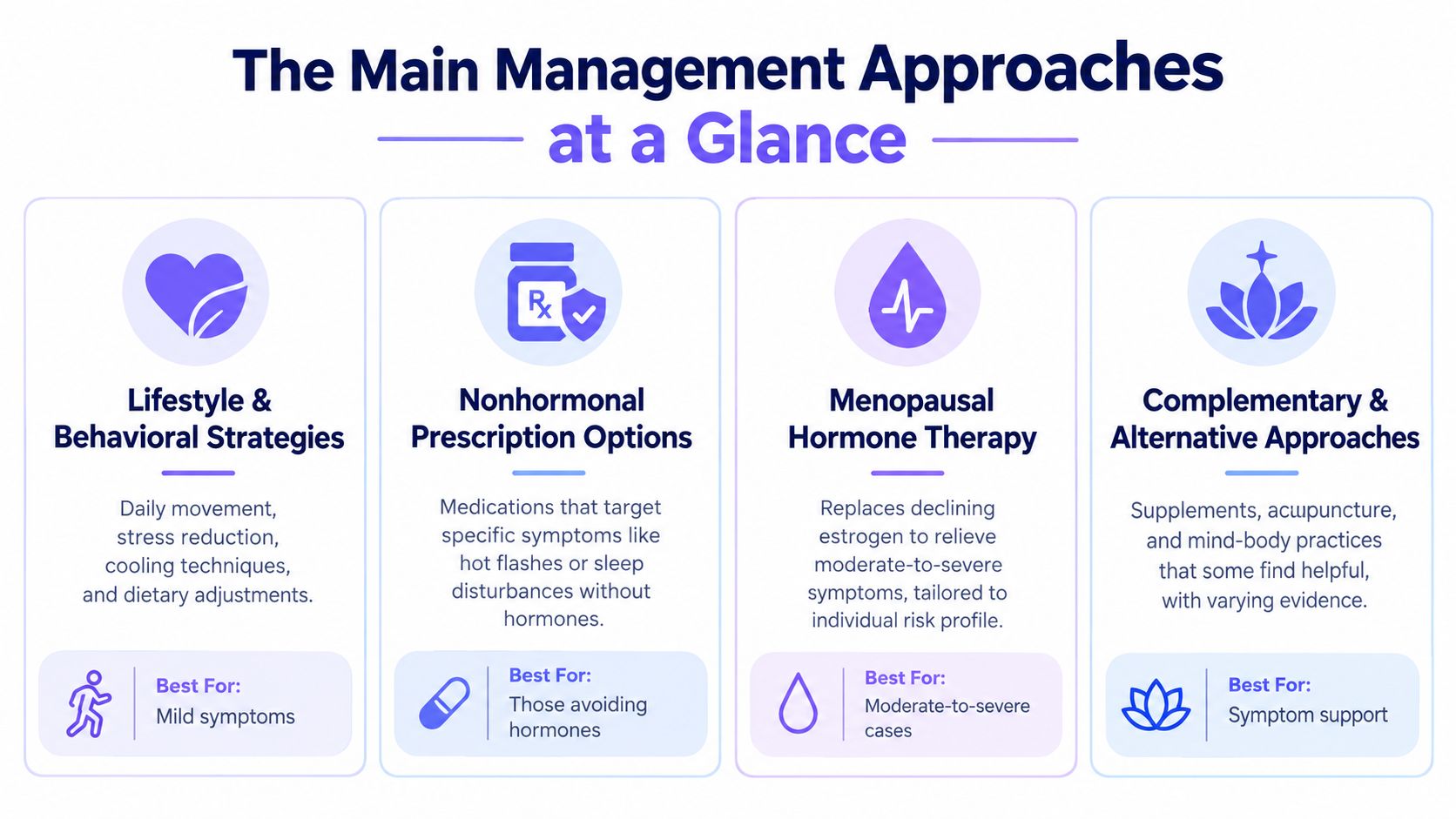
| Approach | Often useful for | Main limitation |
|---|---|---|
| Lifestyle and behavioral strategies | Mild symptoms, sleep support, general health, and identifying triggers | May not adequately control disruptive symptoms on their own |
| Nonhormonal prescription options | People who can't or don't want to use hormone therapy, or who need a targeted option | Choice depends on symptoms, medical history, side effects, and interactions |
| Menopausal hormone therapy | Moderate-to-severe vasomotor symptoms and selected genitourinary symptoms | Requires individualized risk assessment and clinician prescribing |
| Complementary approaches | Supportive care, relaxation, and personal symptom routines | Evidence and response vary, and “natural” doesn't automatically mean safe |
Lifestyle measures can include cooling strategies, regular movement, a consistent sleep schedule, stress regulation, and food patterns that support energy and cardiovascular health. They also create useful observations. A warm room may worsen a hot flash, but that trigger is not necessarily the underlying cause. Avoiding every suspected trigger can become exhausting and restrictive.
Nonhormonal medicines may target vasomotor symptoms, sleep, or mood without supplying estrogen. For people with troublesome vasomotor symptoms, hormone therapy is the most effective treatment according to the North American Menopause Society's 2023 position statement (NAMS position statement22.pdf)). Whether it is suitable depends on timing, formulation, route, dose, medical history, and personal preference. Read more about what hormone therapy for menopause involves.
Tracking supplies the thread that connects these options. Record symptom timing, possible triggers, sleep disruption, treatments, and changes in daily function. The record does not diagnose the cause or replace care. It shows which intervention appears helpful, whether symptoms are shifting, and which questions need a clinician's attention.
▶ PlayA practical plan is one you can follow, evaluate, and revise.
Easing Hot Flashes and Night Sweats
A hot flash can last only a short time, yet the fear of waking drenched, losing concentration at work, or changing clothes at night can shape an entire day. Effective management begins by reducing that practical burden, then matching treatment to the pattern and severity of symptoms.
Start with the environment and the pattern
Keep the bedroom cool, choose breathable layers, and place extra bedding where you can remove it without fully waking. During the day, record whether heat, alcohol, spicy foods, stress, crowded rooms, or caffeine appear before an episode. A warm room may make a flash more noticeable, but it is not necessarily the underlying cause. Tracking the suspected trigger beside the symptom helps separate a repeatable pattern from coincidence.
Paced breathing can make an episode feel less overwhelming. Breathe in slowly, then let the exhale run longer and remain relaxed. Remind yourself that the sensation will pass. This may not stop every hot flash, but it can reduce the added surge of fear or muscle tension that makes the experience harder.
Use this practical guide to hot-flash management alongside your record when comparing cooling measures, breathing, sleep changes, and treatment responses. Your notes turn scattered experiences into a clearer appointment conversation.
Know when self-management is not enough
Arrange a clinical discussion if symptoms repeatedly wake you, interfere with work, or lead you to avoid ordinary activities. Nonhormonal prescription treatments may suit people who cannot use hormone therapy or would rather not use it. Selection depends on other symptoms, current medicines, cardiovascular and clotting history, mood, sleep, and possible adverse effects.
For healthy symptomatic women younger than 60 or within 10 years of their final menstrual period, systemic hormone therapy can be considered when no contraindications are present. Oral and transdermal estrogen both reduce vasomotor symptoms more effectively than placebo. The route should reflect the person's medical history and risk profile, as described in the NAMS hormone therapy position statement.
If the uterus is present, systemic estrogen generally requires an accompanying progestogen to protect the endometrium. Treatment is intended for symptom relief, not general cardiovascular prevention. A clinician should review the dose, route, benefits, risks, and continuing need at follow-up visits.
Safety boundary: New postmenopausal bleeding, unexplained bleeding, or a known contraindication needs clinical evaluation. It is not a tracking problem to solve alone.
The Women's Health Initiative shows why treatment decisions need context. The trial involved more than 16,000 healthy postmenopausal women aged 50 to 79, and investigators stopped the combined estrogen-progestin arm after observing higher rates of several serious outcomes than in the placebo group (AMA Journal of Ethics discussion). Later interpretation emphasized that these findings primarily concerned older, generally asymptomatic women using therapy for disease prevention, rather than every younger person starting treatment near menopause for significant symptoms.
Sleep, Mood, Brain Fog, and Sexual Health
A person may tolerate a hot flash better than the consequences that follow it. Repeated awakenings can leave you depleted, while low mood, poor concentration, and vaginal discomfort can affect work and intimacy even when temperature symptoms are modest.
Build sleep support around the actual disruptor
Keep wake time reasonably consistent, create a predictable wind-down routine, and make the bedroom cool and dark. If night sweats are the reason you're awake, address them directly rather than treating the problem as generic insomnia. If snoring, gasping, restless legs, or persistent daytime sleepiness are present, ask about a sleep evaluation.
For additional non-drug ideas, these tips from Pain and Sleep Therapy Center may help you refine the bedroom and evening routine. Don't turn sleep hygiene into another performance test. Choose one change you can repeat and observe whether it affects awakenings or next-day energy.
Separate mood symptoms from ordinary frustration
Irritability can accompany poor sleep and hormonal fluctuation, but persistent depression or anxiety deserves assessment. Write down what changed, how long it has lasted, and whether you still enjoy activities that usually matter to you. Seek prompt support for hopelessness, thoughts of self-harm, or a sudden major change in functioning.
Brain fog often feels like lost words, slower recall, or difficulty switching between tasks. Regular movement, social connection, adequate food, and protected sleep can support cognition, but ongoing or worsening cognitive symptoms shouldn't automatically be attributed to menopause.
Genitourinary symptoms respond to different tools. Vaginal moisturizers used regularly can support ongoing comfort, while lubricants can reduce friction during sexual activity. A clinician can discuss local estrogen or other treatments when dryness, burning, urinary symptoms, or pain persist. Any new bleeding needs assessment rather than self-treatment.
Weight, Metabolism, and Honest Expectations
Many women ask whether hormone therapy will cause weight loss or reverse a changing waistline. The clearest answer is that menopausal hormone therapy should not be used for weight management or improving body composition, according to the 2025 International Menopause Society recommendations (recommendations on menopause and weight).
That doesn't make metabolic health irrelevant to menopause care. It means the goals need to be separated. Hormone therapy may improve bothersome vasomotor or genitourinary symptoms when appropriate, while body composition, blood pressure, lipids, glucose, fitness, and medication review need their own plan.
Use measures that tell a fuller story
The scale is only one signal. Track how clothing fits, waist comfort, strength, stamina, sleep, energy, and relevant clinical measurements. A stable scale weight can coexist with changes in muscle, fat distribution, fitness, or metabolic markers.
A practical plan may include:
- Resistance training: Build or maintain strength with a routine that matches your current ability and any joint or medical limitations.
- Protein and dietary quality: Include satisfying protein sources and a pattern of foods that supports energy without turning eating into punishment.
- Sleep protection: Treat night sweats, irregular schedules, and possible sleep disorders as metabolic concerns as well as comfort issues.
- Clinical review: Discuss blood pressure, lipids, glucose, fatigue, medications, and family history with a clinician when appropriate.
Rapid weight change, persistent fatigue, severe sleep disruption, or abnormal bleeding deserves evaluation. Those symptoms may have more than one explanation, and a menopause label shouldn't delay assessment.
The useful question isn't “Will hormones make me thinner?” It is “Which symptoms are hormone-responsive, and which health goals require a separate, sustainable strategy?”
Turning Tracking Into a Personalized Plan
Tracking becomes useful when it changes what you do. A brief daily check-in can capture hot flashes, sleep interruptions, mood, energy, meals, movement, bleeding, sexual symptoms, and treatment changes without asking you to write a diary at length.
Look for relationships rather than perfect scores. Did a poor night follow night sweats, late caffeine, stress, or an irregular schedule? Did a treatment change affect one symptom but not another? Did bleeding change alongside a medication adjustment? These observations create better questions than “I feel off.”
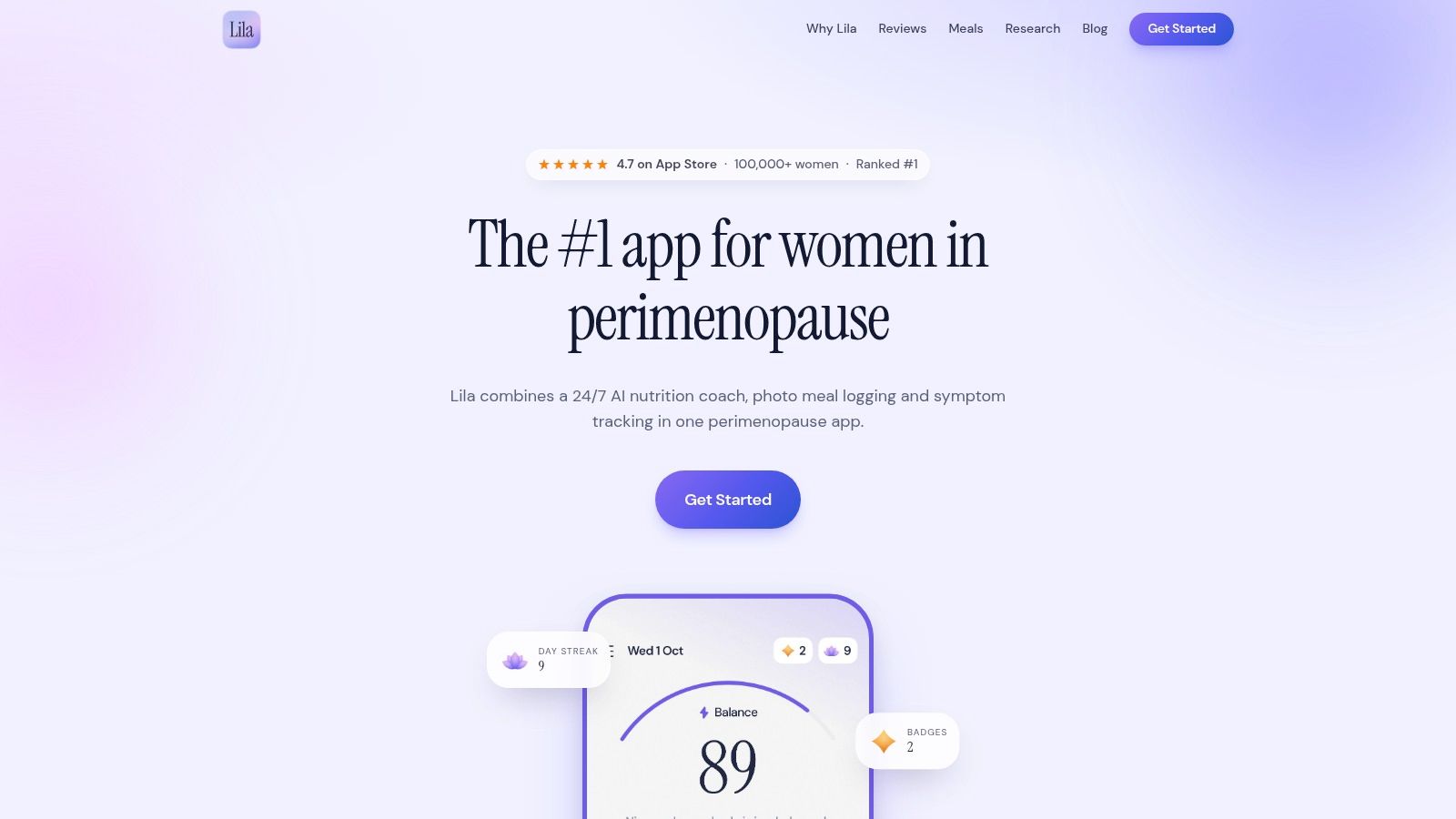
Lila can serve as one example of this workflow, combining daily check-ins with a personalized action plan, centralized tracking for symptoms, mood, sleep, energy, meals, and cycles, and a chat-based coach for ongoing accountability. It isn't a diagnosis or a substitute for prescribing, but it can help organize observations before an appointment. A focused perimenopause symptom tracker can support the same habit.
Bring a concise summary to your clinician:
- Main burden: Which symptom affects life most?
- Pattern: When does it happen, and what does it disrupt?
- Changes: What have you tried, and what happened?
- Safety information: What medicines, conditions, bleeding changes, or family-history concerns matter?
- Decision: What treatment benefits and risks do you want to discuss?
Client-centered care works best when your priorities and lived experience are part of the decision, not an afterthought. This client-centered care guide from Orange Neurosciences offers a useful reminder that communication should support shared decisions.
Your First-Week Plan and What to Do Next
Start small. Choose one or two symptoms that interfere with your life most, and track them daily alongside sleep and function. Record bleeding changes, mood shifts, medicines, and anything that seems to change the pattern.
Set one stable sleep routine and one realistic movement goal. Then write three questions for a clinician:
- What could explain this symptom pattern?
- Which treatment options fit my medical history and preferences?
- What changes should prompt follow-up?
At the end of the week, look for a pattern rather than judging yourself. Over the following month, use that information to refine your routine, seek care when needed, and explore focused guidance on exercise, body composition, sleep, or menopause-related weight concerns.
Lila brings symptom, sleep, mood, energy, meal, and cycle tracking into one perimenopause-focused workflow, with a personalized action plan and chat-based support. Visit Lila to turn this week's observations into a clearer plan and a more focused conversation with your clinician.
Get Lila, your personal coach for perimenopause.
Built for women in their 40s. 24/7 coaching, in your pocket.